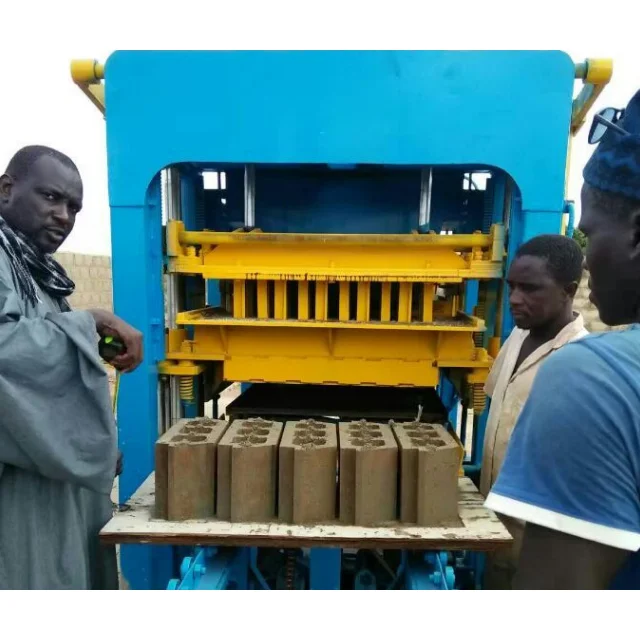

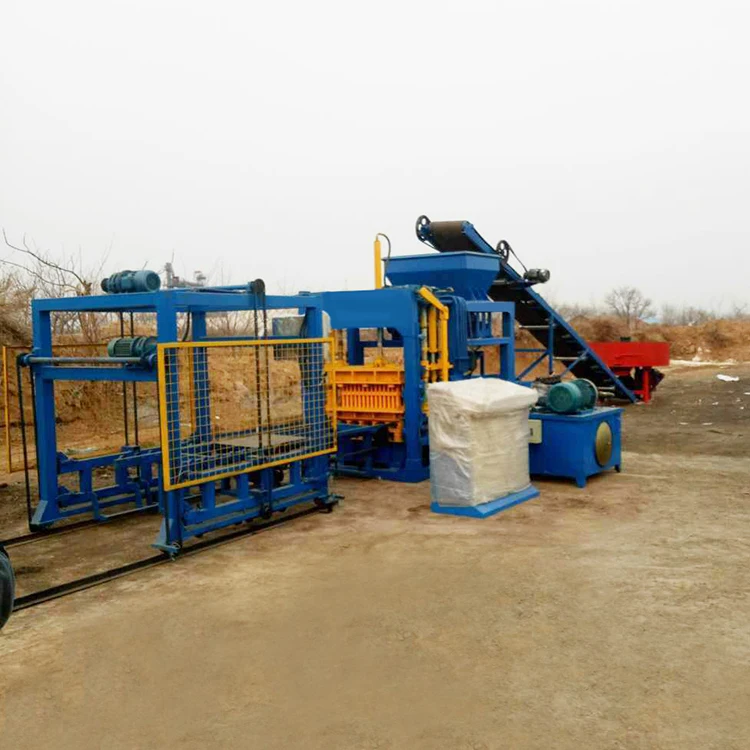
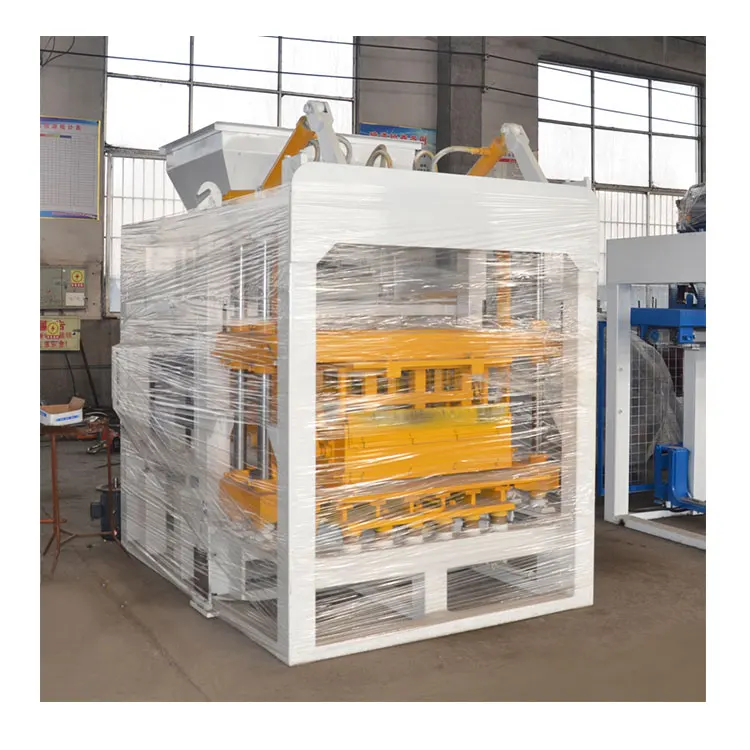

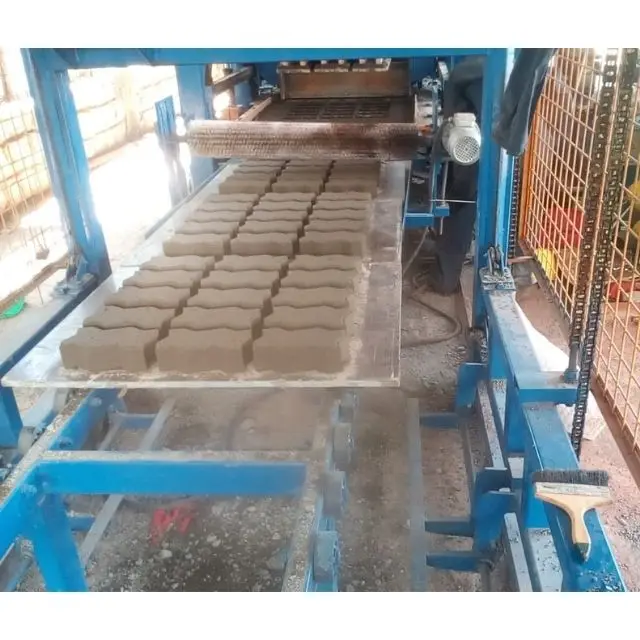
Description
Synchronized Automation — The QT4-15 integrates PLC cycle logic with hydraulic pallet feeding and motor-driven block conveying so each station hands off to the next without operator intervention.
Technical Specifications
| Parameter | Value |
|---|---|
| Model | QT4-15 |
| Product Type | Automatic Concrete Block Making Machine |
| Overall Dimensions (L×W×H) | 7100 × 1600 × 2610 mm |
| Rated Pressure | 16 MPa |
| Vibration Form | Platform Vibration |
| Pallet Size | 1020 × 570 mm |
| Molding Cycle | 15–25 s (basis not stated in source — confirm block format, material, and thickness) |
| Overall Power | 27.5 kW |
| Control System | PLC electronic console |
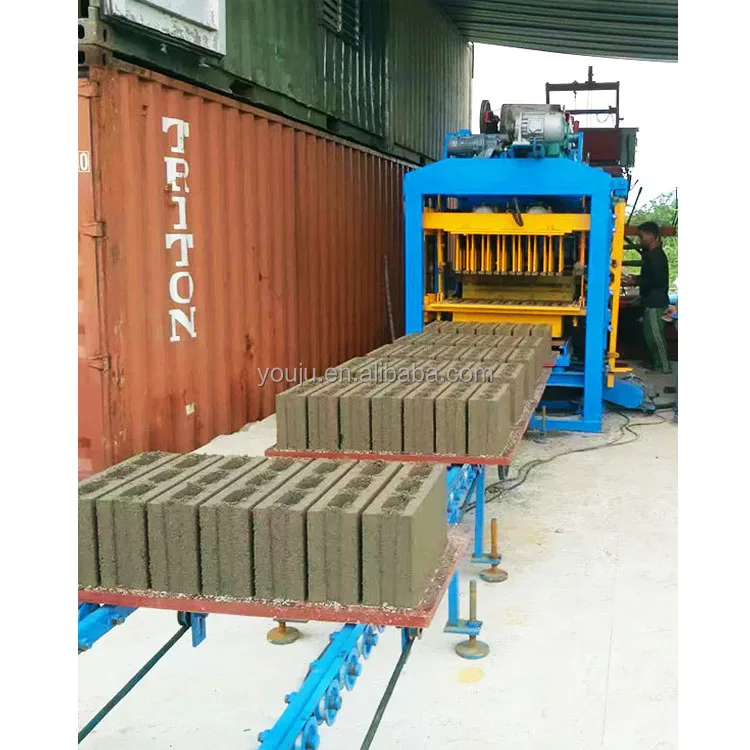
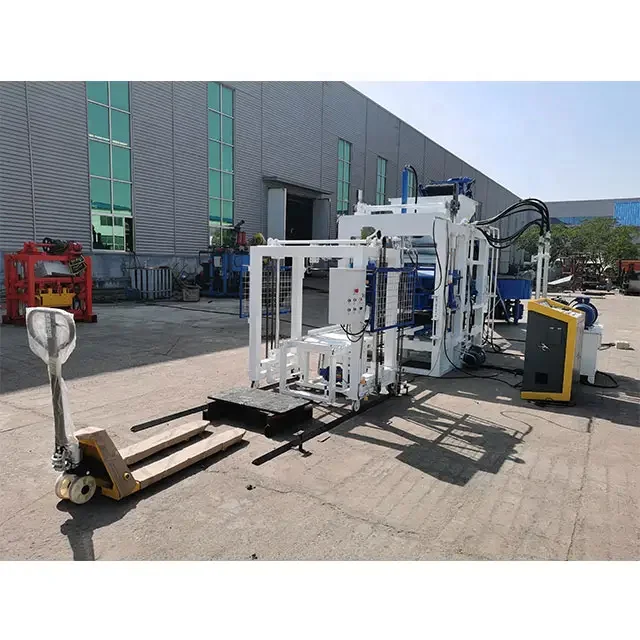
| Automation Level | Automatic (pallet feeder, material feeder, molding, block receiver integrated) |
| Material Feeder System | Hopper, feeding box, feeding platform, conveyor system |
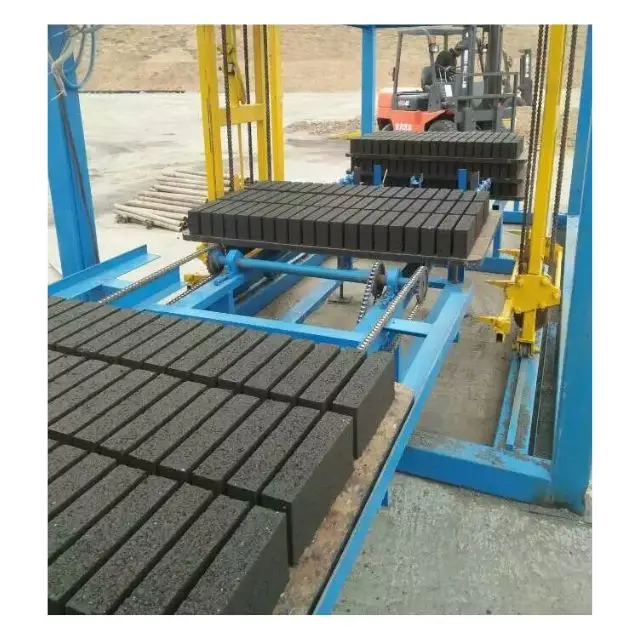
| Block Receiver | Frame, conveyor system, idler wheels, motor and reducer with triangle belt |
| Pallet Feeding | Hydraulic cylinder driven |
Application Suitability
| Application | Material or Output |
|---|---|
| Hollow block production | Crushed stone, sand, cement, and water mix |
| Interlocking block manufacturing | Graded aggregate with cement binder |
| Paving block production | Fine aggregate and pigment-layered concrete |
| Fixed plant concrete block manufacturing | Standard and custom mix designs |
| On-site block production for construction projects | Locally sourced aggregate and cement |
What "15–25 Seconds per Cycle" Actually Means for Your Daily Output
Cycle time without a stated block format is a number without context.
Many buyers receive a molding cycle figure and multiply it across a shift, only to discover on commissioning day that real output falls well short. The QT4-15 lists a 15–25 second molding cycle, but that range depends entirely on the block format being pressed, the thickness of the product, and the specific mix design feeding the hopper. A thin paving block may cycle at the lower end, while a tall hollow block with deep cores requires longer vibration and demould time. Without confirming which format the cycle figure assumes, daily capacity calculations remain guesswork [NEED_CITE: block format assumptions in cycle time quotations].
PLC Logic That Keeps Every Station in Sequence
The PLC electronic console on this automatic concrete block making machine PLC controlled unit governs the entire molding sequence — from material feed through vibration, pressing, demould, and pallet advance. Each step triggers the next only after the previous one completes, which prevents the press from firing before the pallet is seated or the material box has fully retracted. For plant owners moving away from manual timing, this sequential logic removes the most common source of inconsistent block density: human variation in cycle pacing.
Where Automation Removes the Operator From the Loop
The hydraulic cylinder-driven pallet feeder synchronizes with the demould process, pushing a fresh pallet into position while the finished block exits onto the receiver conveyor. The block receiver — built with a motor-driven conveyor, idler wheels, and a reducer — carries output away from the press continuously. This means the operator’s role shifts from physically moving pallets and blocks to monitoring the automatic concrete block making machine PLC controlled interface and managing raw material supply at the hopper.
How Pressure, Vibration, and Pallet Size Interact on the Shop Floor
The rated 16 MPa hydraulic pressure and platform vibration form work together to compact the mix into the mould cavity. Pressure alone does not determine block strength — vibration frequency and amplitude must match the aggregate gradation and cement content of the actual mix being used [NEED_CITE: vibration force and hydraulic pressure matching in block compaction]. The 1020 × 570 mm pallet size defines the mould footprint and, critically, must align with the curing rack dimensions and forklift capacity already in the buyer’s yard. A pallet specification chosen without this check forces the buyer to replace handling equipment or reconfigure the curing area after the machine arrives.
The Cost of Skipping Voltage and Language Confirmation
When a machine ships without confirmed voltage, frequency, and PLC display language, commissioning stalls the moment the container is unpacked. I have seen block plants in Southeast Asia sit idle for days because the control panel displayed only Chinese characters and the local electrician could not match the motor wiring to the site’s supply. The 27.5 kW overall power rating on the QT4-15 requires a dedicated circuit with the correct voltage and frequency — and the PLC interface must be set to a language the operators actually read before the first cycle runs [NEED_CITE: voltage and frequency standards by export market].
Why Sourcing the Line as One System Matters
Block machinery is the single focus here, which means the QT4-15 press, its mould, pallet, and handling equipment are specified as one matched set rather than assembled from separate suppliers. The machine configuration is set against the buyer’s actual mix design, local aggregate, and target block format — not a catalogue default. Mould design covers the formats the buyer’s market sells, with custom drawings available. The automation level is selectable, so a buyer can begin with the integrated pallet feeder and block receiver, then add stacking automation as production volume justifies it. Installation includes on-site commissioning with operator training, and mould and wear parts support continues after the first production run.
Documentation & Verification
- Line layout and capacity calculation stating the block format assumed for cycle time
- Machine specification sheet with confirmed voltage, frequency, and PLC language
- Mould drawing and format list for every block type in the quotation
- Hydraulic and electrical schematic matching the 27.5 kW power configuration
- Factory test record on buyer’s target block format before dispatch
- Operation and maintenance manual with wear parts and mould replacement list
Installation, Commissioning & Support
- Foundation plan sized to the 7100 × 1600 mm footprint with anchor bolt layout
- Dedicated power circuit matching confirmed voltage and the 27.5 kW total load
- Machine shipped in dismantled state with reassembly guidance on site
- First-cycle parameter setting on the PLC console with operator present
- Operator training covering mould change, pallet loading, and daily maintenance
- Wear parts and mould list provided with lead times for first replacements
What We Need to Configure Your Line
To size the QT4-15 correctly, share the block formats your market demands, the target daily output per format, and the local aggregate and cement you plan to use. Confirm your site voltage, frequency, and preferred PLC display language so the control system ships ready. If you have existing curing racks or forklifts, send their dimensions so the 1020 × 570 mm pallet specification can be verified against your handling setup.
Frequently Asked Questions
Q: What block format does the 15–25 second molding cycle assume, and how does daily output vary?
A: The cycle range depends on block format, thickness, and mix design. A hollow block with deep cores typically requires longer vibration and demould time than a flat paving block. We provide a capacity calculation that states the exact format assumed, so your daily output projection is based on the product you will actually produce rather than a generic figure.
Q: Is the PLC display language configurable, and what electrical options are confirmed at order?
A: The PLC electronic console can be set to English or other languages confirmed before production. Voltage and frequency are verified against your site supply during the order stage. This prevents commissioning delays caused by mismatched wiring or an unreadable control interface when the machine arrives at your plant.
Q: Can I start with the current automation level and add stacking later?
A: The QT4-15 ships with integrated pallet feeding, material feeding, and block receiving. Stacking and cubing automation can be added as a later phase when production volume justifies the investment. The PLC platform supports this upgrade path without requiring a full control system replacement.
Q: How does the 1020 × 570 mm pallet size relate to my existing curing area and forklift?
A: Pallet dimensions must match your curing rack spacing and forklift tine width. If your existing handling equipment was sized for a different pallet, you may need to adjust the curing layout or source compatible pallets. We confirm pallet specifications against your site conditions before the machine enters production.