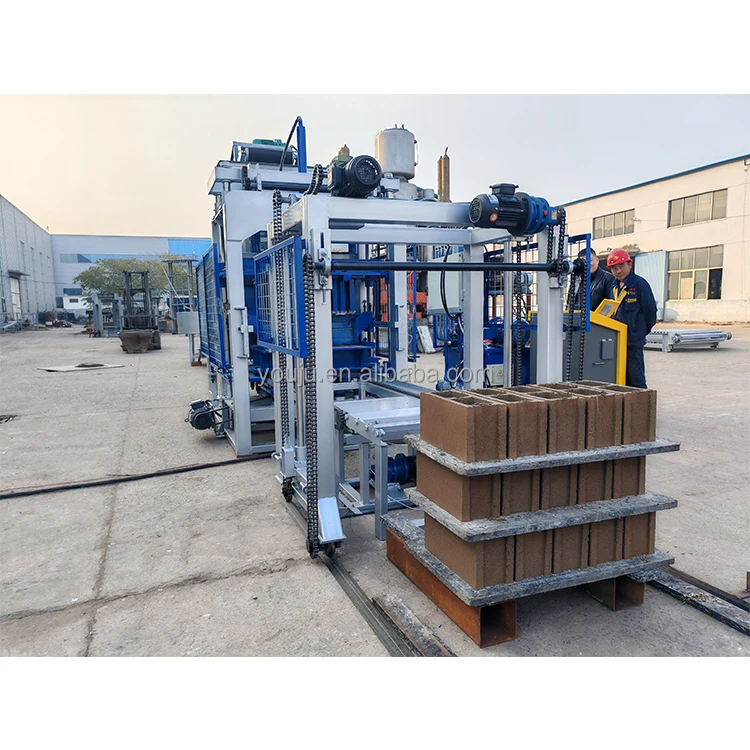


Description
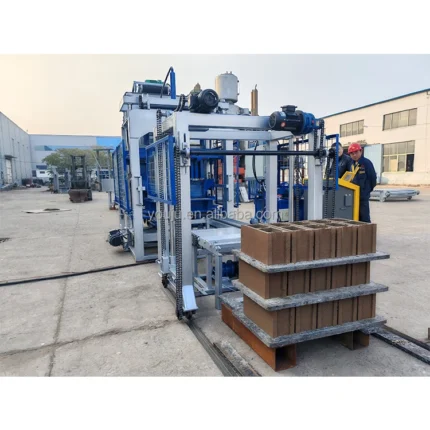
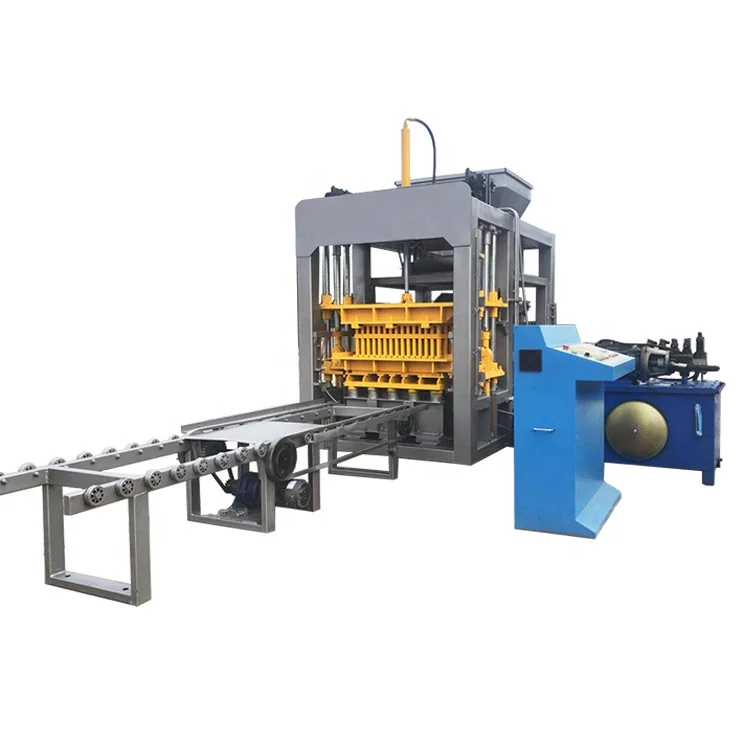
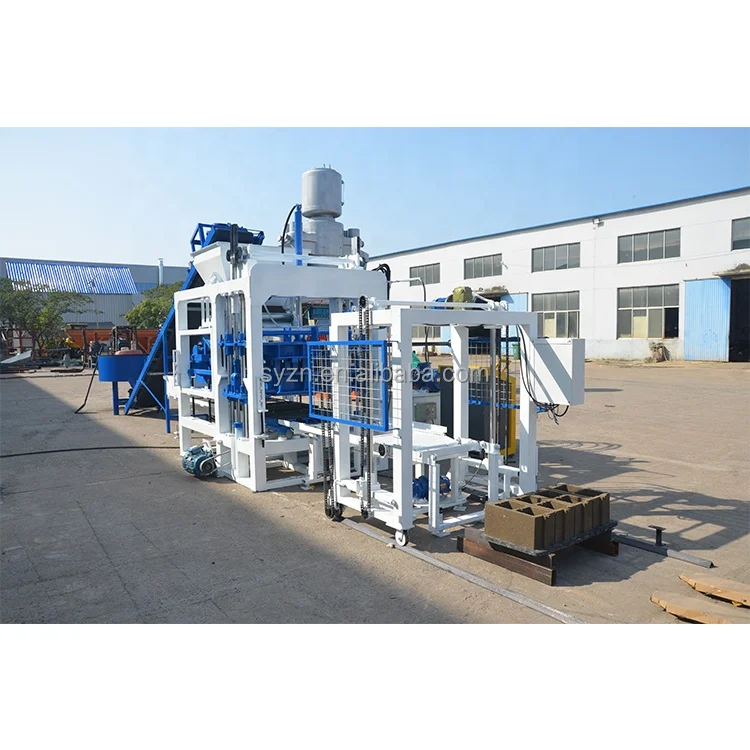
Integrated control systems — The QT4-15 coordinates pallet feeding, vibration, and hydraulic demoulding through a single PLC logic sequence, ensuring every cycle mirrors the last without relying on operator timing.
Technical Specifications
| Parameter | Value |
|---|---|
| Model | QT4-15 |
| Product Type | Hydraulic Automatic Block Making Machine |
| Control System | PLC controlled |
| Pallet Size | 900 x 500 mm |
| Vibration Type | Platform vibration |
| Vibration Frequency | 50–70 Hz |
| Product Height Range | 50–220 mm |
| Overall Power | 24.5 kW |
| Demoulding Method | Hydraulic |
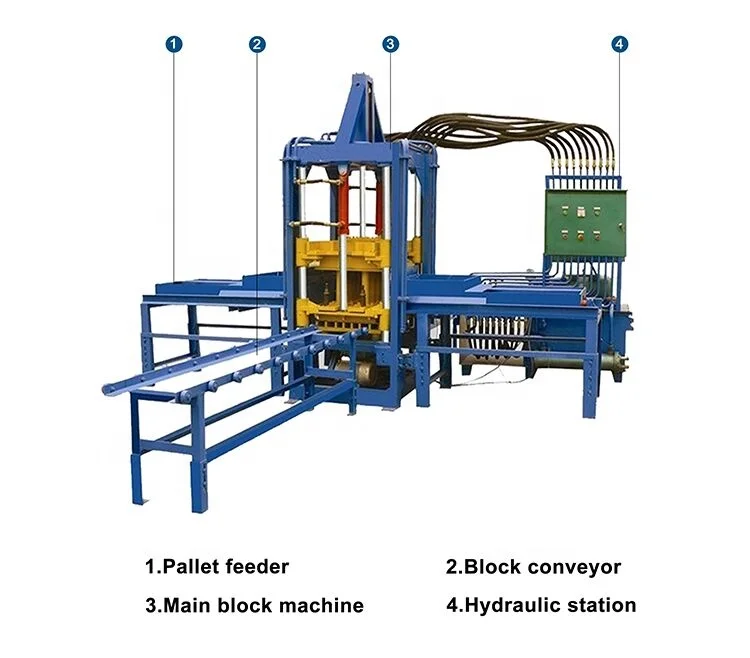
| Automation Level | Automatic (pallet feeding, material feeding, vibrating, demoulding) |
| Moulding Cycle | 15–30 s (basis not stated in source — confirm block format / material / thickness) |
| Block Compressive Strength | More than 15 MPa (source value — verify against manufacturer catalog) |
| Electrical & Hydraulic Components | Original imported or China famous brand (source value — verify against manufacturer catalog) |
Application Suitability
| Application | Material or Output |
|---|---|
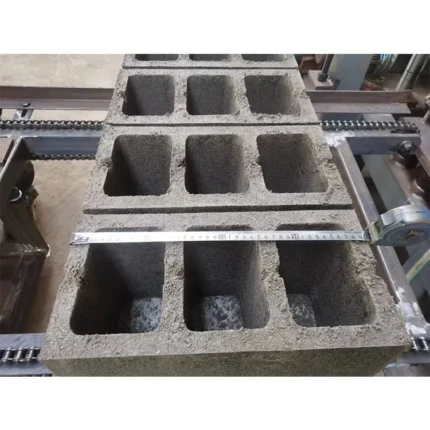
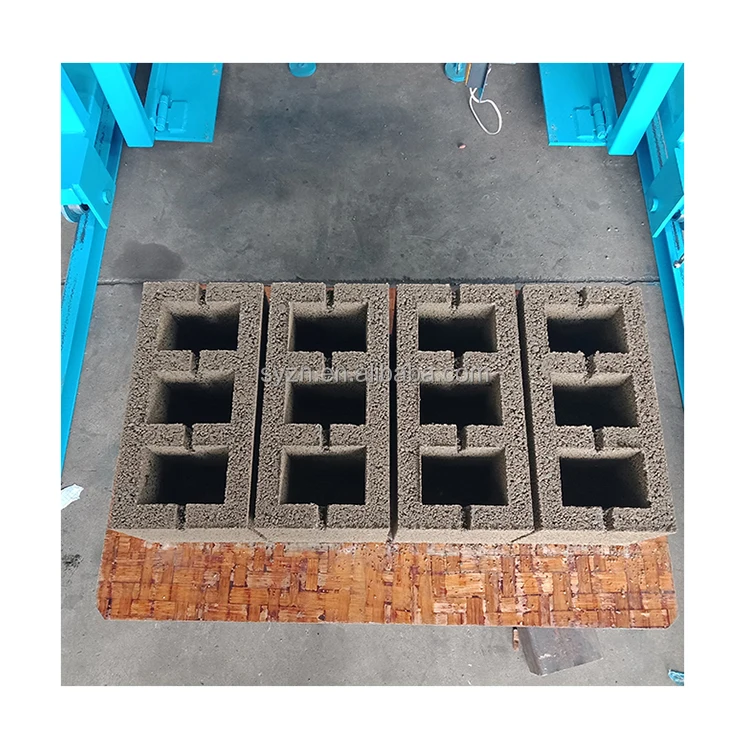
| Hollow block production | Flyash, slag, sand, crushed stone, cement, water and industrial residues |
| Paver brick production | Crushed stone, sand, cement, pigment for colour layers |
| Solid brick production | Flyash, gangue, slag, sand, cement |
| Mid-size block plants | Multiple format output on one 900 x 500 mm pallet platform |
| First-time block entrepreneurs | Semi-to-automatic upgrade path as production scales |
Why PLC Language Confirmation Must Happen Before Crating
A misconfigured HMI language can halt a newly installed line on day one.
During an installation in West Africa, an automatic QT4-15 block making machine PLC controlled sat idle for an entire shift because the touch-screen interface was set to a language the operators could not read. The press was mechanically sound; the automation logic was correct; yet production waited for a language pack update. This is not an isolated event. Control interfaces are frequently confirmed late in the order cycle or left at factory defaults, creating avoidable delays once the machine is bolted to the floor. [NEED_CITE: PLC HMI language configuration best practices for exported machinery]
Coordination Between Stations Through a Single Logic Loop
The QT4-15 runs its pallet feed, material distribution, vibration, and hydraulic ejection from one PLC programme rather than from independent timers on each station. This means the cycle sequence adapts when a parameter changes — for instance, extending vibration duration for a denser mix — without requiring the operator to adjust each sub-system separately. The result is consistent density across batches, which matters when the local aggregate varies from one delivery to the next.
Remote Diagnostics and the Upgrade Path
Because the control architecture is software-driven, fault codes can be read remotely when the buyer connects the cabinet to a network. This matters most during the first weeks, when unfamiliar alarms can otherwise stop production while waiting for an on-site visit. The same PLC platform supports future additions — an automatic stacker or a cubing station — without replacing the core controller, so the automatic QT4-15 block making machine PLC controlled grows with the plant. [NEED_CITE: remote diagnostics adoption in block production lines]
Reading the Specification Sheet Beyond Cycle Time
The vibration frequency range of 50–70 Hz works in concert with hydraulic pressure to compact the mix; raising frequency alone without matching pressure produces a block that looks dense on the outside but crumbles at the core. The 900 x 500 mm pallet dimension must be checked against the curing racks and forklifts already on site — a mismatch means either new racking or hand-stacking, negating the automation investment. The 50–220 mm product height range allows the same press to produce a 60 mm paver and a 200 mm hollow block simply by swapping moulds, yet the cycle time for each format differs, so the quoted 15–30 s range must be narrowed per product before capacity planning begins.
The Hidden Cost of Skipping Automation Verification
Buyers sometimes compare quotations on press price alone, overlooking which automation stations are included. If pallet feeding and demoulding are automatic but stacking is manual, the labour saved at the press is partly offset by workers moving wet blocks by hand to the curing area. Similarly, if the voltage and frequency are assumed rather than confirmed, a 400 V / 50 Hz cabinet arriving at a 415 V / 60 Hz site will require a transformer or face motor burnout. These oversights do not appear on the spec sheet but they do appear on the commissioning invoice. [NEED_CITE: common electrical mismatch issues in imported industrial machinery]
Why Buyers Source This Line Here
Block machinery is the single manufacturing focus, so the QT4-15’s mould, pallet, and handling equipment are specified as one matched set rather than sourced from separate vendors. The configuration is adjusted against the buyer’s actual mix design and local aggregate, not copied from a catalogue default. Moulds are designed for the formats the buyer’s market demands, including custom drawings when standard sizes do not fit. Automation level is selectable — the plant can start with automatic pallet and material feeding, then add stacking later without replacing the controller. Installation includes operator training so the crew understands the PLC menus before the technician leaves site.
Documentation & Verification
- Machine specification sheet with voltage, frequency, and PLC language confirmed per order
- Mould drawing and format list matching the buyer’s target block dimensions
- Line layout showing pallet flow from press through curing rack to stacking zone
- Factory test record run on the buyer’s specified block format before crating
- Hydraulic and electrical schematic for on-site troubleshooting
- Operation and maintenance manual with wear-part replacement intervals
Installation, Commissioning & Support
- Foundation plan sized to the 24.5 kW load and platform vibration footprint of the QT4-15
- Dedicated electrical circuit confirmed for the buyer’s voltage and frequency before dispatch
- Machine shipped in dismantled state with labelled components for on-site reassembly
- First-run parameter tuning with the buyer’s local aggregate and cement ratio
- Operator training covering PLC menu navigation, mould changeover, and daily checks
- Wear parts list with reorder codes for hydraulic seals and vibration springs
Planning Your Enquiry
To receive a configuration that matches your plant rather than a generic quotation, please share the block formats you intend to produce, the daily volume you target for each format, the local aggregate and cement type available, your site’s voltage and frequency, and your preferred PLC display language. If you already operate curing racks or forklifts, include their dimensions so the pallet specification aligns with your existing handling equipment.
Frequently Asked Questions
Q: How is the output capacity verified and what block format does each figure assume?
A: Every capacity figure must state the block format, mould cavity count, and cycle time it assumes. For the QT4-15, hollow block 400×200×200 mm is rated at 900–1200 pieces per hour based on 4 pieces per mould and a 15–20 s cycle. Other formats yield different volumes. Always request the calculation per product, not just a blanket hourly number.
Q: What PLC control language and HMI display options are available for my market?
A: The HMI language is configured before the control cabinet leaves the factory. Common options include English, French, Spanish, Arabic, and Russian, among others. Confirming the display language during the order stage avoids a situation where operators cannot navigate menus on the first day of production.
Q: How does the automation level compare to semi-automatic alternatives, and what is the upgrade path?
A: The QT4-15 automates pallet feeding, material feeding, vibration, and hydraulic demoulding within one PLC loop. A semi-automatic press leaves pallet handling to the operator. The same PLC platform later accepts stacking and cubing stations, so the plant can expand automation without replacing the core controller.
Q: What voltage and frequency configurations are supported, and how is this confirmed before shipment?
A: Standard configurations cover common industrial voltages and 50 or 60 Hz frequencies. The exact voltage, frequency, and plug standard are confirmed in writing during the order process, then verified on the factory test record before crating, ensuring the motor and PLC match the buyer’s grid on arrival.
Q: How does the mould change system work, and what is the realistic changeover time?
A: Moulds are bolted to the press head and vibration table on the 900×500 mm pallet footprint. Changeover involves releasing the clamp set, lifting out the current mould, and seating the replacement. Actual time depends on crew familiarity and tooling available on site; buyers should plan a full shift for the first change and expect improvement after practice.