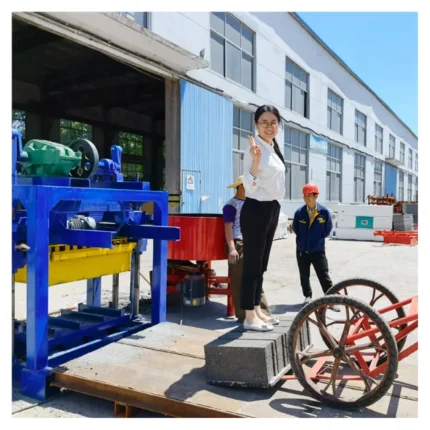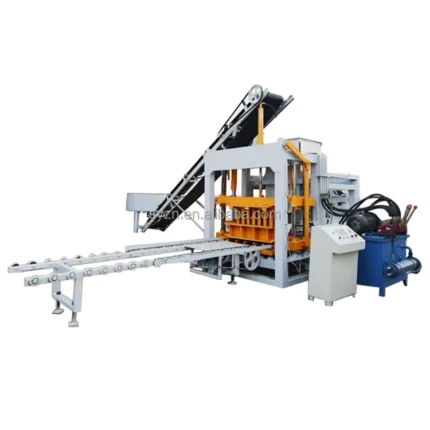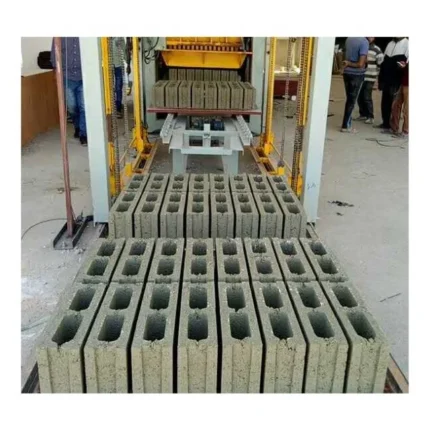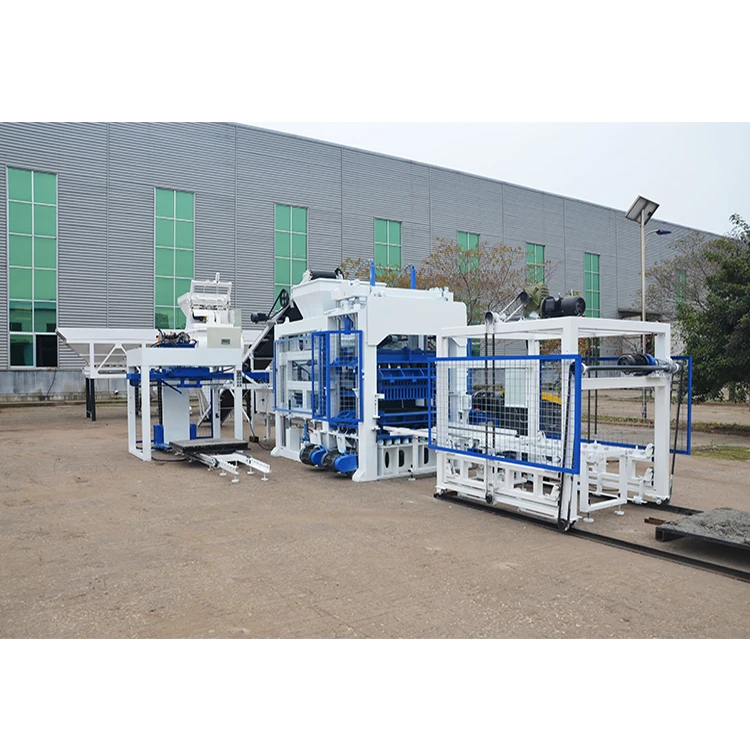
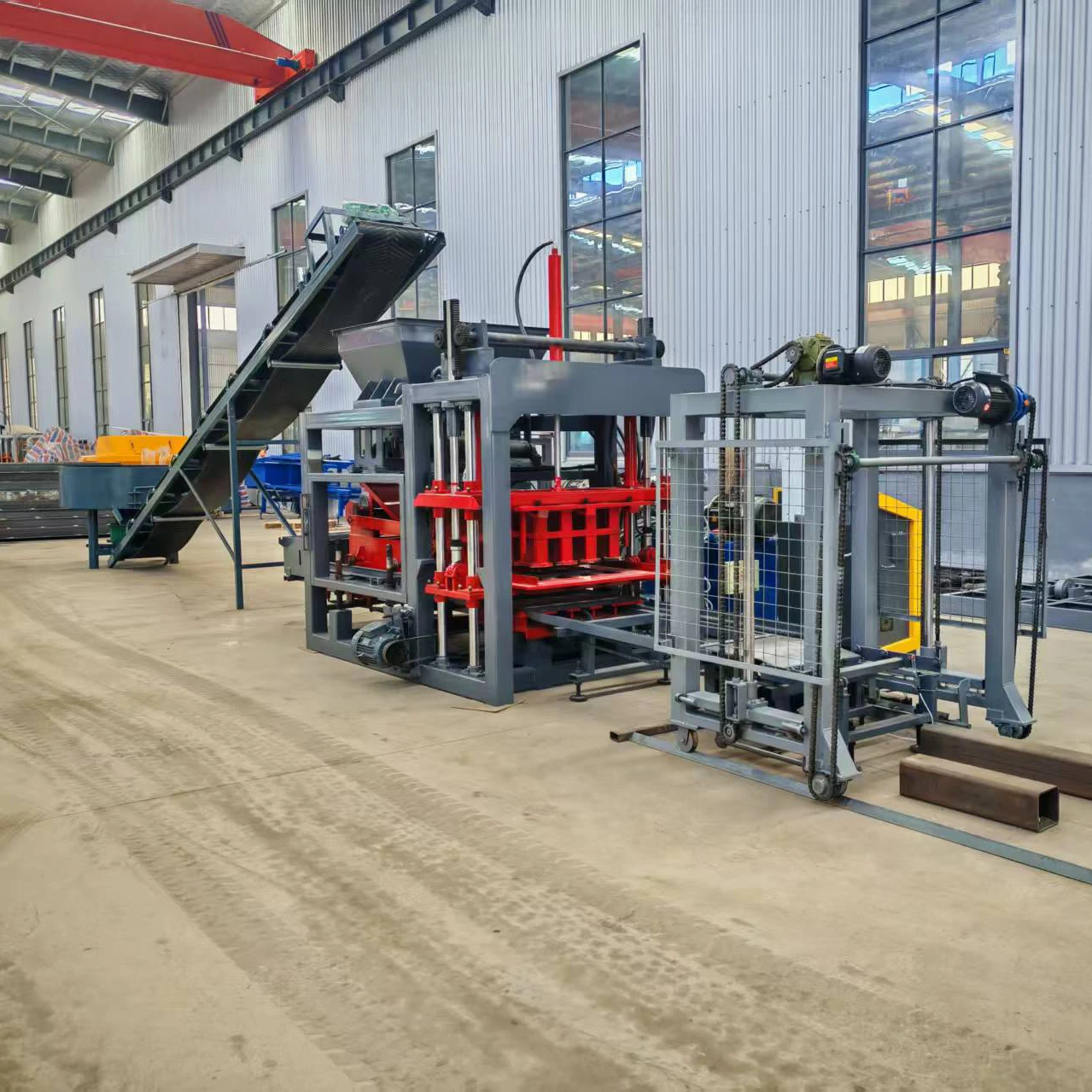
Description
Configured for the buyer’s actual mix — QT4-15A block machine pressure and vibration settings are matched to local aggregate and target format before dispatch, not left at catalogue defaults.
Technical Specifications
| Parameter | Value |
|---|---|
| Model | QT4-15A |
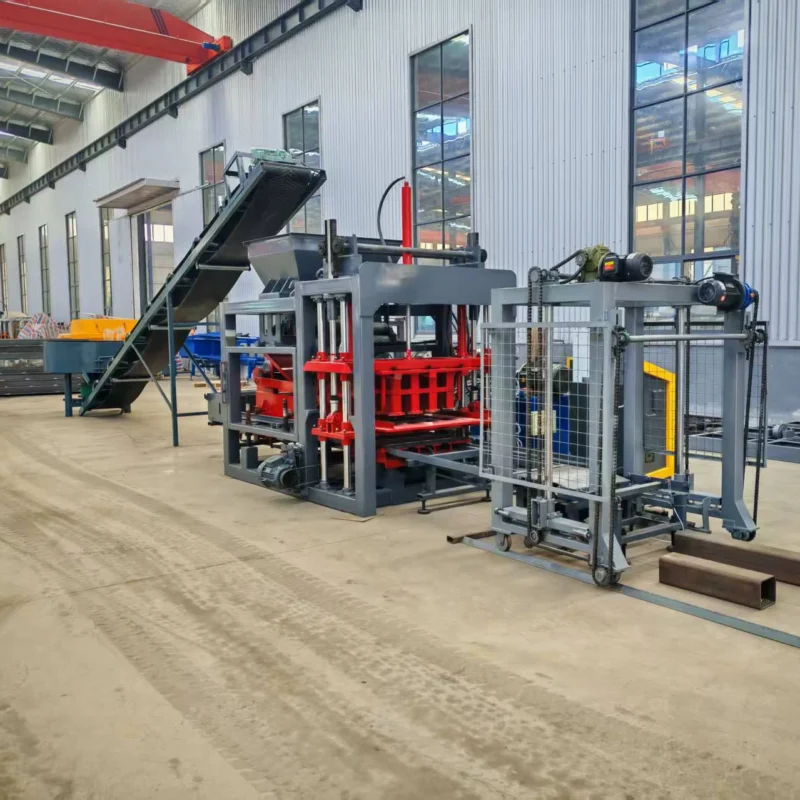
| Product Type | Fully Automatic Concrete Block Making Machine |
| Overall Dimensions (L×W×H) | 4100×1600×2600 mm |
| Rated Pressure | 16–21 MPa |
| Main Vibration Form | Platform Vibration |
| Vibration Frequency | 4200 r/min |
| Vibration Force | 55 kN |
| Pallet Size | 880×550 mm |
| Molding Cycle | 25–30 s (basis to be confirmed) |
| Overall Power | 18.45 kW |
| Total Mass | 4 T |
| Demolding Method | Hydraulic |
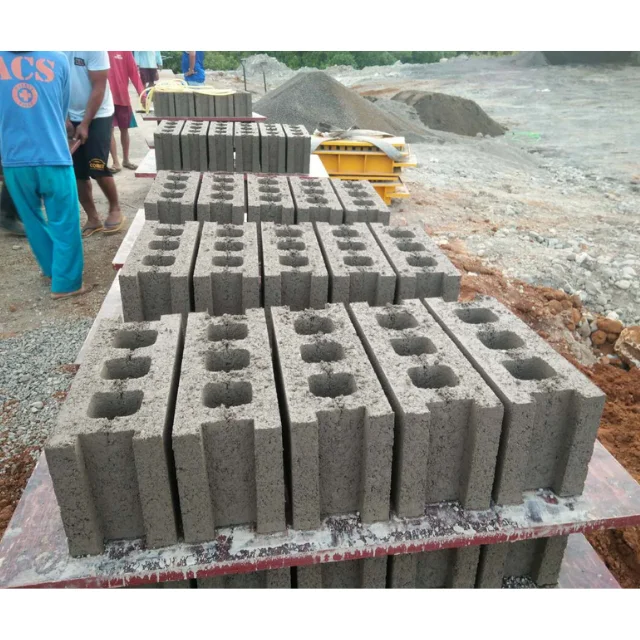
| Applied Products | Concrete blocks, hollow blocks, solid blocks, pavers, interlocking blocks, curbstone, colored pavers |
| Raw Materials | Crushed stone, sand, cement, dust, fly ash, gravel, slag |
| Automation Level | Fully automatic |
| Warranty | 1 year |
Application Suitability
| Application | Material or Output |
|---|---|
| Hollow block production | Crushed stone and cement mixes for structural wall units |
| Solid block production | Sand, fly ash and cement blends for load-bearing blocks |
| Paving block production | Fine aggregate and cement for driveways, walkways and plazas |
| Interlocking brick production | Gravel and cement for retaining walls and slope protection |
| Curbstone production | Coarse aggregate and cement for road edging and drainage channels |
| Colored paver production | Pigmented cement and sand for decorative hardscape surfaces |
What "25–30 Second Cycle" Leaves Out
A molding cycle number means nothing unless the block format, material profile and thickness are stated alongside it.
The automatic QT4-15A block making machine PLC controlled cycle time is published as 25–30 seconds, but that figure assumes a specific block format and mix density that must be confirmed against your production target. I have watched plants commission a press only to discover the hollow block cycle is noticeably longer than the paver cycle, throwing daily output projections off entirely [NEED_CITE:]. When the target format changes, vibration duration, hydraulic dwell and feeding time all shift. Without a per-format capacity calculation, the quoted cycle becomes a best-case scenario that rarely survives the first production week.
PLC Logic That Removes Operator Guesswork
The automatic QT4-15A block making machine PLC controlled system manages the full pressing sequence from material feed through demolding. Once the operator selects the block program, the controller governs vibration timing, hydraulic pressure application and pallet advance without manual intervention. This keeps block density consistent from the first pallet of the shift to the last, which is where manually operated presses tend to drift.
The Upgrade Path From Semi-Automatic to Fully Automated
A plant that starts with manual pallet handling and semi-automatic stacking can add automatic pallet feeding, stacking and cubing to the QT4-15A line as production volume grows. The press itself does not need replacement — the automation stations bolt on around it. This means the initial investment in the block machine is protected, and the plant scales without a full line teardown and reinstall [NEED_CITE:].
How Pressure and Vibration Work Together on the Pallet
The 16–21 MPa hydraulic pressure range and 55 kN vibration force on the 880×550 mm pallet must be read as a matched pair, not isolated figures. Vibration consolidates the mix into the mould cavity while hydraulic pressure compresses it from above. If pressure is set too high for the vibration frequency, the top surface cracks before the core is fully compacted. If vibration runs too long without sufficient pressure, the block holds shape but lacks the compressive strength the market demands. The QT4-15A adjustable pressure range lets the commissioning engineer dial in the balance that suits the buyer’s specific aggregate grading and cement content, rather than locking in a single factory preset. Pallet size also matters here: 880×550 mm determines how many blocks fit per cycle, and the pallet must match both the curing rack spacing and the forklift tines already in use at the plant [NEED_CITE:].
The Cost of Skipping Voltage Confirmation
A PLC display in the wrong language and a motor wound for the wrong frequency turn commissioning week into a troubleshooting week. Voltage and frequency confirmation should happen before production starts, not after the container arrives. When a 50 Hz motor runs on a 60 Hz supply, the vibration frequency overshoots the rated 4200 r/min and wear accelerates through bearings and hydraulic seals. Language mismatch on the HMI means operators cannot read fault codes, so every alarm becomes a phone call instead of a screen-tap fix.
Why Source the Full Line From One Supplier
Block machine, moulds, pallets and handling equipment specified as one system arrive ready to connect, avoiding the integration gaps that appear when stations come from separate vendors. The QT4-15A configuration is set against the buyer’s raw material samples and target block formats, not pulled from a generic catalogue page. Mould design covers the formats the local market actually sells, with custom drawings available for non-standard profiles. Automation level is selectable at order and expandable later, so the plant does not overpay for features it is not ready to use. Installation support includes operator training on the specific PLC programs loaded for the buyer’s product range [NEED_CITE:].
Documentation & Verification
- Line layout showing QT4-15A footprint within the 300 m² factory area allocation
- Capacity calculation table stated per block format, not a single aggregate figure
- Hydraulic and electrical schematics matching the confirmed voltage and frequency
- Factory test record on buyer’s target block format before container loading
- Wear parts list covering mould liners, hydraulic seals and vibration motor brushes
- Operation manual in the confirmed PLC display language
Installation, Commissioning & Support
- Foundation pad must support 4 T machine mass plus dynamic vibration loads at 4200 r/min
- Dedicated electrical circuit sized for 18.45 kW total power draw at confirmed voltage
- Hydraulic lines pre-assembled and pressure-tested to 21 MPa before dispatch
- On-site commissioning includes PLC parameter tuning to buyer’s mix design
- Operator training covers mould change procedure and cycle program selection
- Wear parts stock recommended for first twelve months based on production schedule
What to Include in Your Inquiry
Send the target block formats with dimensions, the daily output you need per format, and a sample or lab report of your local aggregate. Confirm the site voltage, frequency and the language your operators read on a control screen. If you already have curing racks or forklifts, share the pallet dimensions they accept so the 880×550 mm pallet is validated against your existing handling setup.
Frequently Asked Questions
Q: How is the 25–30 second molding cycle verified per block format?
A: The published cycle assumes a specific block size, mix density and thickness. Before production, we run a factory test using your confirmed format and material profile, then document the actual cycle time for each block type in the capacity calculation sheet. This becomes the baseline for daily output planning rather than an unverified catalogue number.
Q: What PLC brand and display language ship with the machine?
A: The PLC brand and HMI language are confirmed during the quotation stage based on your operator team’s requirements and local service availability. The control logic can be expanded later to accommodate additional automation stations such as automatic stackers or cubing units without replacing the main controller.
Q: How are the 16–21 MPa pressure and 55 kN vibration matched to my aggregate?
A: We request a raw material sample or lab analysis before finalizing machine settings. During commissioning, the hydraulic pressure and vibration duration are adjusted against the actual mix to reach the compressive strength your market requires, then locked into the PLC program for repeatable production.
Q: Is automatic pallet feeding and stacking included in the standard package?
A: The standard QT4-15A package covers the press, hydraulic system and PLC control. Pallet feeding, stacking and cubing stations are configurable additions. A plant can start with manual handling and bolt on automation modules later as production volume increases, without replacing the core machine.
Q: What electrical confirmation is needed before production begins?
A: We require written confirmation of site voltage, frequency and phase configuration before the motor and control panel are assembled. This prevents commissioning delays caused by mismatched electrical standards and ensures the PLC, vibration motor and hydraulic pump all operate within rated parameters from day one.