

Description
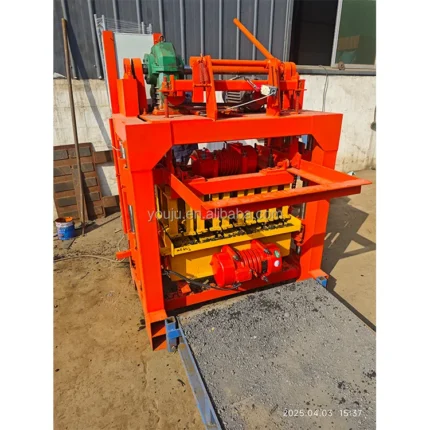
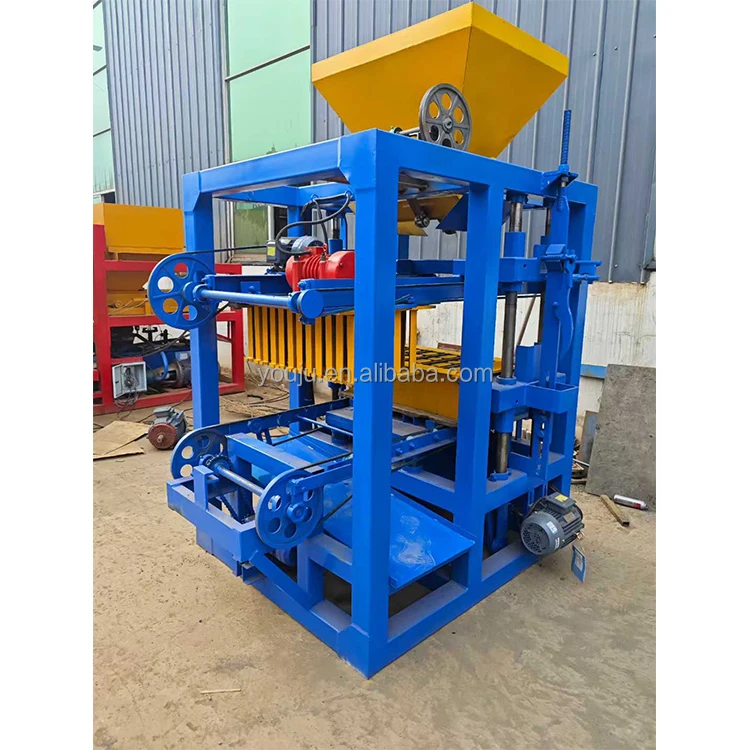
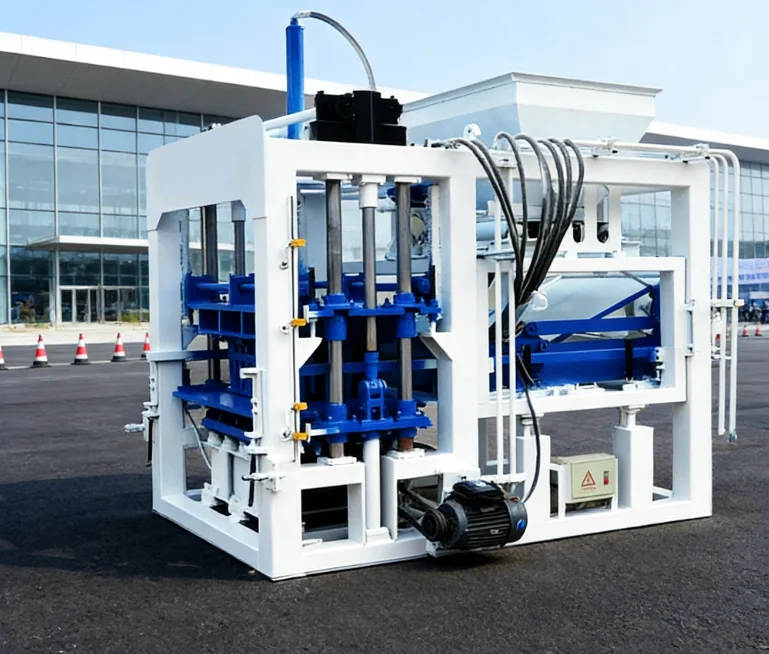
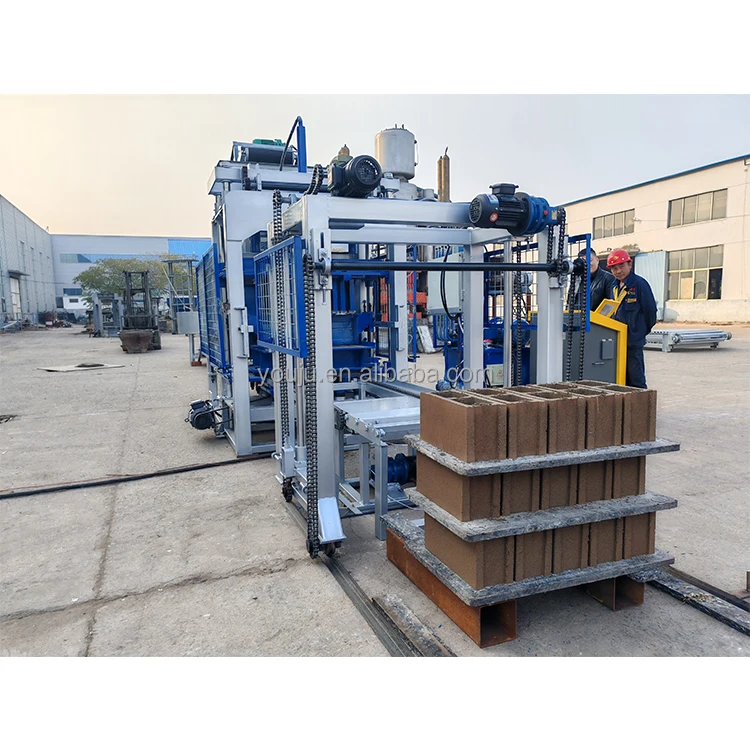
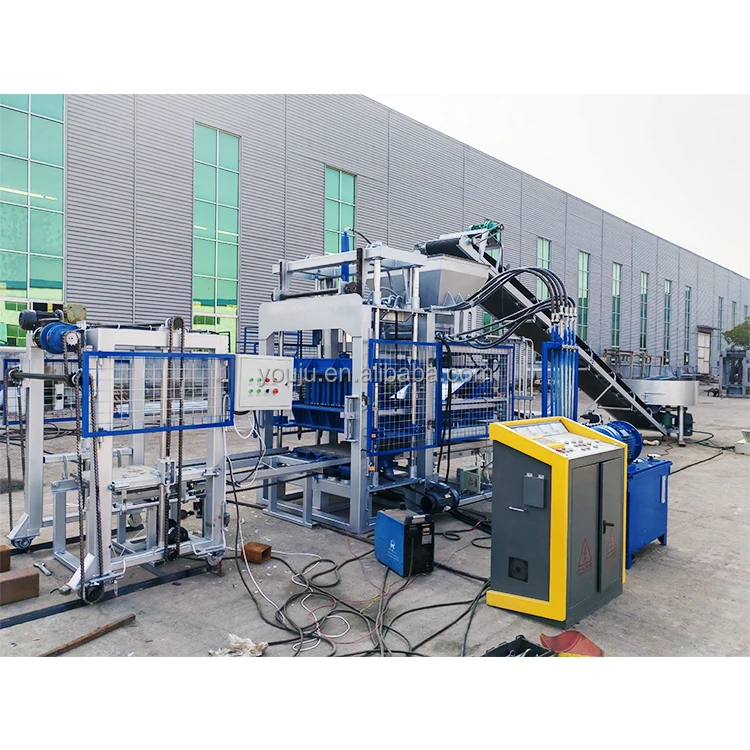
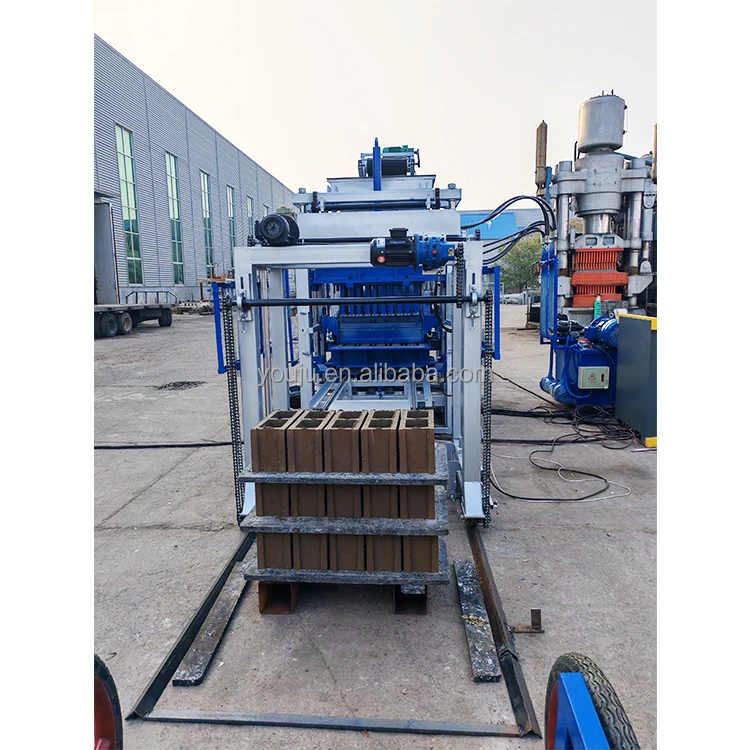
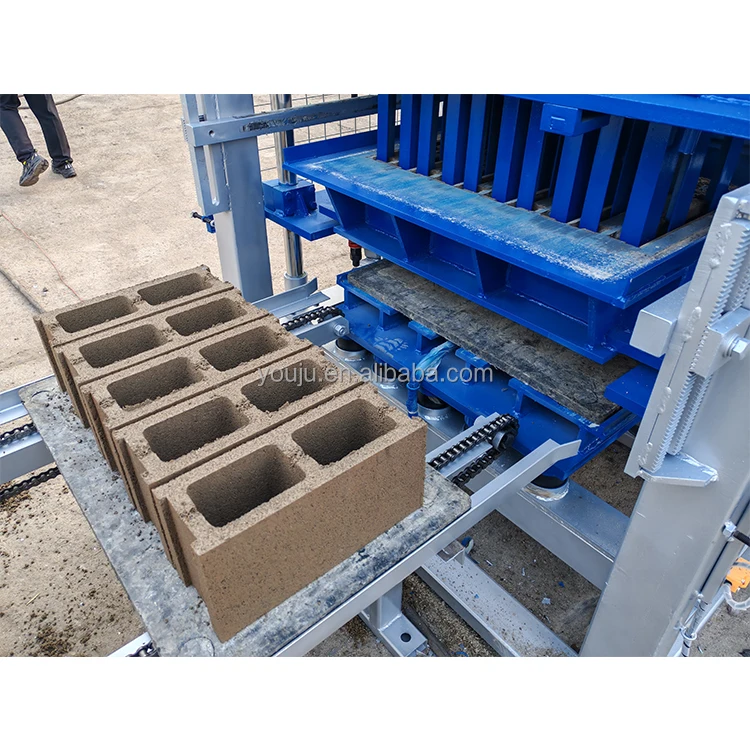
Matched Automation — the QT4-15 hydraulic block making machine synchronizes PLC logic with pallet feeding, vibration, and hydraulic demolding so the operator monitors the cycle rather than driving it.
Technical Specifications
| Parameter | Value |
|---|---|
| Model | QT4-15 |
| Product Type | Hydraulic Block Making Machine |
| Control System | PLC controlled |
| Molding Cycle | 15-30s |
| Vibration Type | Platform vibration |
| Vibration Frequency | 50-70Hz |
| Demolding Method | Hydraulic |
| Pallet Size | 900x500mm |
| Product Height Range | 50-220mm |
| Overall Power | 24.5kW |
| Block Compressive Strength | More than 15 MPa |
| Output Capacity (400x200x200mm hollow block) | 900-1200 pcs/hour |
| Output Capacity (400x150x200mm hollow block) | 1080-1440 pcs/hour |
| Output Capacity (400x100x200mm hollow block) | 1440-1920 pcs/hour |
| Output Capacity (200x100x60mm paver) | 2880-3840 pcs/hour |
| Output Capacity (240x115x53mm solid brick) | 5930-6720 pcs/hour |
| Mould Formats | Hollow block, paver brick, solid brick |
| Raw Materials | Flyash, slag, gangue, sand, crushed stone, cement, water |
| Standards | CE (source value — verify against manufacturer catalog) |
Application Suitability
| Application | Material or Output |
|---|---|
| Mid-scale hollow block production | Crushed stone, sand, cement, flyash blends |
| Paver manufacturing for landscaping and municipal projects | Fine aggregate mixes with pigment dosing |
| Solid brick runs for load-bearing walls | Standard sand and cement with slag addition |
| On-site production for housing developments | Locally sourced aggregate and industrial residues |
What "900 Pieces per Hour" Leaves Out on an automatic QT4-15 block machine
Cycle time only means something when it is tied to a specific block format and mould.
Most quotations list a single output figure and leave the buyer to discover, after installation, that the number assumed a small solid brick rather than the 400×200×200mm hollow block the local market actually demands. The automatic QT4-15 block machine quotes capacity per format: 900-1200 pieces per hour for the standard hollow block, up to 6720 for solid brick. Without that breakdown, a PLC controlled block making machine can look productive on paper and under-deliver on the shop floor. [NEED_CITE: block format assumptions in capacity quotations]
Removing the Operator from the Cycle
The PLC controlled block making machine sequences pallet feeding, material distribution, vibration, hydraulic pressing, and demolding as one continuous loop. The operator’s role shifts from timing each step manually to monitoring consistency and clearing faults. On the QT4-15, the platform vibration runs at 50-70Hz while hydraulic pressure locks the mould, producing blocks with compressive strength above 15 MPa without the variation that comes from manual timing.
Scaling Automation Without Replacing the Press
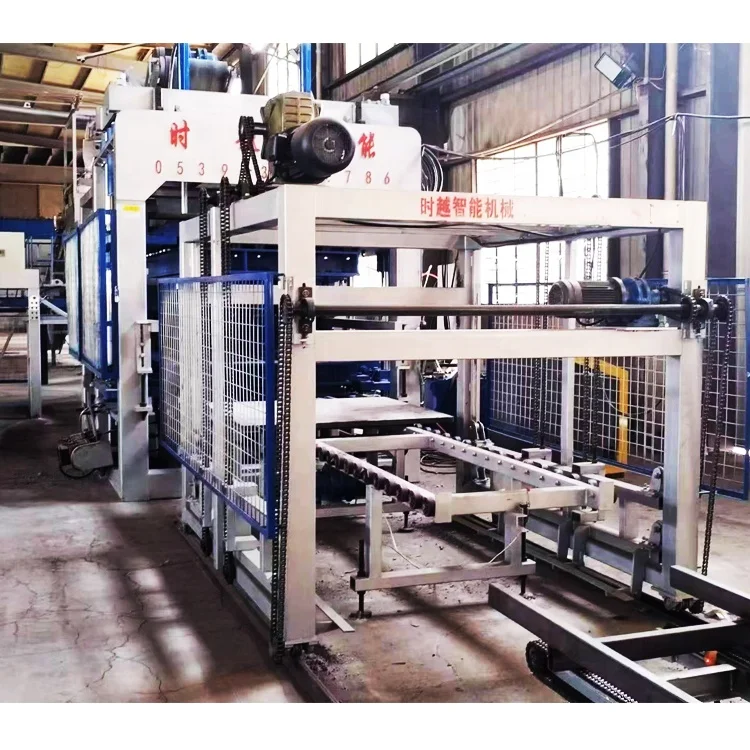
A buyer starting with the base QT4-15 configuration can run semi-automatic pallet handling and add automatic stacking or cubing later as volume grows. The PLC architecture supports this upgrade path because the I/O mapping for downstream stations is already reserved in the control logic. This means the automatic QT4-15 block machine grows with the plant instead of requiring a full press swap when the curing yard expands. [NEED_CITE: PLC I/O reservation for automation upgrades]
Reading the Specs That Actually Matter
Platform vibration at 50-70Hz combined with hydraulic demolding is what determines block density. A machine with strong vibration but weak hydraulic pressure produces blocks that look solid on the outside but crumble under load; the reverse gives dense but poorly finished surfaces. The 900×500mm pallet size must match the curing rack spacing and the forklift already on site — a mismatch here means blocks are double-handled before they even reach the yard. The 24.5kW overall power draw dictates the transformer and dedicated circuit the buyer must arrange before the machine arrives.
The Cost of Skipping Configuration Details
When voltage, frequency, and PLC display language are not locked in before production, the machine arrives with a control panel the operators cannot read and a motor wired for the wrong grid. Commissioning stalls, the engineer waits on-site, and the project schedule slips. Moulds specified without reference to the buyer’s actual block format force a second purchase within months. These are not equipment failures — they are specification gaps that surface only after the container is opened. [NEED_CITE: commissioning delays from unconfirmed electrical specifications]
Why Source This Machine Here
Block machinery is the sole focus of the production facility, so the QT4-15 press, mould, pallet, and handling equipment are specified as one matched system. Configuration is set against the buyer’s actual mix design and local aggregate, not pulled from a catalogue default. Mould design covers the formats the buyer’s market sells, with custom drawings available. Voltage, frequency, and control language are confirmed in the contract annex before any steel is cut. The automation level is selectable, allowing a buyer to start with the QT4-15 base and upgrade downstream stations without replacing the core press.
Documentation & Verification
- Line layout with capacity calculation per block format and assumed mould cycle
- Machine specification sheet covering hydraulic ratings and PLC I/O map
- Mould drawing and format list matched to buyer’s product range
- Voltage, frequency, and PLC display language confirmation before production
- Factory test record showing actual cycle times on buyer’s selected mould
- Hydraulic and electrical schematic for local maintenance teams
Installation, Commissioning & Support
- Foundation plan sized to the 900×500mm pallet footprint and 24.5kW power draw
- Dedicated circuit specification matching confirmed voltage and frequency
- Machine dismantled for container loading with reassembly guide on arrival
- PLC parameter tuning against buyer’s mix design during first production run
- Operator training on format changeover and fault clearing procedures
- Wear parts list covering hydraulic seals, vibration springs, and mould liners
Preparing Your Inquiry
Share the block formats your market moves, the daily volume you need per format, and the raw materials available locally. Confirm your site voltage, frequency, and preferred PLC display language so the control panel matches your operators. If you already run pallets, stacking racks, or forklifts on site, provide those dimensions so the 900×500mm pallet system integrates without rework.
Frequently Asked Questions
Q: How is output capacity verified per block format on the QT4-15, and what cycle time is assumed?
A: Each capacity figure is tied to a specific mould and its measured cycle. The factory test record documents actual cycles per format — hollow block, paver, and solid brick — so the buyer sees real throughput rather than a single generic number calculated from the fastest possible cycle.
Q: What PLC language options and voltage configurations are available for my target market?
A: The PLC display language is confirmed in writing before production begins, available in English and other languages on request. Voltage and frequency are matched to the destination grid, locked in the contract annex so the control panel and motor wiring arrive ready for local power. [NEED_CITE: voltage and frequency standards by export market]
Q: How long does a mould change take, and does the automation level affect format switching?
A: Mould changeover on the QT4-15 involves releasing hydraulic clamps and swapping the mould box. The PLC stores cycle parameters per format, so once the new mould is seated the operator selects the matching program and production resumes without manual retuning.
Q: Can the QT4-15 be upgraded with automatic stacking and cubing after initial installation?
A: Yes. The PLC reserves I/O channels for downstream automation stations. A buyer can begin with manual pallet handling and later add automatic stacking or cubing modules without replacing the press or rewriting the core control logic.
Q: What remote diagnostics or troubleshooting support is available through the PLC system?
A: The PLC logs fault codes and cycle data that can be reviewed locally or shared with the support team. Hydraulic and electrical schematics are provided so on-site technicians can trace issues without waiting for overseas visits.