

Description
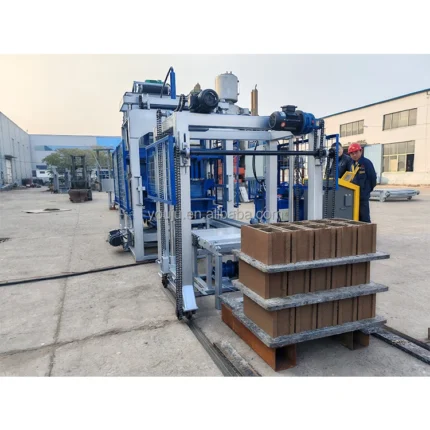
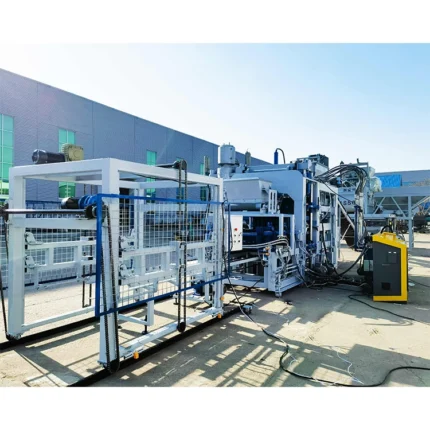
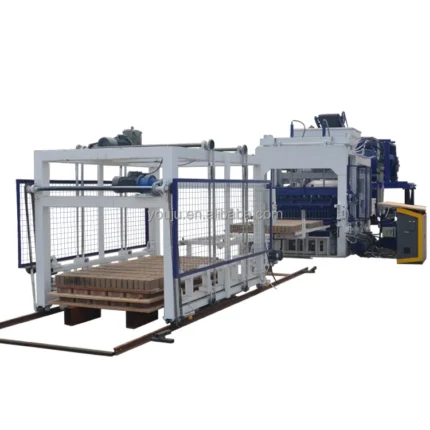
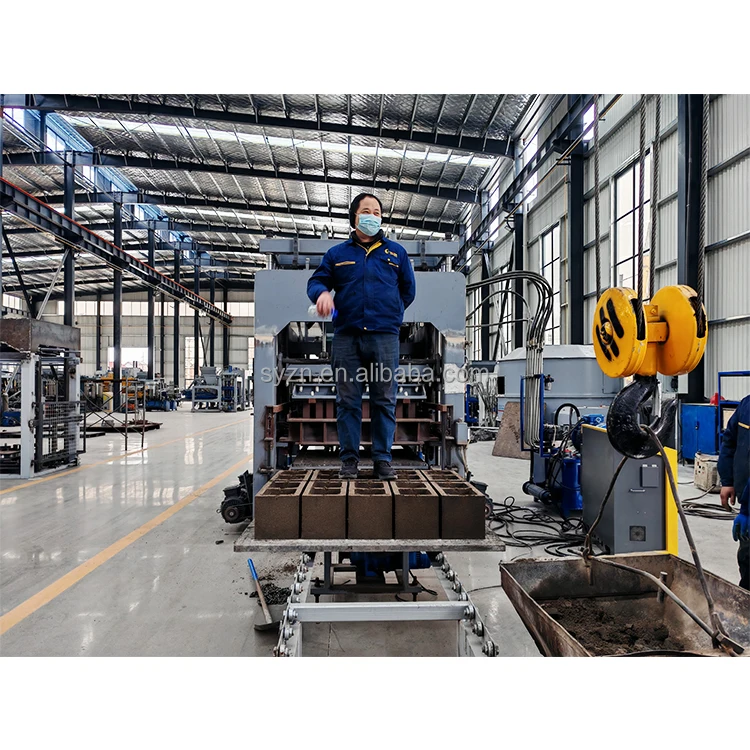
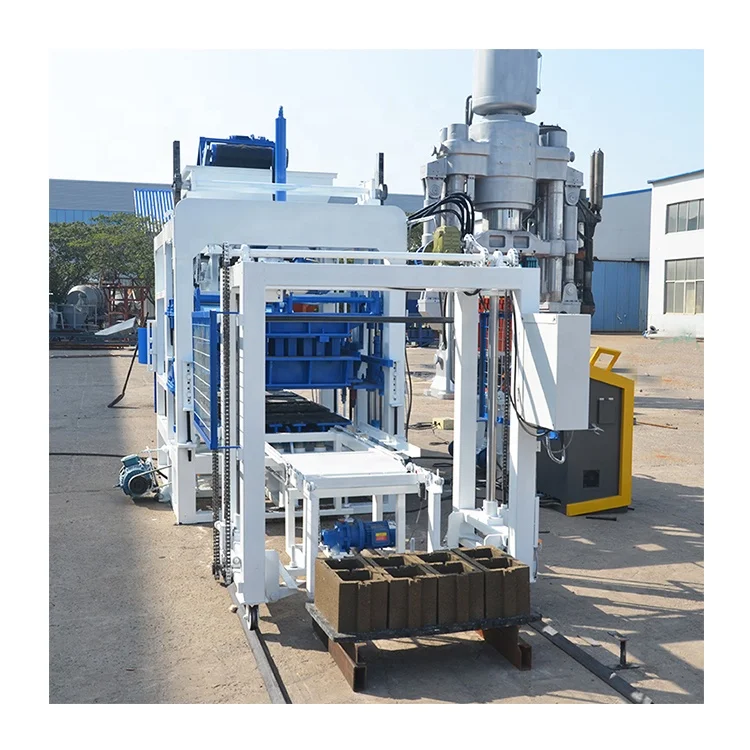
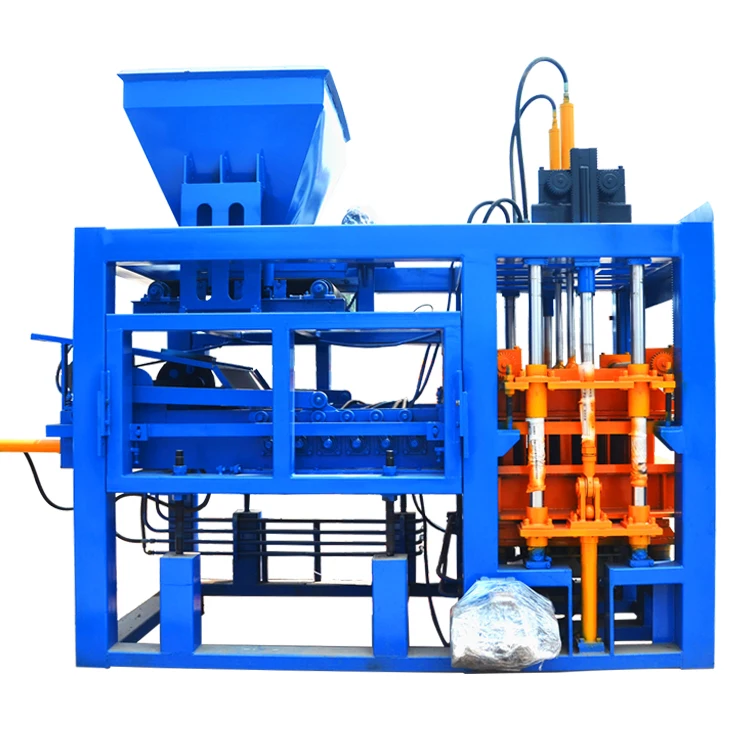
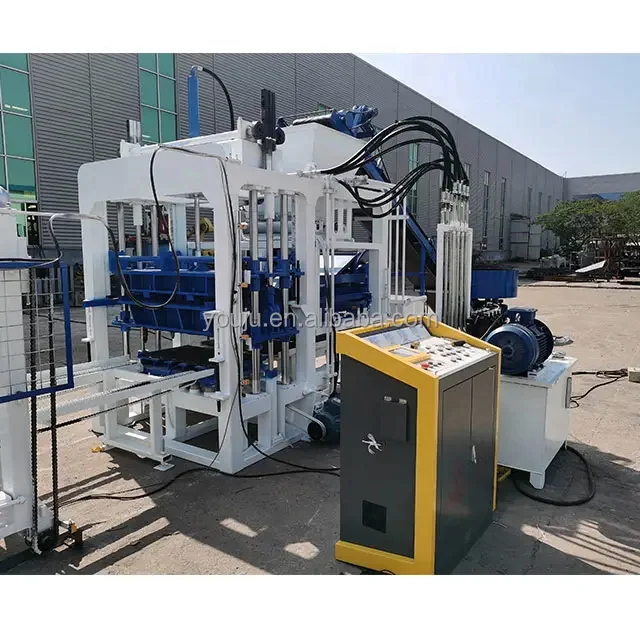
Control System Matched to Your Operators — The QT4-18 automatic block making machine PLC controlled configuration is verified for display language and voltage before assembly begins, so the team on your floor can run it from day one.
Technical Specifications
| Parameter | Value |
|---|---|
| Model | QT4-18 |
| Product Type | Automatic Hydraulic Block Making Machine |
| Host Machine Power | 27.5 kW |
| Vibration Force | 40 kN |
| Moulding Cycle | 15 s (basis not stated in source — confirm block format and material) |
| Pallet Size | 1020 × 570 mm |
| Overall Dimensions (L×W×H) | 7100 × 1600 × 2610 mm |
| Net Weight | 5 T |
| Mixer Model | JS500 |
| Voltage | 380 V (frequency to be confirmed: 50 or 60 Hz) |
| General Water Consumption | 4 T / day |
| Required Workers | 3–4 |
| Workshop Area | 150 m² |
| Control System | PLC (brand and HMI language to be confirmed) |
| Hydraulic Pressure | To be confirmed |
| Stacking Method | Configurable from manual to automatic stacking and cubing |
Application Suitability
| Application | Material or Output |
|---|---|
| Hollow block production | Crushed stone, sand, cement, water |
| Solid block production | Dense aggregate mix with cement binder |
| Paving block production | Fine aggregate and cement with colour pigment option |
| Kerbstone and interlocking brick | Specialty mould with adjusted vibration profile |
| Porous permeable brick | Open-graded aggregate with reduced hydraulic pressure |
Why the PLC Language Matters More Than the Cycle Time
A control panel your operators cannot read turns an automatic machine into a very expensive manual one.
I spent years on the procurement side in Southeast Asia, and I watched a fully automatic block press sit idle for a week because the HMI was locked to a language nobody on the floor understood. The electricians could wire it, the foundation was ready, the raw material was stockpiled — and still the line waited. When you evaluate an automatic QT4-18 block making machine PLC controlled setup, the conversation about control language and voltage format must happen before the purchase order, not after the container arrives [NEED_CITE: voltage and frequency standards by export market].
The same logic applies to the electrical supply. A 380 V system at the wrong frequency will run the motors, but the vibration profile and hydraulic timing will drift, producing blocks that look correct on the outside but fail compressive strength tests once cured.
Synchronising the Press With Upstream and Downstream Stations
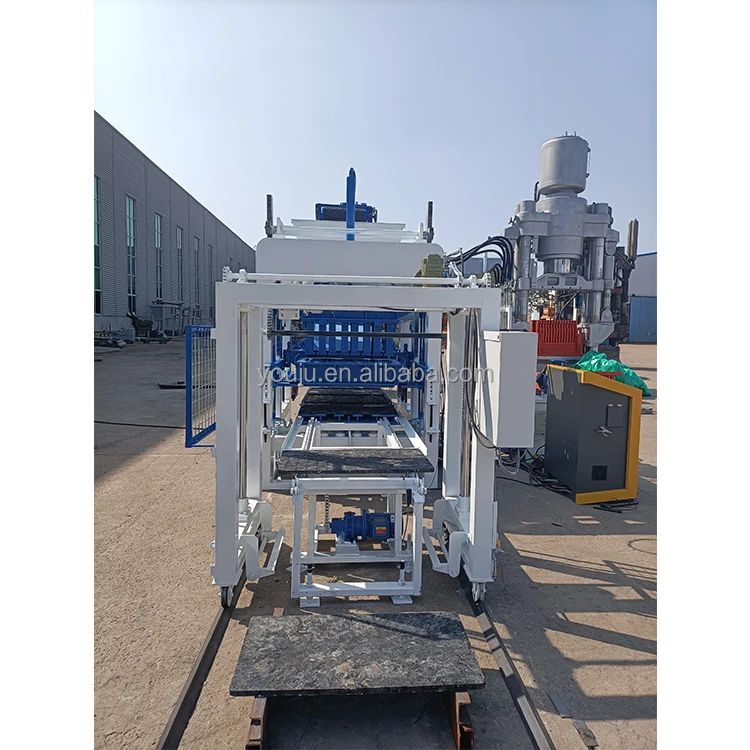
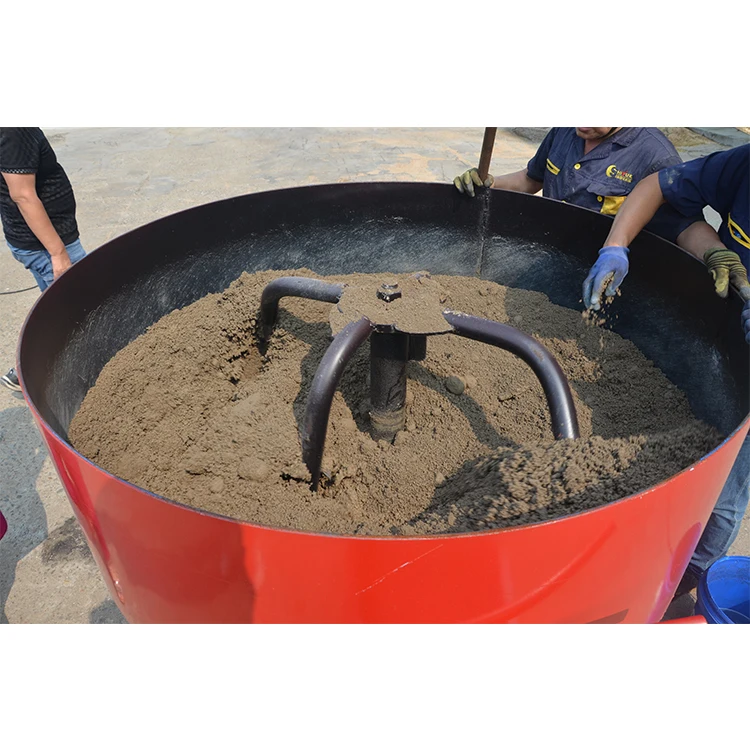
An automatic stationary block press does not work in isolation. The JS500 mixer must deliver a consistent batch to the hopper before the moulding cycle completes, and the pallet feeding system must place a fresh pallet under the press before the next stroke. When any station lags, the press idles and the quoted cycle time becomes irrelevant. The QT4-18 is configured so that its PLC communicates with the mixer discharge gate and the pallet feeder, keeping the line moving without operators manually triggering each step.
Choosing the Right Automation Level for Your Plant
Not every buyer needs full automatic stacking and cubing from the first day. Some plant owners start with semi-automatic pallet handling — workers pull the loaded pallets and move them to the curing area by hand — then add the automatic stacker later when volume justifies the investment. The QT4-18 supports this upgrade path because the PLC program includes the logic for downstream handling equipment even when those stations are not yet installed. When you are ready to add the stacker, the control system recognises it without a full program rewrite [NEED_CITE: PLC modular expansion in concrete product lines].
Reading the Specs That Actually Shape Your Output
The 40 kN vibration force is one half of the compaction equation. Hydraulic pressure provides the static squeeze while vibration rearranges the aggregate particles into a dense matrix. If your local aggregate is mostly rounded river gravel, the vibration needs to do more work than it would with angular crushed stone. Confirming the vibration-to-pressure balance against your specific mix design prevents the common problem where blocks crumble at the corners during demoulding.
The 1020 × 570 mm pallet size determines how many blocks you produce per cycle and whether those pallets fit your existing curing racks and forklift tines. Ordering pallets that are even slightly wider than your rack slots means rebuilding the curing area or replacing the pallets — both costly corrections that could have been avoided with a measurement check before production.
At 27.5 kW host machine power, the QT4-18 requires a dedicated circuit with proper transformer sizing. In regions where industrial voltage fluctuates, a stabiliser or isolation transformer protects the PLC and the hydraulic solenoids from spike damage.
The Cost of Skipping the Configuration Conversation
Buyers who select a block press based on a catalogue line item, without confirming the mould format, pallet material, or automation scope, often discover the real cost after commissioning. A machine quoted with a 15-second cycle may deliver that cycle on a small solid block, but the same cycle on a large hollow block could be 25 seconds or more — cutting daily output nearly in half. Pallets specified without regard to your curing climate may warp in high humidity, jamming the pallet feeder and stopping the line every few cycles [NEED_CITE: pallet material selection for tropical curing environments]. These are not warranty claims; they are configuration oversights.
Why Source the QT4-18 Through This Channel
Block machinery is our single focus, which means the press, mould, pallet, and handling equipment are specified as one matched system rather than assembled from separate suppliers. We configure the QT4-18 against your actual mix design, local aggregate, and target block format — not a catalogue default. Mould design covers the formats your market sells, including custom drawings if your buyers demand a shape outside the standard range. The automation level is selectable, so you can start semi-automatic and upgrade the stacking and cubing stations as volume grows. Installation support includes on-site commissioning and operator training so the team running the machine understands the PLC menus and the maintenance schedule from the first shift.
Documentation & Verification
- Line layout showing station spacing and pallet flow for the QT4-18 footprint
- Capacity calculation stating block format, cycle time, and daily output assumption
- Hydraulic and electrical schematic with confirmed voltage and frequency
- PLC program documentation in the buyer’s operating language
- Factory test record on the actual mould to be shipped
- Operation and maintenance manual with wear parts and mould list
Installation, Commissioning & Support
- Foundation plan matching the 7100 × 1600 mm footprint and 5 T operating weight
- Dedicated 27.5 kW circuit with voltage and frequency confirmed before wiring
- Machine shipped in dismantled state with labelled components for reassembly
- On-site commissioning including mould installation and first-cycle parameter tuning
- Operator training on PLC menus, mould change procedure, and daily checks
- Wear parts list and mould spares identified before the first replacement cycle
What to Include in Your Inquiry
Help us match the QT4-18 to your plant by sharing your target block formats, the daily volume you need per format, and the local aggregate you plan to use. Confirm your site voltage and frequency, the language your operators read, and whether your curing area uses racks or floor stacking. If you already have a mixer, conveyor, or forklift on site, list those so the line can be configured around them.
Frequently Asked Questions
Q: How is the 15 s moulding cycle verified for my specific block format and mix design?
A: The 15-second figure applies to a particular block size and material that must be confirmed. Before production, we run a factory test using your chosen mould and a mix sample representative of your local aggregate, then record the actual cycle time. That measured value — not the catalogue number — becomes the basis for your capacity calculation.
Q: Which PLC brand is used and can the HMI language be set before shipment?
A: The PLC brand is confirmed during the specification stage based on availability and your preference. The HMI display language is set to your operators’ language and verified during the factory test. We ship the PLC program documentation in the same language so your maintenance team can troubleshoot independently.
Q: What automation level is included — is pallet feeding, stacking and cubing part of the package?
A: The automation scope is configurable. A basic package may include only the press and pallet feeder with manual stacking. Automatic stacking and cubing stations are available as additions, and the PLC is pre-programmed to accept them later without replacing the controller. Your quotation lists exactly which stations are included and which are reserved for future expansion.
Q: How does the QT4-18 synchronize with upstream mixing and downstream curing equipment?
A: The PLC coordinates the mixer discharge gate, the pallet feeder, and the press stroke so that each station delivers before the next cycle begins. If you add a curing rack handler or cubing stacker later, the existing control logic recognises the new station and adjusts timing accordingly, keeping the line balanced without manual intervention.
Q: What is the upgrade path if I start semi-automatic and later add automatic stacking?
A: The QT4-18 PLC includes reserved I/O points and program blocks for automatic stacking and cubing. When you decide to add those stations, the hardware is bolted into position and connected to the existing panel. The PLC enables the new logic, and the upgrade is completed without replacing the controller or rewriting the core program.