
Description
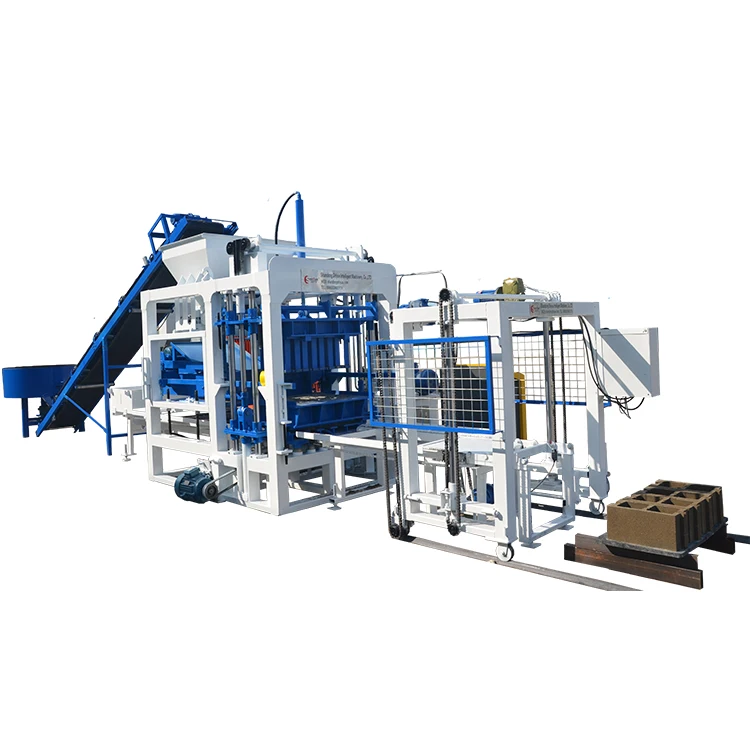
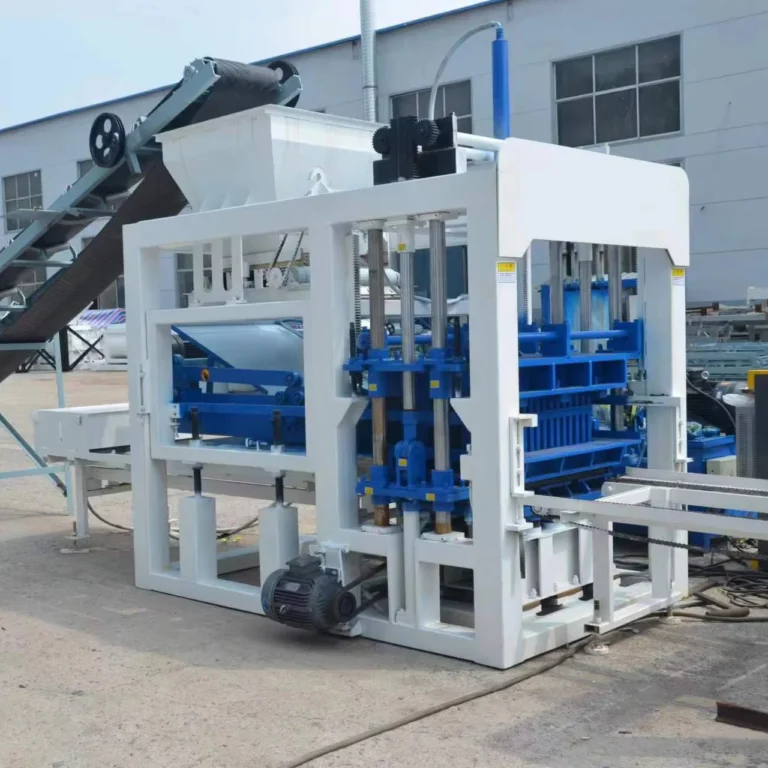
Automation That Matches the Operator — the QT4-18 pairs its PLC logic with confirmed display language and voltage, because a control system only works when the people running it understand what it says.
Technical Specifications
| Parameter | Value |
|---|---|
| Model | QT4-18 |
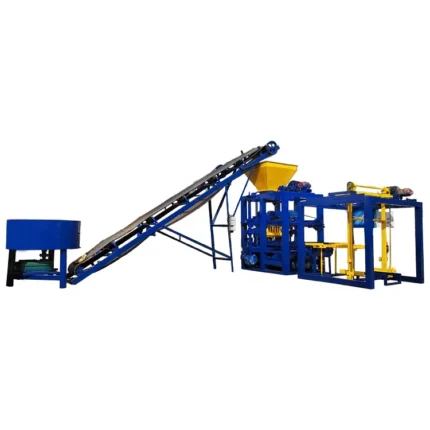
| Product Type | Automatic Hydraulic Concrete Block Making Machine |
| Overall Dimensions (L×W×H) | 3900×1600×2300 mm |
| Total Weight | 3T |
| Rated Power | 24KW |
| Molding Cycle | 15-25s |
| Exciting Power (Vibration Force) | 40-50KN |
| Mixer | JQ350 |
| Pallet Size | 850×550×25mm |
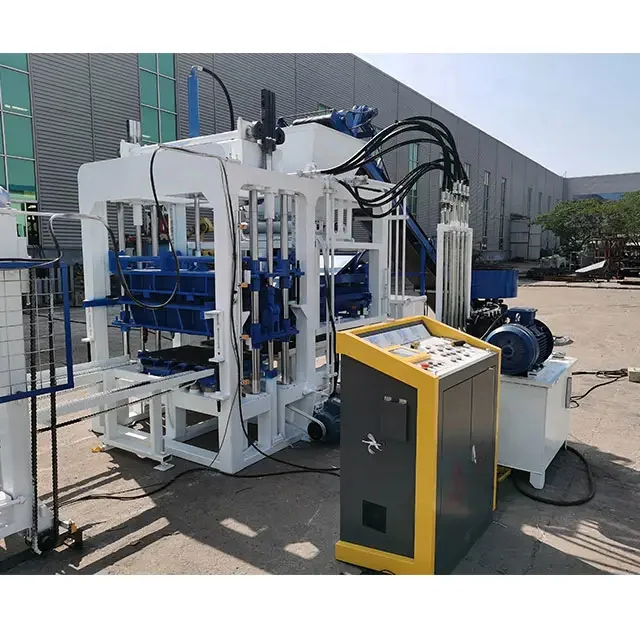
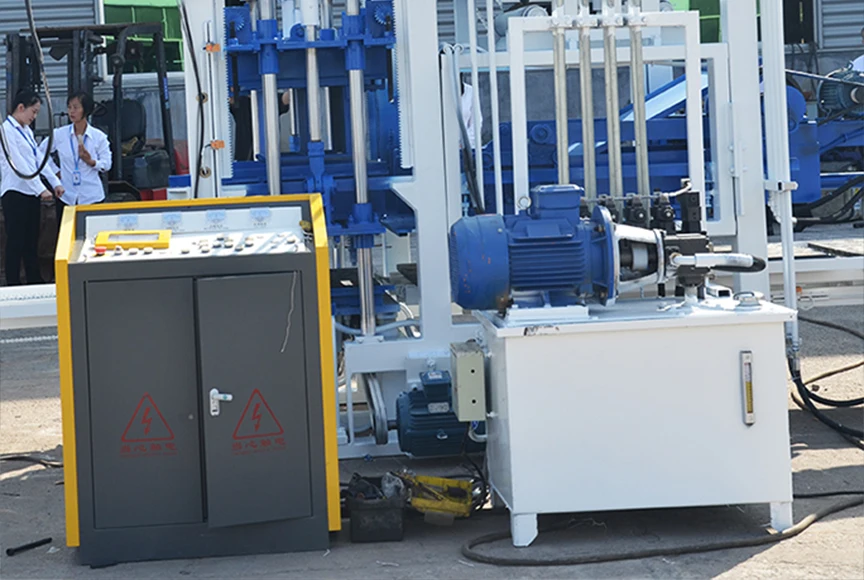
| Control System | PLC control system |
| Hydraulic Station | Included |
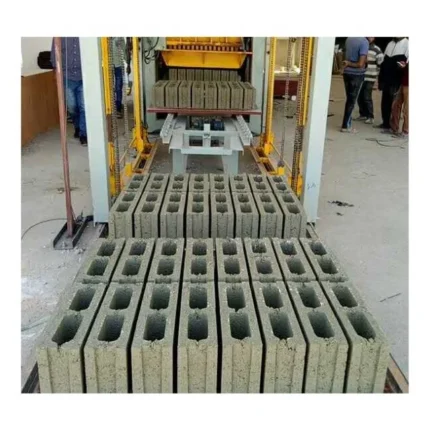
| Output Capacity (400×200×200mm Hollow Block) | 1200-1680 Pcs/Hr (9600-13440 Pcs/8hr) |
| Output Capacity (400×150×200mm Hollow Block) | 1800-2400 Pcs/Hr (14400-19200 Pcs/8hr) |
| Output Capacity (240×115×53mm Solid Brick) | 3240 Pcs/Hr (16200-19440 Pcs/8hr) |
| Applied Products | Paver, solid brick, hollow block, curbstone |
| Raw Materials | Crushed stones, sand, cement, dust, fly ash |
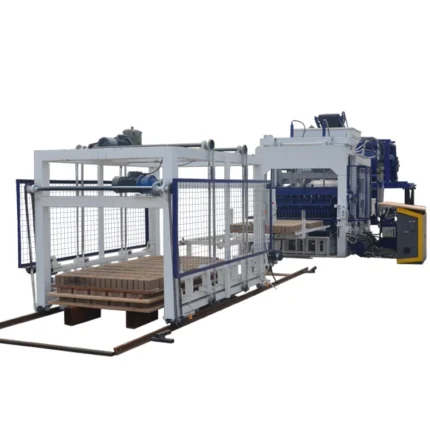
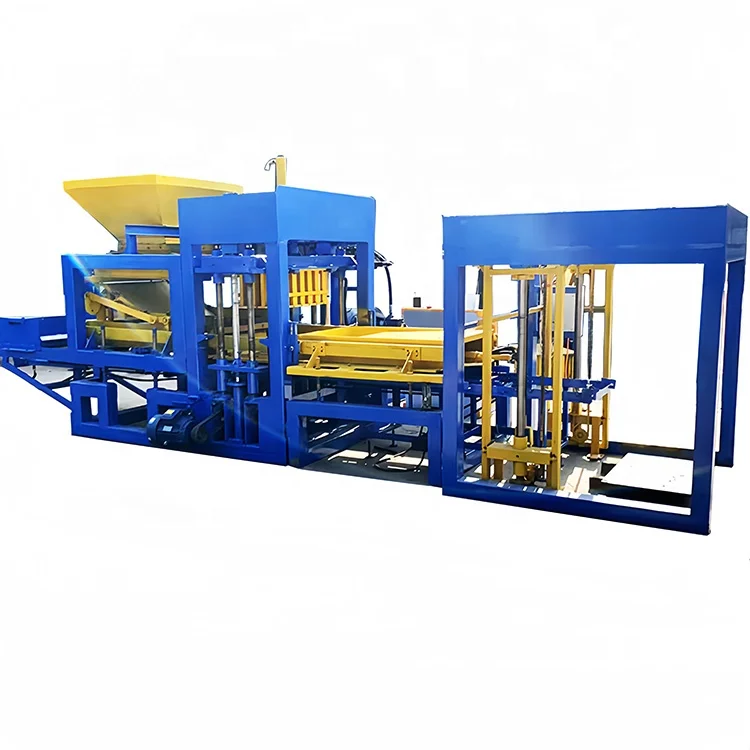
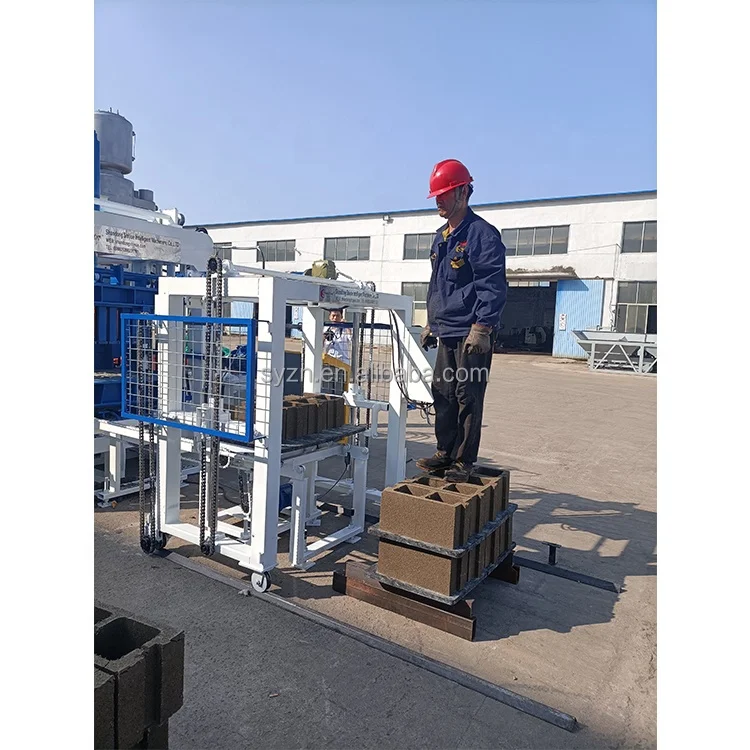
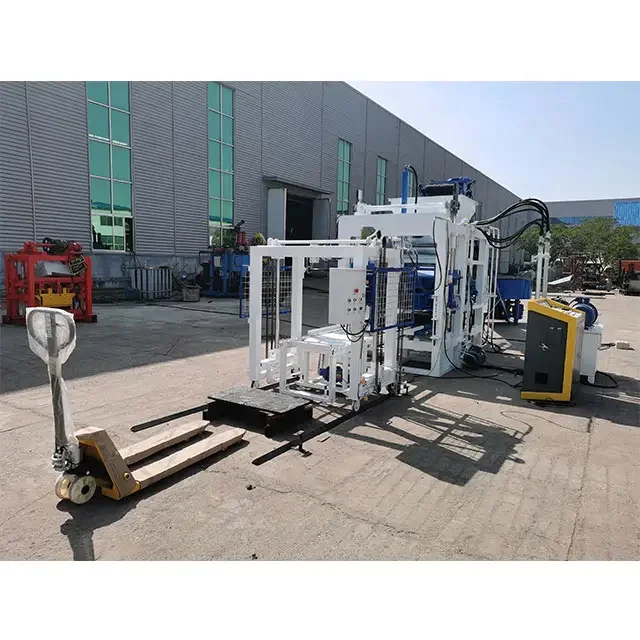
| Included Equipment | Block making machine, hydraulic station, PLC control system, pallet feeder, brick conveyor, block sweeper, manual hydraulic trolley |
| Voltage & Frequency | (basis not stated in source — confirm with target market standard) |
| Language Options | (basis not stated in source — confirm PLC display language) |
| Standards | (basis not stated in source — confirm CE/ISO availability) |
Application Suitability
| Application | Material or Output |
|---|---|
| Concrete block production plants | Hollow blocks from crushed stone, sand, and cement |
| On-site construction block production | Solid bricks and hollow blocks for contractor-owned facilities |
| Paver and kerbstone manufacturing | Interlocking pavers and curbstones from fly ash and aggregate |
| Format-flexible product lines | Switching between hollow, solid, paver, and curbstone formats |
Why the PLC Language Question Should Come Before the Shipment
A control panel only automates what the operator can read.
I configured an automatic PLC controlled concrete block making machine for a West African client once and left the HMI in default English. Their operators spoke French only. The commissioning engineer arrived to find nobody could navigate the menus, and we lost four days rewriting the language pack and reloading the PLC program remotely. Voltage mismatches and language mismatches cause the same outcome — a machine sitting idle while someone waits for a fix that should have been confirmed before the crate was nailed shut [NEED_CITE: common commissioning delays due to HMI language mismatch in industrial PLC equipment].
How the Control Loop Removes Operator Variability
Manual block production leaves cycle timing, vibration duration, and hydraulic dwell to whoever is standing at the panel. The PLC system in the QT4-18 automates that 15-25 second molding cycle so every block receives the same sequence of pressure and vibration regardless of shift changes or operator fatigue. This is what makes the automatic PLC controlled concrete block making machine deliver batch-to-batch density consistency rather than relying on one experienced operator to keep quality stable.
Pallet Feeding as Part of the Control Chain
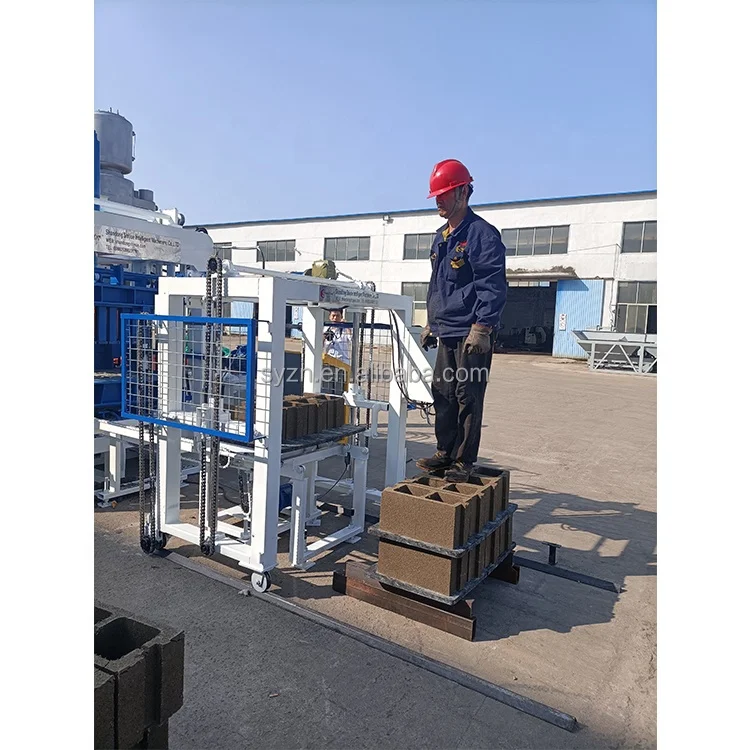
A press that cycles automatically but waits for a worker to slide a pallet in by hand is only half-automatic. The included pallet feeder integrates with the PLC timing so the QT4-18 receives the next 850×550mm pallet on schedule, eliminating the bottleneck that usually appears between the press output and the curing yard. When the pallet feeder, brick conveyor, and block sweeper all respond to the same PLC signals, the line holds its cycle time instead of drifting as the shift wears on [NEED_CITE: pallet handling bottlenecks in semi-automatic block production lines].
Reading the Specs That Actually Matter
The 40-50KN vibration force and hydraulic station work together to compact the mix into the mould cavity. Vibration alone leaves voids; pressure alone produces low-density output. The QT4-18 applies both within the same cycle, and the PLC holds their ratio constant across every moulding stroke. The JQ350 mixer feeds material at a rate matched to the 15-25 second cycle so the hopper never starves the press. Pallet size at 850×550×25mm must align with the curing racks and forklift tines the buyer already operates — specifying pallets without checking downstream handling equipment is a common gap that surfaces only after the first production run.
What Wrong Configuration Costs After Arrival
Buyers who confirm nothing beyond price and lead time inherit problems that only appear during installation. A QT4-18 arrives with the wrong voltage tap and sits for weeks while a transformer is sourced locally. The PLC display shows fault codes in a language the maintenance team cannot read, turning a simple sensor replacement into a remote support call across time zones. Moulds arrive sized for a pallet the buyer does not stock, and the format flexibility that justified the purchase disappears into a pile of unused tooling [NEED_CITE: cost of post-arrival configuration rework in imported block machinery].
Why This Machine Is Specified Rather Than Assembled
The QT4-18 is configured as a matched system — press, hydraulic station, pallet feeder, mixer, and PLC share one control logic rather than arriving as separate brands wired together on site. The mould catalogue covers hollow block, solid brick, paver, and curbstone formats with custom drawings available for non-standard sizes. Automation level is selectable: a buyer can start with the included manual hydraulic trolley and add automatic stacking later without replacing the press. Every configuration is set against the buyer’s actual mix design and local aggregate rather than a default catalogue entry. Documentation leaves the factory complete, not assembled during commissioning.
Documentation & Verification
- Factory test record showing cycle times on your specified block format before dispatch
- Hydraulic and electrical schematic matching the as-built QT4-18 configuration
- PLC program backup and HMI language confirmation sheet signed before crating
- Mould drawing and format list covering every product in your production plan
- Wear parts and mould replacement list with part numbers for first reorder
Installation, Commissioning & Support
- Foundation plan sized to the 3900×1600mm footprint and 3T operating weight
- Dedicated 24KW circuit at confirmed voltage and frequency before machine arrival
- PLC language and parameter set loaded to match operator team before shipment
- Commissioning engineer on site to run first production cycle and train operators
- Mould change procedure demonstrated with your actual format set during training
- Wear parts stock recommendation based on local aggregate abrasiveness
What We Need to Configure Your Line
Send the block formats your market actually sells, the daily output target for each, and a sample of your local aggregate so the mix can be tested against the vibration and pressure settings. Confirm your site voltage, frequency, and the language your operators read so the QT4-18 arrives ready to run on day one rather than waiting for a software reload.
Frequently Asked Questions
Q: How does PLC control improve consistency compared to manual block production?
A: Manual operation leaves vibration duration, hydraulic pressure, and cycle timing to operator judgment, which drifts across shifts. The QT4-18 PLC locks these parameters so every moulding stroke follows the same 15-25 second sequence. Block density and dimensions stay within tolerance because the machine repeats what was programmed rather than what the operator remembers.
Q: What block formats can the QT4-18 produce, and how long does a mould change take?
A: The machine covers hollow block, solid brick, paver, and curbstone formats. Mould change time depends on the quick-release system fitted and operator training — a trained team completes the swap in a fraction of a shift. Custom moulds are designed from buyer drawings when standard formats do not match market demand.
Q: Can the QT4-18 be upgraded to full automatic pallet feeding and stacking later?
A: The included pallet feeder and manual hydraulic trolley represent a starting automation level. Automatic stacking and cubing systems can be added as the operation scales without replacing the press or PLC core. The control system accommodates additional I/O for downstream automation modules.
Q: What voltage, frequency, and PLC display language options are available?
A: Voltage and frequency must be confirmed against your local grid standard before production. The PLC display language is set to match your operator team — we confirm this during the inquiry stage so the machine arrives with the correct HMI loaded, avoiding on-site reprogramming delays.
Q: How are hydraulic pressure and vibration matched to my local aggregate?
A: The 40-50KN vibration force and hydraulic station settings are adjusted based on your mix design and aggregate sample. A crushed limestone mix compacts differently from a fly ash blend, and the QT4-18 parameters are tuned during the factory test to produce blocks meeting your strength requirement with your actual materials.