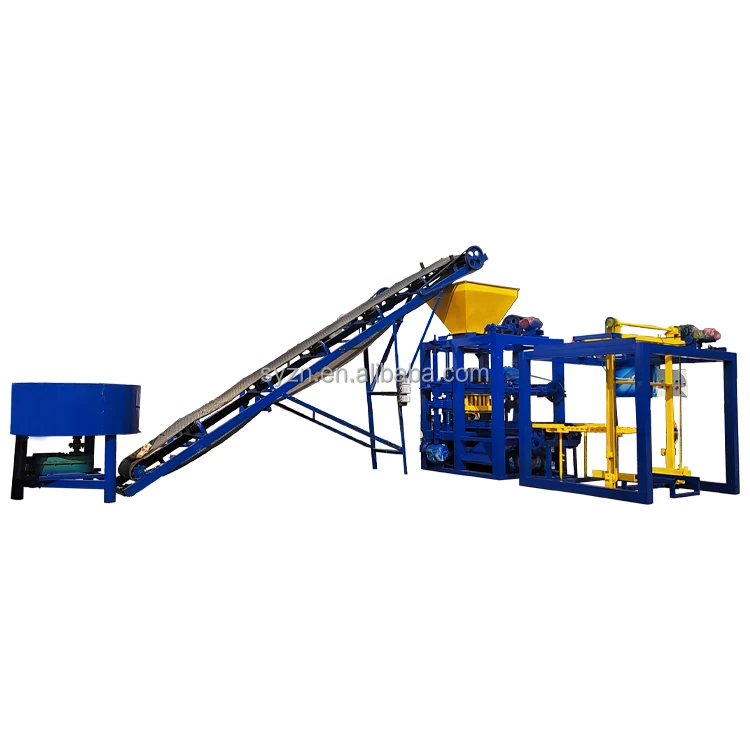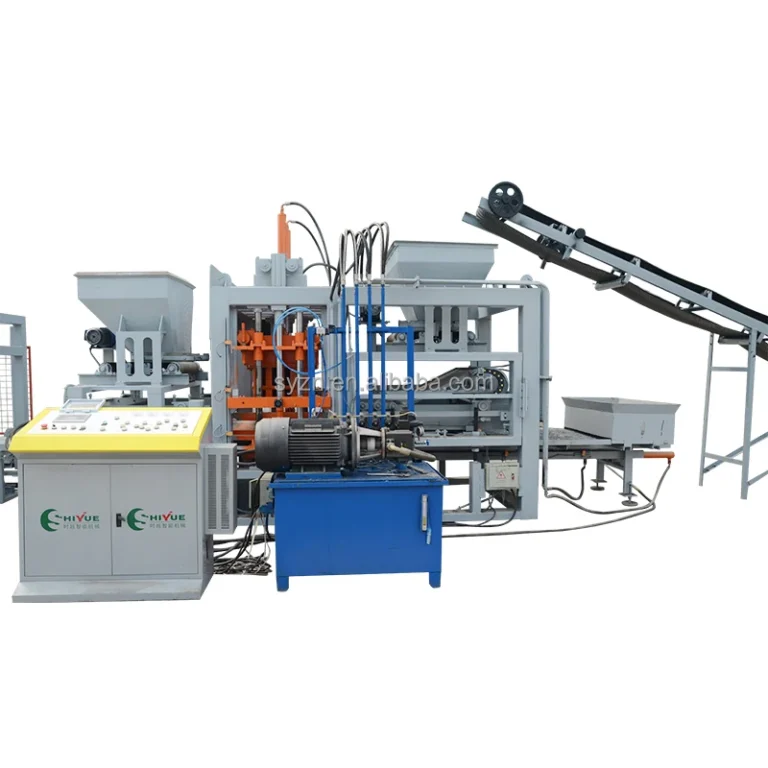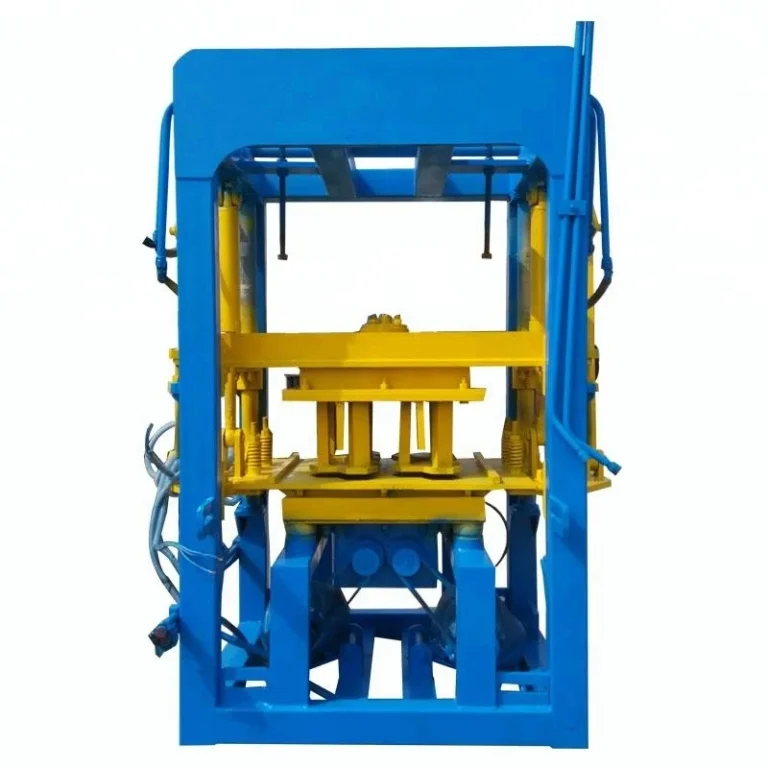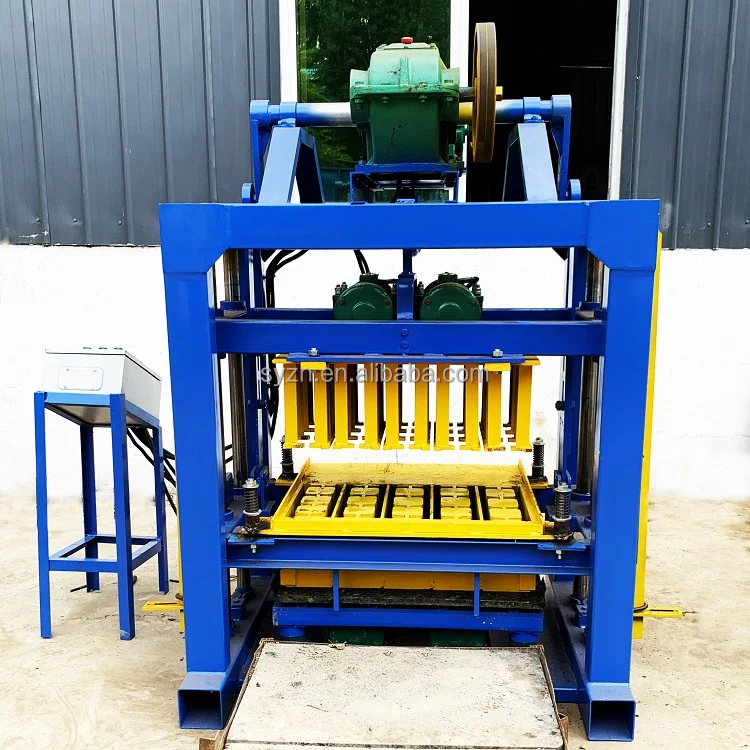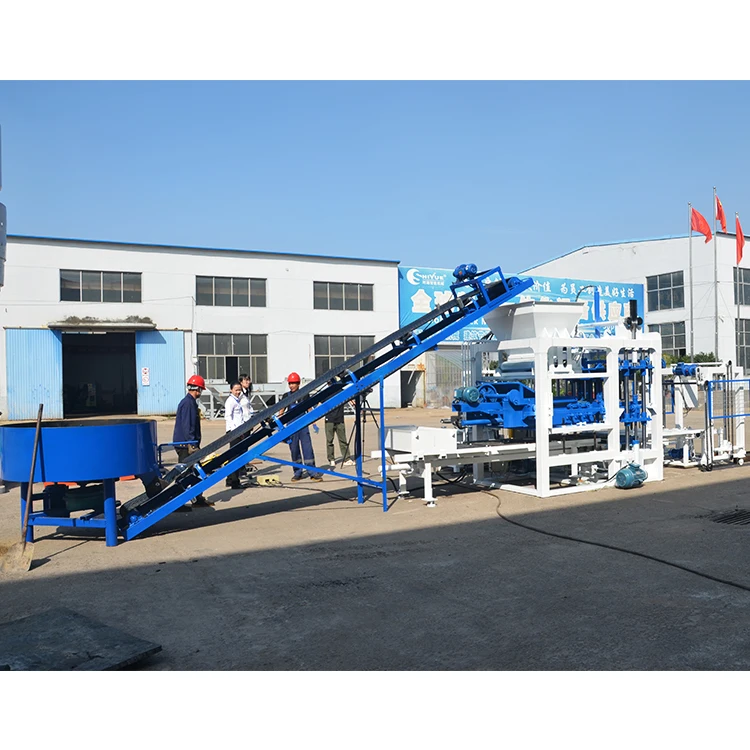
Description
Interlocking Control Logic — the QT4-18 ties each hydraulic and vibration action to a confirmed sequence step, preventing operators from overriding cycle timing and protecting block consistency across formats.
Technical Specifications
| Parameter | Value |
|---|---|
| Model | QT4-18 |
| Product Type | Hydraulic Fully Automatic Concrete Block Making Machine |
| Vibration Form | Platform Vibration |
| Vibration Frequency | 0–60 Hz (adjustable) |
| Vibration Force | 45 kN |
| Molding Cycle | 18–25 s |
| Pallet Size | 900 × 500 mm |
| Demolding Method | Hydraulic |
| Control System | PLC with person-machine conversation interface |
| Automation Level | Fully automatic (electric-hydraulic interlocking) |
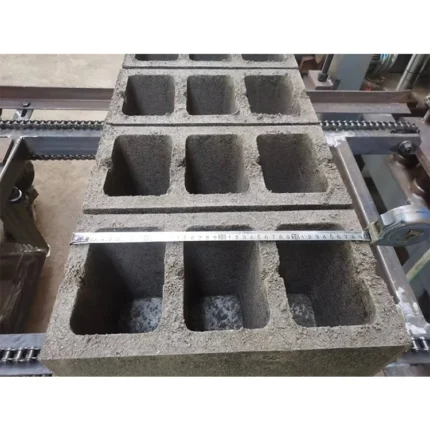
| Output Capacity | 799 pcs/h based on 400×200×200 mm hollow block, 4 pcs/mould, 18 s cycle |
| Output Capacity | 999 pcs/h based on 400×150×200 mm hollow block, 5 pcs/mould, 18 s cycle |
| Output Capacity | 5,199 pcs/h based on 240×115×52 mm solid brick, 26 pcs/mould, 18 s cycle |
| Mould Formats Supported | Hollow block, solid brick, paving brick, road curb, interlocking brick, environmental protection brick, sod brick |
| Warranty | 1 year for whole machine (excluding spare parts) |
Application Suitability
| Application | Material or Output |
|---|---|
| Hollow block production plants | Crushed stone, sand, cement and fly ash mixes for 400×200×200 mm and 400×150×200 mm formats |
| Solid brick manufacturing | Fine aggregate and cement blends for 240×115×52 mm standard bricks |
| Paving brick and curbstone lines | High-density concrete mixes for interlocking pavers and road kerbs |
| On-site contractor block production | Locally sourced aggregate for housing and development project blocks |
| Environmental and sod brick runs | Porous concrete or grass-compatible mixes for landscaping and drainage applications |
Why PLC Language Confirmation Must Happen Before Crating
An unreadable control panel turns a fully automatic machine into a very expensive manual one.
I was on a commissioning call two years ago where a fully automatic hydraulic block machine sat idle for three days because the PLC display shipped in English and the local operators could not read it. The automatic QT4-18 block machine PLC controlled interface is designed to remove guesswork from production, but that only works when the person standing at the panel understands what it says [NEED_CITE: PLC display language standards for exported industrial machinery]. Voltage mismatches get caught at the quotation stage; language mismatches often slip through because nobody thinks to ask until the crate is open and the electrician is staring at an alarm code they cannot translate. The interlocking logic on this machine locks each procedure action to the next, which means a confused operator cannot just press buttons until something happens — the system simply will not advance. That safety feature becomes a production blocker when the panel is unreadable.
What the Interlocking Logic Actually Controls
The electric-hydraulic interlocking on the automatic QT4-18 block machine PLC controlled system means the feeder does not advance until the mould box is confirmed in position, vibration does not start until the feed cycle completes, and hydraulic demolding does not engage until vibration stops. Each step depends on a sensor signal from the previous step. This removes the operator’s ability to rush a cycle or skip a sequence, which is the most common cause of inconsistent block density in plants that run semi-automatic equipment.
Where Automation Ends and the Buyer’s Line Begins
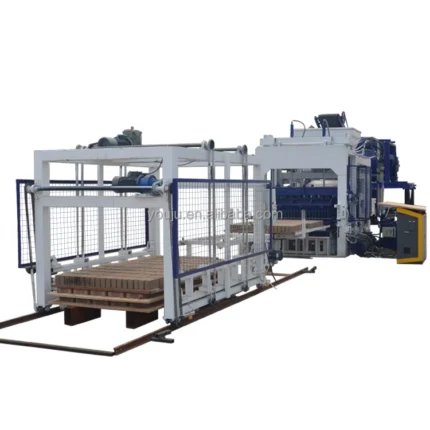
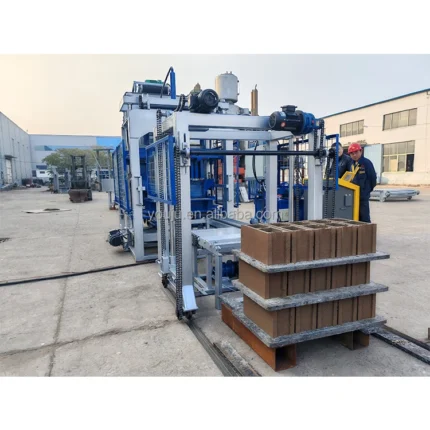
The QT4-18 automates the press cycle itself — feeding, vibration, hydraulic pressing and demolding all run under PLC control. What happens after demolding depends on how the rest of the line is configured. Pallet feeding into the press, wet product stacking off the pallets, and cured block cubing can remain manual or be added as automatic stations. A buyer moving from semi-automatic operation will see immediate labor reduction at the press, but the pallet handling upstream and stacking downstream still define how many workers the full line needs [NEED_CITE: labor allocation in stationary block production lines]. Planning the upgrade path before the machine ships avoids retrofitting conveyors and stackers into a footprint that was not designed for them.
Reading the Specs Beyond the Cycle Time
The 18–25 second molding cycle is the press time only, and the actual rate depends on which block format is in the mould. Vibration force at 45 kN combined with adjustable frequency from 0 to 60 Hz lets the operator match the vibration profile to the mix — coarse aggregate needs higher amplitude and lower frequency to consolidate, while fine sand mixes respond better to higher frequency. Platform vibration transmits force through the pallet into the mould cavity, so pallet flatness and stiffness directly affect block density uniformity. The 900 × 500 mm pallet size should match the curing racks and forklifts already on site; a mismatch here means either replacing the pallet inventory or building new curing racks. Hydraulic demolding lifts the mould box cleanly off the green block, reducing edge damage compared to mechanical stripper systems, which matters when producing paving bricks and face bricks where surface finish is the selling point.
The Hidden Cost of Skipping the Line-Level Conversation
When a block machine is quoted as a standalone press without confirming pallet handling, stacking and curing layout, the buyer arrives at commissioning with a fully automatic press feeding blocks onto pallets that then pile up on the floor waiting for manual collection. The press itself is running at its designed cycle, but the actual daily output is limited by how fast workers can move pallets to the curing area. I have seen plants where the bottleneck was never the press — it was a single worker with a hand cart moving pallets one at a time [NEED_CITE: production bottlenecks in block plant layout design]. The QT4-18 is capable of sustained automatic cycling, but that capability is wasted if the surrounding stations cannot keep pace.
Why Buyers Specifying Automation Choose This Configuration
The machine, mould, pallet and handling equipment are specified as one matched system rather than pulled from separate suppliers, so the PLC logic accounts for the actual pallet dimensions and cycle timing of the full line. Configuration is set against the buyer’s mix design and local aggregate, not a default catalogue setting, which means vibration frequency and hydraulic pressure arrive tuned for the material the plant will actually run. Mould design covers the formats the buyer’s market sells, including custom drawings when a local format does not match the standard range. The automation level is selectable, so a buyer can start with the automatic press and add pallet feeding or stacking stations later without replacing the PLC. Installation includes on-site commissioning with operator training that covers the interlocking logic, alarm codes and mould changeover procedure in the confirmed display language.
Documentation & Verification
- Machine specification sheet with capacity calculation stated per block format
- PLC display language and voltage confirmation record signed before crating
- Hydraulic and electrical schematic for local maintenance team reference
- Factory test record showing cycle timing on the buyer’s specified mould format
- Mould drawing and format list with pallet size and curing rack compatibility noted
- Operation and maintenance manual in the confirmed control language
Installation, Commissioning & Support
- Foundation plan matched to the QT4-18 vibration load and hydraulic station weight
- Dedicated power circuit confirmed for the machine’s rated voltage and frequency before arrival
- PLC language and alarm code display verified against operator requirements at startup
- Vibration frequency and hydraulic pressure tuned to the buyer’s local aggregate during commissioning
- Mould changeover training covering the interlocking sequence for safe format switching
- Wear parts and mould list provided with recommended reorder intervals based on production hours
What to Include With Your Inquiry
Send your target block format and the daily output you need for that specific format, not a generic capacity target. Include your local aggregate type and any existing mix design so the vibration profile can be matched before the machine is built. Confirm the site voltage, frequency and the PLC display language your operators will read — these three items determine whether the automatic QT4-18 block machine PLC controlled system starts producing on day one or waits for an electrician and a translator.
Frequently Asked Questions
Q: How is the PLC display language confirmed before shipment, and can it be changed on-site?
A: The display language is confirmed during the quotation stage and recorded on the voltage and control confirmation document. The language can be changed on-site if the PLC supports it, but confirming before crating avoids commissioning delays and ensures all alarm messages and menu labels are readable from the first production run.
Q: What automation level does the QT4-18 ship with, and which stations remain manual?
A: The press cycle — feeding, vibration, pressing and hydraulic demolding — is fully automatic under PLC interlocking control. Pallet feeding into the press, wet block stacking off the pallets, and cured block cubing can be configured as manual or automatic depending on the line package selected at the time of order.
Q: How does the interlocking control logic protect block consistency?
A: Each procedure action is locked to the completion signal of the previous step. The feeder cannot advance until the mould is positioned, vibration cannot start until feeding is complete, and demolding cannot engage until vibration stops. This prevents operators from shortening cycles or skipping steps that affect block density.
Q: Can vibration frequency and hydraulic pressure be adjusted for local aggregate?
A: Yes. The 0–60 Hz vibration frequency range and adjustable hydraulic pressure allow the commissioning team to match the consolidation profile to the buyer’s specific aggregate gradation and mix design, rather than running a fixed factory default that may not suit local materials.
Q: What is the upgrade path to fully automatic stacking and cubing?
A: Automatic pallet feeding, stacking and cubing stations can be added to the line after the initial installation. The PLC architecture supports these additions without replacing the main controller, provided the floor layout and pallet circuit were planned to accommodate future expansion.