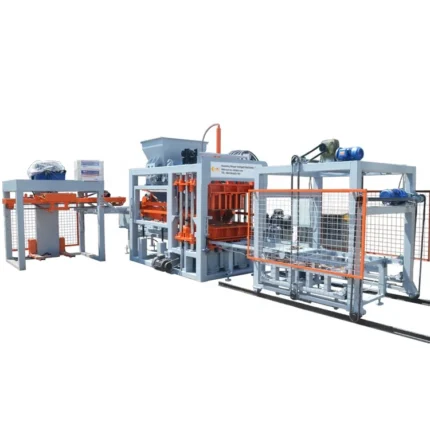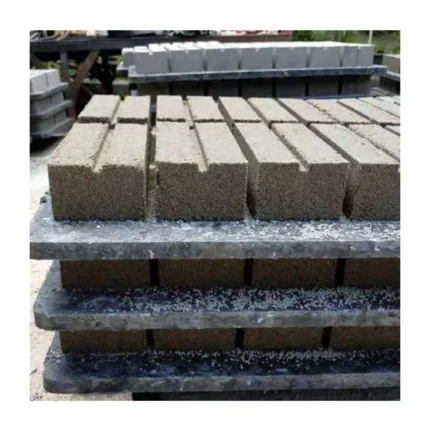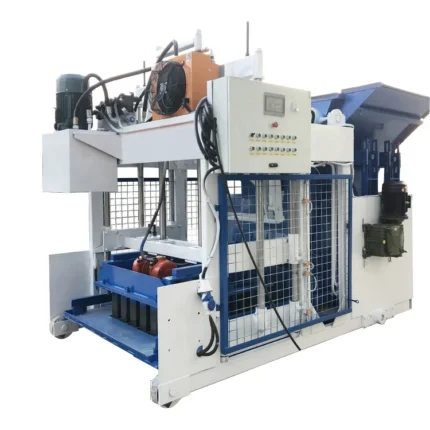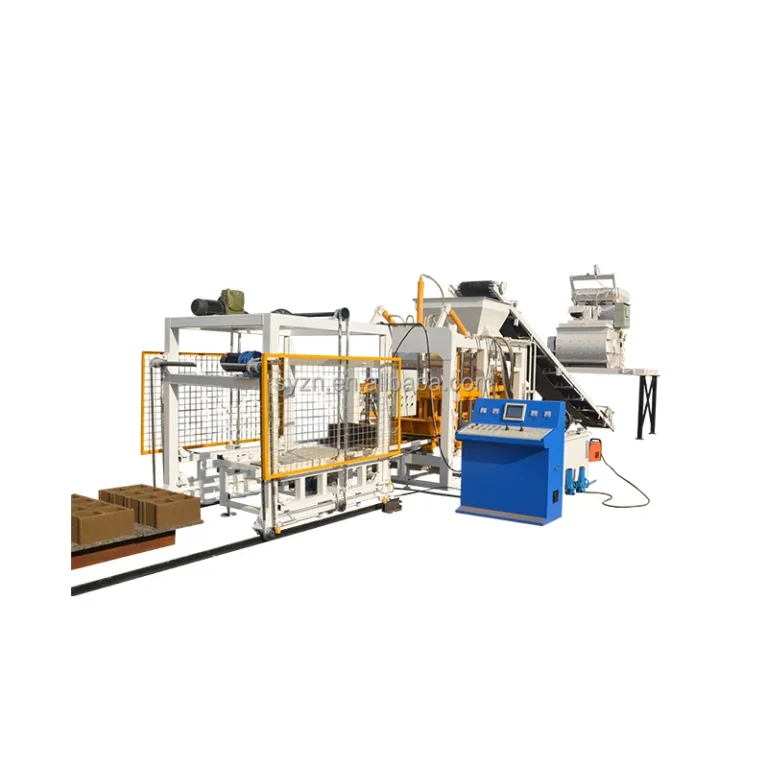
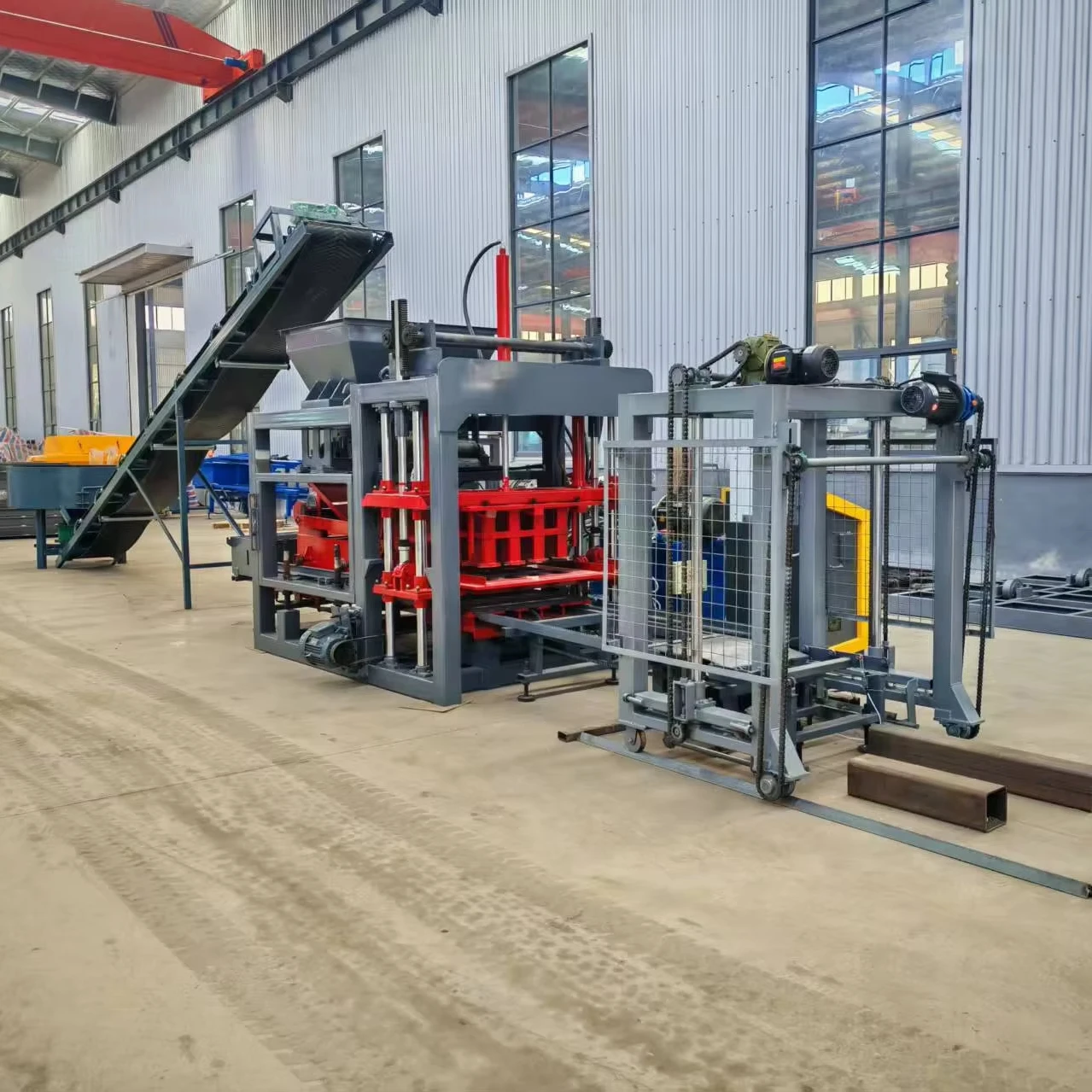
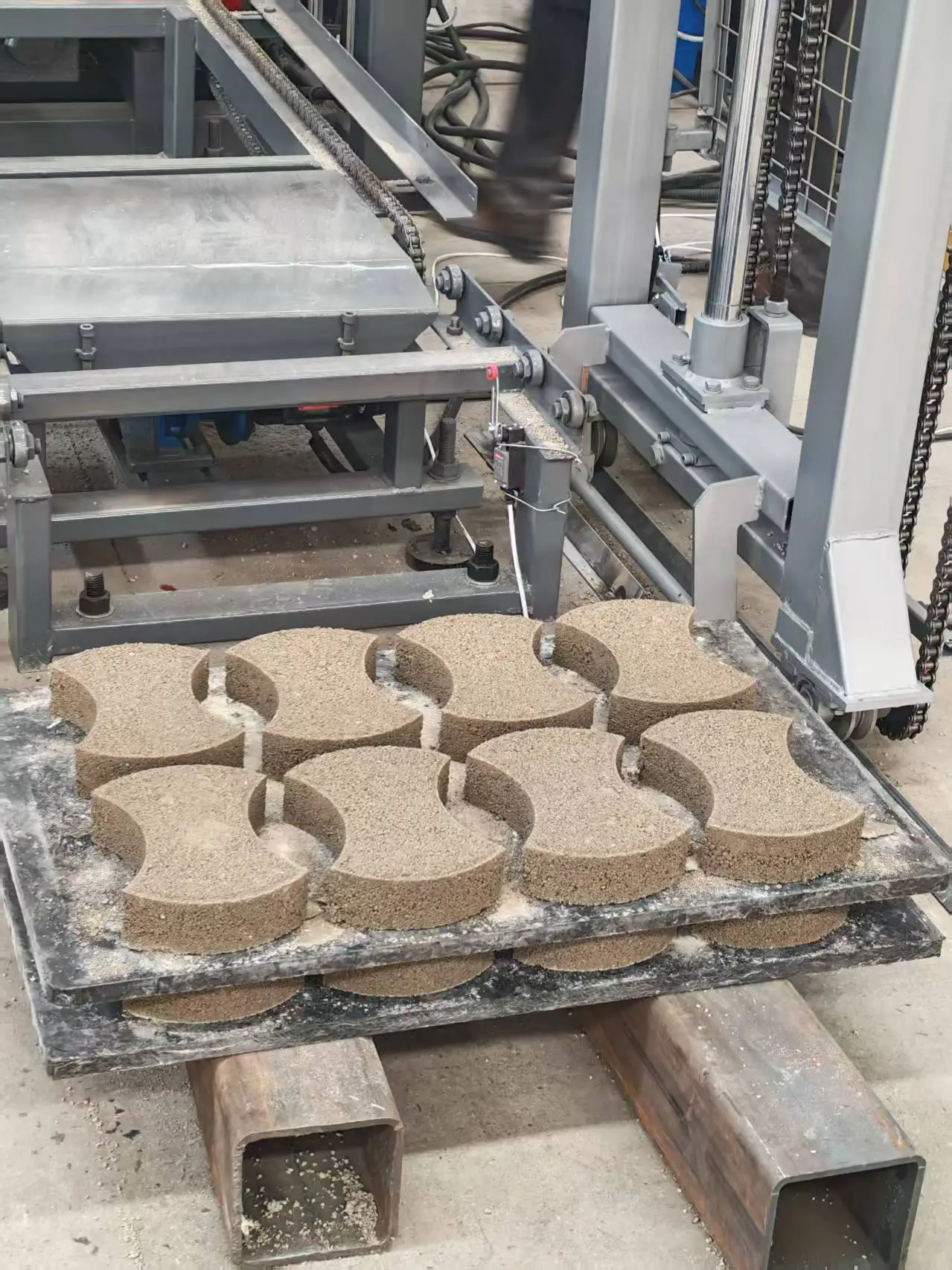
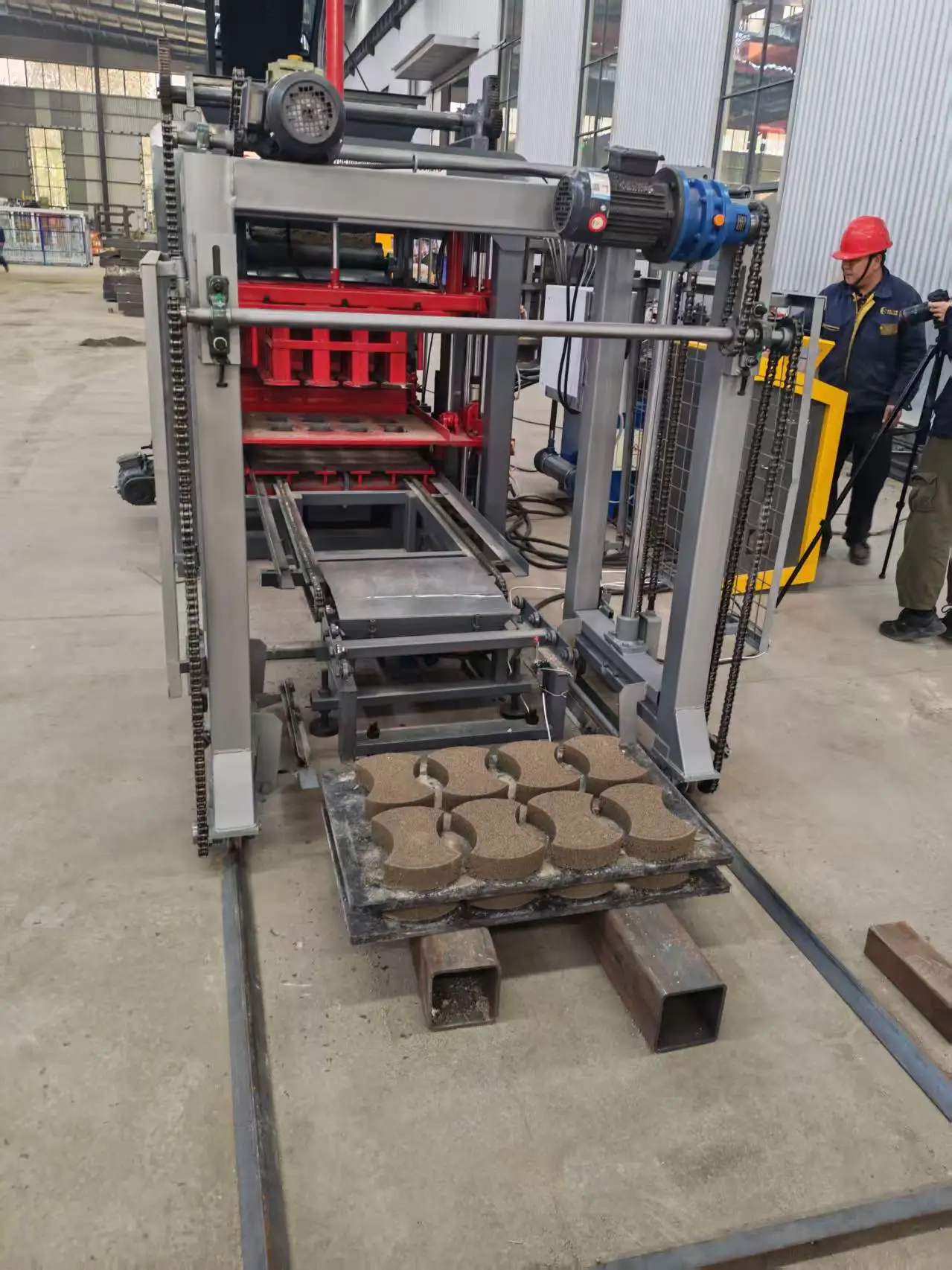
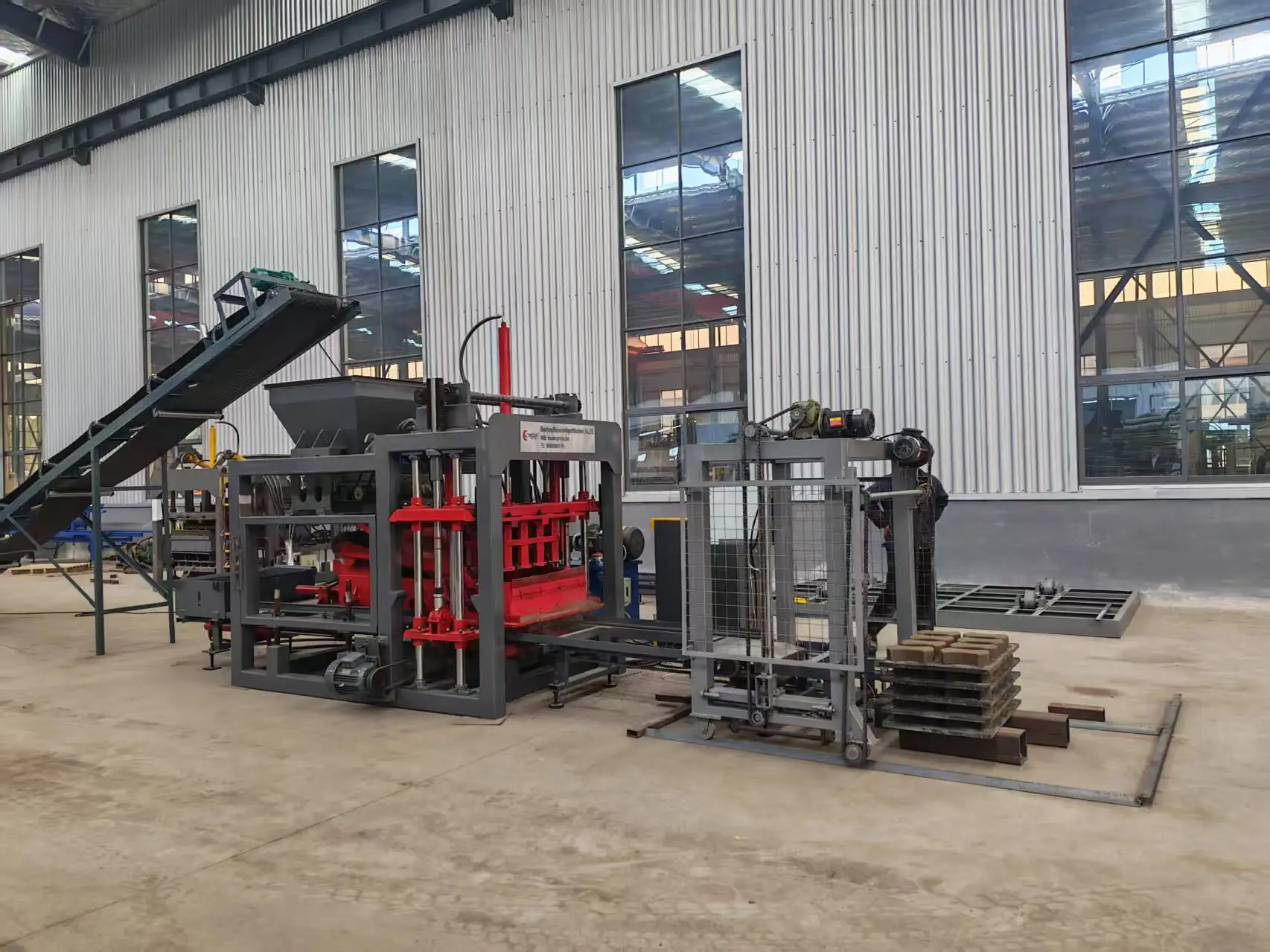
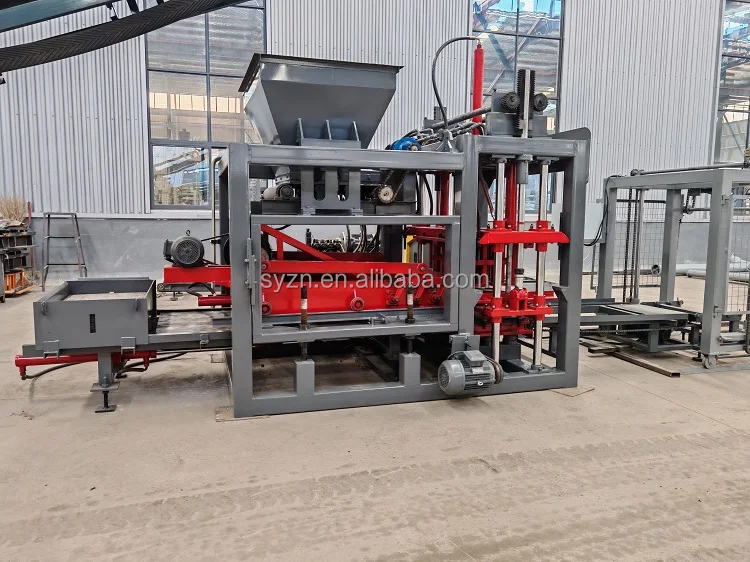
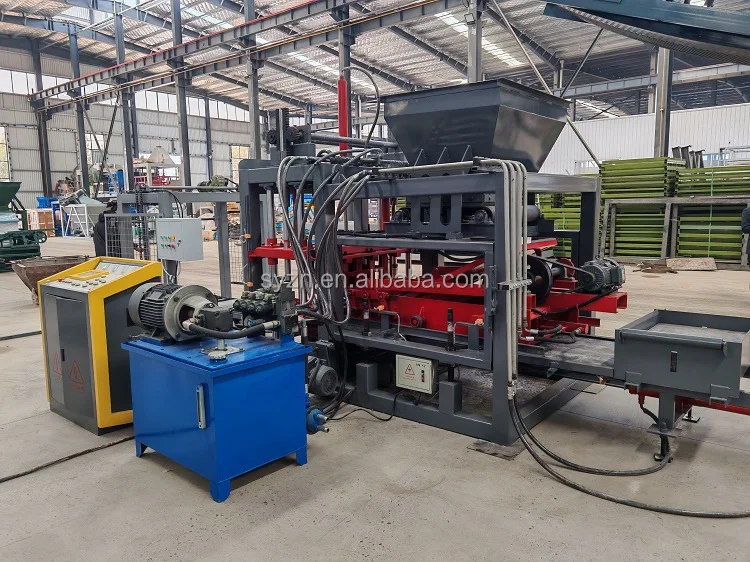
Description
Specified Control Logic — PLC display language and voltage are confirmed against your site conditions before the QT4-18 leaves the factory, removing commissioning delays caused by mismatched control settings.
Technical Specifications
| Parameter | Value |
|---|---|
| Model | QT4-18 |
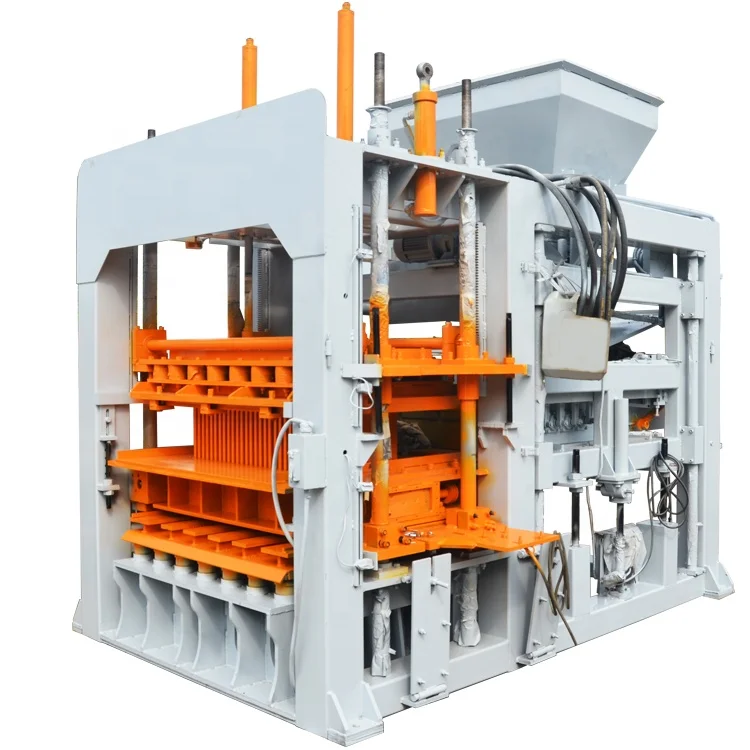
| Product Type | Hydraulic Concrete Block Making Machine |
| Overall Dimensions (L×W×H) | 3900×1600×2300 mm |
| Total Weight | 3T |
| Rated Power | 24KW |
| Vibration Force | 40-50KN |
| Vibration Type | Bed mould vertical vibration + upper mould compression vibration |
| Molding Cycle | 15-25s (basis not stated in source — confirm block format / material / thickness) |
| Mixer Model | JQ350 |
| Pallet Size | 850×550×25mm |
| Hydraulic Station | Equipped, high pressure |
| Automation Level | Semi-automatic |
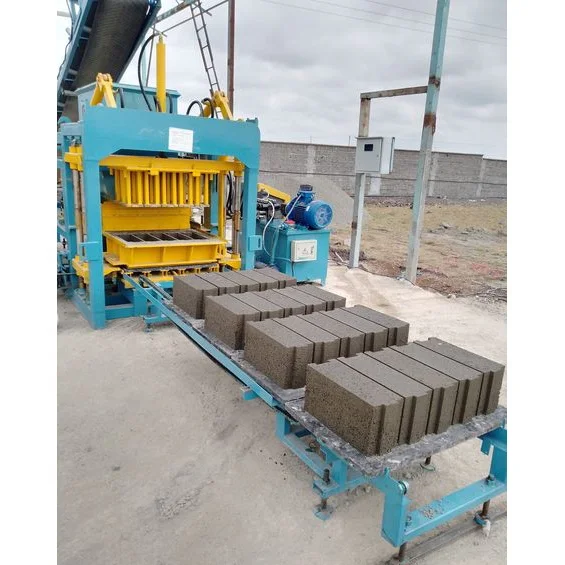
| Applied Products | Paver, solid block, hollow block, curbstone |
| Raw Materials | Crushed stones, sand, cement, dust, fly ash |
| Output Capacity | 1200-1680 pcs/hr based on 400×200×200mm hollow block, 4 pcs/mould, cycle 15-20s |
| Output Capacity | 1800-2400 pcs/hr based on 400×150×200mm hollow block, cycle 15-20s |
| Output Capacity | 3240 pcs/hr based on 240×115×53mm solid brick, cycle 15-20s |
| Container Loading | 20GP (nude packing, approx. 500 pcs pallets loadable) |
| Standards | CE where applicable |
Application Suitability
| Application | Material or Output |
|---|---|
| Hollow block production for wall construction | Crushed stone, sand, cement, fly ash at 400×200×200mm or 400×150×200mm formats |
| Solid brick manufacturing for load-bearing and infill | Cement, dust, sand at 240×115×53mm format |
| Paving block production for walkways and yards | Crushed stone and cement mixes in interlocking or rectangular formats |
| Curbstone forming for road and site edging | Dense aggregate-cement blends on the 850×550mm pallet |
| On-site block manufacturing for housing projects | Local aggregate and cement with semi-automatic operation |
What "Pieces per Hour" Means Without the Format Attached
An automatic QT4-18 block making machine quoted at a single output figure tells you nothing about what you will actually produce on a Tuesday morning. The only capacity number that matters is the one tied to the exact block format your market buys.
I have seen buyers compare two machines on a headline cycle rate, sign the contract, and then discover that the number assumed a hollow block they never intended to make. The real daily output for their paver format turned out to be far lower because the mould cavity count and compaction time were different. Every capacity figure for the QT4-18 must be read against its block format, mould cavity count, and assumed cycle time. [NEED_CITE: block format and cycle time relationship in concrete block production]
How PLC Language Confirmation Prevents Commissioning Standstills
Last year a buyer in Jamaica received a fully automatic hydraulic block machine with the PLC display defaulted to English. The local operators could not navigate the menus, and commissioning stalled for two days while we arranged a remote language patch. Since then, every contract I touch requires the buyer to sign off on the PLC display language and the voltage-frequency combination before the machine enters the container. The QT4-18 control panel supports multiple display languages, and the correct one is locked in during the factory test. This single checkpoint removes the most common first-week frustration on overseas sites.
Matching Vibration and Pressure to Your Local Mix
The QT4-18 pairs a hydraulic station with a dual vibration system — bed mould vertical vibration combined with upper mould compression vibration. The hydraulic pressure holds the mould assembly steady while vibration compacts the mix from below and above simultaneously. When the vibration force of 40-50KN meets a mix design built around your local aggregate gradation, block density stays consistent across the run. If the machine is configured for a clean-washed sand that your area does not supply, the blocks will show surface spalling or low compressive strength regardless of the pressure setting. [NEED_CITE: effect of local aggregate gradation on concrete block compressive strength]
Reading the Specification Sheet Beyond the Headline Numbers
The rated power of 24KW covers the hydraulic pump, vibration motors, and mixer drive combined, so your site must supply a dedicated circuit with adequate headroom. The 850×550×25mm pallet size determines how many blocks cure per rack and which forklift tine width fits — order pallets that match your existing curing area rather than accepting a default. The JQ350 mixer feeds the press at a rate matched to the 15-25s molding cycle, preventing the press from waiting between batches. Total machine weight of 3T keeps foundation requirements modest; a level concrete slab with anchor bolts is typically sufficient. The semi-automatic configuration means pallets are handled manually at this stage, but the frame and control architecture allow automatic pallet feeding and stacking to be added as production scales.
The Hidden Cost of Skipping the Voltage Conversation
Buyers who focus negotiation on cycle time and leave electrical specifications to "standard export configuration" often discover on arrival that the local grid runs at a frequency or phase arrangement the machine was not built for. A motor wound for 380V/50Hz will overheat on a 440V/60Hz supply, and the PLC may refuse to boot if the control transformer tap is wrong. Rewinding or replacing these components on site adds weeks of downtime to a project that was already on a tight schedule. [NEED_CITE: electrical supply standards and motor compatibility across export markets]
Why Source the QT4-18 Through This Channel
Block machinery is the sole focus here, so the QT4-18 arrives with its mould, pallet, and handling equipment specified as one matched system rather than assembled from separate suppliers. The configuration is set against your actual mix design and target block format instead of a catalogue default. Mould design covers the formats your market sells, and custom mould drawings are available when your product range includes non-standard dimensions. The semi-automatic starting point keeps initial investment contained, and the control platform supports a clear automation upgrade path when daily volumes justify adding automatic pallet feeding and stacking. Factory test records are generated on your specific block format before the machine is dismantled for container loading.
Documentation & Verification
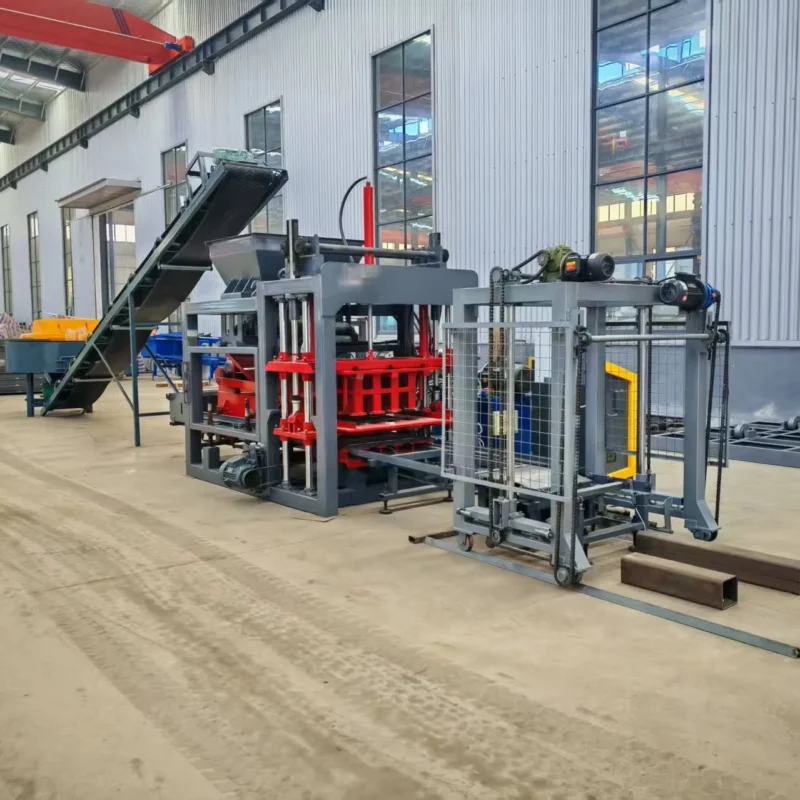
- Line layout showing the QT4-18 positioned with mixer, pallet rack, and curing area
- Capacity calculation sheet stating output per block format and cycle time assumed
- Mould drawing with cavity count and format list for each included mould
- Hydraulic and electrical schematic with voltage and frequency marked
- PLC display language confirmation sheet signed before dispatch
- Factory test record on your target block format and mix proportion
Installation, Commissioning & Support
- Level concrete slab foundation sized to the 3900×1600mm footprint with anchor bolt pattern
- Dedicated 24KW circuit at confirmed voltage and frequency with isolator switch within reach
- Machine shipped nude-packed in a 20GP container and reassembled on site
- First-run parameter setting covering hydraulic pressure, vibration duration, and feed timing
- Operator training on mould change procedure and daily greasing points
- Wear parts list identifying hydraulic seals, vibration springs, and mould liners
Preparing Your Inquiry
To size the QT4-18 accurately, share the block formats your market currently demands along with the daily volume you plan to run for each. Confirm the voltage, phase, and frequency available at your site, and specify the language your operators need on the PLC display. If you already have a curing area and forklift in place, provide the pallet dimensions and tine spacing so the pallet specification can be matched before the quotation is issued.
Frequently Asked Questions
Q: How is the output capacity verified, and which block format is each figure based on?
A: Each output figure for the QT4-18 is tied to a specific block format, mould cavity count, and assumed cycle time. For example, 1200-1680 pieces per hour is based on a 400×200×200mm hollow block with four cavities per mould at a 15-20 second cycle. Your capacity calculation document will state the format and cycle time assumed so there is no ambiguity about expected daily production.
Q: What PLC display language options are available, and can remote diagnostics be added?
A: The QT4-18 PLC supports multiple display languages, and the correct one is confirmed in writing before production begins. Remote diagnostics capability depends on the control hardware tier selected at the quotation stage. If remote access is important for your operation, specify it during the inquiry so the appropriate PLC module is included.
Q: How does the automation level affect labour requirements on the QT4-18?
A: In its semi-automatic configuration, the QT4-18 automates the pressing cycle, vibration, and hydraulic compaction, but pallets are placed and removed manually. This typically requires two to three operators at the press. Adding automatic pallet feeding and stacking later transfers those manual tasks to the machine, reducing the crew needed at the press station.
Q: What is the upgrade path from this semi-automatic QT4-18 to higher automation?
A: The QT4-18 frame and PLC platform are designed to accept automatic pallet feeding, stacking, and cubing modules as add-ons. The upgrade can be staged — pallet feeding first, then stacking — so you match automation spending to actual production growth. Electrical and hydraulic connection points for these modules are included in the base machine.
Q: How should the machine be configured to match my local aggregate and mix design?
A: Share a sample of your local aggregate gradation and the mix proportion you plan to use. The vibration force and hydraulic pressure settings on the QT4-18 are then adjusted during the factory test to produce blocks at your target density. This prevents inconsistent block strength caused by running a machine tuned for a different material profile.