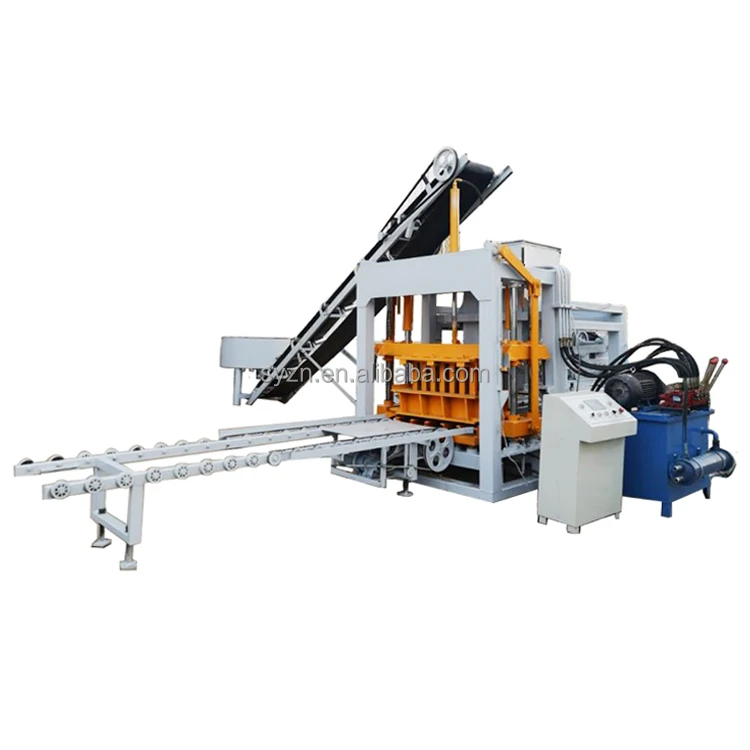


Description
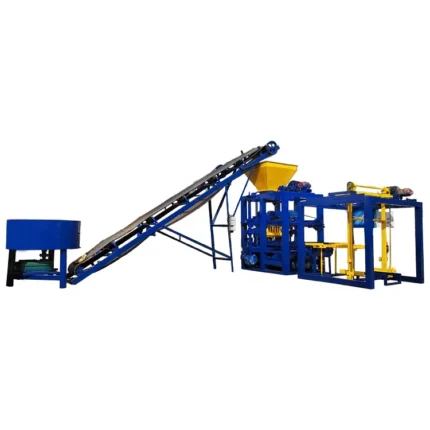
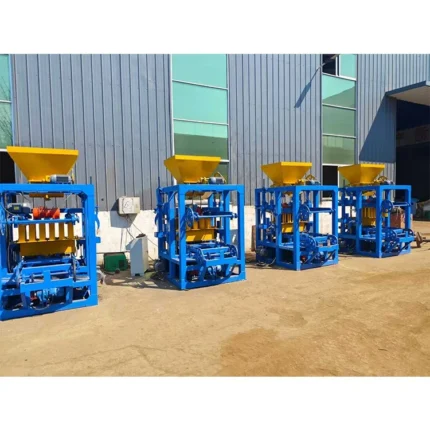
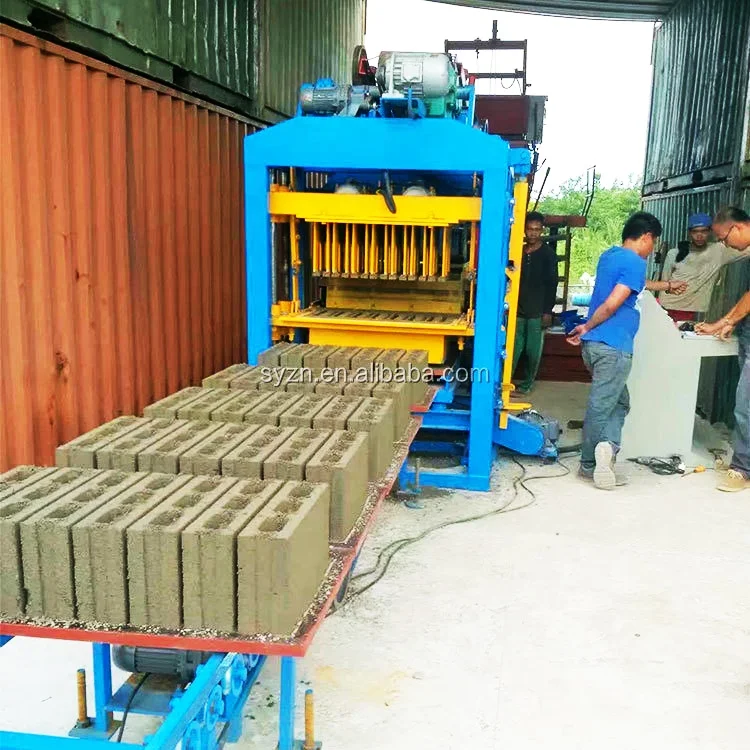
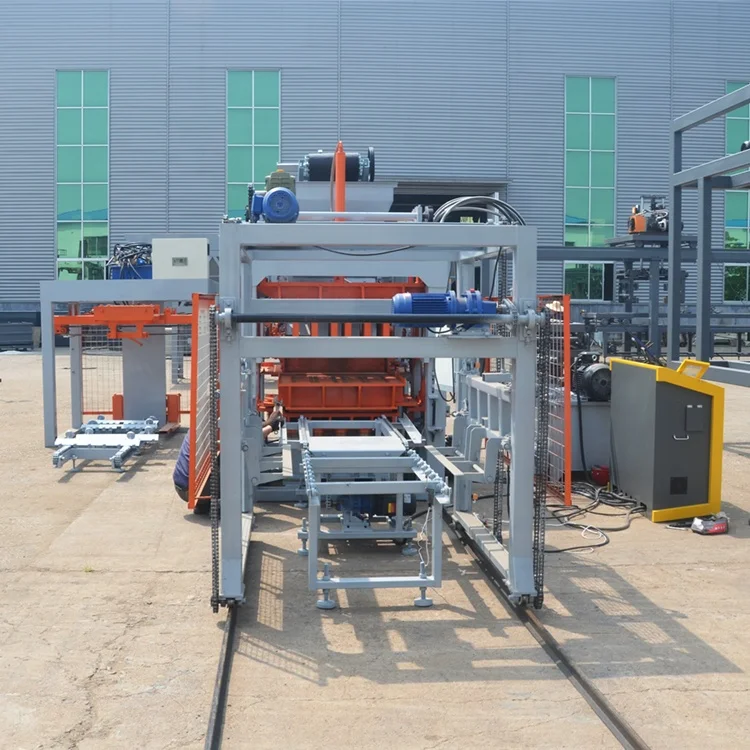
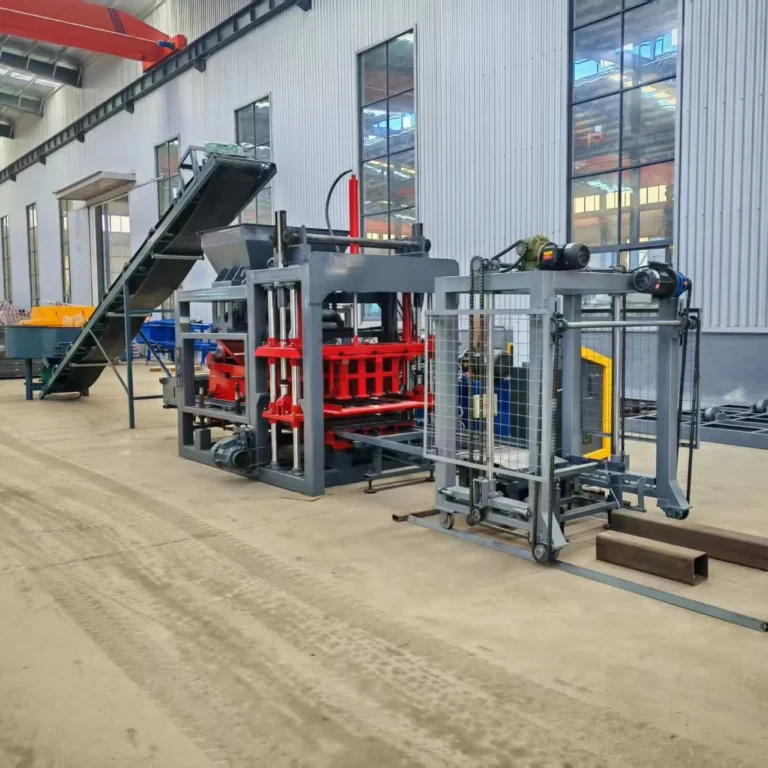
Automation matched to your cycle — the QT4-20 pairs hydraulic demolding with selectable PLC control, letting a block plant start semi-automatic and add stacking automation as volume grows.
Technical Specifications
| Parameter | Value |
|---|---|
| Product Type | Hydraulic Concrete Block Making Machine |
| Model | QT4-20 |
| Overall Dimensions (L×W×H) | 7100 × 1600 × 2610 mm |
| Rated Hydraulic Pressure | 16–21 MPa |
| Vibration Form | Platform Vibration |
| Vibration Frequency | 4600 r/min |
| Vibration Force | 45 kN |
| Pallet Size | 1020 × 570 mm |
| Molding Cycle | 20–30 s (basis not stated in source — confirm block format / material / thickness) |
| Overall Power | 27.5 kW |
| Total Mass | 6 T |
| Demolding Method | Hydraulic |
| General Water Consumption | 12 T/Day |
| Recommended Factory Area | 500 m² |
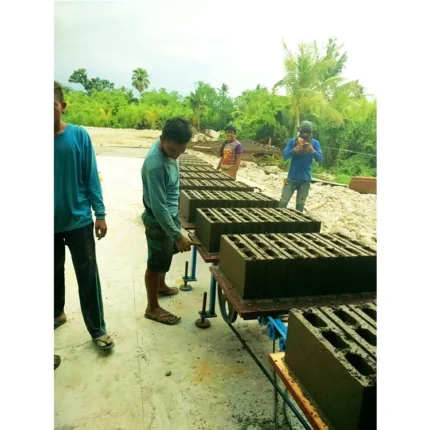
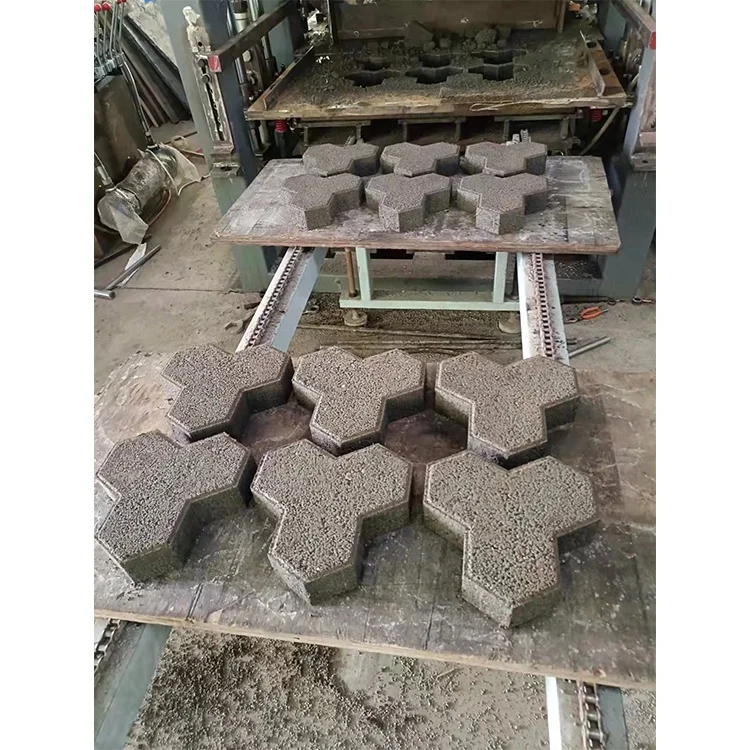
| Applied Products | Hollow blocks, solid blocks, pavers, interlocking blocks, curbstone, colored pavers |
| Raw Materials | Crushed stone, sand, cement, fly ash, gravel, slag |
| Control System | PLC configurable (language and interface to confirm at order) |
| Automation Level | Selectable from semi-automatic to fully automatic with stacking and cubing |
| Container Loading | 1 × 40HQ (basic equipment) |
Application Suitability
| Application | Material or Output |
|---|---|
| Hollow block production for residential and commercial walls | Crushed stone, sand, cement, fly ash blends |
| Solid load-bearing block manufacturing | Dense aggregate and cement mixes |
| Paving block and colored paver runs | Fine sand, cement, pigment additives |
| Interlocking brick for retaining walls and landscaping | Gravel, slag, cement combinations |
| Kerbstone and curb units for road infrastructure | Coarse aggregate with high cement content |
| On-site block production for housing projects | Locally sourced sand, dust, and cement |
What the PLC Display Language Means for Your First Week of Production
A block machine that speaks the wrong language on the factory floor becomes a very expensive paperweight until someone translates the alarm codes.
When a plant owner invests in an automatic QT4-20 block machine expecting reduced operator dependence, the last thing needed is a touch screen displaying fault codes in a language the crew cannot read. Workers who cannot interpret a hydraulic pressure warning will reach for the emergency stop out of caution, interrupting the molding cycle and potentially damaging a freshly installed mould. The control interface must be confirmed in writing before the cabinet is wired, not discovered when the container is opened at the destination port [NEED_CITE: control language requirements for exported industrial machinery].
Programmable Logic Control and Batch Consistency
The QT4-20 block machine uses a PLC system to govern the hydraulic pressure sequence, vibration timing, and pallet indexing. Once the operator dials in the cycle parameters for a specific block format, the controller repeats that exact sequence for every subsequent press. This removes the variability that comes from manual lever operation, where one shift might produce blocks at a different density than the next. For a plant owner upgrading from a manually operated press, the consistency gain shows up in the uniformity of block weight and compressive strength across a production run.
Selectable Automation Tiers and the Upgrade Path
Not every buyer needs a fully automatic line on day one. The QT4-20 concrete block making machine can be configured as semi-automatic with manual pallet handling and feeding, keeping the initial investment within the reach of a first-time plant operator. When volume justifies it, the same press platform accepts automatic pallet feeders, stackers, and cubing stations without replacing the core hydraulic and vibration assemblies. This upgrade path means the machine grows with the buyer’s market rather than forcing an oversized capital commitment upfront [NEED_CITE: automation tier options in concrete block production].
Reading the Vibration and Pressure Specifications
The platform vibration delivers 45 kN of compaction force at 4600 r/min, working in tandem with 16–21 MPa of hydraulic pressure. In block making, vibration settles the aggregate into the mould cavity while hydraulic pressure squeezes out voids from the top. If either force is mismatched to the buyer’s local aggregate gradation or cement content, the resulting blocks may show surface cracking or fail compressive strength tests. The pallet size of 1020 × 570 mm determines how many block cavities fit per cycle and must align with the curing racks and forklift dimensions already present at the plant.
When the Automation Specification Misses the Mark
A buyer who selects a fully automatic stacking system without confirming the pallet return conveyor layout may find cured blocks piling up faster than the handling crew can move them to the yard. The press then sits idle between cycles, negating the throughput the automation was supposed to deliver. Similarly, a PLC programmed with default cycle times for a standard hollow block will run too fast or too slow for interlocking pavers if the mould change parameters are not updated in the controller, leading to under-compacted or over-pressed units [NEED_CITE: cycle time adjustment per block format in PLC-controlled presses].
Why Sourcing the Control System Here Matters
Block machinery is the single focus at this facility, meaning the PLC programming, hydraulic valve timing, and vibration motor wiring are specified together rather than assembled from separate control vendors. The control language, voltage, and frequency are confirmed at the quotation stage so the machine arrives ready for commissioning. Mould design and supply are handled in-house, ensuring the PLC cycle parameters match the specific cavity geometry and wall thickness of the buyer’s target block format. The documentation package includes hydraulic and electrical schematics, allowing local maintenance teams to troubleshoot without waiting for overseas support.
Documentation & Verification
- Line layout drawing with capacity calculation per confirmed block format and cycle time
- Hydraulic and electrical schematic for local maintenance and troubleshooting
- PLC configuration sheet with display language and alarm code translation
- Factory test record on the buyer’s specified block format before container loading
- Mould drawing and format list confirming cavity dimensions and wall thickness
- CE declaration where applicable to the destination market
Installation, Commissioning & Support
- Foundation plan sized to the QT4-20 footprint of 7100 × 1600 mm with vibration isolation pads
- Dedicated electrical circuit sized for the 27.5 kW total power draw at confirmed voltage and frequency
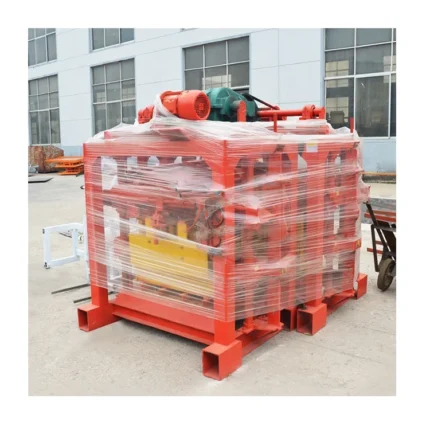
- Machine shipped dismantled in one 40HQ container with reassembly guide and bolt torque specifications
- On-site commissioning includes PLC parameter tuning for the buyer’s confirmed block format and mix design
- Operator training covers mould change procedure, alarm code response, and daily lubrication points
- Wear parts list and hydraulic seal kit provided for the first scheduled maintenance interval
What to Include in Your Inquiry
Send the block formats your market actually sells, along with the target daily output per format and the raw materials available locally. Include your site’s voltage and frequency, the preferred PLC display language, and the dimensions of your existing curing area and forklift so the pallet size and automation level can be matched before the quotation is issued.
Frequently Asked Questions
Q: How is the molding cycle verified for my specific block format?
A: The 20–30 second range is a starting point. During the quotation stage, the cycle time is calculated against your confirmed block format, wall thickness, and material mix. The capacity document states the assumed format so daily output projections are transparent rather than based on a generic cycle number.
Q: Can the automation level be upgraded after installation?
A: Yes. The QT4-20 platform accepts automatic pallet feeders, stackers, and cubing modules as add-on stations. The PLC architecture accommodates the additional I/O without replacing the main controller, so a plant can start semi-automatic and add handling automation as production volume scales.
Q: How are voltage and frequency matched to my site supply?
A: Voltage and frequency are confirmed in writing at the quotation stage and verified again before the control cabinet is wired. The PLC and all motors are specified to match your site’s electrical standard, avoiding commissioning delays caused by mismatched power supplies.
Q: Does the quotation include moulds for all my planned block formats?
A: The mould list is confirmed during the configuration stage and included in the quotation. Each mould drawing is reviewed against your block dimensions, and the PLC cycle parameters are set per format so changeover does not require manual recalibration of press timing.
Q: How does the press integrate with pallet handling and curing logistics?
A: The pallet size of 1020 × 570 mm is selected to match your curing rack spacing and forklift capacity. The line layout shows how pallet feeding, stacking, and return conveyors connect to the press so cycle times stay synchronized and the machine is not left waiting between presses.