Description
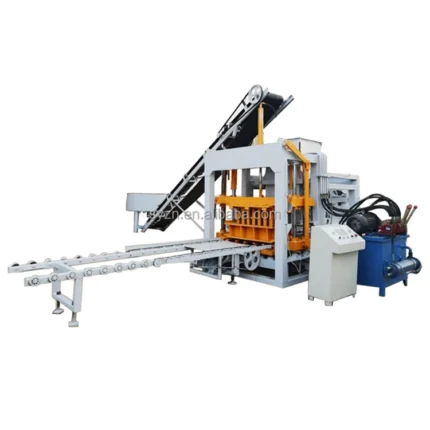
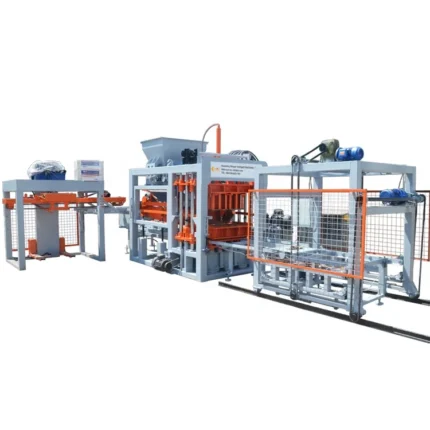
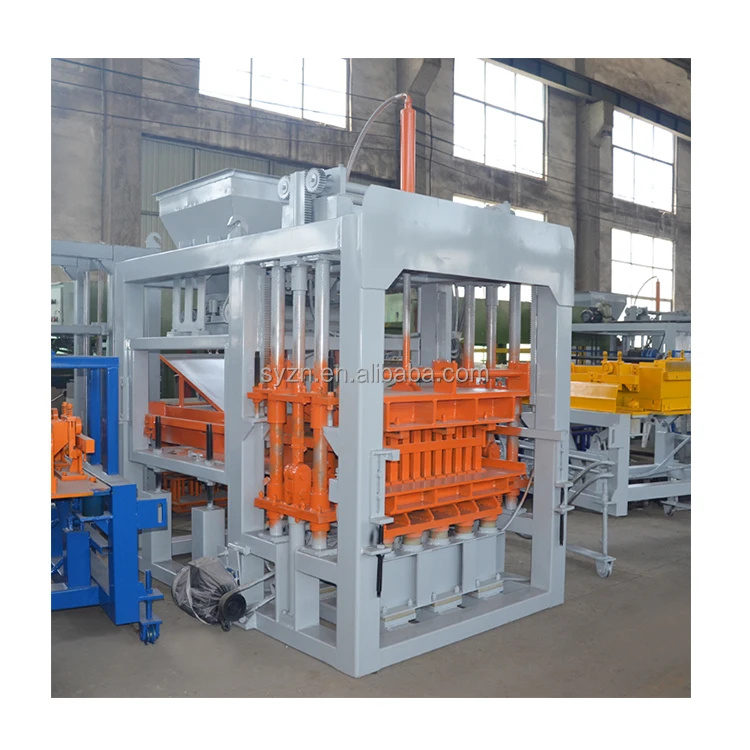
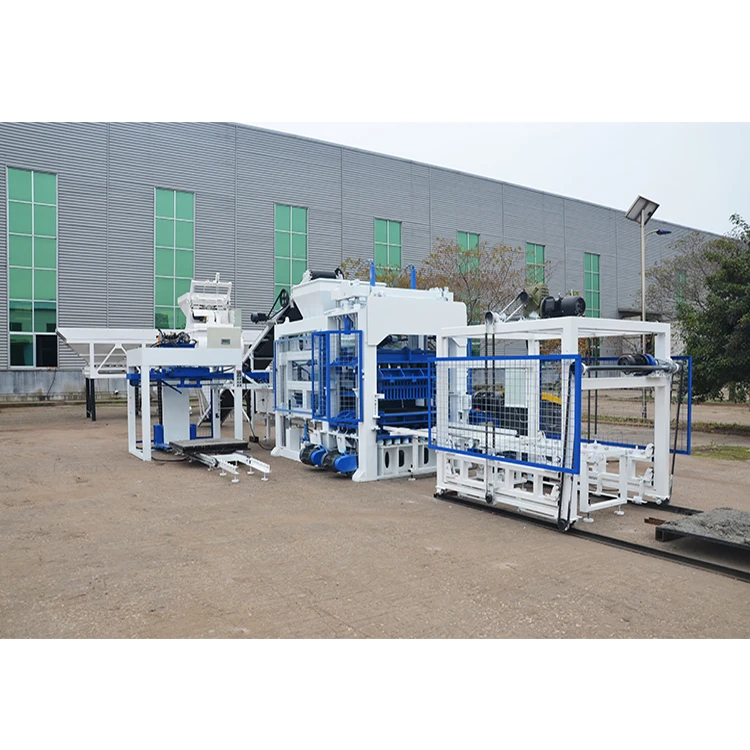
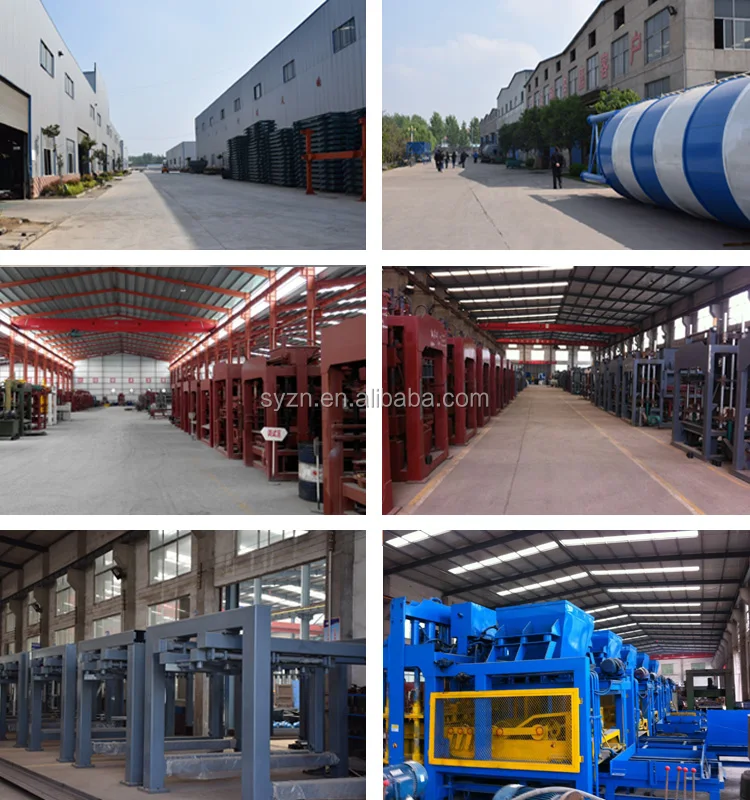
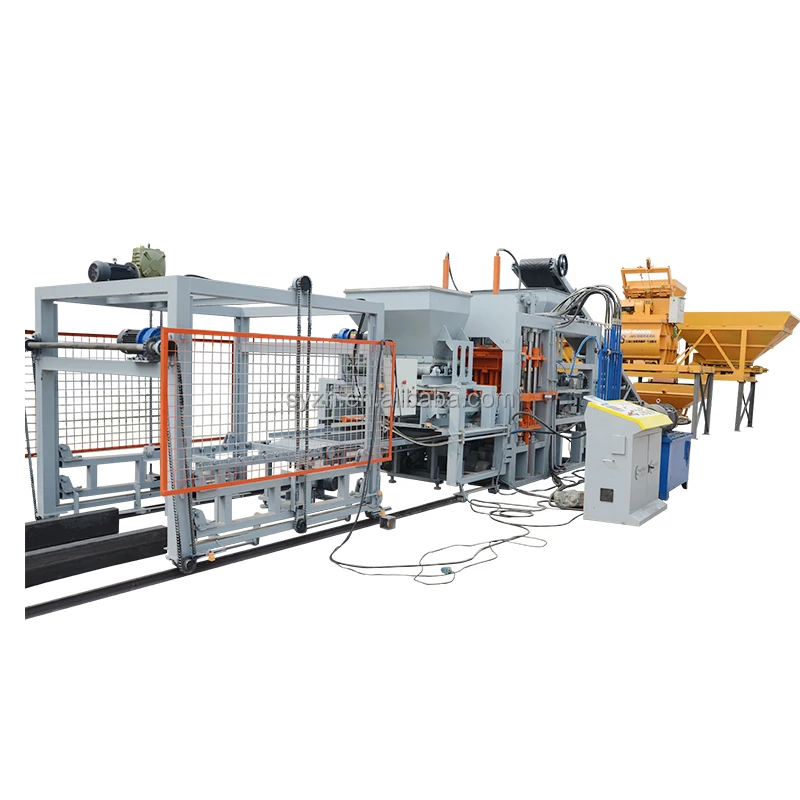
Matched System Design — Every automation station on the QT5-15, from pallet feeding through to stacking, is specified as one coordinated line rather than assembled from disconnected suppliers.
Technical Specifications
| Parameter | Value |
|---|---|
| Model | QT5-15 |
| Product Type | Fully Automatic Concrete Block Making Machine |
| Overall Dimension | 7400 × 1950 × 2800 mm |
| Total Mass | 5000 kg |
| Vibration Form | Platform Vibration |
| Vibration Frequency | 0–60 Hz (adjustable) |
| Vibration Force | 80 kN |
| Moulding Mode | Load automatically, vibration moulding |
| Demolding Method | Hydraulic |
| Hydraulic System | Independent integrated hydraulic station |
| Pallet Size | 1100 × 550 mm |
| Molding Cycle | 15–20 s |
| Overall Power | 32 kW |
| Control System | PLC intelligent control with touch screen |
| Automation Level | Fully automatic (PLC controlled pallet feeding, material feeding, vibrating, demoulding) |
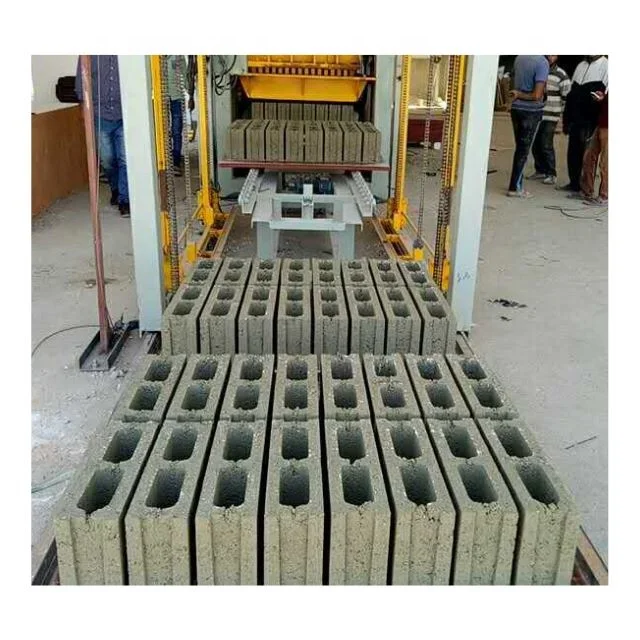
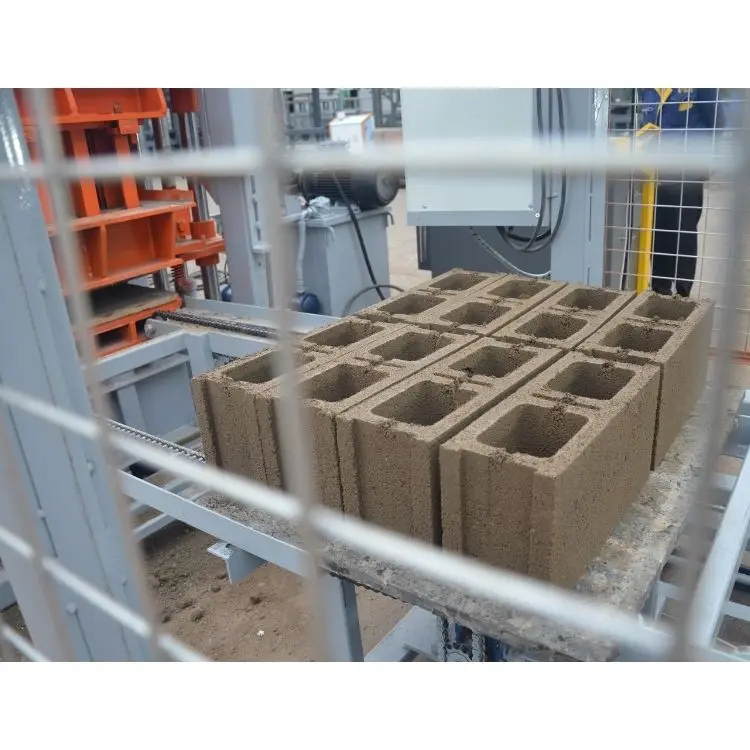
| Output Capacity (Hollow block 400×200×200 mm) | 900–1200 pcs/hour, 7200–9600 pcs/8hr |
| Output Capacity (Hollow block 400×150×200 mm) | 1080–1440 pcs/hour, 8640–11520 pcs/8hr |
| Output Capacity (Solid brick 240×115×53 mm) | 5760–7680 pcs/hour, 46080–61440 pcs/8hr |
| Output Capacity (Rectangular brick 200×100×60 mm) | 3600–4500 pcs/hour, 28800–36000 pcs/8hr (basis: 20–25s cycle) |
| Output Capacity (Zigzag brick 225×112.5×60 mm) | 2304–2880 pcs/hour, 18432–23040 pcs/8hr (basis: 20–25s cycle) |
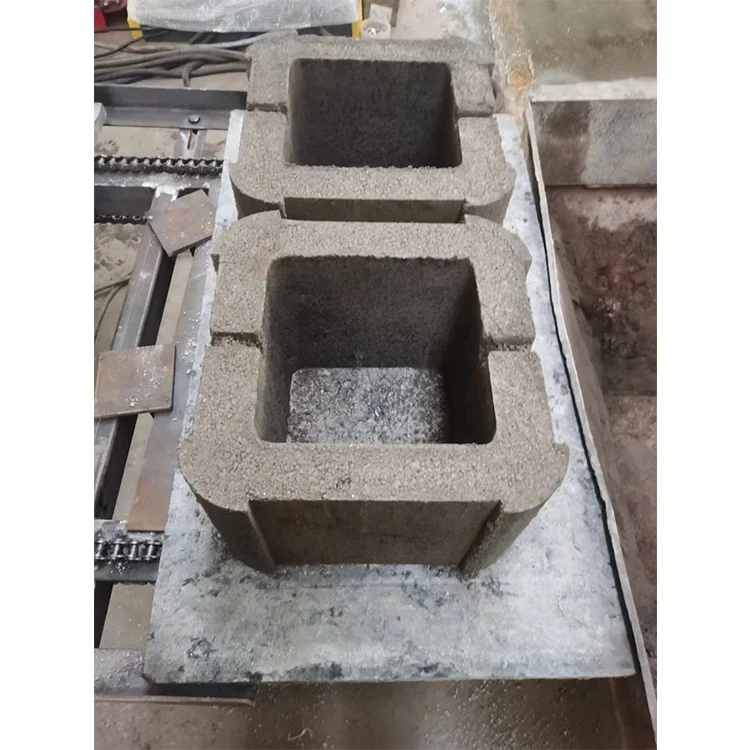
| Mould Compatibility | Hollow block, solid brick, paving brick, zigzag brick (interchangeable moulds) |
| Compressive Strength of Blocks | More than 15 MPa |
| Raw Material Compatibility | Fly ash (up to 70%), slag, gangue, sand, crushed stone, cement, water |
| Factory Area Required | 1000 m² |
| Voltage & Frequency | Configurable (to be confirmed before production) |
| PLC Display Language | Configurable (to be confirmed before production) |
| Warranty | 1 year for the whole machine (excluding spare parts) |
Application Suitability
| Application | Material or Output |
|---|---|
| Hollow block production for building walls | Crushed stone, sand, cement, fly ash blends |
| Solid brick manufacturing | Sand, gangue, slag with cement binder |
| Paving brick and rectangular paver production | Aggregate-rich mixes for high surface durability |
| Interlocking zigzag brick for driveways and walkways | Sand and crushed stone with cement |
| On-site block production for housing projects | Locally sourced aggregate and cement |
| Format expansion for existing concrete product plants | Multiple interchangeable moulds on one press |
Why the PLC Language Must Be Confirmed Before the Price
An automatic QT5-15 block machine PLC controlled system is only intelligent if the operator can read the screen.
I once spent two full days on a commissioning site because the touch-screen interface shipped in a language the local operators could not read. The PLC logic was flawless, the hydraulic station was running perfectly, and the vibration cycle was dialed in — but the machine sat idle while we arranged a remote firmware update. That delay is entirely avoidable when the display language and voltage are locked in writing before the production schedule starts [NEED_CITE: PLC interface language and voltage confirmation protocols for export machinery]. Buyers evaluating automation should treat the human-machine interface as critically as the press tonnage, because every control parameter — from cycle timing to fault reset — flows through that screen.
How PLC Control Removes Guesswork from the Press Cycle
The touch-screen interface on this machine stores process parameters for each mould format, so switching from a 400×200×200 mm hollow block to a 200×100×60 mm paving brick does not depend on operator memory. The PLC recalls the vibration frequency, hydraulic pressure profile, and feed timing that were validated during commissioning. This means the automatic QT5-15 block machine PLC controlled system maintains batch-to-batch consistency across shift changes, which is where most manual plants see their block strength drift.
What Remote Fault Diagnostics Actually Catches in Production
The PLC continuously monitors sensor inputs across the pallet feed, material hopper, vibration motor, and hydraulic demoulding circuit. When a deviation occurs — a pallet misalignment, a hopper level drop, or a hydraulic pressure anomaly — the system logs the fault code and can transmit it for off-site review. This capability matters most during the first months of operation, when the maintenance team is still learning the machine’s normal operating signatures [NEED_CITE: remote diagnostics adoption in concrete block manufacturing]. Rather than waiting for a catastrophic stop, the plant can address trending faults during scheduled downtime.
Reading the Numbers Behind Vibration Force and Cycle Time
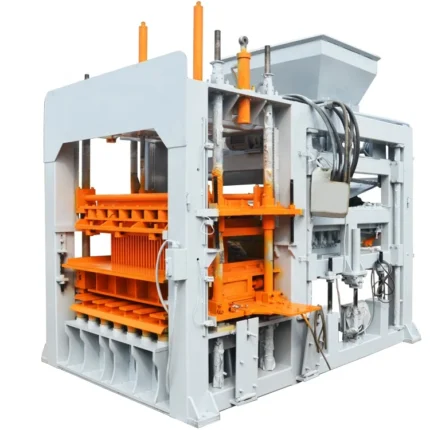
The 80 kN vibration force operating at an adjustable 0–60 Hz frequency is what compacts the concrete mix against the mould walls, and its effectiveness depends directly on the aggregate particle size in your local mix. A higher frequency with lower amplitude works well for fine sand mixes producing solid bricks, while coarser crushed stone blends benefit from lower frequency and higher amplitude to settle larger particles into the mould cavity. The 15–20 second molding cycle quoted for hollow blocks reflects this vibration window plus hydraulic clamp and demould time; switching to rectangular pavers extends the cycle to 20–25 seconds because the denser paving mix requires longer vibration to reach full compaction. The independent hydraulic station is physically isolated from the platform vibration, which prevents the high-frequency oscillation from degrading hydraulic seals and valve response over time. This separation is a detail that only matters after several thousand cycles, when integrated stations begin showing pressure drift and slower demould response.
The Hidden Cost of Skipping the Automation Audit
Plants that add an automatic press without auditing the upstream batching and downstream pallet handling often find the press waiting idle. The QT5-15 can complete a cycle every 15–20 seconds, but if the mixer cannot deliver a consistent batch to the hopper on that schedule, the PLC will pause the line and log a material-feed fault. Similarly, if cured pallets are still being moved by hand while the press expects an automatic pallet return, the entire cycle stalls [NEED_CITE: bottleneck analysis in automated block production lines]. The investment in the press is wasted unless the supporting stations are timed to match.
Why Buyers Source the Automation Package Here
The QT5-15 is configured against the buyer’s actual mix design and target block format rather than a catalogue default, so the PLC parameters loaded at the factory reflect real production conditions. Mould design covers the formats the buyer’s market actually sells, with custom drawings available for non-standard dimensions. The automation level is selectable — a plant can commission the press with semi-automatic pallet handling and add automatic stacking and cubing later without replacing the core machine. Every configuration decision, from pallet size to PLC language, is documented in writing before production begins, which eliminates the on-site surprises that delay commissioning [NEED_CITE: machinery export documentation standards]. The supporting equipment — raw material feeding, mixing, pallet return, and stacking — is specified as one matched system so that cycle times align across every station.
Documentation & Verification
- Line layout and capacity calculation stating the block format assumed for each output tier
- Machine specification sheet with hydraulic and electrical schematic for the 32 kW system
- PLC program backup and touch-screen parameter file for your confirmed mould formats
- Voltage, frequency, and control language confirmation document signed before production
- Factory test record on your specified pallet size and block format before dispatch
- Operation and maintenance manual with wear parts and mould list in your confirmed language
Installation, Commissioning & Support
- Foundation plan sized to the 7400 × 1950 mm footprint with vibration isolation provisions
- Dedicated power circuit rated for the 32 kW overall load at your confirmed voltage and frequency
- Machine arrives dismantled for container loading; reassembly supervised on site
- PLC parameters loaded and validated against your local aggregate and mix design during commissioning
- Operator training on touch-screen interface, mould changeover procedure, and fault code response
- Wear parts list and mould inventory provided with recommended replacement intervals
Preparing Your Inquiry for an Accurate Configuration
To size the automation package correctly, share your target block formats with daily volume requirements and the local aggregate and cement sources you plan to use. Confirm the voltage, frequency, and PLC display language for your site, along with the pallet size that matches your existing curing racks and forklifts. If you are upgrading from a semi-automatic line, describe the current pallet handling and stacking workflow so the supporting equipment can be matched to the press cycle time.
Frequently Asked Questions
Q: How is the output capacity verified for each block format, and what cycle time does each figure assume?
A: Every capacity figure is stated per block format with its corresponding cycle time. Hollow block 400×200×200 mm output is rated at 900–1200 pieces per hour based on a 15–20 second cycle, while rectangular pavers at 200×100×60 mm are rated at 3600–4500 pieces per hour based on a 20–25 second cycle. The line layout document provided with your quotation breaks down daily output by format so you can verify against your actual product mix.
Q: What voltage, frequency, and PLC display language options are confirmed before shipment?
A: Voltage and frequency are configured to match your site supply, and the PLC touch-screen language is set to your operators’ preference. Both are documented in a written confirmation that must be signed before the machine enters production. This step prevents the commissioning delays that occur when control interfaces arrive in an unreadable language or electrical components do not match the local grid standard.
Q: How does the automation level scale from the current configuration?
A: The QT5-15 ships with fully automatic pallet feeding, material feeding, vibration, and hydraulic demoulding. Additional stations — automatic stacking, cubing, and curing rack handling — can be integrated later as separate modules. The PLC architecture supports these additions without replacing the main control cabinet, so the upgrade path is defined at the initial quotation stage.
Q: How is the machine configured to match local aggregate rather than a catalogue default?
A: During the inquiry stage, you provide details on your local aggregate type, particle size distribution, and cement source. The vibration frequency range, hydraulic pressure profile, and mould feed timing are then set to match that specific mix design. Factory testing uses your confirmed mix parameters before dispatch, ensuring the PLC loads are relevant to your actual production conditions from day one.