Description
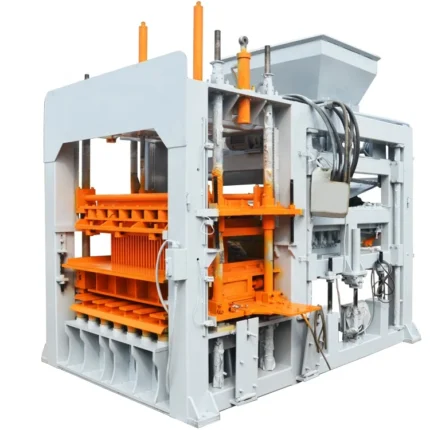
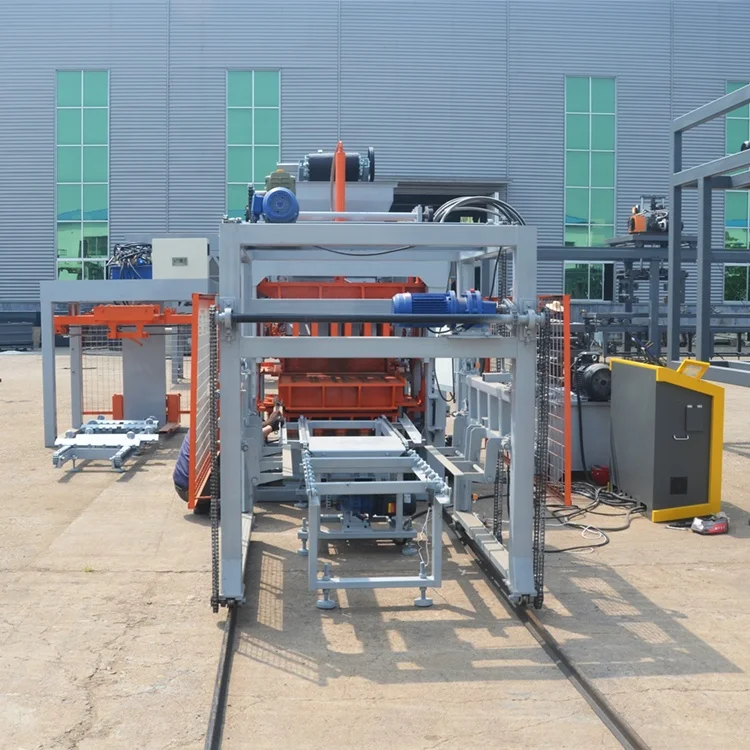
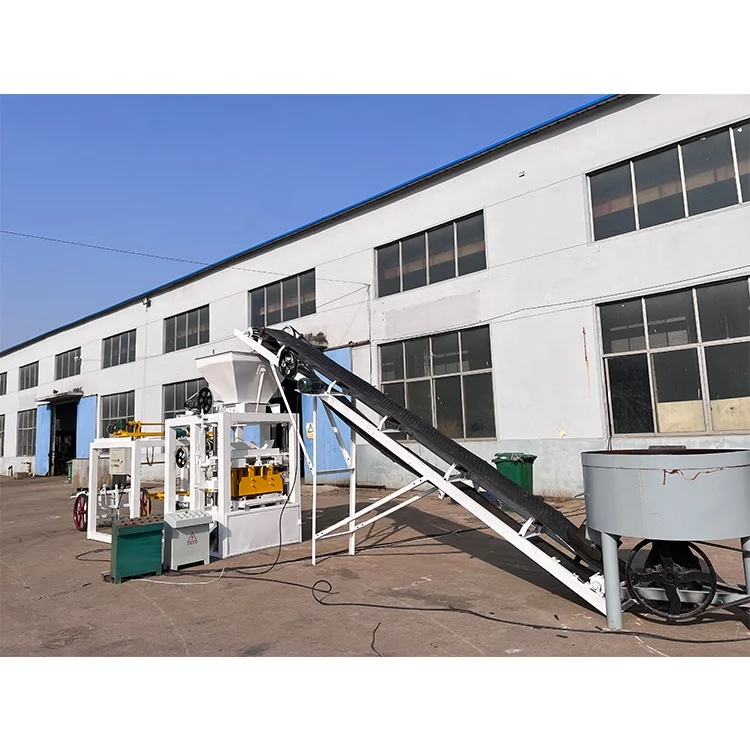
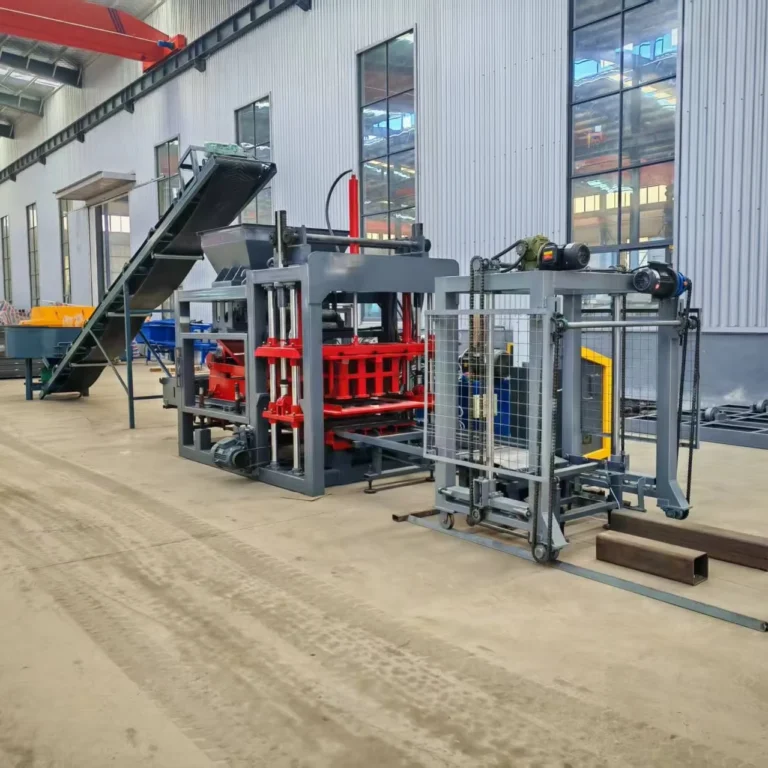
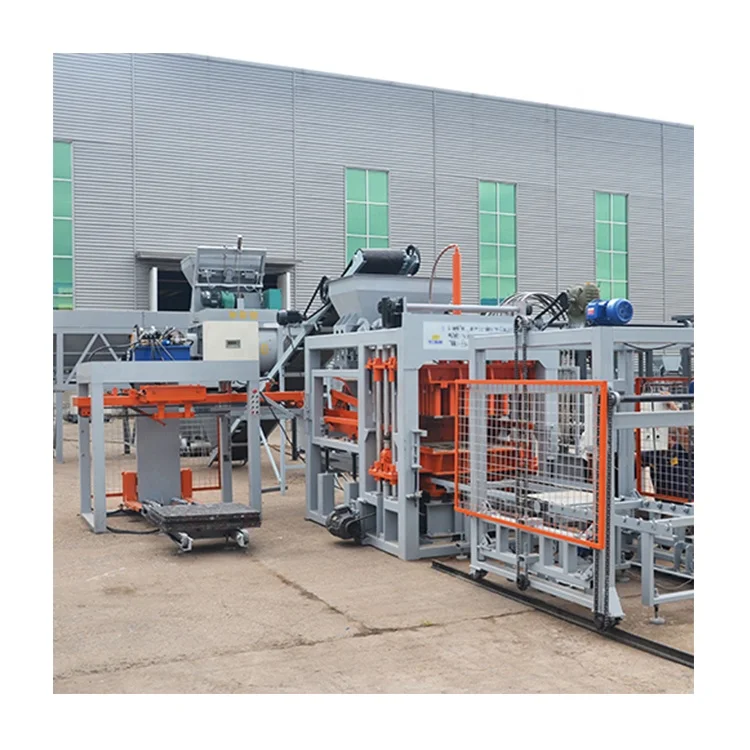
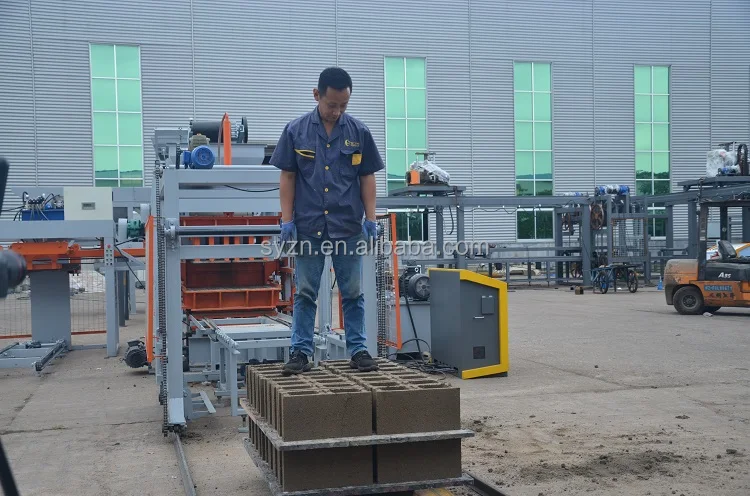
System-Matched Configuration — Every pallet feeder, conveyor and stacking module is timed to the press cycle so the line runs as one unit, not a collection of independent stations.
Technical Specifications
| Parameter | Value |
|---|---|
| Model | QT6-15 |
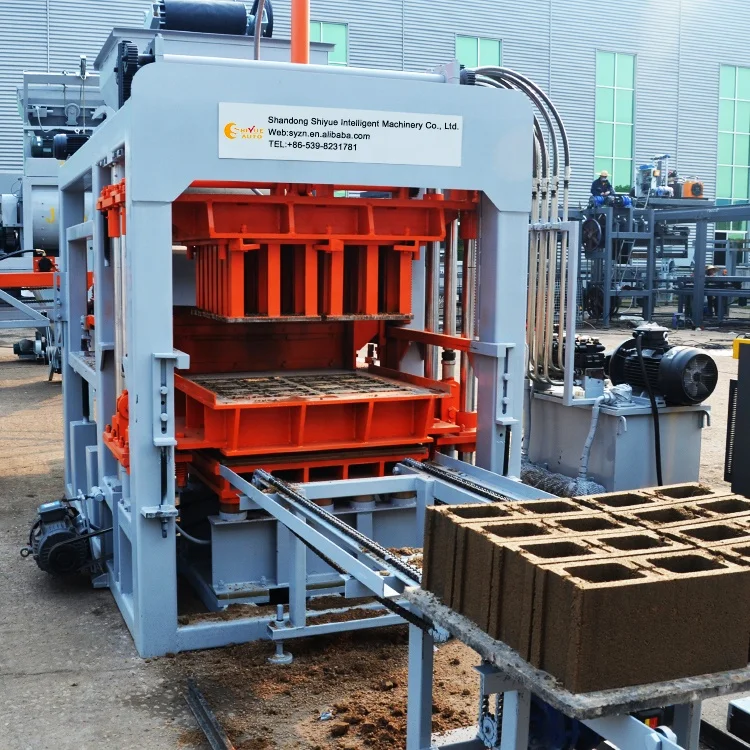
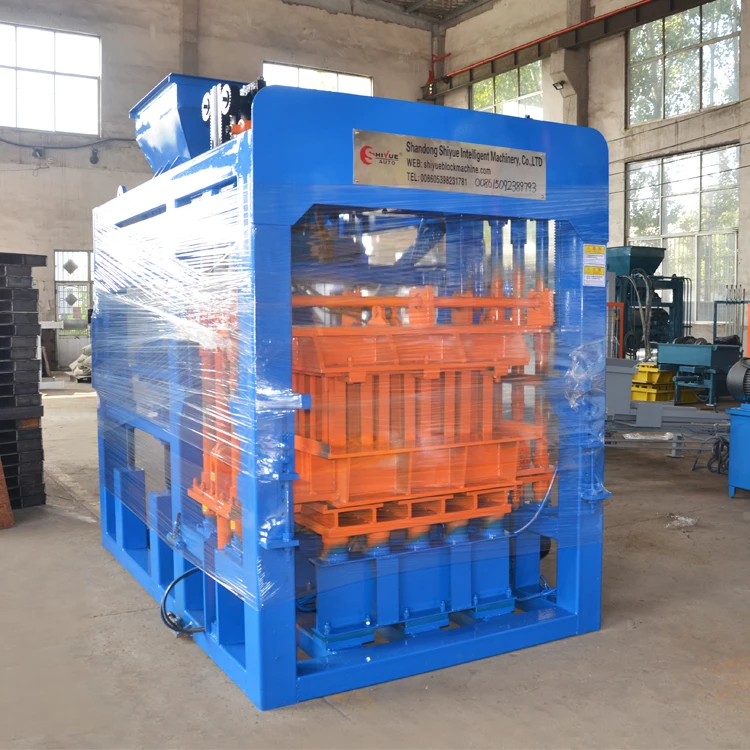
| Product Type | Automatic Concrete Block Making Machine |
| Overall Dimensions (L×W×H) | 7400×1900×2660 mm |
| Molding Cycle | 15-25 s |
| Vibration Frequency | 4600 r/min |
| Vibration Force (Exciting Power) | 40-50 KN |
| Rated Power | 31.25 kW |
| Mixer Model | JQ350 |
| Pallet Size | 850×550×25 mm |
| Total Weight | 7 T |
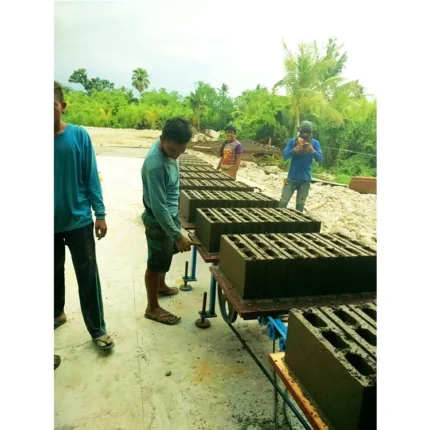
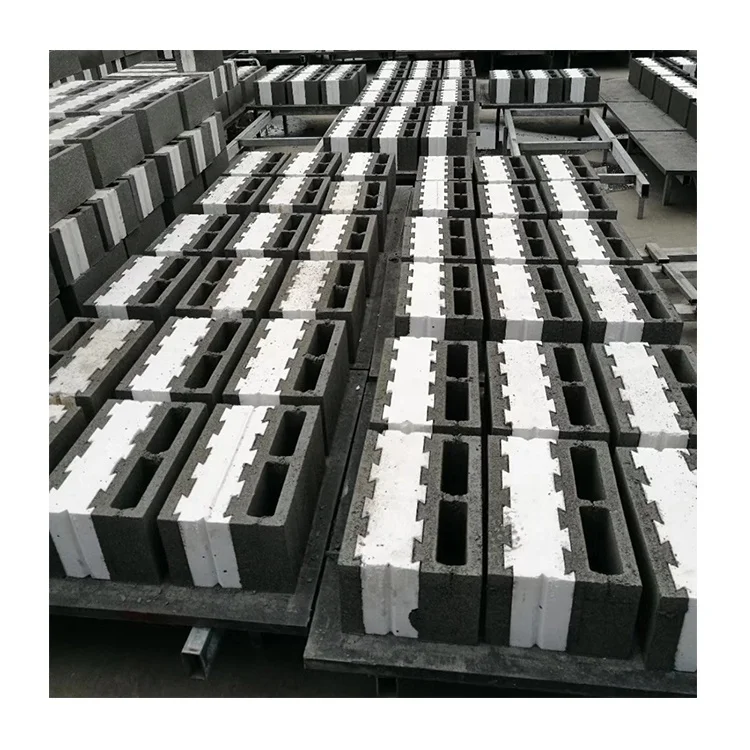
| Applied Products | Paver, solid block, hollow block, curbstone |
| Raw Materials | Crushed stones, sand, cement, dust, fly ash |
| Control System | PLC control system |
| Hydraulic Station | Included |
| Output Capacity | 1200-1680 pcs/hr (basis: 400×200×200 mm hollow block) |
| Output Capacity | 1800-2400 pcs/hr (basis: 400×150×200 mm hollow block) |
| Output Capacity | 3240 pcs/hr (basis: 240×115×53 mm solid brick) |
| Automation Level | Automatic (pallet feeder, brick conveyor, block sweeper included) |
| Voltage & Frequency | To be confirmed per site requirements |
| Hydraulic Pressure | To be confirmed |
| Mould Change Time | To be confirmed |
Application Suitability
| Application | Material or Output |
|---|---|
| Hollow block production for masonry walls | Crushed stone, sand, cement, fly ash mixes |
| Solid brick manufacturing for load-bearing structures | Cement, dust, fine aggregate blends |
| Paver and interlocking block for landscaping | High-density aggregate with cement binder |
| Curbstone production for road and pavement edging | Coarse aggregate with reinforced cement matrix |
Why the Automation Question Should Come Before the Quotation
An automatic QT6-15 block making machine PLC controlled only delivers consistency when every peripheral station is timed to the press, not bolted on as an afterthought.
I have watched lines where the press cycled perfectly but the pallet feeder lagged two seconds behind, so the operator reached in manually and the whole rhythm broke down. The vibration force dropped out of sync with the hydraulic pressure, and green blocks started cracking on demoulding [NEED_CITE: PLC timing synchronization in concrete block production lines]. Buyers had paid for full automation and still ended up hand-stacking half the shift output. The automatic QT6-15 block making machine PLC controlled system here addresses that gap by governing pallet feeding, brick conveying and block sweeping from one logic controller, so the cycle holds whether you are running hollow blocks or switching to pavers.
Removing the Operator from the Cycle Loop
The PLC control system on the automatic QT6-15 block making machine PLC controlled setup manages the molding cycle between 15 and 25 seconds, adjusting vibration frequency at 4600 r/min and coordinating the hydraulic station to hold pressure through the full compression phase. This removes the variable that causes the most batch-to-batch inconsistency: an operator who shortens the cycle when the queue backs up. The machine does not negotiate with the production schedule — it holds the same parameters whether it is the first pallet of the morning or the five-hundredth.
From Semi-Automatic to Full Line Automation
A buyer starting with core press automation can add automatic stacking and cubing modules later without replacing the PLC backbone. The control architecture on this line is designed so that peripheral stations — pallet feeding, brick conveying, block sweeping — plug into the existing logic without a full rewire. This matters for plant owners who need to justify capital in stages, adding labor-reducing modules as production volume grows and the curing area expands to handle the throughput.
Reading the Numbers Behind the Output Figures
Vibration force at 40-50 KN and a vibration frequency of 4600 r/min work together with hydraulic pressure to compact the mix into the mould cavity. If the local aggregate has high clay content, the vibration force needs to be higher to break the air pockets; if the mix is lean on cement, the hydraulic pressure must compensate to hold the green block together on demoulding. The pallet size of 850×550×25 mm determines how many blocks fit per cycle and must align with the curing rack dimensions and forklift capacity already in the plant [NEED_CITE: pallet and curing rack compatibility in block production]. The rated power of 31.25 kW covers the press, mixer model JQ350 and hydraulic station running simultaneously — undersizing the electrical supply causes voltage drops that trip the PLC mid-cycle.
When the Wrong Peripheral Choice Costs More Than the Press
A pallet feeder specified without checking the curing area layout means pallets stack at the wrong height for the forklift, forcing a second handling step that negates the automation investment. A brick conveyor running faster than the press cycle drops blocks onto each other before they have cured enough to withstand contact. These mismatches are not visible in the quotation — they surface three weeks after commissioning when the plant owner realizes the line still needs four workers where the proposal promised two [NEED_CITE: block line peripheral mismatch consequences].
Why Buyers Specify the Full Line Here
Block machinery as a single focus means the press, mould, pallet and handling equipment are configured as one matched system rather than sourced from separate suppliers. The automatic QT6-15 block making machine PLC controlled setup is tuned against the buyer’s actual mix design and local aggregate before shipment, not set to a catalogue default. Mould design covers the formats the buyer’s market actually sells, with custom drawings available. Automation level is selectable so a plant owner can start with the core press and pallet feeder, then add stacking and cubing as volume justifies it. Installation includes on-site commissioning with operator training so the crew understands what the PLC is doing and why.
Documentation & Verification
- Line layout drawing with capacity calculation stating the block format assumed for each output figure
- Machine specification sheet confirming vibration force, hydraulic pressure and pallet size matched to your mix
- Mould drawing and format list for every block type included in the quotation
- Voltage, frequency and PLC display language confirmation document signed before production
- Factory test record demonstrating cycle time and block density on your specified raw material blend
- Operation and maintenance manual with wear parts list and mould change procedure
Installation, Commissioning & Support
- Foundation plan based on the 7400×1900 mm footprint and 7 T total weight with vibration isolation specifications
- Dedicated electrical circuit sized for the 31.25 kW rated power with voltage and frequency confirmed to your local grid standard
- Machine dismantled for container loading with reassembly sequence documented for on-site crew
- First-run commissioning with PLC parameters set against your actual crushed stone, sand and cement proportions
- Operator training covering mould change procedure, pallet feeder adjustment and daily maintenance checkpoints
- Wear parts and mould supply chain established before first replacement is due
What We Need to Configure Your Line
Send the block formats your market sells, the daily volume you need to hit, and the raw materials available locally — including aggregate type and moisture content. Confirm your site voltage, frequency and the PLC display language your operators will work with. Let us know the curing area dimensions and forklift capacity you already have so the pallet size and stacking height align from day one.
Frequently Asked Questions
Q: How is the output capacity verified and what block format is it based on?
A: Every output figure is stated with its block format as the basis — for example, 1200-1680 pieces per hour is measured on 400×200×200 mm hollow blocks, and 3240 pieces per hour on 240×115×53 mm solid bricks. The capacity calculation document supplied with your quotation names the exact format assumed so daily planning is not based on a best-case scenario that does not match your production mix.
Q: What voltage, frequency and PLC display language will the machine ship with?
A: These are confirmed in writing before production starts. The electrical specification matches your site grid, and the PLC display is set to the language your operators read — not assumed from the shipping destination. This prevents commissioning delays where the machine arrives and the crew cannot navigate the control screen.
Q: How does the automation level affect labour requirements and can I add modules later?
A: The base automatic configuration includes the pallet feeder, brick conveyor and block sweeper, removing manual handling between the press and curing area. Stacking and cubing modules can be added to the existing PLC architecture later without replacing the controller, so you can reduce labour in stages as production volume grows.
Q: How is vibration force and hydraulic pressure matched to my local aggregate?
A: Before the machine ships, the vibration force and hydraulic pressure are adjusted against your specific raw material sample — including aggregate type, clay content and cement ratio. This ensures green blocks hold together on demoulding and reach target density, rather than the machine running a default setting that assumes a standard sand mix.
Q: What is the mould change procedure and how long does a format changeover take?
A: The mould change procedure is documented in the operation manual supplied with the machine, and operators are trained on it during commissioning. Changeover time depends on the mould size and clamping system — this figure is confirmed during the configuration stage so you know whether format switching fits your production schedule.