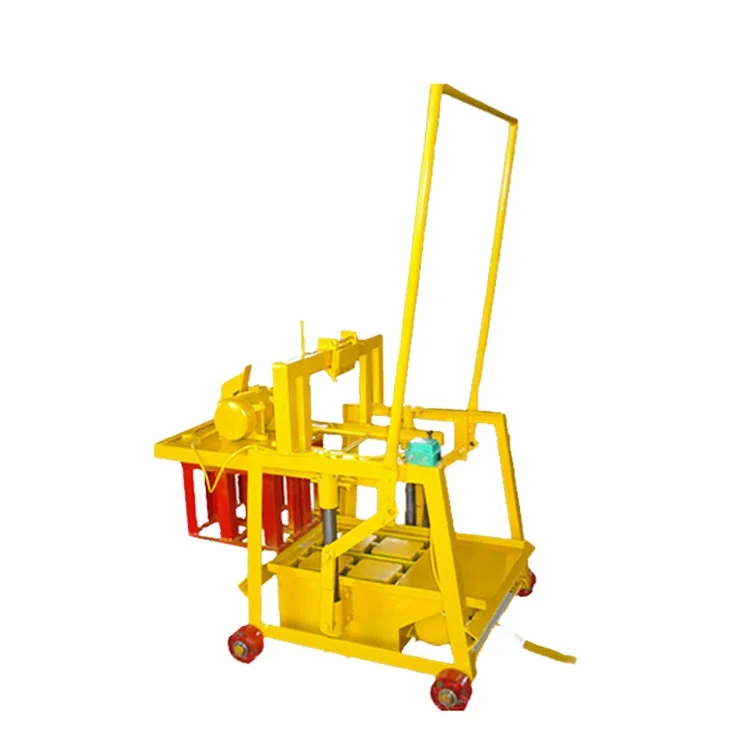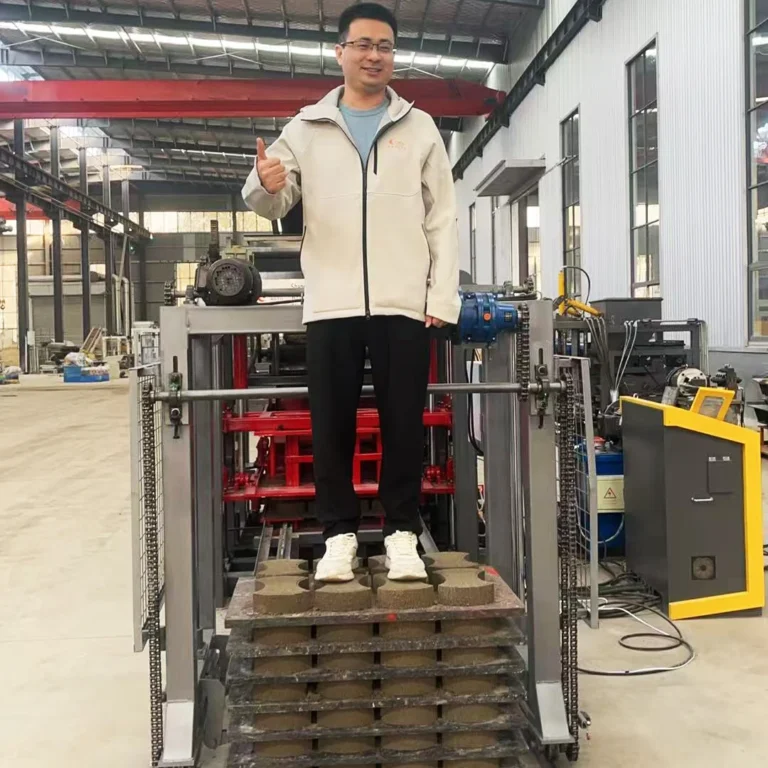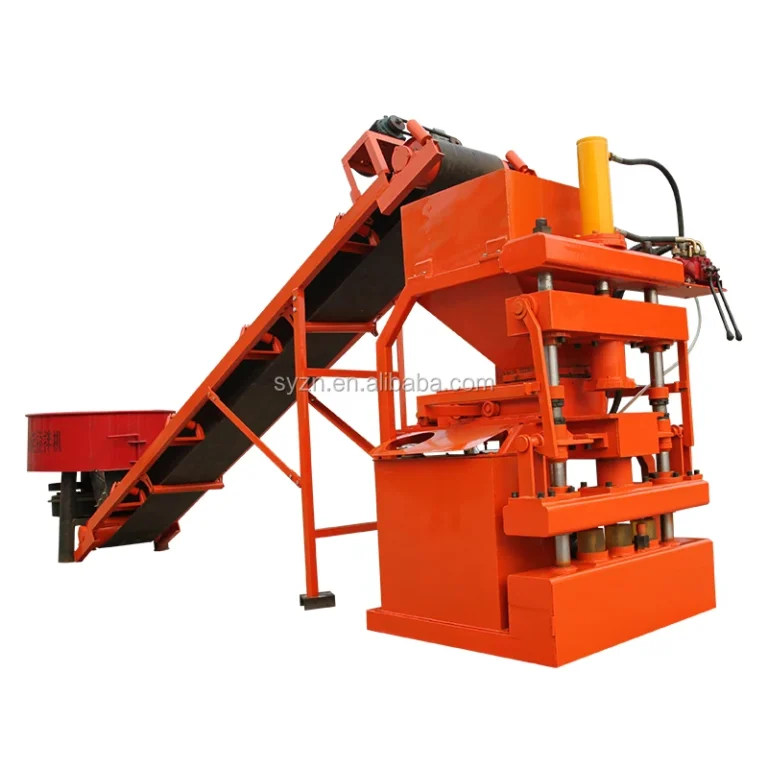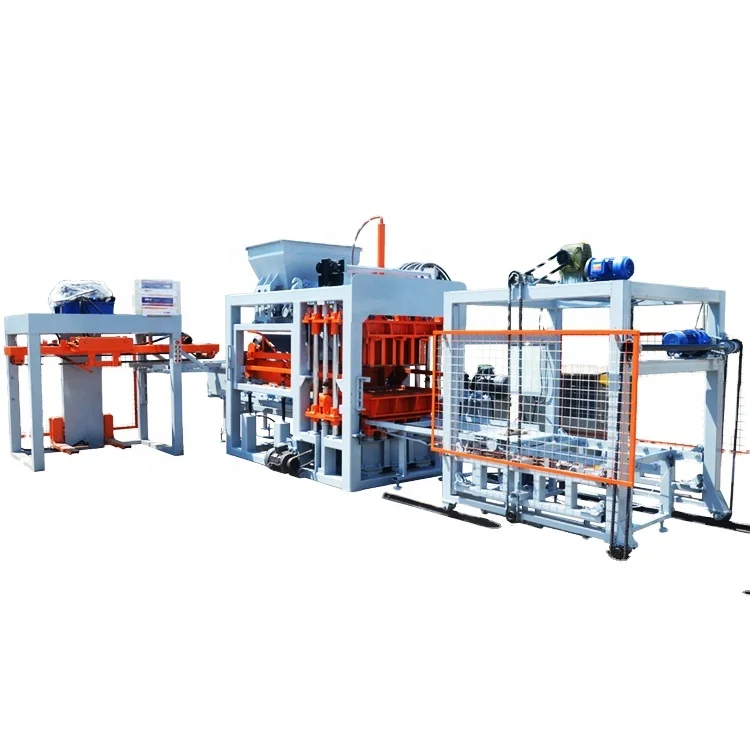
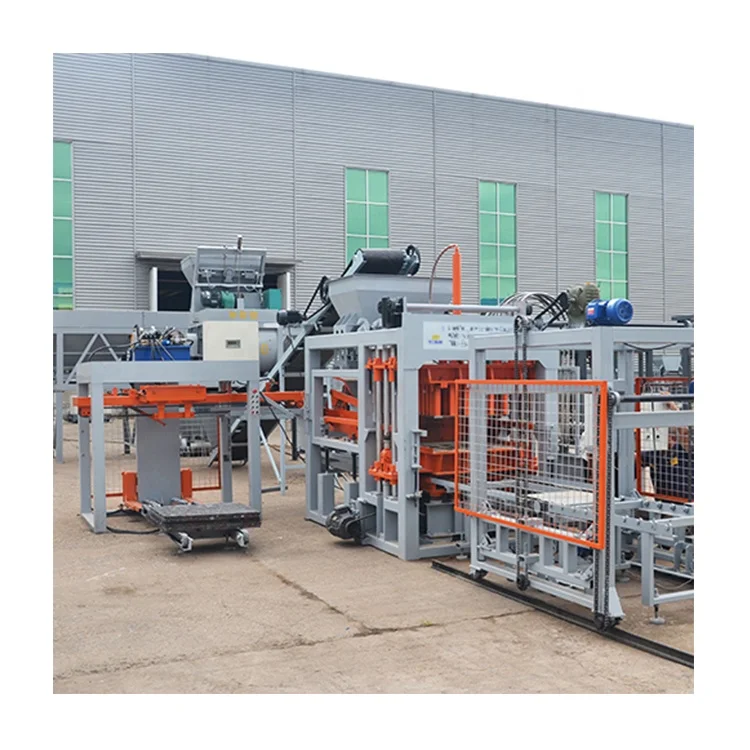
Description
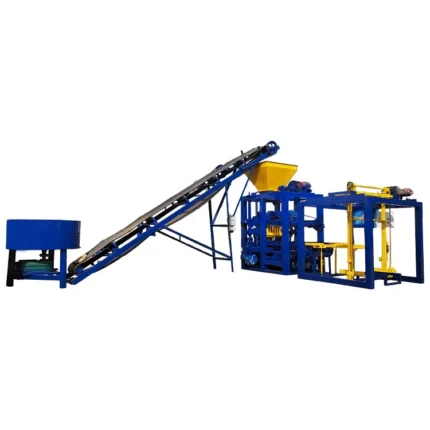
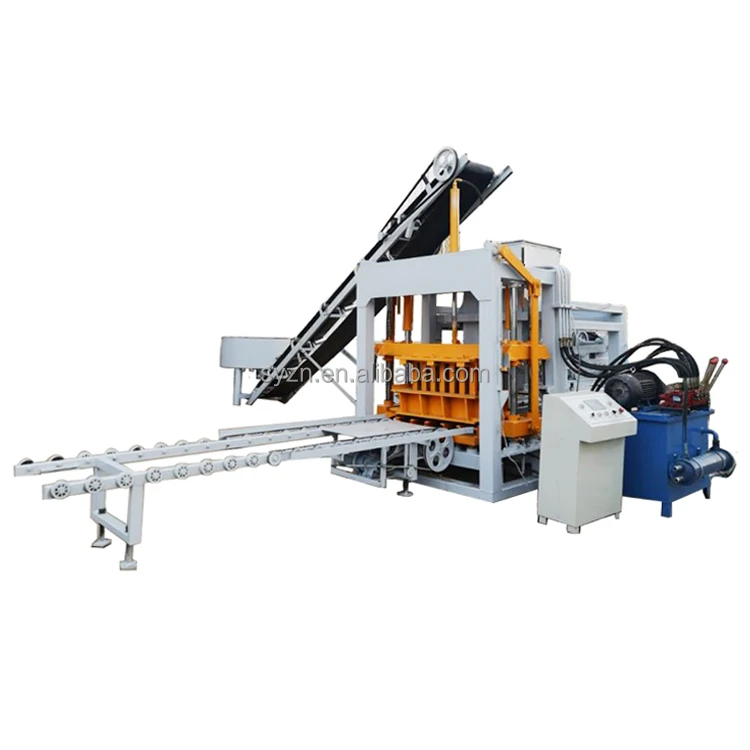
Configuration set against the buyer’s actual mix design — the QT6-15 automatic PLC controlled block making machine is commissioned around your local aggregate, cement dosage and target format rather than shipped with catalogue defaults.
Technical Specifications
| Parameter | Value |
|---|---|
| Model | QT6-15 |
| Product Type | Automatic Hydraulic Concrete Block Making Machine |
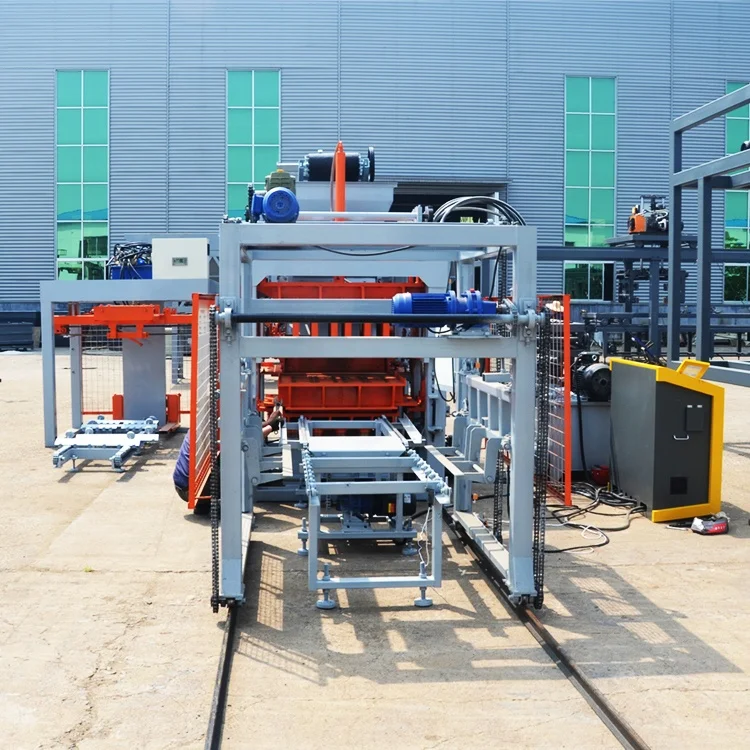
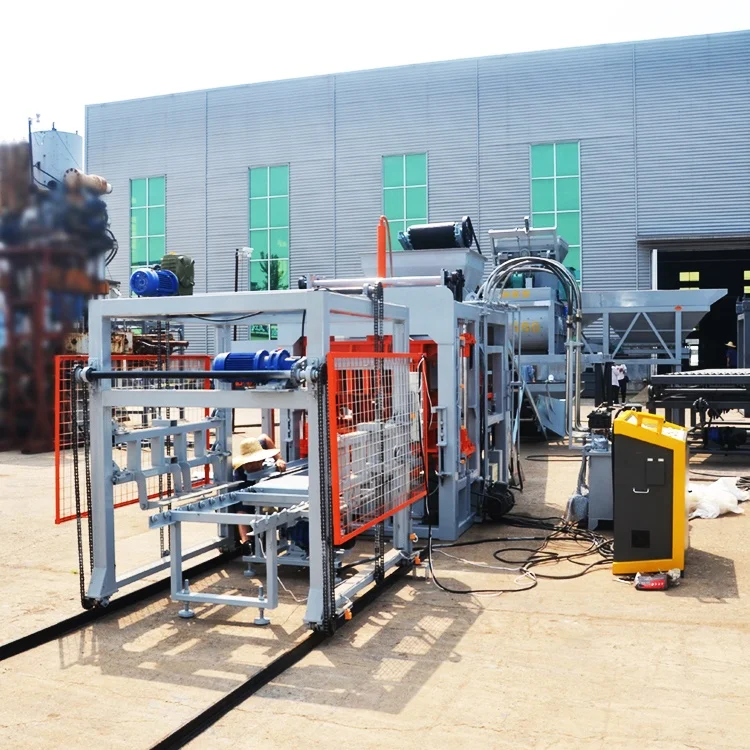
| Overall Dimensions (L×W×H) | 8200×1700×2950 mm |
| Total Mass | 7 T |
| Overall Power | 37 kW |
| Vibration Force | 45 kN |
| Vibration Frequency | 0–60 Hz (adjustable) |
| Vibration Form | Platform Vibration |
| Moulding Mode | Automatic loading, vibration moulding |
| Demolding Method | Hydraulic |
| Pallet Size | 880×850 mm |
| Molding Cycle | 15–20 s |
| Control System | PLC with touch screen, fault diagnosis, safe logic interlock |
| Hydraulic System | Independent integrated hydraulic station |
| Required Factory Area | 1200 m² |
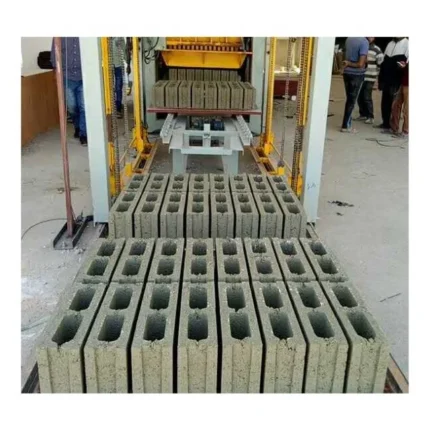
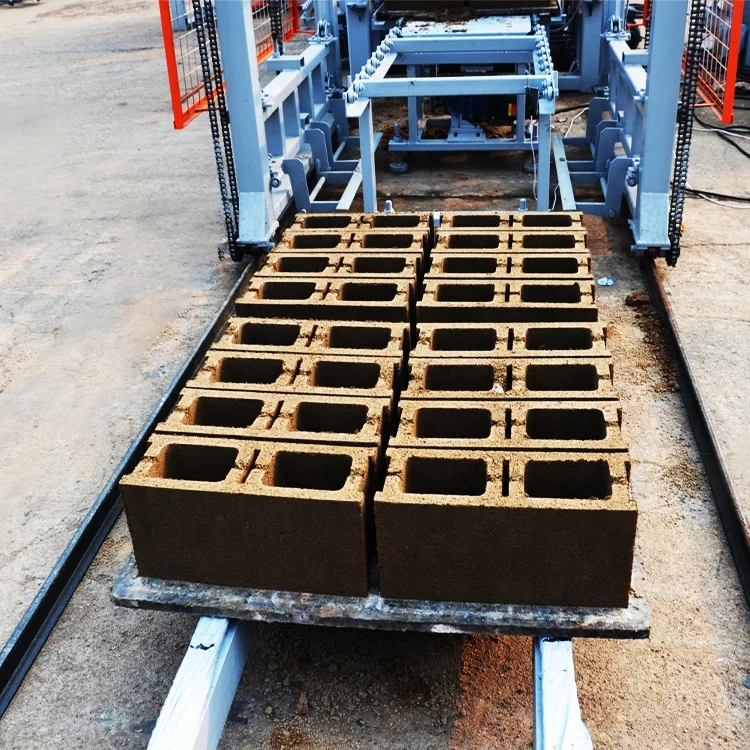
| Output: Hollow Block 400×200×200 mm | 1080–1440 pcs/h; 8640–11520 pcs per 8-hr shift |
| Output: Hollow Block 400×150×200 mm | 1440–1920 pcs/h; 11520–15360 pcs per 8-hr shift |
| Output: Solid Brick 240×115×53 mm | 5760–7680 pcs/h; 46080–61440 pcs per 8-hr shift |
| Output: Rectangular Paver 200×100×60 mm | 2160–2880 pcs/h; cycle 20–25 s; 17280–23040 pcs per 8-hr shift |
| Output: Zigzag Brick 225×112.5×60 mm | 2160–2880 pcs/h; cycle 20–25 s; 17280–23040 pcs per 8-hr shift |
| Block Compressive Strength | >15 MPa |
| Raw Material Adaptability | Waste ash, slag, various aggregates; adjustable cement dosage |
| Voltage & Frequency | Configurable to destination country (confirm before order) |
| PLC Display Language | Confirm language options for operator interface |
Application Suitability
| Application | Material or Output |
|---|---|
| Hollow block production | Fly ash, slag, crushed stone with cement binder |
| Solid brick manufacturing | Quarry dust, river sand, recycled aggregate blends |
| Rectangular paving brick | Fine aggregate, cement, optional pigment for colour |
| Zigzag interlocking paver | Graduated aggregate with higher cement dosage for strength |
| Multi-cellular brick | Lightweight aggregate or ash-based mix designs |
What Cycle Time Actually Means When Aggregate Varies
Cycle figures on paper assume a mix that behaves perfectly under vibration. The automatic PLC controlled block making machine must compensate for real material behaviour, not laboratory conditions.
I spent years commissioning block lines across Southeast Asia, and the most common disappointment at handover is output falling short of brochure numbers. One buyer specified a plant based on a 15-second cycle, only to find that local river sand carried enough silt to demand longer vibration for full compaction. The automatic PLC controlled block making machine responded well once we extended the cycle and adjusted frequency, but the daily tally had to be recalculated from day one. [NEED_CITE: influence of aggregate grading on concrete block cycle time]
Where Operator Guesswork Ends
The PLC stores process parameters per block format — vibration frequency, pressure hold time, demolding speed — so every batch of 400×200×200 mm hollow blocks follows the same sequence. When an operator switches to solid brick, the touch screen calls the matching profile instead of relying on memory. This removes the variable that causes the most inconsistency between morning and afternoon production on manually operated presses.
Fault Diagnosis Without a Service Call
The on-board fault-diagnosis system traces interlock failures, hydraulic pressure deviations and sensor faults to a specific component on the touch screen. Operators resolve simple issues — a blocked proximity sensor, a solenoid that did not energise — before they escalate into a full line stop. For plant owners upgrading from relay-controlled machines, this is the difference between a five-minute reset and a half-shift of troubleshooting. [NEED_CITE: PLC fault diagnosis in industrial concrete equipment]
Reading the Numbers That Matter
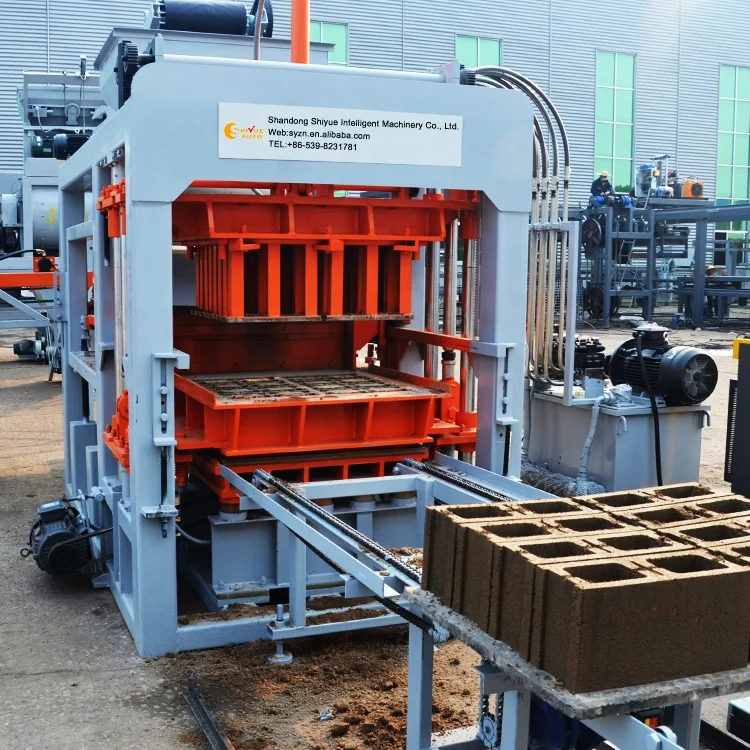
Vibration force of 45 kN combined with an adjustable 0–60 Hz frequency range lets the platform vibration system be tuned to the density required by each format. Paving bricks demand higher compaction than hollow blocks, so the frequency ramps up while cycle time extends to 20–25 seconds. The independent integrated hydraulic station sits away from the main frame, isolated from vibration and dust, which keeps demolding pressure repeatable over long shifts. Pallet size of 880×850 mm should match the curing racks and forklifts already in your yard — a mismatch here creates a bottleneck that no amount of PLC logic can fix.
The Cost of Skipping the Material Trial
Buyers who order on catalogue specifications alone often discover that their local aggregate requires a different water-to-cement ratio than the factory test used. When vibration force and hydraulic pressure are not matched to that real mix, block edges crumble during demolding or compressive strength drifts below the 15 MPa threshold. Rectifying this after shipment means weeks of trial runs, wasted cement and pallets full of rejected output. [NEED_CITE: compressive strength variance from untested aggregate in block production]
Why Sourcing Here Changes the Outcome
Block machinery is the single focus, so the machine, mould, pallet and handling are specified as one matched system. Configuration is set against your actual mix design and target block format rather than a catalogue default. Mould design covers the formats your market sells, including custom drawings to buyer specifications. Automation level is selectable — a semi-automatic line today can grow into full PLC stacking and cubing later. Installation includes operator training so the PLC profiles are understood from the first shift.
Documentation & Verification
- Line layout showing capacity calculation per block format with pallet flow
- Factory test record on your aggregate and target mould before dispatch
- PLC parameter sheet with profiles for every format in your scope
- Hydraulic and electrical schematic for local maintenance teams
- Mould drawing and format list matching the block shapes you will produce
Installation, Commissioning & Support
- 1200 m² factory area required; slab must handle 7 T dynamic load from vibration
- 37 kW total power needs dedicated circuit; confirm voltage and phase locally
- Machine ships in sections; re-assembly on site aligns frame to platform vibration
- First-day commissioning sets PLC profiles against your live mix and pallet size
- Operator training covers fault-diagnosis screens and mould-change procedure
- Wear parts list and hydraulic seal kit included for the first replacement cycle
What to Prepare Before Enquiry
To match the automatic PLC controlled block making machine to your plant, share the block formats your market demands, the aggregate source and typical gradation, and the daily output you need per format. Confirm the voltage, frequency and phase available at your site, along with the PLC display language your operators read. If you already run pallets and curing racks, send their dimensions so the 880×850 mm pallet size is verified against your handling equipment.
Frequently Asked Questions
Q: How is output capacity verified, and which block format is each figure based on?
A: Every capacity figure in the specification table states the exact block format it assumes — for example, 1080–1440 pieces per hour applies only to 400×200×200 mm hollow blocks. A separate line layout confirms the format, cycle time and pallet count behind your quoted daily output, so there is no gap between proposal and production floor.
Q: Which PLC language options and voltage configurations are available?
A: The touch-screen interface can be supplied in the language your operators use, and voltage, frequency and phase are built to your country’s grid standard. Both must be confirmed in writing before production begins so the machine arrives ready for immediate connection and commissioning.
Q: How does the fault-diagnosis system help on the shop floor?
A: The PLC traces interlock, sensor and hydraulic faults to a specific component and displays the finding on screen. Operators resolve common issues — a blocked sensor or a tripped solenoid — in minutes, reducing dependence on external service visits and keeping the line running through a full shift.
Q: Can the line be expanded to full automation later?
A: The QT6-15 architecture supports a staged upgrade. A buyer can start with semi-automatic pallet handling and later add automatic stacking and cubing within the same PLC framework, avoiding a complete press replacement when production volume justifies higher automation.
Q: How are vibration and pressure matched to my local materials before shipment?
A: A factory test runs your target block format with a mix sample or representative aggregate. Vibration frequency, hydraulic pressure and cycle time are adjusted until compressive strength exceeds 15 MPa, and the resulting PLC profile ships with the machine for immediate use on site.