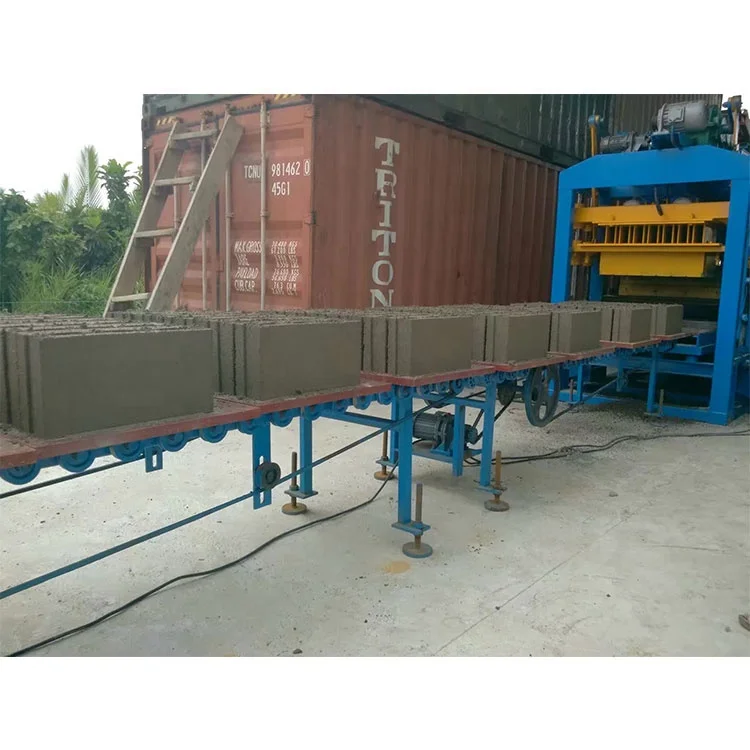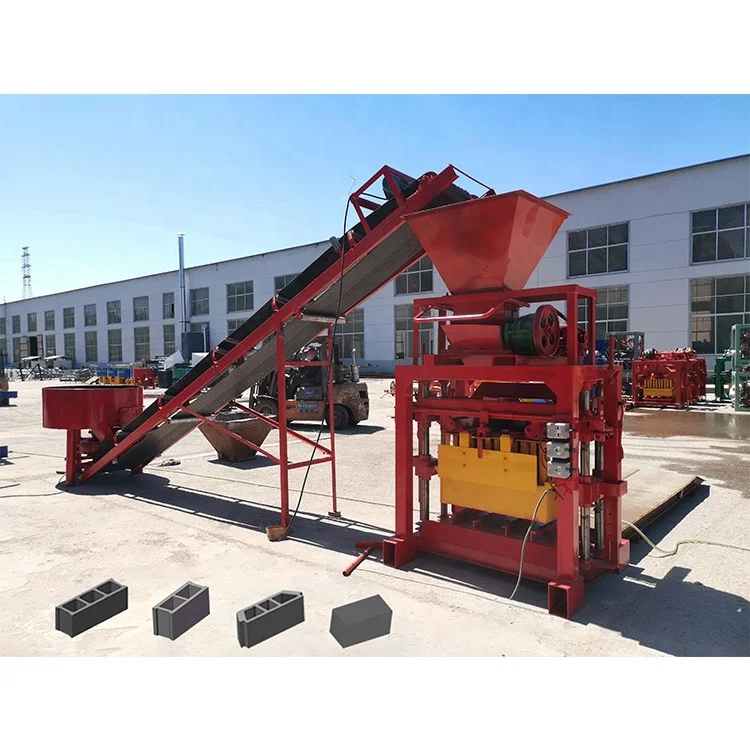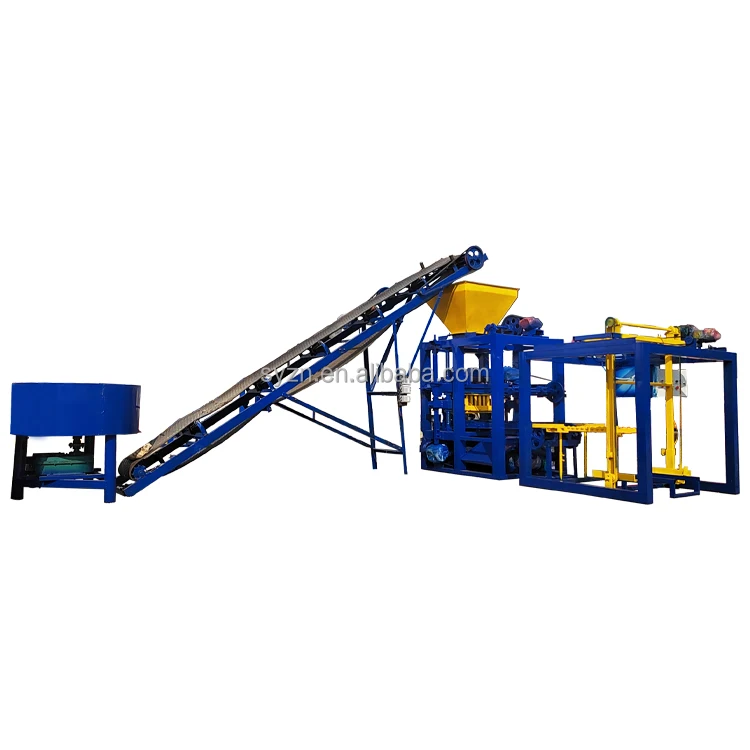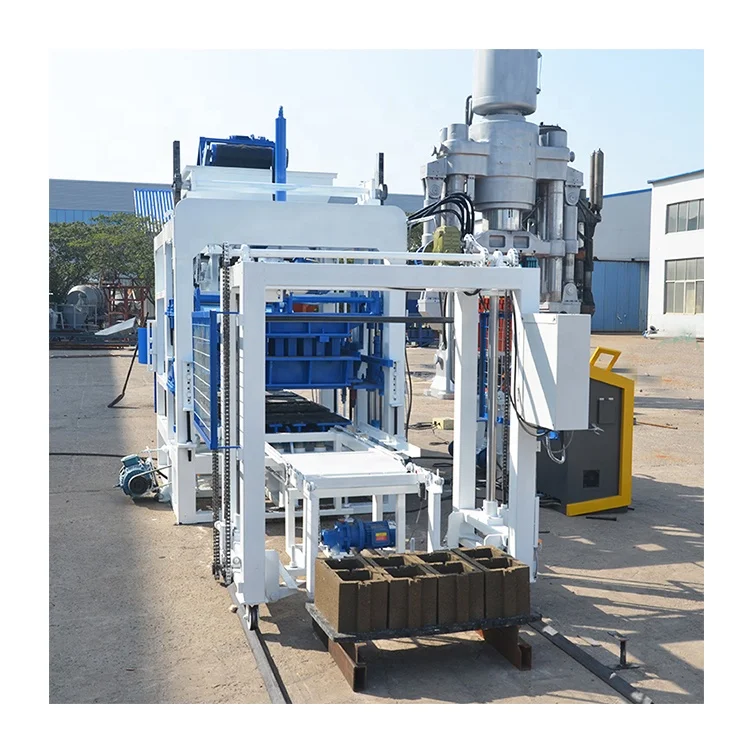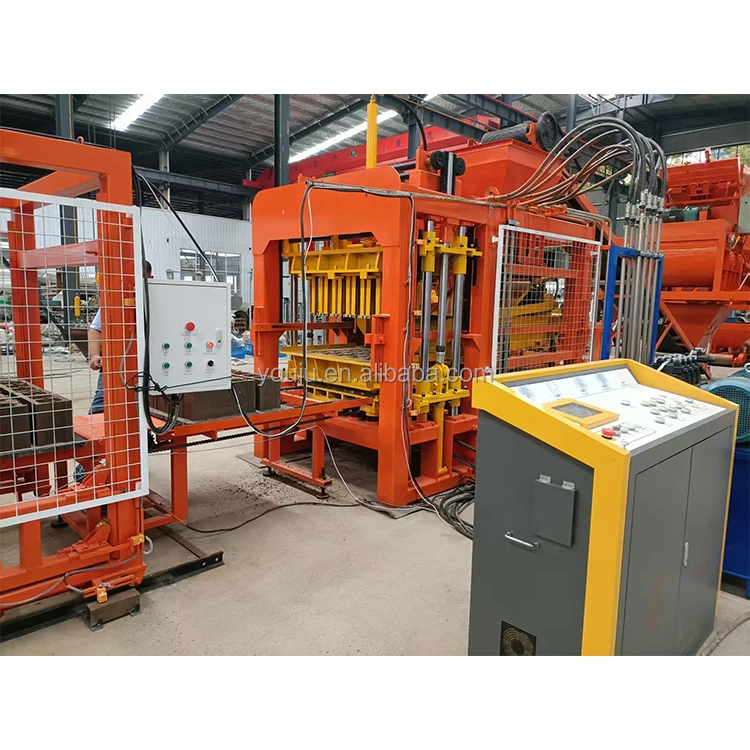
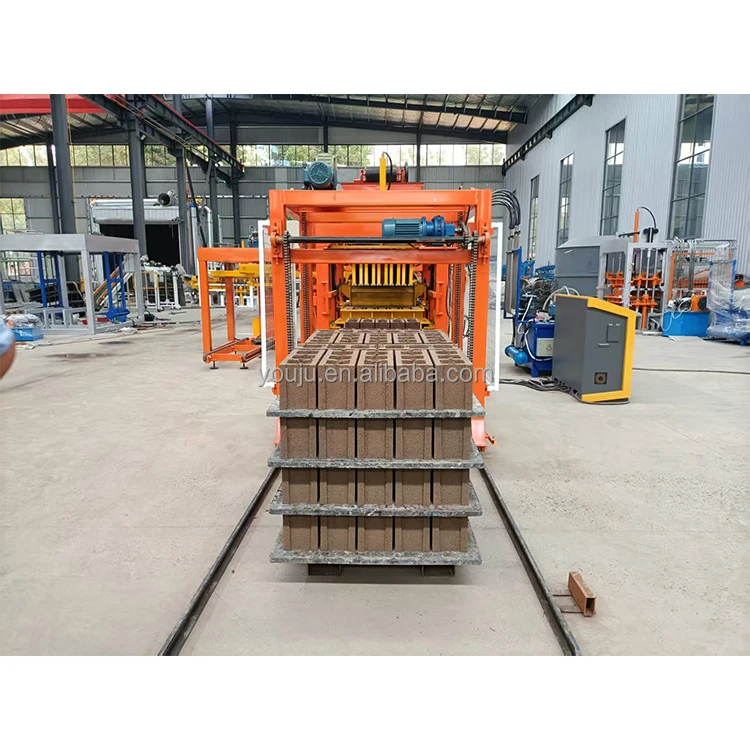
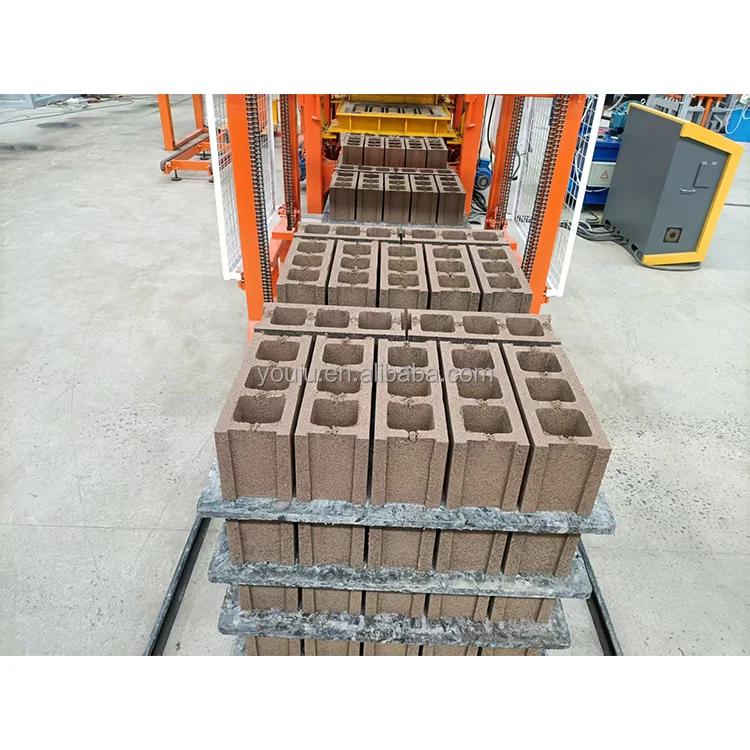


Description
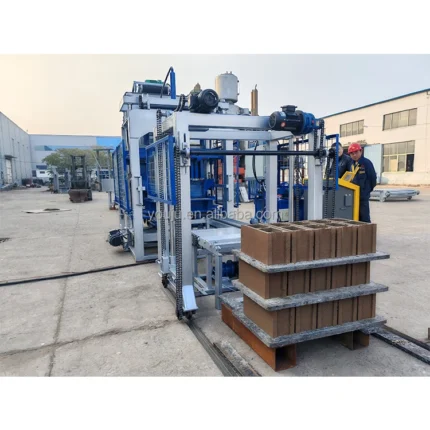
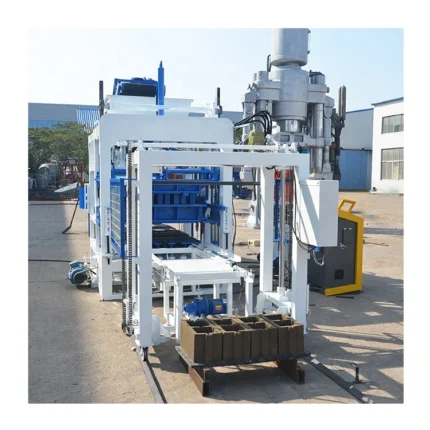
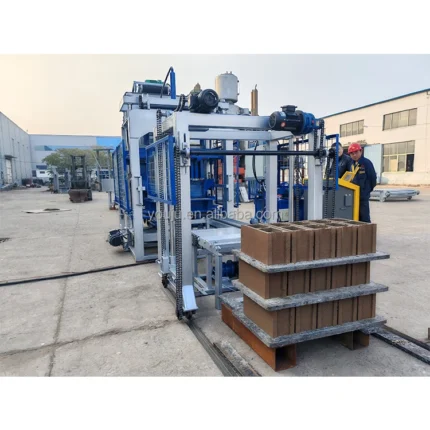
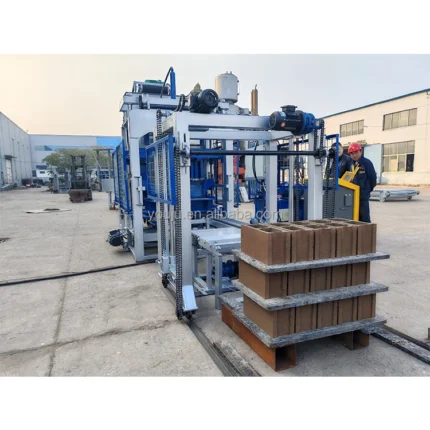
Integrated line logic — the QT6-15 is specified as a matched press, mould, pallet, and handling system rather than a standalone unit bolted to whatever automation happens to be in the yard.
Technical Specifications
| Parameter | Value |
|---|---|
| Model | QT6-15 |
| Product Type | Automatic Hydraulic Concrete Block Making Machine |
| Overall Dimensions (L×W×H) | 7100×1500×3000 mm |
| Weight of Machine | 8700 kg |
| Rated Pressure | 21 MPa |
| Main Vibration Form | Platform vibration |
| Vibration Frequency | 4500–5100 r/min |
| Pallet Size | 880×850 mm |
| Moulding Cycle | 15–25 s (basis to be confirmed per block format and mix) |
| Overall Power | 31.25 kW |
| Drive Type | Hydraulic drive |
| Control System | PLC intelligence control with human-machine dialogue |
| Automation Level | Fully automatic |
| Raw Material Ratio (Cement : Sand : Stone) | 1 : 4 : 5 (8–10% cement, 30–40% sand, 50–60% stone) |
| Water Consumption per Day | 3–5% of raw material weight |
| Mould Change | Replaceable moulds for different concrete brick sizes |
| Voltage & Frequency | Configurable — to be confirmed before order |
| PLC Display Language | Configurable — to be confirmed before order |
| Key Features | PLC-controlled batching dialogue, hydraulic pressure with platform vibration, replaceable mould system, selectable automation stations |
Application Suitability
| Application | Material or Output |
|---|---|
| Hollow block production for wall construction | Cement, sand, and crushed stone aggregate at 1:4:5 ratio |
| Solid brick production for load-bearing and partition walls | Cement-sand-stone mix, higher compaction pressure |
| Paving block and interlocking brick production for yards and roads | Same base mix with pigment or face-mix layer where required |
| Format expansion for existing concrete product plants | Quick mould swap to add new sizes to a running line |
Why "15 Seconds per Cycle" Means Nothing Without the Format
Cycle time only matters when you know which block it was measured on.
Sellers quote the automatic QT6-15 block machine PLC controlled at a 15–25 second moulding cycle, but that number shifts depending on whether you are pressing a thin paver or a tall hollow block, and whether your local aggregate is sharp river sand or crushed granite. I have watched plant owners in West Africa receive a machine that hit its quoted cycle on solid bricks, then spend a month trying to coax the same pace out of hollow blocks the local market actually buys. The mismatch is not the machine — it is the assumption that one number covers every format [NEED_CITE: block cycle time dependency on format and aggregate type].
What PLC Dialogue Actually Removes from the Operator
A human-machine dialogue interface on the automatic QT6-15 block machine PLC controlled means the operator selects a stored recipe rather than manually adjusting water dosing, vibration duration, and press stroke each shift. When the mix changes — say from a river-sand batch to a crushed-stone batch — the PLC recalls the adjusted parameters, keeping block density consistent without relying on operator memory or shift-to-shift handover notes.
The Upgrade Path from Semi-Automatic to Full Line Automation
Starting with a semi-automatic press and bolting on automation later almost always costs more than specifying the line correctly at the outset. The QT6-15 platform allows stations — automatic pallet feeding, stacking, and cubing — to be added as individual modules. A buyer who begins with manual pallet handling can introduce an automatic stacker once curing rack throughput justifies it, without replacing the press itself [NEED_CITE: modular automation upgrade path in block production].
Reading the Specs That Actually Shape Your Output
The 21 MPa rated pressure and 4500–5100 r/min platform vibration frequency work together: pressure compacts the mix downward while vibration settles fine particles into voids. If vibration is too weak for your aggregate gradation, blocks leave the press with honeycomb voids; if pressure is too high for a lean mix, the block cracks on ejection. The 880×850 mm pallet size dictates how many blocks fit per cycle and must match the curing rack spacing and forklift tine width already in your yard — a pallet chosen without checking these dimensions creates a bottleneck downstream. At 31.25 kW overall power, the machine requires a dedicated circuit with correct voltage and frequency, which varies by export market and must be locked in before production begins.
The Cost of Skipping the Voltage Conversation
Voltage, frequency, and PLC display language are the three most common reasons a fully automatic line sits idle on arrival. I have seen a plant in South Asia wait over two weeks for a replacement PLC module because the display shipped in a language the operators could not read, while the local electrician spent days rewiring a 380V motor to match a 415V supply [NEED_CITE: voltage and frequency mismatch impact on commissioning delays]. Every day the line sat still, the contractor was paying curing-rack rental and idle crew wages.
Why Procurement Lands Here
Block machinery is the single focus of the supply chain behind this equipment, so the press, mould, pallet, and handling stations are specified as one matched set rather than assembled from separate vendors. Configuration is built against the buyer’s actual mix design and local aggregate, not a catalogue default that assumes materials the buyer cannot source. Mould design covers the formats the buyer’s market actually sells, with custom drawings available when a project calls for a non-standard size. Automation level is selectable at order and upgradeable later, so a first-time plant owner can start semi-automatic and add stations as output grows. Installation and commissioning support includes operator training on the specific PLC interface and hydraulic controls the crew will use daily.
Documentation & Verification
- Line layout and capacity calculation stating the exact block format assumed for the quoted cycle time
- Machine specification sheet with confirmed voltage, frequency, and PLC display language
- Mould drawing and format list matched to buyer’s market requirements
- Hydraulic and electrical schematic for local maintenance team reference
- Factory test record on buyer’s specified block format before dispatch
- Operation and maintenance manual with wear parts and mould list
Installation, Commissioning & Support
- Foundation pad sized to the 7100×1500 mm footprint with anchor bolt layout provided before pour
- Dedicated power circuit rated for 31.25 kW at confirmed voltage and frequency
- Machine arrives in dismantled state with reassembly supervised on site
- First-run parameter tuning against buyer’s actual cement, sand, and aggregate mix
- Operator training on PLC dialogue screen, recipe storage, and fault diagnostics
- Hydraulic wear parts and mould inventory list handed over with recommended spares
What to Include in Your First Inquiry
To move past generic quotes and get a configuration that actually fits your site, share your target block format and dimensions, the local aggregate type and gradation you will be running, and the voltage and frequency available at your plant. If you already have curing racks and forklifts, send the rack spacing and pallet dimensions so the 880×850 mm pallet can be verified against your existing equipment.
Frequently Asked Questions
Q: How is realistic daily output calculated for my specific block format and mix design?
A: The 15–25 second moulding cycle is a starting point. Realistic daily output is calculated by multiplying confirmed cycle time for your exact block format by operating hours, then deducting mould change, pallet loading, and maintenance windows. A capacity calculation sheet stating the assumed format accompanies every proposal.
Q: What automation level does the QT6-15 include, and can I add stations later?
A: The base configuration is fully automatic at the press with PLC control. Automatic pallet feeding, stacking, and cubing stations can be specified at order or added individually later. The control architecture supports modular additions without requiring a press replacement or full PLC reprogramming.
Q: How are voltage, frequency, and PLC display language confirmed before shipment?
A: These three parameters are locked during the quotation stage and written into the production order. The factory test record includes a voltage verification step and a screenshot of the PLC display in the confirmed language before the machine is dismantled for packing.
Q: What mould formats are available, and how long does a mould change take?
A: Moulds cover hollow blocks, solid bricks, paving blocks, and interlocking formats, with custom drawings available for non-standard sizes. Mould change time depends on the quick-release system specified and is confirmed per configuration — a figure is included in the line layout so buyers can plan format rotation around shift patterns.
Q: How are pallet size and stacking method matched to my existing curing area?
A: The 880×850 mm pallet is checked against your curing rack spacing and forklift tine width before order. If your existing racks use a different dimension, pallet size is adjusted accordingly so that wet blocks move from press to curing without manual re-stacking or forklift adapter plates.