Description
Process Control as a System — every automation element on the QT6-15 is configured around your actual control language, voltage standard, and target block format before the machine leaves the factory, so commissioning is a verification step rather than a discovery phase.
Technical Specifications
| Parameter | Value |
|---|---|
| Model | QT6-15 |
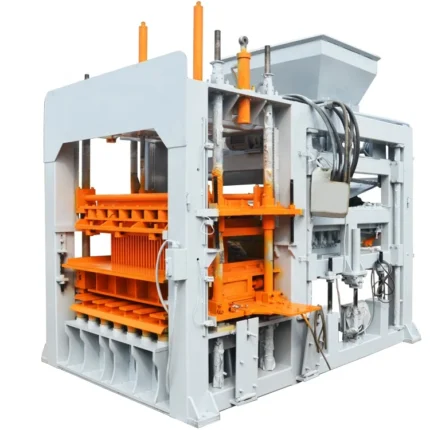
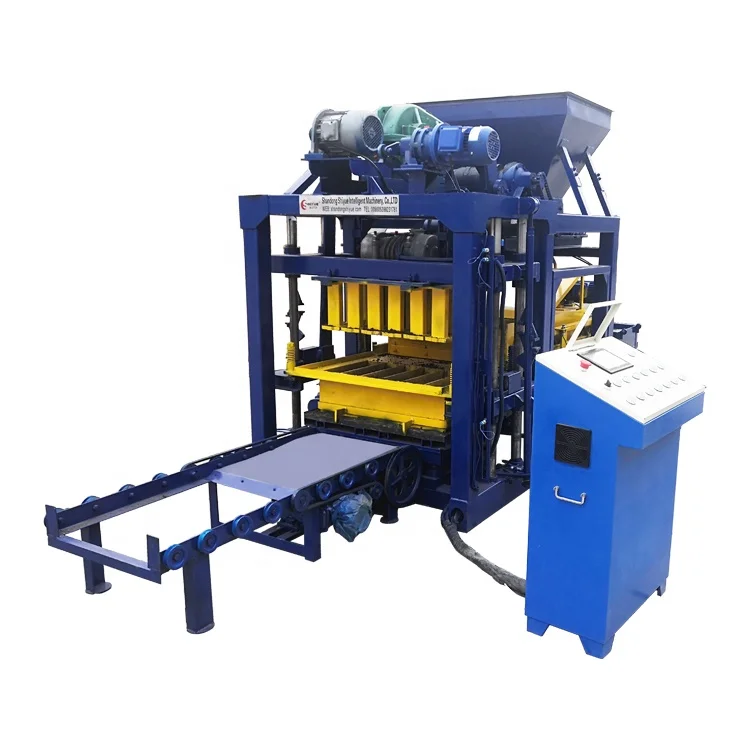
| Product Type | Hydraulic Concrete Block Making Machine |
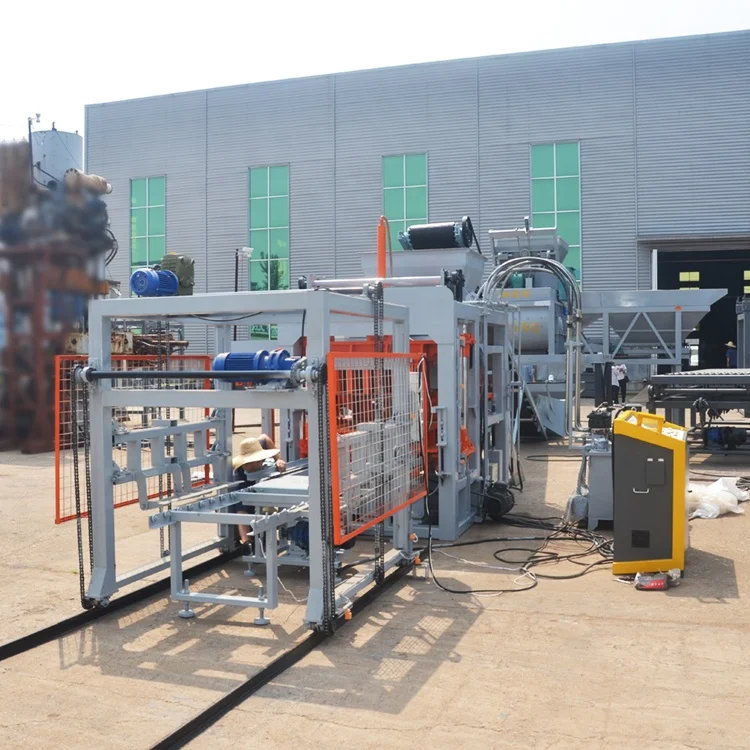
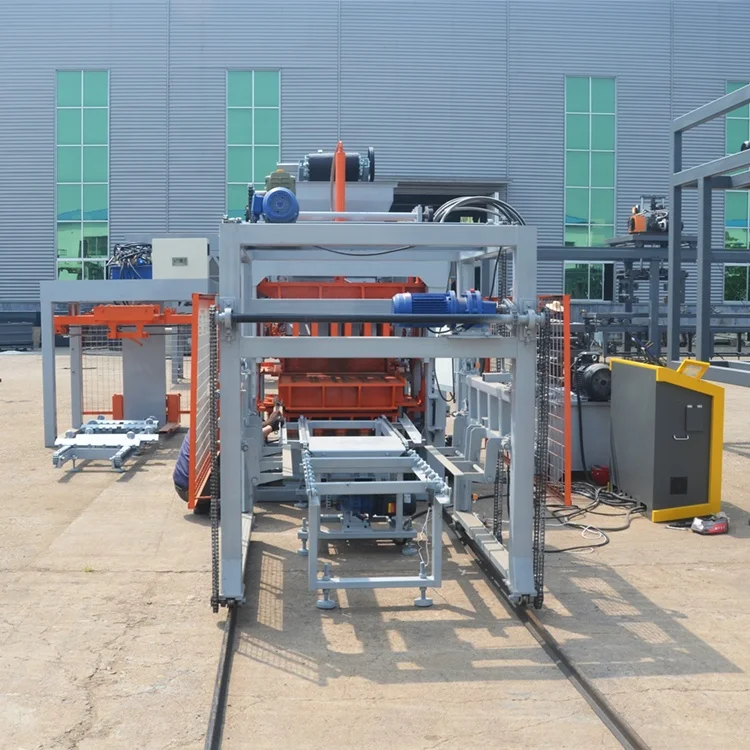
| Overall Dimensions (L×W×H) | 8200×1700×2950 mm |
| Vibration Frequency | 0–60 Hz |
| Vibration Form | Platform Vibration |
| Moulding Mode | Automatic loading, vibration moulding |
| Pallet Size | 880×850 mm |
| Molding Cycle | 15–20 s (basis to be confirmed per block format) |
| Overall Power | 37 kW |
| Vibration Force | 45 kN |
| Total Mass | 7 T |
| Demolding Method | Hydraulic |
| Recommended Factory Area | 1200 m² |
| Control System | PLC with touch screen HMI, fault diagnosis system, safe logic interlock circuit |
| Hydraulic System | Independent integrated hydraulic station, isolated from dust and main machine vibration |
| Automation Level | High — automatic loading, PLC-controlled process, touch screen interface |
| Raw Material Adaptability | Waste ash, slag, and various aggregates; cement dosage adjustable |
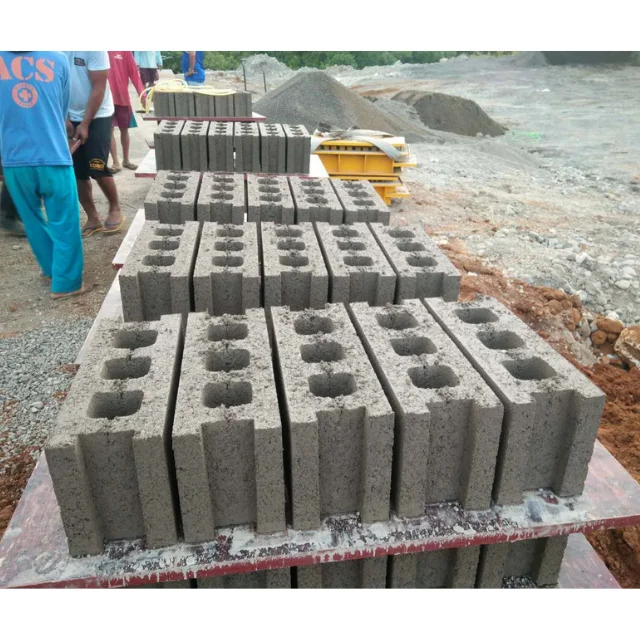
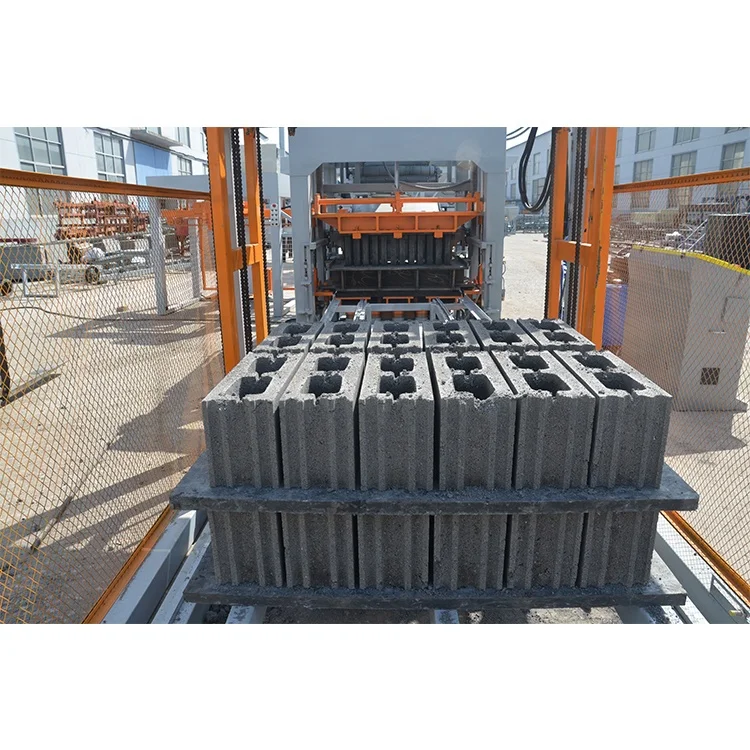
| Output Capacity (Hollow block 400×200×200 mm) | 8640–11520 pcs/8hr (basis: 6 pcs/mould, 15–20s cycle) |
| Output Capacity (Solid brick 240×115×53 mm) | 46080–61440 pcs/8hr (basis: 32 pcs/mould, 15–20s cycle) |
| Output Capacity (Rectangular paver 200×100×60 mm) | 17280–23040 pcs/8hr (basis: 21 pcs/mould, 20–25s cycle) |
Application Suitability
| Application | Material or Output |
|---|---|
| Hollow block production for building construction | Crushed stone, sand, cement, and fly ash blends |
| Solid brick manufacturing | Fine aggregate and cement mixes with adjustable dosage |
| Rectangular and interlocking paving blocks | Coarse aggregate, slag, and cement for high-density pavers |
| Multi-cellular brick production | Lightweight aggregate and waste ash formulations |
| Industrial waste utilization | Fly ash, slag, and recycled aggregate in block mixes |
What "Automatic" Really Means on the Shop Floor
The automatic PLC controlled QT6-15 block machine removes the operator from the press cycle, but only if the PLC language, voltage standard, and peripheral automation scope are confirmed before production begins.
I spent years commissioning lines across the Middle East and the most expensive delays were never mechanical — they were the morning the operator stared at a touch screen in a language he could not read, or the afternoon the electrician discovered the control panel was wired for a frequency that did not exist on the local grid [NEED_CITE: voltage and frequency standards by export market]. Automation only reduces labour when the control interface is something the local team can actually use under pressure.
Programmable Process Parameters Per Mould
Every block format demands a different combination of vibration frequency, pressure hold time, and feed sequence. The automatic PLC controlled QT6-15 block machine stores these parameters per mould so a changeover does not require the operator to relearn the press rhythm from scratch.
The PLC safe logic interlock circuit prevents the machine from cycling when a sensor reads out of range — a gate left open, a pallet misaligned, a hydraulic pressure drop. This matters most during night shifts when supervision is thinner and the cost of one bad cycle is a pallet full of cracked blocks heading to the scrap pile.
Fault Diagnosis Without a Specialist on Site
The touch screen HMI displays fault codes in plain language when a sensor or actuator falls outside its expected window. Instead of calling a technician to interpret blinking indicator lights, the operator reads the diagnosis and follows the prescribed check sequence [NEED_CITE: PLC fault diagnosis protocols in concrete block machinery].
This changes the economics of running a plant in a remote location. The difference between a two-hour sensor replacement and a two-week wait for a visiting engineer is whether the control system tells you what is wrong before you even open the panel.
Vibration Force, Hydraulic Pressure, and the Density Question
The 45 kN vibration force and 0–60 Hz adjustable frequency range determine how thoroughly the mix consolidates inside the mould cavity. Platform vibration transmits energy through the pallet into the material bed, which is why pallet flatness and rigidity directly affect block dimensional consistency across a production run.
The independent hydraulic station sits isolated from the main machine vibration and dust contamination. In a block plant, hydraulic valve contamination is the most common cause of pressure drift, and pressure drift shows up as block-to-block strength variation that only becomes visible at the construction site. The 880×850 mm pallet size must match the curing rack spacing and forklift tine width the buyer already has on site — specifying the pallet without checking the downstream handling equipment is where many quotations quietly fall apart.
The 37 kW total power draw requires a dedicated supply circuit with headroom above the peak starting current of the vibration motor. Confirming the voltage and frequency with the destination grid before the machine enters assembly avoids a scenario where the machine arrives, the electrician connects it, and nothing happens [NEED_CITE: CE machinery directive requirements for industrial equipment].
When Automation Stops at the Press
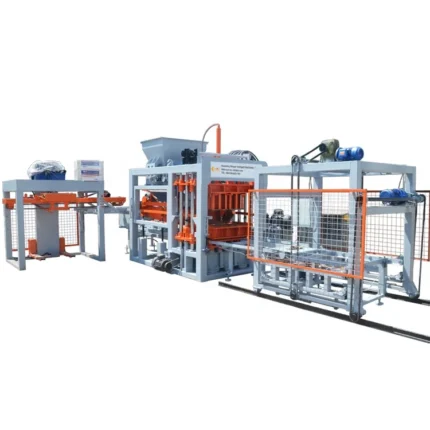
A PLC-controlled press that feeds pallets by hand and stacks cured blocks by hand is only partially automatic. The hidden cost is not the press cycle — it is the four workers moving pallets between the press, the curing racks, and the shipping yard, which quietly erases the labour reduction the buyer thought they were purchasing.
If the quotation does not explicitly include automatic pallet feeding, stacking, and cubing, those stations will default to manual handling. The press itself will run at its rated cycle, but the line throughput will be governed by the slowest human in the chain [NEED_CITE: block plant line balancing and bottleneck analysis]. Confirming the automation boundary at the quotation stage — not at the commissioning stage — is the single most important commercial clarification a buyer can make.
What the Configuration Process Actually Covers
Block machinery is the single focus here, which means the QT6-15 press, its moulds, pallets, and handling peripherals are specified as one matched system rather than sourced from separate suppliers and bolted together on site.
The configuration starts with the buyer’s actual mix design and local aggregate — not a catalogue default that assumes materials the buyer cannot procure. Mould design covers the specific block formats the buyer’s market sells, including custom drawings when standard cavity layouts do not match local dimensions. The automation level is selectable, so a plant can open with semi-automatic handling and add stacking and cubing modules later without replacing the press. Voltage, frequency, and PLC display language are confirmed line by line before production begins. Installation support includes operator training on the specific control interface the local team will use every day.
Documentation & Verification
- Line layout and capacity calculation stating the specific block format and cycle time assumed
- Machine specification sheet with confirmed voltage, frequency, and PLC display language
- Mould drawing and format list matched to the buyer’s target product range
- Hydraulic and electrical schematic for local maintenance team reference
- Factory test record on the buyer’s block format before dispatch
- Operation and maintenance manual in the confirmed control language
Installation, Commissioning & Support
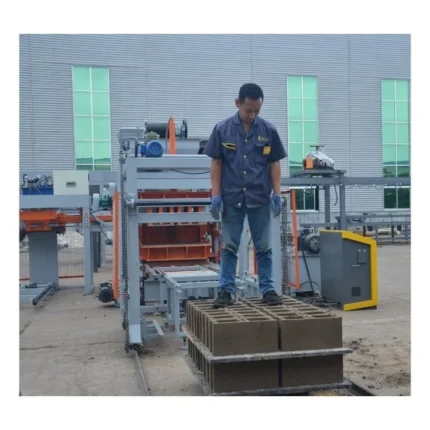
- The 8200×1700×2950 mm footprint requires a level concrete pad within the recommended 1200 m² factory area
- The 37 kW overall power demands a dedicated circuit sized for vibration motor peak starting current
- Machine arrives dismantled for container loading; reassembly sequence documented in the manual
- First-run commissioning includes PLC parameter loading for the buyer’s confirmed block formats
- Operator training covers the touch screen HMI, fault diagnosis responses, and mould change procedure
- Hydraulic and vibration wear parts list provided with recommended replacement intervals
Before You Send the Inquiry
Provide the block formats your market actually sells and the daily volume you need per format, not a single headline number. Confirm your site voltage, frequency, and the language your operators will need on the touch screen. Share your curing area dimensions and the forklift you already have so the pallet size and stacking configuration can be matched before the quotation is written.
Frequently Asked Questions
Q: What does the PLC actually control versus what still needs an operator?
A: The PLC manages the full press cycle — material feed, vibration sequence, hydraulic pressure, and demolding. Pallet feeding, stacking, and cubing may remain manual unless included in the quotation scope. The touch screen HMI lets the operator monitor the process and respond to fault codes, but does not replace the need for someone at the line to manage pallet flow and output handling.
Q: Can the system be upgraded from semi-automatic to fully automatic later?
A: The automation level is selectable at purchase and expandable afterward. A buyer can start with manual pallet handling and add automatic pallet feeding, stacking, and cubing modules as production volume grows. The PLC architecture on the QT6-15 supports these additions without requiring a press replacement, provided the control panel was specified with upgrade headroom from the start.
Q: How do I confirm voltage, frequency, and HMI language before shipment?
A: These three items are confirmed line by line during the quotation stage and verified again before the machine enters assembly. The buyer provides the destination country’s grid specifications and the required operator language. The factory test record documents the confirmed settings before dispatch so there are no surprises when the electrician connects the machine on site.
Q: Which block formats are tested at the factory before dispatch?
A: The factory test runs the specific moulds included in the buyer’s order, using the cycle parameters programmed for those formats. The test record documents the actual cycle time achieved and the block dimensions produced. This gives the buyer a verified baseline rather than a catalogue figure that may have been measured on a different format with a different mix.
Q: How does the fault diagnosis system work for remote troubleshooting?
A: The PLC displays fault codes on the touch screen HMI with a description of the affected sensor or actuator. For remote support, the operator can photograph or read the fault code to the technical team, who can then guide the check sequence without needing to be physically present. This reduces downtime on sites where specialist engineers are not locally available.