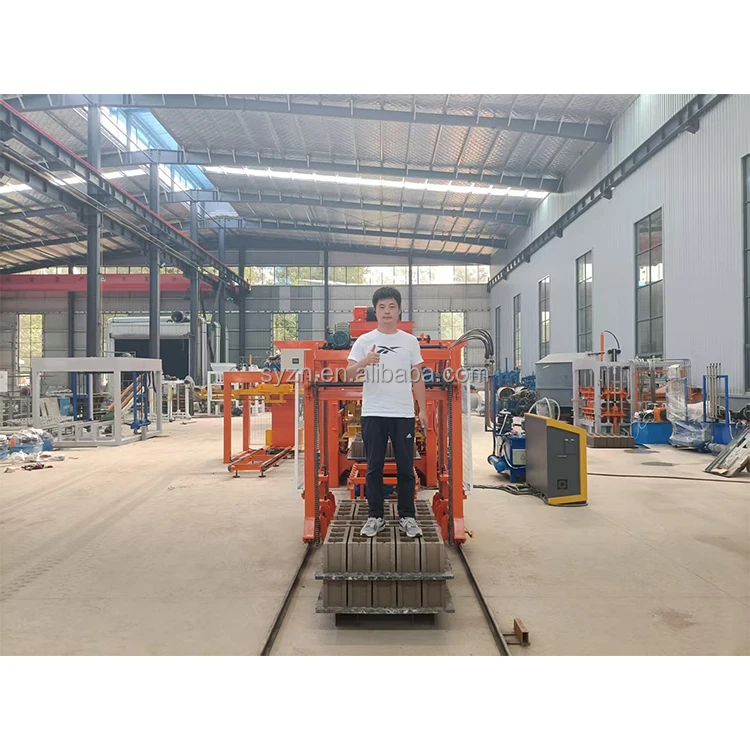
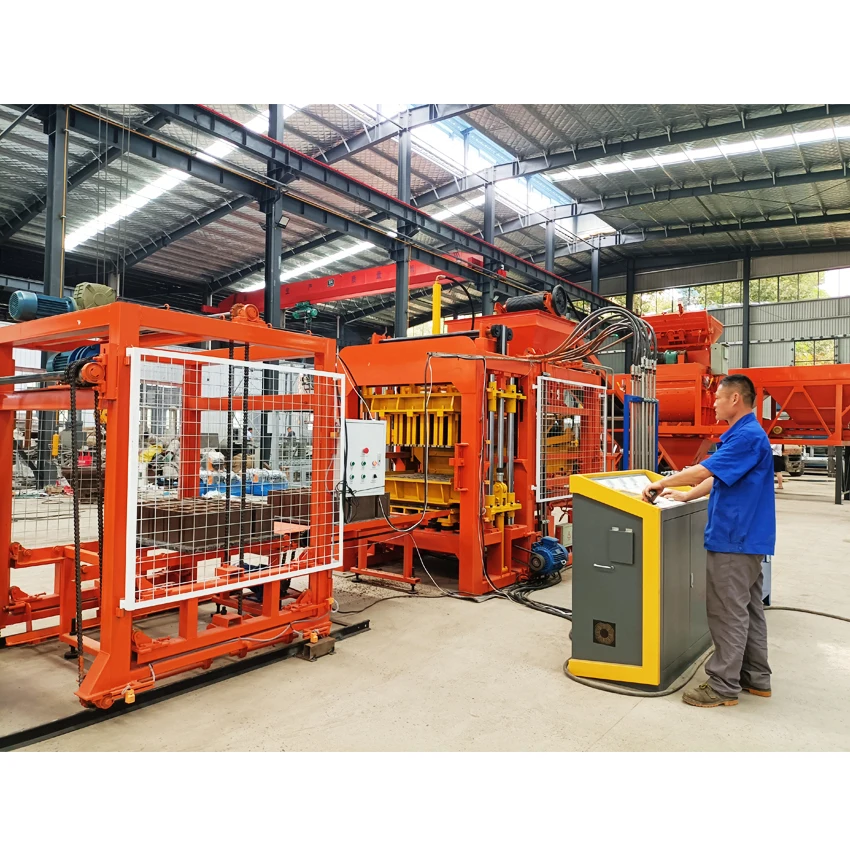
Description
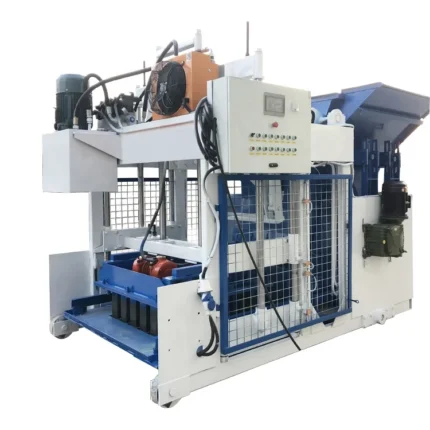
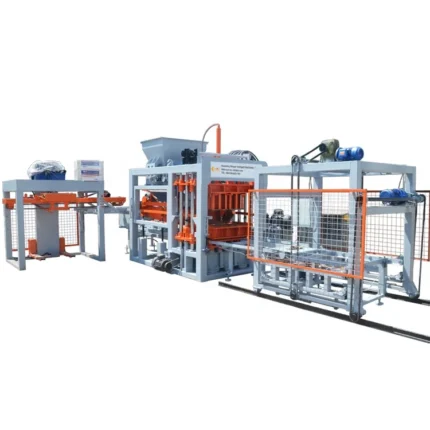
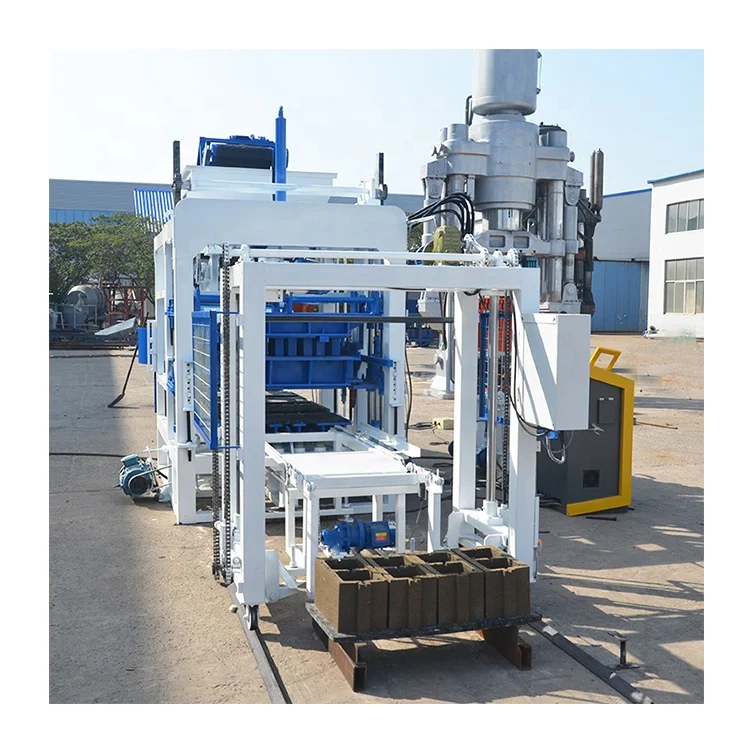
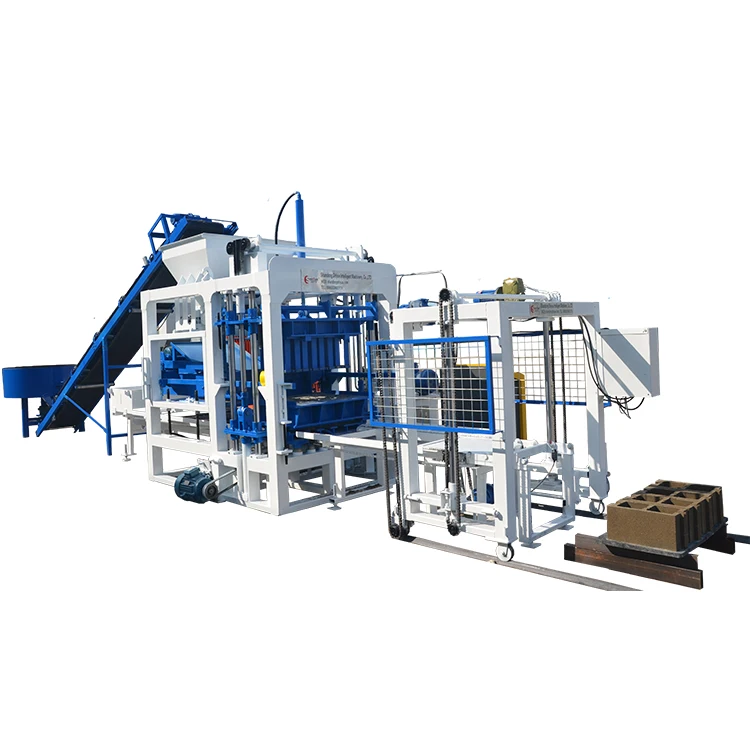
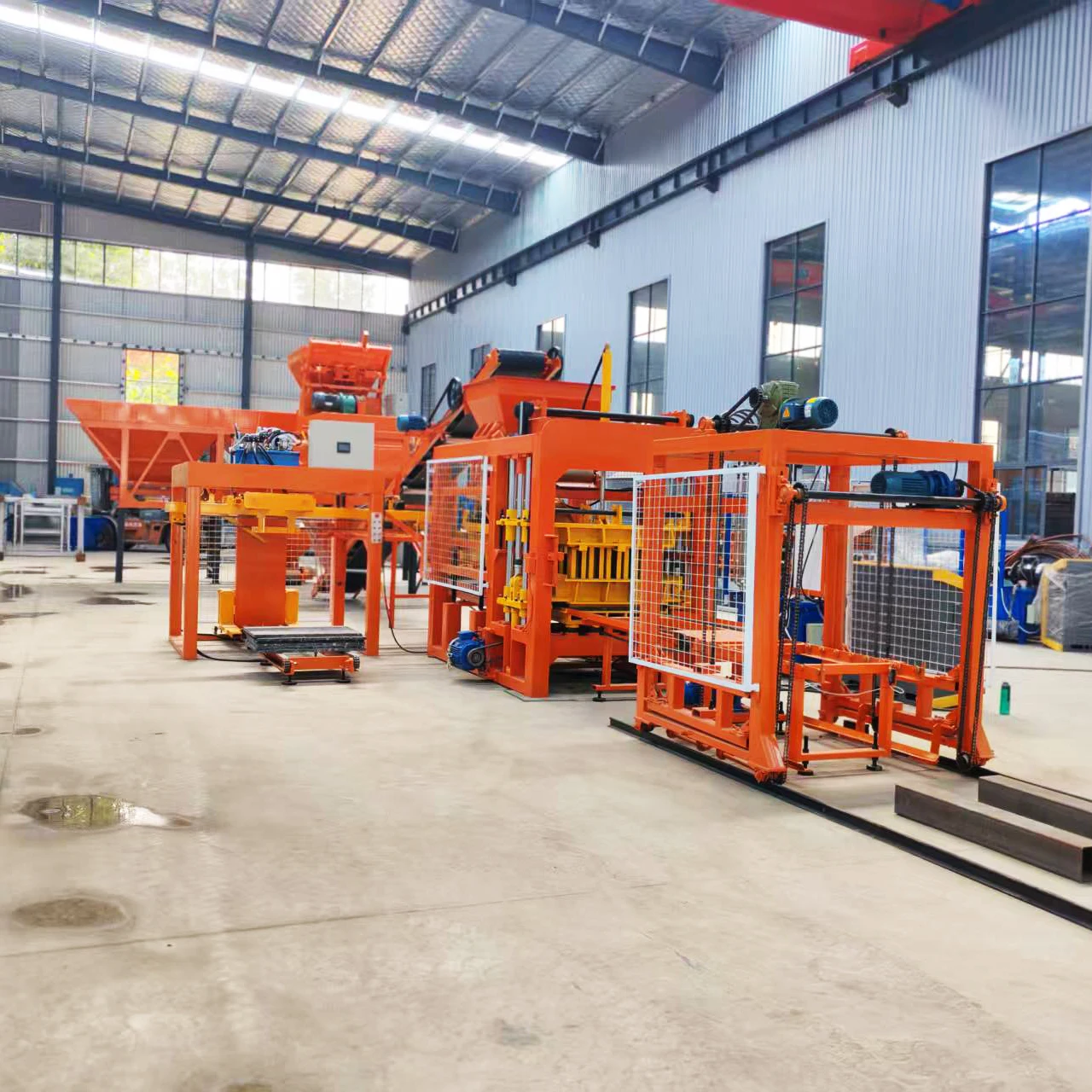
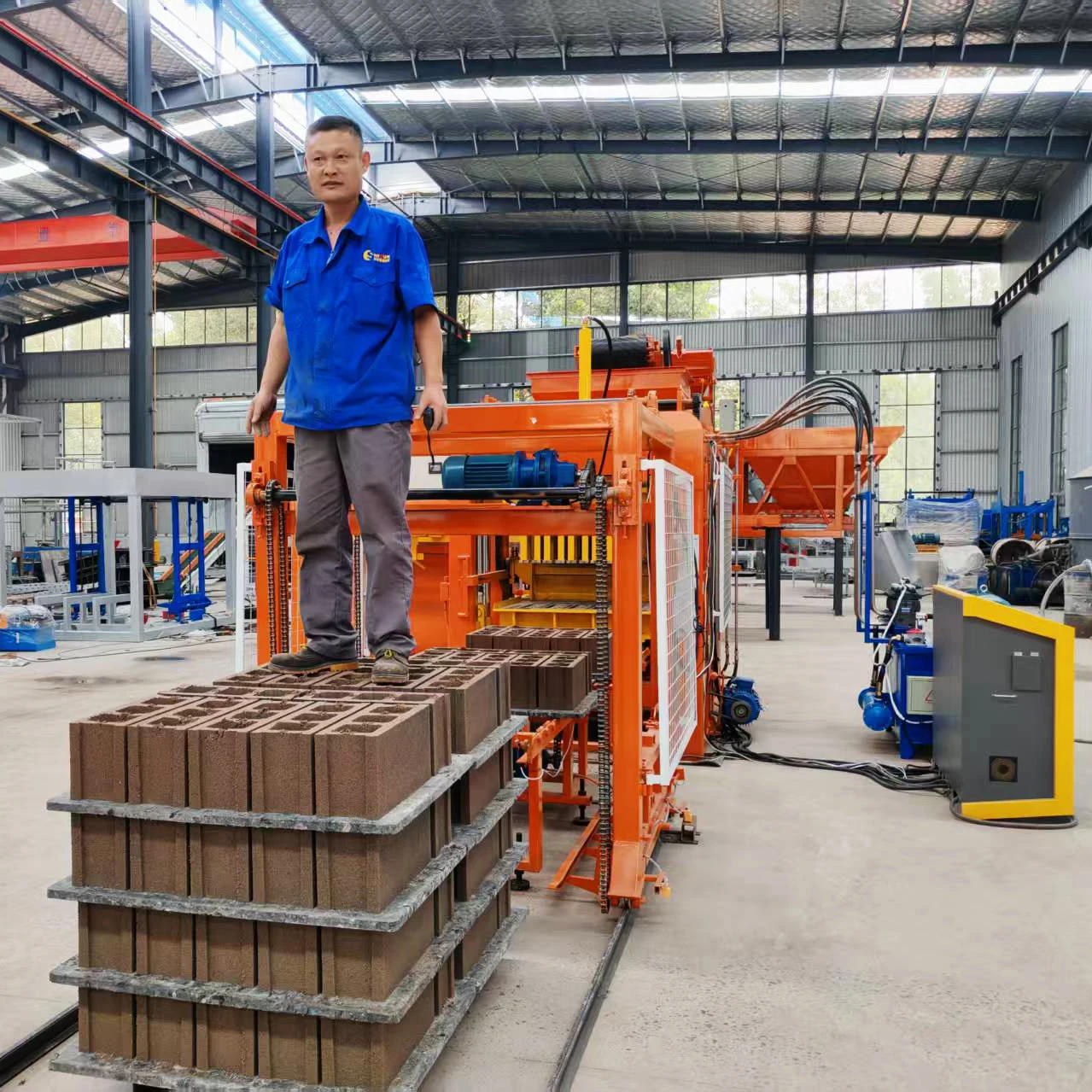
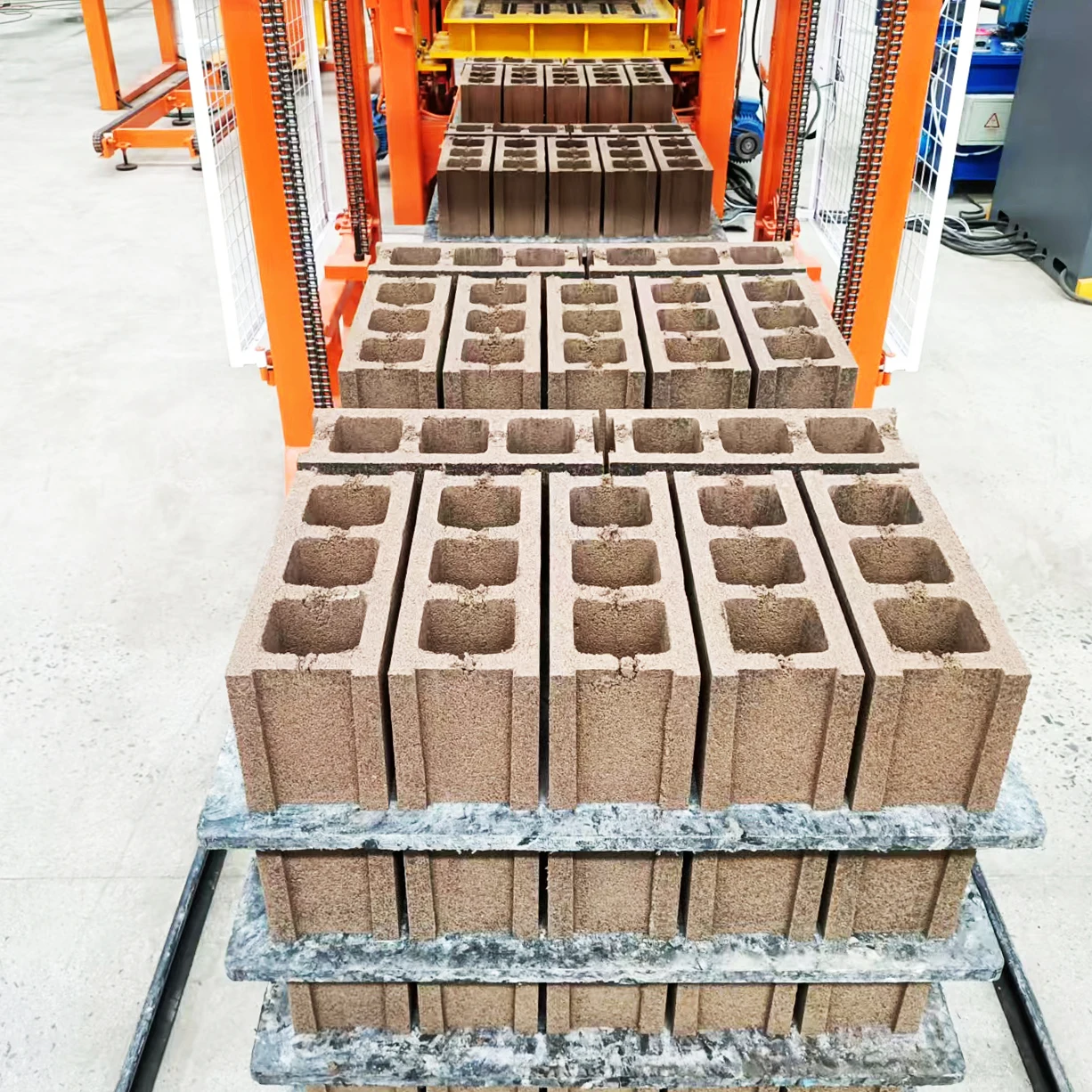
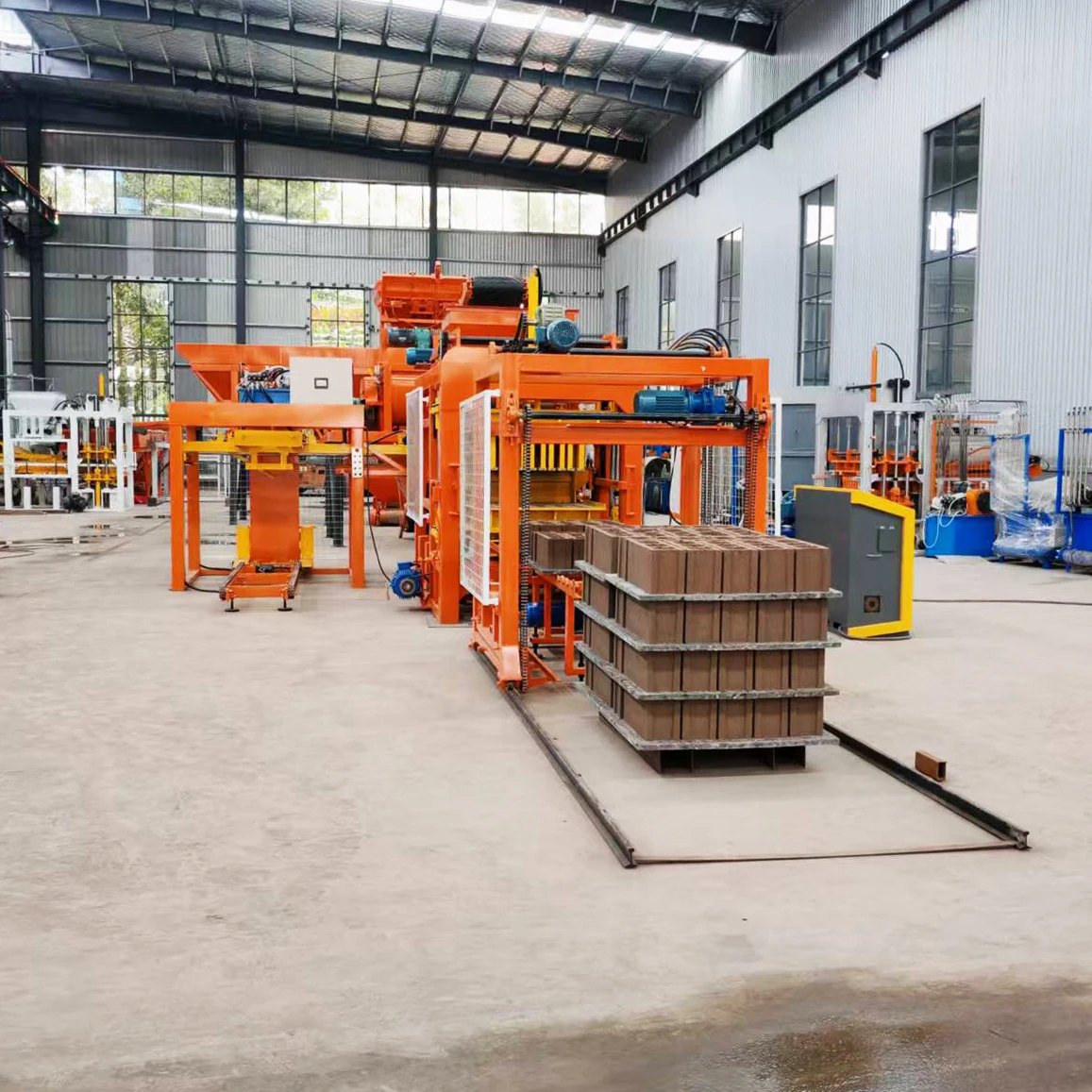
Intelligent control integration — the QT6-15 PLC system manages the entire pressing sequence from material feed to hydraulic demolding, removing operator skill dependency from cycle-to-cycle block consistency.
Technical Specifications
| Parameter | Value |
|---|---|
| Model | QT6-15 |
| Product Type | Hydraulic Block Making Machine |
| Overall Dimension | 820017002950mm |
| Vibration Frequency | 0-60HZ |
| Vibration Form | Platform Vibration |
| Moulding Mode | Load automatically, vibration moulding |
| Pallet Size | 880*850mm |
| Molding Cycle | 15-20s |
| Overall Power | 37KW |
| Vibration Force | 45KN |
| Total Mass | 7T |
| Demolding Method | Hydraulic |
| Factory Area | 1200m2 |
| Control System | PLC (Programmable Controller) with touch screen |
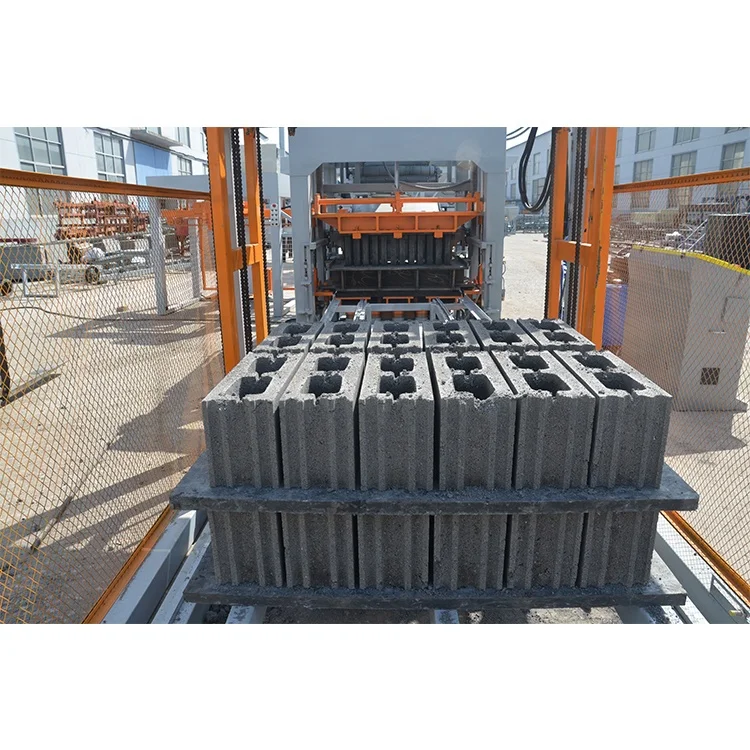
| Compressive Strength of Blocks | More than 15 MPa |
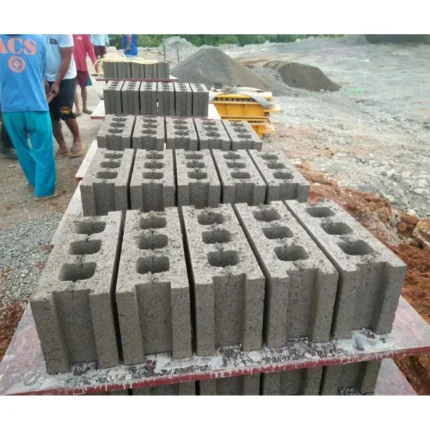
| Output Capacity (Hollow block 400x200x200mm) | 1080-1440 pcs/hour, 8640-11520 pcs/8hr |
| Output Capacity (Hollow block 400x150x200mm) | 1440-1920 pcs/hour, 11520-15360 pcs/8hr |
| Output Capacity (Solid brick 240x115x53mm) | 5760-7680 pcs/hour, 46080-61440 pcs/8hr |
| Output Capacity (Rectangular brick 200x100x60mm) | 2160-2880 pcs/hour (basis: 20-25s cycle), 17280-23040 pcs/8hr |
| Output Capacity (Zigzag brick 225×112.5x60mm) | 2160-2880 pcs/hour (basis: 20-25s cycle), 17280-23040 pcs/8hr |
| Hydraulic System | Independent integrated type hydraulic station |
| Raw Material Adaptability | Waste ash, slag, cement reduction capability |
| Fault Diagnosis System | Included in PLC |
| Safety Logic Circuit | Action interlock control |
Application Suitability
| Application | Material or Output |
|---|---|
| Hollow Block Production | Crushed stone, cement, waste ash blends |
| Paving Brick Production | Sand, aggregate, pigment mixes for interlocking and rectangular formats |
| Solid Brick Production | Standard clay alternative mixes using slag and cement |
| Multi-format Manufacturing | Quick mould changeover for diverse block dimensions |
What "Fully Automatic" Actually Means for Your Operators
Automation eliminates guesswork, but only if the interface speaks the operator’s language.
Capacity figures mean little when the human element fails at the control panel. I once supported an automatic QT6-15 hydraulic block machine PLC controlled installation where the interface defaulted to English, but the local crew read only French and Arabic. Production halted on day one, and remote troubleshooting stretched across three days of video calls. The machine performed perfectly — the communication gap did not. That delay could have been prevented with a single pre-shipment confirmation. [NEED_CITE: operator interface language requirements for industrial machinery exports]
How PLC Logic Removes Batch-to-Batch Variation
The automatic QT6-15 hydraulic block machine PLC controlled sequence manages material loading, vibration timing, hydraulic pressure application, and demolding as a single coordinated routine. Each cycle follows identical parameters regardless of shift changes or operator fatigue, delivering blocks with consistent density and compressive strength above 15 MPa.
Where Manual Intervention Still Matters
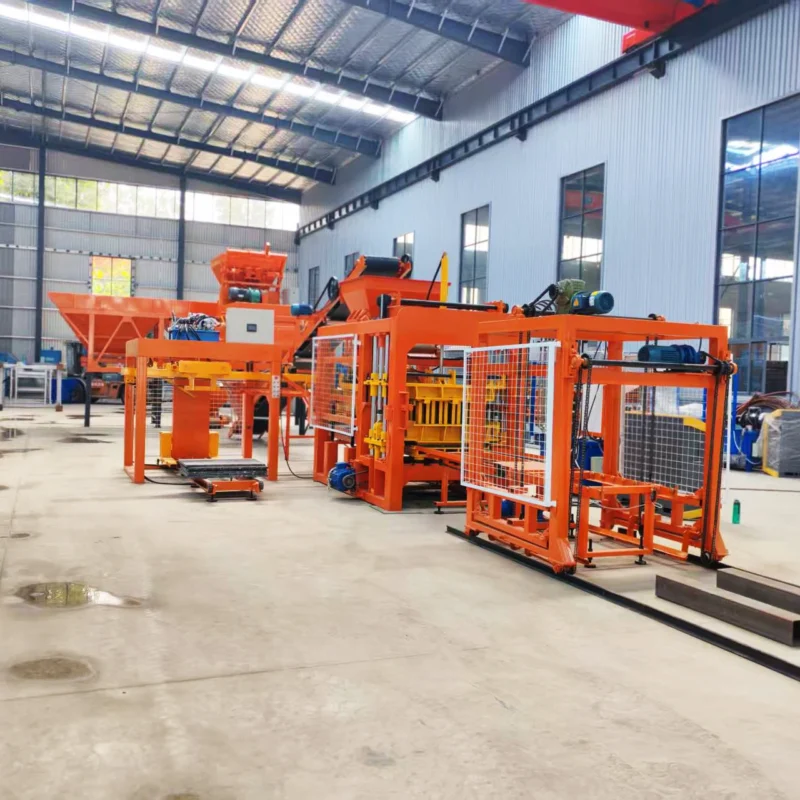
Even with intelligent fault diagnosis and action interlock safety circuits, certain checkpoints demand human attention. Mould changes require manual intervention, pallet feeding upstream depends on conveyor configuration, and raw material moisture levels need periodic verification. The automation handles the pressing cycle, but the line’s overall output depends on how stations before and after the press are configured. [NEED_CITE: automation boundaries in concrete block production lines]
Decoding the Numbers That Actually Matter
Vibration frequency range of 0-60Hz allows matching resonance to different block formats — hollow blocks need lower frequencies with longer dwell times, while dense paving bricks require higher frequencies for proper compaction. The 45KN vibration force works with the independent hydraulic station to achieve uniform density across the 880*850mm pallet surface. Platform vibration transmits energy directly through the mould base rather than through side walls, producing sharper edges and more consistent dimensions. Molding cycles of 15-20 seconds represent realistic timing for standard hollow blocks, though heavier formats extend this range.
When Automation Specifications Don’t Match Reality
Selecting a machine without confirming voltage, frequency, and control language before production creates problems that surface only at commissioning. Transformers may be needed if local supply doesn’t match the 37KW power requirement, and language mismatches turn simple fault codes into translation exercises. The fault diagnosis system becomes useless if operators cannot read the error messages. Buyers who skip these confirmations often discover that "automatic" only applies to the mechanical sequence, not to the information flow that makes the system operable. [NEED_CITE: electrical compatibility standards for industrial equipment across export markets]
Why Sourcing the Control System Matters as Much as the Press
Configuration set against your actual block format and local raw materials means the PLC parameters arrive pre-tuned rather than requiring weeks of trial runs. The independent hydraulic station isolates sensitive components from constant vibration exposure, extending service intervals. Mould design matches the formats your market actually buys, and custom drawings are available when standard options don’t fit. Automation level remains selectable — you can start with semi-automatic pallet handling and add stacking automation later without replacing the press itself. [NEED_CITE: hydraulic system isolation design principles for vibrating machinery]
Documentation & Verification
- Machine specification sheet with capacity calculations stated per block format and cycle time
- Voltage, frequency, and PLC display language confirmation document before production begins
- Hydraulic and electrical schematic showing independent station layout and interlock circuits
- Factory test record demonstrating actual cycle times on your target block format
- Operation and maintenance manual with fault diagnosis code reference table
Installation, Commissioning & Support
- Foundation requirements for 820017002950mm footprint with vibration isolation specifications
- Dedicated power circuit for 37KW load with voltage and frequency matched to confirmed local supply
- PLC touch screen configured to operator language before arrival to prevent commissioning delays
- On-site parameter adjustment for local aggregate characteristics and target block density
- Hydraulic station commissioning with pressure calibration and leak testing at operating temperature
- Fault diagnosis system training covering common error codes and reset procedures
What to Include in Your Inquiry
Provide your target block formats with exact dimensions, daily output requirements based on your shift structure, and local raw material availability including aggregate type and moisture content. Confirm your facility’s voltage and frequency standards, preferred control interface language, and existing pallet dimensions if you plan to integrate with current curing racks. Specify whether you need full-line automation including stacking and cubing, or if the press will feed into manual downstream handling.
Frequently Asked Questions
Q: How is the PLC control system configured for different block formats and what language options are available?
A: The touch screen interface stores multiple mould profiles with pre-set vibration frequencies, cycle times, and hydraulic pressures for each block format. Language is confirmed before production — options include English, French, Spanish, Arabic, and other languages based on your operator requirements. Switching formats requires only selecting the stored profile and physically changing the mould.
Q: What automation level does the QT6-15 provide and what manual interventions remain?
A: The automatic QT6-15 hydraulic block machine PLC controlled system manages material loading, vibration moulding, and hydraulic demolding. Manual tasks include mould changeover, pallet supply to the feeder, and periodic raw material quality checks. Downstream stacking and curing rack handling can be configured as manual, semi-automatic, or fully automatic based on your investment level.
Q: How does the independent hydraulic station prevent dust and vibration from affecting block consistency?
A: The integrated hydraulic station sits isolated from the main machine frame, so platform vibration and concrete dust don’t reach valves and seals. This separation maintains stable pressure delivery throughout production shifts, preventing the gradual pressure loss that causes density variation in blocks produced late in the day versus early morning.
Q: What is the upgrade path if starting with semi-automatic operation?
A: The press and PLC remain identical whether you start semi-automatic or fully automatic. Upgrading later means adding automatic pallet feeding, stacking, and cubing stations that connect to existing PLC I/O points already wired during initial installation. No press modification or control system replacement is required for the upgrade.
Q: How are voltage, frequency and control system language confirmed before shipment to avoid commissioning delays?
A: After order confirmation, we request your facility’s electrical specifications and operator language preference. The PLC is programmed and tested with your confirmed parameters, then documented in a pre-shipment verification record. This prevents the three-day remote troubleshooting scenario that occurs when machines arrive configured for a different market standard.