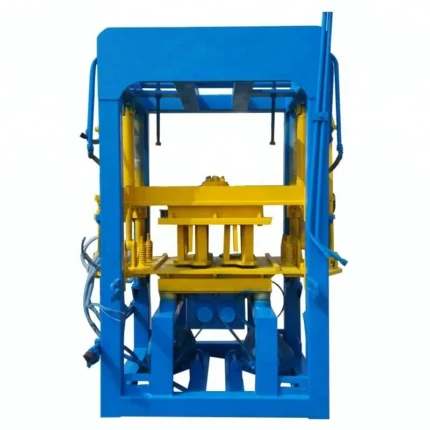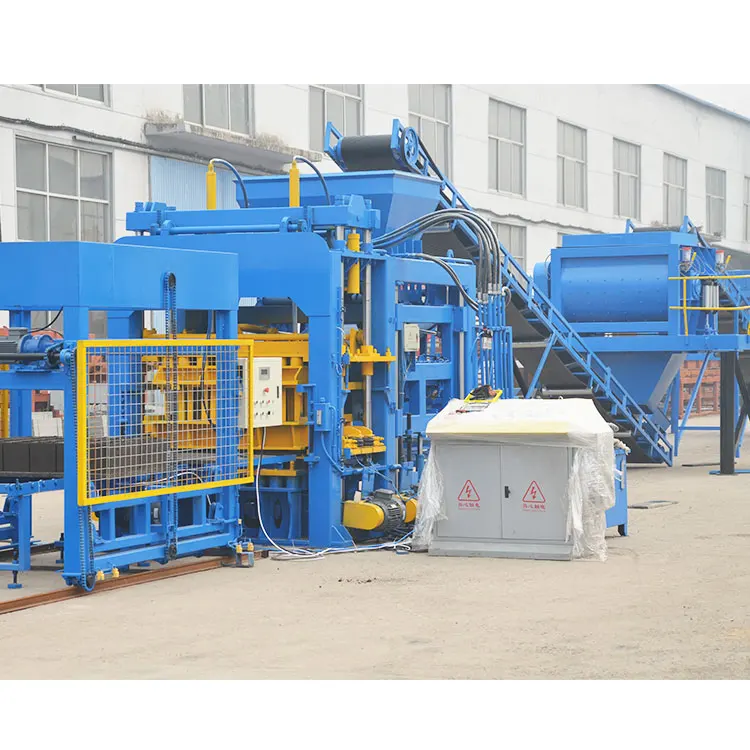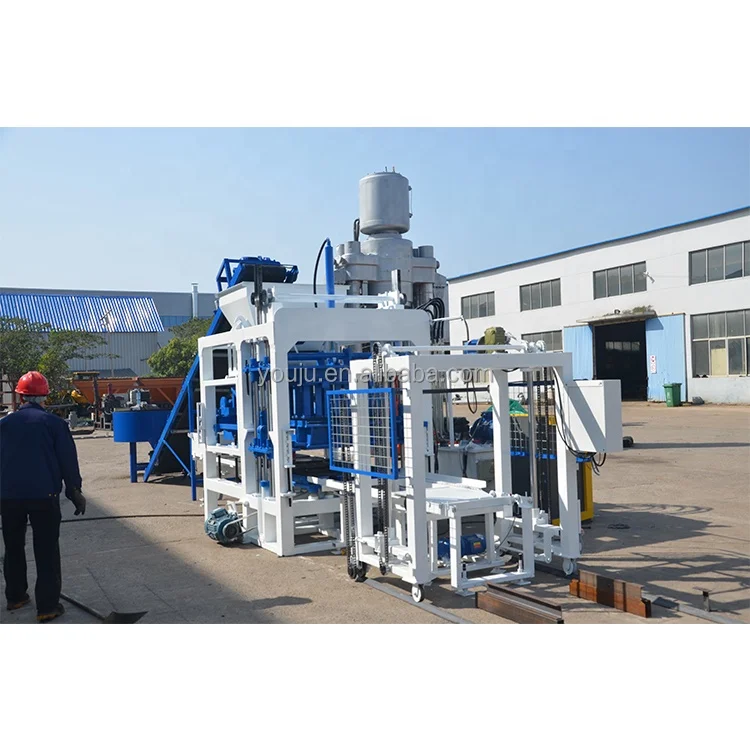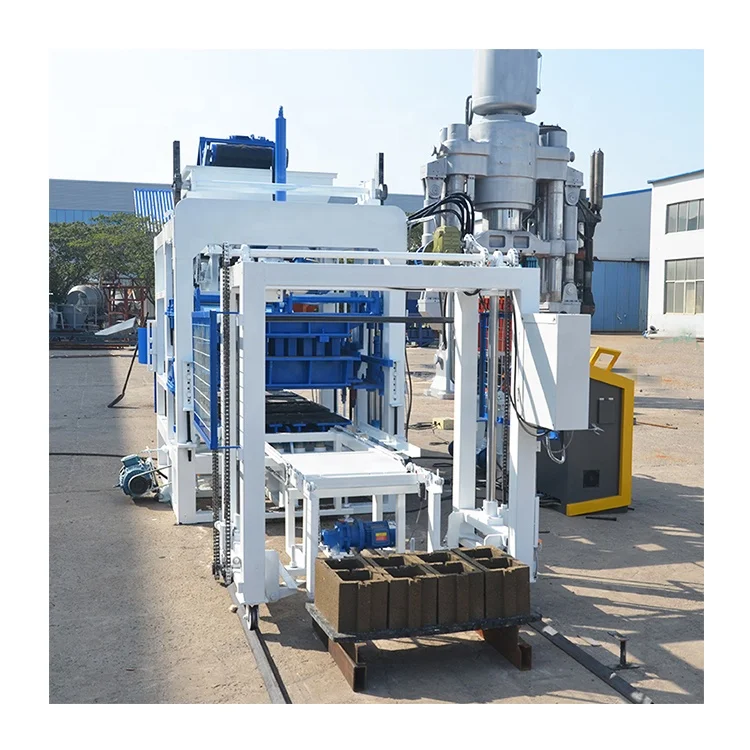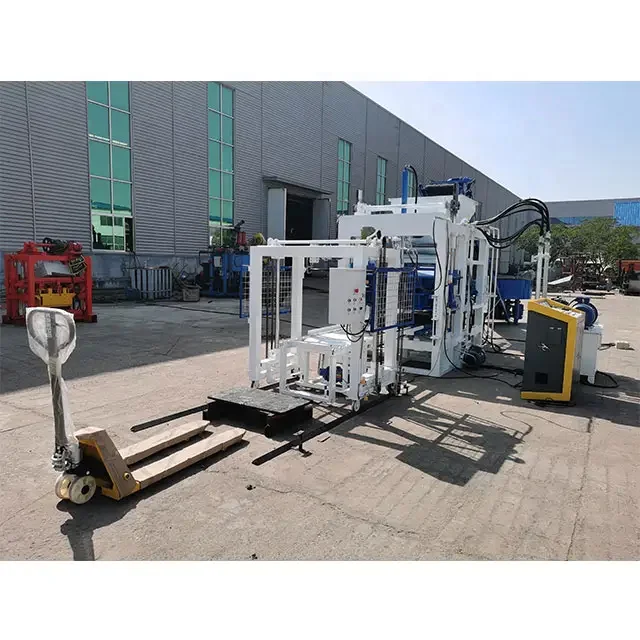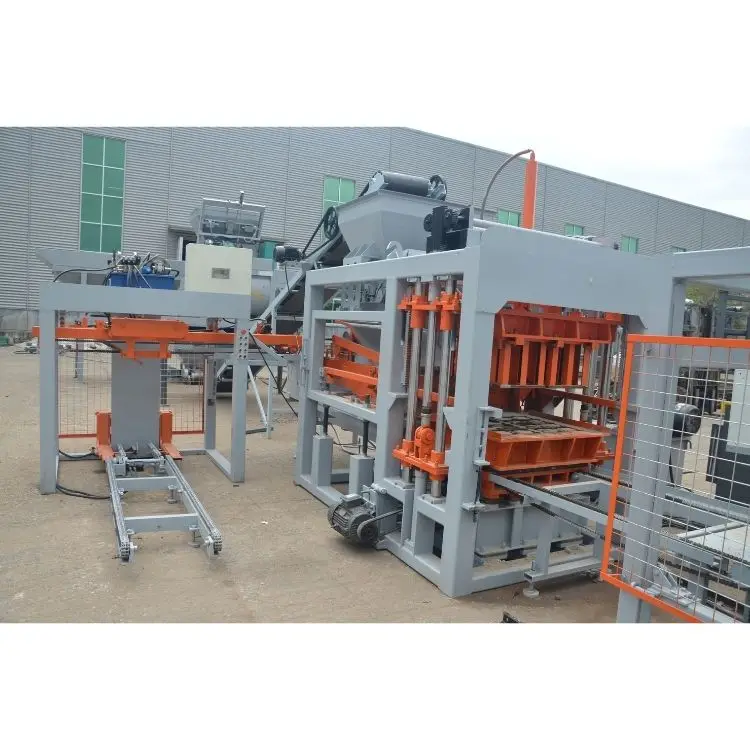
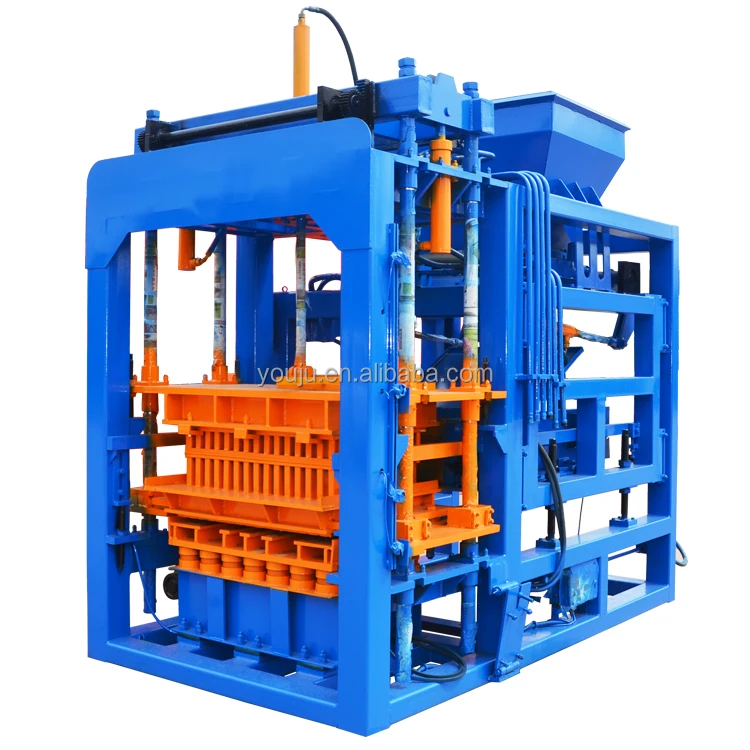
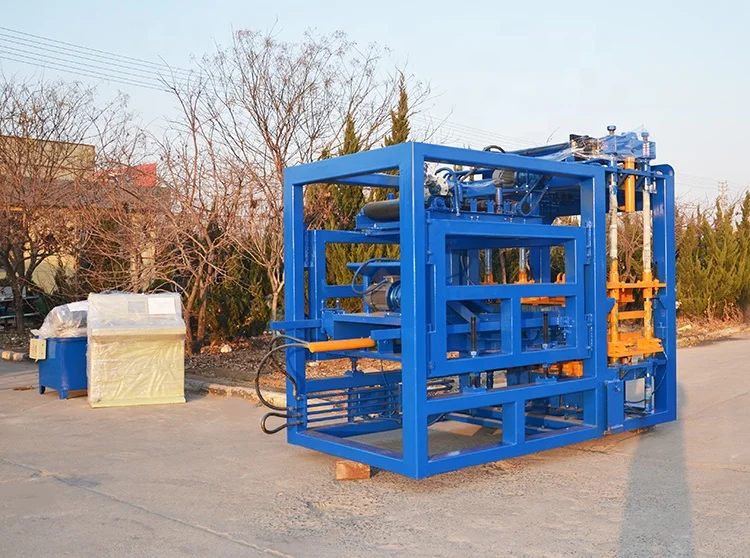


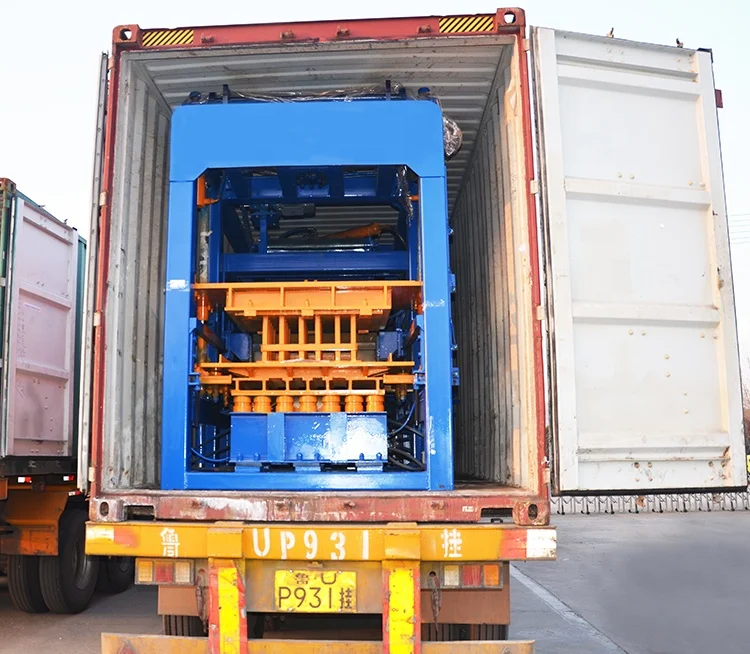
Description
System-matched configuration — The QT6-15 is specified as a coordinated line where PLC logic, hydraulic pressure, and pallet handling share one control architecture, not bolted-on automation.
Technical Specifications
| Parameter | Value |
|---|---|
| Model | QT6-15 |
| Product Type | Semi-Automatic Hydraulic Block Making Machine |
| Molding Method | Vibration combined with hydraulic pressing |
| Rated Hydraulic Pressure | 21 MPa |
| Molding Cycle | 15 s – 20 s (basis not stated in source — confirm block format and material) |
| Pallet Size | 900 × 700 mm |
| Main Machine Weight | 6000 kg |
| Mixer (Simple Line) | JS500 |
| Belt Conveyor (Simple Line) | 8 m |
| Control System | PLC (programmable logic controller) |
| Voltage & Frequency | Customizable to local supply |
| Automation Level | Semi-automatic (expandable to full line) |
| Mould Included (Simple Line) | 1 hollow block mould, 2 hydraulic trolleys |
| Warranty | 1 year (excluding wear parts) |
Application Suitability
| Application | Material or Output |
|---|---|
| Hollow block production | Cement, sand, fly ash, crushed stone |
| Paving brick manufacturing | Aggregate blends with pigment feeder option |
| Solid brick forming | Slag, stone powder, cement mixtures |
| Kerbstone and interlocking brick | Custom mould formats on standard pallet |
| Small to mid-scale plant startup | Semi-automatic entry with planned automation expansion |
Why the PLC Language Question Must Come Before the Price
Confirming display language and electrical standards before production prevents commissioning standoffs at the buyer’s site.
Buyers upgrading from manual egg-laying machines often assume the control panel will arrive in a language their operators can read. I recall a semi-automatic line in Nigeria where the PLC interface was entirely in Chinese; the operator pressed the wrong sequence and the stacker descended onto empty pallets, bending the carriage. That machine sat idle for weeks while the local electrician tried to trace signals against a manual he could not decipher [NEED_CITE: machinery directive requirements for control panel language and labeling]. Voltage mismatches produce similar delays when a 60 Hz motor arrives in a 50 Hz market.
What the PLC Actually Controls Beyond the Press
A PLC controlled semi-automatic block machine does more than time the vibration cycle. It coordinates the feeder gate, mould descent, hydraulic dwell, and pallet advance so that each station hands off without the press waiting for material or the conveyor backing up. When the automation scope stops at the press and pallet handling remains manual, the operator becomes the bottleneck the PLC was meant to remove.
Building the Automation Ladder Without Replacing the Press
The QT6-15 starts with a simple line — JS500 mixer, 8 m belt conveyor, manual pallet loading, and a stacker — but the PLC architecture is specified so that automatic pallet feeding, pallet separation, and full cubing can be added as independent stations later. Each expansion connects to the existing control bus rather than requiring a new cabinet, preserving the investment already made in the press and its moulds [NEED_CITE: PLC modular expansion for block production lines]. Plant owners can begin with semi-automatic operation and add automatic stacking when daily volume and curing area layout justify the labour reduction.
Pressure, Vibration, and the Pallet Match
The 21 MPa rated hydraulic pressure works together with the vibration system to compact the mix inside the mould cavity. The actual block strength depends on matching that force to the buyer’s aggregate gradation and cement content; a mix designed for a lower-pressure press will over-compact and crack under higher force. The 900 × 700 mm pallet size must also align with the curing racks and forklifts already on site — a mismatch means either building new racks or living with double-handling every shift. Cycle time of 15 s to 20 s is achievable, but the exact figure depends on the block format, wall thickness, and moisture content of the local raw material.
The Cost of Automating Only Half the Line
When a quotation covers the press but leaves pallet handling, stacking, and curing rack transfer manual, the plant still needs four or five workers per shift moving product by hand. The press cycle becomes irrelevant because the line speed is set by how fast pallets are loaded and unloaded. I have walked into plants where the PLC controlled everything up to the mould release, and then watched operators carry wet blocks on wooden boards across the yard in the rain [NEED_CITE: manual pallet handling risks in block plants]. Automation that stops at the press is automation that never reached the floor.
Why Specify the Line Here
Block machinery is our single focus, so the press, mould, pallet, and handling equipment are engineered as one system rather than sourced from separate suppliers and forced together on site. Configuration is set against the buyer’s actual mix design and target block format, not a catalogue default. Mould design covers the formats the local market sells, including custom drawings for non-standard kerbstones or interlocking profiles. Automation level is selectable at order, so a buyer can enter semi-automatic and upgrade without replacing the press. Installation support includes operator training conducted with the machine stopped, not with the line running at full cycle.
Documentation & Verification
- Line layout showing capacity calculation for each specified block format
- PLC program backup with display language confirmed before shipment
- Hydraulic and electrical schematic matching installed components
- Factory test record on the buyer’s mould and mix sample
- Operation manual in the confirmed control language
Installation, Commissioning & Support
- Foundation must support 6000 kg static load plus dynamic vibration
- Dedicated circuit required; voltage and frequency confirmed before production
- Press arrives with hydraulic station mounted; on-site hose and cable routing
- PLC parameters set against buyer’s block format during commissioning
- Operator training conducted with line stopped, covering mould change sequence
- Wear parts list and mould spare cavity list provided at handover
Before You Request a Quote
Provide the exact block formats you intend to produce, including dimensions and target daily output per format. Confirm the local voltage and frequency, the PLC display language your operators require, and the existing pallet size and curing rack layout if you plan to integrate with current infrastructure. State whether the quotation should include automatic pallet feeding, stacking, and cubing, or if those stations will be added in a later phase.
Frequently Asked Questions
Q: How is the upgrade from semi-automatic to full automatic stacking planned?
A: The PLC architecture includes reserved I/O points and a communication bus so that an automatic pallet feeder, stacker, and cubing station can be connected without replacing the main cabinet. The mechanical interfaces — pallet magazine mount and stacker frame — are dimensioned into the line layout at the initial order, even if those stations are not installed on day one.
Q: Which PLC display languages are confirmed before shipment?
A: The display language is fixed during the quotation stage and verified on the factory test record before the crate is sealed. We confirm the language in writing so that the panel arrives readable by the local operators, and the operation manual matches the screen text.
Q: How is automation scope matched to daily output and labour?
A: We review the target output per format, the available curing area, and the number of workers per shift. If manual pallet handling already meets the cycle time, we specify semi-automatic. If the curing area is large and pallets must travel far, we add automatic pallet feeding and stacking so the press cycle is not throttled by hand transport.
Q: Which stations remain manual at the semi-automatic tier?
A: In the simple line, the JS500 mixer and 8 m belt conveyor are motor-driven, and the stacker operates automatically. Pallet loading into the press and pallet removal after pressing remain manual tasks. Adding a pallet feeder and separator removes those manual stations in the next configuration tier.