

Description
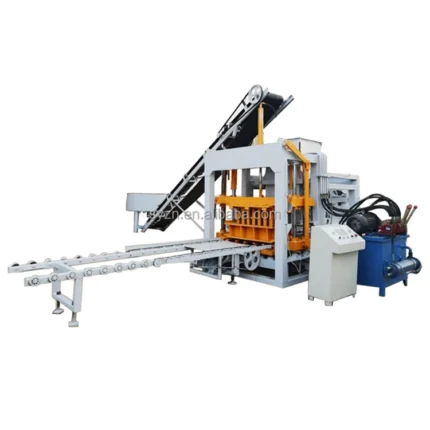
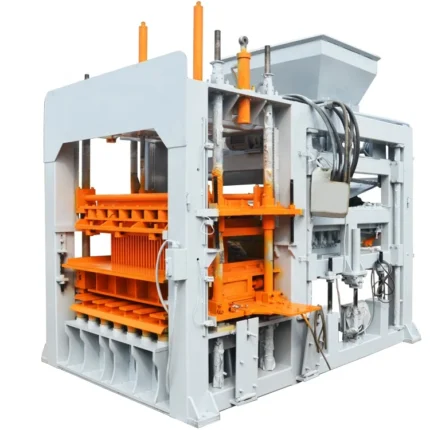
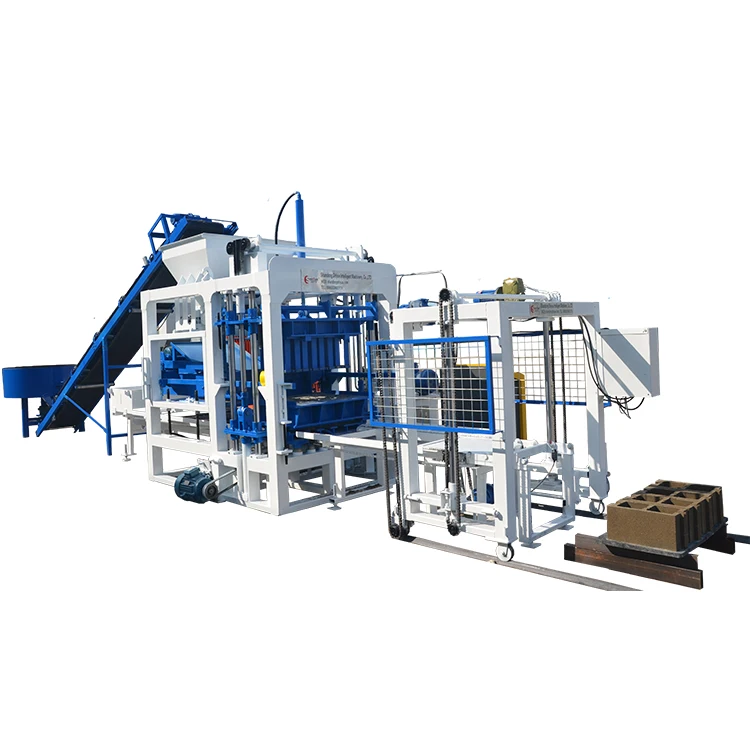
Matched System Coordination — the automatic QT6-15 block making machine PLC controlled platform vibration, mould cycling, and pallet feeding are specified as one coordinated loop rather than isolated components.
Technical Specifications
| Parameter | Value |
|---|---|
| Model | QT6-15 |
| Product Type | Automatic Concrete Block Making Machine |
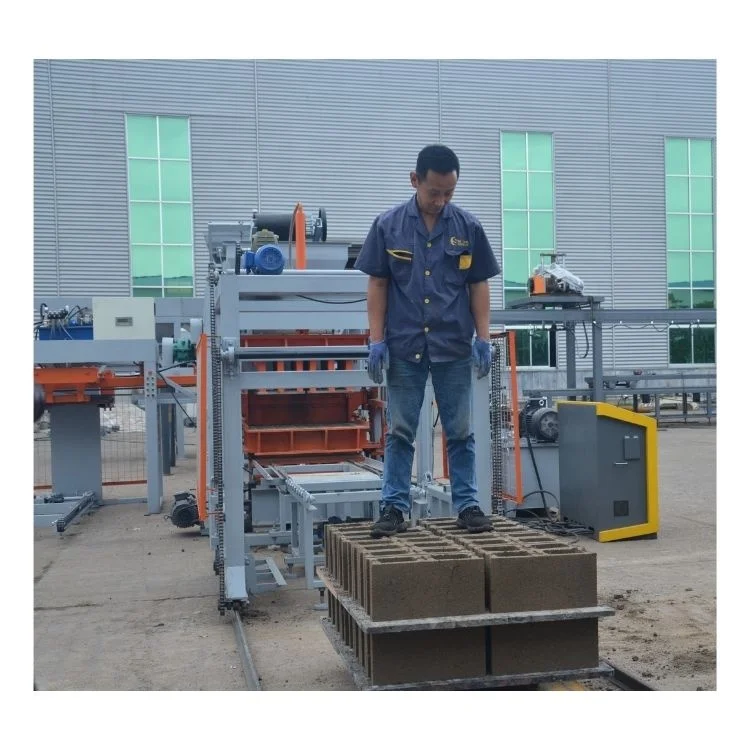
| Overall Dimensions (L×W×H) | 7350×1780×2950 mm |
| Rated Pressure | 16 MPa |
| Main Vibration | Platform vibration |
| Vibration Frequency | 4600 r/min |
| Pallet Size | 880×700 mm |
| Molding Cycle | 15-20 s |
| Overall Power | 30.5 kW |
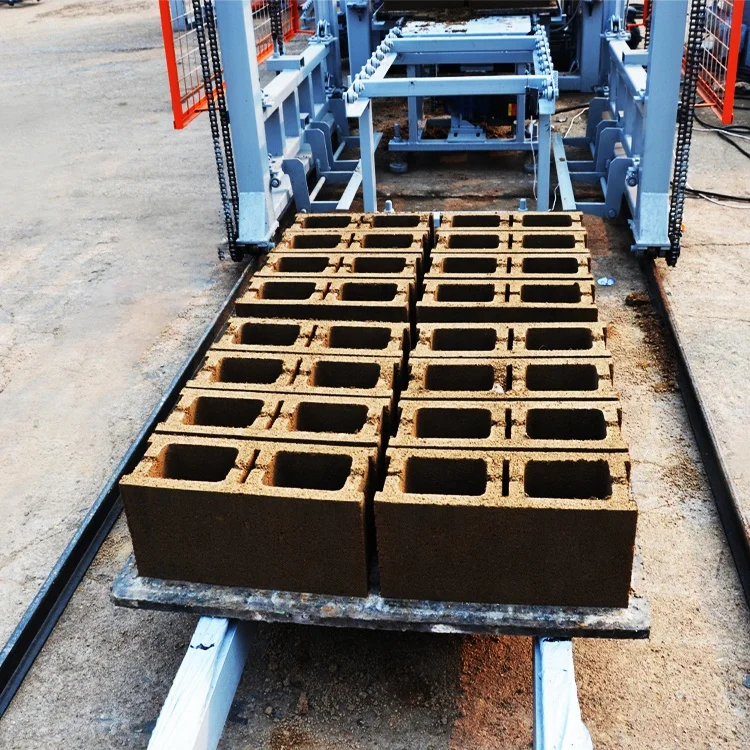
| Output Capacity (Hollow Block 400×200×200 mm) | 1080 pcs/h, 8640 pcs/day (basis: 6 pcs/mold, 16-20 s cycle) |
| Output Capacity (Porous Brick 240×115×90 mm) | 2800 pcs/h, 22400 pcs/day (basis: 14 pcs/mold, 15-18 s cycle) |
| Output Capacity (Standard Brick 240×115×53 mm) | 6800 pcs/h, 54400 pcs/day (basis: 30 pcs/mold, 14-17 s cycle) |
| Raw Materials | Crushed stone, sand, cement, coal fly ash, cinder, slag, gangue, gravel, perlite |
| Control System | PLC |
| Automation Level | Automatic |
| Standards | CE, SGS, ISO 9001 |
| Warranty | One year |
Application Suitability
| Application | Material or Output |
|---|---|
| Hollow block production for building walls | Crushed stone, sand, cement, fly ash |
| Porous brick manufacturing for load-bearing masonry | Cement, slag, gangue aggregate blends |
| Standard solid brick for residential construction | Sand, cement, cinder, gravel mixes |
| Paving stone and interlocking brick for landscaping | Face mix concrete with local aggregate |
| Kerbstone and slope block for municipal projects | High-density concrete with coarse gravel |
What "Pieces per Hour" Leaves Out About the Automatic QT6-15 Block Making Machine PLC Controlled Output
Real capacity only matters when tied to the exact block format, mould count, and cycle time your plant will run.
I have seen quotations that promise a single impressive hourly number without stating which block format it assumes. When the buyer switches to the hollow block their market actually demands, the daily output drops sharply and the return calculation collapses. The automatic QT6-15 block making machine PLC controlled capacity table above states the piece count per hour for each format alongside the mould cavity count and cycle range, so there is no guesswork after the machine arrives. [NEED_CITE: block format impact on real daily output]
How PLC Coordination Removes Operator Guesswork
On a semi-automatic press, the operator decides when to feed, when to vibrate, and when to release — introducing variation that shows up as inconsistent block density across a shift. The QT6-15 automatic block making machine PLC controlled system locks each stage of the cycle into a timed sequence, so platform vibration at 4600 r/min and 16 MPa hydraulic pressure are applied for the same duration on every stroke. This repeatability is what keeps block strength within tolerance from the first pallet of the morning to the last.
What Automation Actually Takes Off the Operator’s Plate
Automation on the automatic QT6-15 block making machine PLC controlled extends beyond the press itself. Pallet feeding into the mould zone, block ejection onto the curing rack, and return of the empty pallet are all sequenced by the PLC so the press is never left idle waiting for manual handling. The operator monitors the line rather than performing each step, which reduces labour dependency and limits the physical fatigue that causes errors late in the shift. [NEED_CITE: automation level and labour allocation in block plants]
Why Vibration Frequency and Hydraulic Pressure Must Be Read Together
A 4600 r/min platform vibration compacts the mix into the mould cavity, but without sufficient hydraulic pressure the block lacks the density to survive handling and curing. The 16 MPa rated pressure on the QT6-15 works in tandem with the vibration to compress aggregate particles tightly, producing a block that holds its edges during pallet transfer. If the local aggregate is coarser or the mix leaner than assumed, the balance between vibration and pressure may need adjustment — which is why confirming the buyer’s actual mix design before production is essential. The 880×700 mm pallet size is specified alongside these parameters so the curing area and forklift the buyer already has remain compatible with the output format.
The Hidden Cost of Skipping Voltage and Language Confirmation
One QT6-15 unit shipped to a West African site arrived with an electrical cabinet configured for a voltage and frequency the local grid could not supply. The customer was ready to produce, but the machine sat silent for weeks while transformers were sourced and the cabinet was rewired. That delay cost the buyer an entire production cycle and damaged trust before the first block was made. Now every automatic QT6-15 block making machine PLC controlled unit goes through a destination checklist — voltage, frequency, and PLC display language — confirmed line by line before the electrical cabinet is wired. [NEED_CITE: export machinery electrical compatibility requirements]
Why Sourcing from a Single-Focus Manufacturer Matters
Block machinery is the only product line here, which means the QT6-15 press, its moulds, pallets, and handling equipment are specified as one matched system rather than assembled from unrelated suppliers. The mould is designed around the block formats the buyer’s market actually sells, and custom drawings are accepted when the standard range does not cover a local requirement. Configuration is set against the buyer’s mix design and local aggregate, not a catalogue default, so the machine produces acceptable blocks from the first run. The automation level is selectable, allowing a plant to start with the QT6-15 in semi-automatic mode and add stacking or cubing modules later as demand grows. Installation support includes operator training on the PLC interface and maintenance routines for hydraulic and vibration components.
Documentation & Verification
- Line layout with capacity calculation stating hollow block, porous brick, and standard brick formats individually
- Machine specification sheet with 7350×1780×2950 mm footprint and 30.5 kW total power draw
- Mould drawing and format list showing cavity count and cycle time per product
- Voltage, frequency, and PLC display language confirmation sheet signed before production
- Hydraulic and electrical schematic for the 16 MPa system and 4600 r/min vibration motor
- Factory test record on buyer’s selected block format before container loading
Installation, Commissioning & Support
- Foundation pad sized for 7350×1780 mm footprint with anchor bolt pattern for vibration isolation
- Dedicated power circuit rated for 30.5 kW at confirmed destination voltage and frequency
- Machine shipped in dismantled state for container loading, reassembled on-site by technician
- PLC display language set and verified during commissioning before first production run
- Operator training on mould change procedure, cycle parameter adjustment, and daily lubrication
- Wear parts list covering platform vibration components, hydraulic seals, and mould liners included
What We Need to Size Your Line Correctly
To match the QT6-15 to your operation, we need the block formats your market demands, the daily volume target for each format, and the raw materials you can source locally. Confirm the voltage and frequency available at the site along with the preferred PLC display language. If you already have pallets, a curing area, or handling equipment in place, share the dimensions and capacity so the line can be configured around what you have.
Frequently Asked Questions
Q: How is the QT6-15 output capacity verified for each block format?
A: Each capacity figure in the specification table is tied to a specific mould cavity count and cycle time range. For hollow blocks at 400×200×200 mm, the figure assumes six cavities and a 16-20 second cycle. Porous brick and standard brick figures follow the same logic with their respective mould counts. This removes ambiguity about what the machine can actually produce in a shift.
Q: What PLC language and voltage options are available for my market?
A: The PLC display language is confirmed before the cabinet is wired, so operators read instructions in a language they understand. Voltage and frequency are matched to the destination grid, whether that is 380V/50Hz, 440V/60Hz, or another combination. This is verified in writing before production begins to avoid the costly rewiring delays I have witnessed on unconfirmed shipments.
Q: How does automation on the QT6-15 reduce operator tasks?
A: The PLC sequences pallet feeding, mould filling, vibration, pressing, and ejection so the operator monitors rather than performs each step manually. The upgrade path allows a plant to add automatic stacking or cubing modules later without replacing the press itself, scaling labour requirements as output volume grows.
Q: What supporting equipment is matched to the QT6-15 cycle time?
A: Pallet feeding speed, block ejection timing, and curing rack handling are all set so the press completes its 15-20 second cycle without waiting on upstream or downstream stations. When the entire line is specified together, the press runs at its rated rhythm rather than losing cycles to bottlenecks elsewhere in the process.