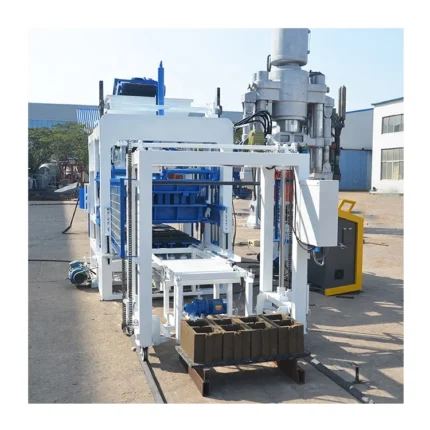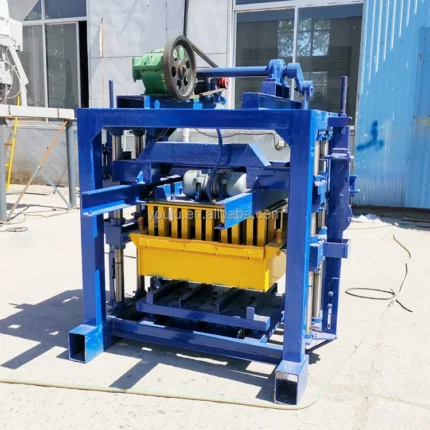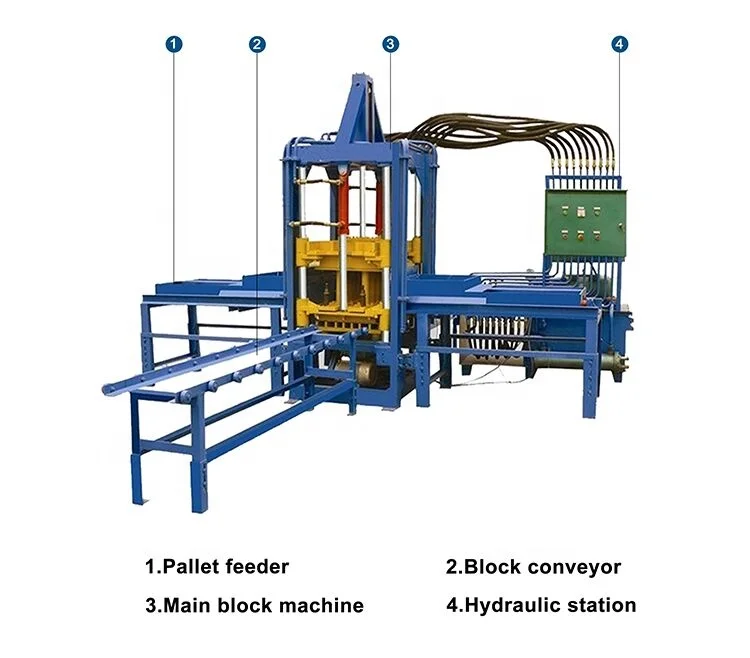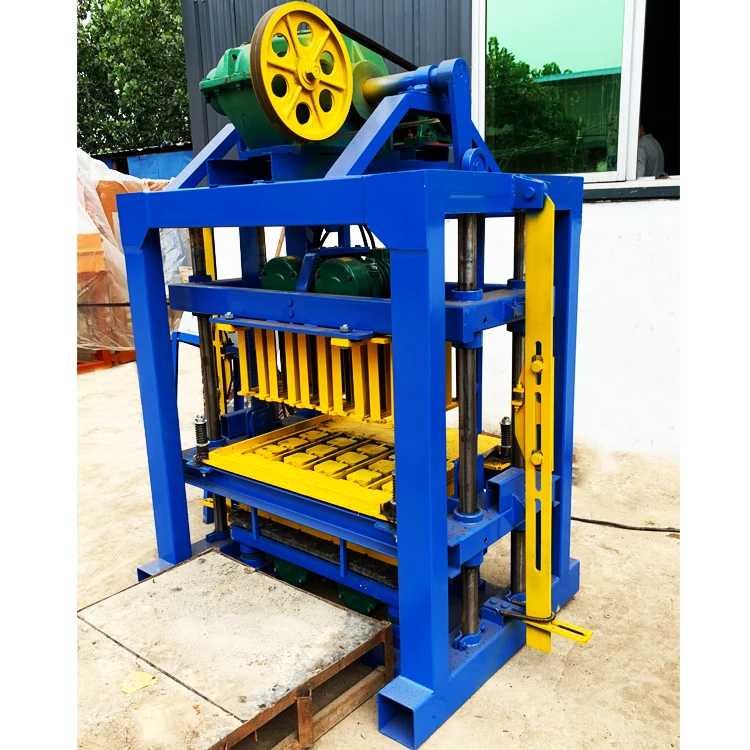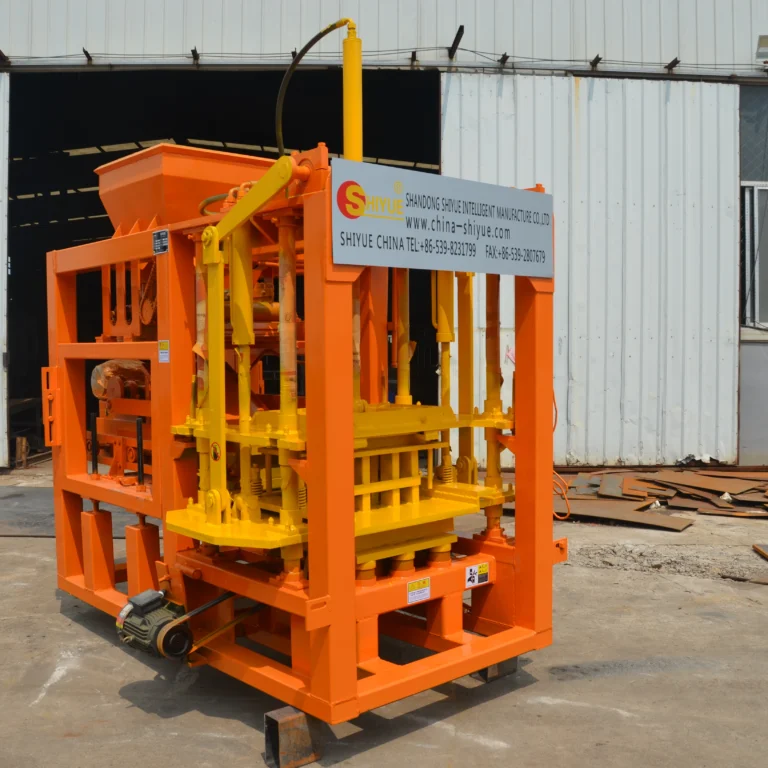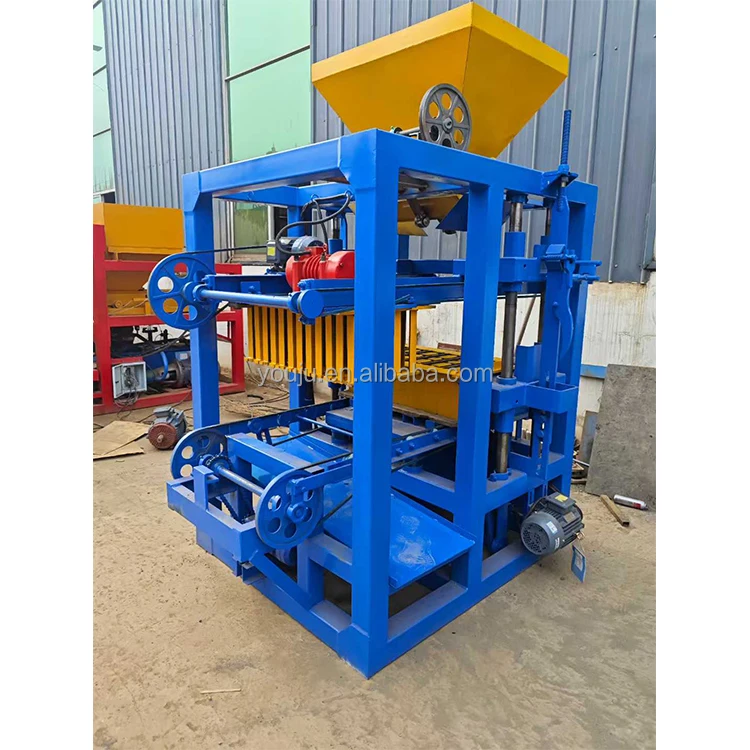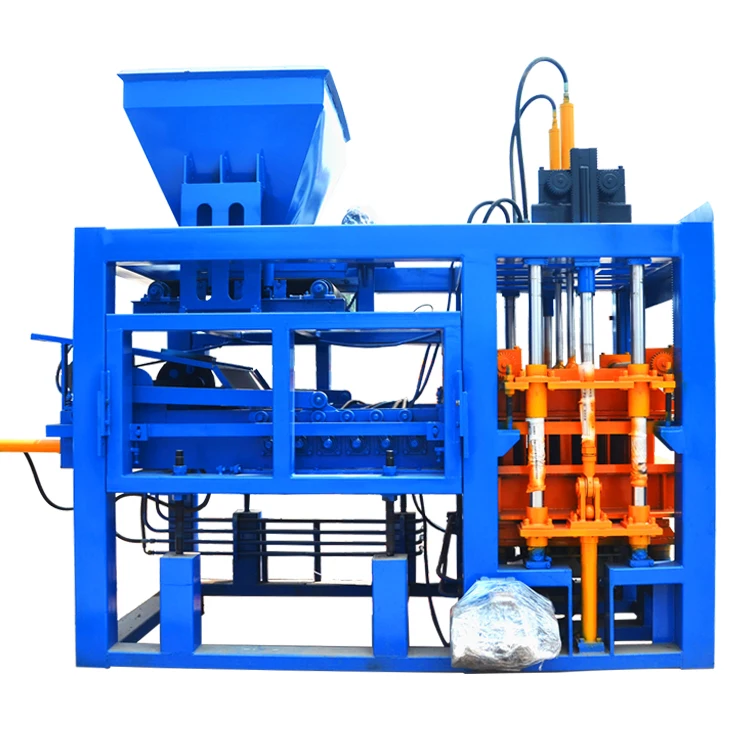
Description
Synchronized Vibration Matched to Mix — platform vibration frequency is tuned between 2800–4500 r/min against the buyer’s aggregate report, not a catalogue default, before the QT8-15 leaves the factory.
Technical Specifications
| Parameter | Value |
|---|---|
| Model | QT8-15 |
| Product Type | Automatic Stationary Concrete Block Making Machine |
| Overall Dimensions (L×W×H) | 8400×1700×2950 mm |
| Overall Power | 37 kW |
| Molding Cycle | 15–25 s (basis to be confirmed per block format) |
| Vibration Frequency | 2800–4500 r/min |
| Machine Weight | 10000 kg |
| Voltage | Customizable to local standard |
| Main Vibration Form | Platform Vibration |
| Pallet Size | 950×900 mm |
| Factory Area | 600 m² |
| Control System | Computer-based with fault diagnosis and remote monitoring |
| Automation Level | Automatic |
| Applied Products | Concrete blocks, hollow/solid blocks, pavers, interlocking blocks, curbstone, colored pavers |
| Standards | CE |
Application Suitability
| Application | Material or Output |
|---|---|
| Hollow block production for housing projects | Crushed stone, cement, river sand or manufactured sand |
| Solid load-bearing block manufacturing | Dense aggregate blends with controlled moisture |
| Interlocking paver and colored paver runs | Fine aggregate with pigment dosing for face-mix layers |
| Curbstone and kerb production | Coarse aggregate with high hydraulic compaction |
| On-site block production for contractors | Locally sourced sand and gravel with cement binder |
What the PLC Actually Replaces on the Shop Floor
The automatic QT8-15 block machine removes the operator from cycle timing, pallet indexing, and fault response — shifting those tasks to a computer-based control loop.
Many buyers assume a PLC-controlled stationary block making machine is just a screen bolted to a manual press. The reality is that automation reassigns decisions: when vibration starts, how long compaction holds, when the mold lifts, and whether a fault pauses the line or triggers a warning. I once watched a semi-automatic line in West Africa lose two hours because the operator missed a proximity sensor fault and kept cycling empty pallets [NEED_CITE: PLC fault response protocols in block production]. With built-in diagnosis, that downtime collapses into a visible alert.
How Fault Diagnosis Shortens Unplanned Stops
The computer-based control on the QT8-15 monitors sensor states across the molding cycle — vibration motors, hydraulic pressure switches, pallet position detectors — and surfaces a warning before a minor drift becomes a line stop. When a limit switch fails or a hydraulic valve sticks, the system flags the specific component rather than shutting the entire press down silently. This matters on sites where a dedicated electrician is not always present, because the PLC display points the maintenance crew directly at the faulty circuit.
Remote Monitoring Without a Dedicated Server Room
The remote monitoring capability lets a plant manager or off-site technician view production status and adjust parameters without standing at the control cabinet. This does not require a specialized IT infrastructure — it connects through standard network access already available at most block plants [NEED_CITE: remote monitoring requirements for industrial PLC systems]. For buyers running multiple lines or managing a site from a distance, the ability to review cycle counts and fault logs remotely removes the guesswork from daily production reporting.
Reading the Specs That Actually Shape Block Density
The vibration frequency range of 2800–4500 r/min is not a marketing spread — it reflects the need to match compaction energy to different mix designs. A lightweight hollow block with high sand content needs higher frequency to settle fines, while a dense curbstone with coarse aggregate responds better to lower frequency with longer hold time. Platform vibration, as opposed to mold-only vibration, ensures the energy reaches the full 950×900 mm pallet area evenly, preventing density variation between blocks at the center and edges of the board. The 37 kW total power allocation covers vibration motors, hydraulic pump, and conveyor drives simultaneously, so the press does not starve one system to feed another during peak draw. Molding cycle time of 15–25 seconds varies with block height and wall thickness — a 200 mm hollow block will sit at the longer end, while a thin paver may cycle faster.
When Automation Is Specified Without Confirming the Language
The most avoidable commissioning delay I have seen on a PLC-controlled stationary block making machine was a control panel displaying fault codes in a language the local operators could not read. The machine ran fine — but every alarm required a phone call to translate. Confirming the PLC display language alongside voltage and frequency before the automatic QT8-15 block machine enters production prevents this entirely [NEED_CITE: PLC language and HMI localization standards for export machinery]. A three-day delay at the ordering stage saves a three-week delay on the factory floor.
Why Procurement Should Start With the Control Specification
Buying the QT8-15 through this channel means the control system is configured against the buyer’s actual electrical grid and operational requirements, not a standard export setting. Voltage, frequency, and PLC language are locked in before production starts. The machine, pallet handling, and stacking are specified as a matched system — not assembled from separate suppliers who shift responsibility when cycle times do not align. Mould design is confirmed against the block formats the buyer’s market actually purchases, with custom drawings available when standard catalogs fall short. Factory test records are generated on the buyer’s target format before dispatch, not on a generic demo block.
Documentation & Verification
- Machine specification sheet with voltage, frequency, and PLC language confirmed per destination market
- Line layout showing QT8-15 placement within 600 m² factory area with pallet flow paths
- Hydraulic and electrical schematic for on-site maintenance team reference
- Factory test record run on buyer-specified block format and mix design
- Operation and maintenance manual with fault diagnosis code index in confirmed language
- Mould drawing and format list matching buyer’s product range
Installation, Commissioning & Support
- Foundation plan matching 8400×1700 mm footprint and 10000 kg operating weight
- Dedicated 37 kW power circuit with voltage and frequency verified before connection
- PLC display language and fault codes confirmed with local operators before first run
- Vibration frequency tuned between 2800–4500 r/min against buyer’s aggregate sample
- Operator training on fault diagnosis responses and mould change procedures
- Wear parts list covering hydraulic seals, vibration motor bearings, and mould liners
What to Include With Your Inquiry
Send your target block formats with dimensions, the local aggregate type and moisture range, and your daily output requirement stated per specific block size rather than as a general figure. Confirm your site voltage, frequency, and preferred PLC display language so the control cabinet is configured before assembly begins.
Frequently Asked Questions
Q: What automation functions does the QT8-15 remove from the operator?
A: The QT8-15 handles pallet indexing, vibration timing, mold lifting, and fault detection through its computer-based control system. The operator monitors the PLC display and responds to alerts rather than manually triggering each cycle step. Pallet feeding and block stacking are also automated when the full line is configured, removing repetitive manual handling from the production floor.
Q: How does the PLC fault diagnosis system work during a production run?
A: Sensors across the vibration, hydraulic, and pallet systems feed status data to the PLC continuously. When a parameter drifts outside its set range — a stuck valve, a failed proximity switch, or a motor overload — the system displays the specific fault location and recommended action. This allows the maintenance team to address the issue directly rather than troubleshooting the entire line.
Q: Can the control system and automation level be upgraded later?
A: The QT8-15 platform supports upgrading from semi-automatic pallet handling to full automatic stacking and cubing as production volume grows. The PLC architecture accommodates additional I/O modules and sensor inputs without replacing the core controller. Buyers planning a phased investment can specify the base machine with upgrade-ready wiring and add automation stations later.
Q: How is voltage, frequency, and PLC language confirmed before shipment?
A: During the order confirmation stage, the buyer provides the local electrical standard and preferred display language. These parameters are locked into the PLC configuration and electrical panel build before the QT8-15 enters assembly. A pre-shipment test verifies that the control cabinet operates correctly at the specified voltage and that all fault messages display in the confirmed language.