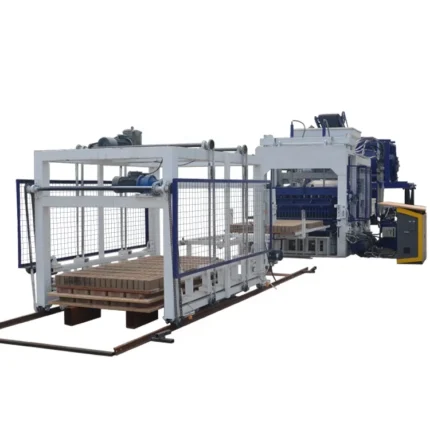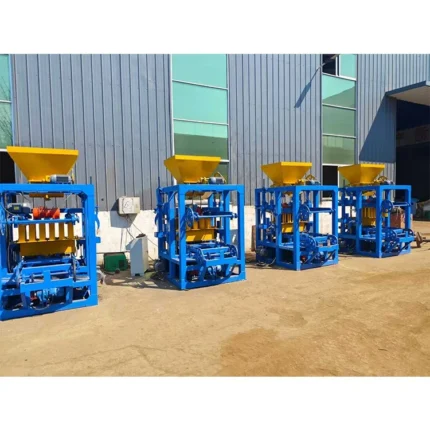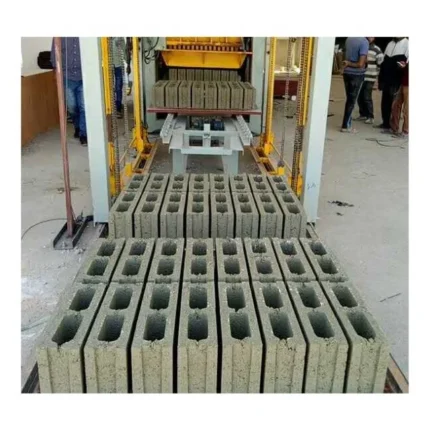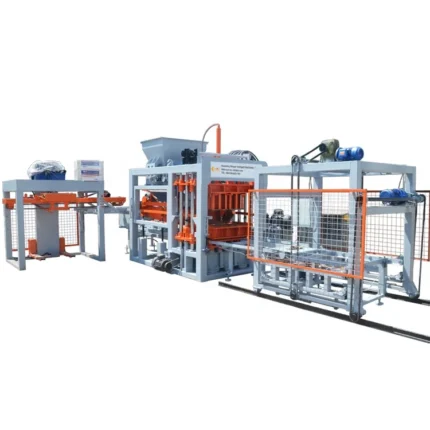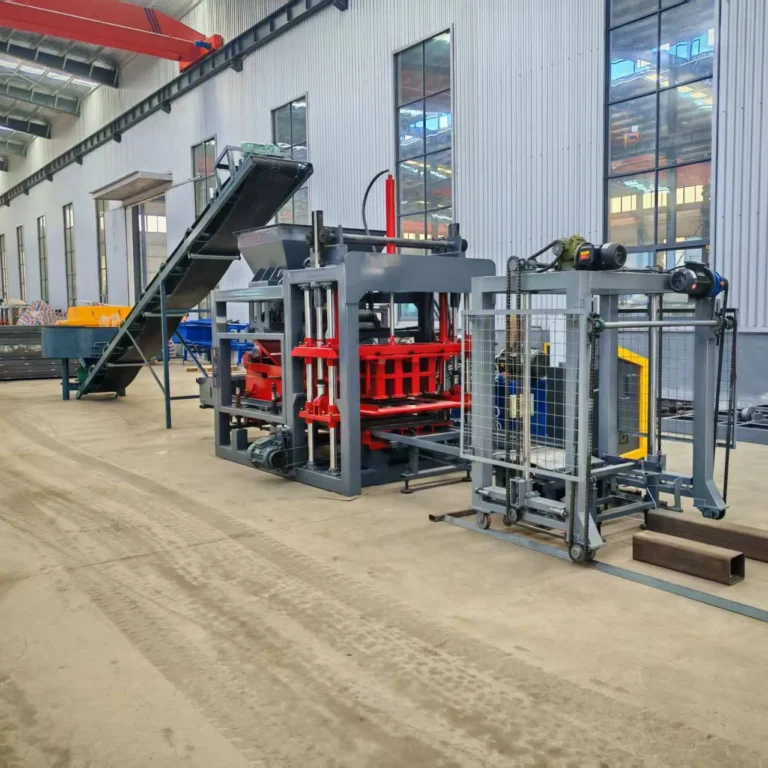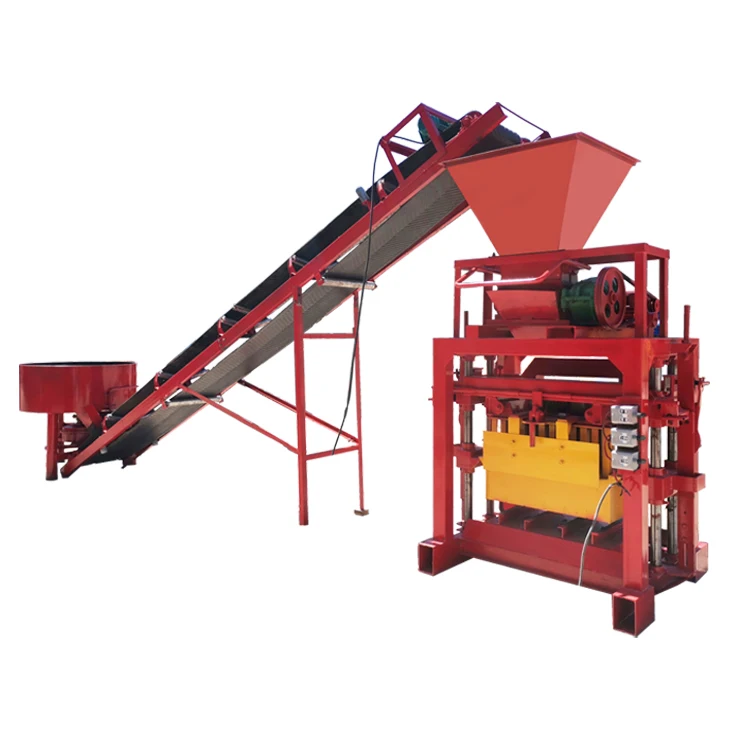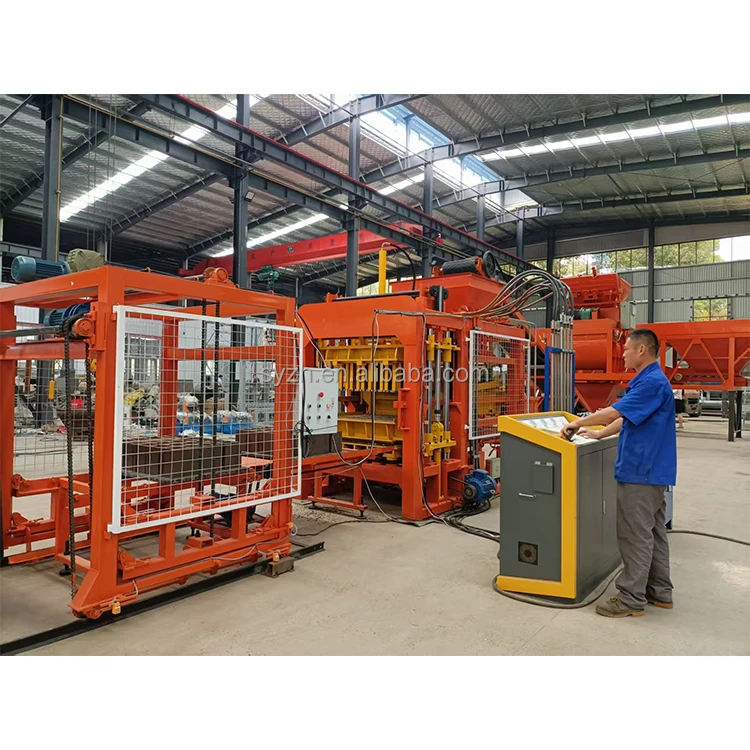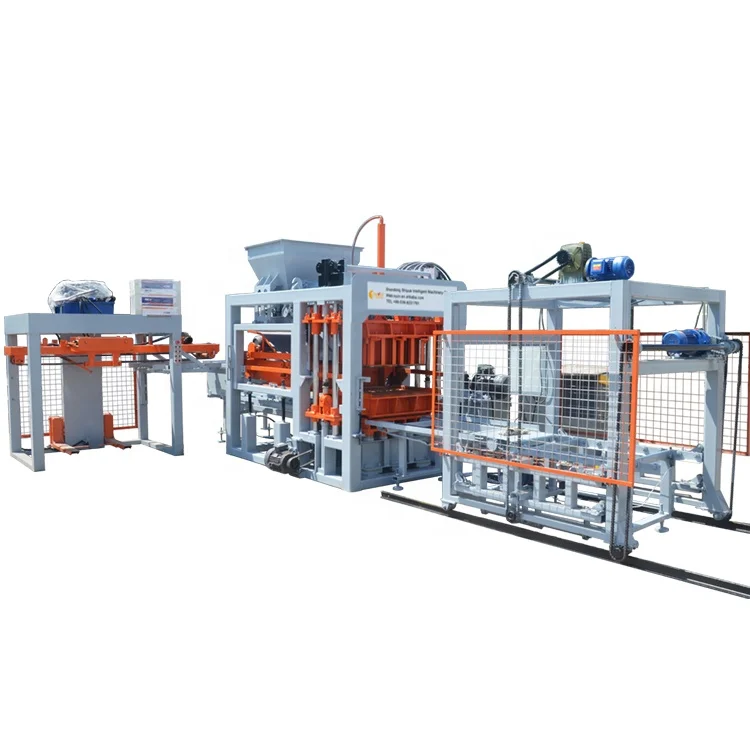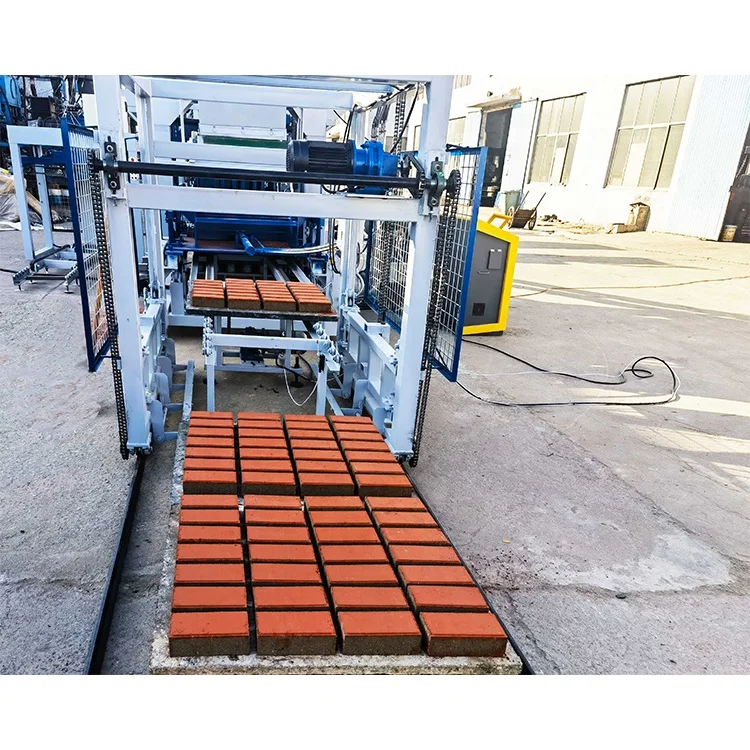

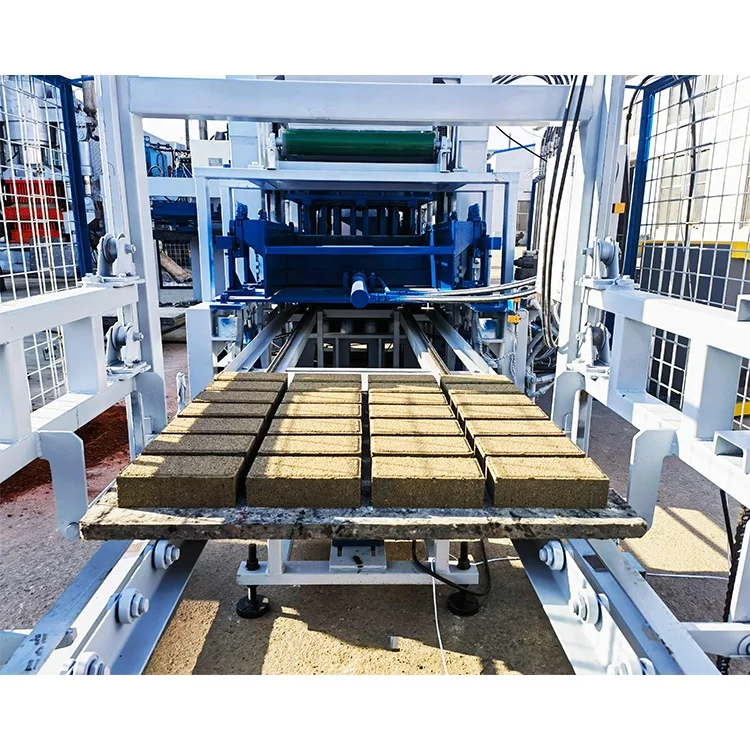
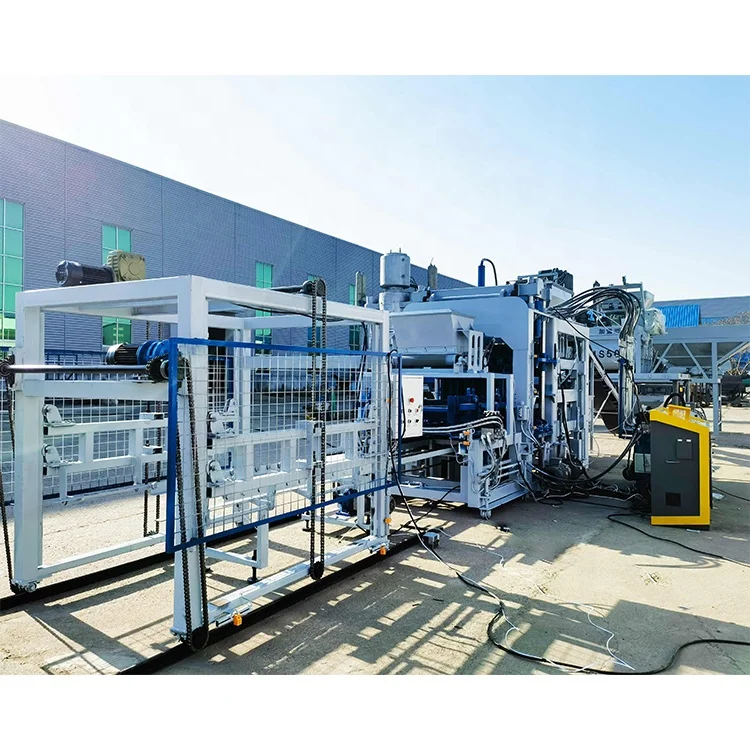
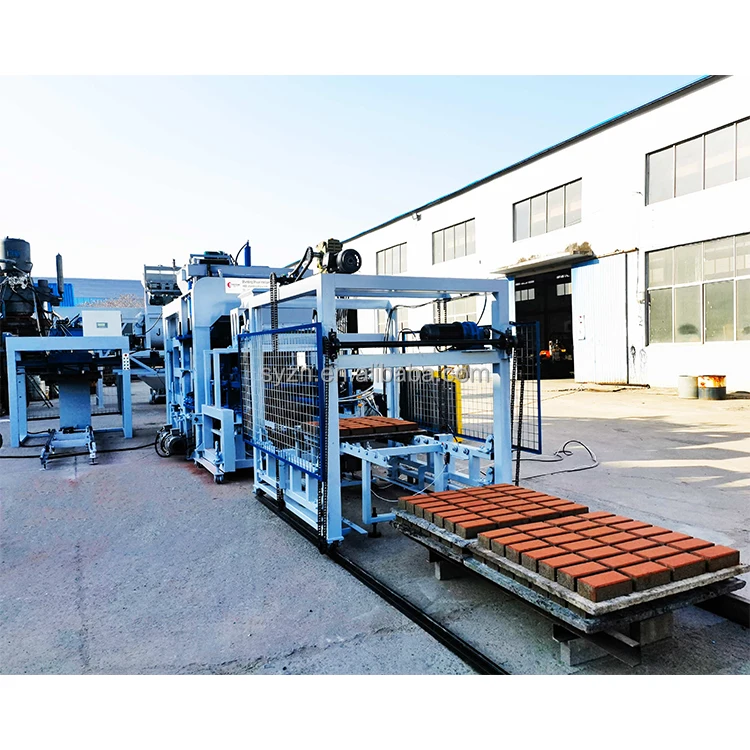
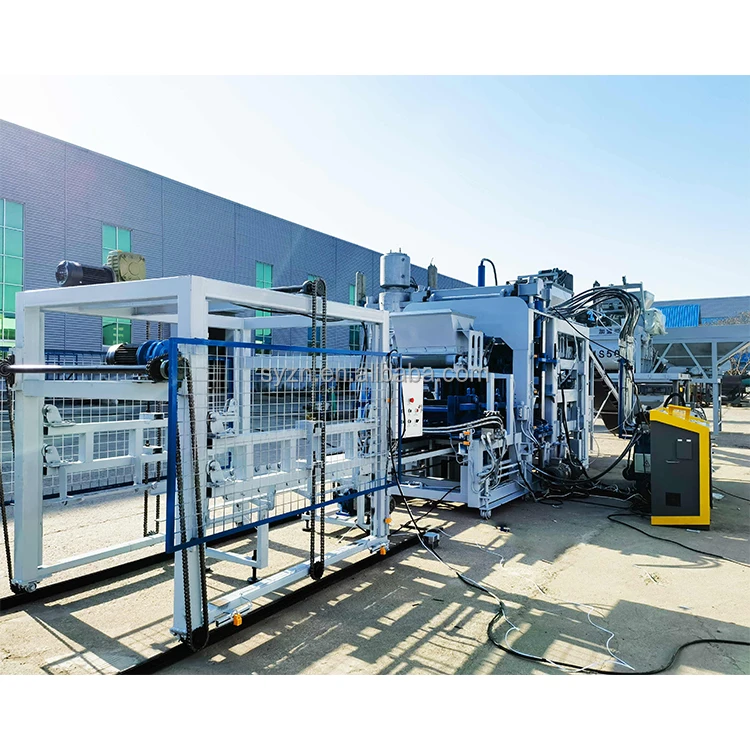
Description
Configured Control Logic — every QT8-15 leaves the factory with PLC parameters set against the buyer’s confirmed block format and mix design, so the automation does what the operator expects from day one.
Technical Specifications
| Parameter | Value |
|---|---|
| Model | QT8-15 |
| Product Type | Hydraulic Concrete Block Making Machine |
| Overall Dimensions | 8300 × 1860 × 3000 mm |
| Total Mass | 8 T |
| Overall Power | 55.5 kW |
| Rated Pressure | 21 MPa |
| Vibration Force | 45 kN |
| Vibration Frequency | 2800–4500 r/min |
| Main Vibration Form | Platform Vibration |
| Pallet Size | 950 × 900 mm |
| Molding Cycle | 15–20 s |
| Demolding Method | Hydraulic |
| Factory Area Required | 300 m² |
| Warranty | 1 year |
| Control | PLC-controlled (language configurable) |
Application Suitability
| Application | Material or Output |
|---|---|
| Hollow block production | Crushed stone, sand, cement, fly ash |
| Solid block manufacturing | Gravel, slag, cement blends |
| Paving block and colored paver runs | Fine aggregate with pigment dosing |
| Interlocking brick and kerbstone | Coarse aggregate with hydraulic compaction |
Why "Cycles per Hour" Does Not Tell You the Real Output
When a supplier quotes cycle speed without naming the block format behind that number, the automatic QT8-15 block machine PLC controlled can still disappoint once production starts on your actual product mix.
The cycle time only means something when tied to a specific mould and block geometry.
A 15-second cycle on a solid paver is not the same event as a 15-second cycle on a tall hollow block. The hydraulic fill depth, vibration duration, and demolding stroke all shift with format. I have watched plant owners arrive at a factory test expecting one daily output, then recalculate on the spot when they saw the real timing on the hollow block their market actually buys. The conversation should happen before the machine ships, not after it lands [NEED_CITE: capacity calculation methods for concrete block formats].
Removing the Operator from the Timing Loop
The PLC-controlled molding cycle on the automatic QT8-15 block machine PLC controlled holds each stage — feed, vibrate, press, demold — to a repeatable window regardless of shift length or operator fatigue. Where manual timing lets one cycle run 18 seconds and the next 24, the controller enforces the same sequence every time. This is what delivers batch-to-batch density consistency, not simply the presence of a screen.
Where Automation Stops and the Operator Still Matters
Automation handles pallet feeding, vibration timing, and hydraulic demolding. What it does not remove is the need for a trained operator watching raw material feed consistency, checking block edges off the press, and catching a worn mould before it produces a full shift of out-of-spec product. The upgrade path from semi-automatic to full stacking and cubing lets a plant owner add labour reduction in stages as the team gains confidence with the automatic QT8-15 block machine PLC controlled system.
Reading the Specs That Shape Block Quality
The 21 MPa rated pressure and 45 kN vibration force are not independent numbers — they work together during compaction. Hydraulic pressure packs the mix into the mould cavity while platform vibration at 2800–4500 r/min settles fine particles into voids. If vibration is too low for a given pressure, the block core stays loose; if pressure is too low for the vibration energy, the surface cracks on demold. The 950 × 900 mm pallet size determines how many blocks fit per cycle and must match the curing racks and forklift already in the plant. The 15–20 second molding cycle range reflects different block heights — taller hollow blocks need longer fill and vibration phases than flat pavers [NEED_CITE: hydraulic and vibration matching in block compaction].
The Cost of Skipping the Voltage Conversation
I once arrived at a West African plant where the block machine sat under a tarp for three weeks because the local supply was 415V/50Hz and the control panel was wired for a different standard. The PLC display language was also set to a script the local operators could not read. With the QT8-15, voltage, frequency, and PLC display language must be confirmed before production begins. Skipping that step turns a commissioning visit into a troubleshooting trip, and the automatic QT8-15 block machine PLC controlled unit sits idle while new components ship overseas [NEED_CITE: voltage and frequency standards by export market].
Why This Supply Chain Holds Up After Delivery
Block machinery as a single focus means the press, mould, pallet, and handling equipment are specified as one system — not sourced from separate vendors who blame each other when cycle times do not match. The QT8-15 configuration is set against the buyer’s actual mix design and local aggregate, not pulled from a catalogue default. Mould design covers the formats the buyer’s market sells, with custom drawings available. Automation level is selectable so a buyer can start semi-automatic and add stacking later. Installation support includes operator training on the specific PLC interface shipped with the machine.
Documentation & Verification
- Line layout showing QT8-15 placement within your 300 m² factory area
- Capacity calculation stating the block format assumed for each output figure
- Hydraulic and electrical schematic for your local maintenance team
- PLC display language and voltage confirmation sheet signed before production
- Factory test record run on your target block format before dispatch
- Mould drawing and format list matching your market requirements
Installation, Commissioning & Support
- Foundation pad sized to the 8300 × 1860 mm footprint with drainage for hydraulic leaks
- Dedicated power circuit rated for the 55.5 kW total draw at confirmed voltage
- Machine arrives partially dismantled for container loading, reassembled on-site
- First-run parameter tuning against your local aggregate and cement ratio
- Operator training covering PLC menu navigation and fault code response
- Spare hydraulic seals and wear parts list reviewed before shipment
What to Share With Your Inquiry
Before we discuss configuration, it helps to know which block formats your market moves fastest, what local aggregate and cement sources are available, and what curing space and pallet handling you already have in place. Share your site voltage and frequency along with the preferred PLC display language so the automatic QT8-15 block machine PLC controlled system arrives ready to run.
Frequently Asked Questions
Q: How is the QT8-15 cycle time verified per block format?
A: Each mould format — hollow block, paver, interlocking brick — has its own verified cycle within the 15–20 second range. The capacity calculation provided with your quotation states the daily output for the specific format you will produce, not a single generic number. This lets you plan curing space and logistics against real figures.
Q: What PLC language options and voltage configurations are available?
A: The PLC display language is set before production to match your operator team. Voltage and frequency are configured to your local supply standard. Both are confirmed in writing during the order process so the machine arrives without commissioning delays caused by electrical or interface mismatches.
Q: How does automation level affect the labour needed on the QT8-15?
A: In semi-automatic mode, operators handle pallet transfer and stacking manually while the PLC manages the press cycle. Upgrading to automatic pallet feeding, stacking, and cubing reduces manual handling but still requires an operator to monitor material feed and product quality at the press exit.
Q: Can I start semi-automatic and upgrade to full stacking later?
A: Yes. The QT8-15 is designed with an upgrade path so pallet feeding, stacking, and cubing stations can be added after the press is running and your team is comfortable with the PLC interface. This spreads investment while keeping the same core machine.
Q: What mould formats are available and how long does a change take?
A: Moulds cover hollow blocks, solid blocks, pavers, interlocking bricks, and kerbstones, with custom designs available to buyer drawings. Mould change time depends on the format shift and operator familiarity — the goal is a swap within a single shift so format flexibility does not cancel out production time.