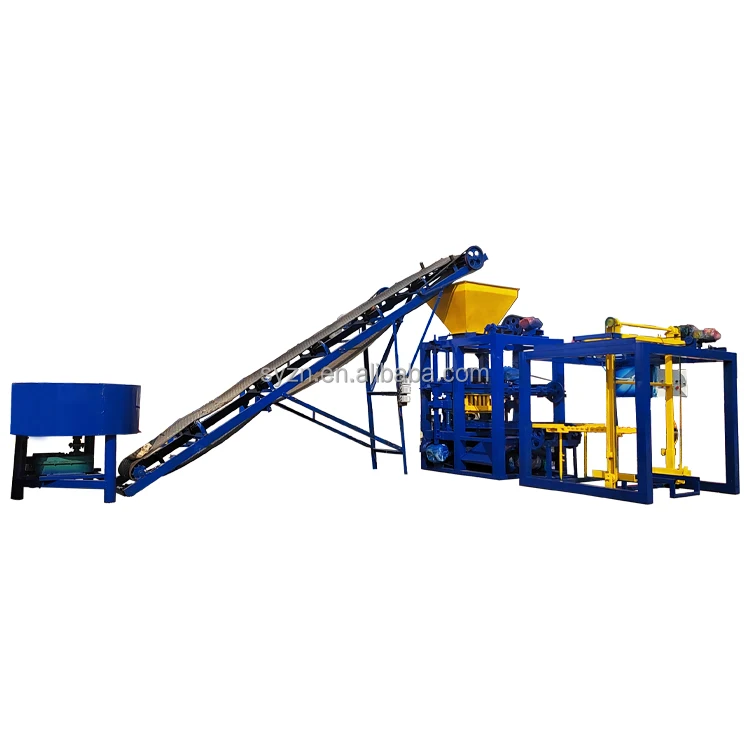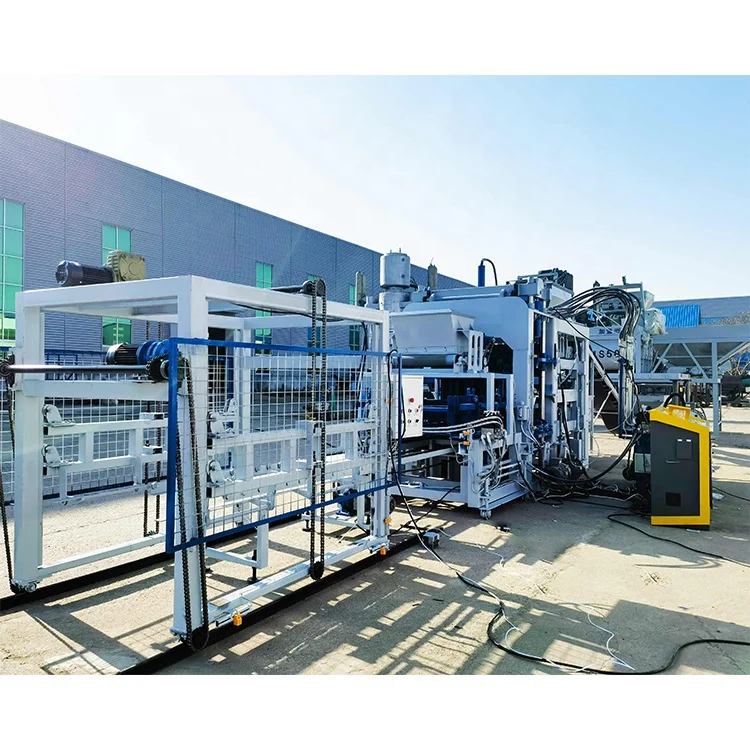
Description
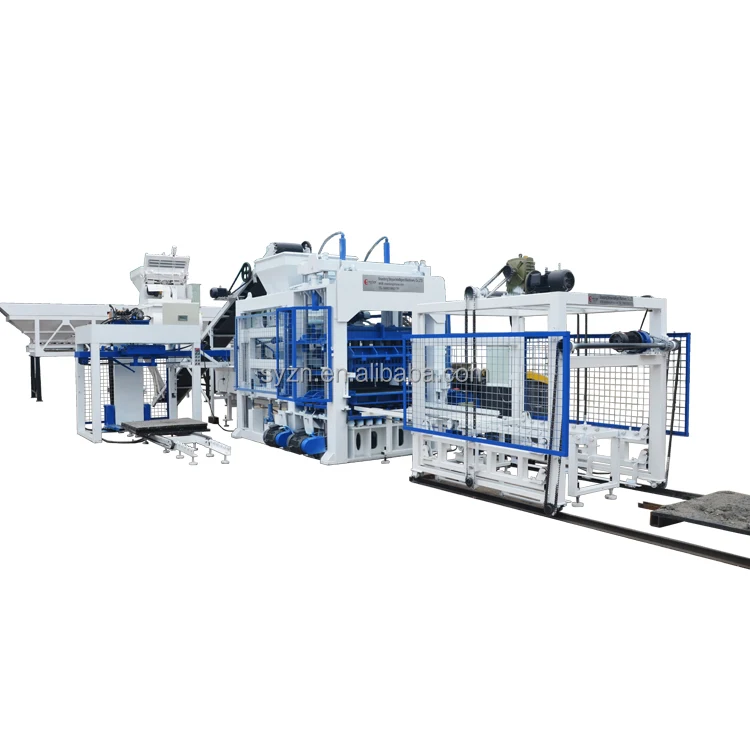
Configuration Set Against Actual Production Targets — Every control parameter, cycle time, and pallet specification for the automatic QT8-15 block making machine PLC controlled system is confirmed against your block format, local aggregate, and curing layout before production begins.
Technical Specifications
| Parameter | Value |
|---|---|
| Model | QT8-15 |
| Product Type | Automatic Hydraulic Block Making Machine |
| Overall Dimensions (L×W×H) | 8300×1860×3000 mm |
| Total Mass | 9 T |
| Rated Pressure | 21 MPa |
| Main Vibration Form | Platform Vibration |
| Vibration Frequency | 2800~4500 r/min |
| Vibration Force | 60 kN |
| Vibration Source | Double vibration sources with synthetic output, frequency conversion and braking |
| Pallet Size | 950×900 mm |
| Molding Cycle | 15-25 s (basis not stated in source — confirm block format / material / thickness) |
| Demolding Method | Hydraulic |
| Overall Power | 55.5 kW |
| Control System | PLC aptitude control with human-machine interface dialogue system |
| Feeding System | Semi-closed screen reticular rotational forced feeding unit |
| Automation Level | Completely automatic (raw material feeding and block stacking automated) |
| Factory Area | 600 m² |
| Applied Products | Concrete blocks, hollow/solid blocks, pavers, interlocking blocks, curbstone, colored pavers |
| Raw Materials | Crushed stone, sand, cement, dust, fly ash, gravel, slag |
| Certification | CE declaration where applicable |
| Voltage & Frequency | To be confirmed before order |
| PLC Display Language | To be confirmed before order |
Application Suitability
| Application | Material or Output |
|---|---|
| Hollow block production plants | Crushed stone, sand, cement, fly ash blends |
| Solid block manufacturing | Gravel, cement, and slag aggregates |
| Interlocking paver and curbstone lines | Colored concrete mixes with fine aggregates |
| Fully automatic block plants replacing manual operation | High-volume output requiring automated feeding and stacking |
| On-site production for housing and development projects | Locally sourced raw material mixes including dust and fly ash |
What a "15-25 Second Cycle" Actually Means for Your Daily Output
Cycle time only becomes meaningful when tied to a specific block format, pallet size, and the automation level included in your quotation.
Manufacturers frequently quote a molding cycle range without stating which block thickness, aggregate blend, or pallet configuration that figure assumes. I have seen buyers receive machines where the stated cycle time applied only to thin paving blocks, while the hollow blocks they actually needed to produce required substantially longer press and curing durations. The automatic QT8-15 block making machine PLC controlled system allows real-time signal analysis and adjustment at the human-machine interface, but the cycle baseline must be documented per format before the machine ships [NEED_CITE: capacity calculation standards for block forming equipment]. Without that documentation, daily output projections remain guesswork and shift planning breaks down within the first week of production.
How PLC Dialogue Control Removes Operator Guesswork
The automatic QT8-15 block making machine PLC controlled interface replaces manual timing adjustments with computer-controlled hydraulic flow pressure matched to the vibration system. When local aggregate moisture or grading shifts between batches, the operator can adjust pressure and vibration parameters directly through the dialogue system rather than relying on trial-and-error block testing. This keeps batch-to-batch density consistent across formats as large as curbstone and as small as interlocking pavers on the same 950×900 mm pallet.
Double-Source Vibration and Why Synchronous Compaction Matters
Platform vibration at 2800 to 4500 r/min combined with 60 kN vibration force provides vertical synchronous compaction across the entire mould cavity. The frequency conversion and braking system stops vibration precisely at the end of each cycle, preventing surface cracking that occurs when the press decelerates unevenly. This level of control is particularly relevant when switching between hollow block and solid paver formats, where the fill density and vibration duration requirements differ significantly [NEED_CITE: vibration compaction principles in concrete block forming].
Reading the Specifications That Actually Affect Your Plant Layout
The 55.5 kW overall power requirement means the electrical supply must support sustained draw across the hydraulic pump, vibration motors, and forced feeding unit simultaneously — a dedicated circuit with appropriate breaker sizing is necessary, not a shared plant bus. The 21 MPa rated hydraulic pressure determines the maximum compaction force available for dense aggregate mixes, and buyers working with high-cement-content paver designs should confirm that this pressure range suits their target block strength. The semi-closed screen reticular rotational forced feeding unit distributes material uniformly across the mould cavity, which matters most when producing thin-walled hollow blocks where uneven fill causes wall collapse during demolding. Factory area of 600 m² covers the press, pallet circulation, and stacking zone but curing rack layout depends on your existing forklift and yard dimensions.
The Cost of Mismatched Pallet Handling and Automation Gaps
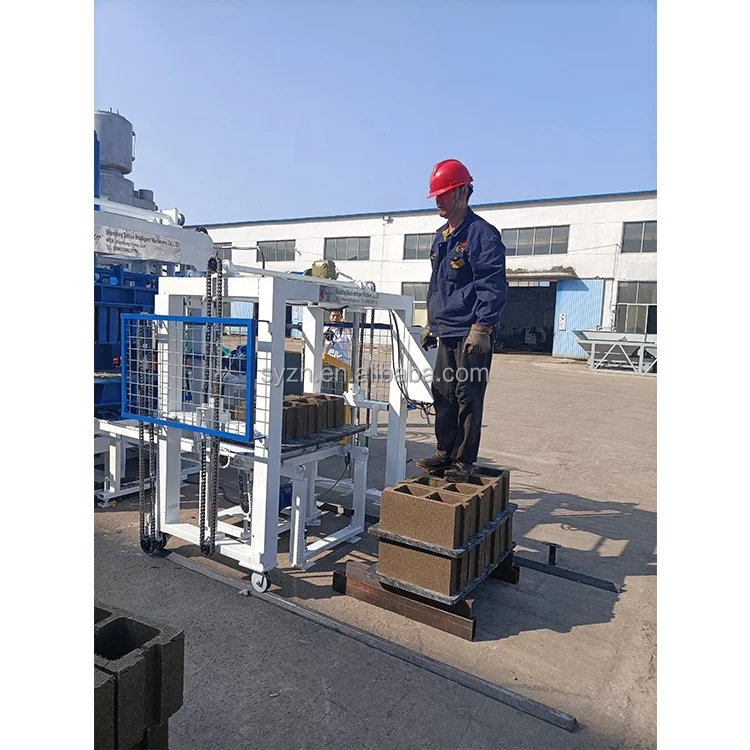
I spent years doing after-sales service in the Pearl River Delta region, and the most frustrating calls were never about broken machines — they were about machines running perfectly while blocks piled up and shattered at the discharge end. One Southeast Asian client installed a large-format automatic press with rapid cycling, but the stacking station was still manual. The output rhythm was completely mismatched: a full pallet of blocks had not been carried away before the next one pushed out, and hundreds of blocks broke daily. When the automation level is quoted as completely automatic with raw material feeding and block stacking included, confirm that the stacking and cubing stations are actually in the line quotation and that their cycle times match the press output rate [NEED_CITE: block line synchronization and pallet handling requirements].
Why Buyers Source This Press Through a Matched System Approach
Block machinery is our single focus, so the QT8-15 press, mould, pallet, and handling equipment are specified together rather than assembled from separate suppliers. The configuration is set against your actual mix design and local aggregate, not a catalogue default, which prevents the situation where a machine arrives configured for a material blend you cannot source locally. Mould design covers the formats your market actually sells, including custom drawings to buyer specifications. The automation level is selectable, so a plant can start with semi-automatic pallet handling and add stacking automation later. Installation support includes on-site commissioning with operator training so the PLC dialogue system parameters are set for your specific block formats from day one [NEED_CITE: block machinery commissioning and operator training protocols].
Documentation & Verification
- Line layout and capacity calculation stating the block format assumed for each cycle time figure
- Machine specification sheet with voltage, frequency, and PLC display language confirmed per order
- Mould drawing and format list covering hollow, solid, paver, interlocking, and curbstone options
- Hydraulic and electrical schematic matching the 55.5 kW power configuration and 21 MPa pressure rating
- Factory test record on your target block format before dispatch
- Packing photographs and customs documentation support for export shipment
Installation, Commissioning & Support
- Foundation must support 9 T total mass with anchor bolt pattern matching the 8300×1860 mm footprint
- Dedicated power circuit sized for 55.5 kW sustained draw with confirmed voltage and frequency before wiring
- Machine ships dismantled for container loading and requires on-site reassembly of vibration platform and hydraulic frame
- First-run commissioning includes PLC parameter setup for your block format, mix design, and target cycle time
- Operator training covers human-machine interface dialogue operation, mould change procedure, and daily maintenance checks
- Wear parts and mould replacement list provided with first-order availability confirmed for hydraulic seals and vibration components
What to Include with Your Inquiry
Provide your target block format with dimensions, required daily output per format, and local raw material availability including aggregate type and grading. Include your site electrical supply specifications — voltage, phase, and frequency — along with the preferred PLC display language for your operators. If you have existing curing racks, forklifts, or upstream batching equipment, share those details so the pallet size and automation configuration can be matched to what is already on site.
Frequently Asked Questions
Q: How is cycle time stated per block format, and what is the realistic daily output for my target product?
A: The 15-25 second molding cycle range must be confirmed against your specific block format, material mix, and required thickness. We provide a capacity calculation per format with the cycle time assumption documented, so daily output projections reflect what you will actually produce rather than a best-case figure based on a thin paver or small solid block.
Q: What automation level is included — does the quotation cover automatic pallet feeding, stacking, and cubing?
A: The QT8-15 is specified as completely automatic with raw material feeding and block stacking automated. However, the exact scope — including pallet circulation, stacking pattern, and cubing station — must be confirmed in the line quotation. We calculate the cycle time for each station so the press is never left waiting and blocks are not damaged at the discharge end.
Q: Is the PLC display language configurable to my operator’s language, and is remote diagnostics available?
A: The PLC aptitude control system includes a human-machine interface dialogue system, and the display language is confirmed before production starts. Remote diagnostics capability depends on the control configuration selected. Specify your operator language preference and connectivity requirements during the inquiry stage so the interface is ready at commissioning.
Q: How is the vibration force and hydraulic pressure matched to my local aggregate and mix design?
A: The 21 MPa rated pressure and 60 kN vibration force with frequency conversion are configured against your aggregate type, grading, and cement content. The computer-controlled hydraulic flow pressure is matched to the double-source vibration system to achieve consistent compaction density. Buyers provide their mix design during the proposal stage so parameters are set before the machine ships.
Q: What is the mould change time, and what format flexibility does the QT8-15 support on a 950×900 mm pallet?
A: The QT8-15 supports hollow blocks, solid blocks, pavers, interlocking blocks, and curbstones on the 950×900 mm pallet. Mould change time depends on the change system configuration selected — manual bolt-release or hydraulic quick-change. The format list and change procedure are documented per order so buyers know exactly how long a format switch takes before committing to a multi-format production schedule.