

Description
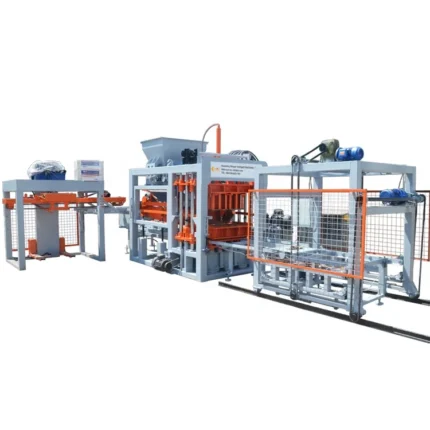
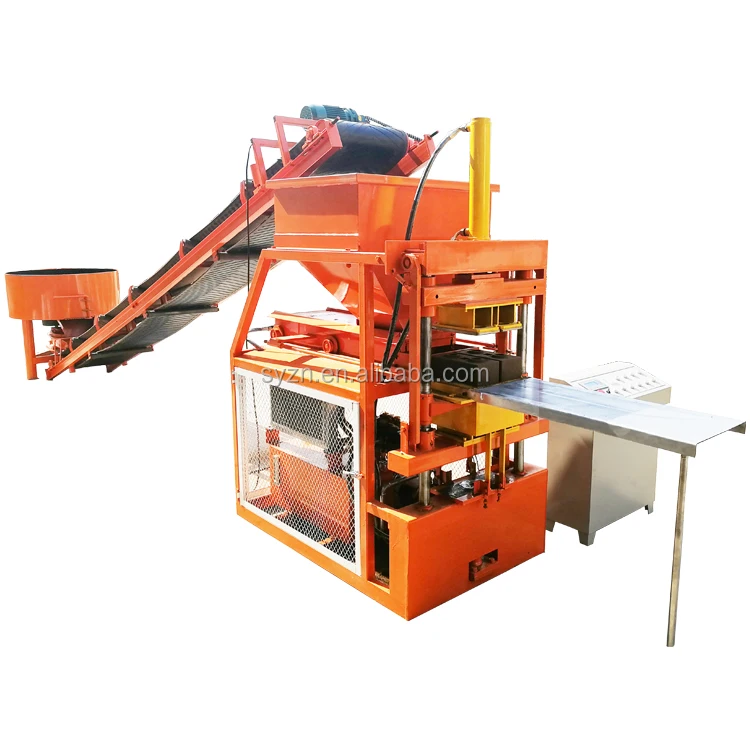
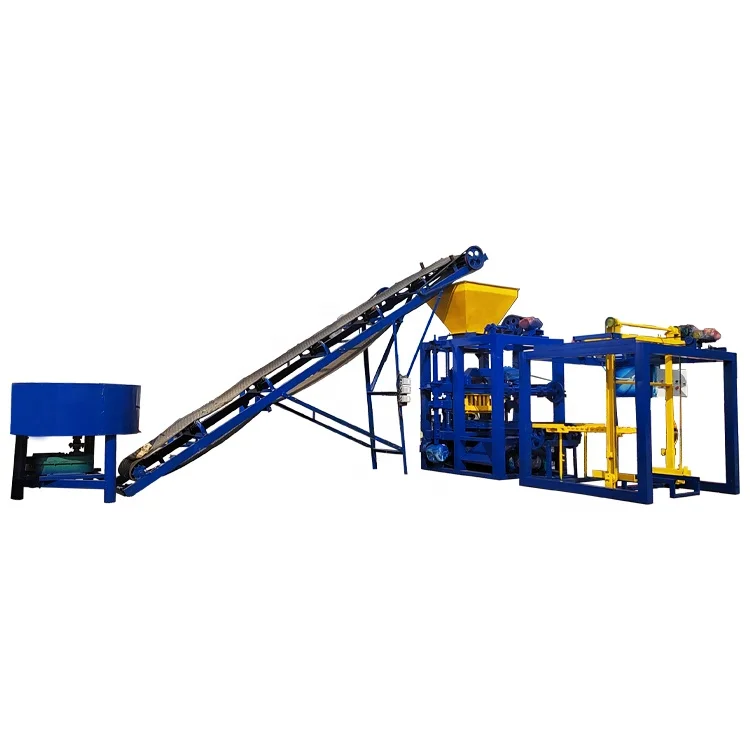
Single-Focus Automation Path — the QTJ4-24 block making machine with PLC control is engineered as an upgradeable platform where vibration, cycle logic, and pallet handling are commissioned together, eliminating the integration gaps typical of machines assembled from separate suppliers.
Technical Specifications
| Parameter | Value |
|---|---|
| Model | QTJ4-24 |
| Product Type | Semi-Automatic Concrete Block Making Machine |
| Overall Dimensions (L×W×H) | 2060×1700×2650 mm |
| Rated Vibration Force | 35.5 kN |
| Main Vibration Form | Platform Vibration |
| Vibration Frequency | 4200 r/min |
| Pallet Size | 900×450 mm |
| Molding Cycle | 24 s (basis to be confirmed — depends on block format, material, and thickness) |
| Overall Power | 11.95 kW |
| Total Mass | 2000 kg |
| Demolding Method | Vibration |
| Factory Area Required | 260 m² |
| Control System | Configurable (PLC or MCC, language confirmed pre-production) |
| Voltage & Frequency | Configurable to site supply (confirmed before build) |
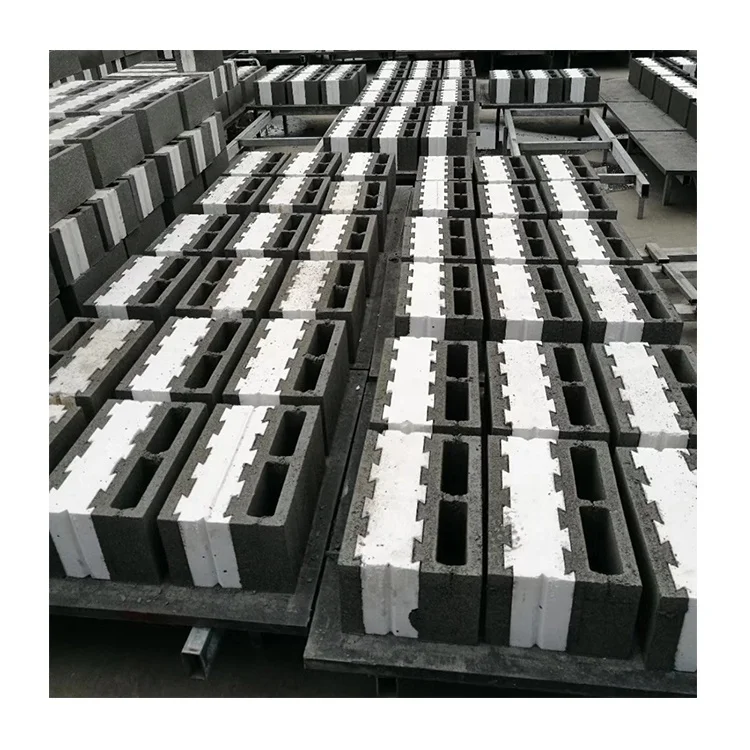
| Applied Products | Hollow blocks, solid blocks, pavers, interlocking blocks, curbstones |
| Raw Materials | Crushed stone, sand, cement, fly ash, gravel, slag |
| Warranty | 1 year (excluding spare parts) |
Application Suitability
| Application | Material or Output |
|---|---|
| Small to medium block plants | Hollow and solid concrete blocks from locally sourced crushed stone and cement |
| Paver and interlocking brick production | Colored pavers and interlocking blocks using sand, cement, and pigment |
| On-site contractor manufacturing | Kerbstones and solid blocks produced at project sites using available aggregate |
| First-time block plant setup | Semi-automatic production within a ~260 m² workshop footprint |
Why the Control Language Question Should Come Before the Shipment Date
Every PLC display text and alarm message must match the operator’s working language before the machine leaves the factory.
I once shipped a semi-automatic block press to a Caribbean site where the default HMI language was never confirmed during the order cycle. When the container arrived, the local operator stared at Chinese alarm codes and could not clear a simple pallet jam. Commissioning stalled for days while a language pack was prepared remotely. That delay is avoidable: the automatic QTJ4-24 block machine ships only after the buyer signs off on every screen label, fault message, and cycle status indicator in their chosen language [NEED_CITE: HMI localization standards for industrial control panels].
Matching Vibration to Mix Design, Not a Catalogue Default
The QTJ4-24 platform delivers 35.5 kN of vibration force at 4200 r/min through a platform vibration system. Those figures only translate into consistent block density when the machine is tuned to the buyer’s actual aggregate gradation and cement ratio. A mix that works in one region may produce weak or cracked blocks in another if the vibration amplitude and cycle timing are not adjusted accordingly.
From Semi-Automatic Baseline to Fully Controlled Line
The control architecture supports a clear upgrade path. A buyer can start with manual pallet handling and a basic cycle timer, then add PLC-controlled pallet feeding, automatic stacking, and batching accuracy modules as production volume grows. This staged approach means the initial automatic QTJ4-24 block machine investment stays contained, while the control backbone is already in place for future expansion. [NEED_CITE: PLC upgrade compatibility in semi-automatic block presses]
Reading the Specs That Actually Matter on Site
The 900×450 mm pallet size determines how many blocks are pressed per cycle and how the output fits into the curing area. If the buyer already operates a specific forklift or curing rack system, the pallet material — bamboo, steel, or PVC — and dimensions must align with that infrastructure. The 11.95 kW overall power draw is modest, but the site must still provide a dedicated circuit at the confirmed voltage and frequency to avoid compressor-like voltage dips during the vibration peak. The 2000 kg machine mass sits within standard workshop floor loading limits, yet a level concrete pad remains essential for vibration uniformity across the platform.
What Happens When Voltage and Frequency Are Assumed, Not Confirmed
A block press configured for 380 V / 50 Hz that arrives at a 440 V / 60 Hz site will not simply run slower or draw more current. The vibration motor will overspeed, altering the compaction profile and producing blocks that fail strength tests. The hydraulic pump, if equipped, will shift its pressure curve. These mismatches are not discovered during unpacking — they surface weeks later as inconsistent block quality or premature motor failure [NEED_CITE: electrical frequency mismatch effects on industrial vibration motors].
Why Buyers Source the QTJ4-24 Here
- Block machinery is the sole product focus, so the press, mould, pallet, and handling equipment are specified as one matched system rather than assembled from separate vendors.
- Each QTJ4-24 is configured against the buyer’s actual mix design and local aggregate, not shipped with a default catalogue setting.
- Mould supply covers the formats the buyer’s market sells, including custom drawings when standard formats do not match local demand.
- Automation level is selectable at order and expandable later, so a semi-automatic start does not lock the buyer out of future PLC-controlled pallet feeding or stacking.
- Voltage, frequency, and control language are confirmed and signed off before production begins, removing the most common commissioning delays.
Documentation & Verification
- Line layout and capacity calculation stating the exact block format assumed for cycle timing
- Machine specification sheet with confirmed voltage, frequency, and control language
- Mould drawing and format list matching the buyer’s product range
- Hydraulic and electrical schematic for local maintenance planning
- Factory test record with actual cycle times and block strength data for the specified format
Installation, Commissioning & Support
- The 260 m² factory area requirement guides workshop layout, including raw material storage and curing zone placement around the QTJ4-24.
- A dedicated power circuit at the confirmed voltage and frequency must be installed before the 11.95 kW system is energized.
- The 2000 kg machine mass is shipped in a dismantled state and reassembled on site to fit standard container loading.
- Commissioning includes vibration tuning against the buyer’s mix to validate the 24-second cycle on the target block format.
- Operator training covers PLC screen navigation, alarm clearing, and mould change procedures in the confirmed language.
- A wear parts and mould list is provided with the machine for planning the first replacement order.
Before Requesting a Quotation
Provide the target block format and dimensions, the daily output you need to meet, and the raw materials available at your site — including aggregate type and cement grade. Confirm your local voltage, frequency, and preferred control language. If you already have pallets, curing racks, or a forklift in place, share those specifications so the 900×450 mm pallet system is matched to your existing infrastructure from day one.
Frequently Asked Questions
Q: How is the 24-second molding cycle verified, and which block format does it assume?
A: The cycle time depends on block format, material thickness, and compaction requirements. Before shipment, a factory test is run using your specified mix and target block dimensions. The actual measured cycle and block strength results are documented in the test record provided with the machine.
Q: What PLC and control language options are available, and can the system be upgraded later?
A: The control system is configurable between PLC and MCC at the time of order, with display language confirmed before production. The architecture supports adding automatic pallet feeding, stacking, and batching modules as your operation grows without replacing the base controller.
Q: How is the vibration force and pressure matched to my local aggregate and mix design?
A: Vibration amplitude and cycle timing are adjusted based on the aggregate gradation and cement ratio you provide. This ensures the 35.5 kN platform vibration produces consistent compaction rather than a one-size-fits-all setting that may cause weak or cracked blocks.
Q: What automation upgrades can be added after initial installation?
A: The QTJ4-24 supports staged automation: PLC-controlled pallet feeding, automatic stacking, and cubing systems can be integrated after the semi-automatic baseline is running. The control backbone is installed from the start, so upgrades connect to existing hardware.
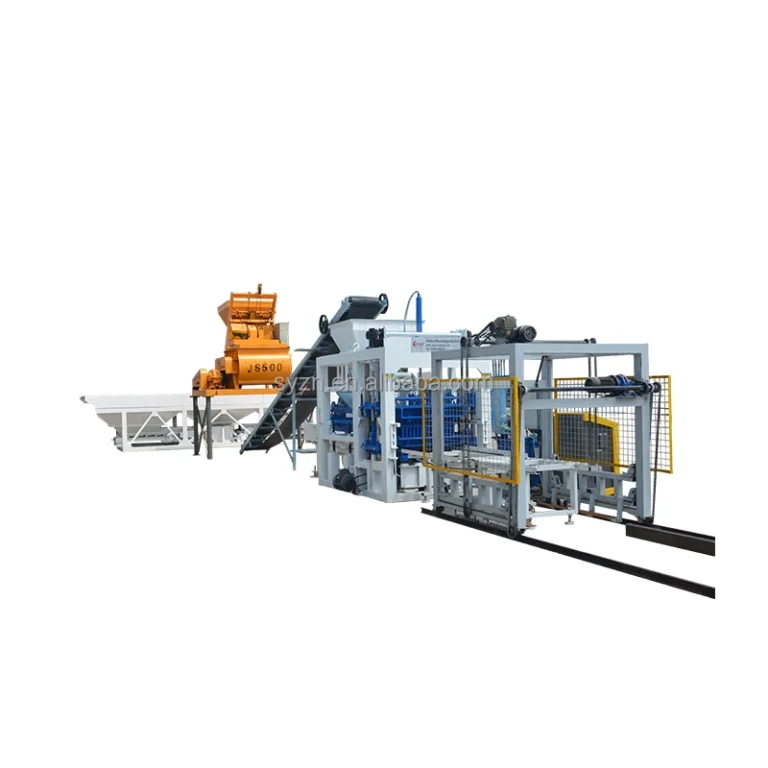
Q: How does the QTJ4-24 synchronize with upstream mixing and downstream curing rack handling?
A: The cycle timing and pallet release point are coordinated with your mixer discharge rate and curing rack capacity. The line layout document maps these stations to ensure the press is not left idle between cycles waiting for material or pallets.