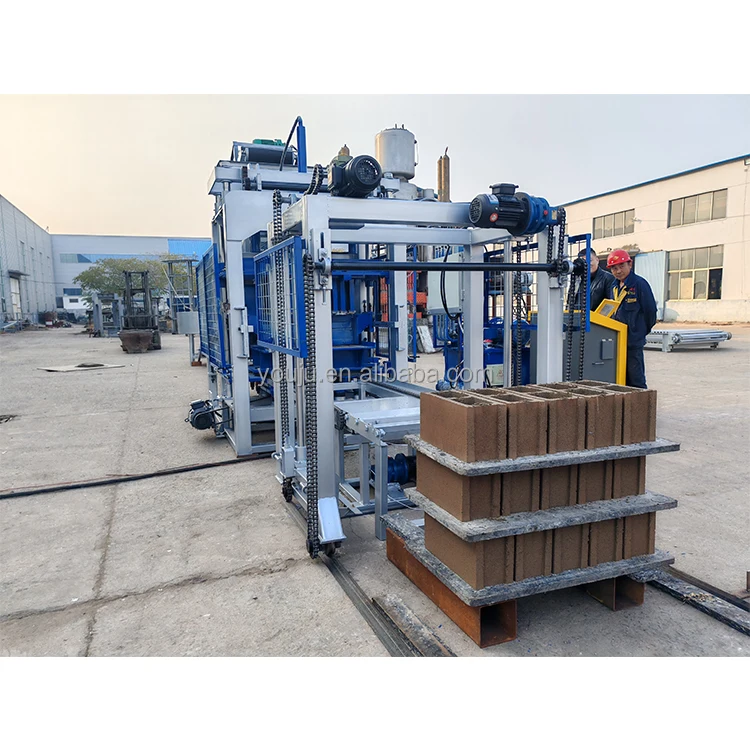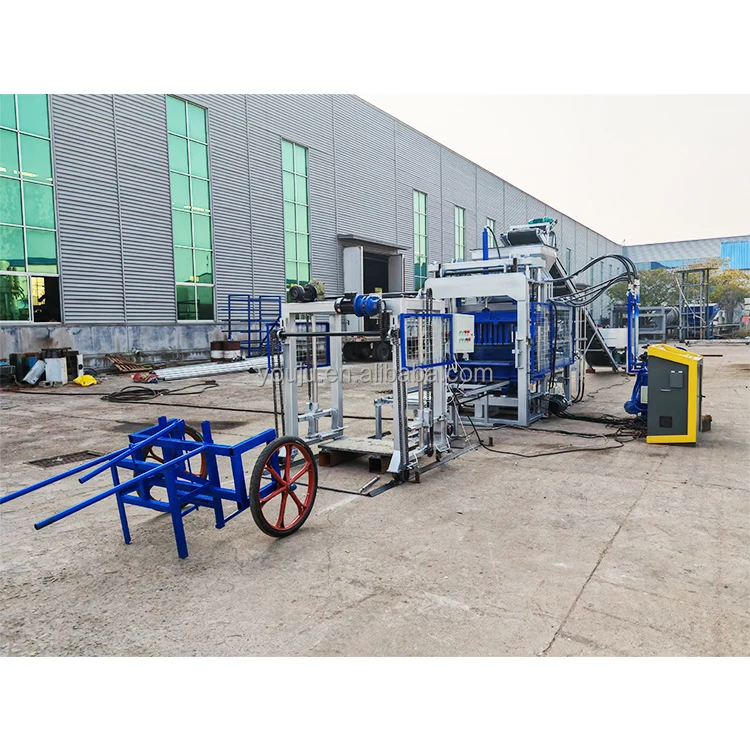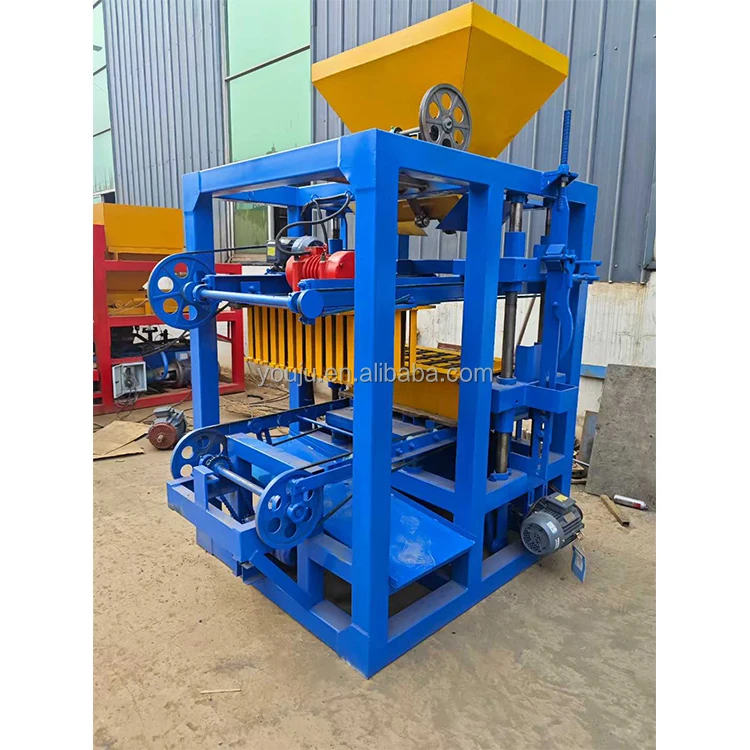


Description
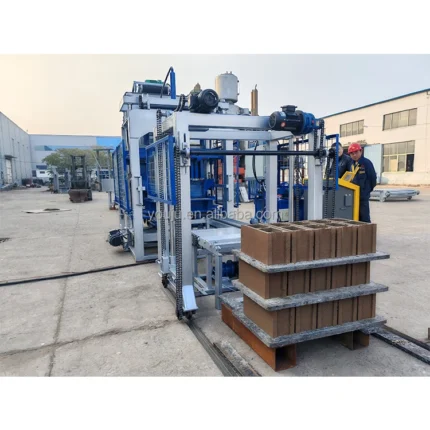
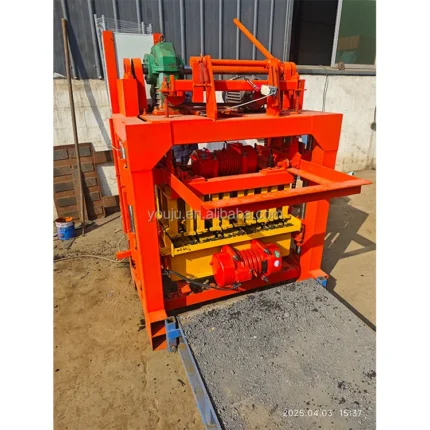
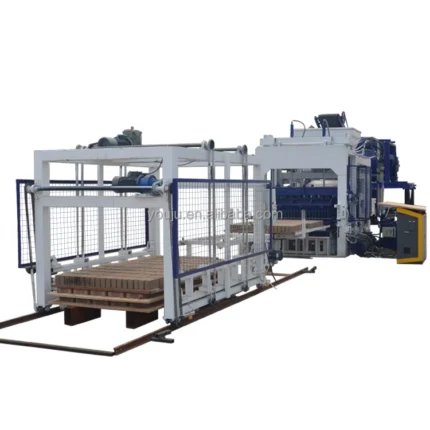
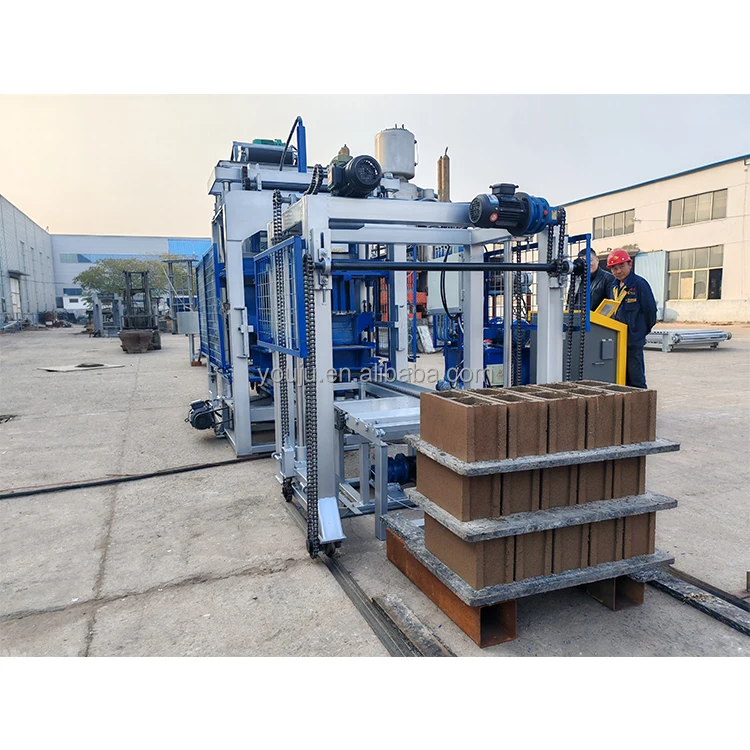
Selectable automation levels — The QTJ4-24 semi-automatic block machine is specified around the buyer’s actual curing area layout and pallet handling capacity, allowing a defined upgrade path from manual to automated stacking without replacing the press itself.
Technical Specifications
| Parameter | Value |
|---|---|
| Model | QTJ4-24 |
| Product Type | Semi-Automatic Concrete Block Making Machine |
| Molding Type | Platform Vibration |
| Overall Dimensions | 3600mm × 1700mm × 2560mm (working state) |
| Total Mass | 1750kgs |
| Pallet Size | 850mm × 450mm |
| Overall Power | 14.25KW |
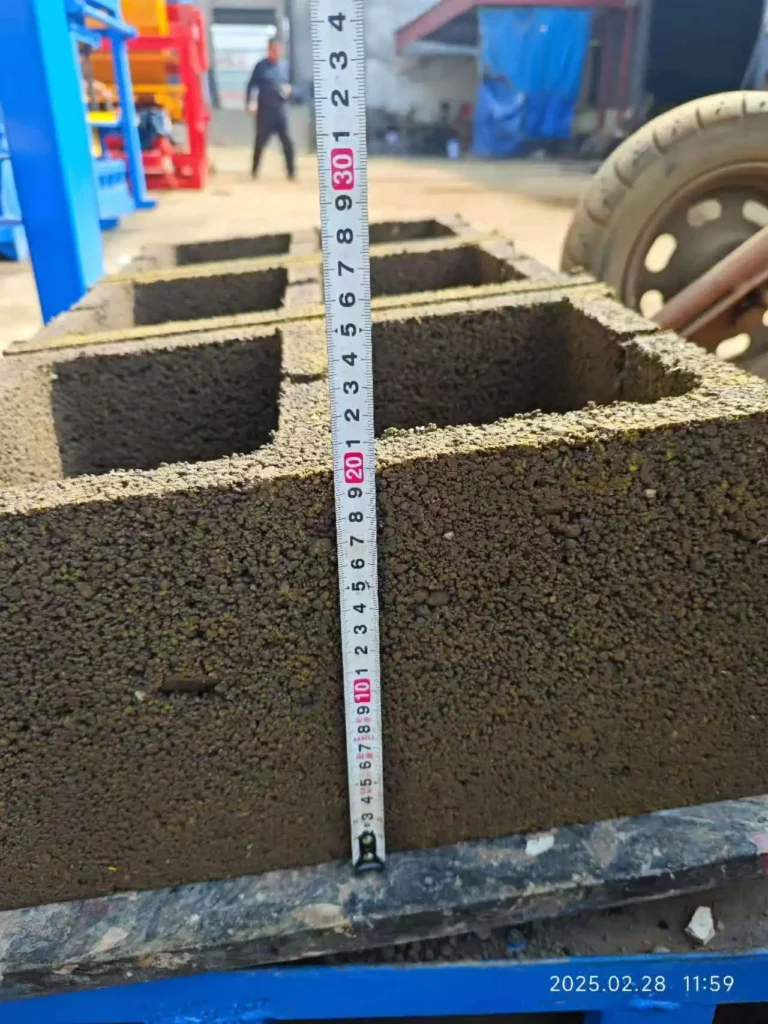
| Mould Format | 390mm × 190mm × 190mm (4 pcs/mold); 240mm × 115mm × 53mm (21 pcs/mold) |
| Vibrating System | Lower platform vibration (2 × 3kW motors) + Upper vibration (1.5kW attached device) |
| Elevating System | Cone-shape motor with JZQ250 speed reducer, V-shape triangle belt drive |
| Delivery Device | Cycloidal pin wheel speed reducer, chains, V-shape triangle belt |
| Machine Frame | Dragon gate style, super steel construction, four vertical wear-resisting shafts |
| Control System | Electronic controlling part (basis to be confirmed: PLC / relay / manual) |
| Automation Level | Semi-automatic |
| Voltage & Frequency | (basis to be confirmed) |
| PLC Language Options | (basis to be confirmed) |
| Cycle Time per Format | (basis to be confirmed) |
| Output Capacity | (basis to be confirmed) |
| Mould Change Time | (basis to be confirmed) |
| Hydraulic Pressure | Not applicable (mechanical vibration platform type) |
| Vibration Force | (source value — verify against manufacturer catalog) |
| Assembly State | Stationary |
| Supporting Equipment | JQ350 pan mixer, 6m belt conveyor, optional auto stacker (3–6 layers), trolley (included) |
Application Suitability
| Application | Material or Output |
|---|---|
| Small-scale block plant startups | Hollow blocks from local crushed stone, sand, and cement |
| On-site construction production | Solid bricks using site-available aggregate and standard Portland cement |
| Paving and landscaping supply | Interlocking formats limited by 850mm × 450mm pallet boundary |
| Contractor self-supply operations | Batch runs of 390×190×190mm hollow blocks for masonry wall systems |
Why the Control Panel Language Matters More Than the Cycle Time
An unreadable fault code on a PLC display turns a five-minute reset into a two-day shutdown.
When buyers focus entirely on cycle speed, they often leave the control interface unspecified. I have seen semi-automatic block machines arrive at sites where the operators could not navigate the menu because the display language was never confirmed before production. The automatic QTJ4-24 block machine PLC controlled interface must be locked down during the order stage — language, voltage, and frequency all written into the contract. Without that step, the machine is mechanically sound but operationally blind [NEED_CITE: industrial machinery export documentation standards].
Electronic Sequence Control and the Upgrade Boundary
The QTJ4-24 manages its elevating, vibrating, and material delivery sequences through an electronic control system rather than manual operator timing. This means the press cycle remains consistent from the first pallet to the last, regardless of operator fatigue. For a buyer starting with manual pallet feeding, the control system still governs vibration duration and delivery timing, removing the most critical variables from human judgment. When production scales and an automatic stacker is added later, the existing electronic sequence integrates with the new station without replacing the core controller.
Defining Where Automation Stops Before You Order
The most common dispute I encounter after delivery is not about the press itself — it is about what was assumed to be included. Pallet handling, stacking, and curing rack transfer are often left ambiguous in quotations, so the buyer expects a continuous line and receives a machine that discharges onto the floor. The QTJ4-24 configuration includes a trolley and offers an optional auto stacker rated for 3 to 6 layers, but this must be selected explicitly. Specifying the automation boundary in writing before production prevents the situation where output piles up faster than workers can move it [NEED_CITE: block plant automation level specification practices].
Platform Vibration, Frame Rigidity, and Block Density
The dual vibration system uses two 3kW motors on the lower platform combined with a 1.5kW upper attached device, applying compaction force from both directions. On a mechanical vibration platform without hydraulic pressure, block density depends entirely on vibration force and mould confinement. The dragon gate frame with four vertical wear-resisting shafts holds the mould in precise alignment through thousands of cycles, preventing the gradual drift that causes uneven wall thickness in hollow blocks. Pallet size at 850mm × 450mm must be cross-checked against the buyer’s curing rack dimensions and forklift fork width — a mismatch here means pallets cannot be racked or moved mechanically after pressing. The total connected load of 14.25KW requires a dedicated circuit with voltage stability, which brings the electrical confirmation back to the front of the process.
The Cost of Skipping the Electrical Confirmation
A machine configured for 380V/50Hz arriving at a site running 440V/60Hz will either trip immediately or run the vibration motors at the wrong speed, producing blocks that crumble under their own weight. I have watched a control panel reboot in a loop for an entire week because the local supply voltage fluctuated outside the tolerance the electronics were set for. The repair was not mechanical — it was a specification gap that should have been closed with a single photograph of the site distribution board before the machine left the factory [NEED_CITE: voltage and frequency standards by export market].
Why This Configuration Approach Works Here
Block machinery is the single focus of this operation, meaning the press, mould, pallet, and handling equipment are specified as one matched system rather than sourced from separate suppliers. The QTJ4-24 is configured against the buyer’s actual mix design and local aggregate, not pulled from a catalogue default. Mould formats are designed around the products the buyer’s market actually sells, with custom drawings available. The automation level is selectable — a buyer can start semi-automatic and add stacking later. Installation support includes operator training on the specific control interface shipped with the machine.
Documentation & Verification
- Machine specification sheet with voltage, frequency, and control language confirmed per order
- Mould drawing and format list showing pallet boundary and block dimensions
- Pallet specification cross-referenced to buyer’s curing rack and forklift capacity
- Factory test record documenting vibration cycle on buyer’s confirmed block format
- Electrical schematic with component list for on-site troubleshooting
- Operation and maintenance manual in confirmed display language
Installation, Commissioning & Support
- Foundation must support 1750kgs static mass plus dynamic vibration load across 3600mm footprint
- Dedicated 14.25KW circuit with voltage stabilization matching confirmed frequency and phase
- Machine ships stationary; vertical shafts and vibration motors checked on arrival before first cycle
- Control panel language and fault codes verified with operators during commissioning session
- Wear parts list for vibration motors, drive belts, and mould liners provided at handover
- Pallet and trolley system aligned to curing area layout during installation walkthrough
What We Need to Configure Your Line
To specify the QTJ4-24 correctly for your site, we need the block formats your market sells, the local aggregate and cement type available, and your target daily output per format. Confirm your site voltage, frequency, and the language your operators read. Share your existing curing area dimensions and forklift specifications so the 850mm × 450mm pallet is validated against your material handling setup.
Frequently Asked Questions
Q: How is the output capacity of the QTJ4-24 verified, and which block format does the figure assume?
A: Output capacity is calculated per block format because a 390×190×190mm hollow block and a 240×115×53mm solid brick have different cycle times and mould fill volumes. The capacity figure in your quotation states the exact format, material thickness, and curing assumption it is based on, so daily planning uses real numbers rather than a generic cycle rate.
Q: What automation level does the QTJ4-24 ship with, and what is the upgrade path?
A: The standard configuration is semi-automatic with electronic sequence control and manual pallet handling. An optional auto stacker for 3 to 6 layers and a trolley system can be added at order or retrofitted later. The control system supports this integration without replacing the core electronics.
Q: How are voltage, frequency, and PLC display language confirmed before shipment?
A: The buyer provides a photograph of the site distribution board and states the required operator language during the order stage. These values are written into the production specification and verified during the factory test. The control panel is set and locked before the machine is packed.
Q: How is vibration force matched to local aggregate for consistent block strength?
A: The dual vibration system output is evaluated against the buyer’s confirmed mix design and aggregate type. If the local material is heavier or more abrasive, the vibration duration and amplitude settings are adjusted during commissioning to achieve target density without over-stressing the mould.
Q: What mould formats fit the 850mm × 450mm pallet, and how long does a change take?
A: Standard formats include 4-piece hollow block and 21-piece solid brick moulds within the pallet boundary. Custom formats are available to buyer drawings. Mould change time depends on the locking mechanism and operator familiarity — it is documented during training so buyers can plan format rotation across a shift.