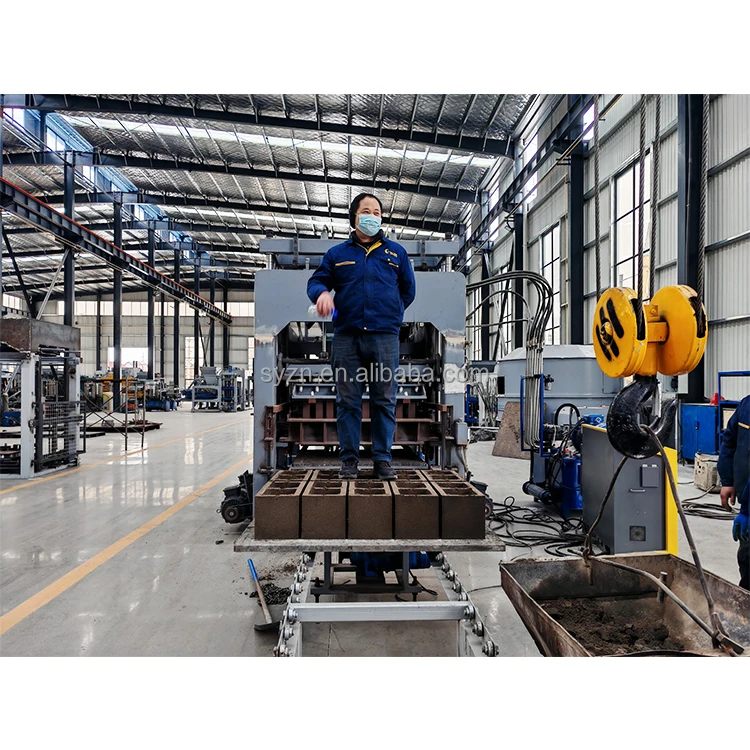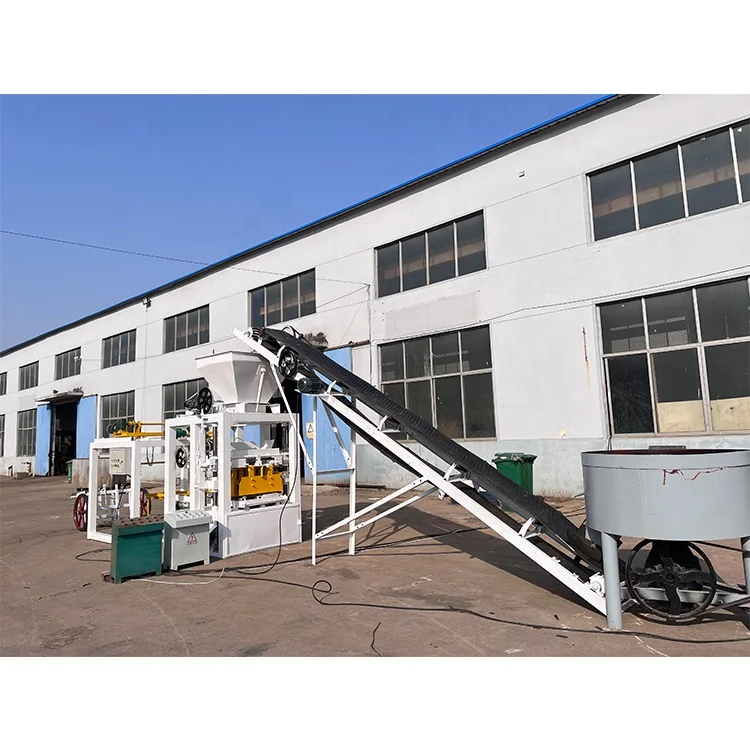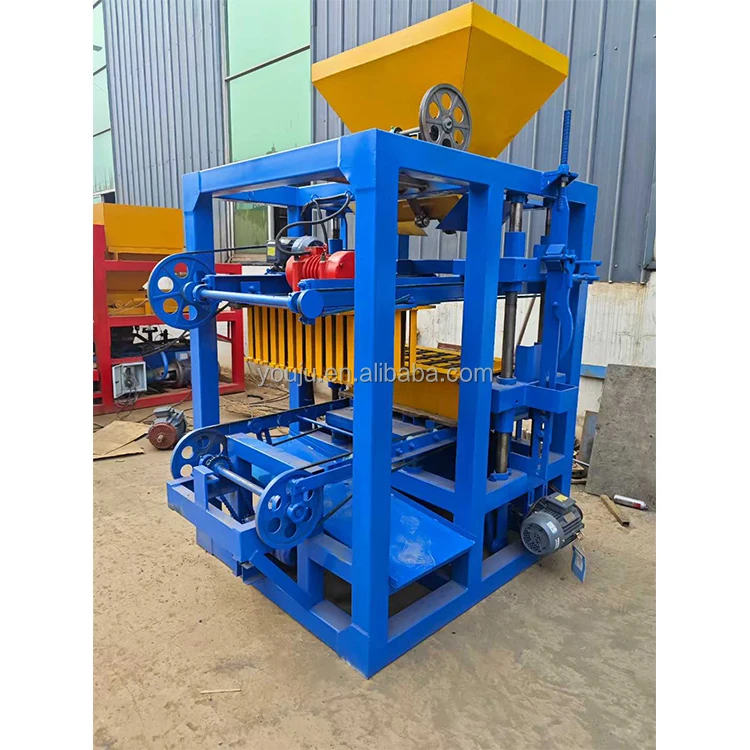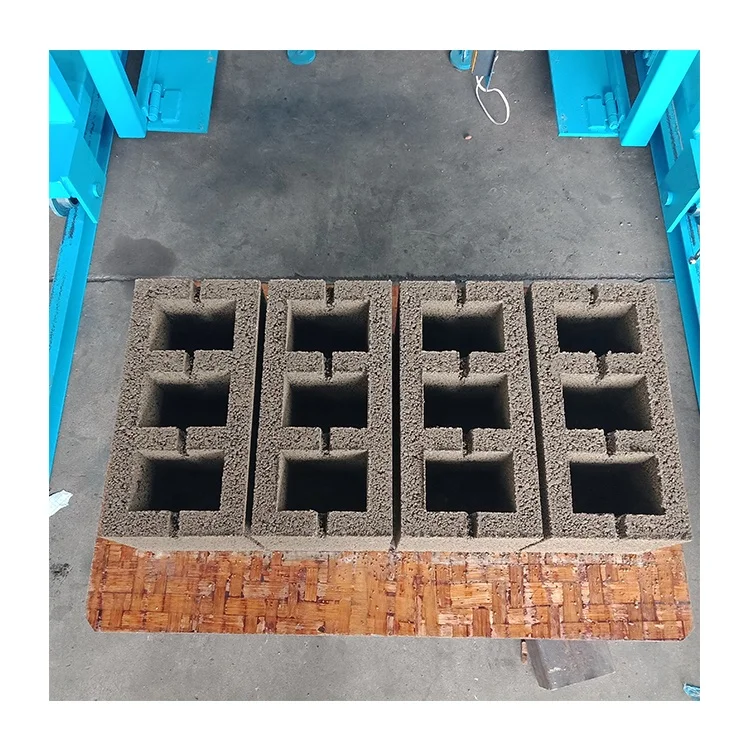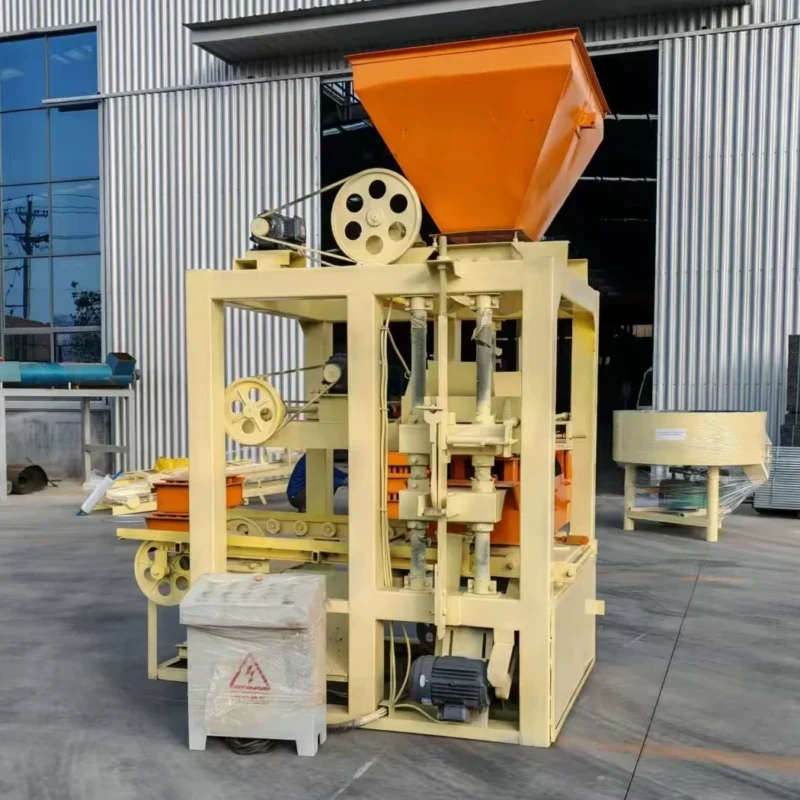
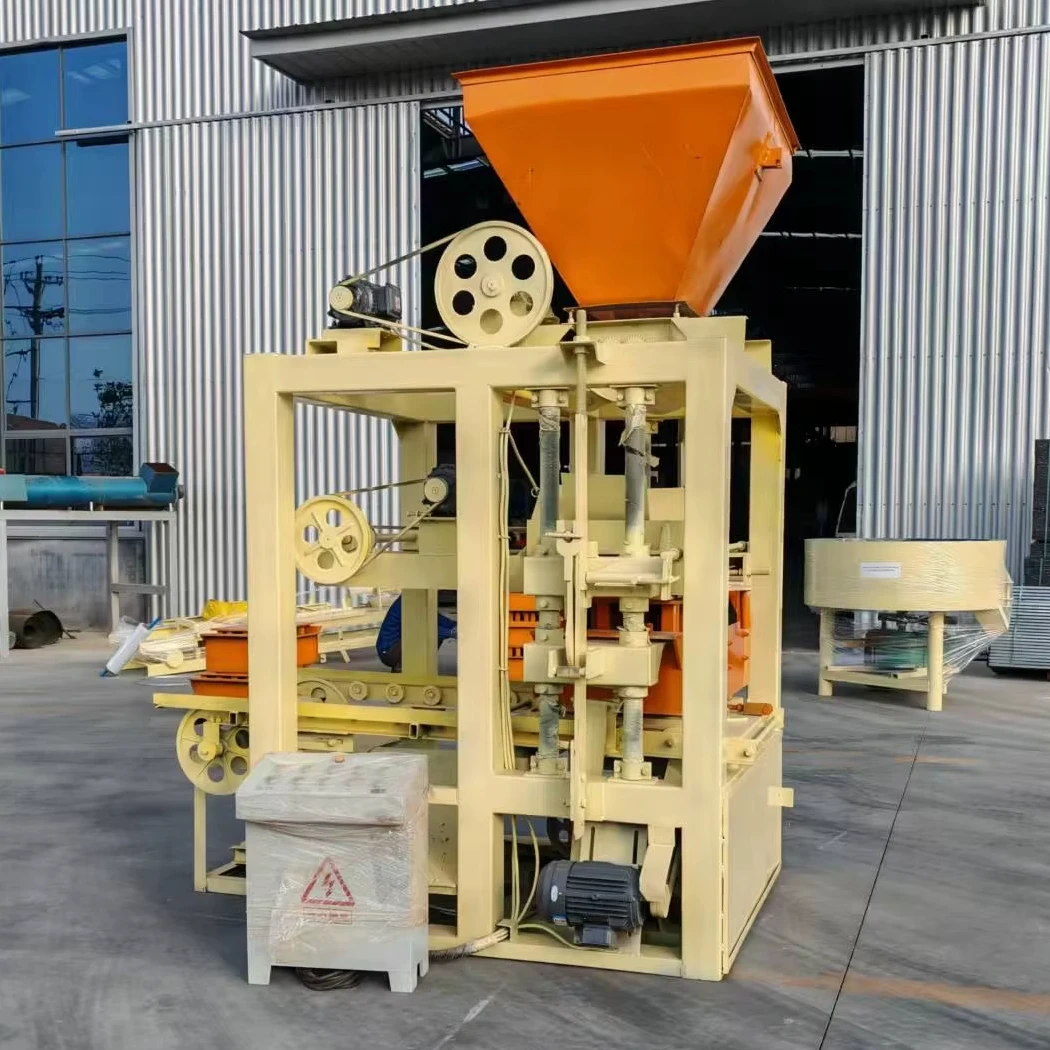
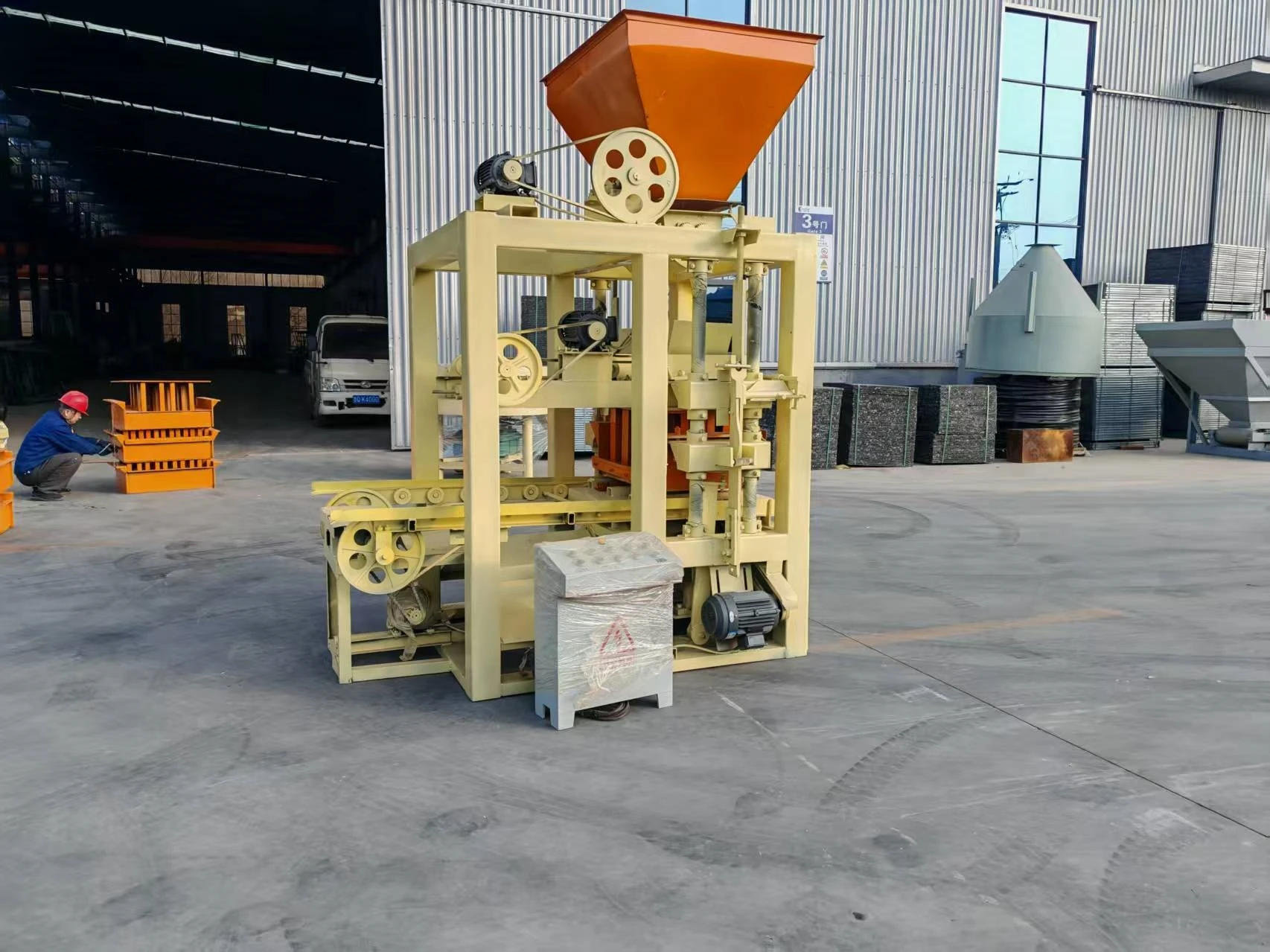
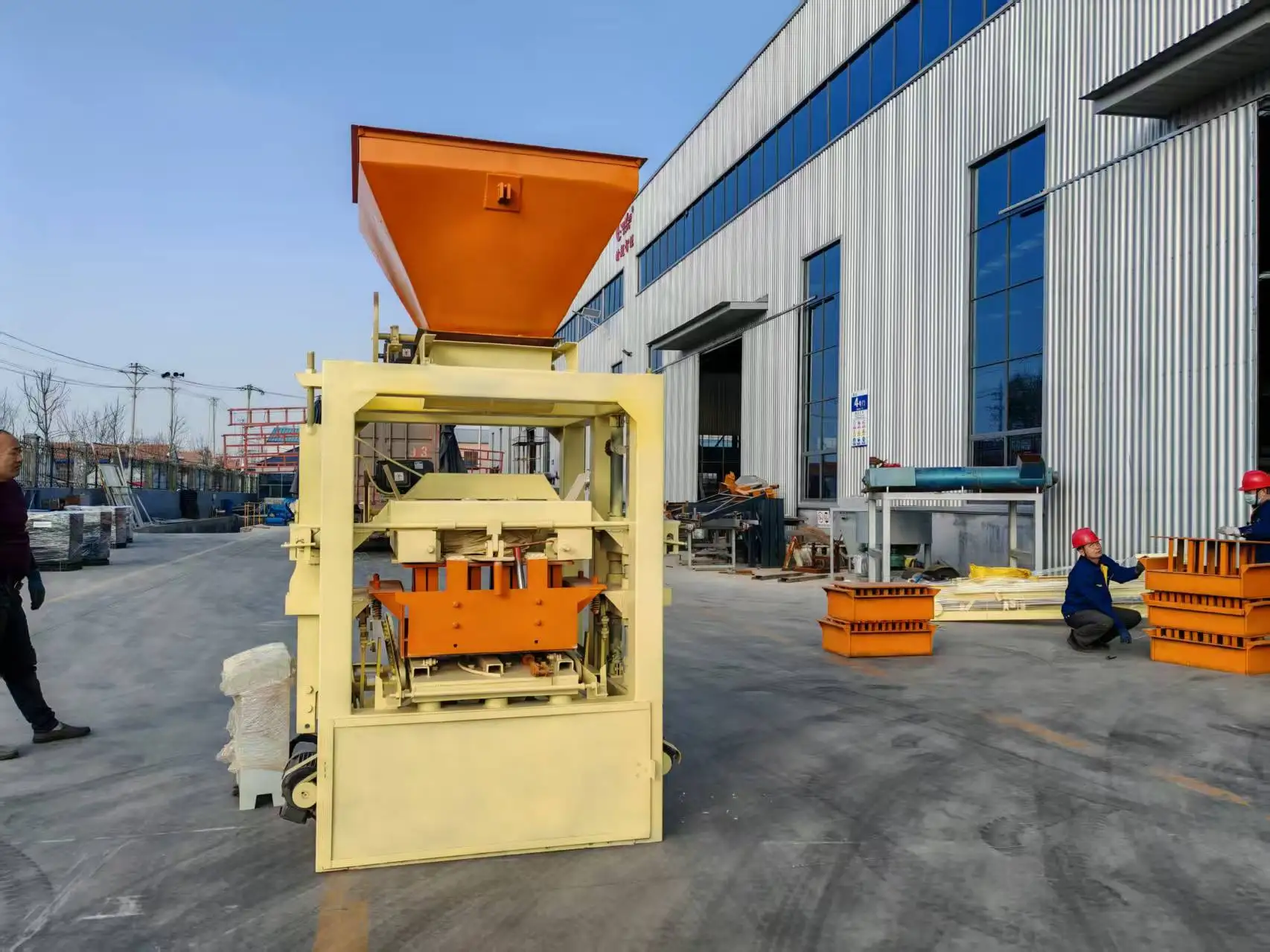
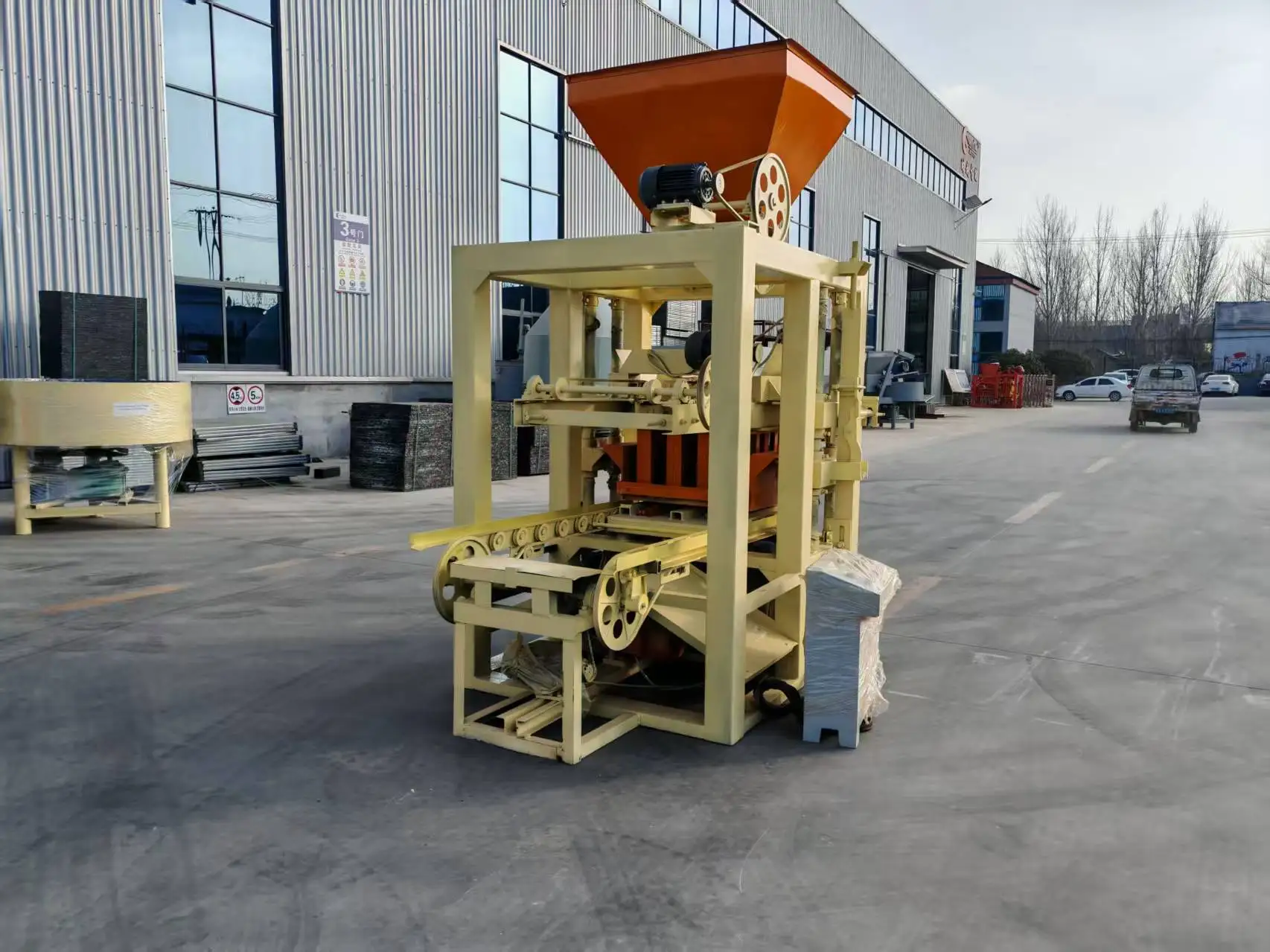
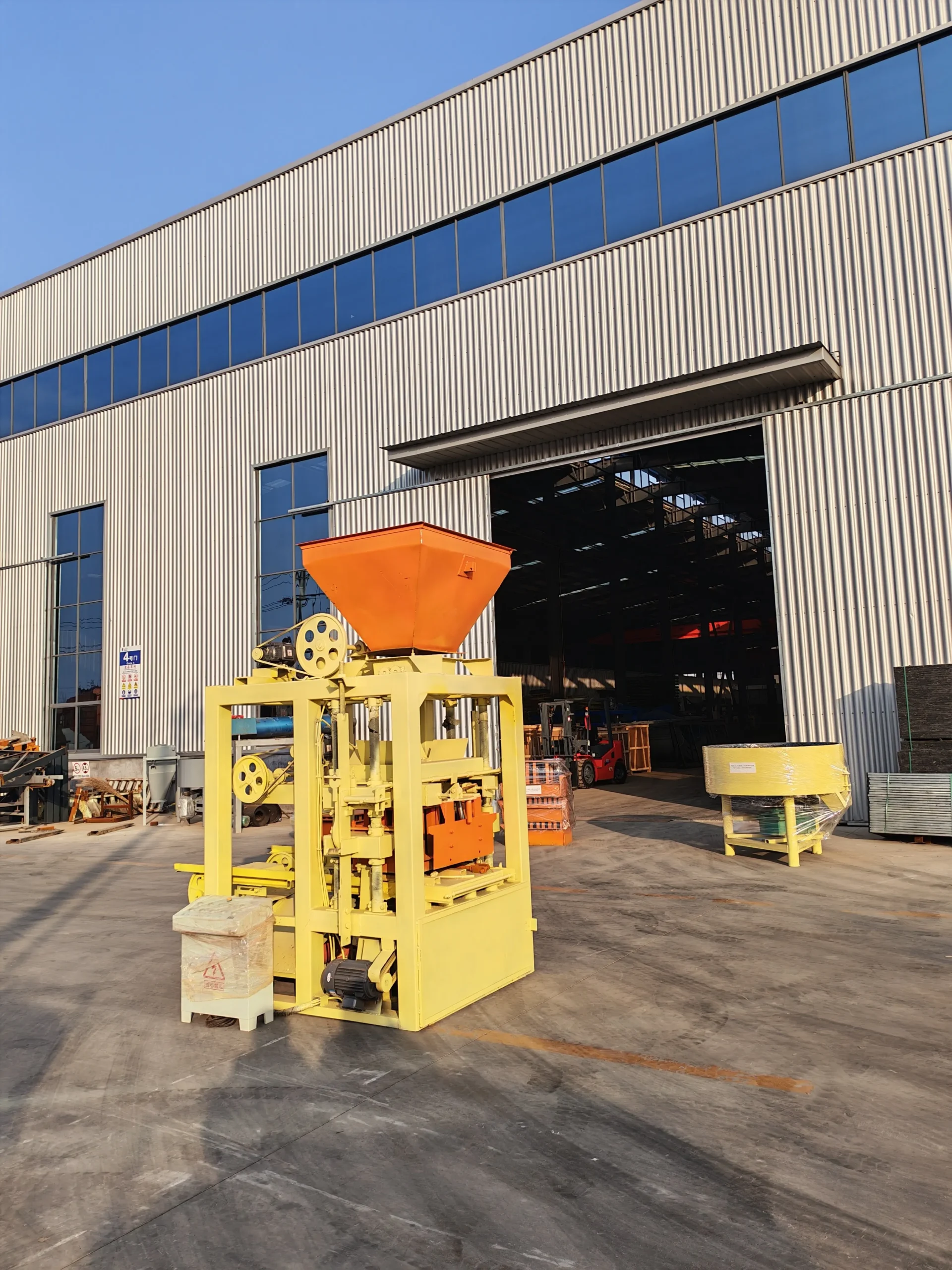
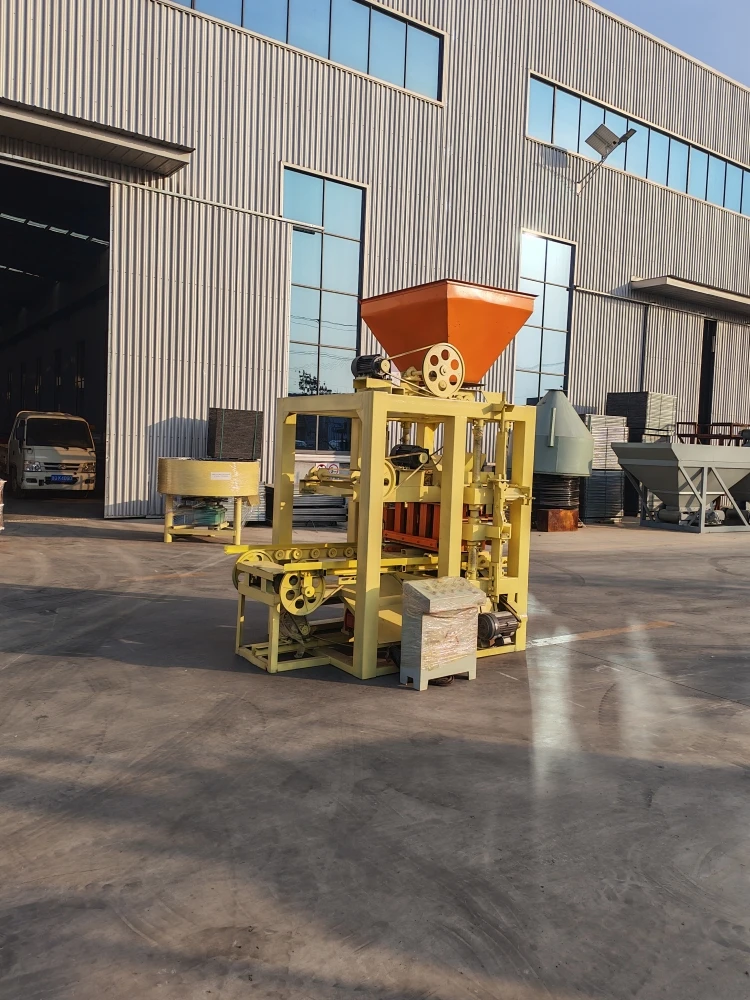
Description
Configured Control Logic — every PLC parameter on the QTJ4-24 is set against the buyer’s confirmed mix design and target block format, not a factory default that may not match local conditions.
Technical Specifications
| Parameter | Value |
|---|---|
| Model | QTJ4-24 |
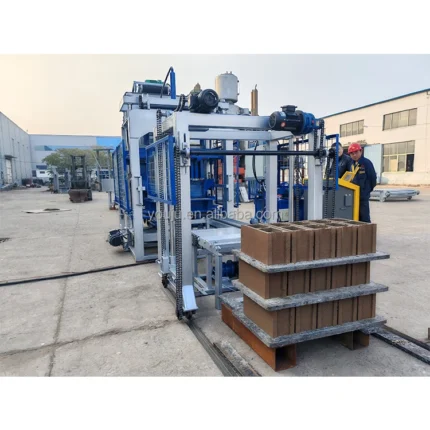
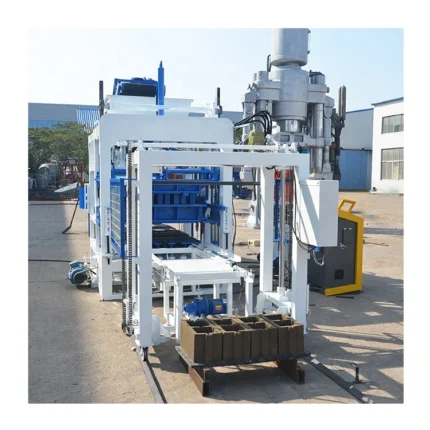
| Product Type | Semi-Automatic Cement Block Making Machine |
| Overall Dimensions (L×W×H) | 3600×1700×2560 mm |
| Pallet Size | 850×450 mm |
| Molding Cycle | 24–26 s (basis not stated in source — confirm block format / material / thickness) |
| Overall Power | 11.95 kW |
| Vibration Force | 45 kN (2×3 kW lower vibrators + 2×1.5 kW upper vibrators) |
| Total Mass | 2 T |
| Molding Method | Mechanical |
| Control System | PLC controlled |
| Material Feeding | Full-automatic spiral material distribution |
| Mold Lifting Reducer | 350-type |
| Raw Materials | Cement, sand, stone |
| Automation Level | Semi-automatic |
| Voltage & Frequency | Configurable to buyer’s site supply (basis to be confirmed) |
| Language Options | PLC display language configurable to operator’s preference (basis to be confirmed) |
| Warranty | 1 year for whole machine (excluding spare parts) |
Application Suitability
| Application | Material or Output |
|---|---|
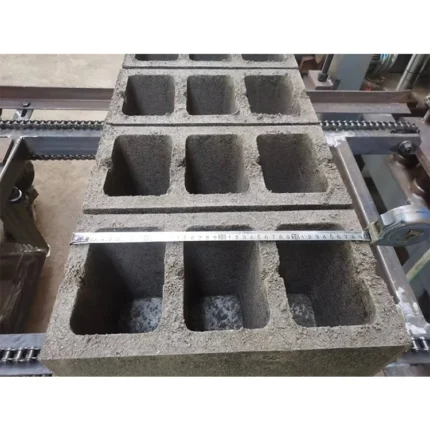
| Hollow block production for wall construction | Cement, sand, crushed stone or local aggregate |
| Solid block manufacturing for load-bearing structures | Standard concrete mixes with varied aggregate grading |
| Interlocking brick production for paving and landscaping | Cement-based mixes suitable for high-density compaction |
| Paving brick output for driveways and walkways | Fine aggregate and cement blends for surface finish |
| Small-to-medium block plant operation | Semi-automatic workflow with manual pallet handling |
What "24-Second Cycle Time" Actually Means for Your Plant
A cycle time without a stated block format is a number, not a capacity guarantee.
When sellers quote a molding cycle of 24 to 26 seconds, buyers often multiply that figure by the number of hours in a shift and assume a daily output. The problem is that a 400×200×200mm hollow block, a thin paving brick, and a solid interlocking unit all demand different vibration durations, feeding volumes, and compaction pressures. The QTJ4-24 automatic QTJ4-24 block machine delivers its rated cycle only when the format, mix consistency, and vibration parameters align. Without a capacity calculation sheet that names the specific block assumed, the number is a starting point for discussion, not a production target. [NEED_CITE: block machine capacity verification by format and mix design]
Removing the Operator from the Feeding Equation
The full-automatic spiral material distribution on this PLC controlled cement block machine replaces the manual shoveling or gravity-fed hoppers common on machines at this investment level. Manual feeding introduces variation: a tired operator late in a shift delivers less material to one side of the mold cavity than the other, producing blocks with uneven density. The spiral feeder pushes a consistent volume of mix across the mold table on every cycle, which matters directly for block strength and dimensional repeatability. The PLC monitors the feeder cycle and coordinates it with the vibration sequence, so the operator’s role shifts from controlling material flow to monitoring output quality.
Vibration Matching and Block Density
The QTJ4-24 uses an integrated pressure and super vibration system rated at 45 kN total, split between two 3 kW lower vibrators and two 1.5 kW upper vibrators. This dual-level arrangement compacts the mix from below while the upper vibrators settle the surface — essential when producing hollow blocks where the core pins leave voids that require lateral compaction. The vibration force must be matched to the buyer’s actual mix design and the local aggregate available at the site. A mix heavy in fine sand demands a different vibration duration than one using coarse crushed stone, and the PLC control allows the vibration time to be adjusted per format without rewiring the machine. [NEED_CITE: vibration force and mix design correlation in block production]
Reading the Specification Sheet Beyond the Headline Numbers
The 850×450 mm pallet size determines not only the mold footprint but also the curing rack spacing and the forklift tine width the buyer needs on site. A plant that ordered pallets without checking curing rack dimensions found the loaded pallets could not slide onto existing racks, forcing a rack rebuild after the machine arrived. The 350-type mold lifting reducer handles the mechanical stress of mold changes, and its service life depends on how often the buyer swaps formats — a plant running a single hollow block format will see far less wear than one changing between pavers, kerbstones, and hollow blocks daily. The 11.95 kW overall power draw requires a dedicated circuit sized for the starting surge of the vibration motors, not just the running load. The mechanical molding method means compaction relies on vibration and the weight of the mold head rather than hydraulic pressure, which limits the range of mixes the machine can handle compared to a hydraulic press.
The Language on the Screen Nobody Checked
A PLC panel displaying in a language the operator cannot read turns a controlled machine into a manual one. Buttons get pressed in sequence from memory rather than by reading cycle feedback, and alarm codes go unnoticed until a mechanical fault causes visible damage. Last year a client received a QTJ-class machine with an English-only PLC interface; the local operators could not read the fault descriptions, and commissioning stalled for days while translations were improvised on site. Confirming the PLC display language in writing before production begins is a one-line addition to the order paperwork that prevents a week of lost production at the other end. [NEED_CITE: PLC display language confirmation in machinery export contracts]
Why Buyers Source This Machine Here
Block machinery is the single focus of this operation, so the QTJ4-24 arrives as a matched system — machine, mold, pallet, and handling specified together rather than assembled from separate suppliers. The configuration is set against the buyer’s actual mix design and target block format, not pulled from a catalogue default. Molds are designed and supplied for the formats the buyer’s market actually sells, including custom drawings when a standard cavity layout does not fit local building codes. The automation level is selectable, meaning a buyer can start semi-automatic with manual pallet handling and add automatic stacking later without replacing the press. Installation and commissioning support includes operator training so the team running the machine understands the PLC parameters, not just the start and stop buttons.
Documentation & Verification
- Line layout and capacity calculation stating the block format assumed for the QTJ4-24 cycle time
- Machine specification sheet with vibration force, power, and pallet dimensions confirmed
- Mold drawing and format list showing cavity layout and block dimensions
- Voltage, frequency, and PLC display language confirmation before production
- Operation and maintenance manual with wear parts and mold list included
- Factory test record on the buyer’s target block format before dispatch
Installation, Commissioning & Support
- 3600×1700×2560 mm footprint requires a level concrete slab with anchor bolt provisions
- 11.95 kW total power draw demands a dedicated breaker sized for vibration motor starting surge
- Machine ships assembled; site unloading requires a forklift rated for the 2 T total mass
- PLC parameters set during commissioning to match the buyer’s confirmed mix and block format
- Operator training covers spiral feeder adjustment, vibration timing, and mold change procedure
- Wear parts list identifies vibration motor bearings and spiral feeder flighting as scheduled replacements
- 350-type mold lifting reducer inspected and greased per the maintenance schedule
What to Prepare Before Inquiry
Buyers evaluating the QTJ4-24 should confirm the target block format, daily output requirement, and local aggregate type so the vibration parameters and mold can be specified correctly. The site voltage, frequency, and the language the operator reads must be stated to avoid commissioning delays. If the plant already has curing racks and forklifts, share the pallet dimensions and rack spacing so the 850×450 mm pallet size can be verified against existing equipment.
Frequently Asked Questions
Q: How is the QTJ4-24’s cycle time verified, and which block format is it based on?
A: The 24–26 second cycle is quoted without a stated block format in the source specification. A capacity calculation sheet naming the exact block dimensions, mix design, and material thickness must be requested before the cycle time can be used for production planning. Actual output depends on the format produced and the consistency of the feed material entering the spiral feeder.
Q: What PLC brand is used, and can the display language be set to the operator’s language?
A: The PLC brand and display language are configurable but not pre-stated in the source documentation. Both must be confirmed in writing before production begins. A panel in the operator’s working language prevents misread fault codes and ensures cycle parameters are adjusted correctly during production rather than guessed.
Q: What voltage and frequency configurations are available for the target market?
A: The QTJ4-24 is built to the buyer’s confirmed site voltage and frequency, which must be stated on the order. The 11.95 kW total power and the starting surge of the 3 kW vibration motors require a correctly sized circuit. Voltage and frequency must be verified against local grid standards before the machine enters production.
Q: How does the automation level compare to a fully automatic line, and what is the upgrade path?
A: The QTJ4-24 is semi-automatic, meaning pallet handling and stacking are performed manually while the PLC manages feeding, vibration, and cycle timing. A fully automatic line adds pallet feeding, automatic stacking, and cubing. The machine can be upgraded by adding these stations later, allowing a plant to scale labor requirements as production volume grows.
Q: Which mix designs and local aggregates has this machine been configured for, and how is vibration matched?
A: The 45 kN dual-level vibration system is adjusted via the PLC to suit the buyer’s specific mix and local aggregate. A coarse crushed stone mix requires different vibration duration and amplitude than a fine sand mix. Configuration against the buyer’s actual material ensures block density and strength are consistent across production batches.