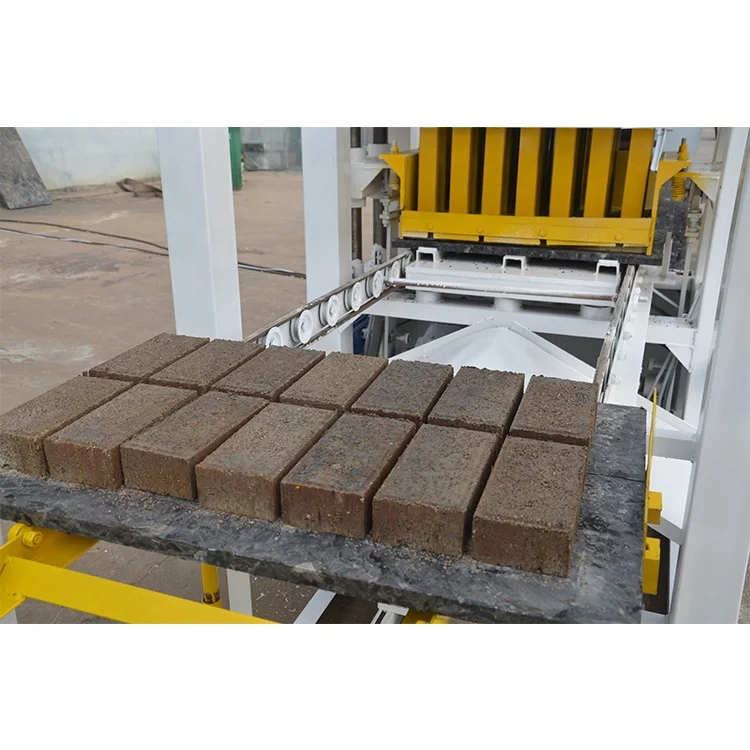
Description
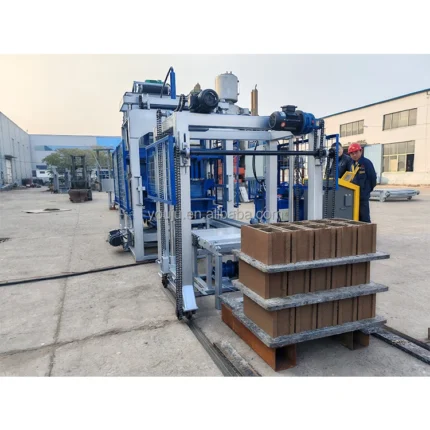
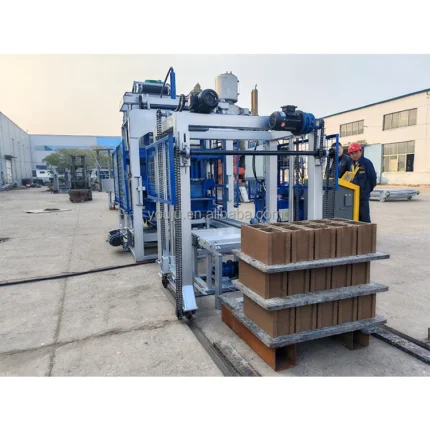
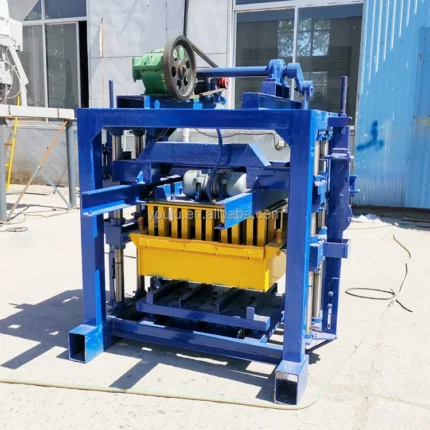
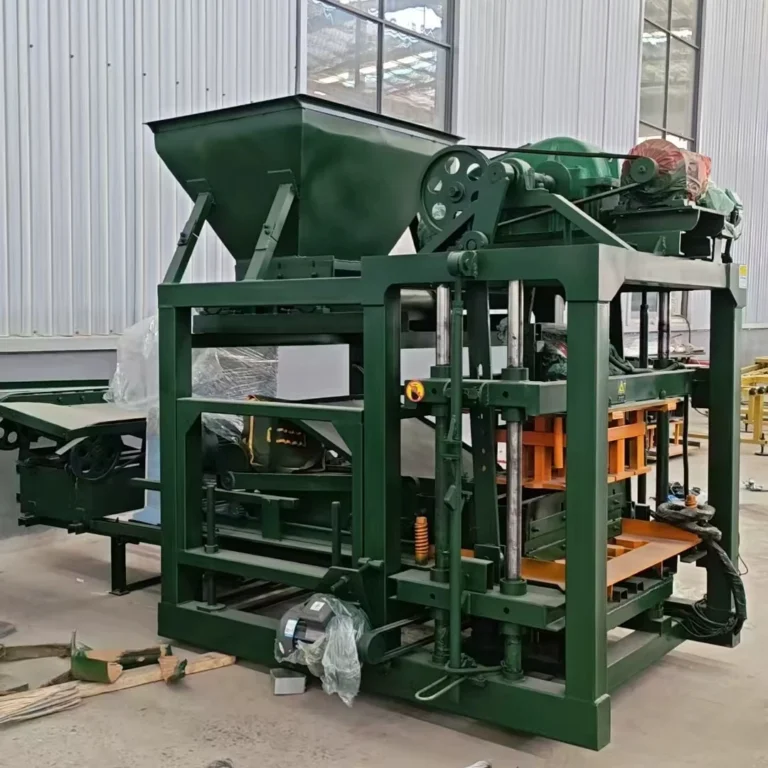
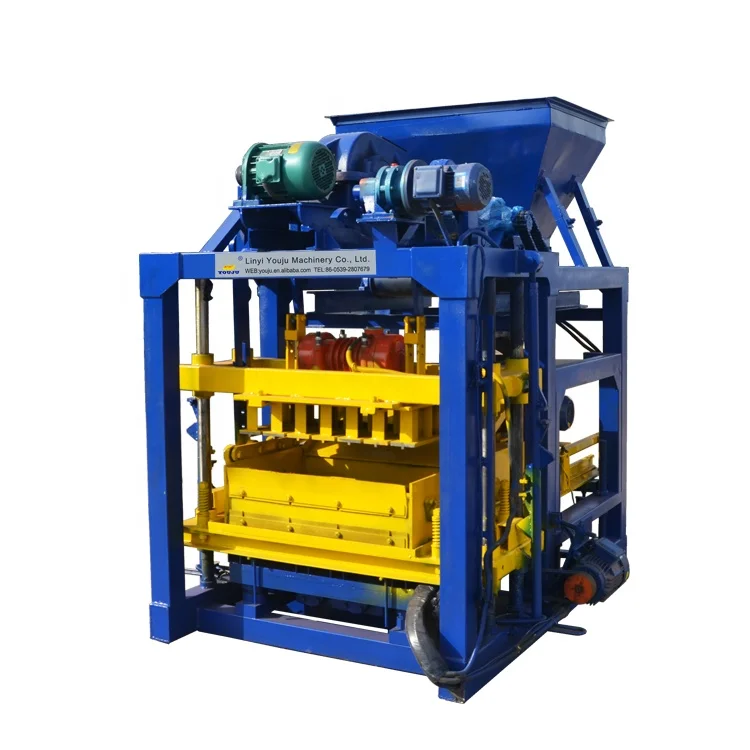
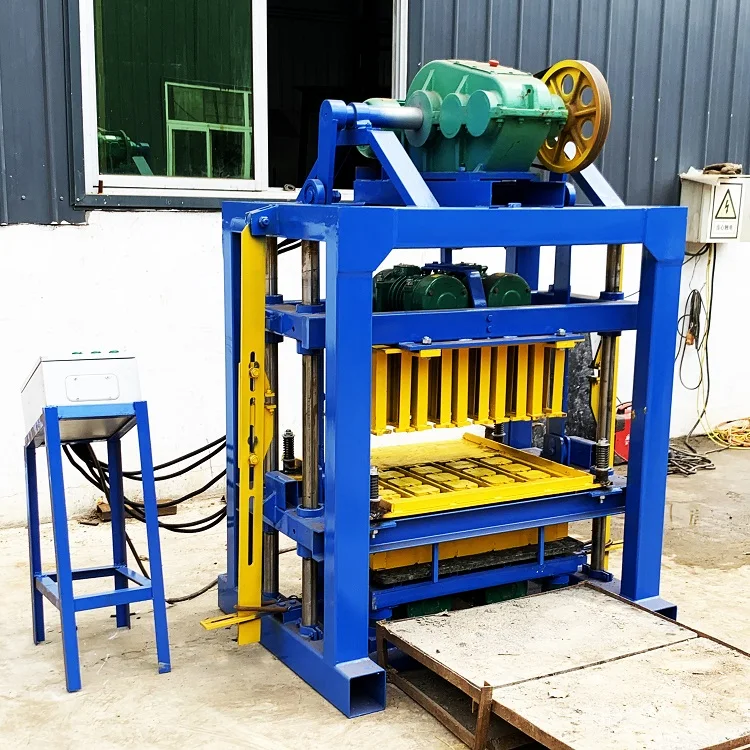
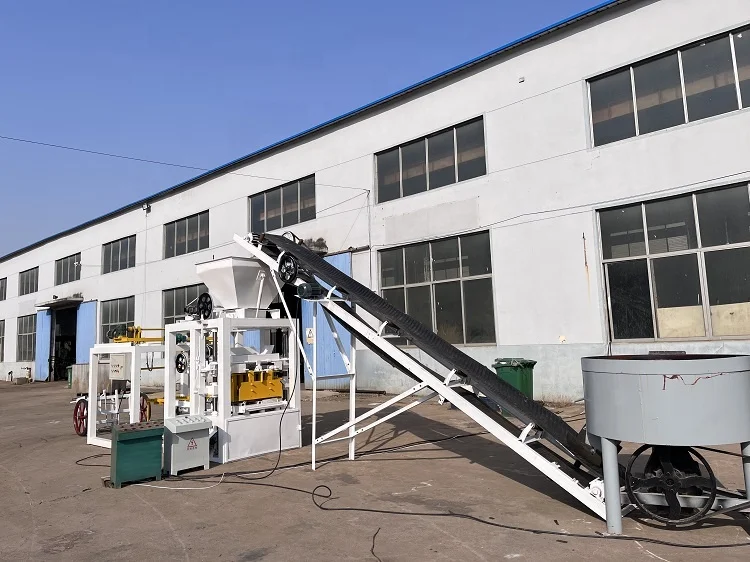
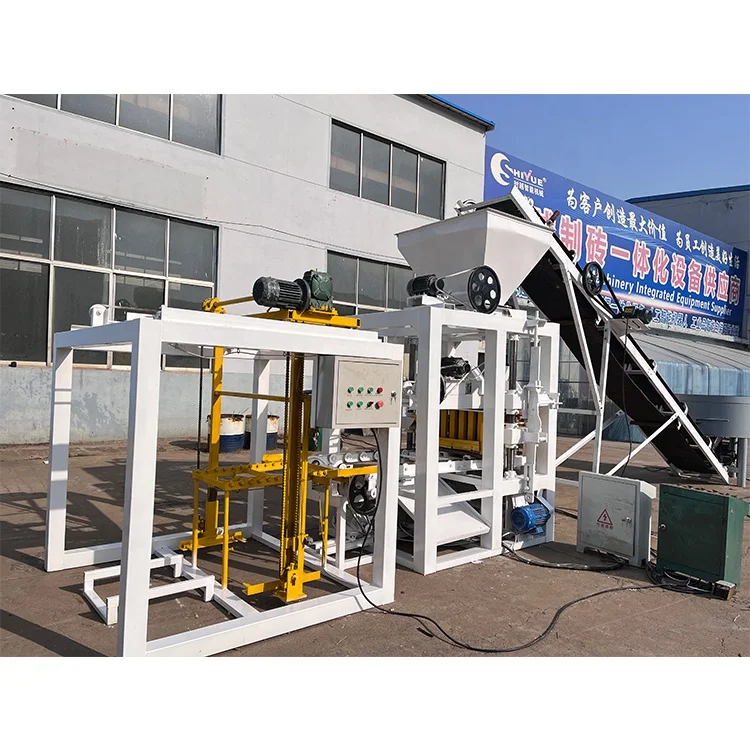
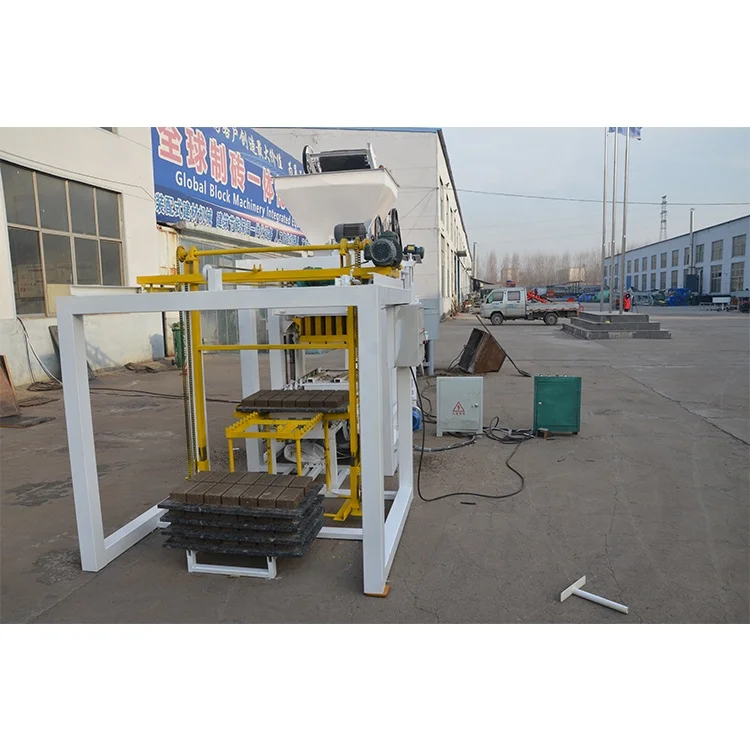
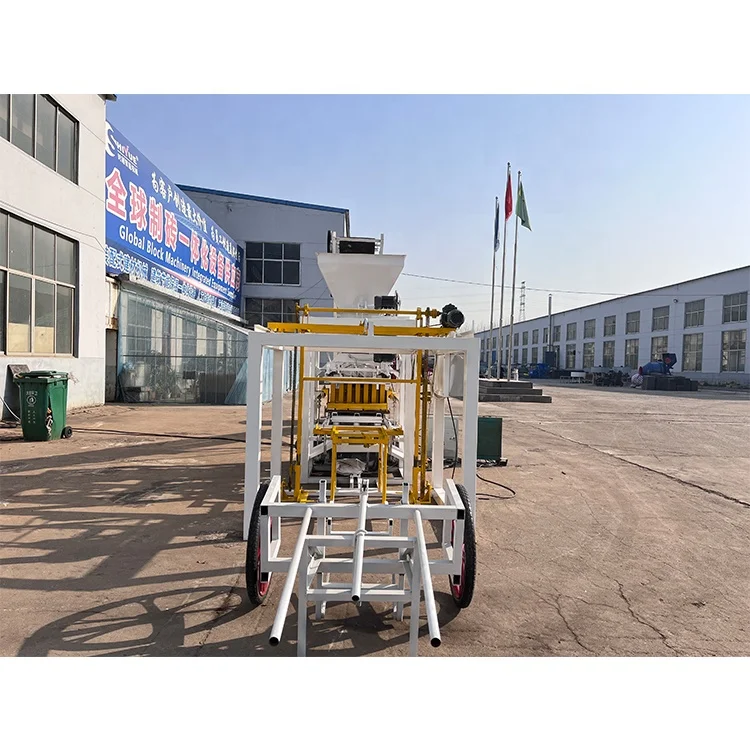
Intelligent Control Integration — the PLC-controlled QTJ4-24 pairs semi-automatic mechanical molding with automated spiral material distribution, removing feed inconsistency from the operator while leaving the automation upgrade path open for future plant scaling.
Technical Specifications
| Parameter | Value |
|---|---|
| Model | QTJ4-24 |
| Product Type | Stationary Block Making Machine |
| Overall Dimensions (L×W×H) | 3600 × 1700 × 2560 mm |
| Pallet Size | 850 × 450 mm |
| Molding Cycle | 24–26 s (basis to be confirmed with target block format) |
| Overall Power | 11.95 kW |
| Vibration Force | 45 kN |
| Total Mass | 2 T |
| Molding Method | Mechanical pressure with dual-level vibration |
| Vibration System | 2 × 3 kW lower vibrators + 2 × 1.5 kW upper vibrators |
| Material Distribution | Full-automatic spiral feeder |
| Reducer for Mold Lifting | 350-type |
| Control System | PLC (brand and display language to be confirmed) |
| Compatible Materials | Cement, sand, crushed stone |
| Automation Level | Semi-automatic with PLC-controlled feed distribution |
| Warranty | 1 year for the whole machine (excluding consumable spare parts) |
Application Suitability
| Application | Material or Output |
|---|---|
| Hollow block production | Cement, sand, and fine aggregate blends |
| Solid block manufacturing | Dense concrete mixes with crushed stone |
| Interlocking brick forming | Graded sand and cement with controlled moisture |
| Paving brick pressing | High-strength concrete with stone dust and chips |
| Small-to-medium block plant startup | Entry-level semi-automatic production with PLC-assisted feed |
| On-site contractor production | Stationary setup producing blocks directly at project locations |
Why the Language on the Screen Should Be Settled Before the Machine Ships
A PLC-controlled QTJ4-24 block machine arriving with an unreadable display language stalls the entire commissioning schedule.
When a semi-automatic press lands at a job site and the operator cannot read the fault codes or parameter menus, the first production day is lost before the first block is molded. I have flown across time zones to reflash a control panel because nobody confirmed the display language during order processing. The PLC-controlled QTJ4-24 block machine gives you automated spiral feeding and vibration sequencing, but that intelligence is useless if the human standing at the cabinet cannot interpret it [NEED_CITE: PLC display language requirements for international machinery deployment].
What PLC Control Actually Replaces on the Operator’s Shift
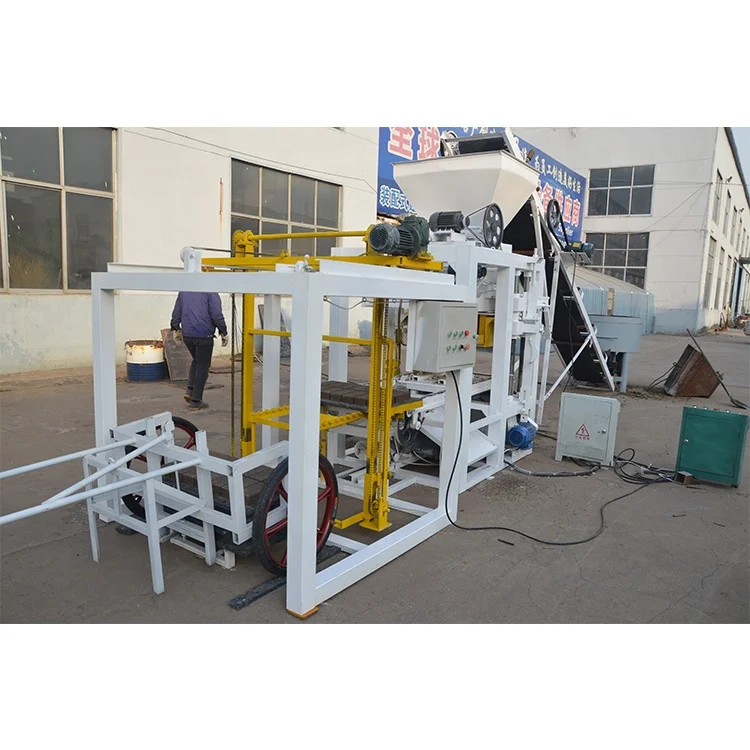
The full-automatic spiral material distributor on the QTJ4-24 takes over the most variable manual task on a semi-automatic line: shoveling concrete mix into the mold cavity. With PLC sequencing, the spiral feed timing, duration, and retraction are governed by the program cycle rather than the operator’s judgment. This means the PLC-controlled QTJ4-24 block machine delivers the same material volume per mold from the first cycle of the morning to the last cycle of the shift, which is where batch-to-batch dimensional consistency originates.
Building the Upgrade Path Into the Automation Decision
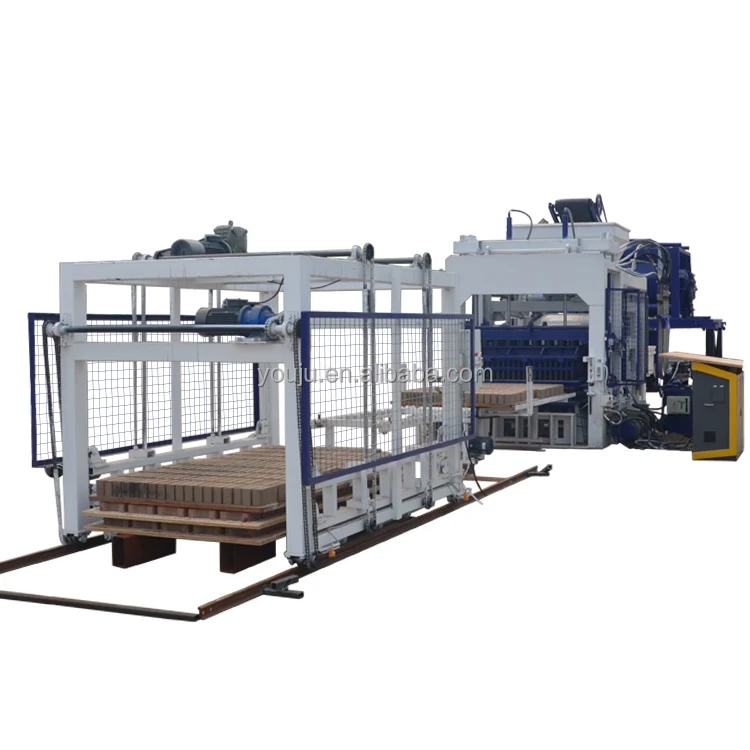
A buyer choosing the QTJ4-24 today may be running manual pallet handling with two or three workers moving wet blocks to the curing area. The semi-automatic configuration keeps the initial investment measured while the PLC architecture leaves room for adding automatic pallet feeding, stacking, and cubing modules later. The control cabinet and I/O capacity should be specified at order stage to accommodate that future expansion, rather than discovering the current PLC has no spare channels when the plant is ready to scale [NEED_CITE: PLC I/O expansion planning for block production lines].
Reading the Vibration and Pressure Specs Against Your Mix Design
The dual-level vibration system — two 3 kW lower vibrators and two 1.5 kW upper vibrators — applies energy from both the mold table and the pressure head simultaneously. Combined with mechanical pressure, this configuration compacts concrete from both directions, which matters when the buyer’s local aggregate has a different particle shape or moisture absorption than the factory test material. The 45 kN total vibration force must be evaluated against the specific mix design, not treated as a standalone number. An 850 × 450 mm pallet size dictates how many block units fit per cycle, and the 24–26 s molding cycle must be confirmed with the buyer’s target block format and wall thickness before daily output can be calculated.
What Happens When Voltage and Frequency Are Assumed Instead of Confirmed
A three-phase motor wound for 380 V / 50 Hz running on a 440 V / 60 Hz supply will overheat, lose torque, and fail prematurely. The QTJ4-24 carries 11.95 kW of total connected load across vibrators, spiral feeder, and lifting motor — each of these responds differently to voltage deviation. When the supply frequency does not match the motor nameplate, the vibration cycle timing shifts and the 350-type reducer sees load patterns it was not designed for. Confirming voltage, frequency, and phase configuration before production begins is not a paperwork exercise; it determines whether the machine runs or sits idle after arrival [NEED_CITE: voltage and frequency standards by export market].
Why This Machine Is Specified as a Matched System
Block machinery is the single production focus here, which means the QTJ4-24 press, its mold, pallet specification, and handling equipment are configured as one matched set rather than sourced from separate vendors. The spiral feeder, vibration system, and mold lifting reducer are balanced against each other at the factory. The PLC-controlled QTJ4-24 block machine ships with the control language, voltage, and pallet size confirmed against the buyer’s actual curing area and forklift capacity. Installation support includes operator training on the specific mold formats the buyer’s market sells, and wear parts availability is confirmed before the first replacement cycle is due.
Documentation & Verification
- Machine specification sheet with confirmed pallet size, vibration force, and total power ratings
- PLC brand, display language, and I/O configuration record locked before production begins
- Voltage and frequency confirmation document matching the buyer’s local supply standard
- Factory test record run with the buyer’s target mold format installed
- Operation and maintenance manual with wear parts list and mold change procedure
- Packing photographs and customs documentation support for the destination port
Installation, Commissioning & Support
- Foundation must support 2 T static mass plus dynamic vibration loads from the 45 kN system
- Dedicated three-phase circuit required for the 11.95 kW total connected load
- Machine arrives with mold lifting reducer and vibration assemblies pre-mounted
- First-day commissioning covers PLC parameter verification, spiral feed calibration, and cycle timing
- Operator training addresses mold change procedure and daily vibration system inspection
- Wear parts list provided with recommended replacement intervals for vibrator mounts and spiral blade
What to Include With Your Inquiry
Provide your target block format with dimensions, wall thickness, and required compressive strength so the mold and cycle time can be specified accurately. State your local voltage, frequency, and preferred PLC display language to prevent delays at commissioning. Describe your current pallet handling method and curing area layout so the automation level and pallet size recommendation match your site conditions.
Frequently Asked Questions
Q: How is the real daily output calculated, and which block format does the 24–26 s cycle assume?
A: The 24–26 s cycle must be confirmed against your specific block format, wall thickness, and mix design. Daily output is calculated by multiplying confirmed cycles per hour by blocks per pallet, then applying your actual shift length. A generic cycles-per-hour figure without a named block format is not a reliable capacity claim.
Q: What PLC brand and display language options are available for my market?
A: The PLC brand and display language are confirmed during order processing to match your local operator requirements and maintenance capabilities. Common options include major international PLC platforms with multilingual HMI support. Specify your preference before production starts to avoid reflash delays at commissioning.
Q: Can the QTJ4-24 be upgraded later to automatic pallet feeding, stacking, and cubing?
A: The semi-automatic configuration supports future automation additions when the control cabinet and PLC I/O capacity are planned for expansion at the order stage. Adding pallet feeders and stackers later requires confirming spare I/O channels and mechanical interface points during the initial specification.
Q: How does the vibration force match my local aggregate and mix design?
A: The 45 kN dual-level vibration system must be evaluated against your specific aggregate particle shape, cement ratio, and moisture content. Factory testing with your target mix confirms whether the lower and upper vibrator balance produces the required block density and surface finish without segregation.