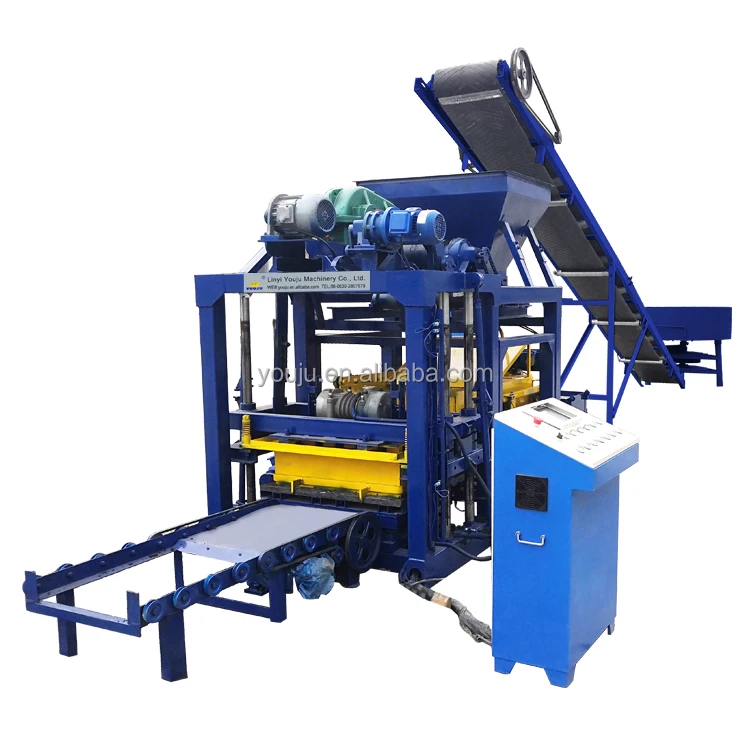
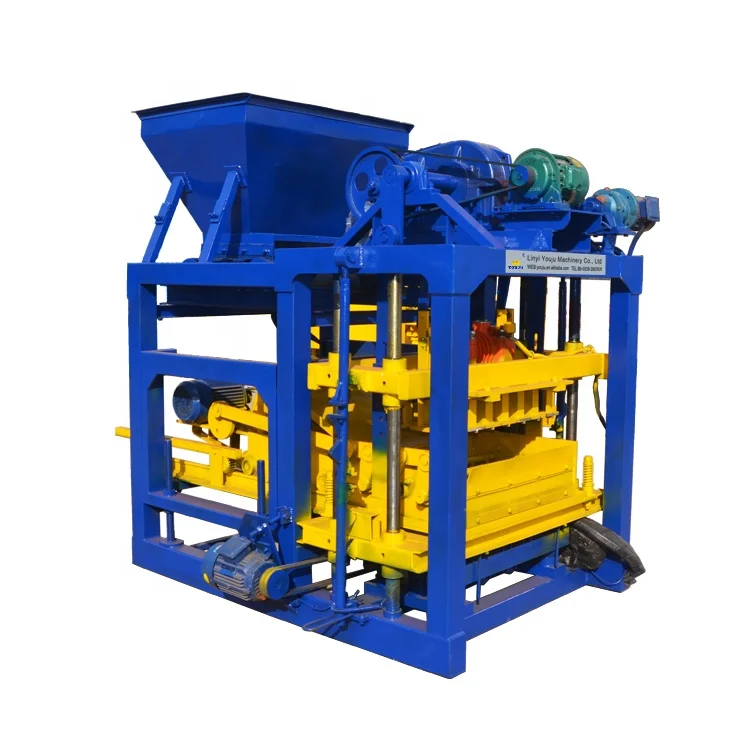
Description
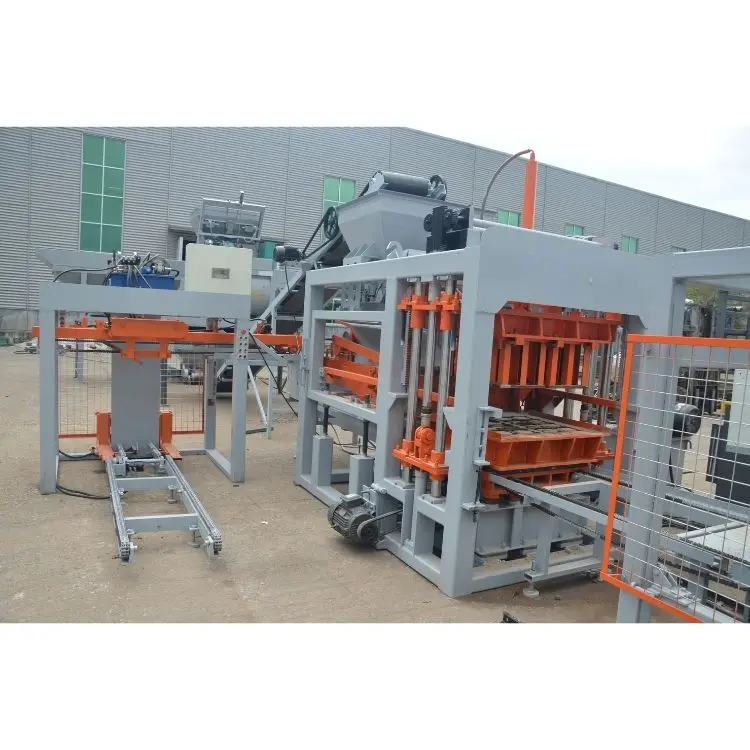
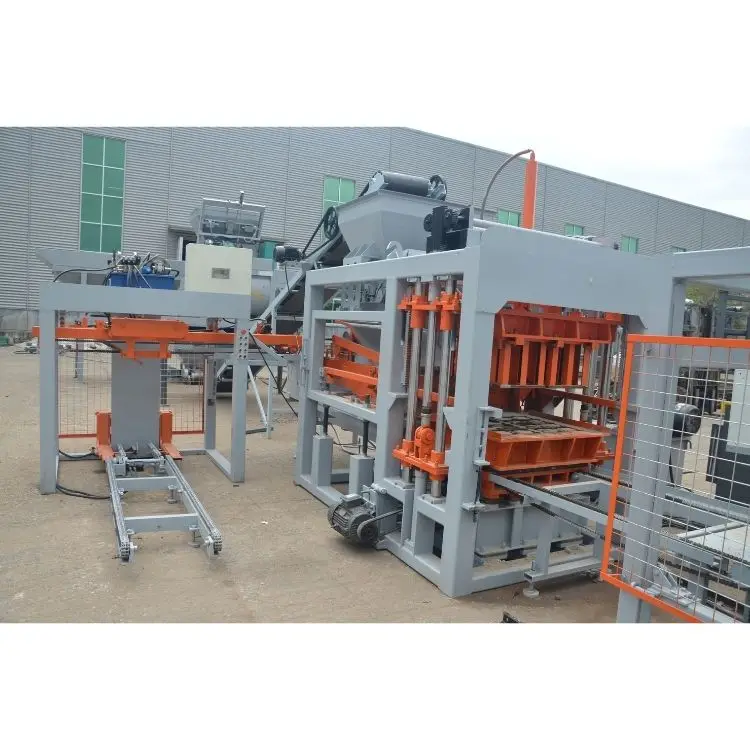
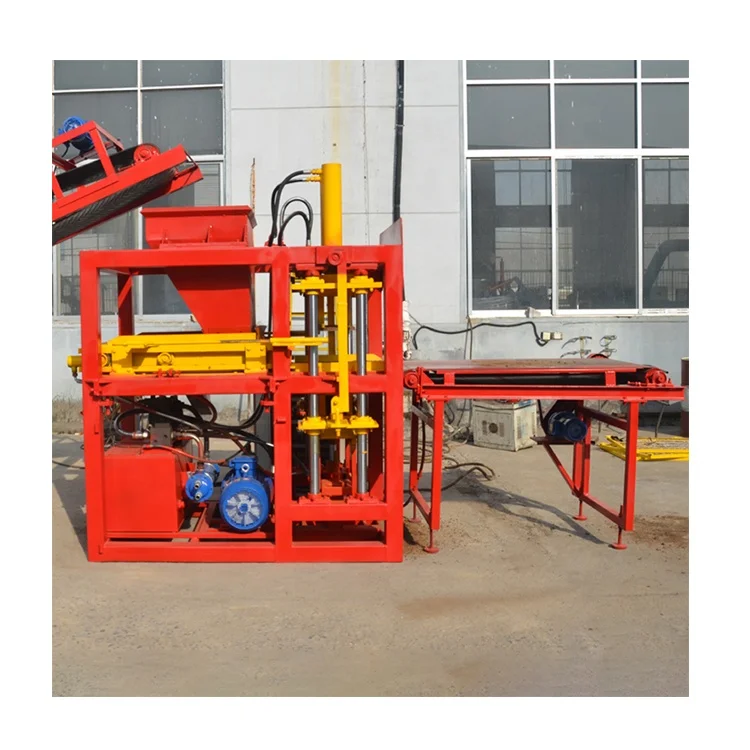
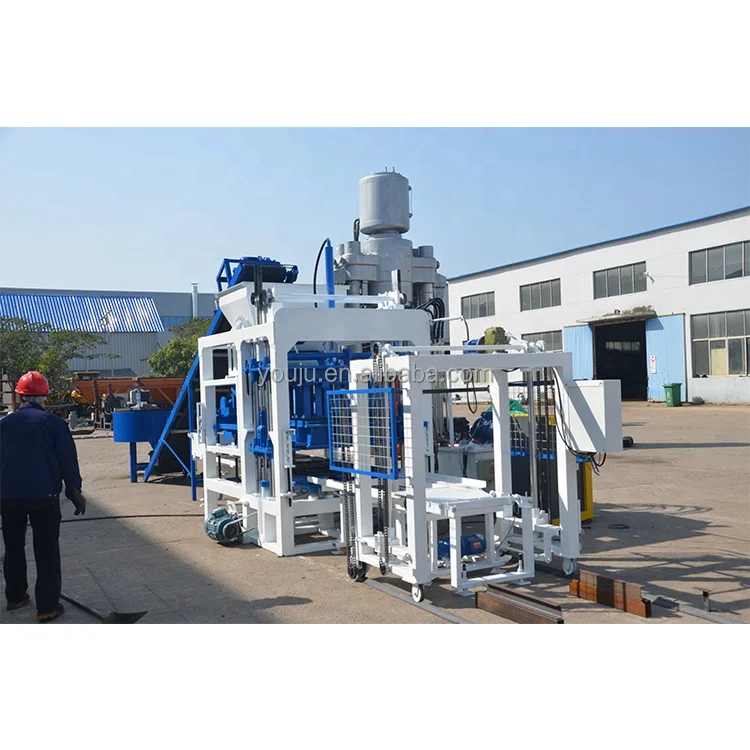
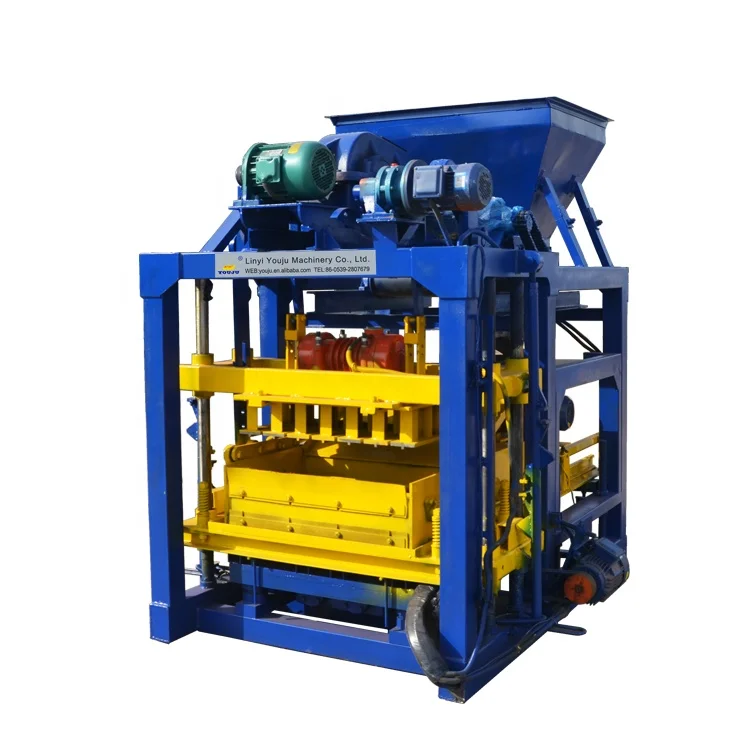
Controlled Vibration, Consistent Cycles — the QTJ4-25 semi-automatic block machine delivers adjustable platform vibration and repeatable 25-second molding cycles so operators can maintain uniform block density without stepping into full automation.
Technical Specifications
| Parameter | Value |
|---|---|
| Product Type | Semi-Automatic Concrete Block Making Machine |
| Model | QTJ4-25 |
| Overall Dimensions (L×W×H) | 3000×1800×2680 mm |
| Total Mass | 3.5 T |
| Overall Power | 16.58 kW |
| Vibration Force | 60 kN |
| Main Vibration Form | Platform Vibration |
| Vibration Frequency | 2800–4500 r/min |
| Pallet Size | 850×480 mm |
| Molding Cycle | 25 s |
| Demolding Method | Mechanical |
| Guide Column Design | Four chrome-plated columns with overlong guide |
| Frame Material | National standard manganese steel |
| Raw Materials | Crushed stone, sand, cement, fly ash, gravel, slag |
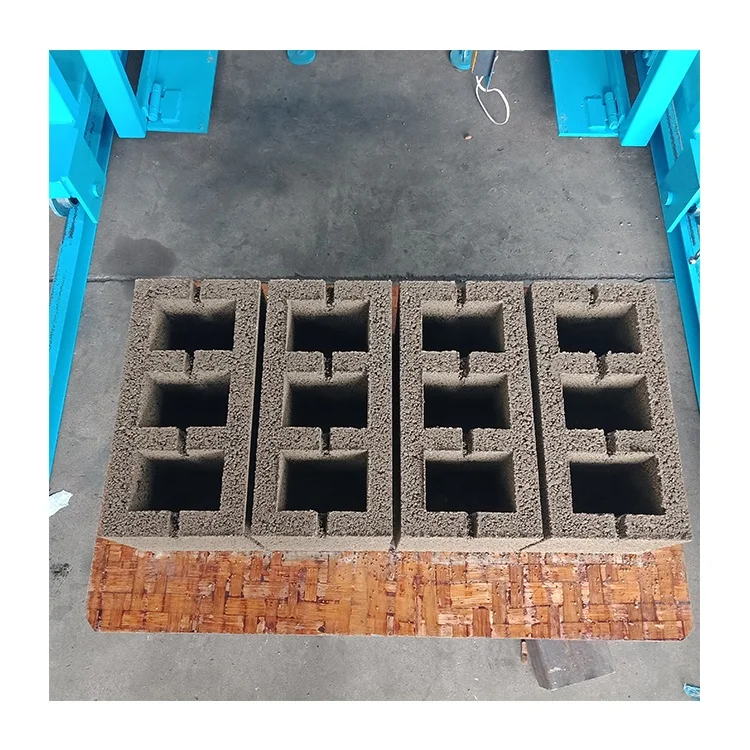
| Output (400×200×200 mm hollow block) | 4 pcs/mould, 580 pcs/h, 4640 pcs/day (8 h) |
| Output (240×115×90 mm block) | 9 pcs/mould, 1400 pcs/h, 11200 pcs/day (8 h) |
| Output (240×115×53 mm solid brick) | 21 pcs/mould, 3300 pcs/h, 26400 pcs/day (8 h) |
| Factory Area Required | 300 m² |
| Voltage & Frequency | (basis not stated in source — confirm with supplier) |
| Control System | Available with PLC or MCC control (confirm before order) |
| Warranty | 1 year for the whole machine (excluding spare parts) |
Application Suitability
| Application | Material or Output |
|---|---|
| Hollow block production for wall construction | Crushed stone, sand, cement, fly ash mixes on 400×200×200 mm format |
| Solid brick manufacturing for load-bearing walls | Sand, cement and gravel blends on 240×115×53 mm format |
| Paver and interlocking block production | Cement, dust and fine aggregate for colored or standard pavers |
| On-site block production for housing projects | Local aggregate and cement with mobile or fixed semi-auto setup |
| Curbstone and kerb production | Coarse aggregate mixes on dedicated mould formats |
Why the Control Language Must Be Settled Before the Machine Ships
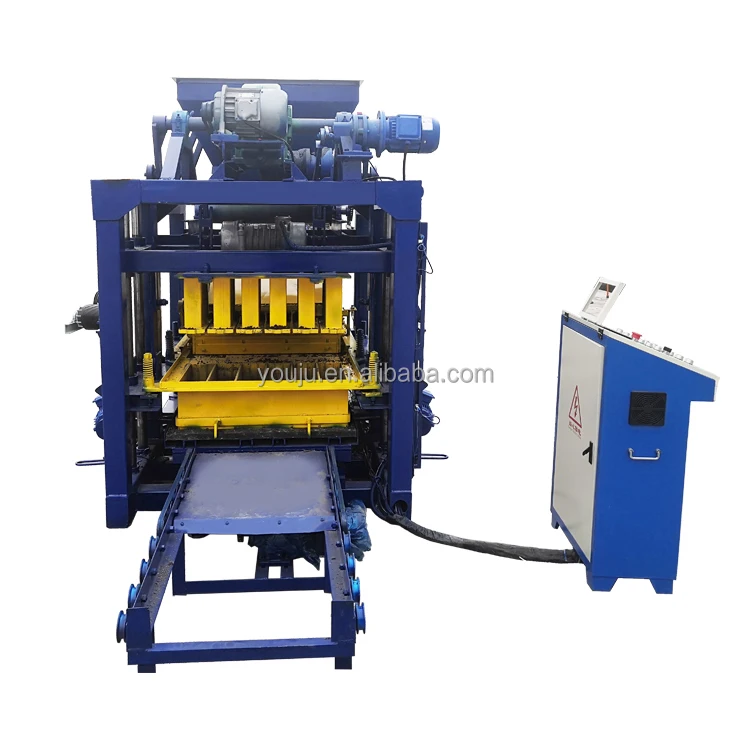
The automatic QTJ4-25 block machine PLC controlled interface is only useful if your operators can read every parameter on screen.
I once helped commission a semi-auto line in North Africa where the PLC display was locked in Chinese. The local crew could not read a single alarm code or cycle counter. We spent an entire shift translating menus on a phone before the first hollow block came off the press. That delay had nothing to do with the press itself — it was entirely a configuration oversight that could have been caught during the order confirmation stage [NEED_CITE: control language and HMI localization requirements for export machinery].
When buyers focus on cycle speed and pallet count but skip the control language and voltage confirmation, the machine arrives ready to run but nobody on site can operate it. The QTJ4-25’s mechanical demolding and 25-second cycle are straightforward, yet the PLC or MCC panel still governs vibration frequency, cycle timing and fault diagnostics. If that panel speaks the wrong language, the machine is effectively idle until someone bridges the gap.
How the Control Panel Governs Cycle Consistency
The QTJ4-25 uses platform vibration as its primary compaction method, with frequency adjustable across 2800–4500 r/min. The control system determines whether operators set that frequency manually at a dial or through a PLC screen that stores recipes per mould format. When the automatic QTJ4-25 block machine PLC controlled configuration is selected, the panel logs vibration time and frequency for each cycle, giving shift supervisors a record to trace density variations back to a specific parameter change. Without that logging, inconsistent block strength is blamed on the mix when the real cause was an operator adjusting the dial mid-shift.
The Upgrade Path From Semi-Auto to Full Line Automation
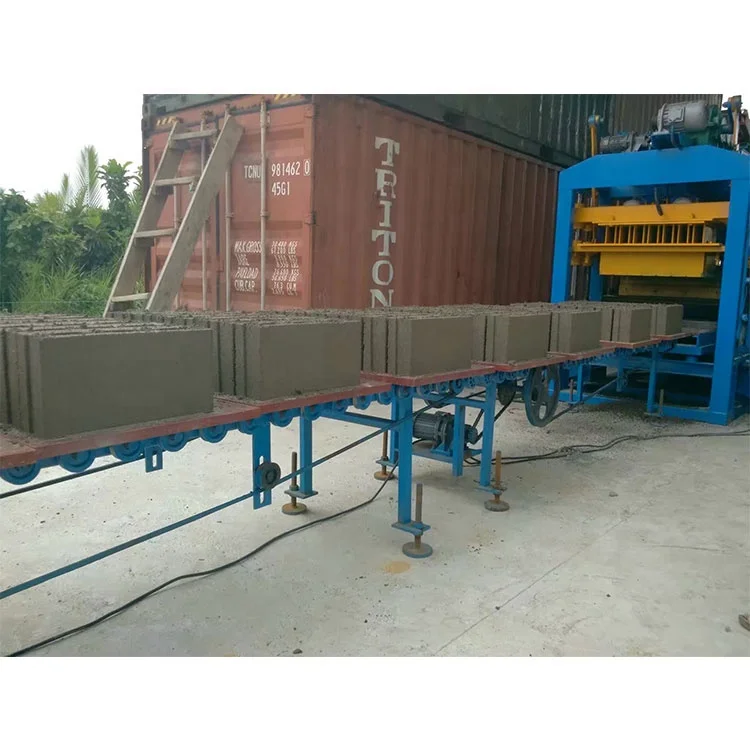
A semi-automatic press like this one handles compaction and mechanical demolding, but pallets still move by hand between the press, the curing area and the stacking zone. The upgrade path involves adding stations around the press: an automatic pallet feeder to replace manual loading, a stacking unit to cube fresh blocks, and a curing rack handler to move racks in and out of the yard. Each station connects to the existing PLC so that cycle timing stays synchronized. The press does not need replacement — it needs peripheral automation that matches its 25-second cycle so the press is never left waiting for a pallet [NEED_CITE: automation staging for semi-automatic block production lines].
Reading the Specs That Actually Shape Block Quality
The 60 kN vibration force and the adjustable 2800–4500 r/min frequency range work together to compact the mix into the mould cavity. Higher frequency with lower force suits fine-aggregate paver mixes where surface finish matters; lower frequency with sustained force suits coarse hollow block mixes where internal density is the priority. The four chrome-plated guide columns with overlong guide design keep the mould aligned during high-frequency vibration, preventing the uneven wall thickness that shows up as weak corners after curing. Pallet size at 850×480 mm must match the curing racks and forklift tines already on site — a mismatch means either new racks or manual re-stacking after every cycle. The manganese steel frame with anti-wear welding holds dimensional stability across thousands of cycles, which matters because frame flex under vibration translates directly into block height variation.
What Happens When Control and Voltage Are Left to Chance
Buyers who skip voltage and frequency confirmation often discover on arrival that the local grid does not match the motor nameplate. A 380 V / 50 Hz motor on a 440 V / 60 Hz supply will run, but the vibration motor will spin faster than rated, shifting the compaction profile and accelerating bearing wear. The PLC may fail to boot if its power supply expects a different input range. Rectifying this on site means sourcing a transformer, rewiring the panel, or waiting weeks for a replacement control board — all while the production schedule slips and the contractor’s block delivery deadline passes [NEED_CITE: voltage and frequency standards by export market].
What Sets This Configuration Apart
Block machinery is our single focus, which means the QTJ4-25 is specified as a matched system — press, mould, pallet and handling — rather than assembled from separate suppliers who each blame the other when output falls short. Every configuration is set against the buyer’s actual mix design and local aggregate, not a catalogue default. Mould design covers the formats the buyer’s market actually sells, with custom drawings available for non-standard dimensions. Automation level is selectable: start semi-automatic and add pallet feeding, stacking or cubing later without replacing the press. Installation includes on-site commissioning with operator training so the crew can run the first shift independently.
Documentation & Verification
- Line layout showing QTJ4-25 footprint within the 300 m² factory area allocation
- Capacity calculation stating output per specific block format and mould configuration
- Mould drawing and format list for every block type included in the order
- Pallet specification matching the 850×480 mm size with material and load rating
- Voltage, frequency and PLC display language confirmation sheet signed before production
- Factory test record on your target mix design and block format before dispatch
Installation, Commissioning & Support
- Foundation plan based on 3000×1800 mm footprint and 3.5 T operating mass
- Dedicated power circuit for 16.58 kW total load with confirmed voltage and frequency
- Mechanical demolding system calibrated on site to the 25-second cycle across all ordered moulds
- Vibration frequency tuned between 2800–4500 r/min to match your local aggregate and mix
- PLC or MCC panel configured in the operator’s language with alarm codes translated
- Wear parts list for guide columns, vibration motor bearings and mould liners with reorder codes
What to Include With Your Inquiry
Send your target block formats with dimensions, the daily output you need per format, and the local raw materials you plan to use — including aggregate type and cement grade. Confirm your site voltage, frequency, and the language your operators need on the control screen. If you already have curing racks or forklifts, share their dimensions so the 850×480 mm pallet can be validated against your existing equipment.
Frequently Asked Questions
Q: How do I confirm the real daily output for my specific block format?
A: The published figures assume specific mould sizes — 580 pcs/h is based on 400×200×200 mm hollow blocks at four per mould. Your target format may have a different cavity count and cycle behaviour. Request a capacity calculation that states output per your exact block dimensions and mould layout, including the pallet movement time between cycles.
Q: Which control details must be confirmed before the machine enters production?
A: Voltage, frequency, PLC display language, and alarm code translation all need written confirmation. The automatic QTJ4-25 block machine PLC controlled panel governs vibration frequency and cycle timing, so any mismatch delays commissioning. Lock these parameters during the order stage, not after the crate arrives at your port.
Q: Can I add automation stations later without replacing the press?
A: Yes. Automatic pallet feeding, stacking and cubing units can be added to the existing press and connected to the PLC. Each station must synchronize with the 25-second molding cycle so the press is never idle waiting for a pallet or blocked by an uncleared output stack.
Q: How should vibration settings change when switching between hollow block and paver moulds?
A: Hollow blocks with coarse aggregate typically need lower frequency and sustained force for internal density. Pavers with fine aggregate benefit from higher frequency for surface finish. The adjustable 2800–4500 r/min range covers both, but the exact setting depends on your mix — validate with test blocks before locking the recipe.
Q: What does a mould change involve on the mechanical demolding system?
A: Moulds are exchangeable for multiple block formats, and the mechanical demolding mechanism adjusts to each mould’s release profile. Confirm whether quick-change tooling is included so that a format switch takes minutes rather than consuming a significant portion of the shift, which would negate the flexibility you purchased.