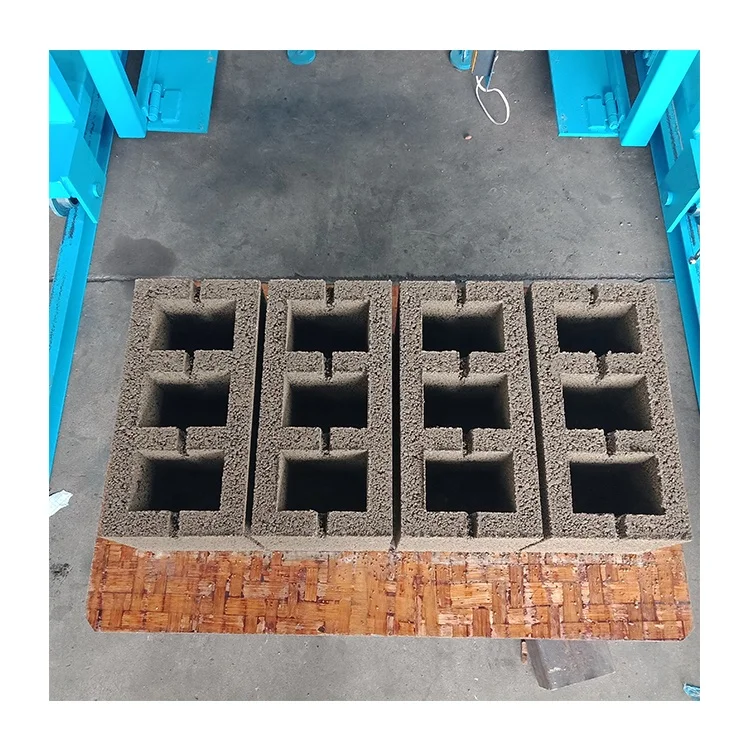
Description
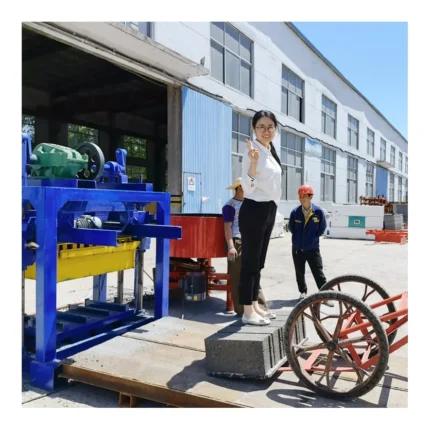
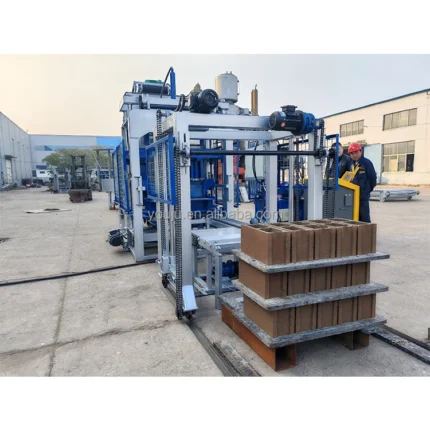
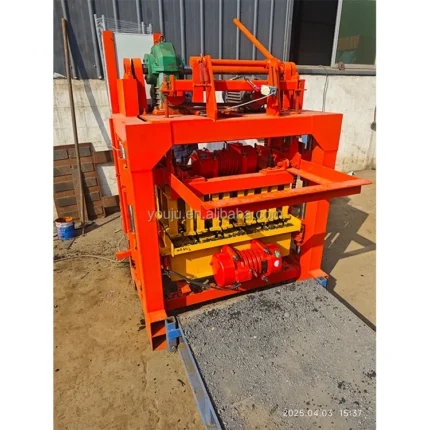
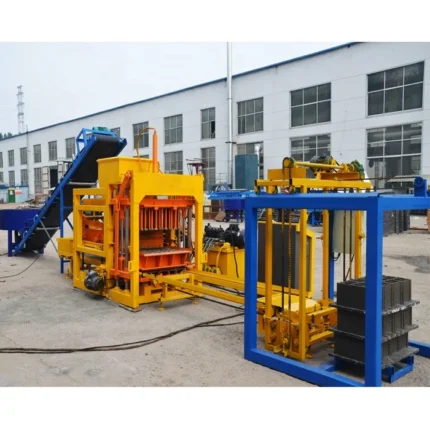
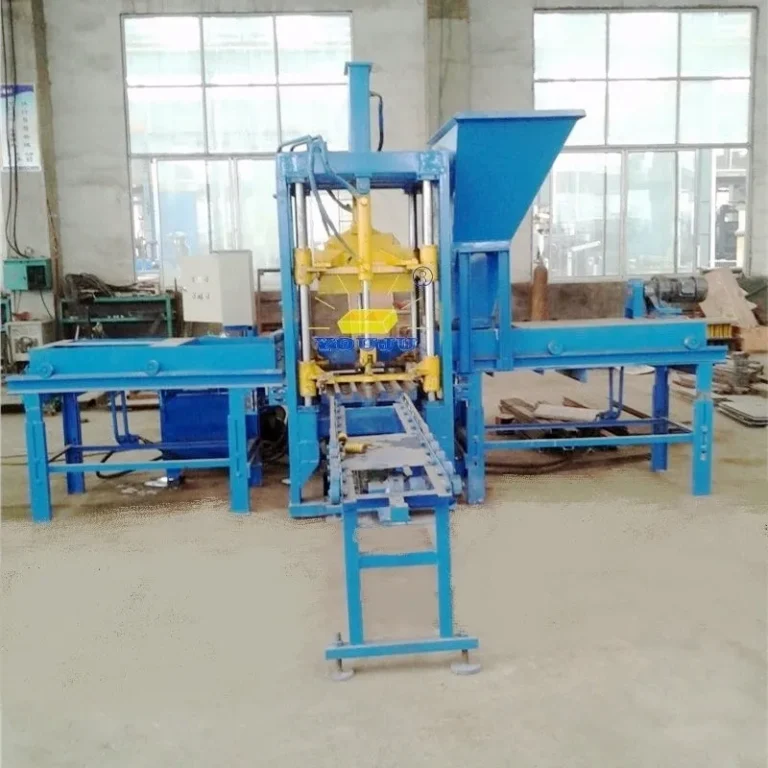
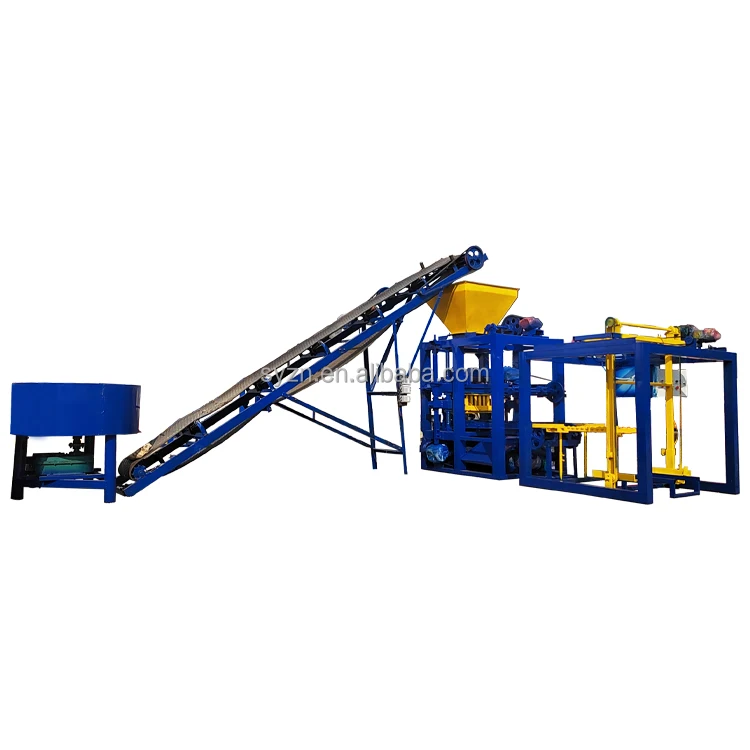
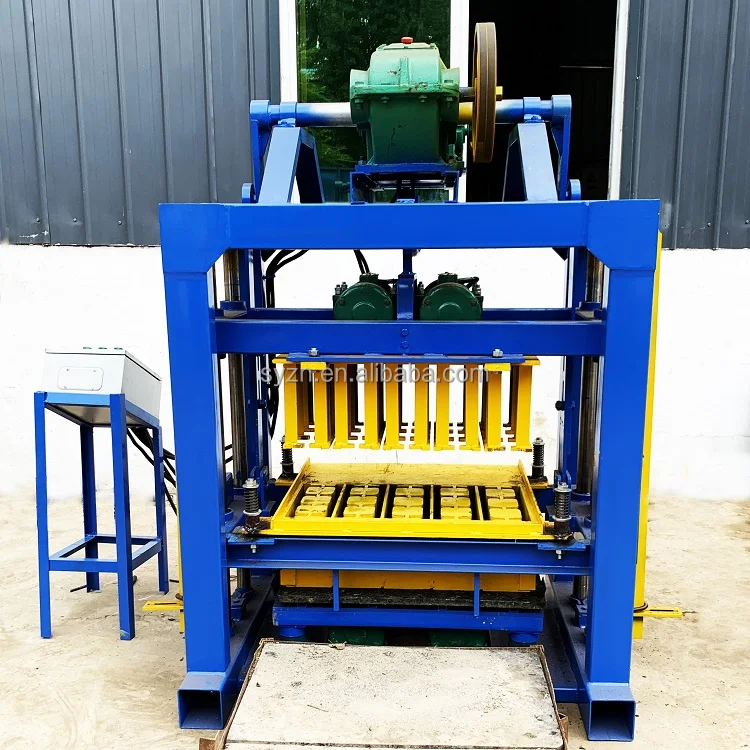
Configured automation path — the QTJ4-25 starts as a semi-automatic press with PLC logic, leaving the stacking and pallet handling stations ready for a future upgrade without swapping the core machine.
Technical Specifications
| Parameter | Value |
|---|---|
| Model | QTJ4-25 |
| Product Type | Semi-Automatic Concrete Block Making Machine |
| Rated Power | 17.9 kW |
| Overall Dimensions | 6400 × 1500 × 2700 mm |
| Total Mass | 2500 kg |
| Molding Cycle | 25 s |
| Pallet Size | 850 × 550 × 20 mm |
| Vibration Frequency | 2800 r/min |
| Vibration Force | 60 kN |
| Output Capacity | 960 pcs/h (basis: 400 × 200 × 200 mm hollow block, 4 pcs/mould) |
| Daily Output | 7680 pcs/day (basis: 400 × 200 × 200 mm hollow block, 8-hour shift) |
| Control System | PLC (brand and language configurable) |
| Automation Level | Semi-automatic |
| Mould Format Capability | Hollow, solid, paver (confirm sizes) |
| Mixer Included | JQ350 mixer (1 set) |
| Stacking Method | Manual |
Application Suitability
| Application | Material or Output |
|---|---|
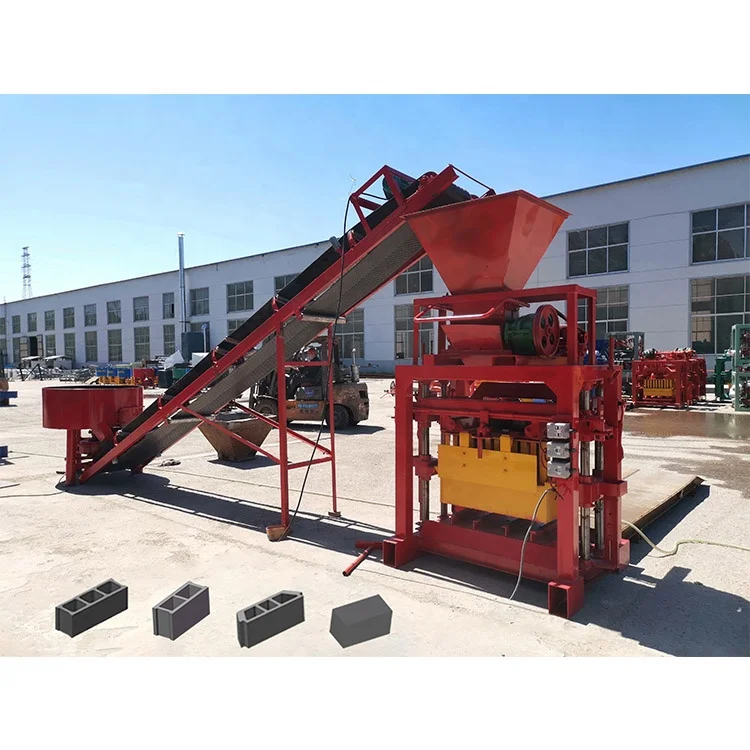
| First-stage block plant startup | Hollow and solid blocks from local crushed stone and cement |
| On-site contractor production | Paving and kerb formats using site-available aggregate |
| Format expansion for existing plants | Adding hollow block lines alongside existing solid block output |
| Small workshop block supply | Medium-volume hollow block runs with semi-automatic handling |
What "960 Pieces per Hour" Leaves Out on a PLC Controlled Block Machine
Every capacity figure must name the block format it assumes, or it is just a number on a brochure.
Buyers regularly receive quotes stating a high hourly output without disclosing that the figure was measured on a small solid paver rather than the 8-inch hollow block the buyer actually plans to produce. When the machine arrives and the first hollow block run falls short, the operator blames the PLC, but the mismatch was in the quotation. The automatic QTJ4-25 block making machine capacity quoted here is tied directly to a 400 × 200 × 200 mm hollow block at four pieces per mould [NEED_CITE: block format impact on cycle time]. Any format change alters that number, and the honest approach is to recalculate per product.
How PLC Logic Removes Operator Guesswork
On a manual press, the operator decides when to stop vibration and release the mould, meaning batch density shifts with fatigue and attention span. The PLC controlled block machine removes that variable by locking vibration duration and hydraulic hold into a repeatable sequence. The result is block-to-batch consistency that does not depend on who is running the shift.
Semi-Automatic Now, Full Line Later
The semi-automatic configuration handles pressing and vibration while leaving pallet feeding and stacking to manual labour. This keeps initial capital low for entrepreneurs starting a first plant. When output demand grows, the same PLC architecture accepts automatic pallet feeders and stackers, so the upgrade is an addition rather than a full replacement [NEED_CITE: automation upgrade path for block plants].
Reading the Specs That Matter on the Shop Floor
The 60 kN vibration force paired with the 25-second moulding cycle determines how densely the aggregate compacts inside the mould cavity. If vibration force is too low for a coarse local aggregate, hollow block walls come out fragile at the corners. The 850 × 550 mm pallet size must match the curing racks and forklifts already on site, or the buyer ends up replacing the entire handling setup. Mould change time is not listed in the source data and should be confirmed before ordering, because a slow changeover cancels out the format flexibility the machine promises. Voltage, frequency, and HMI language must be locked in writing before production, not assumed [NEED_CITE: voltage and frequency standards by export market].
The Cost of Skipping Configuration Details
A buyer who confirms price before confirming pallet size often discovers that the delivered pallets do not fit the curing area forklift. The blocks then sit stacked by hand, and the output rate drops regardless of how fast the press cycles. Similarly, a PLC display that arrives in a language the operator cannot read leaves the machine idle until a new HMI is sourced and shipped, costing weeks of lost production [NEED_CITE: HMI language confirmation before shipment].
Why Source This Machine Through a Single-System Supplier
Block machinery is the only product line here, so the press, mould, pallet, and mixer are specified as one matched set rather than assembled from unrelated vendors. Configuration starts from the buyer’s actual mix design and local aggregate, not a catalogue default. Mould drawings are supplied for the exact formats the buyer’s market sells. Installation support includes operator training on the PLC interface, and wear part lists are provided before the first replacement is due. Every order ships only after voltage, frequency, and display language are confirmed in writing.
Documentation & Verification
- Capacity calculation document naming the exact block format behind the quoted hourly output
- Voltage, frequency, and PLC display language confirmation sheet signed before production
- Hydraulic and electrical schematic for the buyer’s local maintenance team
- Mould drawing and format list with estimated changeover procedure
- Factory test record on the buyer’s target block format before dispatch
Installation, Commissioning & Support
- Foundation pad sized to the 6400 × 1500 mm footprint with anchor bolt template provided
- Dedicated circuit rated for the 17.9 kW total load at confirmed voltage and frequency
- Machine arrives as a single-frame unit; pallet feeder and mixer bolt on during commissioning
- PLC parameter set loaded with cycle times matched to the buyer’s confirmed mould format
- Operator training covers mould change procedure, vibration adjustment, and fault code reading
- Wear parts list identifies hydraulic seals and vibration springs with part numbers for reorder
What to Include in Your Inquiry
Send the target block format and dimensions, the daily output you need on an eight-hour shift, and the local aggregate type you plan to use. Include your site voltage and frequency so the motor and PLC are wound correctly before the machine leaves the factory. Specify the HMI language your operators will read on the shop floor.
Frequently Asked Questions
Q: How is the 960 pcs/hour output verified, and which block format does it assume?
A: The 960 pieces per hour figure is calculated on a 400 × 200 × 200 mm hollow block with four pieces per mould and a 25-second cycle. Switching to a smaller solid paver or a larger block changes the mould cavity count and cycle time, so we provide a revised capacity calculation for each format you plan to produce.
Q: What PLC brand and display language options are available for this machine?
A: The PLC brand is confirmed during the proposal stage based on local service availability in your market. Display language is locked in writing before production begins, ensuring the operator can read cycle parameters, fault codes, and mould recipes on the HMI from day one of commissioning.
Q: How does the automation upgrade path work from this semi-automatic setup?
A: The semi-automatic base handles pressing and vibration while pallets are placed and stacked manually. When you are ready, automatic pallet feeding, stacking, and cubing modules can be added to the same PLC architecture without replacing the core press, letting you scale labour and output together.
Q: How are vibration force and hydraulic pressure matched to my local aggregate?
A: Before production, we review your local aggregate gradation and mix design to confirm that the 60 kN vibration force and pressing pressure will achieve the wall density your market requires. If the aggregate is unusually coarse or fine, the vibration duration in the PLC recipe is adjusted and tested at the factory before dispatch.