Description
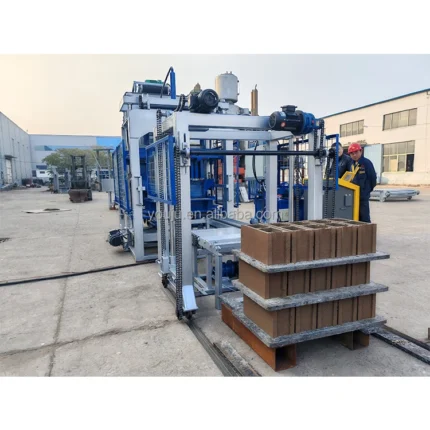
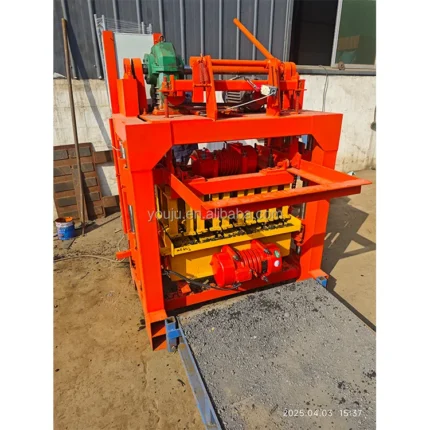
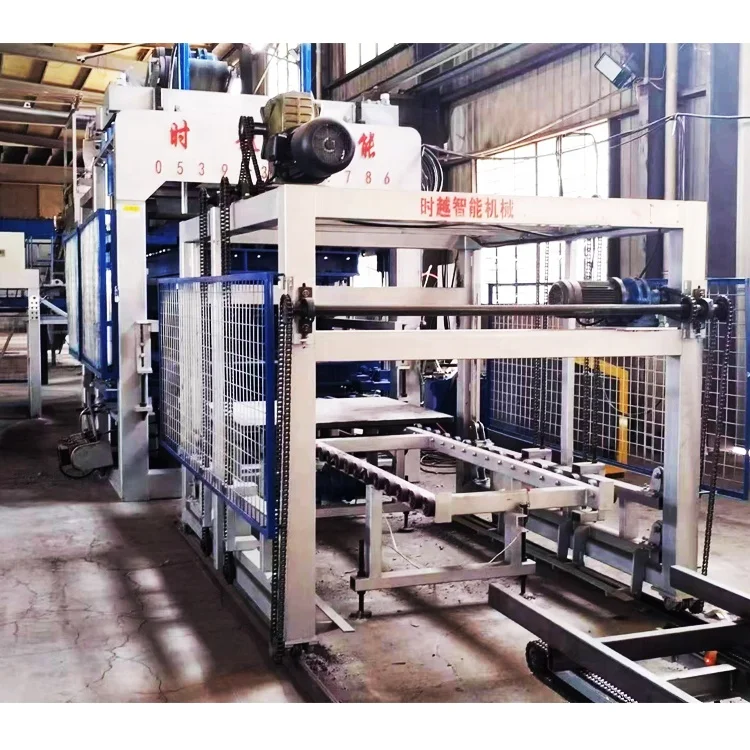
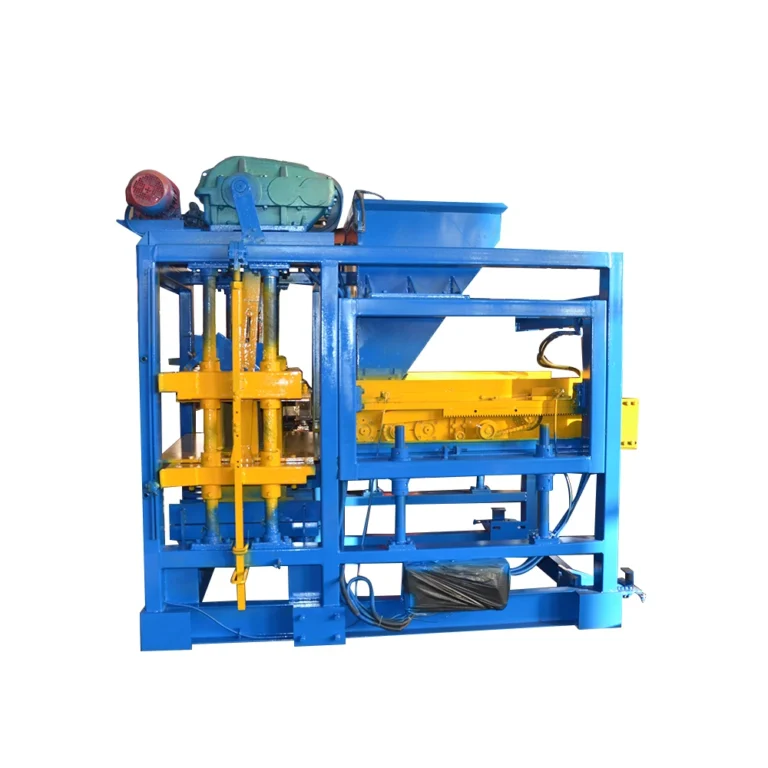
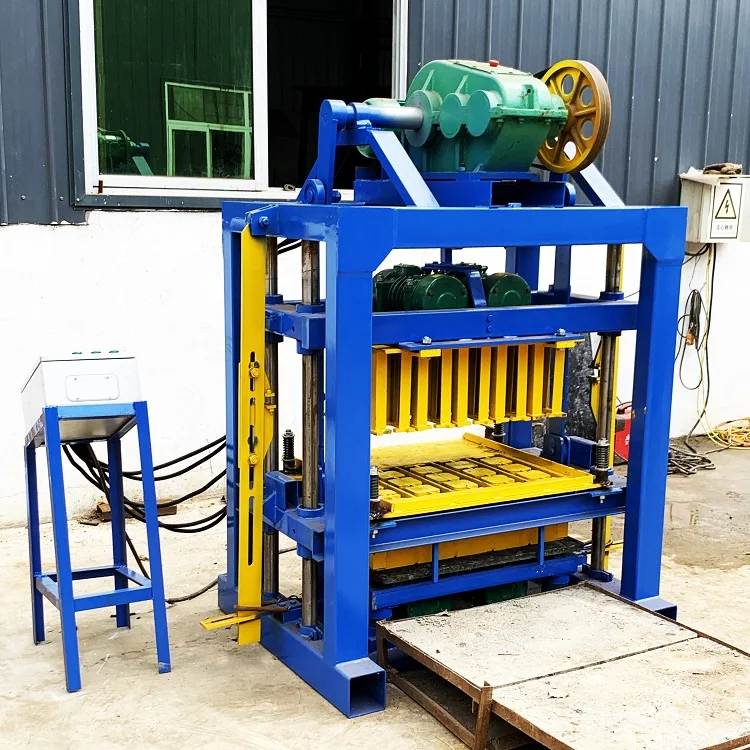
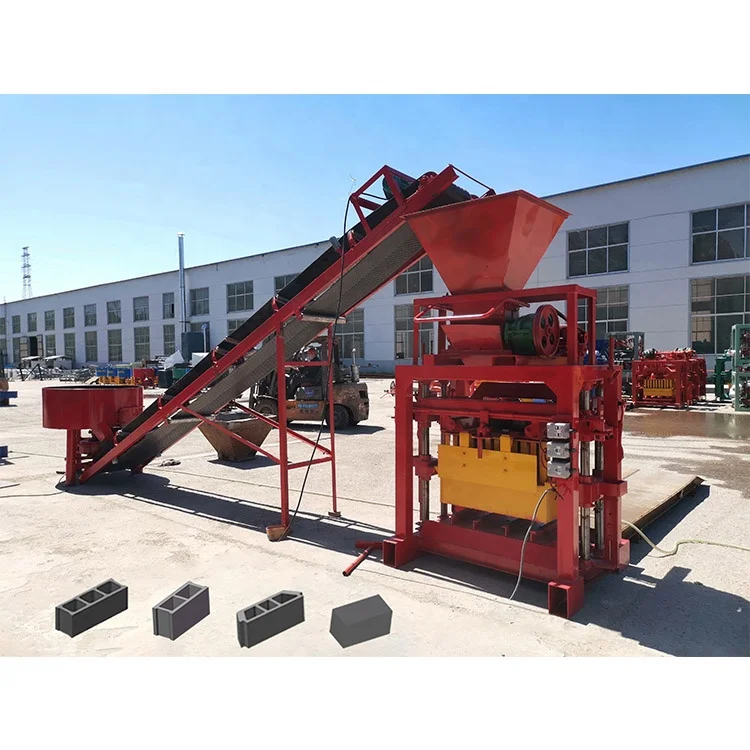
Manual Operation with an Automation Path — The QTJ4-35 stationary block machine starts as a standalone press and accepts pallet feeders, stackers, and PLC batching modules as your output targets grow.
Technical Specifications
| Parameter | Value |
|---|---|
| Model | QTJ4-35 |
| Product Type | Stationary Manual Block Making Machine |
| Overall Dimensions (L×W×H) | 2050 × 1660 × 1900 mm |
| Overall Power | 9.7 kW |
| Vibration Form | Platform Vibration |
| Vibration Force | 32 kN |
| Molding Cycle | 35 s |
| Capacity | 3,200 pcs/day (basis not stated in source — confirm block format / material / thickness) |
| Pallet Size | 850 × 450 mm |
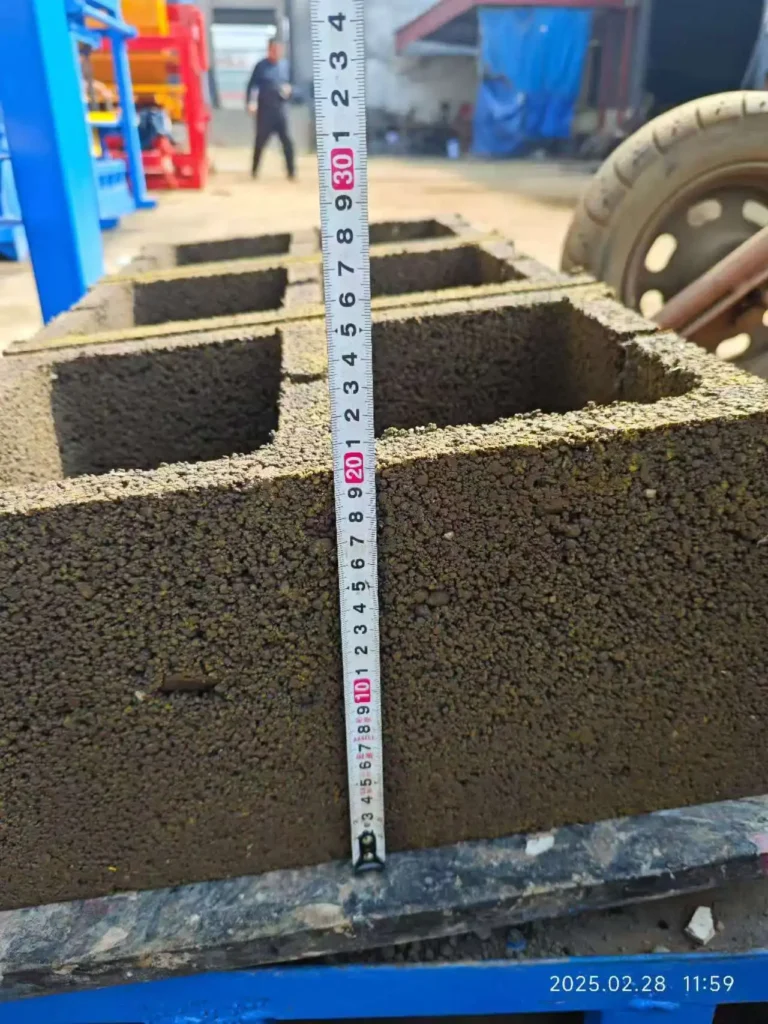
| Supported Mould Formats | 390×190×190 mm (4 pcs/mould), 390×240×190 mm (3 pcs/mould), 390×120×190 mm (6 pcs/mould), 240×115×53 mm (21 pcs/mould) |
| Automation Level | Manual (PLC control available as line upgrade) |
| Assembly State | Standalone host or simple line with belt conveyor and mixer |
| Raw Material Compatibility | River sand, mechanism sand, gravel, crushed stone, slag, cinder, fly ash, pumice stone, ceramic, perlite, shale, lightweight concrete |
| Control System | Manual operation (no PLC in base configuration) |
Application Suitability
| Application | Material or Output |
|---|---|
| Small-scale hollow block production | Crushed stone, river sand, and cement on 850×450 mm pallets |
| Solid block manufacturing for housing projects | Fly ash, slag, or shale blends with local aggregate |
| Standard brick runs for masonry contractors | Mechanism sand and cement at 21 pcs per mould cycle |
| On-site block production for development projects | Lightweight concrete or pumice stone mixes in temporary yards |
What "3,200 Pieces per Day" Actually Means for a PLC Controlled Stationary Block Machine
Capacity only matters when the block format, mix design, and pallet cycle are named alongside the number.
Every stationary block machine datasheet leads with a daily output figure, and the QTJ4-35 is no exception. The 3,200 pcs/day claim sits in the brochure, but it does not state which of the four supported mould formats it assumes, what raw material mix was used, or whether the 35-second cycle holds across all formats. I have watched buyers sign purchase orders based on a headline number, then discover on commissioning day that their actual hollow block output sits well below what they budgeted for [NEED_CITE: block machine capacity calculation standards by format]. An automatic stationary block machine with PLC batching can hold cycle consistency, but the base QTJ4-35 relies on manual pallet handling, which introduces variable rhythm between cycles. Before the number means anything, the buyer needs to see a line layout that names the exact block format and the assumed operator pace.
How the Control System Defines the Upgrade Ceiling
The base QTJ4-35 ships with manual operation and no PLC. That keeps the entry cost low for a first-time block plant, but it also means every pallet feed, mould vibration trigger, and stacking decision rests on the operator. When you are ready to move toward a PLC controlled stationary block machine, the host frame accepts add-on modules for automatic pallet feeding and batching accuracy. The critical question is whether the original wiring harness and motor contactors were sized for that expansion, or whether a full panel swap is needed later. Confirming this at the inquiry stage avoids a costly rewiring project six months into production.
Pallet Handling Is Where Manual Lines Lose Time
The 850 × 450 mm pallet size on the QTJ4-35 determines how many blocks sit on each board and how the curing yard must be arranged. In manual mode, an operator places and retrieves pallets by hand, which limits realistic cycle throughput regardless of what the 35-second moulding cycle suggests on paper [NEED_CITE: manual versus automatic pallet handling cycle impact]. When buyers later add an automatic pallet feeder and stacker, the press itself does not change, but the rhythm of the entire line tightens. The forklift you already own, the curing rack spacing you have built, and the pallet material you selected all need to match before that upgrade delivers its full effect.
Reading the Vibration and Pressure Numbers Together
Platform vibration at 32 kN is the compaction force that drives mix particles into the mould cavity. For hollow blocks at 390×190×190 mm producing four pieces per cycle, this force must work with the hydraulic pressure to achieve the density your market requires. Vibration alone does not guarantee block strength — the mix design, moisture content, and local aggregate grading all shape the final result. If your region relies on fly ash or pumice stone, the vibration frequency and amplitude may need adjustment compared to a crushed stone mix, which is exactly the kind of configuration detail that gets locked in during factory testing rather than assumed from a catalogue default.
The Hidden Cost of Skipping Voltage and Language Confirmation
I once watched a QTJ4-35 sit idle for two days on a Southeast Asian job site because the control panel shipped with a Chinese-language interface. The operator would not touch a single button without understanding what it did, and we had to fly in a bilingual technician just to run the first cycle. When a PLC controlled stationary block machine arrives with the wrong display language or an incompatible voltage frequency, the downtime is not a mechanical failure — it is a paperwork failure [NEED_CITE: voltage and frequency standards by export market]. Confirming the target market voltage, the frequency, and the PLC display language before the machine enters production is a five-minute conversation that prevents a week of lost output.
Why Sourcing the Press and the Line Together Matters
Block machinery is our single focus, which means the QTJ4-35 host, its moulds, pallets, and any future handling equipment are specified as one matched system rather than assembled from unrelated suppliers. We configure the machine against your actual mix design and local aggregate, not a generic catalogue setting. Mould design covers the formats your market sells, including custom drawings when standard sizes do not fit. The automation level is selectable — start manual, add pallet feeding later, move to full stacking and cubing when volume justifies it. Installation support includes operator training that covers the specific control language and safety routines your crew will use every day.
Documentation & Verification
- Line layout showing capacity calculation per block format for the QTJ4-35
- Mould drawing and format list matching your local market dimensions
- Voltage, frequency, and control panel language confirmation sheet before dispatch
- Factory test record on your specified raw material mix
- Hydraulic and electrical schematic for on-site maintenance reference
- Wear parts and mould availability list for first replacement planning
Installation, Commissioning & Support
- Foundation pad sized to the 2050 × 1660 mm footprint with vibration isolation
- Dedicated power circuit rated for the 9.7 kW total draw at confirmed voltage and frequency
- Host arrives as a standalone unit; conveyor and mixer bolt on during site assembly
- First-cycle parameter setting covering vibration duration and moulding pressure for your mix
- Operator training on manual pallet handling routines and safety interlocks
- Wear parts list covering vibration springs and mould liners with reorder lead times
What to Share With Your Inquiry
To size the QTJ4-35 correctly, tell us the block formats your market actually buys, the raw materials available in your area, and the daily output you need per format. Share your site voltage and frequency so the electrical panel is built right the first time. If you already have a curing yard and forklift, send the pallet dimensions and rack spacing so we can confirm the 850 × 450 mm pallet works with your existing setup.
Frequently Asked Questions
Q: How is the 3,200 pcs/day capacity verified and which block format does it assume?
A: That figure appears in the source data without a stated block format, mix design, or shift length assumption. We provide a line layout and capacity calculation that names the exact mould format — for example, 390×190×190 mm hollow blocks at four pieces per cycle — so you can compare the number against your actual production target before committing.
Q: What automation upgrades are available for the QTJ4-35?
A: The host frame accepts automatic pallet feeders, stackers, and PLC-controlled batching modules as separate additions. The upgrade path moves from manual pallet handling through semi-automatic feeding to full stacking and cubing, depending on your output growth and labour availability.
Q: How does mould change time differ between manual and automated setups?
A: In the base manual configuration, mould swaps require physical adjustment by the operator, which can consume a meaningful portion of a shift. Adding an automated mould change system reduces that downtime and lets the press return to production faster when switching between hollow, solid, and brick formats.
Q: What PLC and batching options exist when upgrading from the manual base?
A: A PLC control panel can replace the manual operation, bringing batching accuracy, cycle consistency, and a configurable display language. The panel is built to the voltage and frequency of your site, with remote diagnostics available if your maintenance team needs off-site support during commissioning.