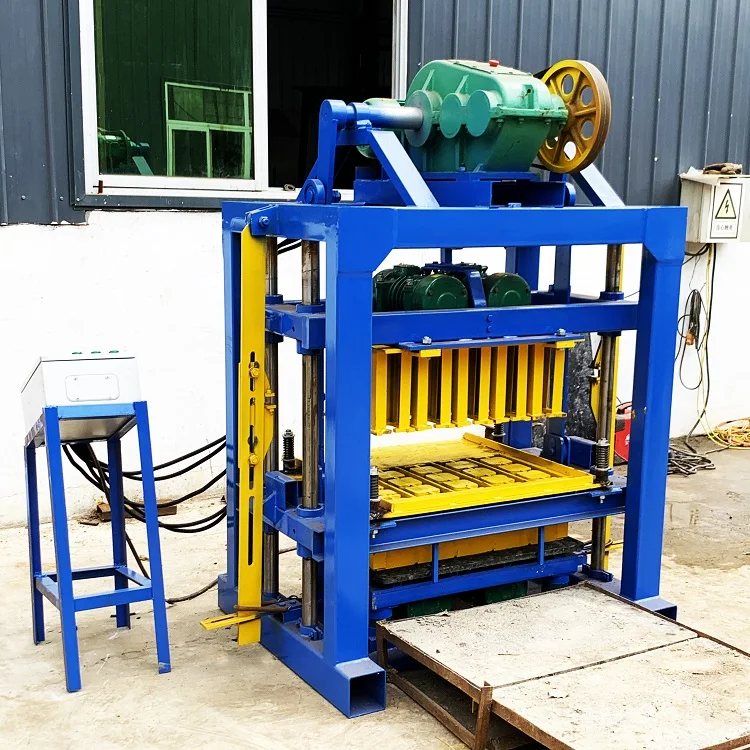
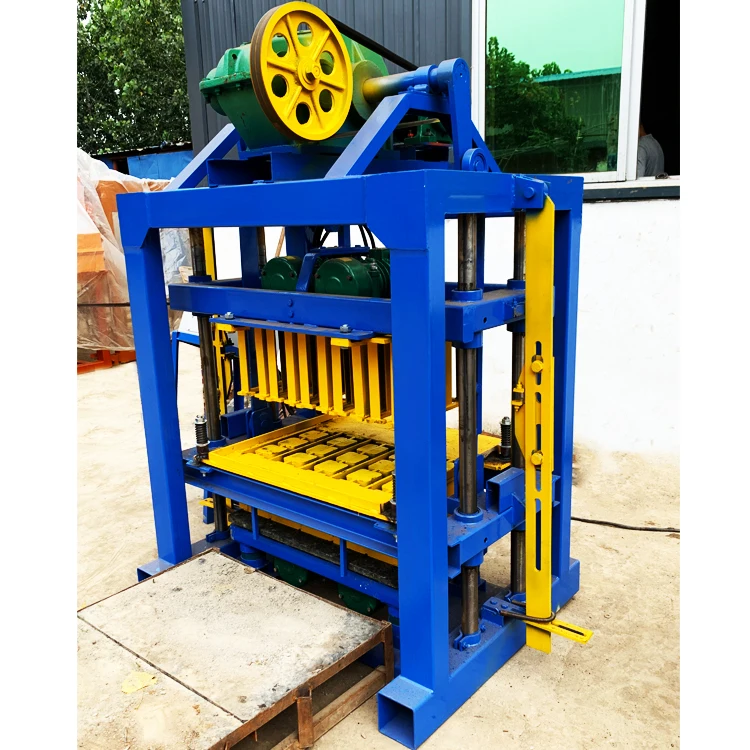
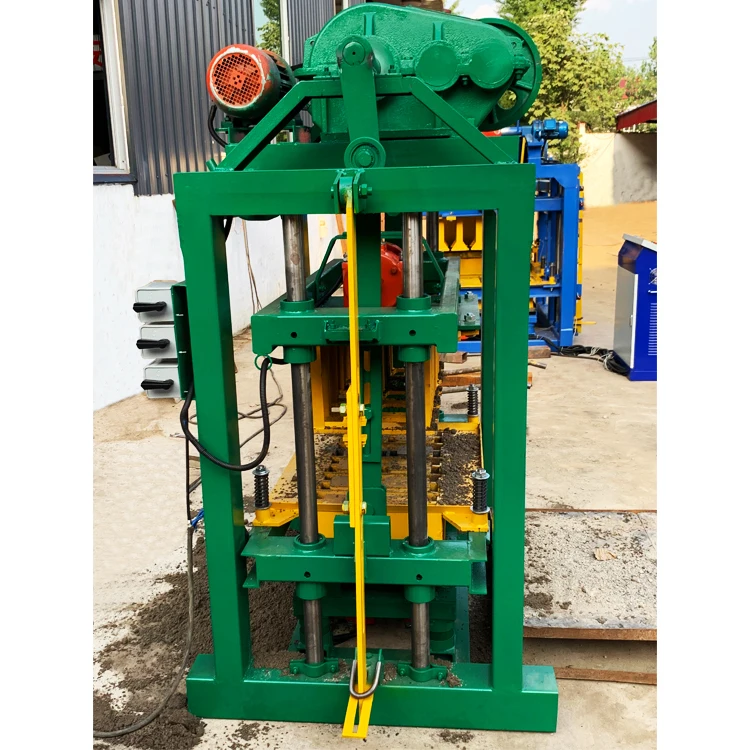


Description
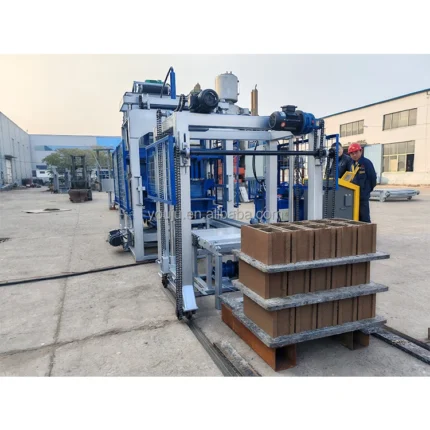
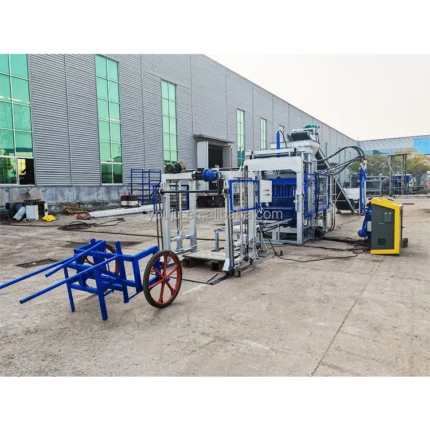
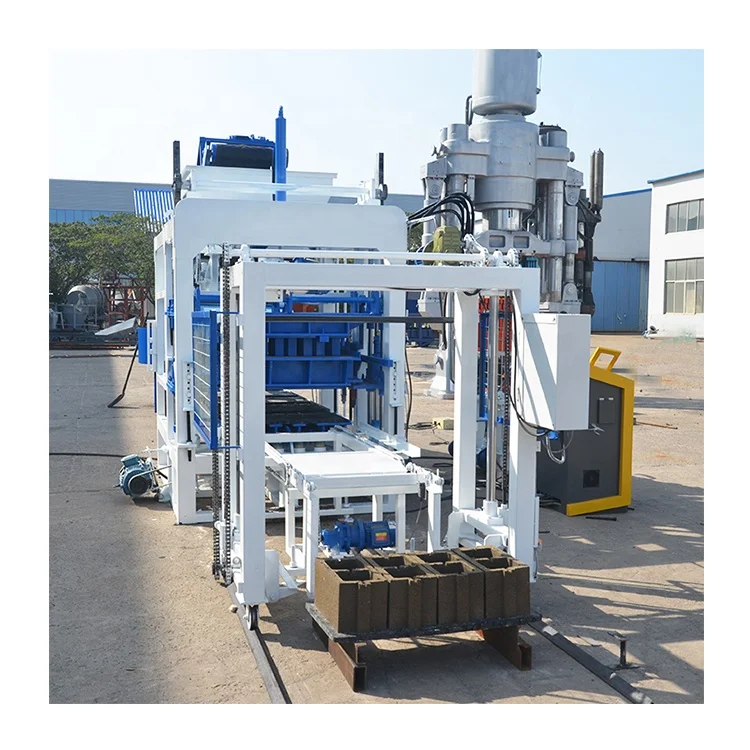
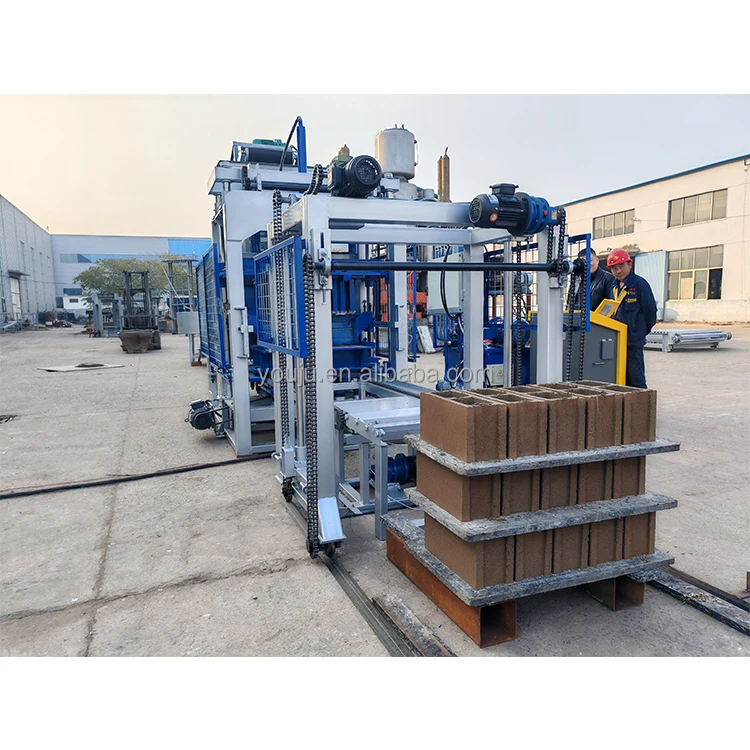
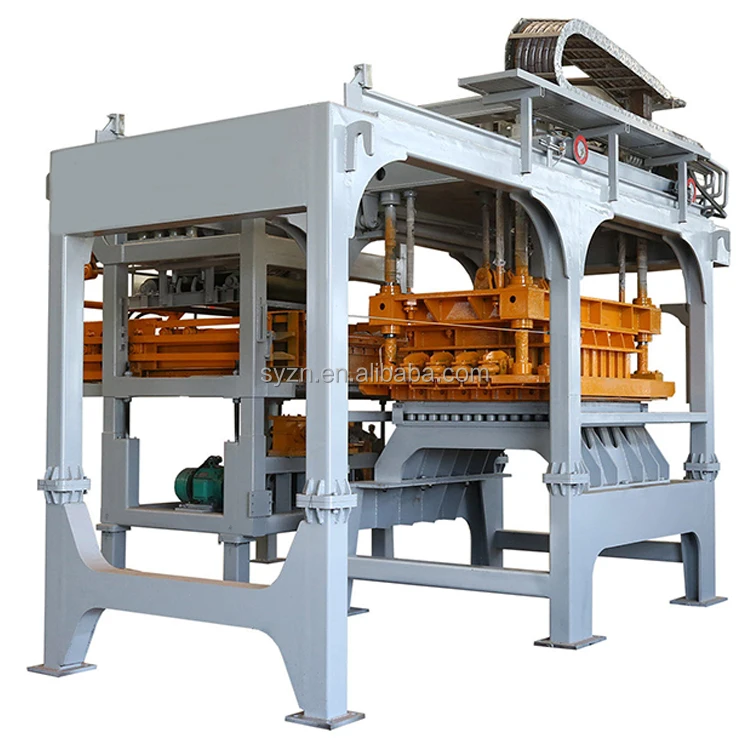
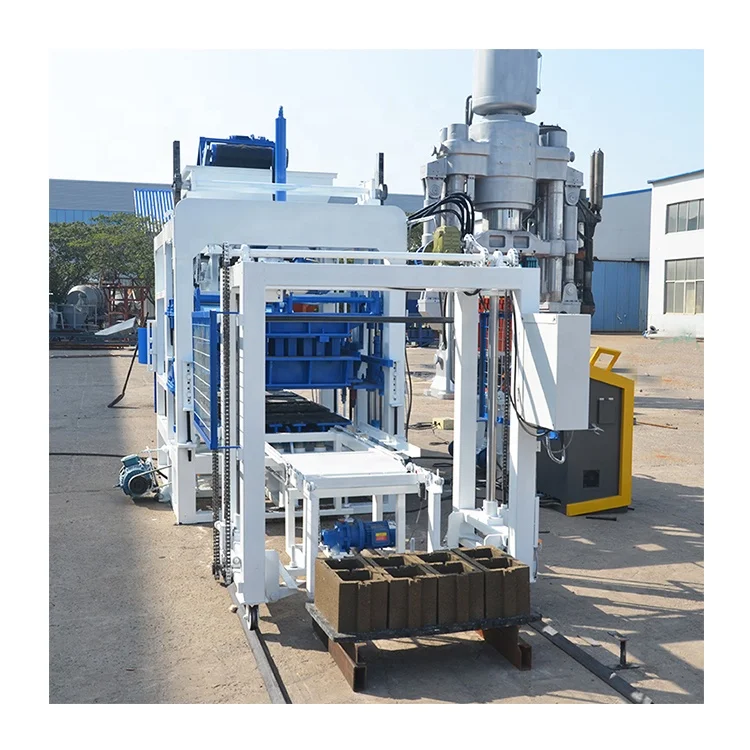
Automation-Ready Baseline — the QTJ4-40 interlocking brick machine arrives configured for manual pallet handling, yet every control and mechanical interface accepts future PLC and stacking add-ons without press replacement.
Technical Specifications
| Parameter | Value |
|---|---|
| Model | QTJ4-40 |
| Product Type | Interlocking Brick Making Machine |
| Overall Dimensions (L×W×H) | 1350×1460×1800 mm |
| Net Weight | 1 T |
| Rated Power | 9.5 kW |
| Voltage & Frequency | 380V or customized to local voltage |
| Control System | Manual / Semi-automatic operation |
| Pallet Size | 850×450×40 mm |
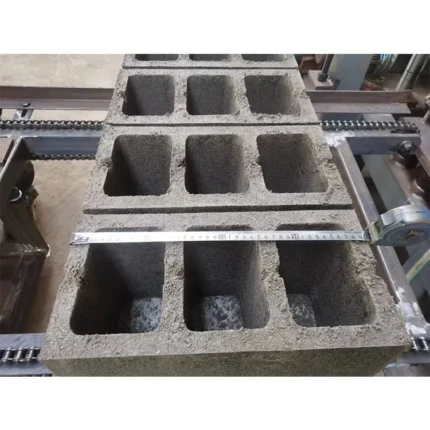
| Mould Format | 400×200×200 mm (4 pcs/mould); 400×240×200 mm (3 pcs/mould) |
| Cycle Time | 40 s |
| Vibration Frequency | 2800 r/min |
| Motor | Siemens motor |
| Automation Level | Semi-automatic (manual pallet handling) |
| Factory Area Required | 200 m² |
| Workers Required | 3–5 |
| Warranty | 1 year |
| Color Options | Red or optional |
Application Suitability
| Application | Material or Output |
|---|---|
| Small-scale interlocking brick production | Cement blended with local crushed stone and sand |
| Hollow block manufacturing for low-rise walls | Cement, fine aggregate, and coarse aggregate mix |
| Solid cement block for foundation and paving | Dense cement-aggregate mix at controlled moisture |
| On-site block production for housing projects | Locally sourced aggregates with Portland cement |
Why "40 Seconds per Cycle" Does Not Tell the Full Story
Realistic daily output depends entirely on which block format the mould is set to produce.
When a supplier quotes a 40-second cycle time, that figure covers the press closing, vibrating, and opening. It does not include the operator pulling the finished pallet, placing a fresh one, feeding the hopper, or moving cured blocks to the stacking area. For the four-piece 400×200×200 mm mould, a trained three-person team might sustain a rhythm close to the rated cycle. Switch to the three-piece 400×240×200 mm interlocking format and the per-block yield per cycle drops, shifting the daily total even though the press timing stays the same [NEED_CITE: block format impact on realistic daily output]. Without a capacity calculation tied to your exact block format, the number on the quotation remains an abstraction.
From Manual Rhythm to PLC-Governed Consistency
On a semi-automatic line like the QTJ4-40, the operator decides when the pallet slides in and when the vibration stops. That human judgment introduces shift-to-shift variation in compaction density. Adding PLC-controlled cycle timing to the automatic QTJ4-40 interlocking brick machine PLC controlled upgrade path locks vibration duration and pressure dwell into repeatable sequences, removing operator judgment from the equation.
Where Automation Removes the Biggest Variable
Block strength inconsistency usually traces back to uneven vibration transfer or inconsistent feed depth rather than raw material quality. When pallet feeding, hopper charging, and cycle timing are all manual, even a skilled team drifts over a ten-hour shift. Integrating automatic pallet feeding and PLC batch control standardizes every station, so the twentieth pallet receives the same compaction energy as the first [NEED_CITE: batch consistency in semi-automatic versus PLC-controlled block production].
Reading the Vibration and Motor Specifications
The 2800 r/min vibration frequency driven by a Siemens motor determines how thoroughly the cement-aggregate mix consolidates inside the mould cavity. Higher frequency translates to finer particle rearrangement, which matters most for interlocking brick profiles where thin webs and tongue-and-groove edges must fill completely. The 9.5 kW rated power covers both the vibration motor and the hydraulic pump, so voltage drop on undersized site wiring will affect compaction before it trips a breaker. Confirming that the 380V supply or its customized equivalent reaches the machine within acceptable tolerance prevents weak blocks that show no visible defect until a drop test.
The Cost of Skipping the Automation Conversation Early
Buyers who treat semi-automatic as a permanent configuration often discover that adding a pallet feeder and stacker later requires rewiring the entire control cabinet and modifying the press frame. Some find that the original PLC panel has no spare I/O channels, forcing a full control replacement. Others learn that the manual pallet handling pace they budgeted for assumed a five-person crew, while local labor costs have since shifted the economics toward automation [NEED_CITE: hidden costs of retrofitting automation on semi-automatic block machines]. Addressing the upgrade path before the machine is built avoids these field surprises.
What Sets This Supply Chain Apart
Block machinery is the single focus here, so the QTJ4-40 arrives with its mould, pallets, and handling equipment specified as one matched set rather than assembled from disconnected vendors. Configuration is built around the buyer’s actual mix design and local aggregate, not a catalogue default. Mould design covers the interlocking profiles the buyer’s market actually sells, and custom drawings are supported when standard formats do not match. Automation level is selectable at order, meaning a buyer can begin with manual pallet handling and add PLC-controlled stations later without swapping the press. Installation support includes operator training so the crew understands both the baseline semi-automatic routine and the upgrade sequence.
Documentation & Verification
- Line layout showing QTJ4-40 footprint with pallet flow and curing rack positions
- Capacity calculation per mould format stating cycle assumptions and shift length
- Mould drawing listing interlocking profile dimensions and wear plate thickness
- Voltage and control language confirmation sheet signed before production
- Factory test record on buyer’s specified block format before dispatch
- Wear parts and mould list with part numbers for first-year spares
Installation, Commissioning & Support
- 200 m² floor area with level concrete slab to support 1 T machine weight
- Dedicated 9.5 kW circuit at confirmed voltage and frequency for the Siemens motor
- Machine arrives partially assembled; vibration module and hopper bolt on site
- First-run cycle tuning against buyer’s mix to verify 40 s timing per format
- Operator training covers manual pallet sequence and future PLC handover steps
- Spare vibration pads and hydraulic seals shipped with initial mould set
Before You Send an Inquiry
To size the right configuration, share the interlocking brick profile you intend to produce, your target daily output, and the local aggregate available for the mix. Confirming site voltage, frequency, and preferred control display language at this stage prevents commissioning delays after the QTJ4-40 arrives. If you already operate curing racks or forklifts, include the pallet dimensions they accept so the 850×450×40 mm pallet spec can be verified or adjusted.
Frequently Asked Questions
Q: How is realistic daily output calculated for each block format on the QTJ4-40?
A: The 40-second cycle applies to the press operation only. Daily output must account for pallet exchange, hopper refill, and block removal, all of which vary between the four-piece and three-piece mould formats. A proper capacity calculation states the assumed block format, shift length, and crew size so the figure reflects actual production conditions.
Q: What automation upgrades are available from the semi-automatic baseline?
A: The QTJ4-40 supports adding automatic pallet feeding, PLC-controlled cycle timing, and mechanical stacking as separate modules. Each upgrade integrates with the existing press frame and vibration system, so the core machine does not require replacement. Planning the upgrade path at order ensures spare I/O capacity and mounting points are included.
Q: How do I confirm voltage and frequency match my site before shipment?
A: Provide your local supply voltage and frequency during the quotation stage. The manufacturer configures the motor winding and control transformer accordingly, then confirms the setup on a signed specification sheet. This step prevents rewiring costs and commissioning delays once the machine reaches your facility.
Q: What is the mould change procedure and how long does it take?
A: The mould is bolted to the vibration table and aligned with guide pins. Changeover involves unfastening the clamps, lifting the old mould, seating the new one, and recalibrating the feed depth. Confirm the exact procedure and expected time with the manufacturer so format switches fit within your planned shift schedule.
Q: Which spare parts should I stock for the first year of operation?
A: Vibration pads, hydraulic seals, and hopper liner plates experience the most wear during daily production. Request a wear parts list with part numbers alongside your quotation, and order one full replacement set to ship with the machine. This avoids production stoppages while waiting for international freight on a single component.