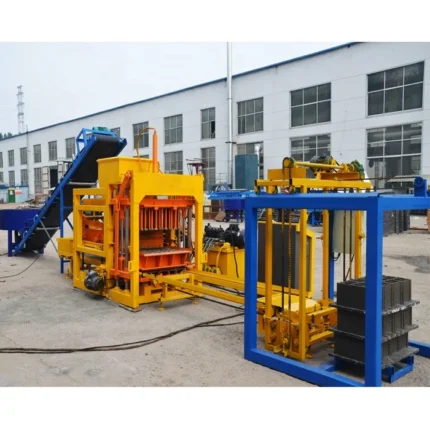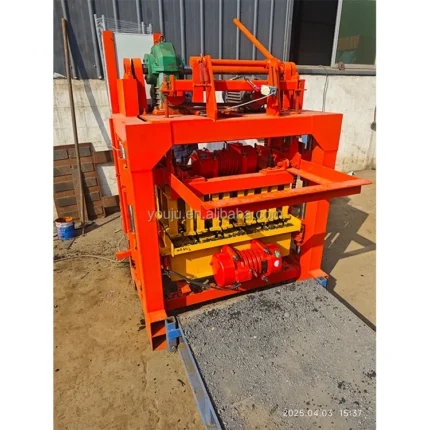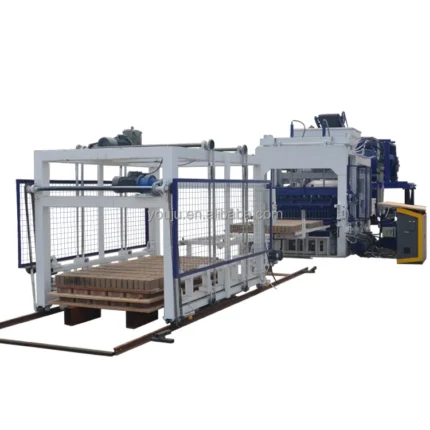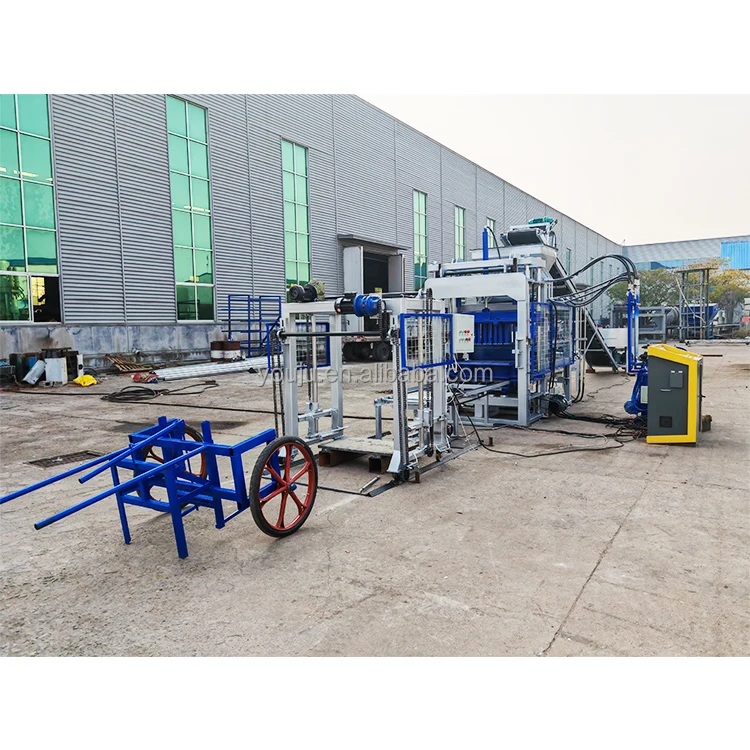


Description
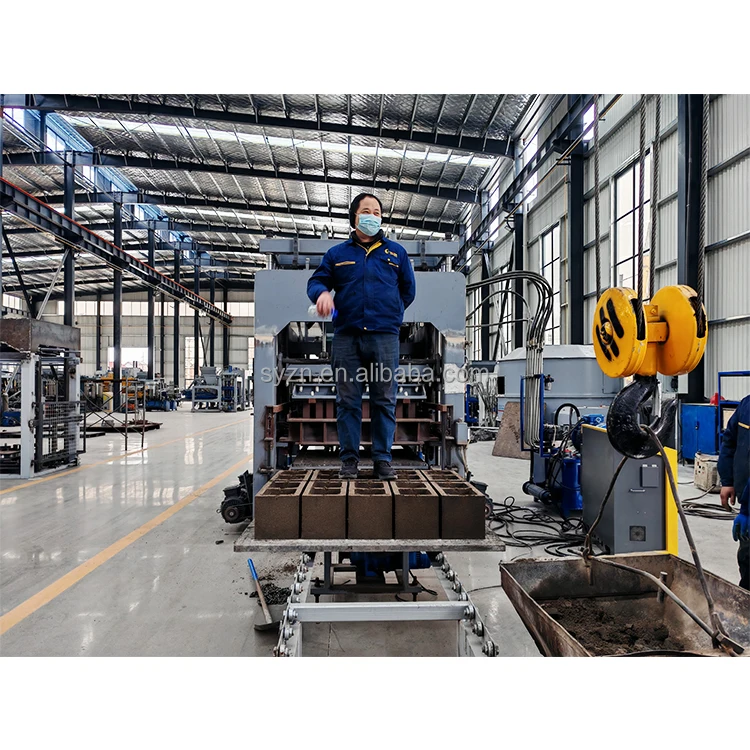
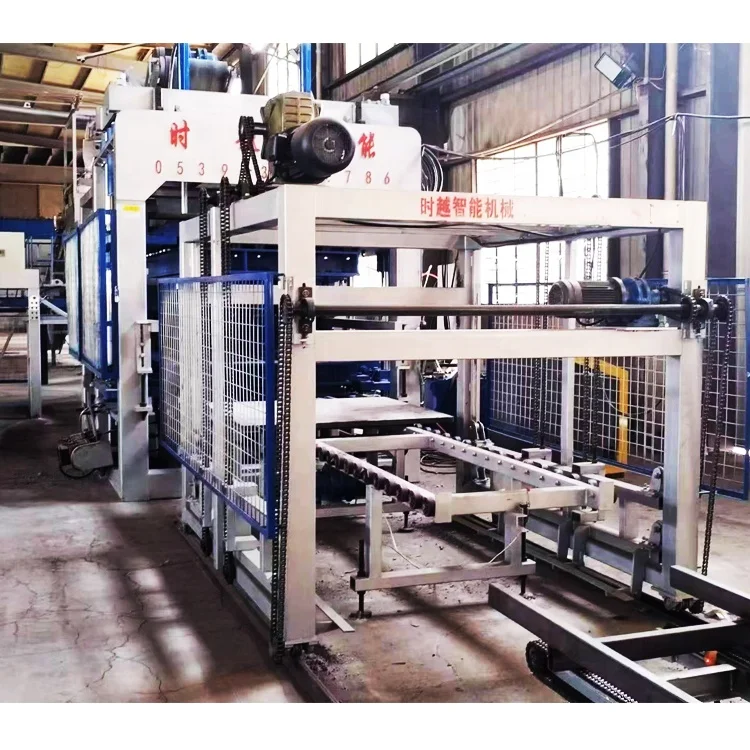
Matched System Engineering — the QT15-15 is configured so PLC logic, vibration tuning, and pallet handling advance together as one coordinated production line rather than isolated stations.
Technical Specifications
| Parameter | Value |
|---|---|
| Model | QT15-15 |
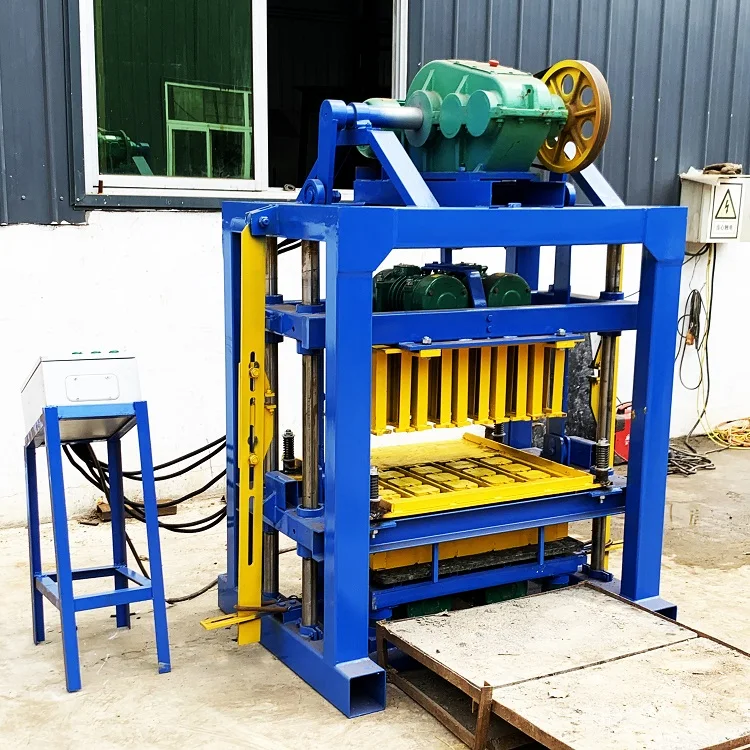
| Product Type | Stationary Concrete Block Making Machine |
| Overall Dimensions (L×W×H) | 9350×2520×2950 mm |
| Net Weight | 15 T |
| Rated Power | 45.7 kW |
| Voltage & Frequency | 380V or configurable to buyer requirements (frequency to be confirmed per target market) |
| Control System | PLC with selectable display language |
| Hydraulic Pressure | 21 MPa |
| Vibration System | Four external vibration motors with individual starting control |
| Upper Mould Synchronization | Dual-side synchronous gear, four-point stabilization |
| Material Feeder | Cylinder with turning arm (European design) |
| Vibration Damping | Airbag system with adjustable air pressure |
| Pallet Size | 1350×850×40 mm |
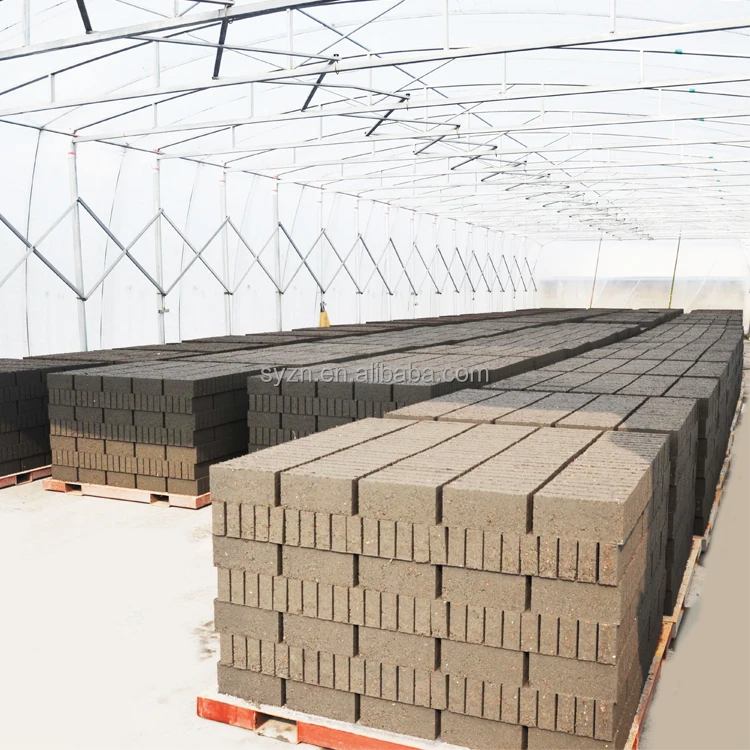
| Output — Hollow Block 400×200×200 mm | 15 pcs/mould, 3600 pcs/hour, 28800 pcs/day |
| Output — Hollow Block 400×150×200 mm | 16 pcs/mould, 4320 pcs/hour, 34560 pcs/day |
| Output — Solid Brick 240×115×53 mm | 62 pcs/mould, 14000 pcs/hour, 112000 pcs/day |
| Cycle Time | Basis to be confirmed per block format |
| Certification | ISO 9001:2008, CE |
| Warranty | 1 year |
Application Suitability
| Application | Material or Output |
|---|---|
| Hollow block production for wall construction | Crushed stone, cement, sand, and water mix |
| Solid brick manufacturing for load-bearing structures | Aggregate blend with cement binder |
| Interlocking paver production for landscaping and roads | Pigmented concrete mix with fine aggregate |
| High-volume block plant operations | Continuous production across multiple block formats |
What "Automatic" Really Means on the Shop Floor
The term automatic QT15-15 block making machine PLC controlled appears on many quotations, but automation scope varies widely between suppliers — clarifying exactly which tasks are machine-driven and which still require manual labour prevents costly staffing surprises at commissioning.
Automation is only meaningful when every station in the line keeps pace with the press cycle.
I once visited a plant where the block press was fully automatic but the pallet return system was manual — two workers spent every shift dragging pallets back to the feeder while the press sat idle waiting. The owner had paid for automation he never received because the quotation listed the press alone. [NEED_CITE: scope of automation in block production line quotations] When a buyer upgrades from semi-automatic operation, the goal is consistent batch-to-batch output with fewer operators, and that only happens when feeding, pressing, stacking, and pallet return are specified as one integrated system.
PLC Logic That Coordinates Every Station
The PLC on the QT15-15 manages more than just the press cycle. It sequences the material feeder, vibration timing, hydraulic head pressure, and pallet advance so each station triggers in relation to the others. When a buyer moves from relay-based controls to PLC, the real gain is not a touchscreen — it is the ability to store recipes for different block formats and recall them without manual timer adjustments across multiple relays.
From Semi-Automatic to Fully Automatic Without Replacing the Press
The automation level is selectable at order stage and can be extended later. A buyer can start with semi-automatic pallet handling and add automatic stacking and cubing as production volume grows. The PLC architecture supports this upgrade path because I/O points for downstream stations are planned into the panel layout from the start, avoiding a full rewiring exercise when the line expands. [NEED_CITE: PLC expansion capacity in block machine control panels]
How Vibration Force and Hydraulic Pressure Shape Block Density
The 21 MPa hydraulic pressure works together with the four external vibration motors to compact the concrete mix inside the mould. Vibration liquefies the mix so it fills the mould cavity, while hydraulic head pressure then squeezes out excess water and increases density. If vibration force is too high relative to the mix design, the block surface tears on demoulding. If pressure is too low, the block leaves the press soft and deforms under its own weight on the pallet. The airbag damping system allows the operator to adjust vibration transmission to match different mix densities and block formats.
The dual-side synchronous gear on the upper mould ensures four-point stabilization, meaning pressure distributes evenly across the entire mould face rather than concentrating on one corner. This matters most on large pallet formats like the 1350×850 mm size used here, where uneven pressure produces blocks that are dense on one side and crumbly on the other.
The Cost of Skipping Voltage and Language Confirmation
A control panel built for one electrical standard does not simply need an adapter to run on another. Frequency differences between 50 Hz and 60 Hz markets affect motor speed, vibration timing, and PLC scan rate. I once configured a QT15-15 for a West African project and caught a language mismatch on the HMI two days before crating — the entire menu tree was in Chinese, and the buyer’s operators spoke French and English. We delayed shipment by forty-eight hours to re-flash the display rather than send a machine that would sit idle while a translator was flown in. [NEED_CITE: PLC display language requirements for export machinery] These are small details on paper but they determine whether a line runs on day one or day ten.
Why Buyers Source the Line Here
Block machinery is our single focus, so the QT15-15 is never quoted as a standalone press — pallet size, automation level, and handling equipment are specified together as one matched system.
Configuration is set against the buyer’s actual mix design and local aggregate rather than a catalogue default, which means vibration and pressure values are adjusted before the machine leaves the factory.
Mould design covers the formats the buyer’s market actually sells, and custom mould drawings are available when standard formats do not match local building codes.
The automation level is selectable, allowing a buyer to begin with semi-automatic operation and add stacking or cubing modules later without replacing the press or control panel.
Installation support includes on-site commissioning and operator training so the line is producing saleable blocks before the technical team leaves.
Documentation & Verification
- Line layout showing station spacing and pallet flow for the QT15-15 configuration
- Capacity calculation sheet stating output per block format with cycle time basis
- PLC I/O list and electrical schematic for local maintenance team reference
- Hydraulic circuit diagram with valve and pump specifications
- Factory test record on buyer’s specified block format before dispatch
- Voltage, frequency, and HMI language confirmation signed before production
Installation, Commissioning & Support
- Foundation plan provided based on 9350×2520 mm footprint and 15 T operating weight
- Dedicated circuit required for 45.7 kW rated power with voltage confirmed pre-production
- Machine ships partially dismantled; reassembly on site with alignment of synchronous gear
- PLC parameters set against buyer’s mix design during first production run
- Operator training covers recipe storage, mould change sequence, and fault diagnostics
- Wear parts list includes vibration motor mounts, hydraulic seals, and mould liner dimensions
Before You Request a Quotation
To configure the QT15-15 correctly, we need to know the block formats your market demands and the daily output you target per format. Share your local aggregate type and cement availability so the vibration and pressure settings can be matched before production. Confirm your site voltage, frequency, and preferred PLC display language — these three items, if missed, delay commissioning more than any mechanical issue.
Frequently Asked Questions
Q: How is the output capacity verified and which block format does each figure assume?
A: Every capacity figure on this page is tied to a specific block dimension. The 28800 pieces per day figure assumes 400×200×200 mm hollow blocks, while 112000 pieces per day assumes 240×115×53 mm solid bricks. We provide a written capacity calculation that states the format, cycle time, and pallet count for your target product before the order is confirmed.
Q: What PLC brand and display language options are available for the target market?
A: The PLC brand is selected based on service availability in your region so local technicians can source replacements. Display language is confirmed in writing before production — options include English, French, Spanish, Arabic, and Russian among others. We verify this at the quotation stage, not after the panel is built.
Q: How does the automation level affect labour requirements on the production line?
A: In semi-automatic mode, operators handle pallet feeding and stacking manually while the PLC manages the press cycle. Adding automatic pallet feeding removes one operator from the pallet return task. Full automatic stacking and cubing removes two more positions. We specify the automation scope in the quotation so you know exactly which tasks remain manual.
Q: What is the upgrade path from semi-automatic to fully automatic stacking and cubing?
A: The control panel is built with reserved I/O points and physical space for downstream modules. When you are ready to add automatic stacking, the stacker and cubing unit connect to the existing PLC without replacing the main panel or rewiring the press. The upgrade can be done during a scheduled production stop.
Q: How are vibration force and hydraulic pressure matched to the buyer’s local aggregate?
A: We ask for a sample of your local aggregate and your preferred cement-to-aggregate ratio before finalizing machine settings. The airbag damping pressure and vibration motor timing are then adjusted so the QT15-15 produces consistent block density with your specific mix. This matching happens at the factory test stage, not on your floor.