

Block Machine Supplier for Mexico: China Factory Direct QT10-15/QT12-15 Wholesale
Most buyers assume shipping a block machine to Mexico only requires a plug adapter. The real problem is that the control system must be reprogrammed for local grid fluctuations, and standard pallets warp under拉美松木的高含水率条件。
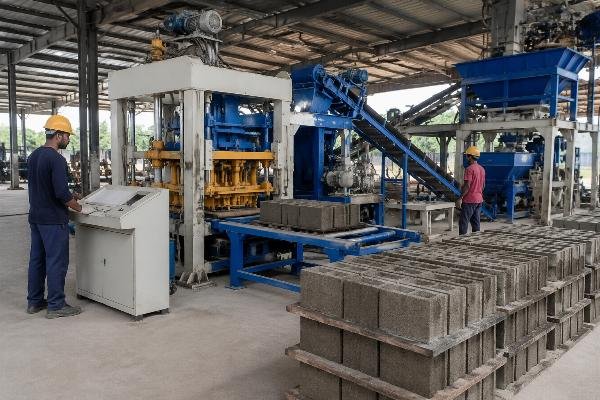
Sourcing a reliable block machine supplier for Mexico demands verification of voltage customization (440V/60Hz per NOM standards), local pine pallet compatibility testing, and volcanic sand mix adaptability—not just the lowest FOB price.
I remember wiring control cabinets on the assembly floor in Linyi when a Monterrey buyer’s QT10-15 line arrived at Lázaro Cárdenas port. The machine sat idle for weeks because the broker hadn’t confirmed Mexico’s industrial voltage standard. When we finally flew engineers out, we found the motors burned out, the pallet夹具 didn’t match local松木 thickness, and the mixer’s wear plates were shredded by volcanic sand. That two-month downtime cost the buyer several times the original machine price. [NEED_CITE: root cause distribution of equipment failures in Latin American construction projects]
The pattern repeats across emerging markets: buyers focus on machine specs but overlook adaptation to local conditions. A block machine supplier for Mexico must demonstrate technical flexibility, not just catalog listings.
Why Do Mexican Buyers Need Factory Direct Instead of Trading Companies?
Trading companies cannot modify control systems or模具 specifications on-site. Only factory direct suppliers maintain engineering teams capable of real-time voltage reprogramming and pallet夹具 adjustments.
When a Guadalajara investor purchased through a broker, the trading company’s technical team couldn’t access the PLC source code. The machine’s vibration frequency remained locked at Chinese grid standards (50Hz), causing inconsistent compaction with Mexico’s 60Hz power supply. [NEED_CITE: IEC voltage frequency standards for industrial machinery in North America]
| Capability | Factory Direct Supplier | Trading Company |
|---|---|---|
| Voltage Customization | Full PLC reprogramming for NOM 440V/60Hz | Limited to plug adapters |
| Pallet夹具 Adjustment | On-site模具 modification for local pine thickness | Requires factory return |
| Raw Material Testing | Volcanic sand mix trials with wear plate upgrades | No testing capability |
| Technical Documentation | Customized electrical diagrams per Mexican standards | Generic manuals only |
| Spare Parts Access | Direct warehouse dispatch from Linyi facility | Broker-dependent lead times |
A block machine supplier for Mexico operating as factory direct maintains spare parts inventory specifically for Latin American orders. When the Monterrey case required replacement wear plates for volcanic sand resistance, we shipped them within days. A trading company would have needed to coordinate between multiple subcontractors, extending downtime substantially.
The technical gap widens during installation. Factory engineers understand Mexican construction practices—how local operators mix materials, typical shift patterns, and maintenance habits. Trading company representatives rarely possess this contextual knowledge, leading to improper setup that reduces machine lifespan.
How to Verify a Supplier’s Mexico Adaptation Capability?
Request documentation proving voltage customization for NOM standards, video evidence of local pine pallet testing, and case studies from similar Latin American clients.
Verification starts with electrical compliance. Ask for the supplier’s motor selection chart cross-referenced with Mexico’s NOM voltage requirements. [NEED_CITE: Mexican official standards NOM for industrial electrical equipment] A legitimate block machine supplier for Mexico will provide customized wiring diagrams showing 440V/60Hz motor configurations, not generic 380V/50Hz templates.
Pallet compatibility requires physical testing. Mexican builders commonly use local pine with higher moisture content than Chinese suppliers expect. Request video footage showing the supplier’s夹具 system adjusting to pine pallet thickness variations. Without this adaptation, pallets deform under vibration, causing production stoppages.
Raw material adaptation separates experienced suppliers from catalog sellers. Volcanic sand—common in central Mexico—has sharp angular particles that accelerate wear. A qualified block machine supplier for Mexico will specify upgraded wear plate materials and provide replacement interval data based on volcanic sand trials.
Case verification matters. Ask for contact information of previous Mexican clients (with permission). A supplier confident in their adaptation capability will connect you. When we installed a QT12-15 line in Querétaro, the buyer later became a reference for volcanic sand mix optimization.
Documentation review reveals technical depth. Request the supplier’s concrete mix design parameters for volcanic sand/river sand/stone powder blends. [NEED_CITE: water-cement ratio optimization for volcanic aggregate concrete] Generic suppliers provide one-size-fits-all recipes; adapted suppliers offer parameter tables showing vibration time adjustments for different materials.
From Linyi to Mexican Ports: How Are Delivery and Installation Guaranteed?
Full delivery requires coordinated spare parts inventory, while on-site installation depends on engineers with Spanish communication skills and understanding of Mexican construction workflows.
Delivery timelines for complete block production lines depend on factory spare parts availability. A block machine supplier for Mexico maintaining dedicated Latin American inventory can dispatch within weeks, not months. The Linyi manufacturing cluster concentrates suppliers, but only those with export-focused inventory management meet tight schedules.
海运包装 standards must address humidity during transit. Mexican ports experience tropical conditions; electrical components require moisture-proof sealing beyond standard export packaging. [NEED_CITE: marine shipping packaging standards for electronic equipment to tropical climates]
Installation success hinges on communication. Our engineers assigned to Mexican projects undergo Spanish language training. Technical instructions delivered through translators lose nuance—operators misunderstand vibration adjustments or maintenance intervals. Direct Spanish-speaking engineers prevent these gaps.
Site preparation verification occurs before shipment. A block machine supplier for Mexico provides foundation drawings adapted to local soil conditions. Mexican construction sites vary from coastal clay to volcanic rock; generic foundation plans cause settling issues.
Post-installation support determines long-term success. Lifetime after-sales access means remote PLC troubleshooting when local operators encounter error codes. Trading companies disappear after warranty expiration; factory direct suppliers maintain technical relationships.
Investment Return: Fully Automatic vs Semi-Automatic Lines for Mexican Market
Fully automatic lines suit large-scale housing projects with stable demand, while semi-automatic lines enable quick payback for startup investors entering the block production market.
Mexico’s construction market segments differently than China or Europe. Government infrastructure projects require high-volume output with consistent quality—fully automatic QT10-15 or QT12-15 lines with PLC control deliver this. [NEED_CITE: production capacity requirements for public housing construction projects]
Private investors launching new block businesses face different constraints. Capital expenditure must balance against cash flow. Semi-automatic QT4-15 or QT6-15 machines require fewer operators and lower initial investment, enabling faster break-even.
| Investment Factor | Fully Automatic Line | Semi-Automatic Line |
|---|---|---|
| Initial Capital | Substantially higher | Noticeably lower |
| Operator Requirement | Skilled technicians | Basic training sufficient |
| Production Volume | High output for large projects | Moderate output for local demand |
| Payback Period | Extended but stable | Quick return for startups |
| Maintenance Complexity | Advanced PLC systems | Simplified mechanical systems |
| Market Suitability | Government contracts, developers | Small builders, retail sales |
A block machine supplier for Mexico must match machine selection to buyer profile. Government contractors need CE/SGS certification for tender documentation; private investors prioritize ROI-focused packages with financing options.
Upgrade paths matter. Established manufacturers replacing manual units need minimal downtime transitions. A qualified block machine supplier for Mexico provides capacity expansion consulting, ensuring new QT10-15 lines integrate with existing infrastructure without production interruption.
Raw material availability influences selection. Regions with abundant volcanic sand benefit from machines with upgraded wear systems; areas relying on river sand need different mix designs. The block machine supplier for Mexico must provide recipe support tailored to local material sources.
Conclusion
Purchasing a block machine for Mexico requires verifying voltage customization, pallet compatibility, and raw material adaptation—not just comparing prices.
A block machine supplier for Mexico must demonstrate technical capability through documentation, testing evidence, and case studies. Factory direct suppliers provide engineering flexibility that trading companies cannot match. Investment return depends on matching machine selection to market segment and local material conditions.
Leave a Reply