

Block Palletizer SONCAP Certified Manufacturer for Sale
Most delays at Lagos ports stem from paperwork typos, not machine defects.
The primary reason block palletizers get stuck in Nigerian customs is a mismatch between the model number on the physical nameplate and the Certificate of Conformity (COC). To clear goods smoothly, importers must ensure that the Proforma Invoice, Bill of Lading, and COC share identical alphanumeric model descriptions before shipment leaves the factory. [NEED_CITE: Nigerian Standards Organization guidelines on document consistency]
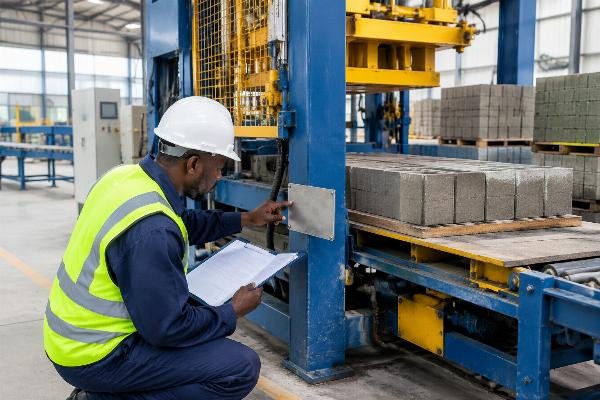
Having spent years overseeing shipments at Apapa and Tin Can Island ports, I have seen perfectly functional machinery sit idle for weeks because of a single character discrepancy. The technical quality of a concrete block machine is irrelevant if the administrative trail is broken. Customs officers do not test the hydraulic pressure or PLC logic during initial clearance; they check if the paper trail matches the steel. This article breaks down the specific administrative hurdles involved in SONCAP certification for block palletizer units and how to navigate them without incurring demurrage charges.
Why Do Block Palletizers Get Stuck at Lagos Port?
Documentation errors account for the vast majority of clearance delays, not technical non-compliance.
The misconception that SONCAP is merely a tax or a fee leads many importers to treat it as an afterthought. In reality, it is a strict verification process where minor typographical errors are treated as potential fraud or misdeclaration. When a shipment arrives, customs officials triangulate data from the Consignment Note, Packing List, and the SONCAP certificate. If any of these documents differ in their description of the goods, the shipment is flagged for physical inspection and possible re-certification. [NEED_CITE: Lagos Port Authority customs procedures for industrial machinery]
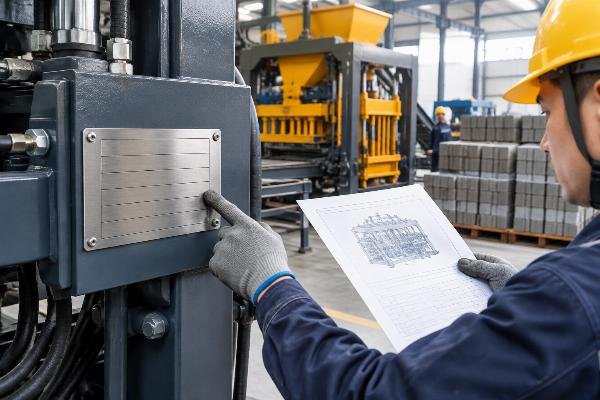
A common scenario involves a block palletizer with the model number QT10-15. If the manufacturer engraves QT10-15A on the nameplate to denote a minor upgrade, but the Proforma Invoice and COC list only QT10-15, the goods are considered non-conforming. This discrepancy, often just two or three characters, can result in delays lasting several weeks. During this time, demurrage charges accumulate, often exceeding the cost of the machine itself. The key to avoiding this is rigorous standardization of naming conventions from the initial quotation stage through to the final inspection.
For buyers seeking a SONCAP certification for block palletizer, the focus must shift from purely technical specifications to administrative precision. The machine’s ability to produce interlocking pavers or standard blocks is secondary to its ability to pass the document check. This requires close collaboration between the buyer’s logistics team and the manufacturer’s documentation department. Any deviation in model numbering must be reflected across all commercial documents before the vessel departs.
What Is the Correct SONCAP Process for Heavy Machinery?
Understanding the transition from Product Certificate to Shipment Certificate is critical for timely clearance.
The SONCAP framework operates on a two-stage verification model: the Product Certificate (PC) and the Shipment Certificate (SC). For heavy industrial equipment like concrete block machines, the PC is obtained by the manufacturer after successful testing of the product design and quality management system. However, the PC alone does not allow goods to enter Nigeria. The importer must convert the PC into an SC for each specific shipment. [NEED_CITE: International Chamber of Commerce trade finance rules on conformity assessment]
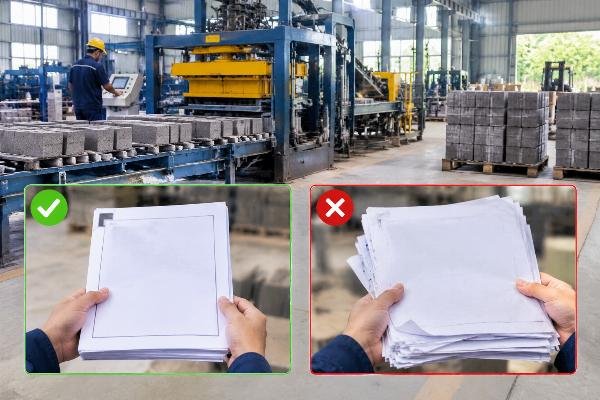
The process begins with the application for an SC, which requires submitting the PC, commercial invoice, packing list, and bill of lading draft to the appointed inspection agency. A pre-shipment inspection is then conducted at the manufacturer’s facility. This inspection verifies that the physical goods match the documentation. For a SONCAP certification for block palletizer, this step is where most errors are caught. If the inspector notes a difference between the nameplate and the invoice, the SC will not be issued until the discrepancy is resolved.
Timing is a crucial factor. The pre-shipment inspection should be scheduled within a specific window before the planned shipment date to ensure that the COC issuance aligns with the Bill of Lading dates. Delays in inspection scheduling can push back the entire shipping timeline. Furthermore, the HS code used in the documentation must accurately reflect the nature of the machinery. Using a generic code for steel structures instead of the specific code for industrial brick-making machinery can trigger higher duty rates and more intense scrutiny. [NEED_CITE: Nigerian Customs Service tariff classification guidelines]
Buyers must ensure that their freight forwarders are aware of the specific requirements for heavy machinery. Unlike consumer goods, block palletizers require detailed technical drawings and operational manuals to be included in the documentation package. Failure to provide these can lead to requests for additional information, further delaying the issuance of the SC.

How to Ensure Model Numbers Match Across All Documents?
Standardizing naming conventions from Proforma Invoice to Physical Nameplate prevents costly discrepancies.
The most effective way to avoid clearance issues is to enforce a strict naming convention across all stages of the transaction. This begins with the Proforma Invoice. The model number listed here must be identical to the one that will be engraved on the machine’s nameplate. Manufacturers often use internal codes for different configurations, such as adding suffixes for voltage variations or mold types. These internal distinctions should not appear on the external documentation unless they are part of the registered model name with SON. [NEED_CITE: Best practices for export documentation consistency]
In one instance, a client ordered a fully automatic line where the palletizer was designated as QT12-15 in the contract. However, the factory’s production team labeled it QT12-15-V2 to indicate a second-version PLC update. The inspection agency flagged this as a mismatch. The resolution required a formal letter from the manufacturer explaining the equivalence, which delayed the shipment by over two weeks. To prevent this, manufacturers like Shiyue adopt standardized naming conventions for their QT series palletizers, ensuring that the document description matches the physical label exactly.
When dealing with a SONCAP certification for block palletizer, buyers should request a pre-inspection photo of the nameplate. This allows them to verify the engraving before the inspector arrives. If any changes are made to the machine’s configuration after the initial order, the documentation must be updated immediately. This includes revising the commercial invoice and packing list to reflect the new model number or specification.
Additionally, the description of goods in the Bill of Lading must mirror the COC. Freight forwarders sometimes abbreviate descriptions to save space or fit character limits. This practice is dangerous for SONCAP-regulated goods. The full model number and description must be preserved in the Bill of Lading to ensure seamless matching during customs clearance.
What Are the Common Pitfalls in HS Code Classification?
Using specific industrial machinery codes avoids unnecessary scrutiny and incorrect duty assessments.
Misclassification of HS codes is another frequent cause of delays and increased costs. Concrete block machines and their auxiliary equipment, such as palletizers, fall under specific categories for industrial machinery. Using a generic code for "parts of machines" or "steel structures" can lead to customs officers questioning the nature of the goods. This often results in a physical inspection to verify the contents, which adds time and expense to the clearance process. [NEED_CITE: World Customs Organization harmonized system explanations for construction machinery]
The correct HS code for a block palletizer typically aligns with machinery for working concrete or masonry. Importers should consult with local customs brokers in Nigeria to confirm the current preferred code. It is important to note that the palletizer is often part of a larger production line. If shipped separately, it must still be declared with its specific function. Bundling it under a general "block machine" code without specifying the palletizing function can raise red flags if the physical inspection reveals a distinct unit.
For those navigating SONCAP certification for block palletizer requirements, clarity in description is key. The HS code should be supported by a detailed product description that highlights the machine’s automated function. This helps customs officers quickly identify the goods as legitimate industrial equipment rather than miscellaneous metal parts. Providing technical brochures and operation manuals alongside the customs declaration can further facilitate this identification process.
Moreover, duty rates vary based on the HS code. An incorrect classification can lead to overpayment of duties or, worse, accusations of under-declaration if the correct code carries a higher rate. Ensuring that the HS code on the COC matches the one on the import declaration is essential for smooth processing. Any discrepancy here will require amendment of the COC, which is a time-consuming process involving the inspection agency and SON.
Conclusion
Precise documentation is the cornerstone of successful customs clearance for industrial machinery.
Avoiding delays at Lagos port requires meticulous attention to detail in every document associated with the shipment. From the initial Proforma Invoice to the final Bill of Lading, consistency in model numbers and HS codes is non-negotiable. By understanding the SONCAP process and enforcing strict naming conventions, importers can ensure that their SONCAP certification for block palletizer units facilitate rather than hinder their operations.


Leave a Reply