

Concrete Mixer for Block Line Storage Handling Wholesale Supplier
Cleaning the drum is not enough to prevent startup failure.
Proper off-season storage for a concrete mixer requires specific mechanical adjustments to hopper geometry and feeder calibration, not just surface cleaning. Ignoring static-induced material compaction and seal degradation leads to aggregate segregation and ratio errors upon restart, causing immediate production downtime and wasted batches.
I once spent three days crouching in a brick plant workshop in Jakarta, watching a client’s new block line fail repeatedly. The mixer had sat idle for two months during a project pause. When they restarted, the output was inconsistent. The aggregates were segregating, and the water-cement ratio fluctuated wildly. The bricks crumbled under light pressure. The client was furious, pointing at the pile of wasted material. The issue was not the mixer itself, but how it had been stored and prepared for restart. Most operators assume that covering the equipment and wiping it down is sufficient. In reality, the true cause of failure is often static-induced material compaction in hoppers and mechanical drift in feeders. This experience highlighted the critical need for precise technical protocols during idle periods. [NEED_CITE: common causes of concrete mixer failure after idle periods]

Understanding these hidden risks is essential for any plant manager or technical lead. A concrete mixer for block line storage handling wholesale supplier must provide more than just hardware; they must offer the knowledge to maintain system integrity during shutdowns. Without proper preparation, even the most advanced PLC-automated lines can fail to meet production targets immediately after restart.
Why Does My Mixer Fail After Storage?
Startup failures are rarely due to major mechanical breakdowns but rather subtle calibration drifts and material bridging.
When a concrete mixer sits idle, several invisible changes occur. The most common misconception is that if the machine looks clean, it is ready to run. However, residual moisture and fine particles can harden in dead zones, creating bridges that disrupt flow. Additionally, mechanical components such as vibration feeders and seals can degrade or shift out of alignment without use. [NEED_CITE: impact of idle time on batching system accuracy]
In many emerging markets, seasonal shutdowns or project pauses are common. During these periods, the lack of regular movement allows materials to compact. When the system restarts, the initial batches suffer from severe segregation. Coarse aggregates may flow faster than fines, or vice versa, depending on the hopper geometry and vibration settings. This leads to inconsistent block quality. For a concrete mixer for block line storage handling wholesale supplier, addressing these issues is part of ensuring long-term customer success.
The integration between the mixer and the batching system is delicate. If the mixer output does not match the scale feedback, the entire production line suffers. Recalibrating these systems post-storage is not optional; it is a necessity for maintaining product quality. Plant managers who overlook this step often face costly rework and delayed project timelines.
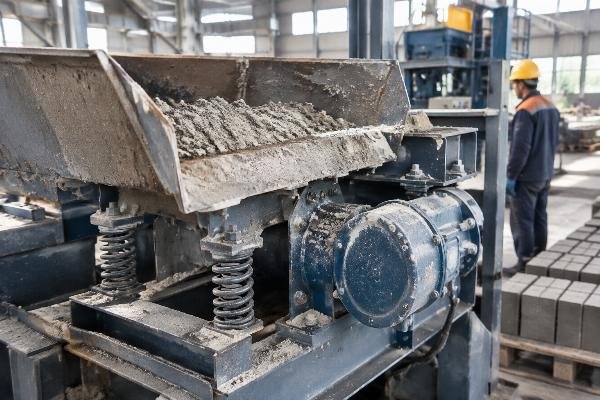
Recognizing these risks early can save significant time and resources. It shifts the focus from reactive repairs to proactive maintenance. By understanding the root causes of post-storage failures, operators can implement effective prevention strategies. This approach ensures that the concrete mixer for block line storage handling wholesale supplier delivers value beyond the initial purchase.
How to Inspect Hopper Geometry for Flow Issues
Check cone angles and remove compacted residues to prevent material bridging.
Hopper geometry plays a crucial role in material flow. A standard cone angle may work well during continuous operation but can lead to dead zones during intermittent use. In one case, a client faced severe segregation after a two-month idle period. The issue was traced back to the hopper cone angle, which was too shallow for the specific aggregate mix being used. Adjusting the angle to a steeper gradient reduced dead zones and improved flow consistency. [NEED_CITE: optimal hopper cone angles for different aggregate types]
To inspect hopper geometry effectively, follow these steps:
- Visual Inspection: Check for any visible buildup or hardening of material on the hopper walls. Use a flashlight to inspect dark corners and weld seams.
- Angle Measurement: Verify the cone angle against manufacturer specifications. If segregation persists, consider adjusting the angle to a steeper gradient. This may require modifying the hopper liner or adding flow aids.
- Surface Smoothness: Ensure the interior surface is smooth and free from rust or pitting. Rough surfaces can trap fine particles, leading to bridging.
- Flow Test: Perform a dry flow test with a small batch of aggregate. Observe the flow pattern for any irregularities or stoppages.
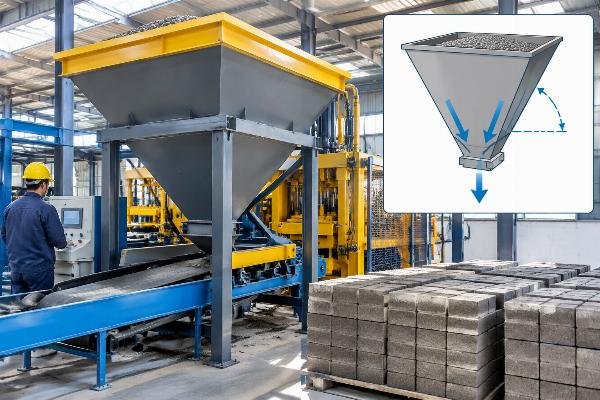
These inspections should be part of the standard pre-start checklist. Ignoring hopper geometry can lead to persistent flow issues that affect the entire production line. For a concrete mixer for block line storage handling wholesale supplier, providing guidance on hopper maintenance is a key service differentiator. It helps customers avoid common pitfalls and ensures smoother operations.
Recalibrating Feeder Rhythms for Accurate Batching
Sync vibration frequency with scale feedback to ensure consistent material delivery.
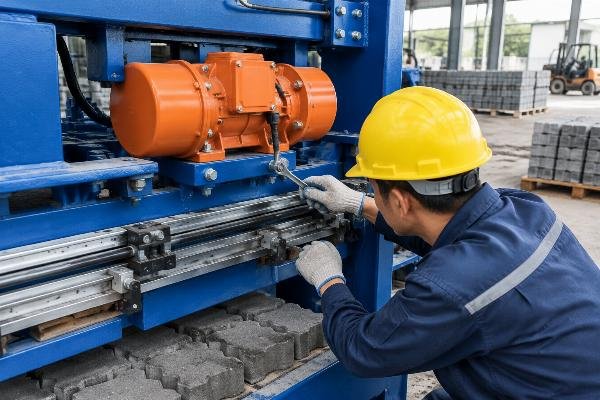
Vibration feeders are sensitive to changes in material properties and mechanical condition. After a period of idle time, the natural frequency of the feeder may shift, leading to inconsistent flow rates. In another instance, a client’s mixer output did not match the scale feedback post-storage. The solution was to recalibrate the vibration feeder frequency to match the current material flow rate. [NEED_CITE: procedure for calibrating vibration feeders in batching systems]
The recalibration process involves:
- Initial Setup: Set the feeder to a low frequency and gradually increase it while monitoring the flow rate.
- Scale Feedback: Compare the actual weight delivered by the feeder with the scale reading. Adjust the frequency until the two values align.
- Material Variation: Account for variations in aggregate size and moisture content. These factors can affect the flow characteristics and require minor adjustments.
- Verification: Run several test batches to ensure consistency. Record the optimal frequency settings for future reference.

This step is critical for maintaining accurate batching ratios. Even small deviations can lead to significant quality issues in the final product. By synchronizing the feeder rhythm with the scale feedback, operators can ensure that each batch meets the specified mix design. This level of precision is what distinguishes a high-quality concrete mixer for block line storage handling wholesale supplier from a basic equipment provider.
Essential Pre-Start Checks for Seals and Lubrication
Prevent ratio fluctuations and mechanical wear by inspecting seals and lubricating moving parts.
Seals and lubrication points are often overlooked during storage preparation. Dried-out seals can lead to water or cement leakage, causing ratio fluctuations. In the Jakarta case, the water-cement ratio fluctuated due to degraded seals. Implementing a pre-start lubrication protocol resolved the issue. [NEED_CITE: maintenance checklist for concrete mixer seals and bearings]
Key inspection items include:
- Seal Integrity: Check all seals for cracks, hardness, or deformation. Replace any damaged seals before starting the machine.
- Lubrication Points: Apply fresh grease to all bearing and moving parts. Ensure that old, hardened grease is removed to prevent contamination.
- Water System: Inspect water pipes and valves for leaks or blockages. Clean any filters or nozzles to ensure proper flow.
- Electrical Connections: Check all electrical connections for corrosion or loose terminals. Tighten as necessary and apply dielectric grease to protect against moisture.
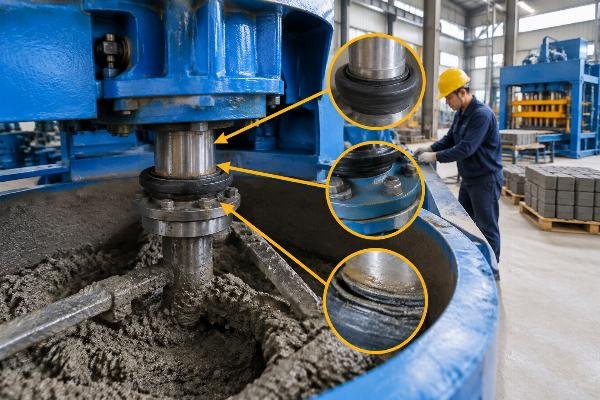
These checks are simple but vital. They prevent unexpected failures and extend the lifespan of the equipment. For a concrete mixer for block line storage handling wholesale supplier, emphasizing these maintenance steps demonstrates a commitment to customer success. It helps buyers maximize their return on investment and minimize downtime.
When to Call for Professional Commissioning Support
Recognize signs of systemic misalignment that require expert intervention.
Despite best efforts, some issues may persist after following standard storage and restart protocols. Signs such as persistent segregation, unexplained calibration drifts, or unusual noises indicate deeper problems. In such cases, professional commissioning support is necessary.
Shiyue offers remote diagnostic assistance and on-site training services to resolve complex integration issues quickly. Our technical team can analyze data logs, perform virtual inspections, and guide local technicians through advanced troubleshooting steps. This support ensures that your concrete mixer for block line storage handling wholesale supplier investment continues to deliver value long after the initial installation.
Knowing when to seek help is a sign of operational maturity. It prevents minor issues from escalating into major failures. By leveraging professional support, plant managers can maintain high production standards and avoid costly downtime. This collaborative approach strengthens the partnership between the buyer and the concrete mixer for block line storage handling wholesale supplier.
Conclusion
Proper storage and recalibration are non-negotiable for consistent block production.
Off-season storage demands more than just covering equipment. It requires specific mechanical adjustments to prevent material bridging and calibration drift. By inspecting hopper geometry, recalibrating feeder rhythms, and checking seals, operators can ensure immediate production readiness. These steps protect the integrity of the mix and the efficiency of the line. For those facing complex issues, professional support provides a reliable path to resolution. This disciplined approach ensures that every batch meets quality standards, safeguarding the investment in your concrete mixer for block line storage handling wholesale supplier.

Leave a Reply