

Curbstone Machine Bulk Sourcing for Indonesia Manufacturing
The cheapest machine is often the most expensive mistake.
For Indonesian contractors importing from China, selecting the right curbstone manufacturing process—specifically choosing between slipform and precast vibration technology—is significantly more critical than negotiating the lowest equipment price. Bulk sourcing decisions must prioritize工艺 compatibility with local labor skills and site logistics to prevent operational bottlenecks, payment delays, and production failures.
I still remember the humidity in the workshop in Linyi, where I first assembled the hydraulic units for QT6-15 block machines. The metal was cold, but the pressure gauges told a story of immense force. Years later, standing on a muddy construction site in Jakarta, I watched that same type of machinery sit idle. A municipal contractor had insisted on using a traditional vibration table setup for high-volume road projects. He believed the lower upfront cost would save his budget. Instead, he faced a crisis: the curing area was overwhelmed, pallets were missing, and daily output targets were missed by a wide margin. The tail payment was delayed for months not because of malice, but because the production line could not deliver the promised volume. It was only after we switched him to a slipform solution that the bottleneck cleared. This experience highlights why curbstone machine bulk sourcing Indonesia requires a deep understanding of process dynamics, not just a catalog review.
Understanding this distinction is the first step toward a successful import strategy. Let us break down why process selection dictates your ROI.
Why Process Selection Matters More Than Price in Indonesia?
Many buyers focus intensely on the FOB price of the machine, overlooking the operational ecosystem required to keep it running. In the Indonesian context, where labor costs are moderate but logistical efficiency can be challenging, the choice of technology defines your overhead.
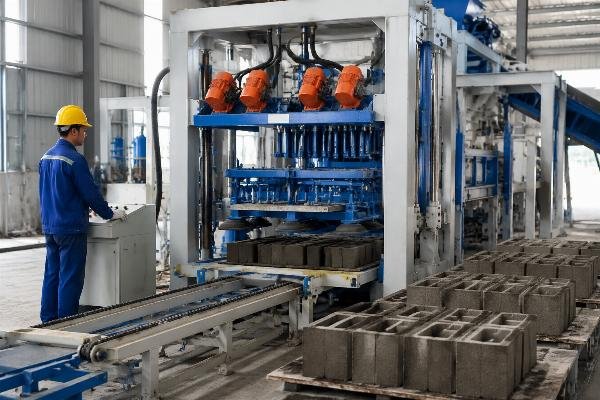
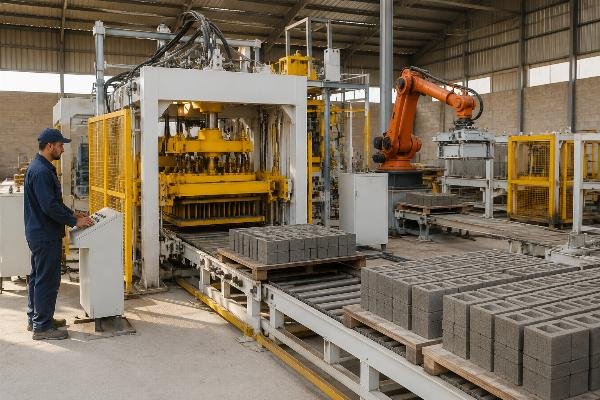
Consider the case of a precast startup in Surabaya. They opted for a versatile QT6-15 machine to produce both pavers and curbstones. The machine itself was robust and performed well. However, they underestimated the logistics of handling thousands of wooden pallets required for the precast process. Each curbstone needed to be cast on a pallet, moved to a curing yard, stored for days, and then stripped. The warehouse space required for these pallets increased their operational costs noticeably. They found themselves managing a pallet inventory rather than a construction material business.
In contrast, a road project in Sumatra imported a full slipform line. This technology extrudes curbstones continuously directly onto the prepared subgrade or a moving belt, eliminating the need for pallets entirely. The operator training provided was comprehensive, focusing on concrete mix consistency rather than mechanical handling. As a result, the project achieved break-even in a relatively short period due to minimized downtime and reduced storage needs. [NEED_CITE: impact of pallet logistics on precast plant OPEX]
When engaging in curbstone machine bulk sourcing Indonesia, buyers must ask: Do I have the space for curing and pallet storage? Or do I need immediate, continuous output? The answer determines whether you should look at vibration tables or slipform extruders.
Slipform vs. Vibration Table: Which Fits Your Site?
To make an informed decision, we must compare the two dominant technologies. This is not about which machine is "better," but which one fits your specific site conditions and labor profile.
| Feature | Slipform Technology | Vibration Table (Precast) |
|---|---|---|
| Production Method | Continuous extrusion | Batch casting |
| Pallet Requirement | None | High volume required |
| Curing Space | Minimal (immediate demolding) | Extensive (days of storage) |
| Labor Skill Level | Moderate (focus on mix & speed) | High (handling & stripping) |
| Output Consistency | High speed, uniform profile | High precision, varied shapes |
| Logistics Cost | Noticeably reduced | Substantially higher |
[NEED_CITE: technical comparison of slipform vs precast curbstone production methods]
A Jakarta-based contractor once struggled with a vibration table setup. The issue was not the machine’s quality, but the curing bottleneck. In tropical climates, concrete cures faster, but the sheer volume of wet products requiring space created a traffic jam in the yard. Switching to slipform allowed them to reduce curing time effectively because the product was stable enough to handle almost immediately after extrusion. This shift cut their logistical footprint dramatically.
However, vibration tables remain superior for complex, decorative curbstones that require intricate molds and high surface finish quality. If your project demands aesthetic variety over sheer volume, precast is the way. But for standard road barriers and drainage curbs, slipform offers a streamlined workflow. When evaluating curbstone machine bulk sourcing Indonesia, match the technology to your product mix.
Key Specs for Bulk Sourcing from China
Once the technology is selected, the next step is defining the technical specifications. Many buyers get lost in marketing jargon. Focus on three core areas: PLC stability, mold durability, and after-sales support structure.
First, the PLC (Programmable Logic Controller) is the brain of the machine. In humid and dusty environments common in Southeast Asia, the electrical components must be sealed and robust. Look for brands with proven track records in industrial automation. A unstable PLC leads to frequent stops and diagnostic headaches. [NEED_CITE: importance of PLC reliability in tropical construction machinery]
Second, mold durability is critical. Curbstones are dense and heavy. The molds undergo significant stress during vibration or extrusion. High-quality steel with proper heat treatment ensures the mold maintains its dimensions over thousands of cycles. Cheap molds deform, leading to inconsistent product sizes and rejection rates.
Third, consider the support structure. Does the supplier offer remote diagnostic assistance? Can they provide spare parts via express shipping? For instance, Shiyue’s QT series machines are designed with modular components that simplify maintenance. Their turnkey training programs ensure that local operators understand not just how to push buttons, but how to troubleshoot common issues. This reduces dependency on foreign technicians and minimizes downtime.
When discussing curbstone machine bulk sourcing Indonesia, request detailed specs on the hydraulic system pressure ratings and the thickness of the mold steel. These details reveal the manufacturer’s commitment to quality.
Avoiding Hidden Costs in Import & Installation
The sticker price is rarely the final cost. Hidden expenses often emerge during shipping, customs clearance, and installation.
Shipping terms matter. While FOB might look cheaper, DDP (Delivered Duty Paid) can sometimes be more cost-effective when factoring in local handling fees and customs brokerage in Indonesia. Ensure you understand who bears the risk at each stage. [NEED_CITE: common hidden costs in importing construction machinery to Indonesia]
Installation is another area where costs spiral. A machine sitting in a crate is useless. You need a team that can assemble, align, and commission the equipment quickly. Some suppliers include installation in the package, while others charge extra. More importantly, operator training is essential. Without proper training, even the best machine will be operated inefficiently, leading to premature wear and low output.
A common mistake is underestimating the foundation requirements. Heavy vibration machines need solid concrete foundations to prevent energy loss and structural damage. Slipform machines, being lighter, may have different requirements. Verify these specs before preparing your site.
How to Validate Supplier Credibility Before Payment?
Trust but verify. The internet is full of trading companies posing as manufacturers. To ensure you are dealing with a genuine producer, take these steps.
First, check for CE and SGS certifications. These are not just badges; they indicate adherence to international safety and quality standards. Request the actual certificates and verify their validity. [NEED_CITE: role of CE and SGS certification in verifying Chinese machinery suppliers]
Second, ask for video evidence of the factory floor. Look for active assembly lines, quality control stations, and inventory of raw materials. A real manufacturer will have no problem providing live video tours.
Third, request references from clients in similar regions. A supplier with experience in Southeast Asia will understand the specific challenges of the market, such as voltage fluctuations or humidity protection. Shiyue, for example, has served multiple regions including Southeast Asia, offering turnkey solutions that account for these local factors.
Finally, start with a smaller order if possible, or visit the factory in person. Seeing the production process firsthand builds confidence and allows you to assess the build quality directly. When navigating curbstone machine bulk sourcing Indonesia, credibility checks are your best insurance against fraud and poor quality.
Conclusion
Success lies in matching technology to terrain.
Importing curbstone machinery into Indonesia is not merely a transaction; it is a strategic integration of technology, logistics, and local operations. By prioritizing process compatibility over initial price, validating supplier credibility through rigorous checks, and planning for hidden logistical costs, contractors can secure a reliable production asset. Whether choosing slipform for efficiency or vibration for precision, the right choice ensures sustainable growth and project success.
Leave a Reply