

Manual Brick Machine Parts Replacement Schedule & Spares for Sale
Your factory calendar is lying to you.
A rigid, date-based replacement plan fails in extreme environments because ambient temperature and daily output volume dictate wear rates far more accurately than the number of days on a clock. To optimize uptime, you must shift from a static schedule to a dynamic maintenance log that tracks hydraulic seal degradation against heat exposure and mold liner loss against production cycles.
I still remember the dust storms in Riyadh that seemed to find their way into every crevice of the precast plant I was visiting. The local operator was frustrated, swapping out hydraulic O-rings every few weeks, convinced the quality of the imported seals was poor. He pointed to the cracked rubber, blaming the supplier. But when I checked the grease bucket sitting next to the machine, it was thick, standard-viscosity lubricant meant for temperate European winters, not the scorching desert afternoon. The heat had thinned the grease, allowing metal-to-metal contact that accelerated seal failure. This wasn’t a parts quality issue; it was a maintenance mismatch. That observation reshaped how I approach the manual brick machine component replacement schedule. It is not about following the manual blindly; it is about reading the machine’s response to its specific environment.
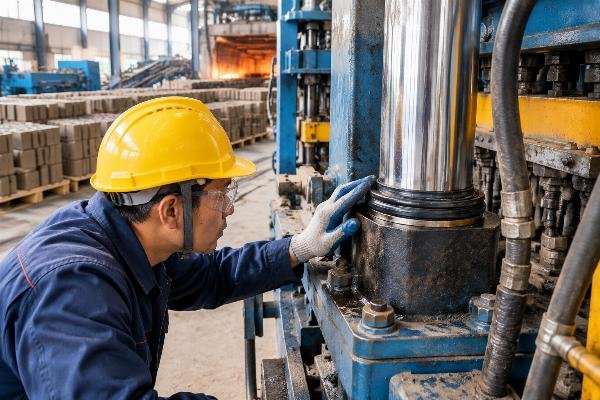
Understanding this distinction is critical for plant managers in MENA, Africa, and other hot climates. The following guide breaks down the critical components that require attention, moving beyond generic advice to field-tested indicators that signal when a part has reached the end of its useful life.
Why Standard Schedules Fail in Extreme Conditions?
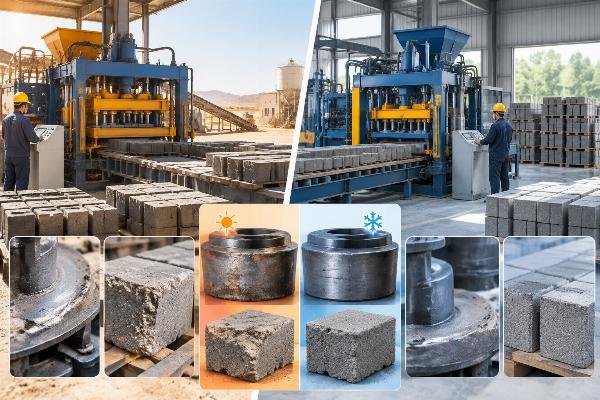
Factory default maintenance schedules are typically designed for controlled indoor environments with moderate temperatures and consistent humidity. When you deploy a manual or semi-automatic block machine in a region with high ambient temperatures and abrasive dust, the wear mechanisms change fundamentally. Heat accelerates the oxidation of rubber compounds, while dust acts as an abrasive paste when mixed with lubricants. [NEED_CITE: impact of ambient temperature on elastomer degradation rates]
In a temperate climate, a hydraulic hose might last for years. In a desert environment, the same hose can become brittle and crack within months if not protected. The standard schedule says "inspect annually," but the reality on the ground demands weekly visual checks during peak summer. Ignoring this environmental factor leads to unexpected downtime that costs far more than the price of a premature replacement.
The key is to adjust your expectations based on two variables: temperature and volume. If your plant operates in high heat, you must shorten the inspection intervals for all rubber and plastic components. If your production volume is high, you must track wear on steel components by cycle count rather than time. This dynamic approach ensures that you replace parts before they fail, but not so early that you waste money on components that still have service life remaining.
Critical Components: When to Replace Seals and Hoses?
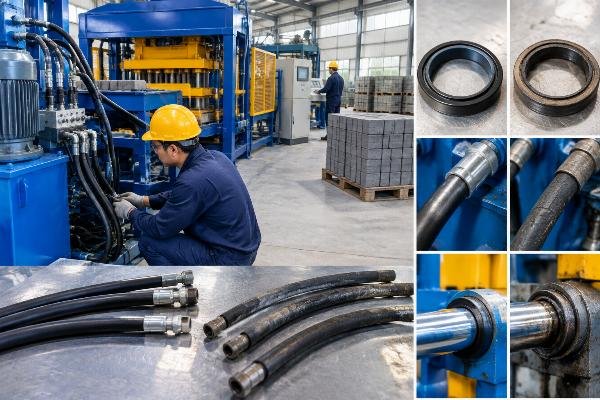
Hydraulic systems are the heart of any block making machine, and seals are the most vulnerable points. Most operators assume seals fail due to manufacturing defects, but the primary cause is often incorrect lubrication or heat degradation. [NEED_CITE: common causes of hydraulic seal failure in construction equipment]
Instead of waiting for a leak, look for these visual signs:
- Hardening and Cracking: Touch the exposed part of the O-ring or wiper seal. If it feels hard like plastic rather than flexible rubber, it has lost its elasticity. In high temperatures, this happens quickly. Once cracking is visible, immediate replacement is necessary to prevent fluid loss and contamination.
- Swelling: If the seal appears larger than its groove, it may have absorbed incompatible fluids or degraded due to chemical reaction with low-quality hydraulic oil. Swollen seals lose their sealing ability and can cause erratic machine movement.
- Discoloration: Darkening or blackening of the seal material indicates thermal breakdown. This is a clear sign that the operating temperature exceeds the seal’s rating, or that friction heat is not being dissipated properly.
For hoses, check for surface cracks, bulges, or soft spots. A bulge indicates internal reinforcement failure, which is a safety hazard. Do not wait for a burst. Replace any hose showing signs of external damage immediately.
When sourcing replacements, ensure the material specification matches your environment. Standard Nitrile (NBR) seals may suffice for moderate conditions, but for high-temperature zones, Viton (FKM) seals offer superior resistance. This is where having access to a reliable manual brick machine component replacement schedule that specifies material grades becomes essential. It prevents the mistake of installing standard parts in extreme conditions, only to repeat the failure cycle.
Mold Maintenance: Balancing Wear and Precision?
Molds are expensive, and many operators run them until they physically break. This is a costly error. Molds affect product quality long before they suffer structural failure. The critical metric is dimensional wear, not just visible damage. [NEED_CITE: tolerance deviation standards for concrete block molds]
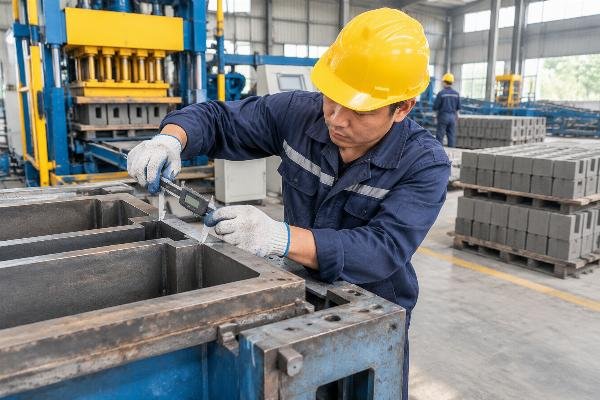
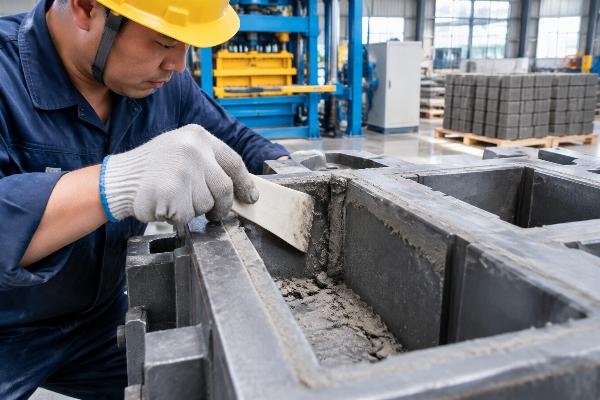
As the mold liner wears, the dimensions of the blocks drift. This leads to inconsistent block sizes, which can cause issues in stacking, palletizing, and ultimately, customer rejection. In high-volume production, this wear happens faster. You should measure the internal dimensions of the mold regularly using calipers. Compare these measurements to the original specifications.
If the deviation exceeds the acceptable tolerance for your product type, it is time to refurbish or replace the liners. Refurbishment can extend the life of the mold frame, but the liners themselves are consumable items. Tracking this wear rate allows you to budget for replacements accurately and avoid sudden production stops due to out-of-spec products.
Another sign of mold wear is surface pitting or roughness. This affects the finish of the block, making it less appealing to buyers. Smooth, well-maintained molds produce higher-quality blocks that command better prices. Therefore, mold maintenance is not just a technical issue; it is a commercial one. Integrating mold inspections into your manual brick machine component replacement schedule ensures consistent product quality and protects your brand reputation.
The Hidden Killer: Vibration and Fastener Integrity?
Vibration is inherent to the block making process, especially in machines with vibrating tables. This constant shaking loosens bolts and fasteners over time. If left unchecked, this can lead to frame misalignment, increased wear on other components, and even structural failure. [NEED_CITE: effects of vibration on bolted joints in heavy machinery]
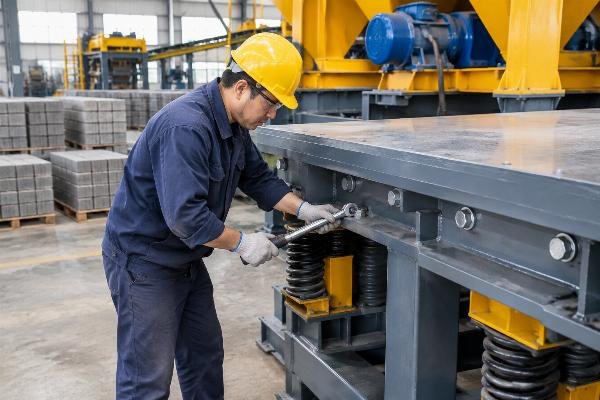
Many operators ignore this until a major problem occurs. However, a simple weekly torque check can prevent significant damage. Use a torque wrench to check the critical bolts on the vibrating table, mold clamps, and frame connections. Refer to the manufacturer’s specifications for the correct torque values. Over-tightening can strip threads, while under-tightening allows movement that causes wear.
Pay special attention to the bolts securing the mold to the vibrating table. These experience the highest stress levels. If these bolts loosen, the mold can shift during operation, causing uneven compaction and potential damage to the mold or the machine frame. Regular tightening ensures that the machine operates as designed, maintaining efficiency and prolonging the life of all components.
This aspect of maintenance is often overlooked because it seems minor. However, the cumulative effect of loose fasteners is substantial. By including fastener checks in your manual brick machine component replacement schedule, you address a hidden risk that can save you from costly repairs and downtime. It is a small effort with a large return on investment.
Creating Your Custom Maintenance Log?
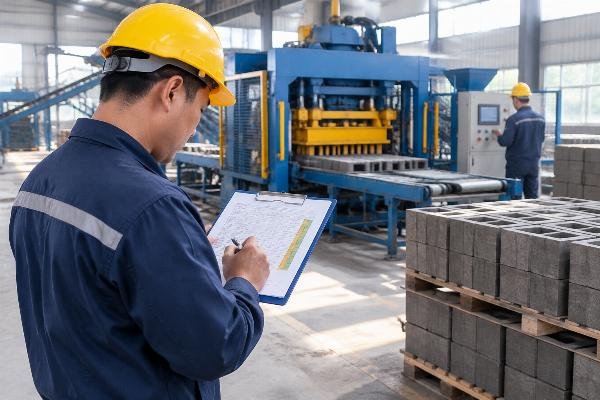
A generic checklist is not enough. You need a log that reflects your specific operating conditions. Start by recording the daily output volume and the ambient temperature. Then, track the lifespan of each critical component. Over time, you will see patterns emerge. For example, you might notice that hydraulic seals last three months in summer but six months in winter. Or that mold liners need replacement after a certain number of cycles, regardless of time.
Use this data to create a dynamic schedule. Instead of saying "replace seals every six months," your log might say "replace seals when hardness increases by X%" or "after Y hours of operation in temperatures above Z degrees." This approach is more accurate and cost-effective.
To help you get started, consider using a template that tracks:
- Date of installation
- Operating hours/cycles
- Ambient conditions
- Visual inspection results
- Date of replacement
This log becomes a valuable tool for predicting future maintenance needs and budgeting for spare parts. It also helps in diagnosing problems when they occur, as you have a history of what was done and when. For those who find this daunting, specialized support can simplify the process. Providers like Shiyue offer remote diagnostic assistance and customized spare parts kits that align with these dynamic logs, helping clients build their specific maintenance strategies without starting from scratch. This integration of practical tracking with accessible support ensures that your manual brick machine component replacement schedule is not just a document, but a living tool for operational excellence.
Conclusion
Maintenance is not about following a calendar; it is about understanding your machine’s environment.
By shifting from static dates to dynamic indicators like heat exposure and cycle counts, you prevent unexpected failures and optimize part lifespan. Focus on visual signs for seals, dimensional precision for molds, and torque integrity for fasteners. Build a custom log that reflects your reality, and let data drive your decisions. This proactive approach ensures your manual brick machine remains a reliable asset, delivering consistent quality and maximizing your return on investment.
Leave a Reply