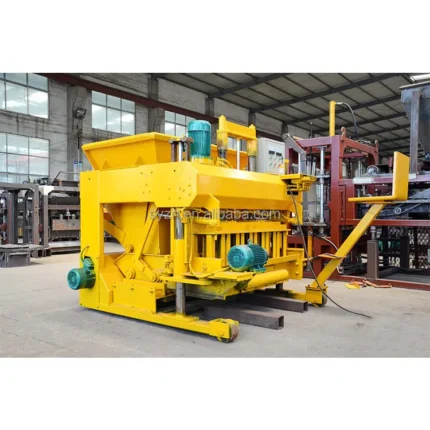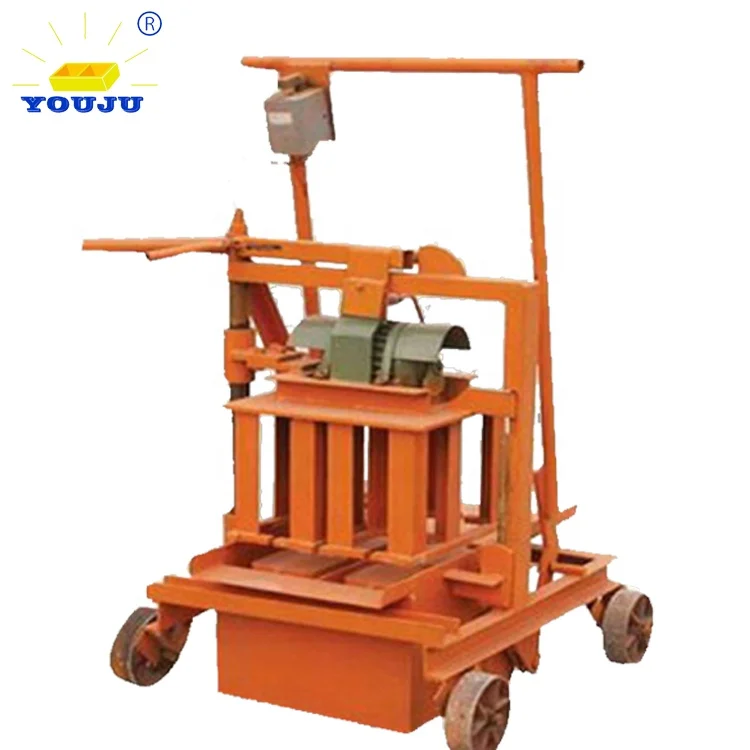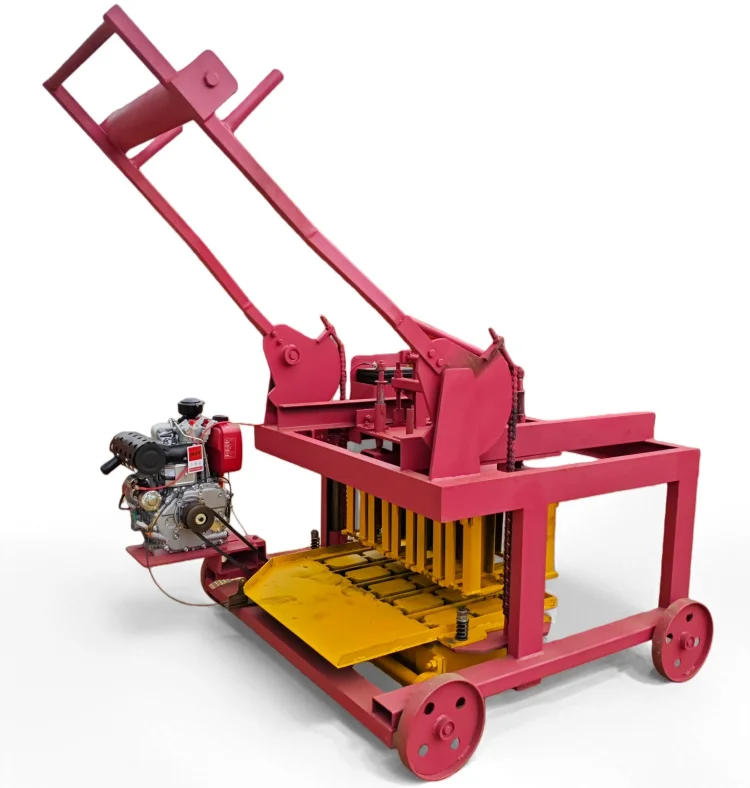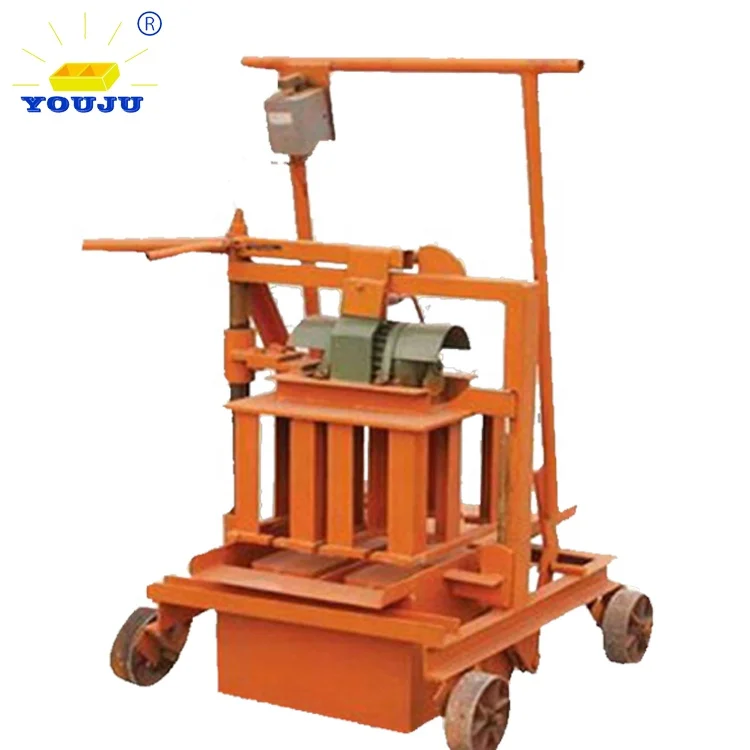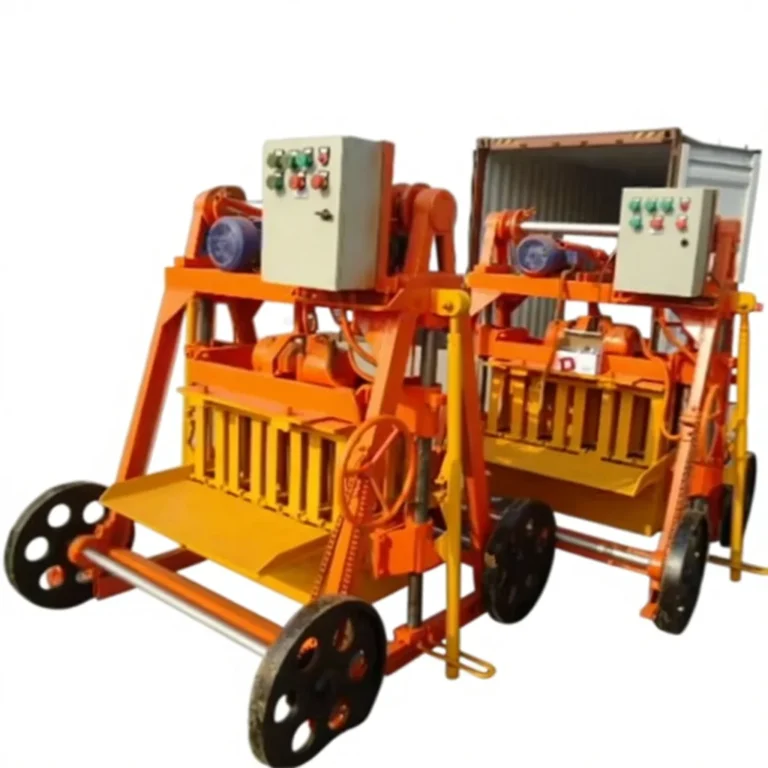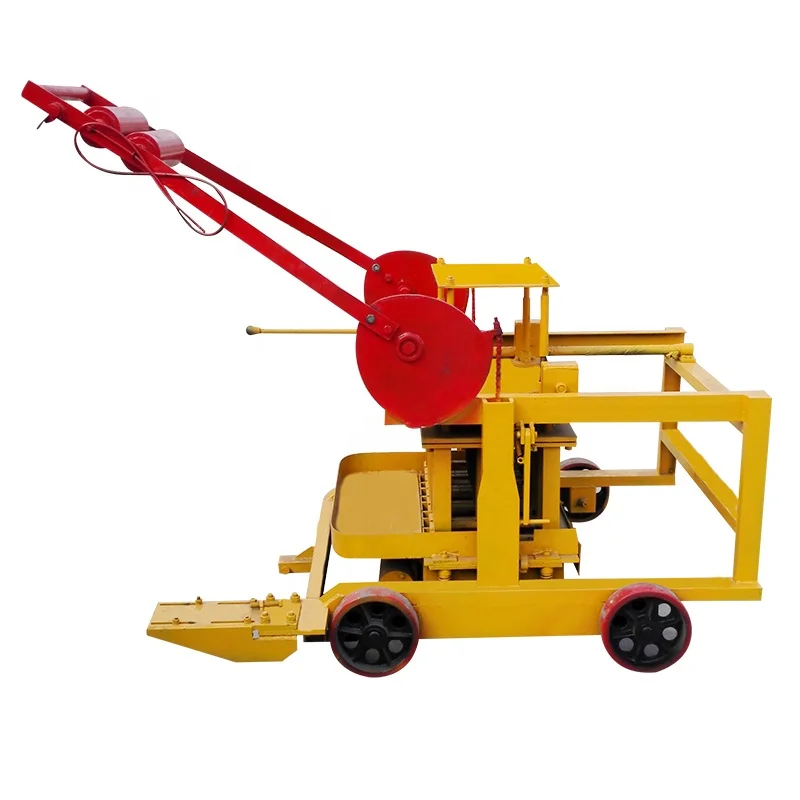
Description
Control Language Alignment — I confirmed the HMI display language and automatic cycle logic match the operator’s native script before the QMR4-45 left the factory, avoiding the first-day scrap I once witnessed on a Middle East site.
Technical Specifications
| Parameter | Value |
|---|---|
| Model | QMR4-45 |
| Product Type | Mobile Block Making Machine |
| Overall Dimensions (L×W×H) | 1100 × 950 × 2100 mm |
| Net Weight | 810 kg |
| Molding Cycle | 30–45 s |
| Power Source | Diesel / Petrol Engine / Electric (selectable) |
| Output Capacity | 2560 pcs/day (basis not stated in source — confirm block format, material and thickness) |
| Pallet Requirement | No pallet needed (egg-laying operation) |
| Block Formats Supported | Paver brick, hollow block, concrete block, solid brick, fly ash brick |
| Basic Equipment Included | JZC350 Diesel Concrete Mixer or JQ350 Diesel Concrete Mixer (Electric Generating Unit); Trolley |
| Mobility | Movable, no fixed plant required |
| Automation Level | Manual / egg-laying type |
| Warranty | 1 Year |
Application Suitability
| Application | Material or Output |
|---|---|
| On-site construction block production | Concrete and cement-based mixes laid directly on the ground |
| Small-scale brick manufacturing | Fly ash, crushed stone, and cement blends for solid and hollow formats |
| Remote project sites with unreliable grid | Diesel-powered paver and kerbstone runs without permanent infrastructure |
| Entrepreneurial first block plant | Low-volume hollow and solid block output with minimal capital outlay |
What "2560 Pieces per Day" Leaves Out When Sizing an Automatic Mobile Block Machine
The daily figure only holds true once you anchor it to a specific block format, wall thickness, and local aggregate density.
Buyers often receive a single capacity number and assume it applies across every mould they plan to run. On a site in Riyadh, I watched a crew lose an entire shift because the quoted output assumed a thin paver while they were pressing 200 mm hollow blocks — the cycle stretched well beyond the brochure range. With the QMR4-45, the 30–45 s molding cycle must be validated against your actual target format before the automatic mobile block machine is shipped. [NEED_CITE: block format impact on daily output in mobile egg-laying machines]
Control Logic That Survives Operator Turnover
When a PLC controlled mobile block making machine arrives with its HMI locked in a language the crew cannot read, the first mistake is never small. I once saw an operator in Jeddah override the automatic stacking sequence because the Arabic prompt was missing, crushing an entire batch before the supervisor arrived. Even though the QMR4-45 is a manual egg-laying unit, buyers who specify the electric power option should confirm the control panel language and any future automation interface before production starts.
Power Source Flexibility on Unstable Grids
Diesel, petrol, and electric options let the QMR4-45 adapt to sites where grid voltage swings or outages are routine. On a housing project outside Amman, the crew switched to the JZC350 diesel mixer when the transformer failed mid-pour, keeping block output running without waiting for utility repairs. Selecting the right power source up front prevents costly idle days once the automatic mobile block machine is bolted to the ground. [NEED_CITE: voltage instability impact on construction equipment in MENA region]
How Molding Cycle and Pressure Interact With Local Aggregate
The 30–45 s cycle range is only achievable when vibration force and hydraulic pressure match the stiffness of your mix. A fly ash blend with high moisture content will need a longer dwell time to reach adequate green strength, while a dry concrete paver mix can cycle at the shorter end. Net weight of 810 kg keeps the machine stable during vibration, but operators must still verify that the compacted block holds its edge before the trolley moves it to the curing area.
Mould Change Time and Format Flexibility
The QMR4-45 supports paver, hollow, solid, and fly ash brick formats, yet the manual mould change still demands a disciplined sequence. If bolts are not torqued evenly, the new mould seats off-centre and every subsequent block drifts out of dimension. I keep a laminated changeover checklist on site so the crew finishes the swap inside one shift instead of losing half a day to alignment rework.
The Hidden Cost of Skipping Voltage and Language Confirmation
Specifying the electric variant without locking in voltage, frequency, and HMI language can delay commissioning for weeks. A 380 V / 50 Hz motor shipped to a 440 V / 60 Hz market will overheat within the first production run, and rewinding it on site is rarely an option. The PLC controlled mobile block making machine must arrive with the exact electrical configuration and display language the local electrician and operator expect, or the machine sits idle while parts are air-freighted. [NEED_CITE: electrical commissioning delays in exported machinery]
Why Procurement Ends Here
Block machinery is the single focus of Shandong Shiyue Intelligent Machinery Co., Ltd, so the QMR4-45 is specified as a matched system — machine, mixer, trolley, and mould — rather than assembled from unrelated suppliers. Configuration is set against your actual mix design, local aggregate, and target block format instead of a catalogue default. Mould design covers the formats your market sells, including custom drawings when standard options fall short. Automation level is selectable, so you can begin with this manual egg-laying unit and plan a future line upgrade without replacing the press. Installation and commissioning support includes operator training tailored to the control language your crew reads.
Documentation & Verification
- Line layout and capacity calculation stating the block format assumed for the QMR4-45
- Machine specification sheet confirming diesel or electric power source and voltage
- Mould drawing and format list for paver, hollow, solid, and fly ash brick
- Hydraulic and electrical schematic matching the selected power configuration
- Factory test record showing actual cycle time per block format before dispatch
- Operation and maintenance manual in the operator’s confirmed language
Installation, Commissioning & Support
- Level compacted ground required; no concrete foundation needed for the 1100 × 950 mm footprint
- Dedicated circuit with confirmed voltage and frequency for the electric variant before first start
- Diesel mixer and trolley arrive pre-assembled; only mould mounting and belt tensioning on site
- First-day commissioning verifies 30–45 s cycle against your chosen block format and mix
- Operator training covers mould changeover sequence and daily vibration plate inspection
- Wear parts list identifies mould liner and vibration spring replacement intervals
Preparing Your Inquiry
Share your target block format, wall thickness, and daily output expectation so the capacity calculation reflects your actual product. Specify local aggregate type and moisture range, along with available site voltage and frequency if you are selecting the electric option. Confirm the HMI display language your operators will read, and note whether a diesel or petrol engine is preferred for grid-independent runs.
Frequently Asked Questions
Q: How is the 2560 pcs/day capacity calculated, and which block format does it assume?
A: That figure is a reference value whose underlying block format, wall thickness, and mix design are not stated in the source data. Before ordering, request a capacity recalculation based on your specific block size, local aggregate, and target cycle time so the daily output reflects your actual production conditions rather than a generic estimate.
Q: Can the QMR4-45 be upgraded to semi-automatic or fully automatic control in the future?
A: The QMR4-45 is designed as a manual egg-laying unit, so its frame and hydraulics are not built for retrofit pallet conveyors or automatic stackers. Buyers planning a future automatic mobile block machine line should discuss an upgrade-path model that shares mould compatibility but includes the automation-ready frame and PLC architecture from the start.
Q: What voltage, frequency, and control language options are available for the electric variant?
A: The electric power option can be configured to common industrial voltages and frequencies, but the exact values must be confirmed against your site supply before production. The PLC controlled mobile block making machine display language is also set at the factory, so specify the language your operators read to avoid commissioning delays upon arrival.
Q: How does diesel versus electric power affect cycle time consistency and block strength?
A: Diesel engines maintain steady RPM under load, keeping vibration force consistent on sites with no grid, while electric motors deliver the smoothest torque curve when voltage is stable. Block strength depends more on mix design and vibration matching than on the power source itself, provided the chosen engine or motor sustains the rated cycle throughout the shift.
Q: What spare parts and moulds are available, and what is the lead time for first replacements?
A: Moulds for paver, hollow, solid, and fly ash brick formats are stocked, and custom mould drawings can be produced to your dimensions. Wear parts such as vibration springs and mould liners ship with the initial order, while replacement lead times vary by destination and should be confirmed at quotation stage to align with your first maintenance window.