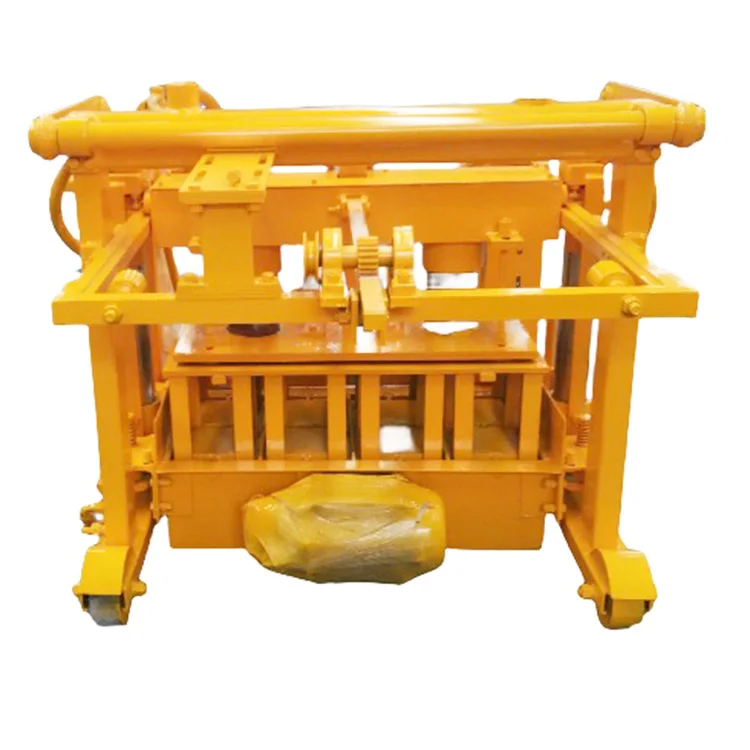
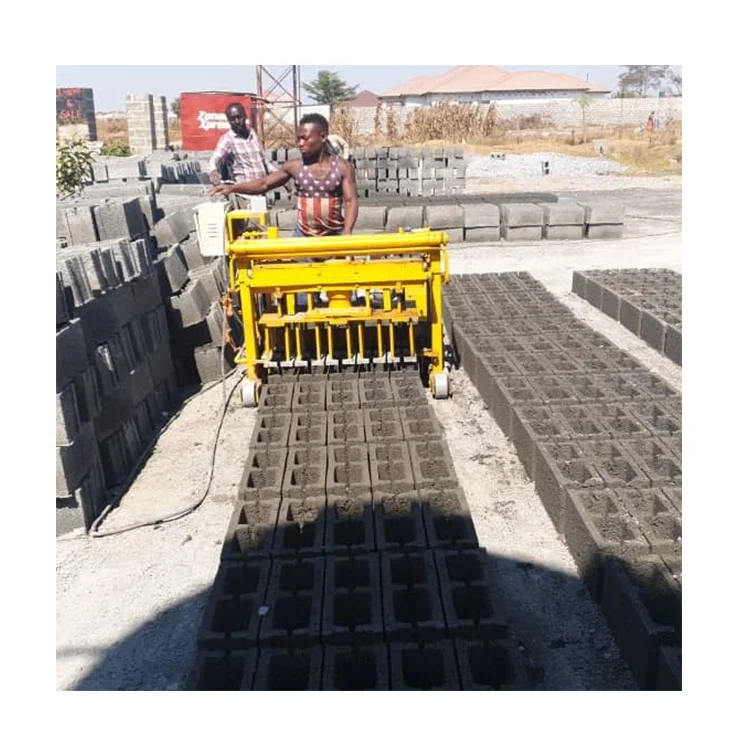
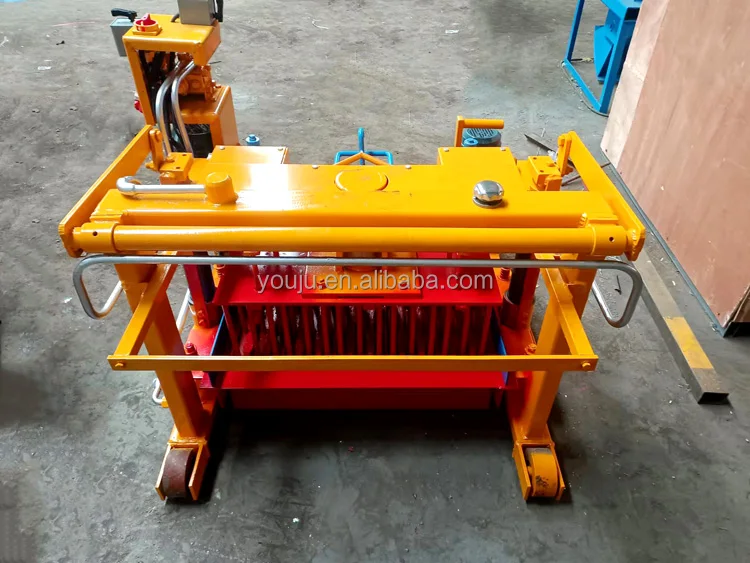
Description
Matched Control Systems — Every QMY4-30 leaves our facility with voltage, frequency and control language verified against your site, because automation only works when the operator understands the panel.
Technical Specifications
| Parameter | Value |
|---|---|
| Model | QMY4-30 |
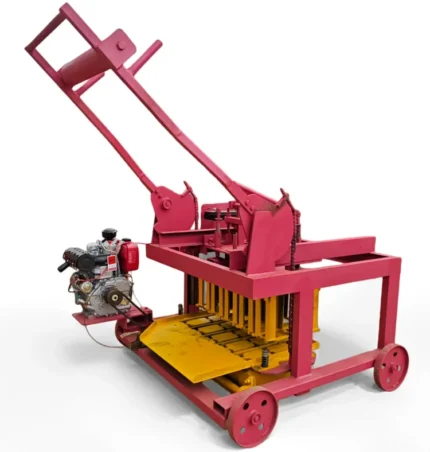
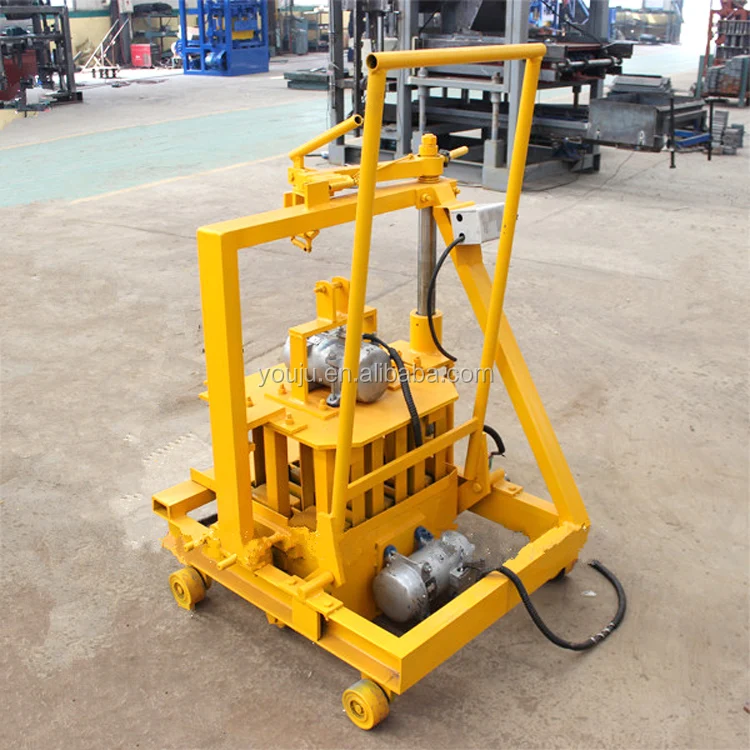
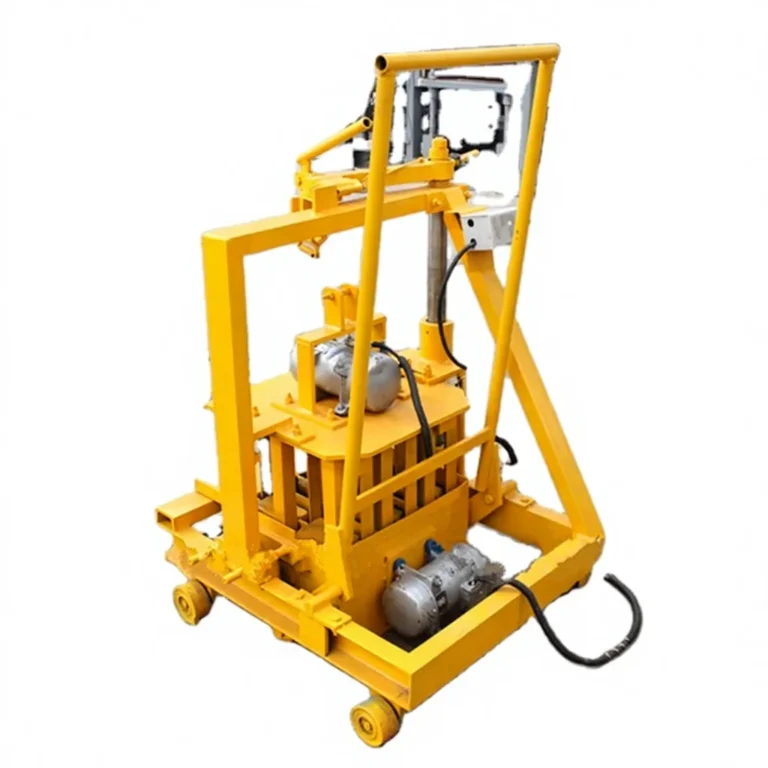
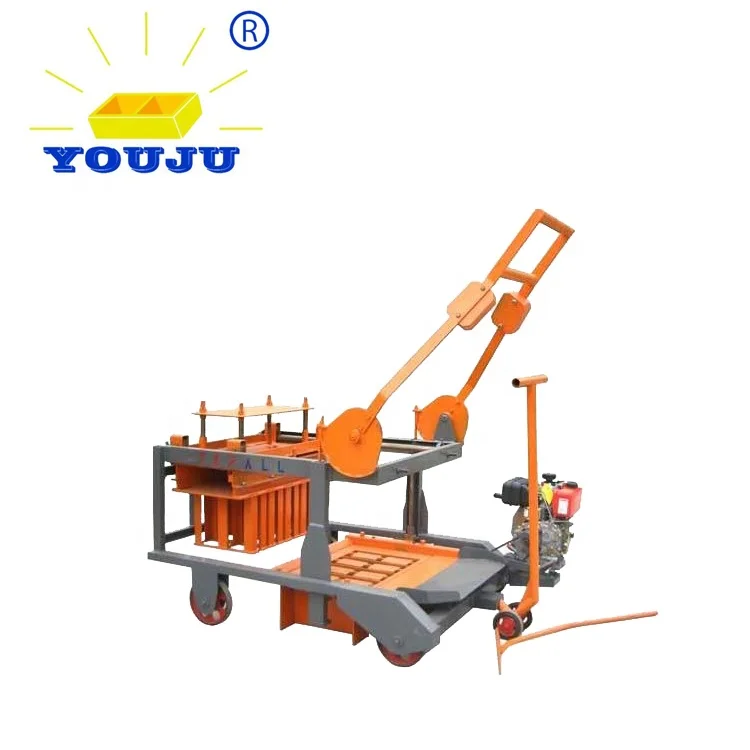
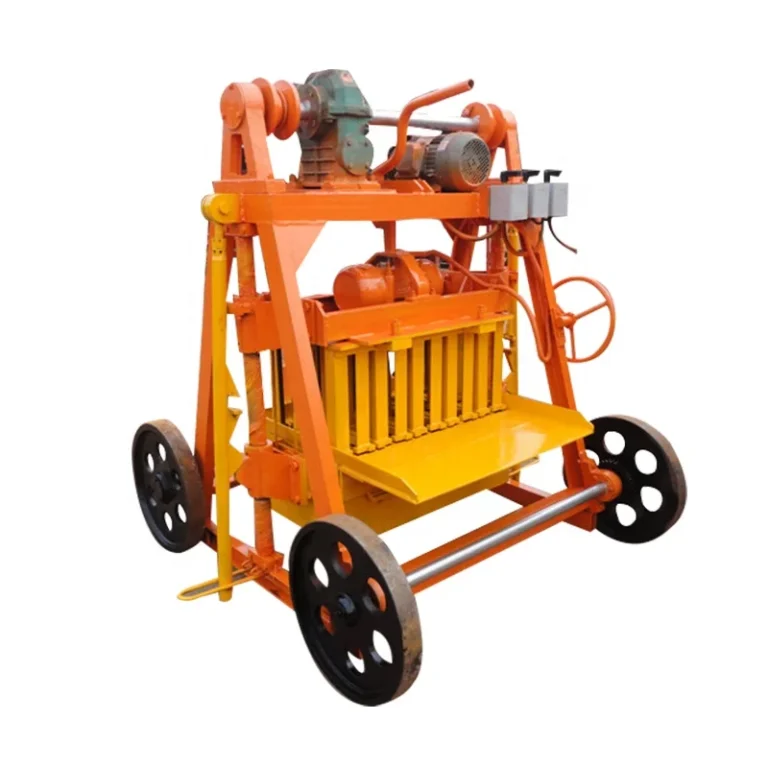
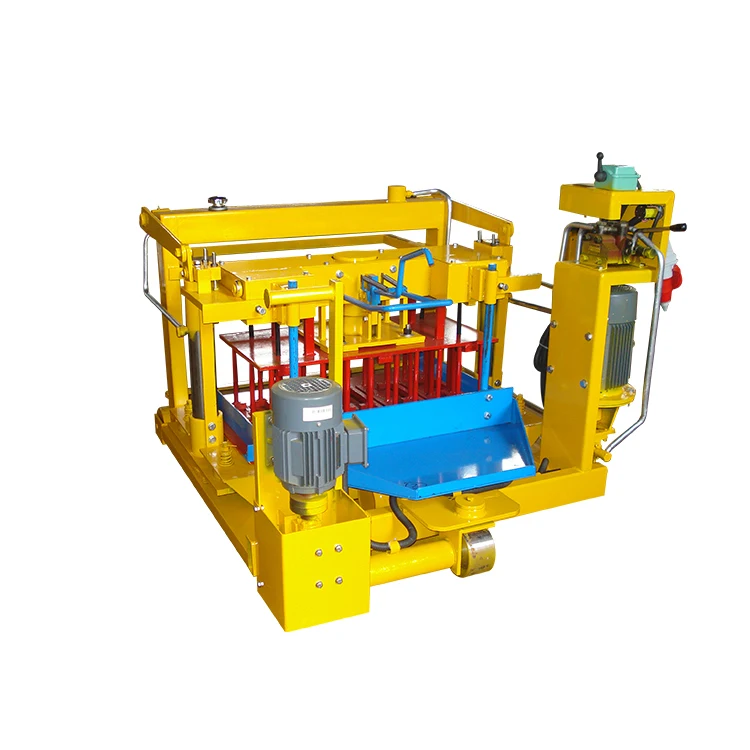
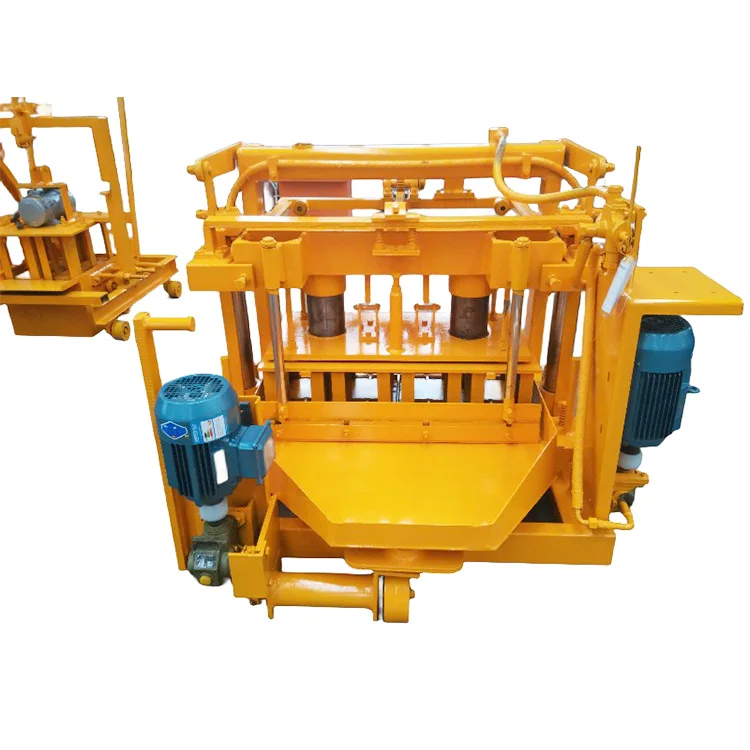
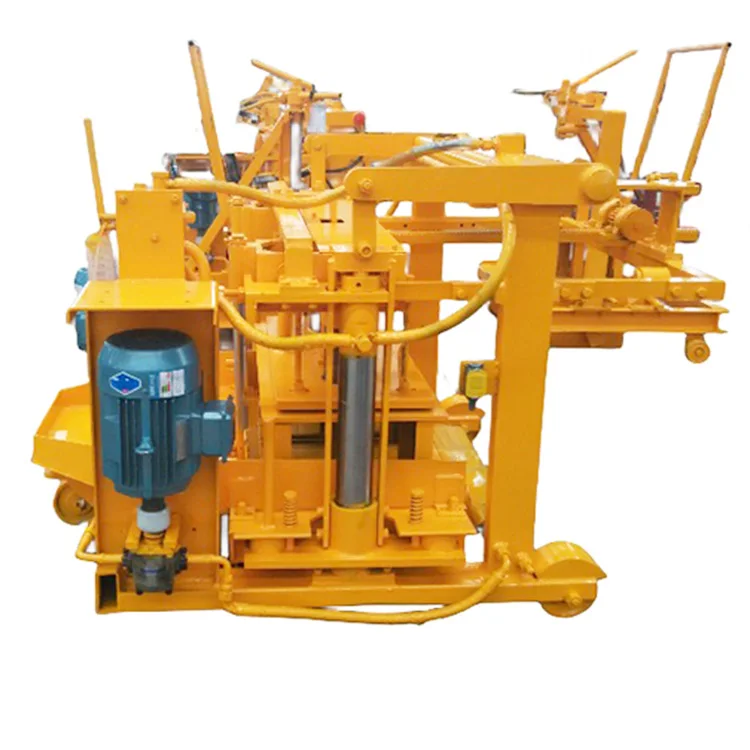
| Product Type | Mobile Concrete Block Making Machine |
| Rated Power | 5 kW |
| Molding Time | 30 seconds per cycle |
| Overall Dimensions | 1200 × 1200 × 1100 mm |
| Net Weight | 950 kg |
| Raw Materials | Cement, sand, crushed stones, slag |
| Mould Format | Hollow block and solid brick |
| Output Capacity | 480 pcs/h based on 400×200×200 mm hollow block, 4 pcs/mould |
| Output Capacity | 600 pcs/h based on 400×150×200 mm hollow block, 5 pcs/mould |
| Output Capacity | 840 pcs/h based on 400×100×200 mm hollow block, 7 pcs/mould |
| Daily Output | 3,840 pcs/8 h based on 400×200×200 mm hollow block |
| Daily Output | 4,800 pcs/8 h based on 400×150×200 mm hollow block |
| Daily Output | 6,720 pcs/8 h based on 400×100×200 mm hollow block |
| Automation Level | Manual egg-laying operation |
| Pallet Requirement | Not applicable — blocks laid directly on ground |
| Voltage & Frequency | Configurable to site supply (basis to be confirmed) |
| Control System | Optional PLC with configurable HMI language (basis to be confirmed) |
Application Suitability
| Application | Material or Output |
|---|---|
| On-site housing project block production | Hollow blocks from local cement and crushed stone |
| First plant for entrepreneurs | Solid brick and hollow block from sand and slag |
| Remote site production without fixed plant | Hollow block from site-sourced aggregate and cement |
| Supplemental output for existing block plants | Solid brick and hollow block formats for secondary runs |
Why the Control Language Question Should Come Before the Price
An automatic mobile block making machine with a PLC panel your operator cannot read is not automatic — it is a liability waiting on the tarmac.
I spent two days remotely re-flashing a PLC on a QT4-30 half-automatic line in the Middle East because the HMI shipped in English while the local crew spoke only Arabic. Every hour lost was concrete setting in the hopper, blocks cured out of spec, and a contractor burning through wages on idle labour. That incident changed how I verify every control system before it leaves the factory. The QMY4-30 runs at a low 5 kW draw, which often places it on sites with limited electrical infrastructure and minimal technical support — making the voltage and language confirmation even more critical before production begins. [NEED_CITE: voltage and frequency standards by export market]
How the Mould Change Sequence Affects Format Flexibility
The QMY4-30 accepts interchangeable moulds for hollow block and solid brick formats, which means a single press can serve multiple product lines across a working day. The real test of format flexibility is how long the change takes and whether the operator can complete it without a second pair of hands. On this egg-laying design the mould sits low to the ground, so alignment depends on manual positioning rather than guided rails. Specifying the exact block dimensions your market demands — and confirming those against the mould drawing before shipment — keeps downtime within the cycle window rather than eating into the next shift.
Consistency Across the 30-Second Molding Cycle
A 30-second cycle time is the mechanical floor: the vibration motor completes one compaction event and the operator moves the press forward. What determines whether that cycle repeats without drift is how the vibration force and mix design interact with the local aggregate. Coarse crushed stone behaves differently from fine sand, and if the vibration frequency is not matched to the particle size distribution you are feeding, block density will vary across the curing area. The PLC controlled mobile block making machine option lets you lock cycle timing and vibration duration so batch-to-batch output holds regardless of which operator is on shift. [NEED_CITE: CE machinery directive requirements for industrial equipment]
Reading the Spec Sheet Against Actual Site Conditions
The 5 kW rated power keeps energy demand low, which suits project sites running from portable generators. However, voltage drop over long cable runs can starve the vibration motor of the amperage it needs, silently reducing compaction force and block density. Confirming both the steady-state voltage and the start-up surge requirement with your electrician before the machine arrives avoids a commissioning delay that no supplier can fix remotely. The QMY4-30 weighs 950 kg and measures 1200 × 1200 × 1100 mm, so it fits inside a standard container and can be pushed into position on level ground — but the curing area layout must be planned around its egg-laying path before the first block is produced.
The Hidden Cost of Skipping the Automation Audit
Buyers often compare mobile block machines on cycle time alone and assume the rest of the line will sort itself out. When vibration force is not verified against the buyer’s actual mix, the first batch of blocks crumbles during handling, and the crew blames the machine rather than the specification gap. A control panel in the wrong language forces the operator to guess menu settings, which leads to inconsistent mould fill and rejects that are not noticed until the blocks are stacked and ready for sale. These are not warranty issues — they are procurement gaps that surface weeks after delivery. [NEED_CITE: common causes of block machine commissioning delays]
What Consistent Configuration Delivers on This Machine
Block machinery is the single focus of the operation, so the QMY4-30 press, mould, and control system are specified as one matched unit rather than assembled from unrelated suppliers. The configuration is set against your local aggregate and target block format, not a catalogue default. Mould design covers the hollow block and solid brick dimensions your market actually sells, and custom drawings are accepted when standard sizes do not match. Automation level is selectable — you can run the QMY4-30 in full manual egg-laying mode now and add batching or pallet-based automation to a fixed line later. Installation and commissioning support includes operator training on the control language that was confirmed before shipment.
Documentation & Verification
- Line layout showing egg-laying path and curing area for your block format
- Machine specification sheet with 5 kW power rating and 950 kg weight confirmed
- Mould drawing listing hollow block and solid brick dimensions accepted
- Voltage, frequency and HMI language confirmation record before production
- Factory test record on your aggregate type before dispatch
- Operation and maintenance manual translated to your operator’s language
Installation, Commissioning & Support
- Level concrete ground required for the 1200 × 1200 mm machine footprint
- Dedicated 5 kW circuit with voltage-drop check over your cable run length
- Machine delivered fully assembled — push to first production position on arrival
- Commissioning includes cycle verification on your cement and sand mix
- Operator training on HMI menus in the confirmed local language
- Wear parts list for mould and vibration motor with first-order lead time
Before You Send an Inquiry
Provide the block format and dimensions your market sells, the daily output you need per format, and your local cement and aggregate source. Include site voltage, frequency and the language your operators read so the control panel matches from day one. If you are adding the QMY4-30 to an existing plant, describe your current curing area and material-handling setup so the egg-laying path integrates without conflict.
Frequently Asked Questions
Q: How is the 30-second cycle time verified on the QMY4-30?
A: The 30-second figure is based on a standard compaction event using the vibration motor on the hollow block formats listed. Actual cycle time can vary with aggregate size, moisture content and operator pace. We run a factory test on your specified mix before dispatch to confirm the cycle holds and block density meets your target.
Q: Can the QMY4-30 be upgraded to higher automation later?
A: The QMY4-30 is designed as a manual egg-laying press, so automatic stacking or pallet feeding cannot be bolted onto the mobile chassis. When volume grows, the typical path is moving to a fixed-line press with full automation while keeping the QMY4-30 for on-site or remote runs.
Q: Is PLC control available, and can the screen language be changed?
A: PLC control with an HMI panel is available as an option. The display language is confirmed during the specification stage and set before the machine ships, so your operators see the correct interface from the first power-on. Arabic, Spanish, French and Russian are routinely configured.
Q: What voltage and frequency configurations are supported?
A: The QMY4-30 can be configured for the voltage and frequency at your site, which must be confirmed before production begins. We provide a written voltage and frequency confirmation record so there is no mismatch when the machine is connected on arrival.
Q: How long does a mould change take on the QMY4-30?
A: Mould change is a manual process given the egg-laying design, and the duration depends on operator familiarity and the block format difference. We supply mould mounting instructions and recommend a practice run during commissioning so your crew can complete changes within a reasonable window.