

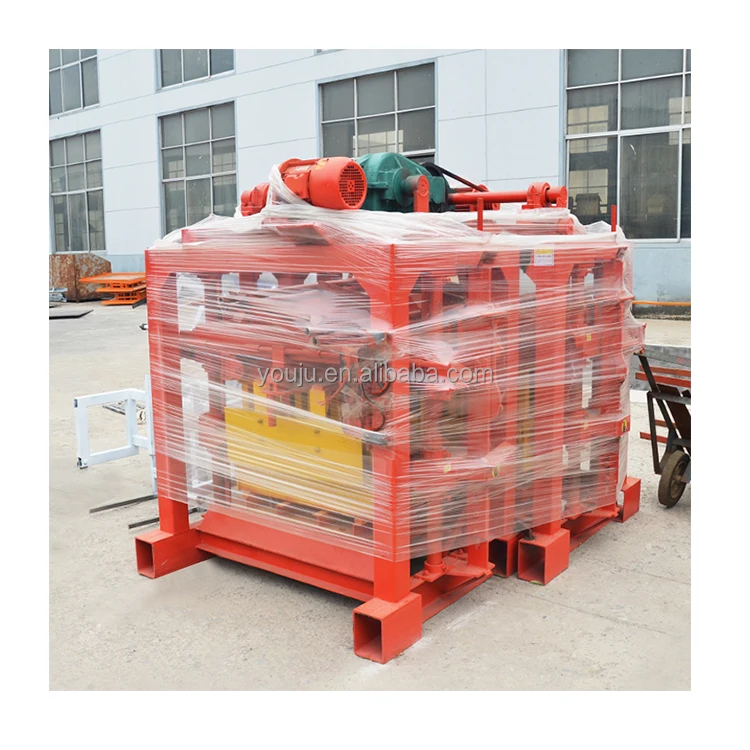


Description
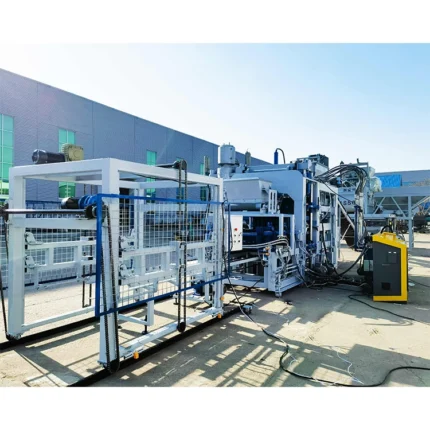
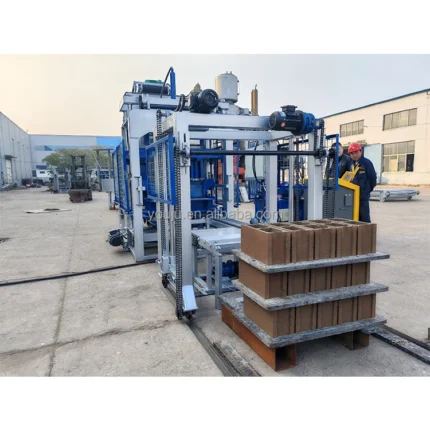
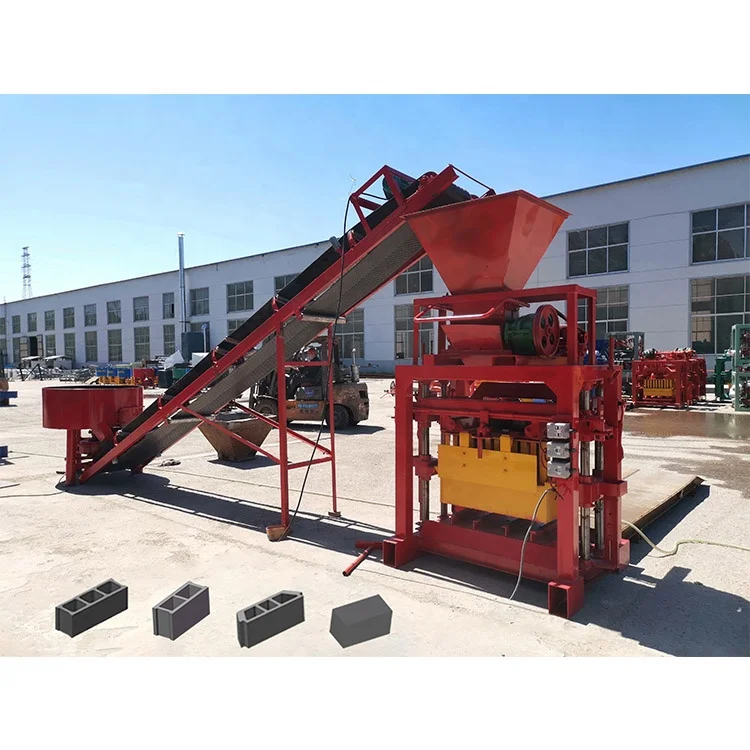
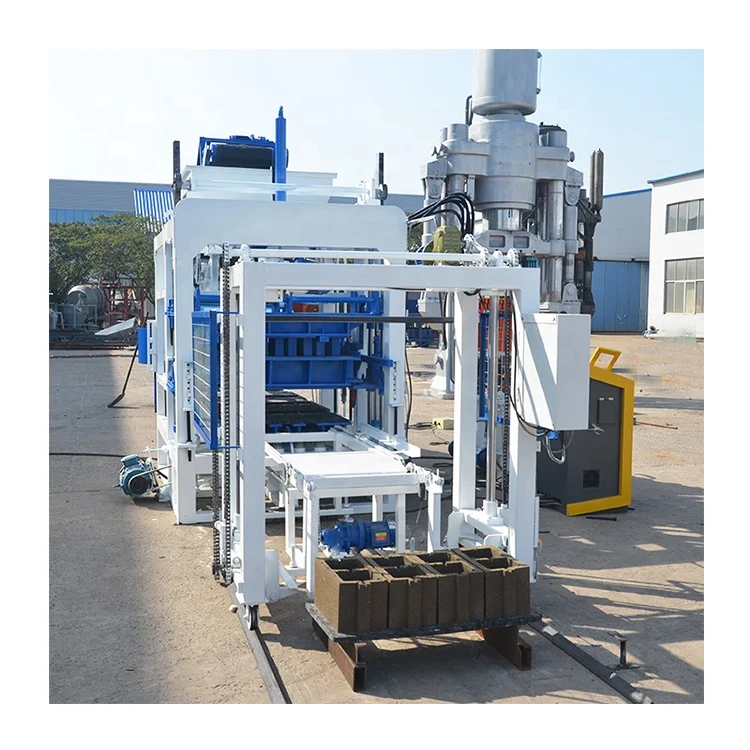
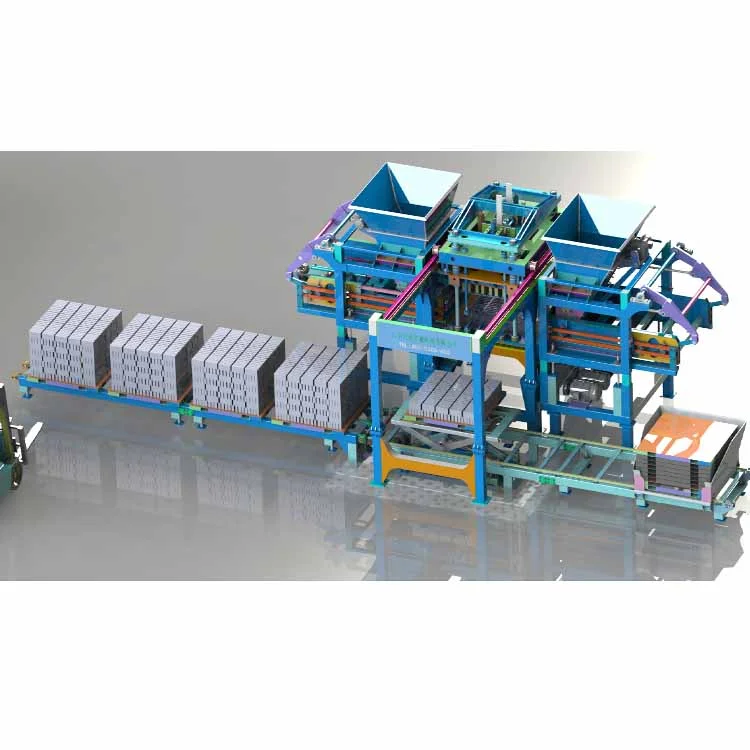
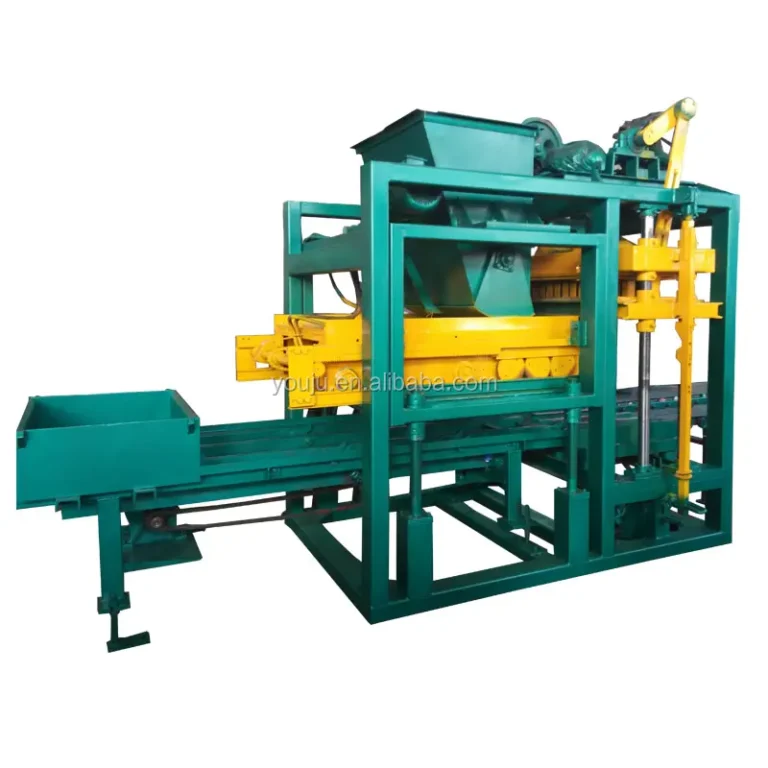
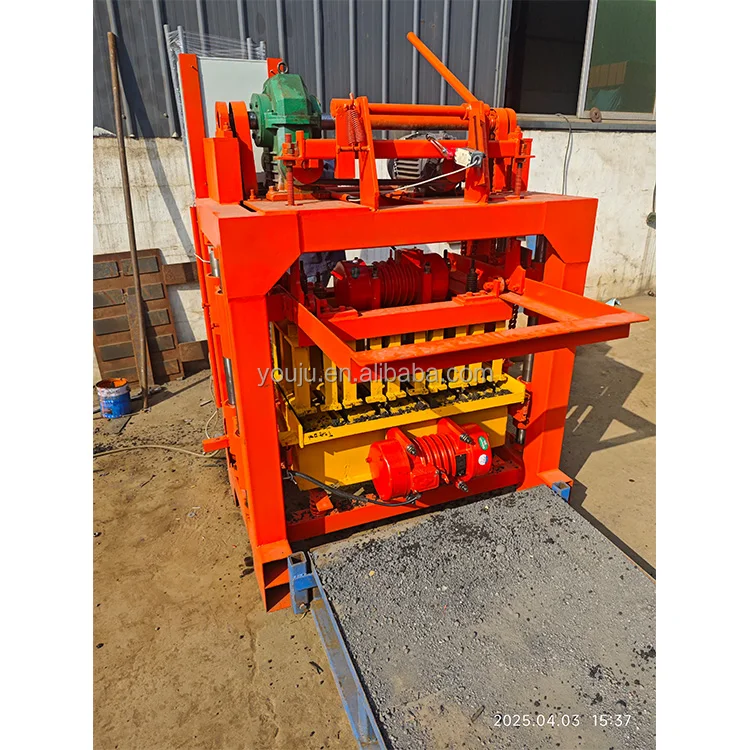
Selectable automation levels — The QTJ4-40 manual block press serves as a base configuration, with pallet feeding, stacking, and cubing stations added only when your daily volume justifies the investment.
Technical Specifications
| Parameter | Value |
|---|---|
| Model | QTJ4-40 |
| Product Type | Manual Hydraulic Block Making Machine |
| Capacity | 2880 pcs/8h (basis: 400×200×200mm hollow block, 4 pcs/mould) (source value — verify against manufacturer catalog) |
| Vibration Frequency | 2800 r/min |
| Main Vibration Form | Platform Vibration |
| Pallet Size | 850×450mm |
| Overall Dimensions | 1350×1460×1800mm |
| Machine Weight | 1T |
| Required Factory Area | 200 m² |
| Workers Required | 1–3 people |
| Raw Material Ratio | Cement 8%–10%, sand 30%–40%, stone 50%–60% (approx. 1:4:5) |
| Applicable Raw Materials | Concrete, cement, fly ash, crushed stone, sand, dust, gravel, slag |
| Applied Products | Concrete blocks, hollow/solid blocks, pavers, interlocking blocks, curbstone, colored pavers |
| Control System | Manual operation (with top die push/pull and automatic scraper) |
| Certification | CE |
Application Suitability
| Application | Material or Output |
|---|---|
| Hollow block production for low-rise residential walls | Crushed stone, sand, and cement mix |
| Solid block manufacturing for load-bearing structures | Concrete with fly ash or slag aggregate |
| Interlocking paver production for walkways and driveways | Colored concrete mixes with fine sand |
| Curbstone forming for municipal road projects | High-strength concrete with coarse gravel |
| On-site block production for remote construction projects | Locally sourced sand and stone aggregates |
What "Semi-Automatic" Leaves Out of the Quotation
Automation is a sequence of matched stations, not a single switch on the control panel.
Many buyers receive a quotation for a block press and assume the pallet handling, stacking, and curing rack transport are included. When the machine arrives, they find that loading empty pallets and moving loaded pallets to the curing area still requires manual labor. I have walked into workshops in Shandong where a QTJ4-40 block machine was running, but three workers were doing nothing but lifting and carrying pallets all shift [NEED_CITE: labor allocation in semi-automatic block plants]. The press itself was never the bottleneck.
Matching the PLC Controlled QTJ4-40 Block Machine to Your Workflow
The QTJ4-40 operates with platform vibration at 2800 r/min, combined with a top die push/pull mechanism and an automatic scraper to simplify the manual pressing cycle. When configured with a PLC, the automatic block machine upgrade path begins at the pallet feeder. The system advances a clean pallet under the mould, waits for the press cycle, and then indexes the loaded pallet forward to the stacking station. This removes the heaviest repetitive lift from the operator’s shift.
Where Batch Consistency Comes From
Consistency in block strength and dimensions depends on the press receiving the same vibration force and hydraulic pressure on every cycle, applied to a mix with stable moisture. A PLC-controlled sequence ensures the vibration timer, scraper pass, and top die descent follow the exact same duration and order. Without this timing lock, an operator manually pulling levers will naturally vary the cycle [NEED_CITE: cycle time variation in manual block production], leading to blocks that test at different compressive strengths even within the same batch.
Reading the Specification Sheet Against Your Actual Block Format
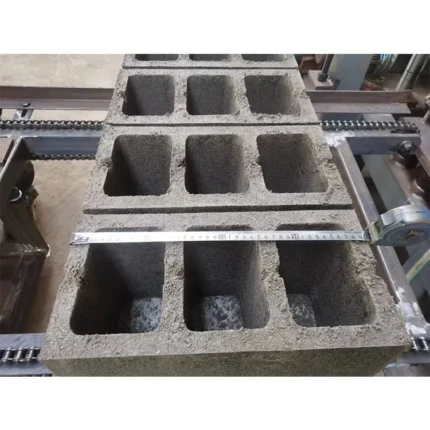
The capacity figure of 2880 pieces per 8-hour shift is based on a 400×200×200mm hollow block with 4 pieces per mould. If your primary product is a smaller solid block or an interlocking paver, the pieces per mould and the cycle time will change. The pallet size of 850×450mm sets the maximum mould footprint, which directly limits how many small-format units you can press in a single cycle. The raw material ratio of approximately 1:4:5 (cement, sand, stone) must be adjusted to your local aggregate’s absorption rate and grading curve to achieve the target block strength.
The Cost of Undersized Pallet Handling
When the pallet size and material are chosen without considering the curing area layout or the forklift the buyer already owns, pallets pile up on the floor. Wooden pallets warp in the curing humidity and jam the feeder rails. Steel pallets that are too thin bend under the vibration force and cause misalignment. These issues do not show up on the first day; they appear after the first month of production when the daily rhythm exposes every mismatch [NEED_CITE: pallet material selection for block curing environments].
Why Procurement Focuses on the Line, Not Just the Press
Block machinery is treated here as a single matched system. The QTJ4-40 press, the mould, the 850×450mm pallet, and the handling equipment are specified together rather than assembled from separate suppliers. The configuration is set against your actual mix design and local aggregate, not a catalogue default. Mould design covers the formats your market sells, including custom drawings. The automation level is selectable so you can start with manual pallet handling and add automatic stacking later. Installation support includes operator training so the team knows how to change the mould without losing a full shift.
Documentation & Verification
- Line layout and capacity calculation stating the block format assumed for the 850×450mm pallet
- Machine specification sheet covering vibration frequency and platform dimensions
- Mould drawing and format list for hollow, solid, and interlocking block options
- Pallet specification matched to your curing area and forklift capacity
- Hydraulic and electrical schematic for local maintenance reference
- Factory test record on your specific block format before dispatch
Installation, Commissioning & Support
- Foundation pad leveled for the 1350×1460×1800mm footprint and 1T operating weight
- Power supply matched to local voltage and frequency before the control panel is wired
- Machine shipped partially assembled with pallet guides and vibration platform pre-mounted
- First-day commissioning includes setting the vibration timer to match your mix moisture content
- Operator training covers manual mould change procedure and scraper adjustment
- Wear parts list provided for vibration springs, scraper blades, and hydraulic seals
Before You Request a Quotation
To size the automation level correctly, we need your target block format, the daily output you are aiming for, and the local raw materials available at your site. Please confirm the voltage and frequency at your facility, as well as the preferred language for the PLC display. Let us know whether you already have pallets and a curing rack system, or if those need to be included in the proposal.
Frequently Asked Questions
Q: How is daily output calculated, and which block format is assumed?
A: The stated capacity of 2880 pieces per 8-hour shift is based on producing 400×200×200mm hollow blocks with 4 pieces per mould cycle. If you produce a different format, the pieces per mould and cycle time will change. We provide a capacity calculation sheet that states the assumed block format for every output figure in the quotation.
Q: What automation level options are available, and what does each remove from the operator?
A: The QTJ4-40 starts as a manual press with top die push/pull. Adding a pallet feeder removes manual pallet loading. Adding a stacker removes lifting loaded pallets to the curing rack. Adding a cuber automates grouping for forklift transport. Each station is added independently based on your volume.
Q: Is the PLC display language configurable to the buyer’s local language?
A: Yes, the PLC display language is confirmed during the quotation stage before production begins. This ensures the operator can read alarms and cycle parameters in their working language from the first day of commissioning, avoiding delays caused by reprogramming the controller on site.
Q: How are pallet size and material selected to match the curing area?
A: The standard pallet size is 850×450mm, but the material — wood, bamboo, or steel — is selected based on your curing environment humidity and the forklift tine spacing you already use. Choosing the wrong material leads to warping or bending that jams the automatic pallet feeder rails.
Q: What is the upgrade path from semi-automatic to fully automatic stacking?
A: The machine frame and pallet guide rails are designed to accept an automatic stacker and cuber at a later stage. When your daily volume justifies removing the manual pallet lifting, the stacking station is mounted to the existing frame and wired into the PLC sequence without replacing the press.