
Description
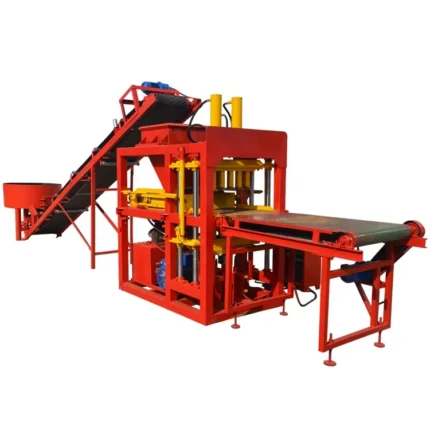
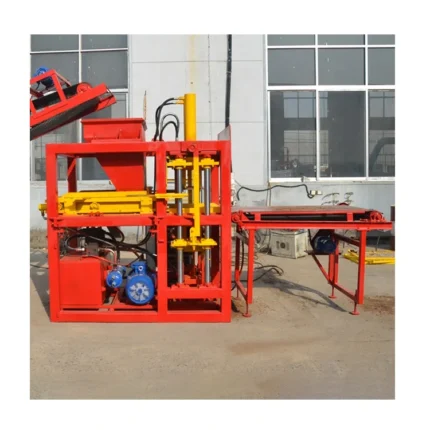
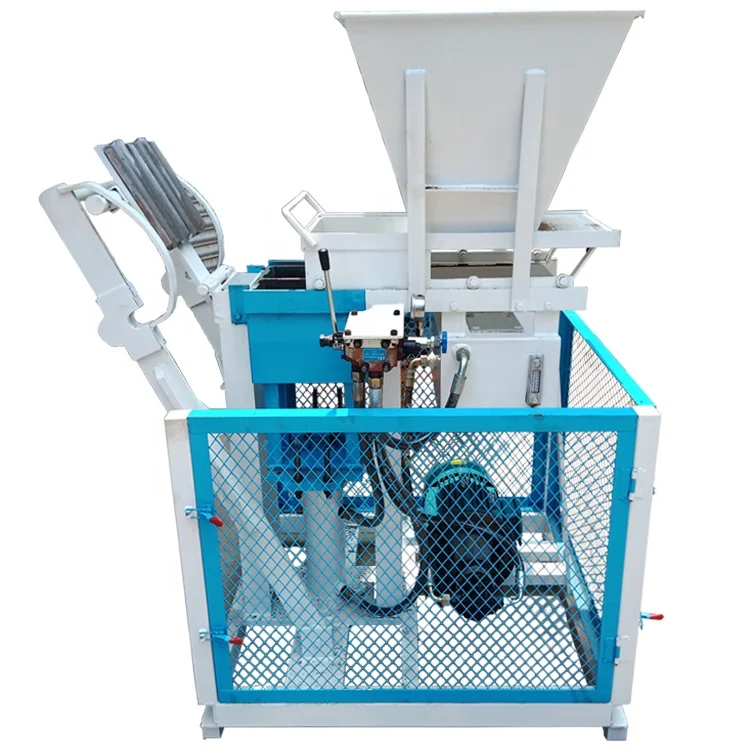
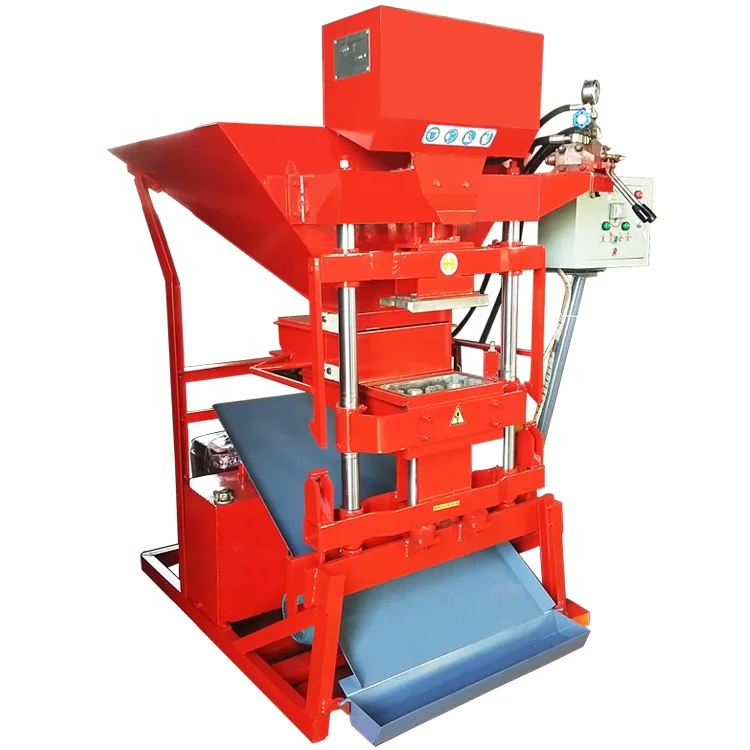
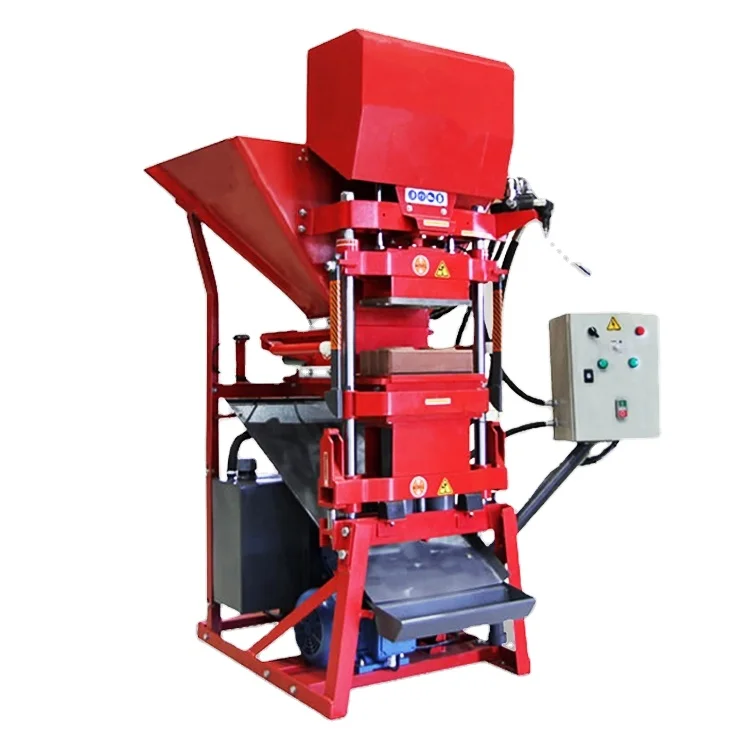
Selecting the right level of automation — the ECO 2700 starts as a manual clay interlocking brick press, but every control layer from semi-automatic relay logic through to full PLC operation is selectable and retrofittable, keeping the investment aligned with the plant’s real output targets.
Technical Specifications
| Parameter | Value |
|---|---|
| Model | ECO 2700 |
| Product Type | Clay Interlocking Brick Making Machine |
| Overall Dimensions (L×W×H) | 1000 × 1000 × 1800 mm |
| Shaping Cycle | 15-20 seconds (basis not stated in source — confirm block format and material) |
| Hydraulic Pressure | 16 MPa |
| Rated Power | 5.5 kW |
| Net Weight | 1000 kg |
| Voltage & Frequency | 380V, 3-phase, 50Hz (customizable) |
| Motor Brand | Siemens |
| Control System | Manual / Semi-automatic (PLC upgrade available) |
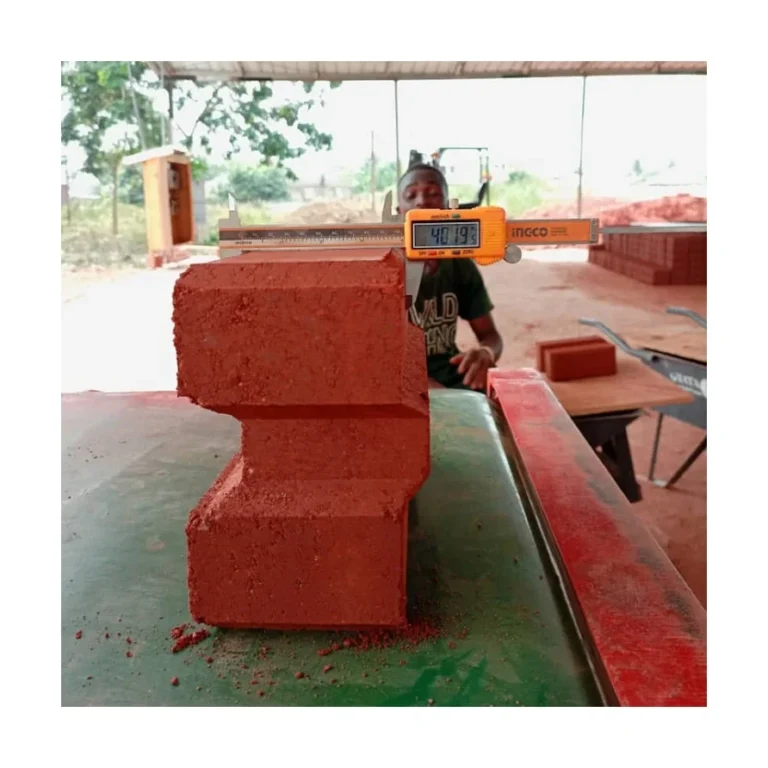
| Mould Format | Interlocking brick (custom dimensions on request) |
| Warranty | 1 year |
Application Suitability
| Application | Material or Output |
|---|---|
| Small-scale interlocking brick plant | Local clay, laterite, or soil-cement mixes |
| On-site production for housing projects | Clay-soil blends sourced near the build location |
| Workshop-level brick forming | Low-volume batches without a fixed curing yard |
| Format expansion for existing block makers | Adding interlocking profile to a current product range |
What "15-20 Seconds per Brick" Leaves Out About Automation
The cycle number only holds if the control system removes operator guesswork from every stroke.
A manual operator watching a timer and pressing buttons will drift. By the third hour of a shift, the press dwell time shortens, the hydraulic hold releases early, and bricks leave the mould before full compaction. This is why the ECO 2700 is offered with selectable control levels — the automatic clay interlocking brick machine PLC controlled option locks the 16 MPa pressure hold and the vibration duration into a repeatable sequence that does not vary with fatigue or distraction [NEED_CITE: effects of manual cycle drift on clay brick compressive strength].
From Manual Lever to Programmable Logic
The base ECO 2700 ships with manual feeding and manual cycle initiation. The operator controls the hydraulic ram, decides when vibration starts and stops, and handles the pallet. Moving to semi-automatic operation replaces the timing decisions with relay logic, while a full PLC-controlled automatic clay interlocking brick machine PLC controlled configuration adds a touchscreen interface where cycle parameters — ram descent speed, vibration duration, pressure hold time — are stored as named recipes for each brick format.
Why Consistency Matters More Than Speed
A faster cycle means nothing if every tenth brick cracks during curing because the pressure hold was cut short. PLC control stores the validated recipe so that the first brick of the morning and the five-hundredth brick of the afternoon receive identical forming energy. This is what separates a plant that passes strength tests from one that fails intermittently and cannot trace the cause [NEED_CITE: role of PLC recipe storage in batch-to-batch brick quality].
Reading the Specifications Against Your Site Conditions
The 16 MPa hydraulic pressure is a baseline. Clay density, moisture content, and the percentage of stabilizer in the mix all shift the pressure required for full interlock engagement. The 5.5 kW Siemens motor provides continuous duty headroom, but the control system must be told what the actual cycle looks like — a thicker interlocking paver needs a longer vibration window than a thin wall tile, and the PLC must reflect that before the machine leaves the factory. Voltage and frequency customization (380V 3-phase 50Hz is the default) must be confirmed alongside the PLC display language so the operator can read fault codes on day one without a translator.
The Cost of Skipping the Control Conversation
Plants that order a manual machine and later discover they need consistent output face a difficult choice: replace the press entirely or retrofit controls onto a frame not originally wired for sensor feedback. Retrofitting is possible on the ECO 2700, but it is more expensive and more disruptive than specifying the automatic clay interlocking brick machine PLC controlled option at the time of order. Sensors, wiring harnesses, and the PLC enclosure must all be integrated during assembly, not bolted on after the machine has been running for a year in clay dust [NEED_CITE: typical cost and downtime of PLC retrofit versus factory-installed control].
Why Buyers Source This Machine Through Us
Block machinery is our single focus, so the ECO 2700 is never quoted as a standalone press. The mould, the pallet size, and the handling equipment around it are specified as one system matched to the buyer’s clay mix and target interlock profile. Configuration is set against the buyer’s actual soil sample and stabilizer ratio, not a catalogue default. The PLC display language, voltage, and frequency are confirmed in writing before production begins, eliminating the commissioning delay that happens when a machine arrives with a control panel the operator cannot read. Mould design covers the specific interlocking dimensions the buyer’s market sells, including custom drawings from the buyer’s own specifications. Installation support includes operator training on the PLC recipe system so the plant team can create and store new brick formats independently.
Documentation & Verification
- Factory test record showing hydraulic pressure and cycle time on your specific clay mix
- PLC program printout with recipe parameters for each interlocking brick format ordered
- Voltage, frequency, and control display language confirmation signed before production
- Mould drawing and interlock profile dimensions matched to your market requirements
- Hydraulic and electrical schematic for local maintenance team reference
Installation, Commissioning & Support
- Foundation pad sized to the 1000 × 1000 mm footprint with anchor bolt template provided
- Dedicated 3-phase circuit rated for the 5.5 kW Siemens motor with correct voltage confirmed
- Machine shipped as a single unit on the 1000 kg frame, no on-site assembly of the press required
- PLC recipe parameters loaded and verified against your clay sample during commissioning
- Operator training covers mould change procedure, recipe creation, and fault code response
- Wear parts list and mould component schedule provided with recommended replacement intervals
Before You Request a Quote
Tell us the exact interlocking brick dimensions your market sells, the clay or soil type available at your site, and whether you have had a local lab test the mix with your chosen stabilizer. Confirm your site voltage, frequency, and the language your operators need on the PLC display. If you already run a curing yard or pallet system, share the pallet dimensions and forklift capacity so the handling side of the line is matched from the start.
Frequently Asked Questions
Q: What automation levels are available for the ECO 2700 and how does PLC control change daily operation?
A: The ECO 2700 is available with manual operation, semi-automatic relay control, or a full PLC-controlled automatic clay interlocking brick machine PLC controlled configuration. The PLC stores cycle recipes for each brick format, removing operator timing decisions and ensuring every brick receives the same hydraulic pressure and vibration duration throughout the shift.
Q: How is cycle time verified against my specific interlocking brick format?
A: The 15-20 second shaping cycle is a reference value. Actual cycle time depends on the brick thickness, clay density, and stabilizer ratio. We run a factory test using your confirmed mix and target format, then record the validated cycle time in the test report provided before shipment.
Q: Can the PLC display language and voltage be confirmed before the machine ships?
A: Yes. Voltage, frequency, and PLC display language are confirmed in writing during the order process. The control panel is configured at the factory and tested before dispatch so the operator can read the interface and respond to fault codes immediately upon commissioning.
Q: What is the upgrade path from semi-automatic to full PLC control?
A: The ECO 2700 frame accepts sensor mounts and wiring channels for PLC integration. A semi-automatic machine can be upgraded later, but factory-installed PLC control avoids the downtime and additional cost of retrofitting sensors and rewiring after the machine has been in production.
Q: Which wear parts need replacement first and are they available?
A: Mould liners, hydraulic seals, and vibration pad inserts are the first components to show wear in clay interlocking brick production. A complete wear parts list with part numbers is included in the documentation, and replacement components are held in stock for dispatch when needed.