Description
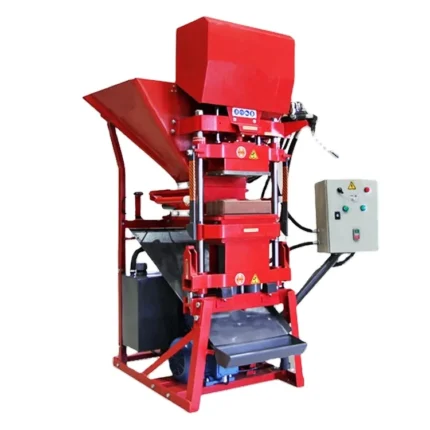
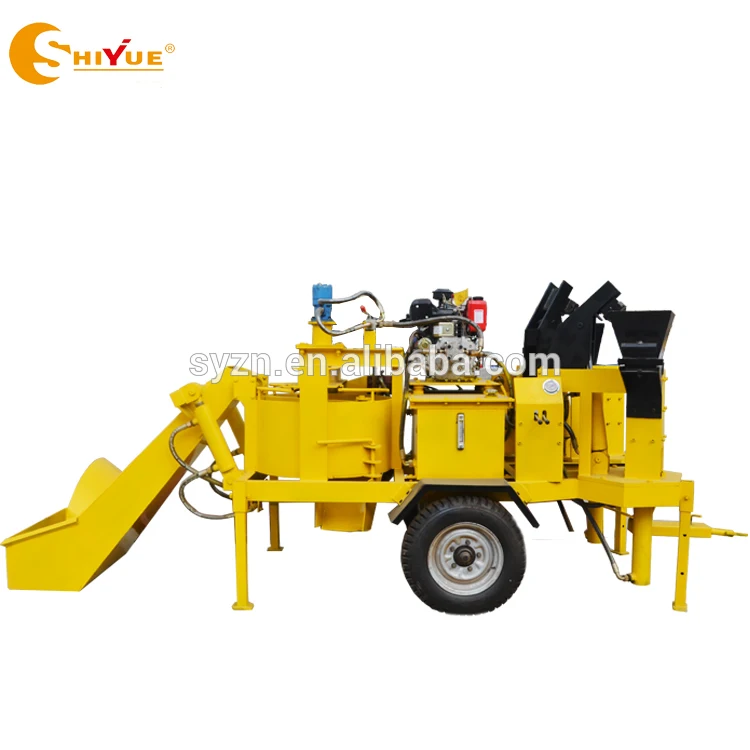
Semi-automatic base with a PLC upgrade path — the LY2-10 removes manual pressing variation from every cycle while leaving room for full automatic pallet feeding and stacking as your daily volume grows.
Technical Specifications
| Parameter | Value |
|---|---|
| Model | LY2-10 |
| Product Type | Compressed Earth Interlocking Brick Machine |
| Rated Power | 7.5 kW |
| Control System | Semi-automatic (automated material feeding, mould pressing, mould lifting); PLC-ready for future expansion |
| Overall Dimensions (L×W×H) | 1300 × 1200 × 1900 mm |
| Net Weight | 1200 kg |
| Moulding Cycle | 10 s per press (basis: 300×150×100 mm or 250×125×75 mm interlocking brick, 2 pcs/mould) |
| Output Capacity | 750 pcs/hour, 6000 pcs/8hours (based on 300×150×100 mm or 250×125×75 mm interlocking brick, 2 pcs/mould) |
| Hydraulic Pressure | 16 MPa |
| Raw Material Compatibility | Clay, soil, earth, mud, concrete, cement, fly ash |
| Labour Requirement | 1–3 operators per shift |
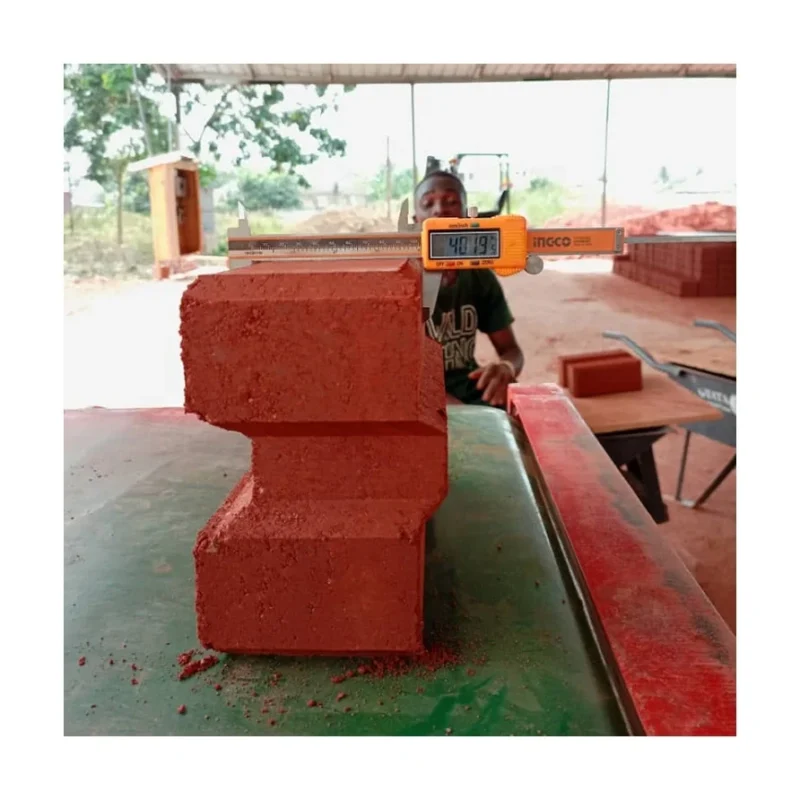
| Mould Format | Interlocking brick (300×150×100 mm / 250×125×75 mm) |
| Standards | CE declaration where applicable |
Application Suitability
| Application | Material or Output |
|---|---|
| On-site housing project production | Local soil and clay with cement stabilisation, producing interlocking blocks directly at the build location |
| First compressed earth block plant | Clay-soil mix with or without fly ash addition, semi-automatic output for entrepreneurs entering the block market |
| Existing concrete product manufacturer | Adding interlocking CEB formats to a current block and paver range using the same raw material supply |
| Development contractor block supply | Earth and mud from excavation stabilised with cement for interlocking wall systems on the same project |
Why Your Actual Soil Matters More Than the Brochure Cycle Time
A 10-second moulding cycle only holds when the material flowing into the hopper matches the test conditions behind that number.
I have stood on project sites where the quoted output collapsed because the local clay behaved nothing like the sandy reference mix the machine was originally tested with. Heavy clay holds moisture differently, resists compression differently, and demands longer dwell time under pressure to reach the same block density. When the automatic compressed earth interlocking brick machine PLC controlled setup arrives configured for a standard sand-soil blend and meets high-plasticity clay instead, the operator is forced to extend the press cycle just to get acceptable strength. Daily output can fall to a fraction of what was quoted, and the blame lands on the machine rather than the material mismatch [NEED_CITE: soil classification and stabilisation requirements for compressed earth blocks]. Confirming your soil’s plasticity index and optimum moisture content before the hydraulic pressure and cycle timer are finalised avoids this entirely.
What Semi-Automatic Actually Removes From the Operator
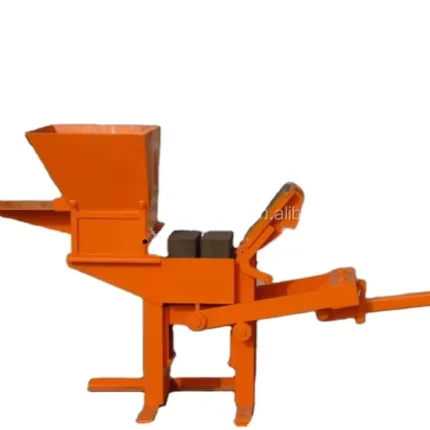
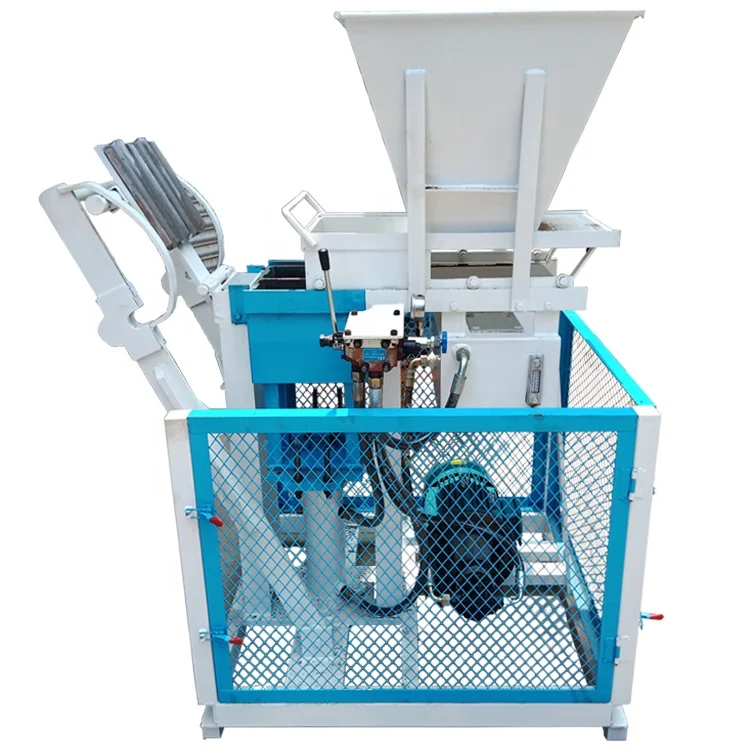
The LY2-10 automates the three steps where human inconsistency most often compromises block quality: material feeding into the mould, hydraulic pressing to 16 MPa, and mould lifting after compression. The operator’s role shifts to monitoring the hopper level, placing and retrieving pallets, and stacking finished bricks — tasks that do not affect the density or interlocking profile of the block itself. This separation is deliberate. By the time a plant owner is ready to invest in full automatic pallet feeding and stacking, the press section is already producing consistent output, and the upgrade adds handling speed without re-tuning the forming process.
Where the PLC Upgrade Path Fits Your Growth
A semi-automatic start keeps initial investment contained while the block format and local market demand are still being established. The LY2-10 is wired and structured to accept a PLC-controlled pallet feeder and automatic stacker as bolt-on additions once daily volume justifies the extra automation [NEED_CITE: automation upgrade paths for small block production lines]. The hydraulic valve block, sensor mounting points, and electrical cabinet space are specified with this transition in mind, so moving to full PLC control does not require replacing the core press. For contractors producing interlocking bricks on a single project, the semi-automatic configuration may be all that is needed; for plant owners building a recurring supply business, the upgrade path protects the original equipment investment.
Reading the Specs Against Your Actual Production
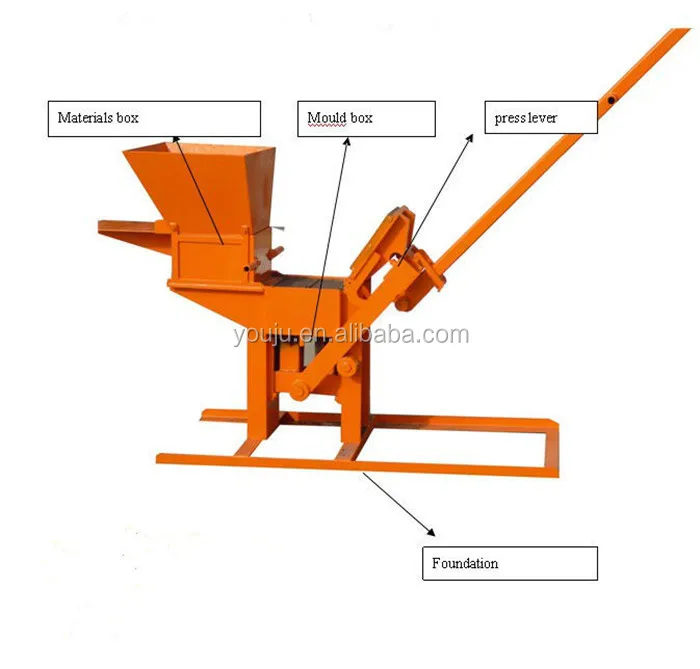
The 16 MPa hydraulic pressure is the figure to cross-reference with your soil-cement mix design. Compressed earth blocks rely on mechanical compression rather than kiln firing, so the pressure directly determines the green strength and final density of every interlocking brick leaving the mould. If your local clay requires a higher cement stabiliser ratio to reach target strength, the hydraulic system must still deliver full pressure within a short enough cycle to maintain throughput — and that balance is what makes material testing before configuration essential. The 7.5 kW rated power covers both the hydraulic pump and the feeding mechanism, meaning no separate power circuit is needed for the press and feeder on a standard site supply. The 1300 × 1200 × 1900 mm footprint allows the machine to operate in a confined on-site compound or inside a small workshop, and the 1200 kg net weight means it can be relocated by a standard site forklift when a project moves to its next phase. Mould change between the 300×150×100 mm and 250×125×75 mm interlocking formats is a manual swap, so planning which format your market actually buys avoids paying for moulds that sit unused.
The Hidden Cost of Skipping Material Verification
When a compressed earth block line is ordered against a sample output figure without anyone checking whether the buyer’s local soil matches the test material, the consequences compound quickly. The operator extends the cycle time to compensate for weak blocks, pallet turnover slows, and the curing area backs up because finished bricks are not leaving the press fast enough [NEED_CITE: impact of raw material variation on block plant cycle time]. Labour cost per block rises without any visible cause, and the plant owner assumes the machine is underperforming. In reality, the configuration was set before the most important variable — the material — was ever confirmed.
Why Buyers Source This Line Here
Block machinery is our single focus, so the LY2-10 press, its interlocking moulds, pallet specification, and any future handling upgrades are specified as one matched system rather than assembled from unrelated suppliers. The hydraulic pressure and cycle timer are set against your actual soil-cement or clay-fly ash mix, not left at a catalogue default that may not suit your aggregate. Mould design covers the interlocking profiles your market sells, including custom drawings when a project architect specifies a non-standard block format. Automation level is selectable, so you can start semi-automatic and add PLC-controlled pallet feeding and stacking when volume justifies it [NEED_CITE: block machine configuration against buyer mix design]. Installation support includes operator training on your specific material, so the team running the press on day one already understands how your clay behaves under compression.
Documentation & Verification
- Line layout showing the LY2-10 positioned with pallet flow and curing rack distances matched to your site footprint
- Capacity calculation sheet stating the interlocking brick format and material assumption behind every output figure
- Hydraulic and electrical schematic with valve settings recorded for your confirmed soil-cement stabiliser ratio
- Mould drawing and interlocking profile list so the block dimensions match your local building code requirement
- Voltage, frequency, and control display language confirmation recorded before production begins
- Factory test record run on material matching your specification, not a generic reference mix
Installation, Commissioning & Support
- Foundation pad sized to the 1300 × 1200 mm footprint with anchor bolt pattern matching the 1200 kg frame load
- Dedicated 7.5 kW circuit at your confirmed voltage and frequency, isolated from welding equipment on site
- Machine shipped as a single assembly with mould and hydraulic hoses pre-fitted to reduce on-site setup time
- First production run supervised to verify cycle timer and hydraulic pressure against your actual clay-soil mix
- Operator training covering mould change procedure between the two interlocking brick formats supplied
- Wear parts list identifying hydraulic seals and mould liner replacement intervals specific to your material abrasiveness
What to Prepare Before Requesting a Quote
To configure the LY2-10 accurately, share your target interlocking brick format and the soil or clay type you plan to use, along with any cement or fly ash stabiliser ratio you have tested. Confirm your site voltage and frequency, the language your operators need on the control display, and whether you intend to start semi-automatic or move directly to PLC-controlled pallet handling. If you have an existing curing area or forklift, include the pallet dimensions already in use so the feeding system aligns with your current setup.
Frequently Asked Questions
Q: How is the daily output of the LY2-10 actually confirmed?
A: Output is stated per interlocking brick format — 6000 pieces per 8-hour shift is based on the 300×150×100 mm or 250×125×75 mm mould at 2 pieces per press with a 10-second cycle. A different block size, a heavier clay requiring a longer dwell time, or a thicker stabiliser ratio will change that figure. We calculate capacity against your confirmed material test and target format, not a single brochure number.
Q: What does semi-automatic cover and what still needs an operator?
A: The LY2-10 automates material feeding into the mould, hydraulic pressing to 16 MPa, and mould lifting after each cycle. The operator handles pallet placement, retrieval, and stacking of finished bricks. This keeps block density consistent while containing initial investment. Full PLC-controlled pallet feeding and stacking can be added later without replacing the press.
Q: How do you match the hydraulic pressure to my local soil?
A: We request your soil classification and any cement or fly ash stabiliser ratio you plan to use. The 16 MPa system is then calibrated so that the pressure and dwell time together produce the block density your building code requires. Running a factory test on material matching your specification confirms the setting before the machine ships.
Q: What electrical and control details must be settled before production?
A: Your site voltage, frequency, and the language for the control display are confirmed and recorded before the LY2-10 enters production. This prevents commissioning delays when the machine arrives. The PLC-ready wiring also means that if you plan to add automatic pallet handling later, the electrical cabinet is already prepared for the additional I/O.
Q: How does the press stay in sync with pallet feeding and curing?
A: The 10-second moulding cycle assumes pallets are available and cured bricks are cleared on time. If your curing rack capacity or forklift schedule cannot keep up, the press will idle between cycles regardless of automation level. We map pallet flow and curing rack distance in the line layout so the LY2-10 runs continuously at its confirmed cycle rate.