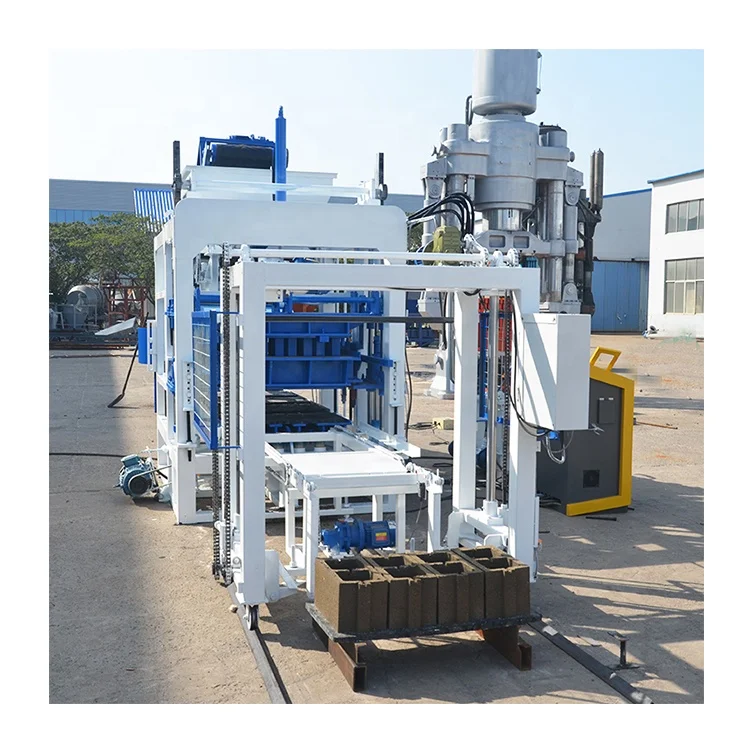


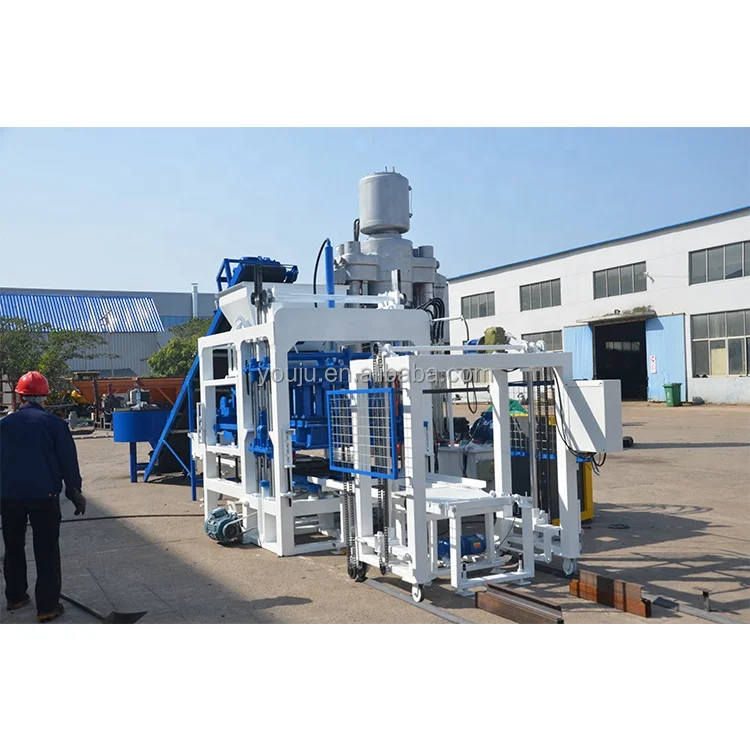


Description
Consistent Cycle Execution — the QT4-18 stores proven recipe parameters in its PLC so every moulding cycle replicates the same vibration, pressure and timing settings rather than relying on operator judgment.
Technical Specifications
| Parameter | Value |
|---|---|
| Model | QT4-18 |
| Product Type | Automatic Concrete Block Making Machine |
| Overall Dimensions (L×W×H) | 2500 × 1750 × 2200 mm |
| Rated Hydraulic Pressure | 16 MPa |
| Vibration Form | Platform Vibration |
| Pallet Size | 950 × 550 mm |
| Molding Cycle | 18–25 s (basis to be confirmed per block format) |
| Overall Power | 27.5 kW |
| Control System | PLC with frequency converter, machine-to-person interface |
| Electrical Components | Schneider brand |
| Mould Lifting Mechanism | Double-sided synchronous gears |
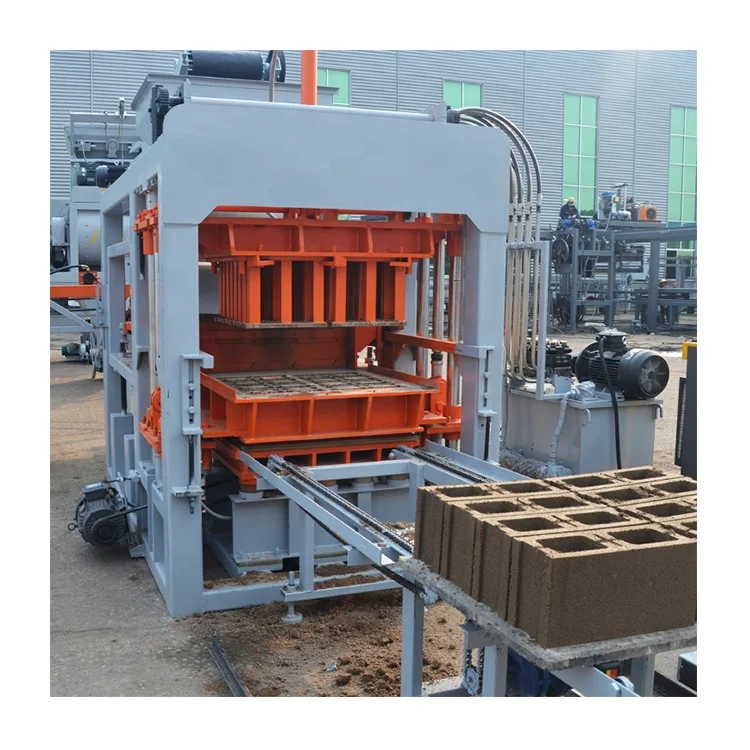
| Material Feeder | Distribution belt hopper with feeding box and platform |
| Block Receiver | Frame, convey system, idler wheels, motor and reducer with triangle belt |
| Automation Level | Automatic pallet feeding, molding and block conveying |
| Stacking Method | Stacker available as supporting equipment |
| Supporting Mixer | JQ500 concrete pan mixer |
| Supporting Conveyor | 8 m belt conveyor (6 m belt optional) |
| Assembly State | Requires foundation pouring per installation drawing |
Application Suitability
| Application | Material or Output |
|---|---|
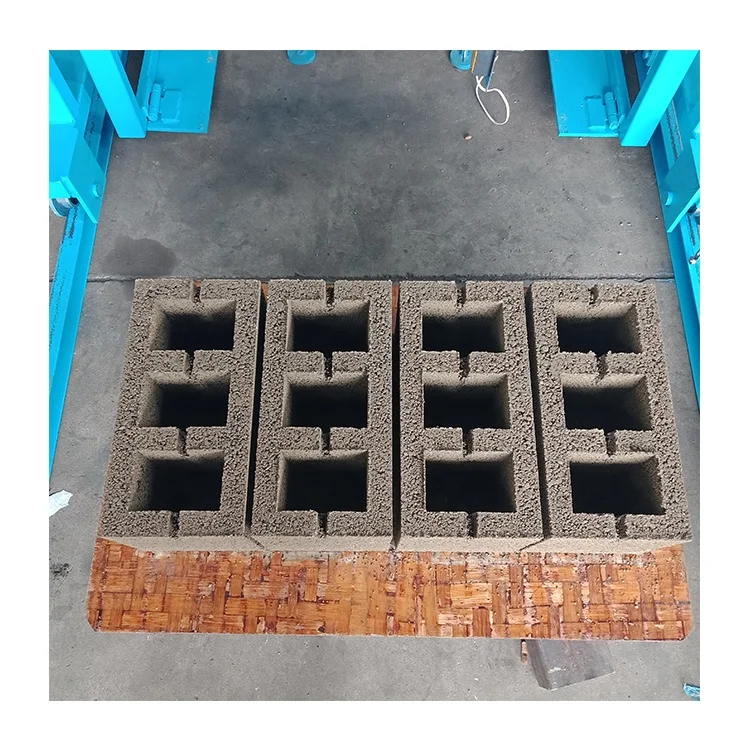
| Hollow block production | Crushed stone, river sand, cement with local aggregate gradation |
| Solid block manufacturing | Fly ash, sand, cement blends for structural walls |
| Cement brick output | Fine aggregate and cement for non-load-bearing partitions |
| On-site contractor production | Locally sourced mix designs at construction project locations |
| First block plant setup | Semi-skilled operator environment with PLC-guided cycle control |
What "18-Second Cycle" Leaves Out About Real Output
A molding cycle figure only becomes meaningful when tied to the exact block format, mix design and pallet size being run.
Buyers often compare machines on a single cycle-time number, yet that figure assumes a specific cavity count, a specific block height and a material that fills and compacts within the quoted window. When the local aggregate is coarser or the moisture content shifts, the same PLC-controlled automatic block making machine PLC controlled cycle may require an extra two or three seconds of vibration to reach full density, changing the hourly output noticeably [NEED_CITE: block format assumptions behind quoted cycle times]. The QT4-18 addresses this by letting the operator store separate recipes for each format so the frequency converter adjusts vibration duration and amplitude automatically instead of relying on manual timing.
How PLC Logic Removes Operator Guesswork
In a semi-automatic press the operator decides when the hopper has fed enough material and when vibration has lasted long enough. The QT4-18 PLC takes those decisions out of human hands. The frequency converter ramps vibration to the exact amplitude and holds it for the programmed duration, then the double-sided synchronous gears lift the mould box at a controlled speed. This sequence repeats identically across every pallet, which is the reason batch-to-batch density stays within a narrow band even when the shift changes.
Where Automation Ends and Planning Begins
The QT4-18 automates pallet feeding, material distribution, pressing and block conveying off the press. What it does not automate is stacking, curing rack handling and pallet return — those stations remain manual unless the buyer adds the optional stacker and conveyor loops. Understanding this boundary before purchase prevents the common situation where blocks leave the press automatically but then pile up waiting for a forklift [NEED_CITE: automation scope boundary in block production lines]. Specifying the pallet size against the curing yard layout and existing forklift capacity is equally important, because a mismatch there creates a bottleneck the press itself cannot solve.
Reading the Spec Sheet Against Your Mix
The 16 MPa rated hydraulic pressure must be matched to the mould cavity volume and the block density target. Higher pressure with insufficient vibration leaves weak cores; excessive vibration with low pressure causes surface cracking. The distribution belt hopper on the QT4-18 meters material into the mould cavity more evenly than a gravity-fed chute, reducing the chance of density variation across a single pallet. Pallet dimensions of 950 × 550 mm dictate how many cavities fit per cycle, so a buyer planning to produce 400 × 200 × 200 mm hollow blocks should calculate the cavities per pallet and multiply by the confirmed cycle time for that format rather than relying on a generic output claim.
The Hidden Cost of Skipping Voltage Confirmation
Commissioning delays almost always trace back to voltage, frequency or PLC display language being left unspecified at order stage. A machine wired for 380 V / 50 Hz arriving in a 440 V / 60 Hz market will trip breakers on day one, and a control panel displaying only Chinese forces the buyer to hire a translator during operator training. Confirming these three items in writing before production starts eliminates the most frequent cause of idle time after arrival [NEED_CITE: voltage and frequency standards by export market]. The QT4-18 electrical cabinet uses Schneider components, so replacement contactors are available globally, but the transformer tap setting still must match the destination grid.
Why Buyers Choose This Configuration
Block machinery is the single focus here, so the QT4-18 press, its mould, pallet and handling equipment are specified as one matched system rather than assembled from separate suppliers. Configuration is set against the buyer’s actual mix design and local aggregate instead of a catalogue default. Mould design covers the formats the buyer’s market actually sells, including custom drawings when a standard cavity layout does not fit. The automation level is selectable: a buyer can start with the automatic press and manual pallet return, then add the stacker and conveyor loops later without replacing the core machine. Installation support includes operator training on the PLC recipe system so the crew can store and recall parameters for each block format independently.
Documentation & Verification
- Line layout showing pallet flow from feeder through press to block receiver
- Capacity calculation stating the block format and cycle time assumed
- Machine specification sheet with hydraulic pressure and vibration force matched to your mix
- PLC language and voltage confirmation sheet signed before production
- Factory test record demonstrating actual cycle time on your chosen block format
- Packing photographs and customs documentation for shipment clearance
Installation, Commissioning & Support
- Foundation pouring per the 2500 × 1750 mm footprint drawing before machine arrival
- Dedicated 27.5 kW circuit with voltage matching the confirmed supply frequency
- Press arrives partially assembled; mould box and hopper bolt on at site
- PLC recipe setup during commissioning covers each block format the buyer produces
- Operator training on double-sided gear mould lifting and frequency converter adjustment
- Wear parts list with mould liner and gear tooth inspection intervals included
Before You Request a Quote
To size the QT4-18 correctly we need the block formats you plan to sell, the local aggregate type and typical moisture range, and the daily output target stated per format rather than as a single total. Share your site voltage, frequency and preferred PLC display language so the electrical cabinet is built to match. If you already have a curing yard and forklift, send the pallet dimensions you currently use so the 950 × 550 mm pallet system can be evaluated against your existing handling setup.
Frequently Asked Questions
Q: How does PLC control improve batch consistency compared to manual operation?
A: The PLC stores vibration amplitude, duration and hydraulic pressure as a recipe for each block format. The frequency converter then reproduces those settings on every cycle without operator intervention. This eliminates the variation that occurs when different operators judge fill time or vibration length by eye, keeping block density within a tight band across shifts.
Q: Does the quotation cover automatic stacking and pallet recycling?
A: The standard QT4-18 package automates pallet feeding, pressing and block conveying off the press. Stacking and pallet return are manual unless the optional stacker and conveyor loops are added. Confirm which stations you want automated so the quotation covers the full scope and no pallet handling surprise appears at commissioning.
Q: How is voltage and control language confirmed before shipment?
A: A confirmation sheet listing supply voltage, frequency and PLC display language is sent for buyer signature before production begins. The electrical cabinet is then wired to those values. This step prevents the most common cause of idle time after arrival, where a mismatch forces rewiring or translator hire during operator training.
Q: Can the machine be upgraded from semi-automatic to fully automatic later?
A: The QT4-18 press core remains the same across automation levels. A buyer running manual pallet return can later add the stacker, pallet conveyor and curing rack handling without replacing the press. The PLC already contains the logic for these stations, so the upgrade is primarily a mechanical and wiring addition.
Q: What is the actual cycle time for specific block formats rather than a generic figure?
A: The 18–25 second range depends on block height, cavity count and material fill characteristics. A 400 × 200 × 200 mm hollow block on standard aggregate typically sits at the upper end, while a thinner solid brick may cycle faster. Request a factory test record on your exact format to obtain the confirmed number for capacity planning.