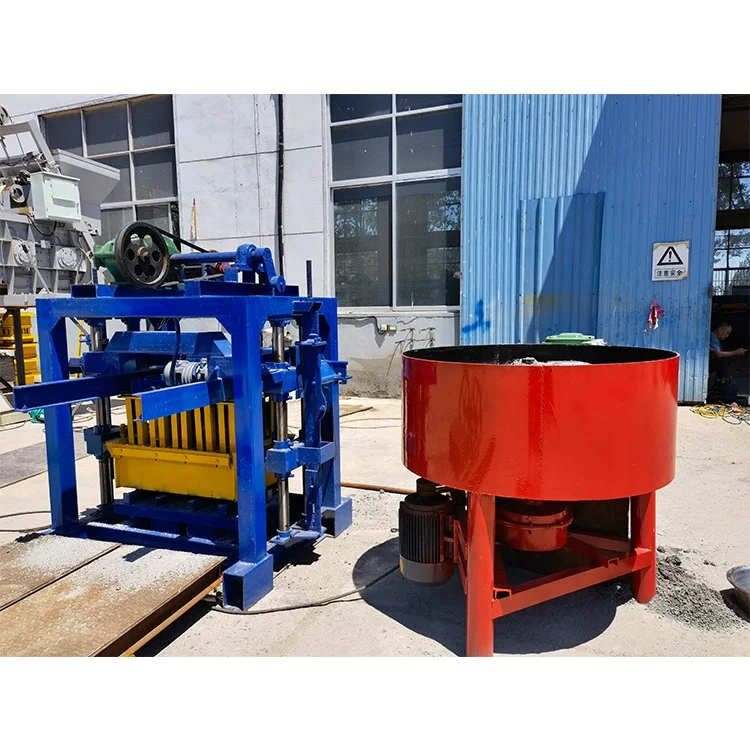
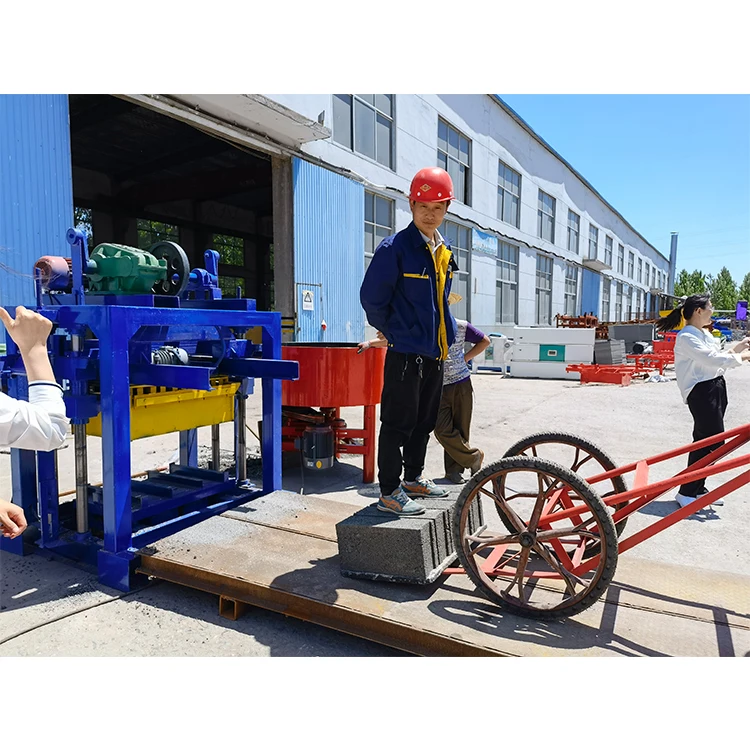
Description
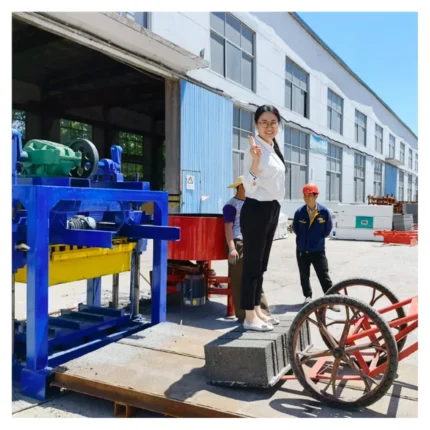
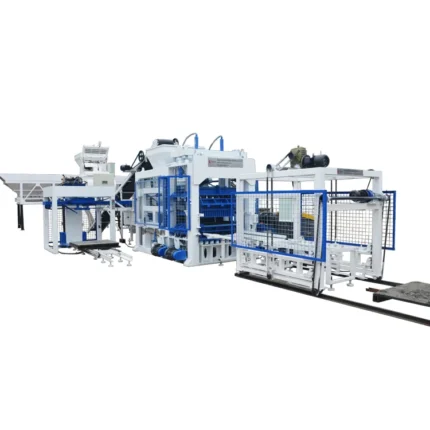
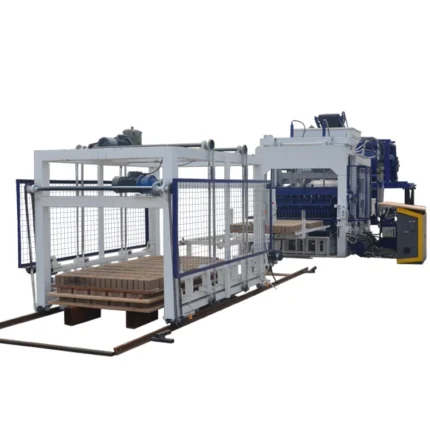
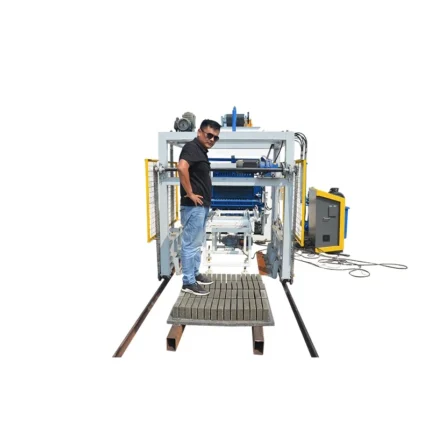
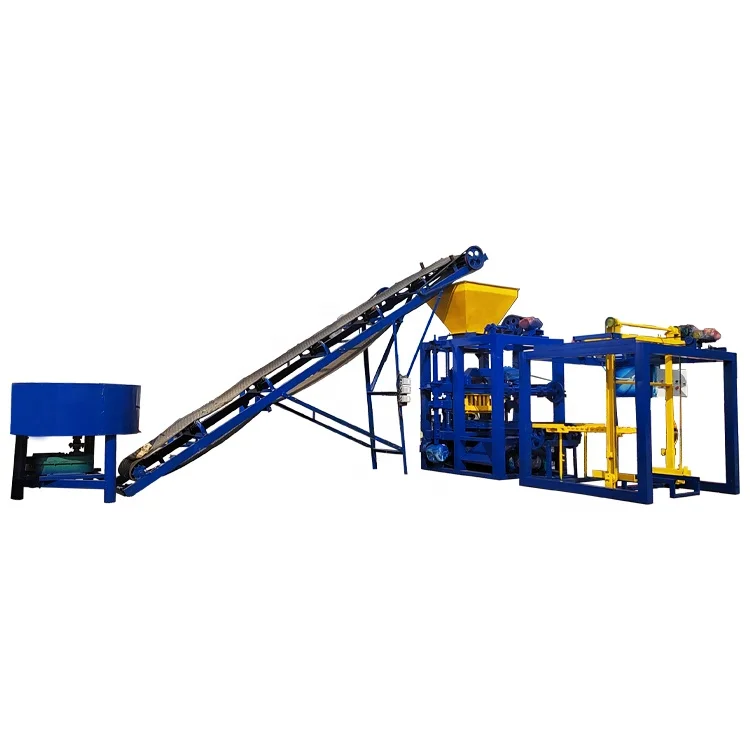
Control Architecture — The QTJ4-40 is wired and programmed for selectable automation, so a buyer can start semi-automatic today and add automatic pallet feeding, stacking, or cubing later without replacing the press.
Technical Specifications
| Parameter | Value |
|---|---|
| Model | QTJ4-40 |
| Product Type | Semi-Automatic Concrete Block Making Machine |
| Rated Power | 10.4 kW |
| Molding Cycle | 40 s |
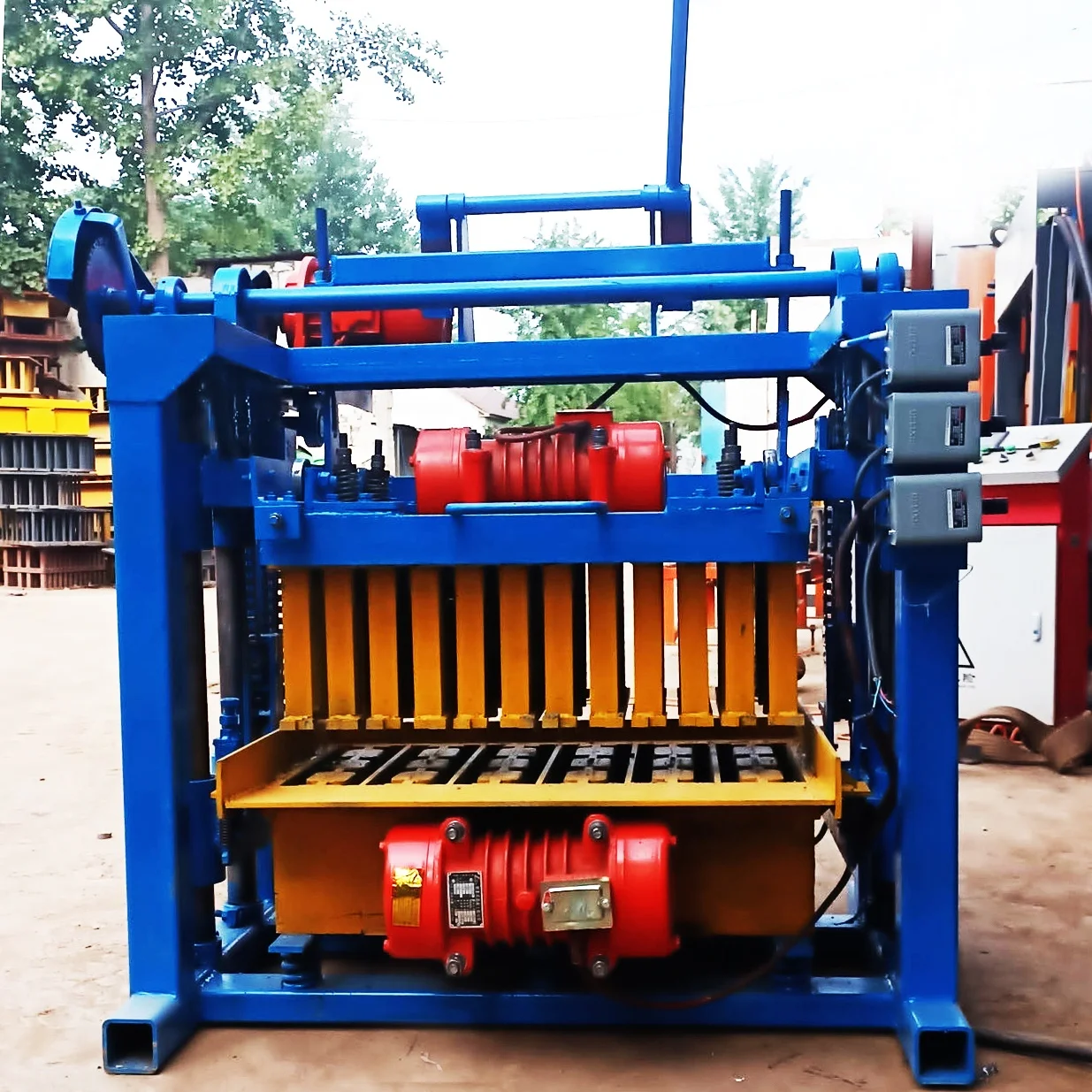
| Vibration System | Bed mould vertical vibration + upper mould compression vibration |
| Control System | Semi-automatic operation with top die push-pull and automatic scraper |
| Pallet Size | 850 × 450 mm |
| Overall Dimensions (L×W×H) | 1350 × 1460 × 1800 mm |
| Machine Weight | 1 T |
| Raw Materials | Concrete, sand, cement, fly ash, lime, gypsum |
| Voltage | Configured to buyer’s local voltage |
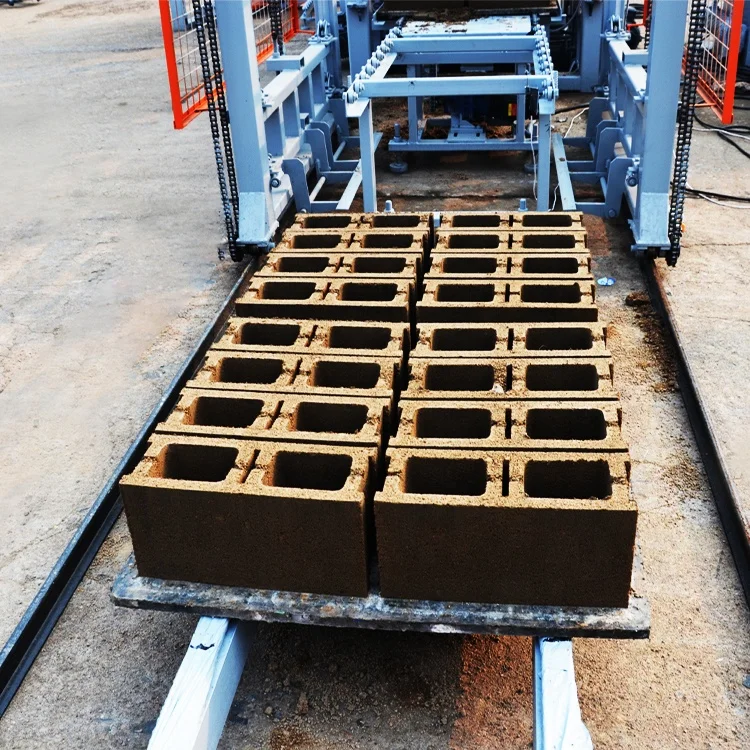
| Theoretical Productivity | 360 pcs/h for 400×200×200 mm hollow block (4 pcs/mould); 450 pcs/h for 400×150×200 mm hollow block (5 pcs/mould); 800 pcs/h for 225×112.5×60 mm solid brick (9 pcs/mould) |
| Output Capacity | 2000–2500 pcs / 8 h (basis not stated in source — confirm block format and mix) |
Application Suitability
| Application | Material or Output |
|---|---|
| Small-scale hollow block production | Concrete and fly ash mixes, 400×200×200 mm or 400×150×200 mm formats |
| Solid brick manufacturing | Cement, sand, and lime blends, 225×112.5×60 mm format |
| On-site contractor block production | Local aggregate and cement, hollow and solid formats |
| First-time block plant startup | Standard concrete mixes with semi-automatic operation |
Why the Control Language Question Must Come Before the Quote
A PLC screen in the wrong language stops a machine before it makes a single block.
I have stood in a Tanzanian block yard where the operator could not read the fault codes on the control panel because the display shipped in a language the crew did not speak. The machine sat idle while we waited for translated manuals and a reconfigured HMI [NEED_CITE: language configuration requirements for exported industrial machinery]. Commissioning delays like this are entirely preventable. When sourcing an automatic block making machine PLC controlled upgrade, the voltage, frequency, and display language must be locked in before production begins, not discovered when the crate arrives on site.
From Semi-Automatic Baseline to Intelligent Operation
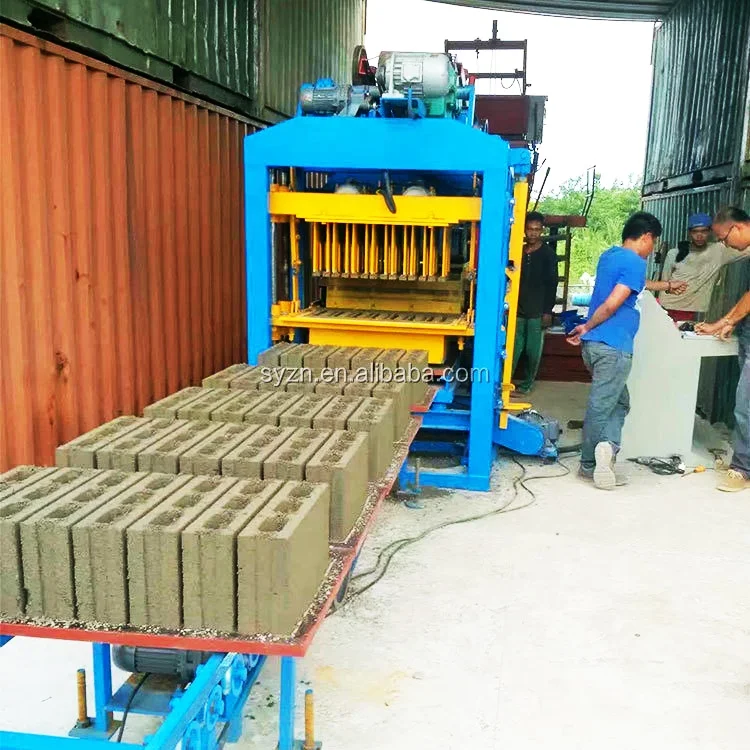
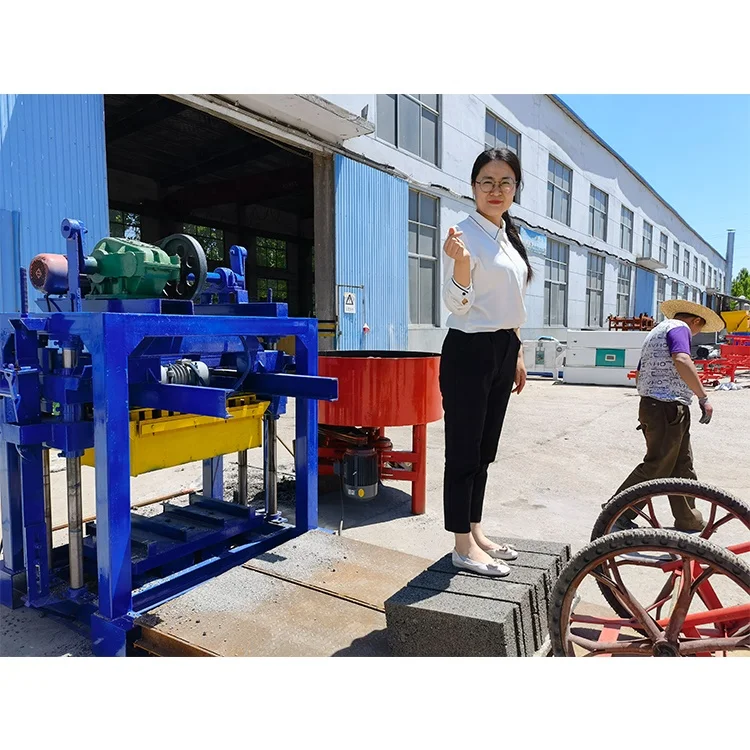
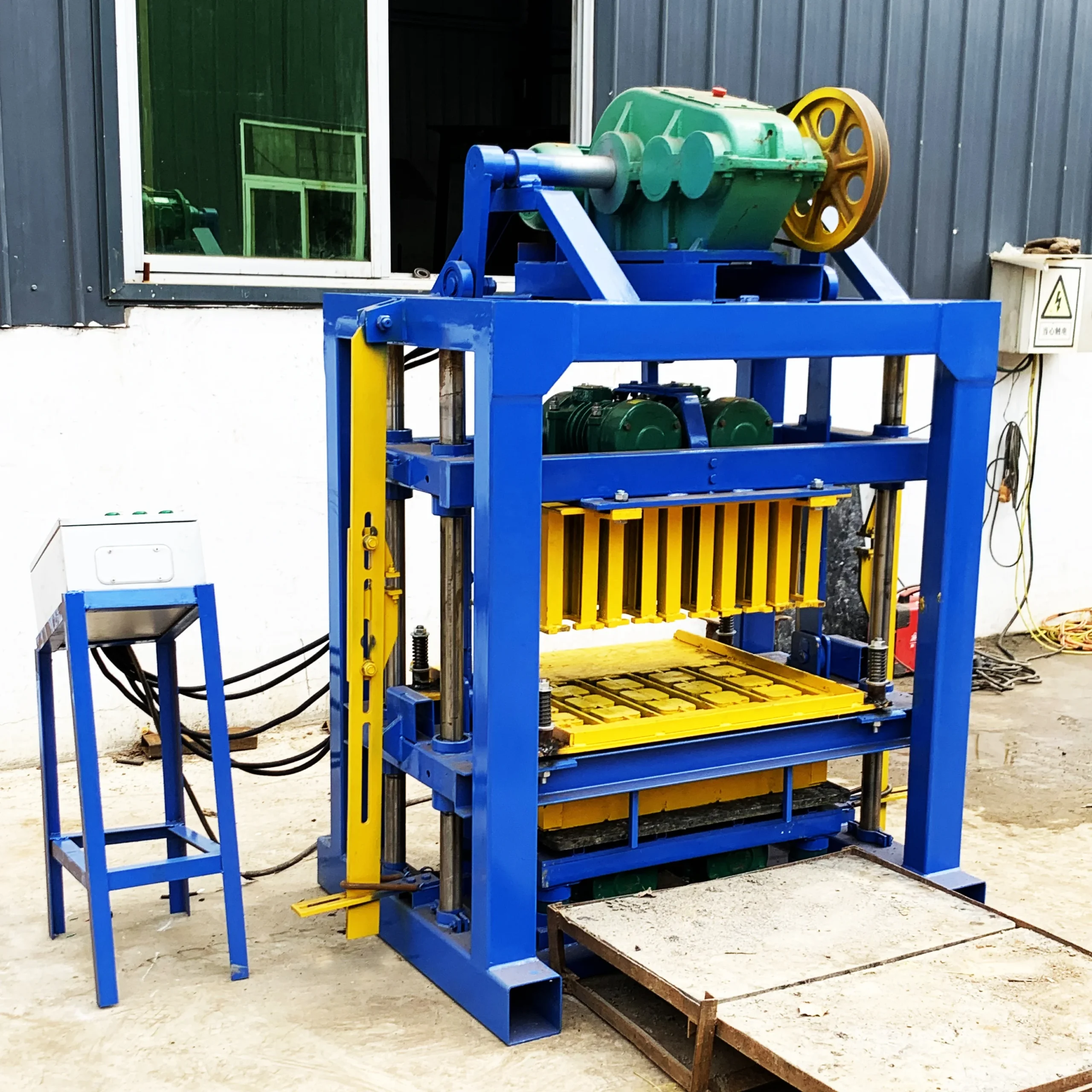
The QTJ4-40 arrives as a semi-automatic press with a top die push-pull mechanism and an automatic scraper that reduces the operator’s per-cycle intervention. The vibration system combines bed mould vertical vibration with upper mould compression, which gives each block a more uniform density across the batch. This baseline is deliberately configured so that an automatic block making machine PLC controlled upgrade can be layered on — adding automatic pallet feeding, stacking, or cubing — without swapping out the core press structure.
What Automation Actually Removes from the Operator
On a fully manual machine, the operator shovels material, positions pallets, triggers vibration, strips the mould, and carries wet blocks to the curing area. Each of those tasks introduces a variable that affects block consistency. The automatic block making machine PLC controlled upgrade path on this model targets those variables one at a time: a batching system handles material proportioning, an automatic pallet feeder sets cycle rhythm, and a stacker removes the heaviest handling step [NEED_CITE: labor reduction through incremental automation in block plants]. The operator’s role shifts from physical labor to monitoring and quality checks.
Vibration, Pressure, and What They Mean for Block Strength
The dual vibration system — vertical vibration at the bed mould combined with compression vibration from the upper mould — works to compact the concrete mix from two directions simultaneously. This matters because local aggregate gradation varies widely across African and South Asian markets. A mix with coarser crushed stone needs different vibration energy than one with fine river sand. The 40-second molding cycle provides enough dwell time for the vibration to consolidate the mix fully, and the pallet size of 850 × 450 mm is a standard dimension that matches common curing rack spacing and small forklift forks found at emerging-market block yards.
What Happens When the Pallet Size Does Not Match
A pallet dimension chosen without checking the buyer’s existing curing racks and forklift means wet blocks get stacked on the ground by hand. The curing area becomes a bottleneck regardless of how fast the press cycles [NEED_CITE: pallet handling mismatch causing production delays]. The 850 × 450 mm pallet on the QTJ4-40 is specified to align with standard rack widths, and the automation upgrade path assumes this pallet size when integrating automatic pallet feeders and stackers downstream.
Why the Configuration Conversation Starts Here
Block machinery is the single focus of the production line, which means the press, mould, pallet, and handling equipment are specified as one matched system rather than assembled from separate suppliers. The configuration is set against the buyer’s actual mix design and local aggregate, not a catalogue default. Mould design covers the formats the buyer’s market actually sells, including custom drawings. The automation level is selectable, so a buyer starts semi-automatic and adds intelligence as volume grows. Installation support includes commissioning and operator training so the crew understands the control system on day one.
Documentation & Verification
- Machine specification sheet listing every component and its rating
- Mould drawing and format list matched to buyer’s target products
- Voltage, frequency, and control language confirmation record before production
- Hydraulic and electrical schematic for local electrician reference
- Factory test record on buyer’s specified block format before dispatch
- Operation and maintenance manual in buyer’s preferred language
Installation, Commissioning & Support
- 10.4 kW rated power requires a dedicated circuit; confirm local voltage before wiring
- Overall footprint of 1350 × 1460 mm fits small workshop bays with minimal foundation prep
- Machine weight of 1 T allows single-forklift unloading at most sites
- First commissioning includes cycle timing verification on the buyer’s actual mould and mix
- Operator training covers semi-automatic scraper operation, die push-pull sequence, and fault reading
- Wear parts list and mould spares recommended for the first year of production
What We Need to Size Your Configuration
To move from a general quotation to a matched configuration, share the block format and dimension you plan to sell, your target daily output, and the raw materials available locally. We also need your site voltage and frequency, plus the preferred language for the control display and documentation. If you already have curing racks or a forklift, send the dimensions so the pallet and handling spec align from the start.
Frequently Asked Questions
Q: How is output capacity verified per block format rather than per generic cycle?
A: The 40-second molding cycle produces different piece counts depending on the mould loaded. For a 400×200×200 mm hollow block at 4 cavities per mould, the theoretical rate is 360 pieces per hour. For a 225×112.5×60 mm solid brick at 9 cavities, it reaches 800 pieces per hour. We state capacity against the specific format you will run, not a blanket cycles-per-hour number.
Q: What automation upgrades are available from this semi-automatic baseline?
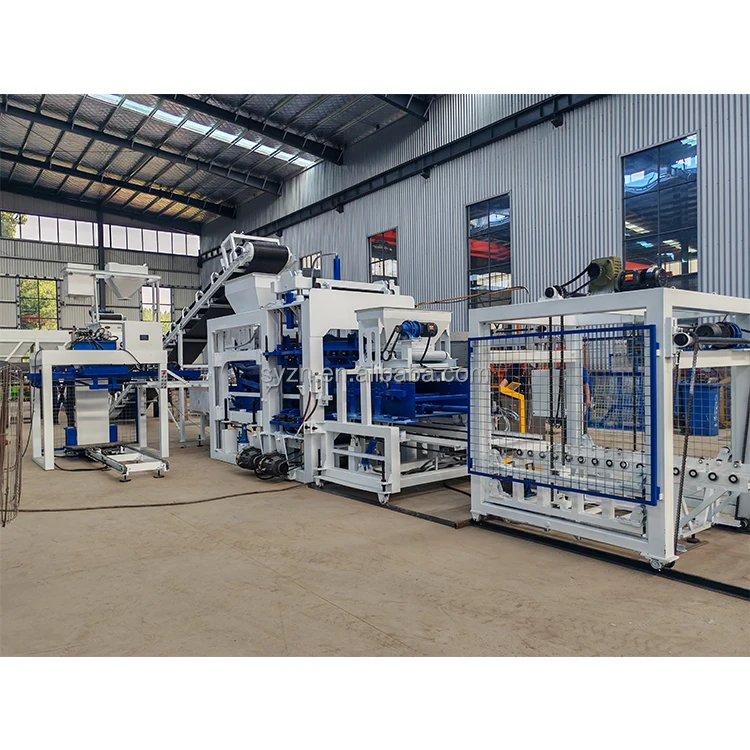
A: The QTJ4-40 is configured to accept an automatic block making machine PLC controlled upgrade in stages. Buyers can add automatic pallet feeding first, then stacking, then cubing. Each stage integrates with the existing press without requiring a full machine replacement, and the control system is prepared for these additions from the initial build.
Q: How is voltage, frequency, and control language confirmed before shipment?
A: Before production begins, we request your local voltage and frequency specifications along with the language your operators read. These are written into the order confirmation and verified during the factory test. The control display, manual, and fault codes all ship in the confirmed language to prevent idle time at commissioning.
Q: What is the mould change procedure and can it be automated later?
A: The top die push-pull mechanism and automatic scraper reduce the physical effort of each cycle, including mould changeovers. The upgrade path includes an automated mould change system that further cuts changeover time. Current manual change procedure and future automation compatibility are both documented in the operation manual.
Q: Which wear parts and spares should be ordered with the first machine?
A: The recommended first-order spares list is built around the vibration system components, hydraulic seals, scraper blades, and die contact surfaces that experience regular friction. We supply this list with the quotation so spares arrive with the machine rather than waiting for an international shipment after the first failure.