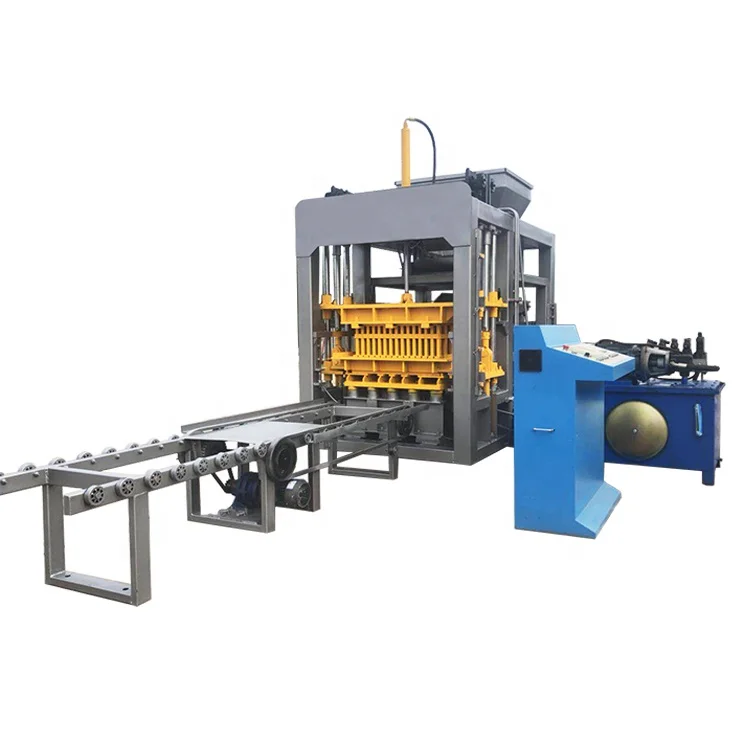
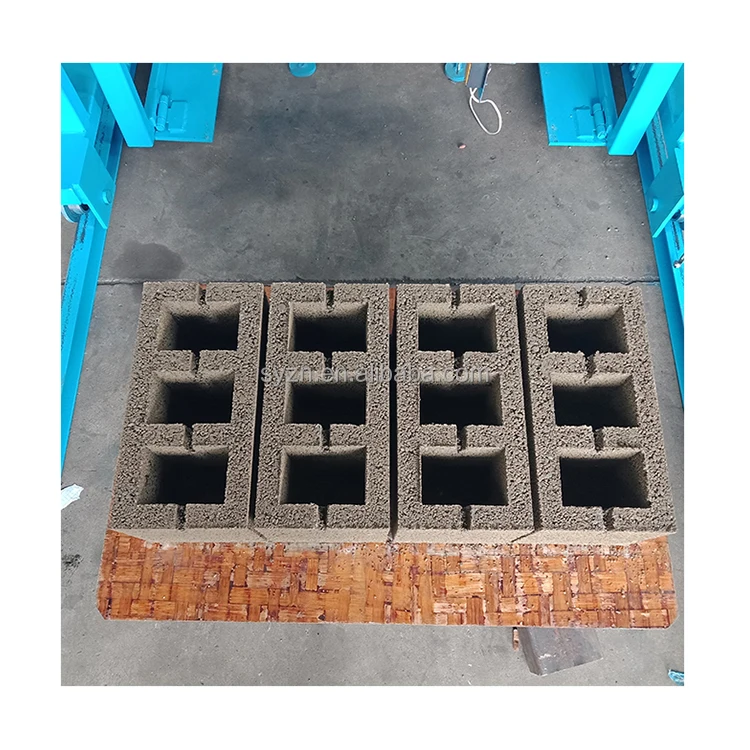
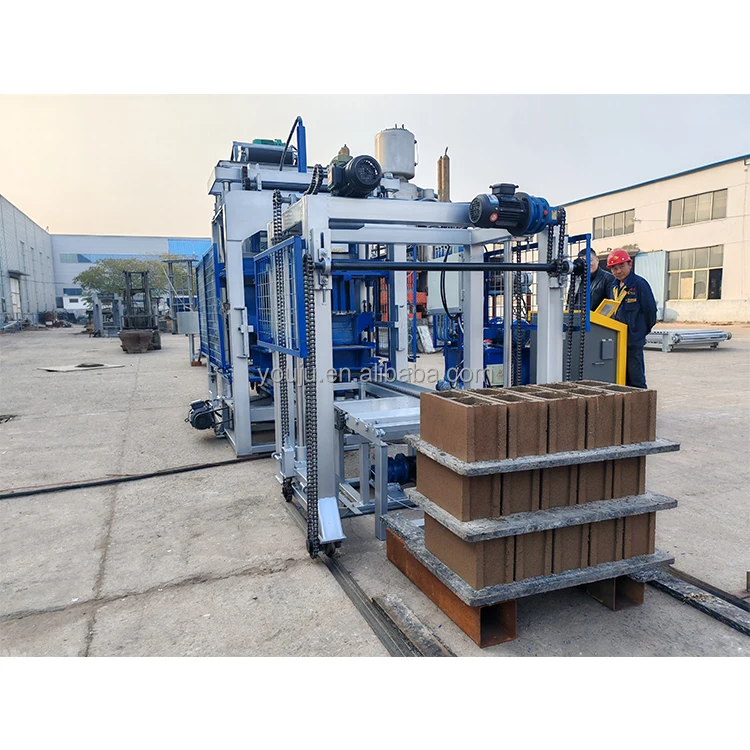
Description
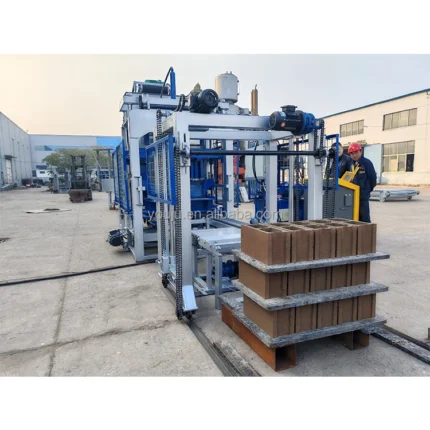
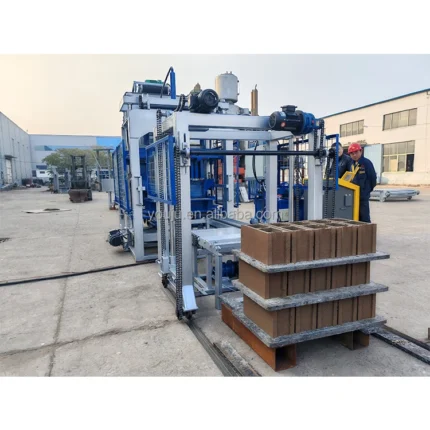
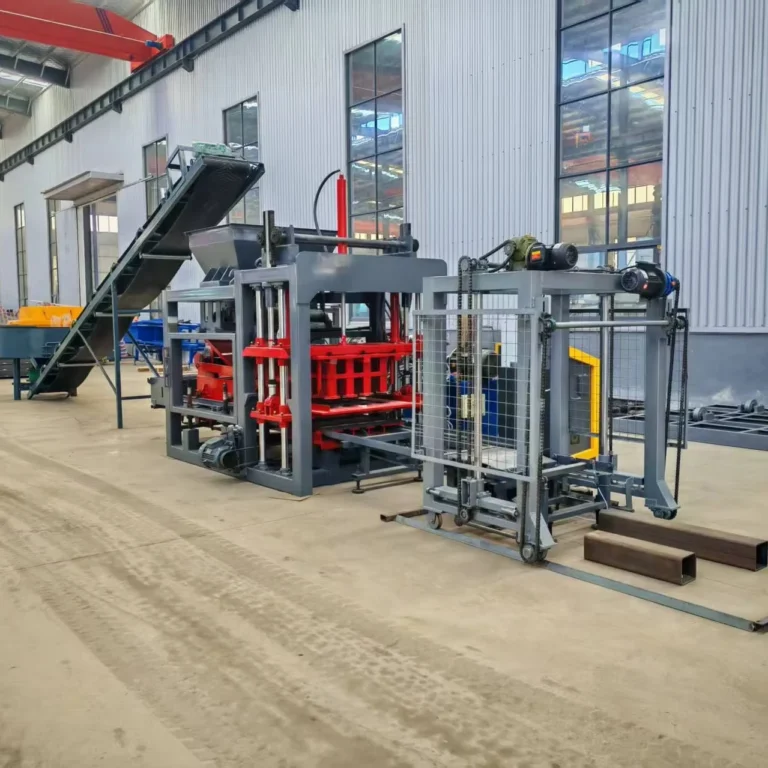
Configurable automation architecture — the QTF3-20 is specified as a matched system where PLC logic, pallet feeding and stacking are designed to grow with your production volume rather than replaced entirely.
Technical Specifications
| Parameter | Value |
|---|---|
| Model | QTF3-20 |
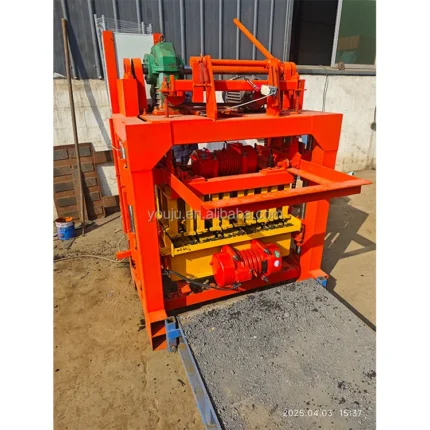
| Product Type | Semi-Automatic Stationary Concrete Block Making Machine |
| Control System | Semi-automatic with PLC interface; upgradeable to full automatic pallet feeding, stacking and cubing |
| Automation Level | Semi-automatic (manual pallet handling at base tier) |
| Mould Format Capability | Paving block, curbstone, hollow block, solid block |
| Output Capacity — Paving Block 200×100×60 mm | 15 pcs/mould, 2700 pcs/hour, 21600 pcs/8 hours (basis: stated format) |
| Output Capacity — Hollow Block 400×200×200 mm | 3 pcs/mould, 540 pcs/hour, 4320 pcs/8 hours (basis: stated format) |
| Output Capacity — Paving Block 225×112.5×60 mm | 8 pcs/mould, 1440 pcs/hour, 11520 pcs/8 hours (basis: stated format) |
| Hydraulic Pressure | To be confirmed against buyer’s mix design and target block strength |
| Vibration Force | To be confirmed against local aggregate characteristics |
| Pallet Size | To be confirmed against buyer’s curing area and existing forklift dimensions |
| Cycle Time per Format | To be confirmed per block format |
| Mould Change Time | To be confirmed |
| Stacking Method | Manual at base tier; automatic stacking and cubing available as upgrade |
| Voltage & Frequency | Customizable to buyer’s local supply |
| Warranty | 1 year (excluding wearing parts) |
Application Suitability
| Application | Material or Output |
|---|---|
| Concrete paving block production | Crushed stone, sand, cement and pigment for roads, walkways and parking areas |
| Curbstone and kerbstone manufacturing | High-density concrete mixes for infrastructure and municipal projects |
| Hollow block production for building walls | Lightweight or standard aggregate blends with cement binder |
| Solid concrete block production | Dense aggregate mixes for load-bearing and partition walls |
| Small-to-medium plant operations | Semi-automatic workflow with planned automation upgrade path |
Why "Semi-Automatic" Means Different Things to Different Suppliers
A PLC controlled semi-automatic block making machine should define exactly which stations are automated and which remain manual — not leave it ambiguous until the crate arrives.
I spent years watching buyers discover on commissioning day that "semi-automatic" meant the press cycled on its own but pallets were still moved by hand, cured racks were loaded manually, and stacking was someone’s full-time job. The disappointment is not about the machine itself — it is about a specification that was never pinned down. With the QTF3-20, the automation boundary is drawn explicitly: the PLC governs the press cycle, vibration sequence and hydraulic timing, while pallet feeding, stacking and cubing sit on the other side of the line, available as defined upgrade packages rather than vague promises [NEED_CITE: automation level definitions in block making machinery specifications].
The real cost of this ambiguity shows up weeks later when the buyer realizes their labour plan was built around an automatic stacker that was never in the contract. An automatic QTF3-20 block machine upgrade is straightforward when the base machine was designed for it from the start — hydraulic ports pre-plumbed, PLC I/O reserved, pallet conveyor mounting points cast into the frame.
Where the PLC Earns Its Place in Block Consistency
Batch-to-batch density variation is the complaint I hear most often from plant owners running manual or poorly configured presses. The operator shortens the vibration cycle to chase throughput, or the hydraulic dwell drifts as the oil warms up, and block strength scatters across a range that fails site inspections. The PLC on this PLC controlled semi-automatic block making machine locks vibration duration, hydraulic pressure hold time and cycle sequence into a recipe that cannot be shortened by an operator chasing a daily count.
The Upgrade Path from Semi-Automatic to Full Line Automation
Starting with semi-automatic operation makes sense when volume is still proving itself or when capital must be staged across two financial years. What matters is whether the machine was engineered with the upgrade in mind. The QTF3-20 frame reserves mounting geometry for an automatic pallet feeder, a wet-side stacker and a cubing station so that adding those modules later does not require cutting, welding or rewiring the base machine. The PLC I/O map ships with reserved channels for each future station [NEED_CITE: PLC I/O reservation practices for staged automation in concrete equipment].
Reading the Specifications That Actually Shape Your Output
Hydraulic pressure and vibration force are not independent numbers to compare across brochures — they interact with the buyer’s specific mix design and local aggregate to determine whether a block holds together off the pallet or crumbles at the edges. A high vibration force with insufficient hydraulic clamp will flash the mix out of the mould cavity; excessive pressure with weak vibration leaves voids and low density. The correct pairing is established during configuration against the buyer’s actual material samples, not copied from a catalogue default. Pallet size is another dimension that reaches beyond the press itself: it must match the curing rack spacing the buyer already has and the forklift tine width on the shop floor, otherwise cured blocks sit on the ground waiting for handling equipment that does not exist. Cycle time only means something when tied to a specific block format — a hollow block cycle and a paving block cycle on the same machine are entirely different numbers, and any capacity discussion must state which format it assumes.
What Happens When Voltage and Language Are Confirmed After Shipment
A machine arriving with the wrong voltage rating sits in a container while transformers are sourced locally, sometimes for weeks. A PLC display in a language the operators cannot read turns every parameter adjustment into a guessing game that invites mistakes. I have seen commissioning delayed because the frequency mismatch was caught only when the vibration motor ran at the wrong speed and blocks came out under-dense. These are not engineering failures — they are communication failures that a pre-production confirmation checklist eliminates entirely [NEED_CITE: voltage and frequency standards by export market].
Why Buyers Specifying Automation Choose This Configuration
The machine, mould, pallet and handling equipment are specified as a single matched system rather than assembled from separate suppliers, so cycle times align across stations instead of the press waiting on a slow stacker. Configuration is set against the buyer’s actual mix design, local aggregate and target block format rather than a catalogue default that may not match regional materials. Mould design covers the formats the buyer’s market actually sells, including custom drawings when standard moulds do not fit the local specification. The automation level is selectable at order and upgradeable in the field, meaning a buyer can start semi-automatic today and add automatic stacking and cubing when production volume justifies the investment without replacing the press itself.
Documentation & Verification
- Line layout showing QTF3-20 station positions and pallet flow path for your plant footprint
- Capacity calculation stating the exact block format assumed for each output figure
- Mould drawing and format list confirming the profiles your market requires
- Hydraulic and electrical schematic for your maintenance team before arrival
- Voltage, frequency and PLC display language confirmation signed before production
- Factory test record on your specified block format before dispatch
Installation, Commissioning & Support
- Foundation plan matching the QTF3-20 footprint and dynamic vibration load
- Power supply confirmation for the specified voltage and frequency before wiring
- Machine shipped in defined assembly state with dismantling schedule for container loading
- Commissioning includes PLC parameter loading matched to your mix and block format
- Operator training covers PLC recipe selection, mould change procedure and daily checks
- Wear parts and mould list with part numbers provided at handover for reorder planning
Before You Send the Inquiry
When you are ready to scope this PLC controlled semi-automatic block making machine for your plant, the details that shape the proposal most are your target block formats with dimensions, the daily output you need per format, and the characteristics of your local aggregate and cement supply. Confirm your site voltage and frequency along with the preferred PLC display language so that electrical build matches your grid from the start. If you have existing curing racks, forklifts or pallet inventory, share those dimensions — they determine pallet size and handling configuration more than any catalogue default.
Frequently Asked Questions
Q: How is the output capacity verified — which block format does each pcs/hour figure assume?
A: Every capacity figure on this page is tied to a stated block format and mould cavity count. The 2700 pcs/hour figure assumes a 200×100×60 mm paving block at 15 cavities per mould, while the 540 pcs/hour figure assumes a 400×200×200 mm hollow block at 3 cavities. Your actual daily output depends on the format mix you run and the cycle time achieved with your specific material.
Q: Can the control system be upgraded from semi-automatic to full automatic stacking later?
A: Yes. The QTF3-20 frame is built with reserved mounting geometry and PLC I/O channels for an automatic pallet feeder, stacker and cubing station. Upgrading later means bolting on those modules and loading the corresponding PLC program — no structural rework or rewiring of the base press is required.
Q: What voltage, frequency and PLC display language options are confirmed before shipment?
A: The motor voltage and supply frequency are confirmed against your local grid during the proposal stage and locked before production begins. The PLC display language is confirmed at the same point so operators can read parameter screens and alarms in their working language from the first day of commissioning.
Q: How are vibration force and hydraulic pressure matched to local aggregate and mix design?
A: During configuration, your local aggregate type, grading and cement ratio are reviewed to determine the vibration amplitude and hydraulic clamp pressure needed for target block density. The PLC stores these values as a recipe so every batch runs the same parameters regardless of shift or operator.
Q: What automation components are included versus what requires a separate upgrade package?
A: The base QTF3-20 includes PLC-governed press cycling, vibration control and hydraulic sequencing with manual pallet handling. Automatic pallet feeding, wet-side stacking and cubing are defined upgrade packages with their own scope and pricing, documented separately so the automation boundary is clear before you place the order.