Description
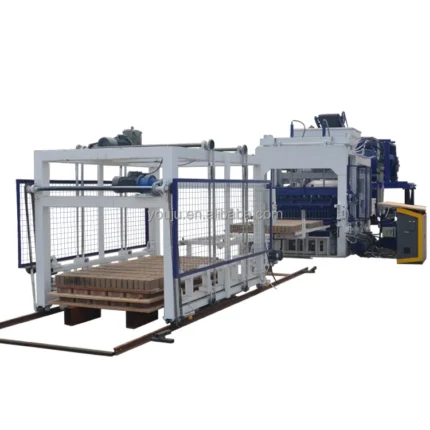
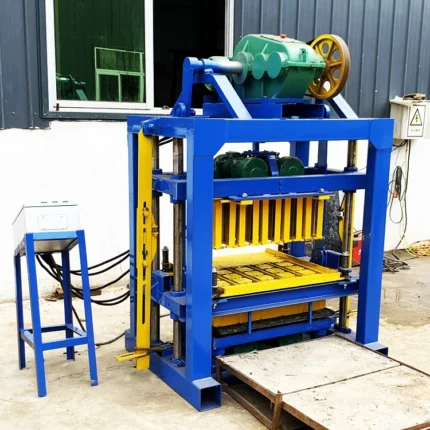
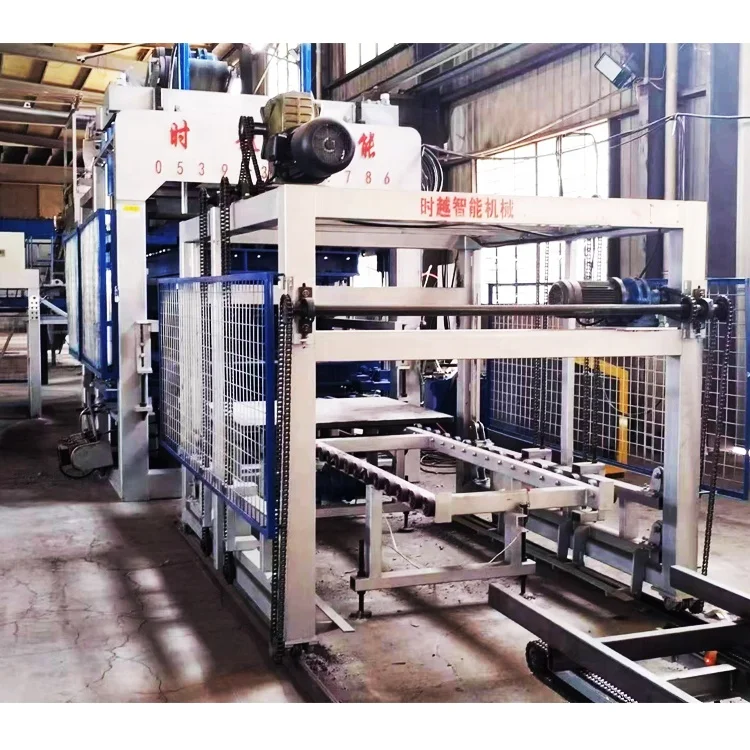
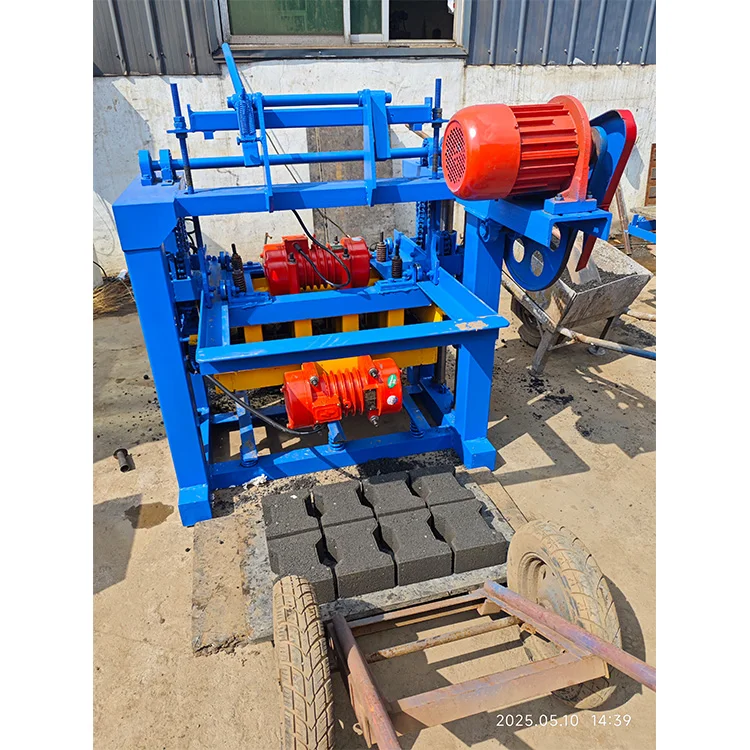
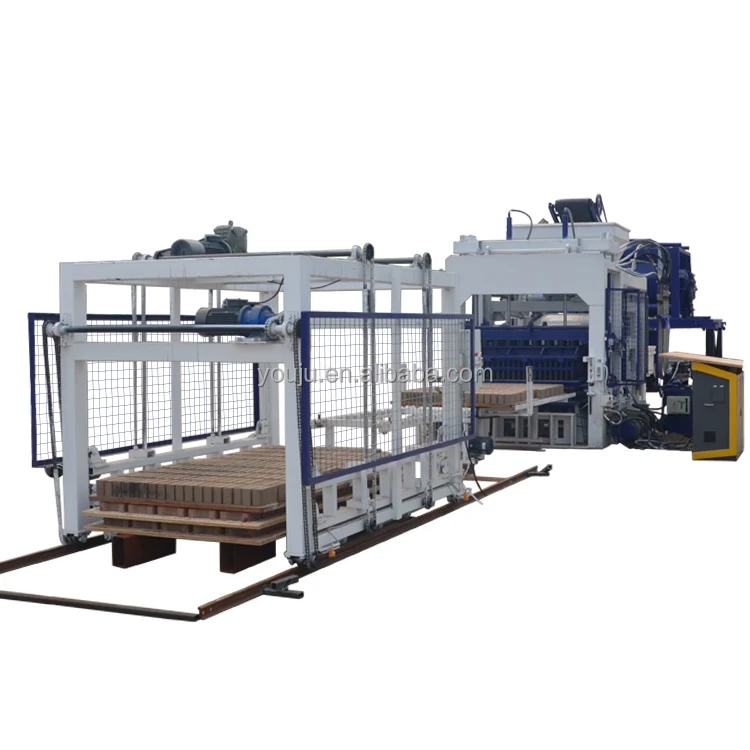
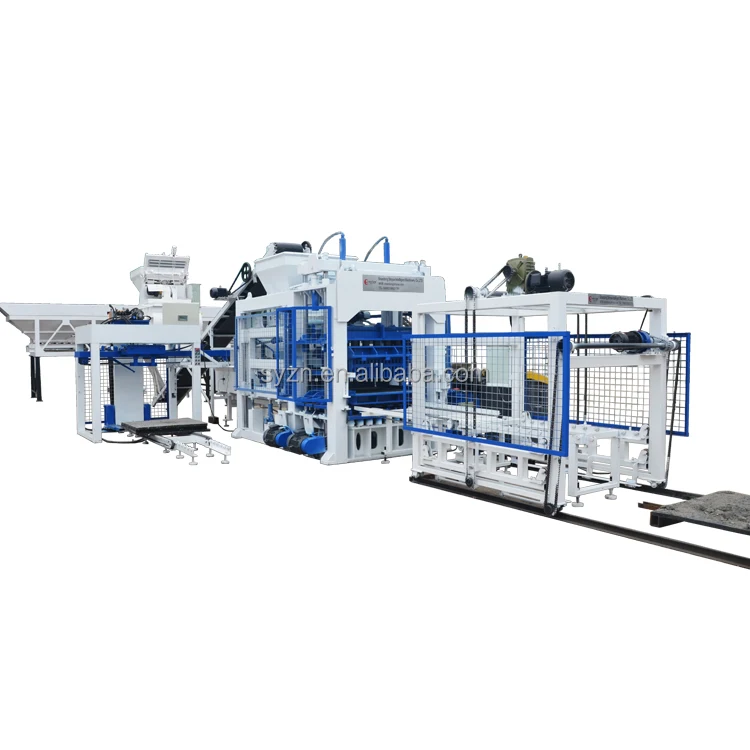
Upgradable automation architecture — the QTJ4-25 starts as a semi-automatic press and accepts automatic pallet feeding, stacking, and PLC-driven batching modules as your output scales, eliminating the need for a second machine purchase.
Technical Specifications
| Parameter | Value |
|---|---|
| Model | QTJ4-25 |
| Product Type | Stationary Block Making Machine |
| Overall Dimensions (L×W×H) | 3060×1730×2580 mm |
| Total Weight | 4 T |
| Vibration Force | 45 kN |
| Cycle Time | 25 s |
| Pallet Size | 850×550 mm |
| Block Height Range | 40–280 mm |
| Workshop Area | 50–150 m² |
| Material Storage Area | 300–500 m² |
| Mixer Model | JQ500 |
| Belt Conveyor Length | 8 m |
| Motor Brand | Siemens or ABB |
| Voltage & Frequency | 380V / 3-phase / 50Hz (customizable to local voltage) |
| Automation Level | Semi-automatic |
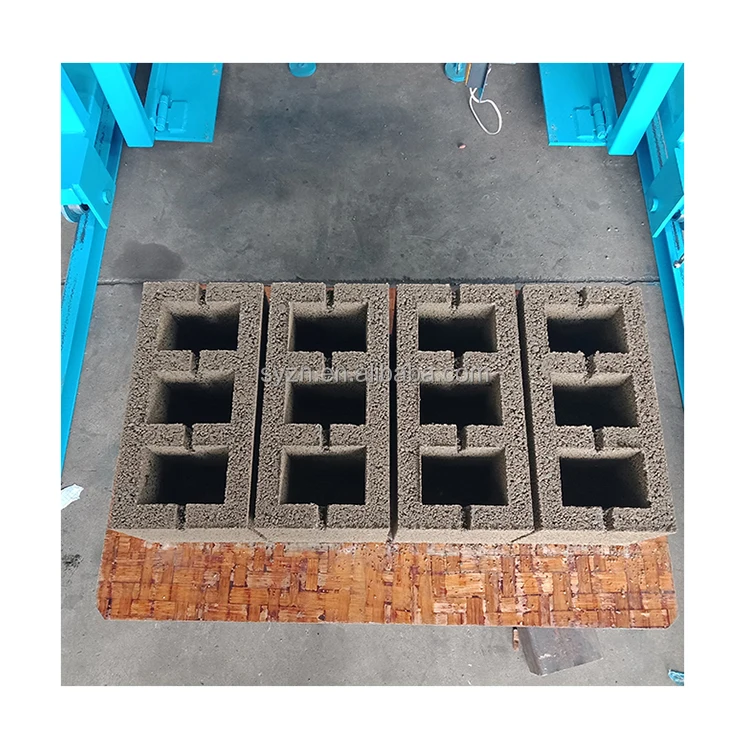
| Output — 400×200×200 mm hollow block | 480 pcs/h (4 pcs/mould) |
| Output — 400×150×200 mm hollow block | 600 pcs/h (5 pcs/mould) |
| Output — 400×100×200 mm hollow block | 840 pcs/h (7 pcs/mould) |
| Output — 240×115×53 mm solid brick | 2880 pcs/h (24 pcs/mould) |
| Mould Change Method | Manual |
| Control System | Electric control with PLC option |
| Key Features | Interchangeable moulds, customizable voltage, CE-declared compliance |
Application Suitability
| Application | Material or Output |
|---|---|
| Hollow block production for wall construction | Crushed stone, sand, cement, and fly ash mixes |
| Solid brick manufacturing | Cement and fine aggregate blends |
| Interlocking block and paver production | Colored concrete mixes with surface pigments |
| Kerbstone and curb production | High-strength concrete with coarse aggregate |
| Grassed and revetment brick manufacturing | Porous concrete mixes for drainage applications |
| Small to medium-scale block plant operations | Semi-automatic cycling with manual pallet handling |
What the "25-Second Cycle Time" Actually Means on the Floor
Every output figure here is tied to a specific block size, mould cavity count, and pallet dimension — not a generic cycles-per-hour claim.
Buyers often receive quotations stating a machine produces a certain number of blocks per hour without disclosing which format that number assumes. When the plant starts running a different block — say switching from 400×200×200 mm hollow blocks to 240×115×53 mm solid bricks — the actual daily output diverges sharply from the quoted expectation. On the QTJ4-25, the 25-second cycle time applies across all formats, but the hourly output shifts depending on how many cavities the chosen mould carries. This matters because a plant owner budgeting for a daily target needs to see the calculation per format, not a single headline number [NEED_CITE: block format and mould cavity assumptions in capacity quotations]. An automatic stationary block making machine PLC controlled setup further refines this by locking the cycle consistency, so batch-to-batch variation stays within predictable limits.
From Semi-Automatic Start to Full Line Automation
The QTJ4-25 ships as a semi-automatic stationary block machine with electric-controlled cycling, meaning the press itself runs on a timed cycle while pallet feeding and stacking remain manual. For a first-time block plant entrepreneur, this keeps the initial investment contained while still delivering consistent vibration and pressing on every cycle. When daily volume grows, the machine accepts automatic pallet feeding modules, stacking systems, and cubing stations — converting the line from manual pallet handling to a fully automated workflow without replacing the press.
Control Language and the Commissioning Delay That Shouldn’t Happen
I once stood in a block plant in West Africa watching an operator stare at a PLC screen full of English text, unable to confirm his batching parameters because the interface language had never been discussed during the order. The QTJ4-25 control system is configurable for PLC type and display language, but this must be confirmed before production begins — not discovered during on-site commissioning. Voltage and frequency are equally critical: a machine wired for 380V/50Hz arriving at a site running 440V/60Hz will not start without a transformer swap and motor rewiring, adding days to the installation timeline [NEED_CITE: voltage and frequency mismatch during equipment commissioning]. Specifying the automatic stationary block making machine PLC controlled configuration with the correct language and electrical standard upfront removes these delays entirely.
Vibration Force, Pallet Size, and Why Both Must Match Your Operation
The 45 kN vibration force on the QTJ4-25 is calibrated to compact standard cement-aggregate mixes into dense, structurally sound blocks. However, vibration alone does not guarantee consistent block strength — the force must be matched to the buyer’s specific mix design and local aggregate gradation. A plant using locally sourced crushed limestone with a different particle shape than the factory test material may need mould or vibration adjustments to achieve the same density. The 850×550 mm pallet size determines how many blocks fit per cycle and must align with the curing area layout and the forklift capacity already on site. A pallet that does not match existing handling equipment creates a bottleneck between the press and the curing racks, regardless of how fast the machine cycles. The block height range of 40–280 mm covers hollow blocks, solid bricks, pavers, and interlocking formats on a single pallet size, giving the plant format flexibility without changing the base infrastructure.
The Cost of Skipping the Automation Upgrade Conversation
Plant owners who purchase a semi-automatic machine without mapping out the automation upgrade path often find themselves locked into manual pallet handling long after volume has outgrown the labour model. The result is stacking inconsistency, higher breakage during curing, and output variability that undermines delivery commitments. Another common gap: ordering a machine without confirming whether the quotation includes pallet feeding, stacking, and curing rack handling — only to discover these stations were never part of the scope, leaving fresh blocks stacked by hand at the end of every cycle [NEED_CITE: missing auxiliary equipment in block machine quotations]. The automatic stationary block making machine PLC controlled upgrade path on the QTJ4-25 exists specifically to prevent this gap, but it only works if the buyer and supplier agree on the target automation level before the machine enters production.
Why Source This Machine Through a Single-System Supplier
Block machinery is the sole focus here, which means the QTJ4-25 press, mould, pallet, and handling equipment are specified as one matched system rather than assembled from separate vendors. The configuration is set against the buyer’s actual mix design and local aggregate, not pulled from a catalogue default. Mould design covers the formats the buyer’s market actually sells, with custom mould engineering available from buyer drawings. The automation level is selectable at order and upgradable afterward, so a buyer can start semi-automatic and add pallet feeding or stacking as volume grows. Installation support includes on-site commissioning with operator training, and wear parts lists accompany every shipment so the first replacement cycle does not become a sourcing emergency.
Documentation & Verification
- Line layout and capacity calculation stating the block format assumed for each output figure
- Machine specification sheet with vibration force matched to your mix design
- Mould drawing and format list covering all ordered block types
- Voltage, frequency, and PLC display language confirmation record before production
- Factory test record on your specified pallet size and block format
- Operation and maintenance manual with wear parts and mould list
Installation, Commissioning & Support
- Workshop area of 50–150 m² with level concrete floor for the 3060×1730×2580 mm machine footprint
- Dedicated 3-phase power circuit matching confirmed voltage and frequency at your site
- Machine arrives with mixer, belt conveyor, and control cabinet for on-site assembly
- First-run commissioning includes cycle time verification on your ordered block format
- Operator training covers mould change procedure and PLC navigation in confirmed language
- Wear parts list and mould spares provided for the first maintenance cycle
What to Include in Your Inquiry
To size the QTJ4-25 correctly for your plant, share the block formats you intend to produce along with the daily output target for each format. Specify your local voltage, frequency, and the control panel language your operators require. If you have existing pallets, forklifts, or curing racks on site, provide their dimensions so the pallet size and handling stations can be matched to your current infrastructure.
Frequently Asked Questions
Q: How is the output capacity of the QTJ4-25 verified for each block format?
A: Every output figure is tied to a specific block dimension, mould cavity count, and the 25-second cycle time. For example, 480 pcs/h applies to 400×200×200 mm hollow blocks at 4 cavities per mould, while 2880 pcs/h applies to 240×115×53 mm solid bricks at 24 cavities. A capacity calculation sheet is provided with each quotation showing the assumed format.
Q: What automation level ships with the QTJ4-25, and can it be upgraded later?
A: The machine ships as a semi-automatic press with electric-controlled cycling. Manual pallet handling is standard. Automatic pallet feeding, stacking, and cubing modules can be added as production volume grows, converting the line to full automation without replacing the base press or changing the mould system.
Q: How are voltage, frequency, and PLC language confirmed before production?
A: These parameters are confirmed during the order process through a written specification record. The buyer provides local electrical standards and preferred operator language, and the factory configures the motor, control cabinet, and PLC interface accordingly before assembly begins, preventing commissioning delays on site.
Q: Can custom moulds be designed for block formats outside the standard range?
A: Yes. Mould design and manufacturing are available from buyer-provided drawings or market-specific format requirements. The QTJ4-25 accepts interchangeable moulds on the same pallet size of 850×550 mm, and custom moulds are built to fit the existing press frame and vibration system.
Q: How is the 45 kN vibration force matched to local raw materials?
A: The vibration force is configured based on the buyer’s mix design and local aggregate type. Different aggregate shapes and gradations affect compaction density, so the factory adjusts vibration parameters to match the specific material profile, ensuring consistent block strength across production batches.