Description
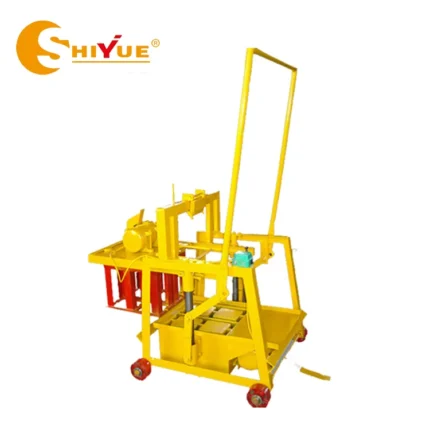
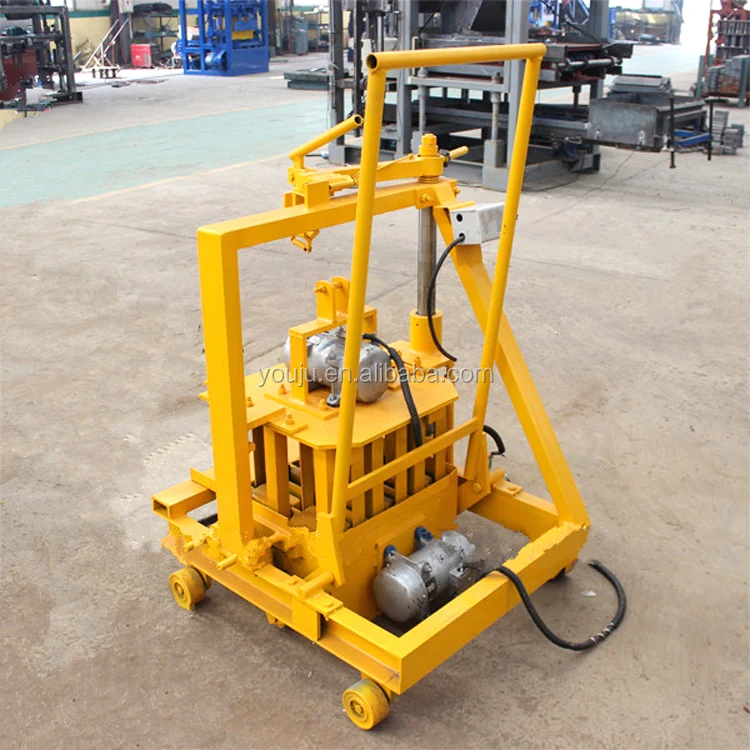
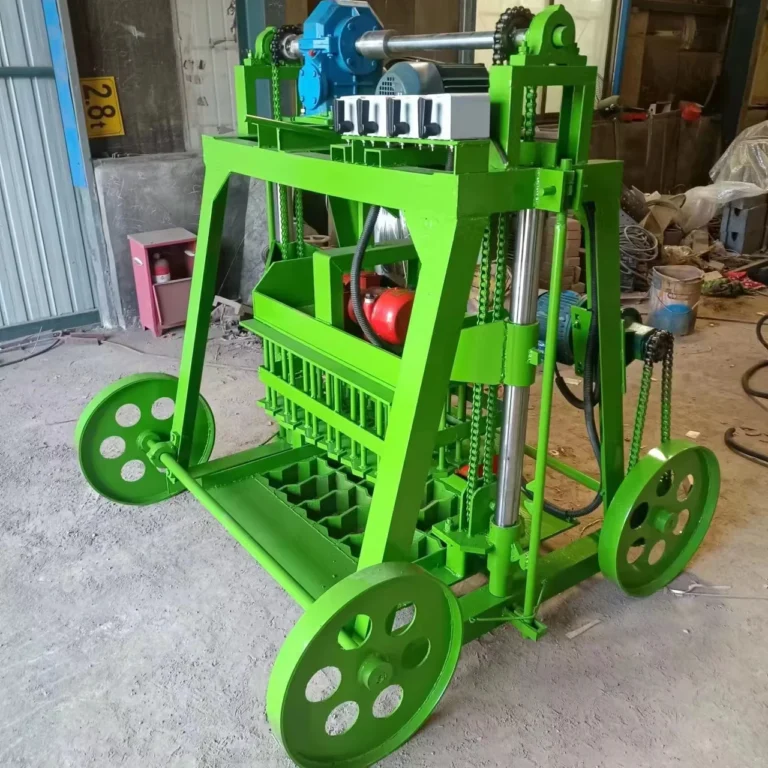
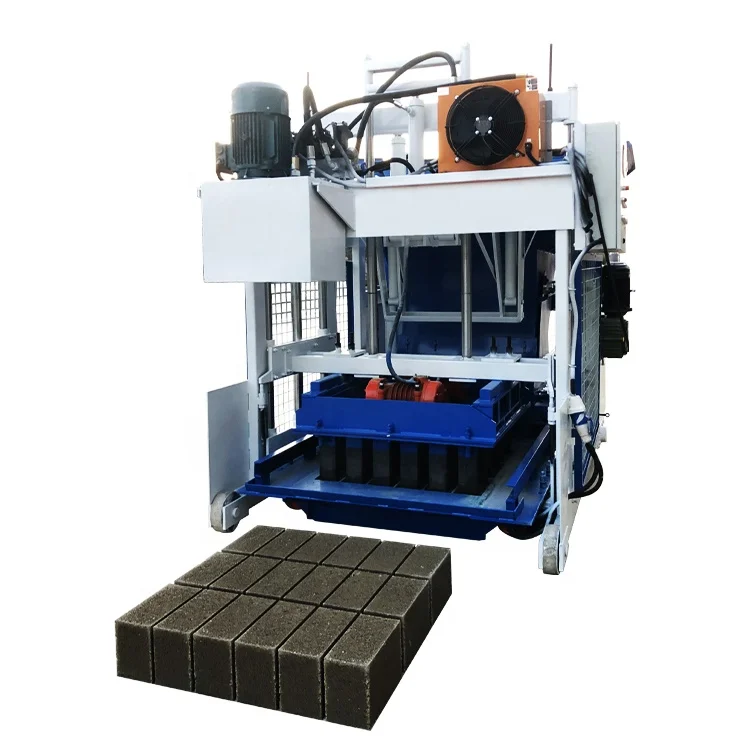
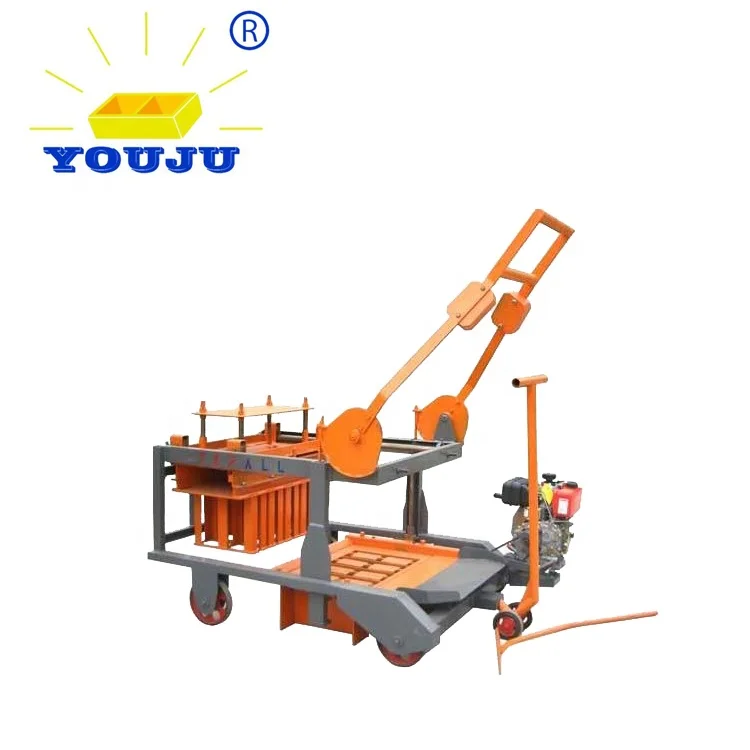
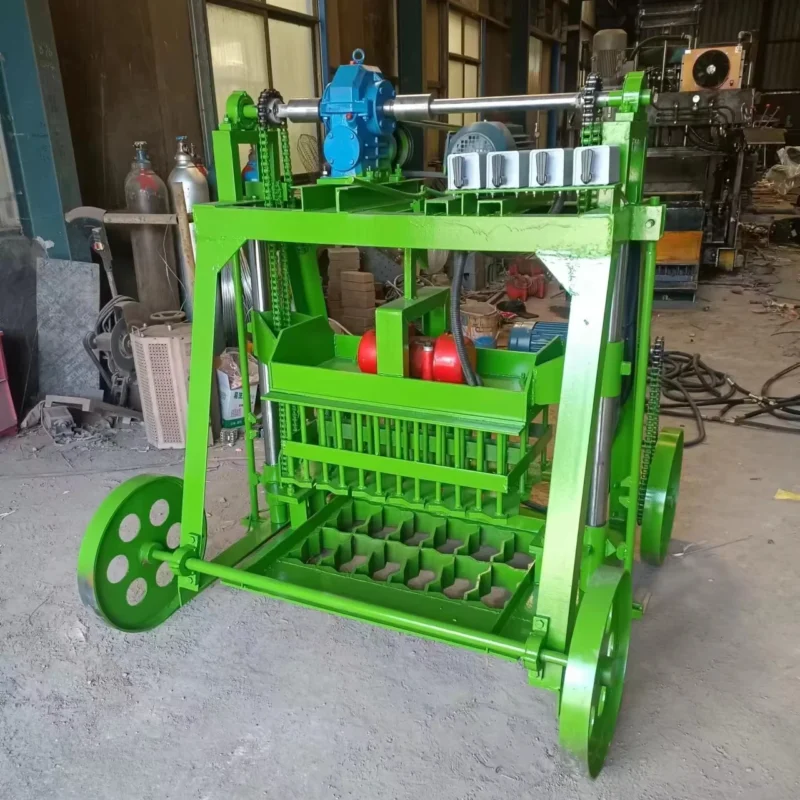
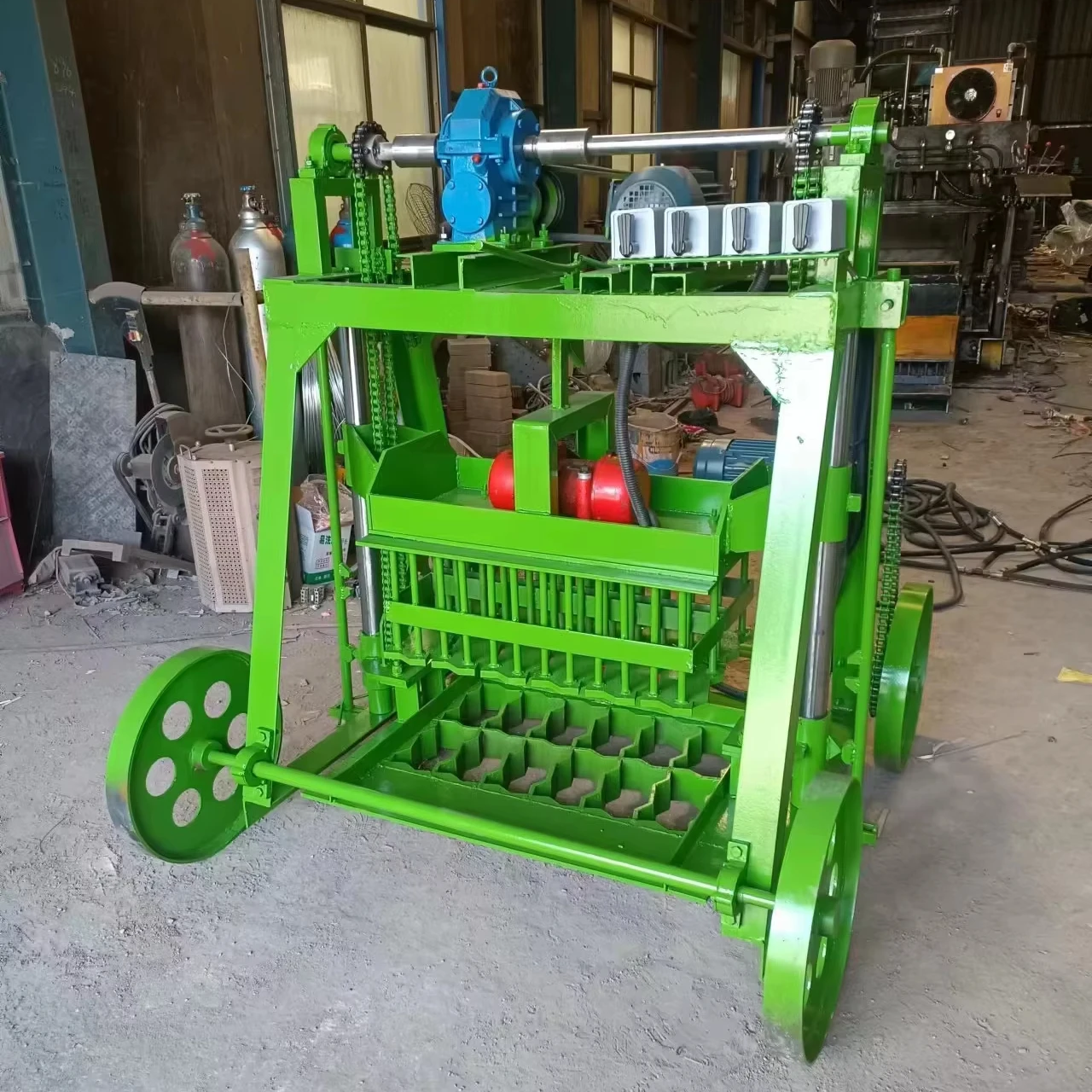
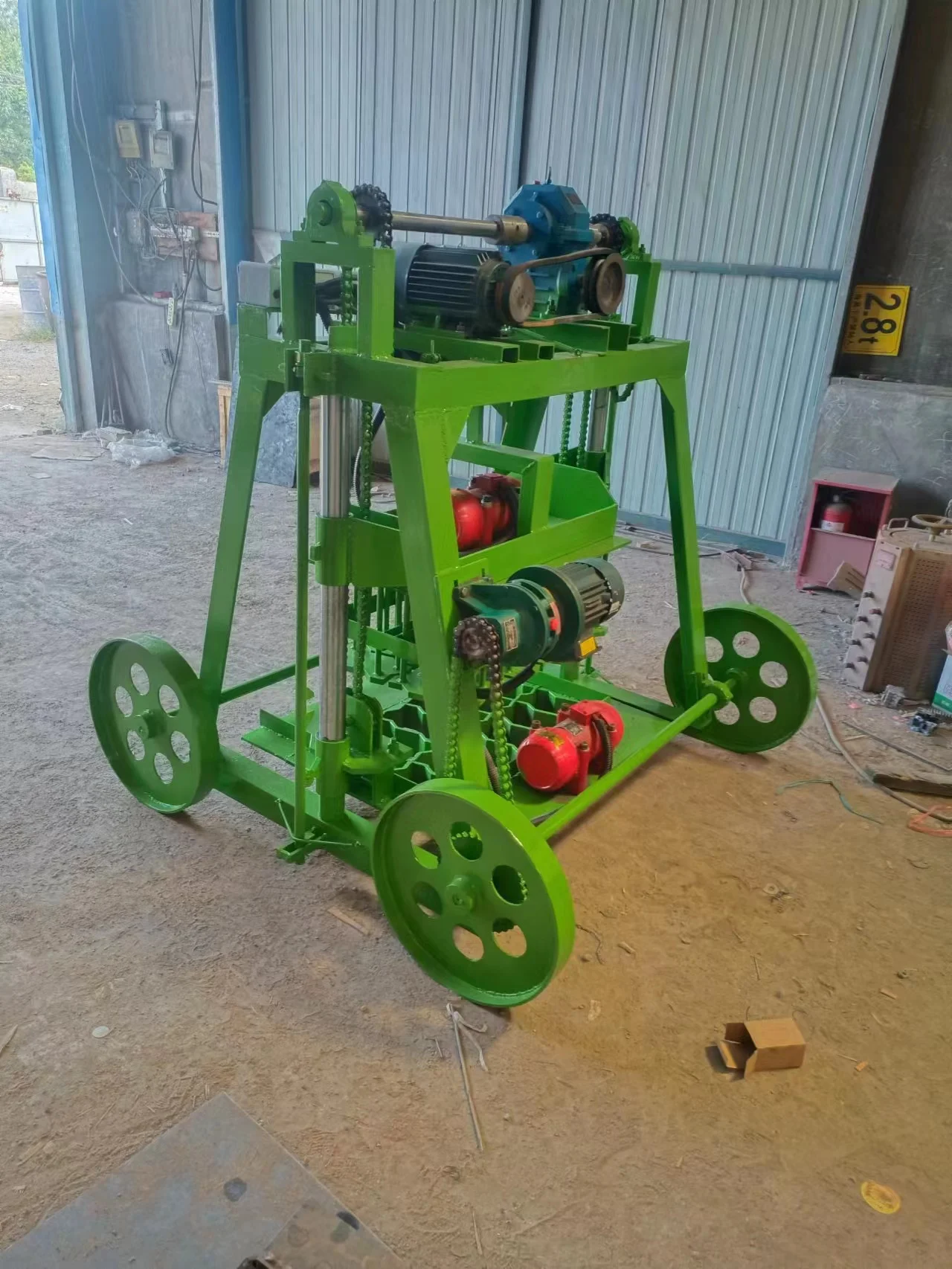
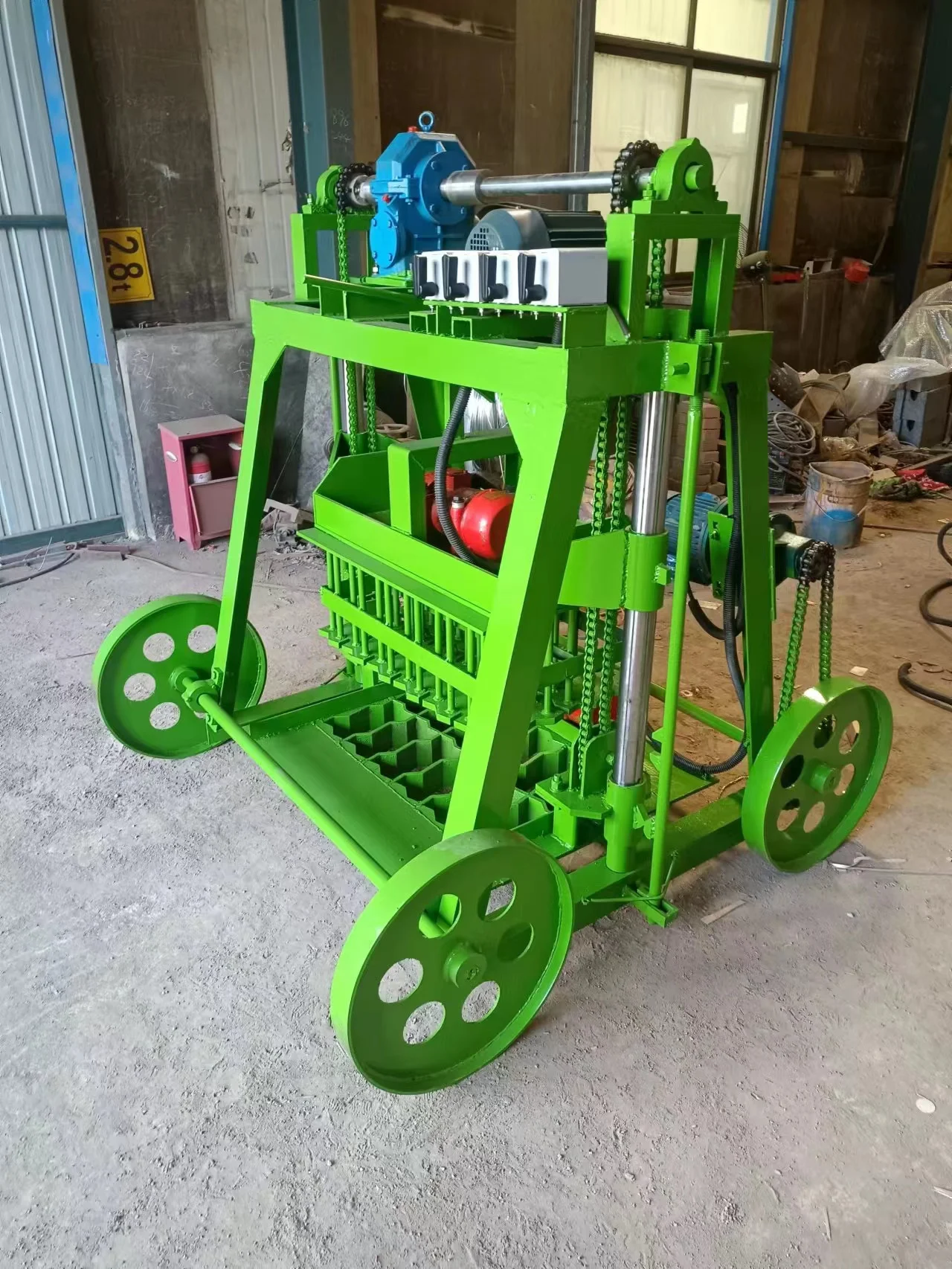
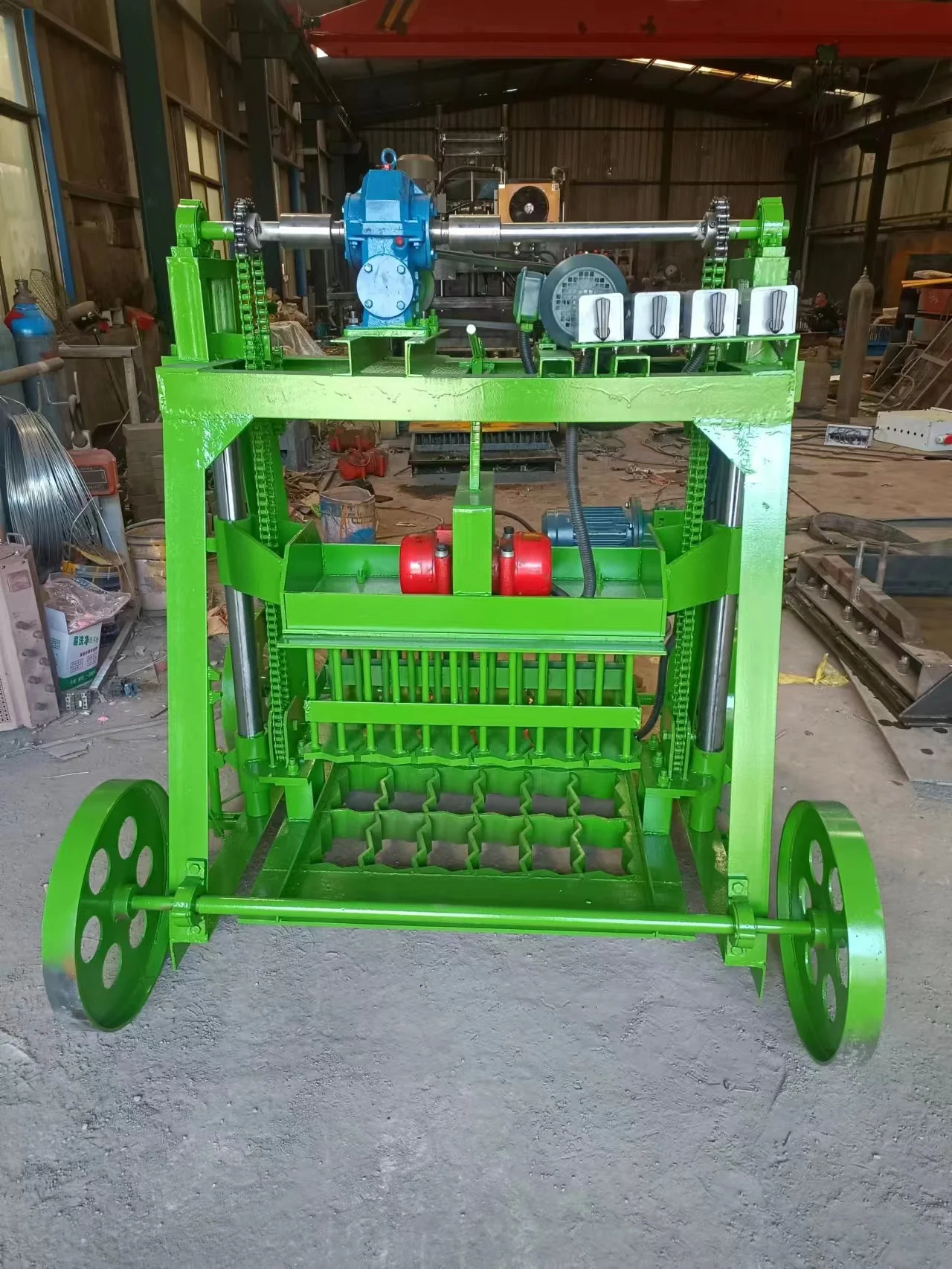
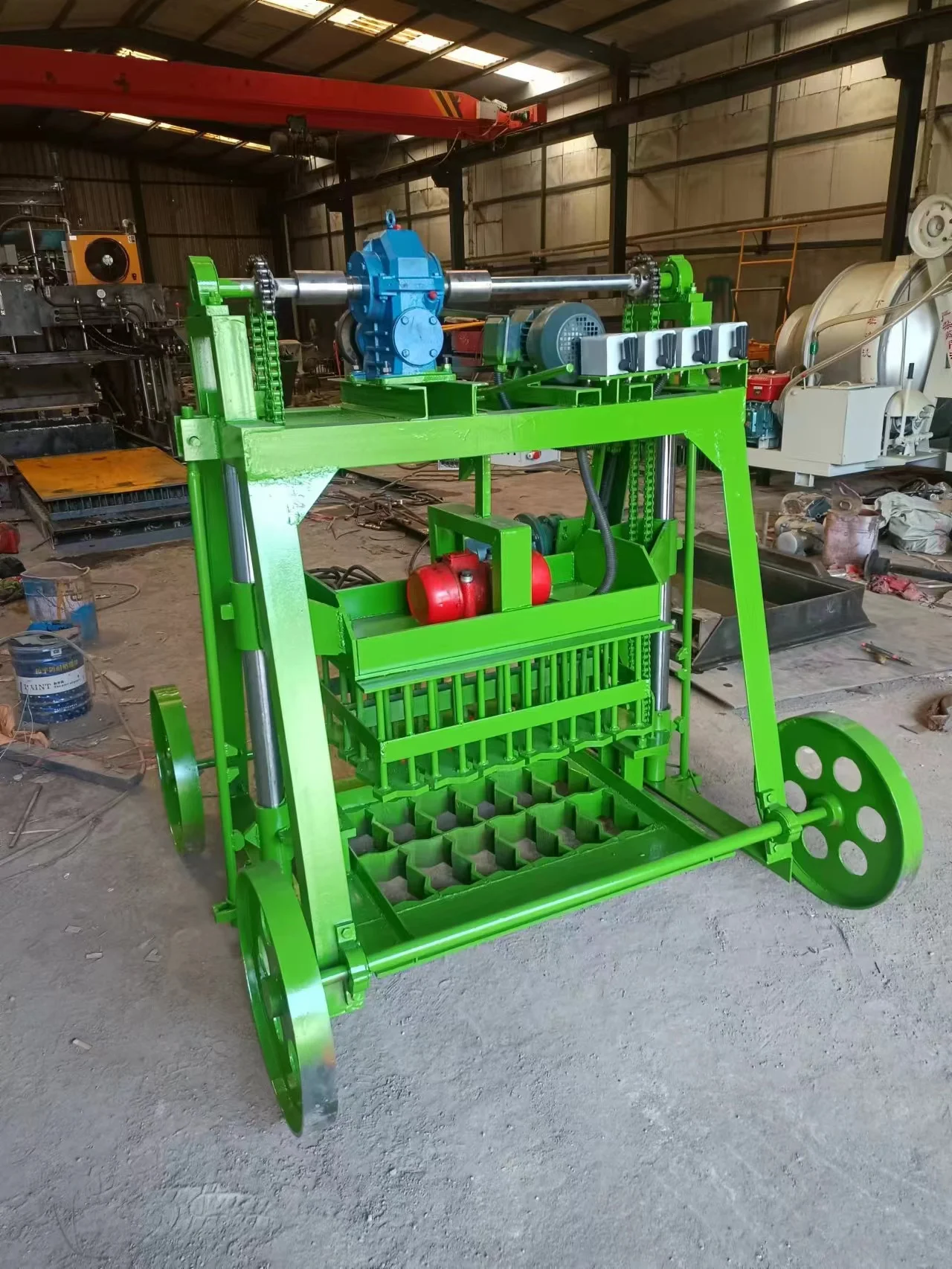
Vibration Control Baseline — the QMJ4-45 mobile block machine arrives with manual operation as standard, yet its architecture supports structured upgrades to semi-automatic feeding and PLC-managed vibration cycles, removing guesswork from on-site hollow block production.
Technical Specifications
| Parameter | Value |
|---|---|
| Product Type | Egg Laying Block Making Machine |
| Model | QMJ4-45 |
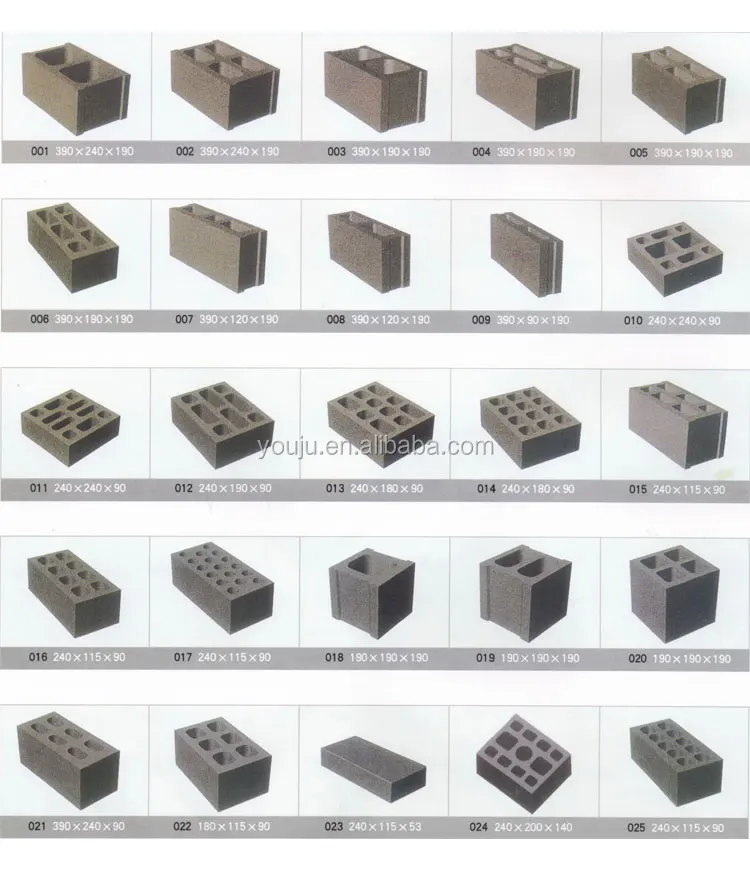
| Molding Capacity | 4 pcs/mold for 400×200×200mm hollow block (basis not stated in source — confirm block format) |
| Vibration Frequency | 2400 r/m |
| Productivity | 2600–4000 pcs/day (basis not stated in source — confirm block format) |
| Hydraulic Method | Mold vibration |
| Demold Method | Manual |
| Turning Method | Manual |
| Total Power | 6 kW |
| Power Source | Diesel/Petrol engine |
| Molding Cycle | 45 s |
| Automation Level | Manual (egg laying / mobile) |
| Vibration Type | Twice-vibration of molding core |
| Pallet Requirement | Reduced consumption pallets (source value — verify against manufacturer catalog) |
| Block Format Reference | Hollow block 400×200×200mm: 4 pcs/mould, 40–45s cycle, 3000 pcs/day (8 hours) |
| Certification | CE |
Application Suitability
| Application | Material or Output |
|---|---|
| On-site hollow block production at housing project sites | Crushed stone, sand, cement, water — no fixed plant required |
| Small-scale block manufacturing with limited investment | Standard concrete mix using locally sourced aggregate |
| Supplementary mobile capacity for existing block plants | Hollow formats from 400×200×200mm down to 400×120×200mm |
| Remote construction sites without grid power | Diesel or petrol engine operation independent of electrical infrastructure |
Why the Voltage Question Must Precede Any Quotation
Confirming site power conditions before specifying a mobile block machine prevents a three-week standstill on a live construction project.
Last year, I delivered a mobile egg laying block machine to a job site in Indonesia where the contractor planned to run everything off a diesel generator. The voltage fluctuation on that generator was severe enough to burn out the vibration motor within the first shift. The crew then waited three weeks for a step-up transformer to arrive, and the entire masonry schedule collapsed [NEED_CITE: typical voltage fluctuation tolerance for industrial vibration motors]. With the QMJ4-45 automatic egg laying block making machine configured for diesel or petrol engine drive, this failure mode is removed entirely — no grid connection and no generator voltage sensitivity. However, if a buyer later opts to switch to an electric motor for reduced fuel cost, the voltage and frequency must be confirmed and locked into production documentation before the unit leaves the factory.
Control Logic That Removes Operator Guesswork
The baseline QMJ4-45 operates through manual demolding and manual turning, which keeps the initial investment low but ties block consistency directly to operator discipline. When a PLC controlled mobile block machine upgrade is added, the vibration cycle duration, pause intervals, and mold descent sequence become programmable rather than dependent on a worker counting seconds. This matters most on sites where shift turnover is frequent and operator experience varies from week to week.
The Upgrade Path From Manual to Semi-Automatic Feeding
A manual egg laying operation requires one worker to feed the mold cavity and another to guide the machine forward after each cycle. Introducing semi-automatic raw material feeding changes that dynamic: a hopper with a controlled gate delivers a measured volume of mix into the mold box, and the PLC controlled mobile block machine then initiates the twice-vibration sequence automatically. The result is not simply fewer workers — it is batch-to-batch density consistency that manual shoveling cannot match [NEED_CITE: effect of feed volume variation on block compressive strength].
How the Twice-Vibration Core Affects Block Density
Single-vibration egg laying machines apply force from one direction, which often leaves the top face of a hollow block less compacted than the bottom. The QMJ4-45 uses a twice-vibration molding core that delivers energy in two distinct phases within the same 45-second cycle. At 2400 r/m, this approach drives aggregate particles into a tighter arrangement throughout the full height of the mold cavity. For hollow blocks at 400×200×200mm, the outcome is more uniform wall strength from top to bottom, which matters when blocks are load-bearing and the site inspector tests random samples from the stack.
What Happens When the Power Source Is Assumed Instead of Confirmed
A buyer who assumes grid electricity is available on site, only to find the nearest three-phase connection is hundreds of meters from the production area, faces a choice between pulling new cable at significant cost or switching to a generator with unpredictable voltage output. I have seen this exact scenario shut down a block production run for weeks while the contractor sourced a transformer that matched the machine’s voltage requirement [NEED_CITE: common voltage and frequency standards by export market]. With the QMJ4-45, the diesel or petrol engine eliminates that risk at the outset. But if an electric motor conversion is planned for later, the motor winding specification and the control panel voltage rating must be documented before the machine ships.
Why Buyers Specify Here Rather Than From a Catalog Page
Every QMJ4-45 that leaves the factory is configured against the buyer’s stated block format, local aggregate type, and site power conditions — not against a default line in a brochure. The capacity calculation you receive states which hollow block dimension the output figure assumes, so there is no gap between the quoted daily volume and what the crew actually produces on the ground. Mould drawings are reviewed against the formats your local market actually sells before steel is cut, and if your curing area or forklift capacity constrains pallet size, the pallet specification is adjusted to match. When a PLC controlled mobile block machine upgrade is selected, the control language on the HMI panel is confirmed in writing so the operator reads instructions in a language they understand on day one. Factory test records cover the twice-vibration performance and cycle time per format before the unit is crated.
Documentation & Verification
- Capacity calculation sheet stating output per hollow block format and assumed cycle time
- Mould drawing and format list reviewed against buyer’s local market demand
- Voltage and engine specification confirmed and documented before production begins
- PLC display language confirmation when control upgrade is selected
- Factory test record covering twice-vibration cycle performance per format
- CE declaration of conformity where applicable to destination market
Installation, Commissioning & Support
- Level compacted ground or concrete pad required — no fixed foundation needed for the 6 kW diesel-driven unit
- Diesel fuel supply and engine oil grade confirmed against local climate before first start
- Vibration motor wiring inspected on arrival if electric motor conversion is specified instead of engine drive
- Mould change procedure demonstrated with the buyer’s specified block format during commissioning
- Operator training covers the 45-second molding cycle, manual demold technique, and twice-vibration timing
- Wear parts list provided with mould and core shoe replacement intervals based on local aggregate abrasiveness
What to Include With Your Inquiry
To move from a general inquiry to a firm configuration proposal, share the hollow block formats your market demands, the daily volume you need to sustain on an eight-hour shift, and whether your site has stable grid power or requires engine-driven operation. If you are considering a PLC upgrade, specify the control language your operators need and the voltage and frequency standard at your location.
Frequently Asked Questions
Q: How is daily output verified per block format, and what cycle time applies?
A: Each output figure is tied to a specific hollow block dimension. For example, a 400×200×200mm block runs at 4 pcs/mould with a 40–45 second cycle, yielding roughly 3000 pcs over an eight-hour shift. Smaller formats such as 400×120×200mm produce 6 pcs/mould on the same cycle, raising daily volume. The capacity document you receive will state which format each figure assumes.
Q: What automation upgrades are available from the manual baseline?
A: The QMJ4-45 starts as a fully manual egg laying machine. Available upgrades include semi-automatic material feeding with a controlled hopper gate, and PLC-managed vibration cycles that standardize the molding sequence. Automatic stacking does not apply to egg laying production since blocks cure in place on the ground.
Q: Can the diesel engine be replaced with an electric motor?
A: Yes. The QMJ4-45 can be specified with an electric motor instead of a diesel or petrol engine. Before production, you must confirm the site voltage, frequency, and phase configuration so the motor winding and control panel are matched correctly. This prevents the voltage mismatch failures that commonly delay commissioning.
Q: How does the twice-vibration system affect block strength consistency?
A: Single-vibration machines compact material from one direction, often leaving density variation from top to bottom. The twice-vibration molding core in this PLC controlled mobile block machine delivers energy in two phases within the 45-second cycle, driving aggregate into a tighter arrangement throughout the full block height for more uniform compressive strength.