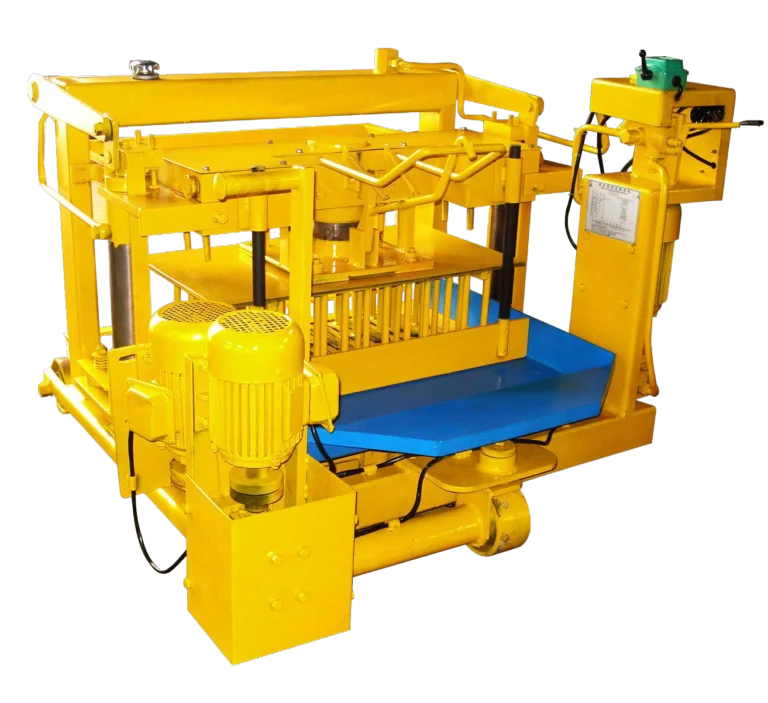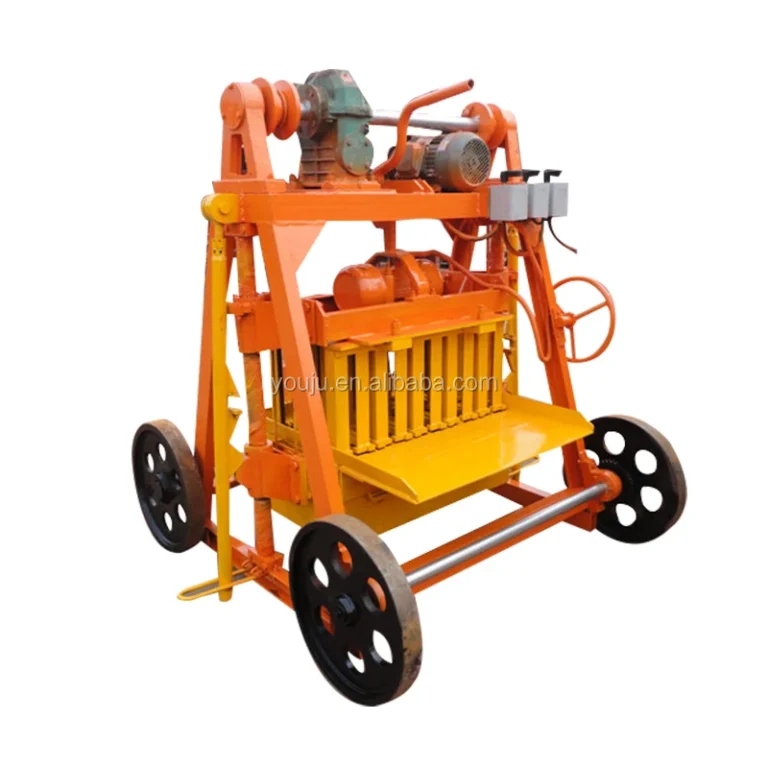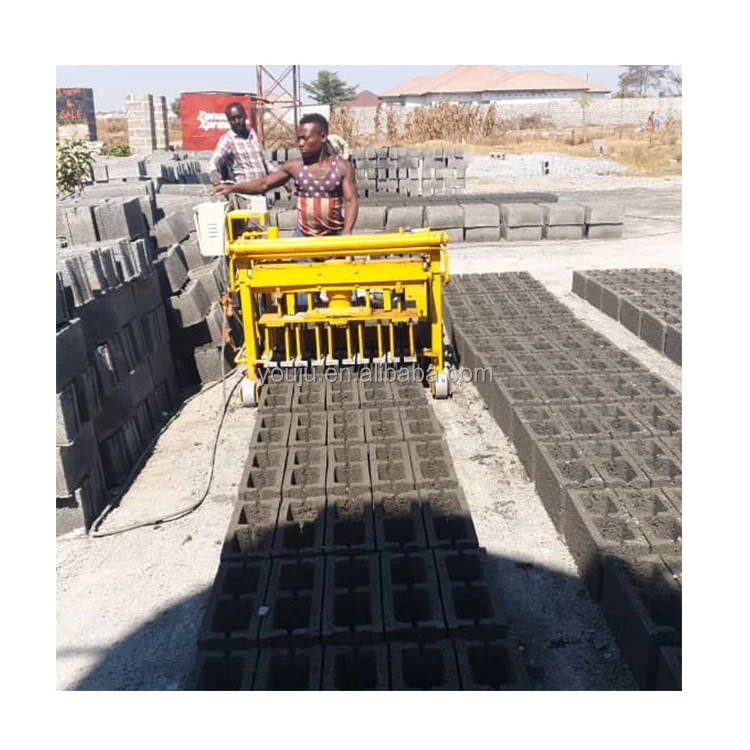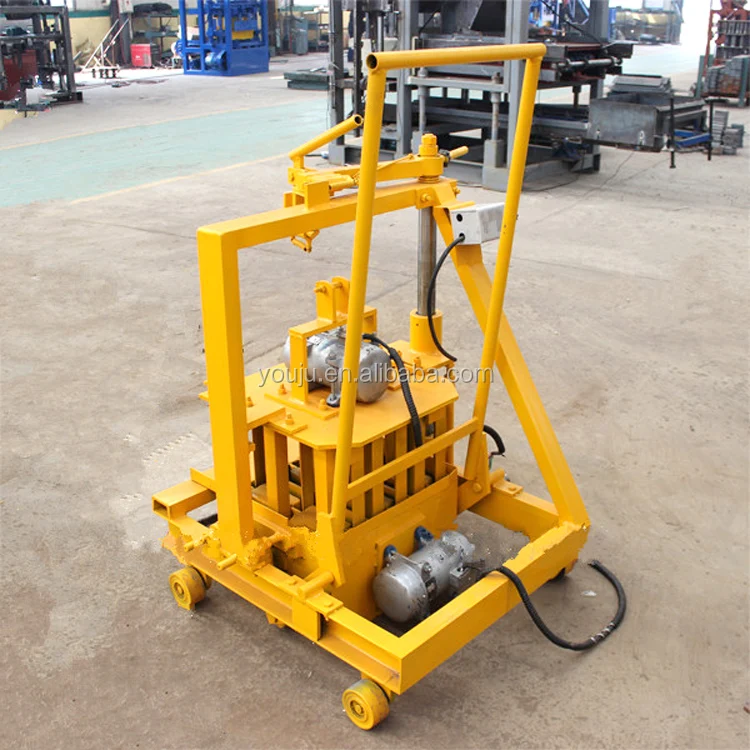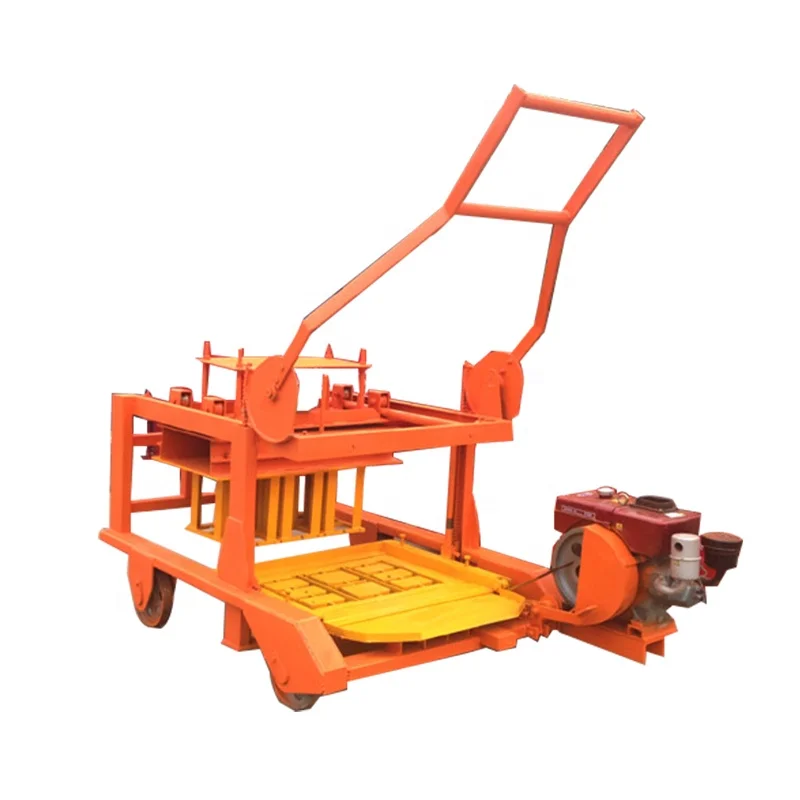
Description
Configurable Automation Level — The QMR4-45 mobile egg-laying block machine can be specified from basic manual control through to improved batching and cycle consistency, letting plant owners match the intelligence layer to their operator skill level and upgrade as production grows.
Technical Specifications
| Parameter | Value |
|---|---|
| Model | QMR4-45 |
| Product Type | Mobile Egg-Laying Concrete Block Making Machine |
| Power Source | Diesel / Electric (optional) |
| Rated Power | 8 hp |
| Molding Form | Vibration and Pressure |
| Vibration Force | 60 kN |
| Molding Cycle | 45 s (basis not stated in source — confirm block format and material) |
| Total Weight | 800 kg |
| Overall Dimensions (L×W×H) | 2420 × 1320 × 1650 mm |
| Pallet Requirement | No pallet required (egg-laying type) |
| Mobility | Mobile, movable on-site |
| Basic Equipment Included | JZC350 Diesel Concrete Mixer or JQ350 Diesel Concrete Mixer; Trolley |
| Mould Format | Hollow block, solid brick, paver brick, fly ash brick |
| Automation Level | Manual / low automation (operator-dependent handling implied) |
Application Suitability
| Application | Material or Output |
|---|---|
| On-site block production for housing developments | Hollow blocks and solid bricks from crushed stone, sand, and cement |
| Remote construction sites without reliable grid power | Diesel-powered operation for off-grid paver and brick production |
| First-stage block plant for entrepreneurs | Low-investment entry with fly ash brick and concrete slab formats |
| Contractors adding mobile formats to existing range | Paver bricks and kerbstones produced directly at the project location |
What "45 Seconds per Cycle" Leaves Out About an Automatic Mobile Block Machine
A cycle time only becomes meaningful when tied to a specific block format, mix design, and wall thickness.
I once watched a contractor in Lagos time his QMR4-45 with a stopwatch and celebrate hitting the brochure number — only to realize the test used a thin paver mould while his actual order was for 200 mm hollow blocks that needed longer vibration to reach strength. The vibration force of 60 kN must be matched against the buyer’s actual aggregate and cement ratio before any cycle figure can be trusted. When a PLC controlled mobile block making machine is configured without that match, the operator ends up extending cycles manually, and the daily output drifts far from the quoted number [NEED_CITE: importance of mix design validation for block strength consistency].
How Vibration and Pressure Interact on a PLC Controlled Mobile Block Making Machine
The 60 kN vibration force works together with mechanical pressure to compact the concrete mix inside the mould. On a mobile egg-laying machine, this combination determines the green strength of the block at the moment it is released onto the ground. If the control system allows the operator to adjust vibration duration and pressure application independently, the same machine can handle both a harsh mix for hollow blocks and a finer mix for paver bricks without swapping hardware.
Batching Consistency Through Mixer and Press Coordination
The included JZC350 or JQ350 diesel mixer sits upstream of the press, and its batch size must align with the mould volume and cycle rate. When the mixer discharges faster than the press can consume, material slumps and loses workability. When the press waits for the mixer, the cycle time stretches beyond the stated 45-second baseline. Coordinating these two stations through a shared control logic — even a simple relay sequence — removes the idle time that silently erodes daily output on many small sites [NEED_CITE: mobile block line synchronization between mixer and press].
Reading the Specs That Actually Matter for Block Strength
The 800 kg total weight of the QMR4-45 contributes directly to the static pressure applied during moulding; a heavier frame resists vibration escape and pushes more force into the block rather than into the ground. The 8 hp rated power must cover both vibration motor and hydraulic pump if equipped, so buyers should confirm how that power is split across functions. The egg-laying design eliminates pallet cost but demands a level, cured concrete floor — uneven ground tilts the machine and produces blocks with inconsistent wall thickness. Finally, the diesel option removes grid dependency but introduces fuel quality as a variable; high-sulphur or water-contaminated diesel can shorten engine life noticeably on remote African sites.
The Hidden Cost of Skipping Voltage and Control Confirmation
I have seen machines sit idle for weeks at a Nigerian port because the control panel was wired for 50 Hz while the local generator ran at 60 Hz, tripping overload relays on every start-up. On a mobile machine where the control system is already minimal, a frequency mismatch can render the vibration timer inaccurate, producing blocks that look correct but fail compressive strength tests. Confirming voltage, frequency, and any display language before the machine leaves the factory prevents what is otherwise an expensive on-site rewiring job [NEED_CITE: voltage and frequency standards by export market].
Why Sourcing the Intelligence Layer Here Makes Sense
Block machinery is the single focus of this supplier, so the QMR4-45 is specified as part of a matched system — machine, mould, mixer, and trolley — rather than assembled from unrelated vendors. The automation level is selectable, meaning a buyer can start with manual operation and add PLC-controlled batching or cycle timing later without replacing the press. Mould design covers the formats the buyer’s market actually sells, and custom drawings are accepted. Configuration is set against the buyer’s real mix design and local aggregate, not a catalogue default. Installation support includes operator training so the crew understands how vibration duration, mix moisture, and mould change interact on this specific machine.
Documentation & Verification
- Machine specification sheet stating which block format the 45-second cycle assumes
- Mould drawing and format list confirming hollow, solid, paver, and fly ash brick dimensions
- Voltage, frequency, and control language confirmation signed off before dispatch
- Factory test record run on the buyer’s target block format and mix ratio
- Operation and maintenance manual with wear parts and mould replacement list
Installation, Commissioning & Support
- Level concrete floor required for egg-laying operation; 2420 × 1320 mm footprint plus mixer clearance
- Diesel engine or electric motor power source confirmed to match site voltage and frequency
- Machine arrives assembled on trolley; mixer connected and test batch run on first day
- Vibration duration and pressure adjusted to buyer’s actual aggregate during commissioning
- Operator training covers mould change sequence and daily vibration motor inspection
- Wear parts list provided with first replacement intervals for vibration pads and mould liners
Before You Request a Quote
To size the QMR4-45 correctly, share the block formats your market sells, the daily output you need per format, and a sample of your local sand and aggregate so a test block can be pressed before the machine ships. Confirm your site voltage, frequency, and whether you need diesel or electric drive. If you plan to add PLC-controlled batching or automatic mould change later, mention that now so the control architecture can accommodate the upgrade path.
Frequently Asked Questions
Q: What automation level can the QMR4-45 be configured to, and how does that affect operator workload?
A: The QMR4-45 ships as a manual or low-automation machine by default, with operator-dependent handling. Buyers can specify improved control for batching accuracy and cycle timing, reducing the operator’s role in judging mix consistency and vibration duration by hand. This lowers batch-to-batch variation and frees the operator to focus on mould change and block inspection rather than timing each cycle manually.
Q: How is the 45-second cycle time verified — which block format and mix design does it assume?
A: The 45-second figure is a baseline that must be confirmed against a specific block format, wall thickness, and mix design. A thin paver brick may achieve this cycle, while a 200 mm hollow block requires longer vibration to reach target strength. Buyers should request a factory test on their exact format and aggregate to establish a realistic cycle time before daily output is calculated.
Q: Can the control system be upgraded from manual to PLC-controlled for batching accuracy?
A: Yes, the QMR4-45 can be specified with a PLC-controlled mobile block making machine upgrade that manages batching ratios, vibration duration, and cycle sequencing. This is typically added during the initial configuration rather than retrofitted, so buyers planning an automation path should declare that intent at the inquiry stage to ensure the wiring harness and sensor mounts are prepared.
Q: What voltage, frequency, and PLC language options are confirmed before dispatch?
A: Voltage and frequency must match the destination site’s generator or grid supply, and this is confirmed in writing before production. If a PLC is specified, the display language is agreed at the same stage. Shipping without this confirmation risks commissioning delays and potential rewiring costs once the machine arrives on-site.
Q: How do the included mixer and trolley match the press cycle so the machine is not left waiting?
A: The JZC350 or JQ350 diesel mixer is sized to produce a batch volume that aligns with the QMR4-45 mould capacity and cycle rate. The trolley transports mixed material from the mixer to the press hopper. When both stations are specified together, the supplier verifies that discharge rate and transport distance do not create idle time that would stretch the actual cycle beyond the quoted baseline.