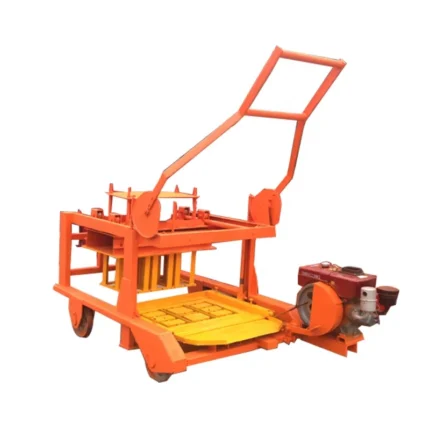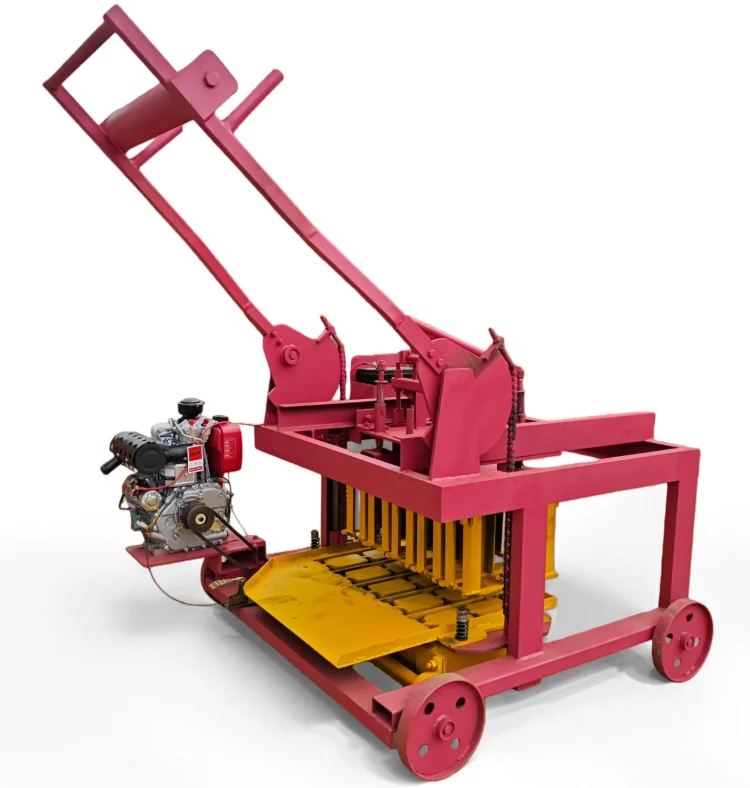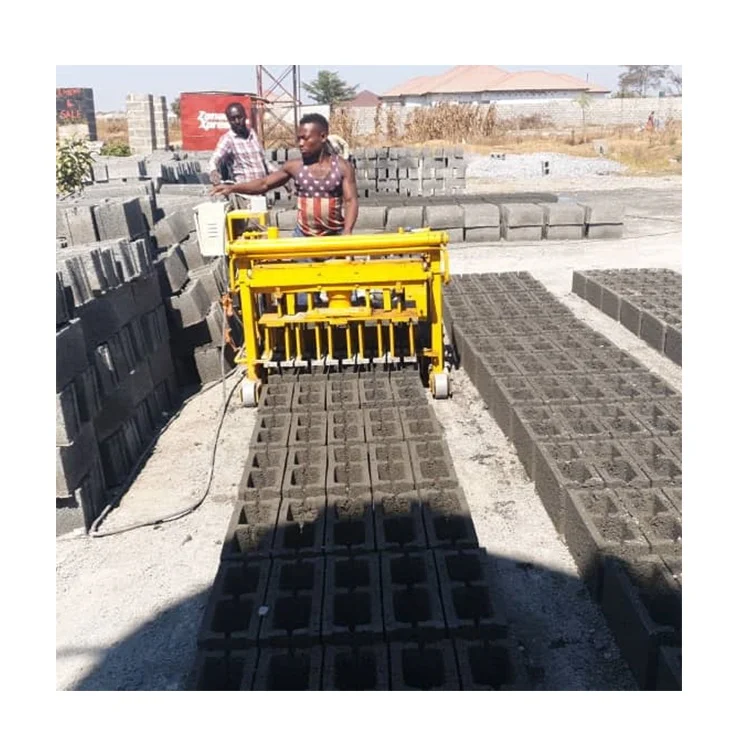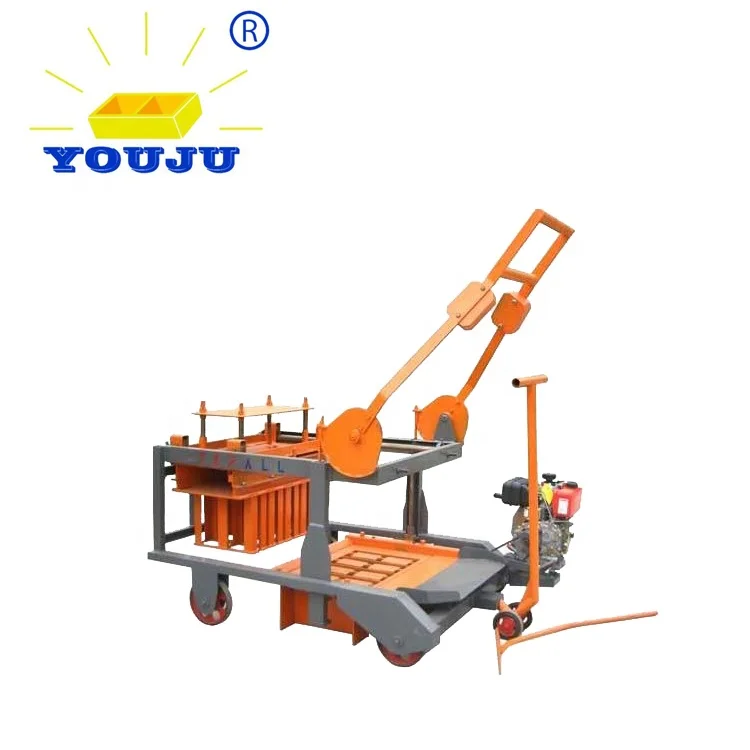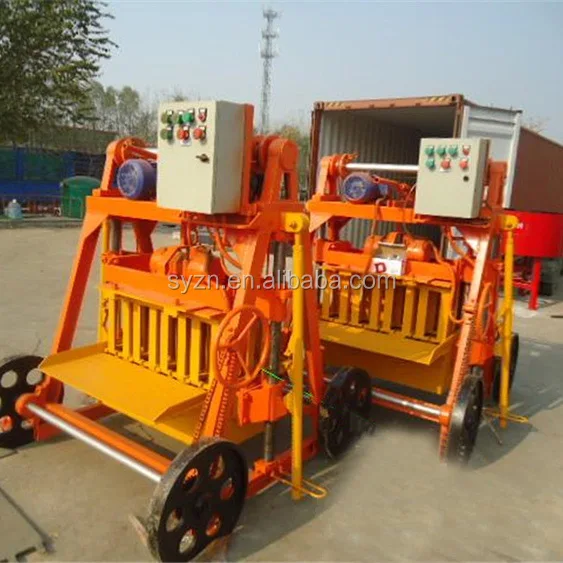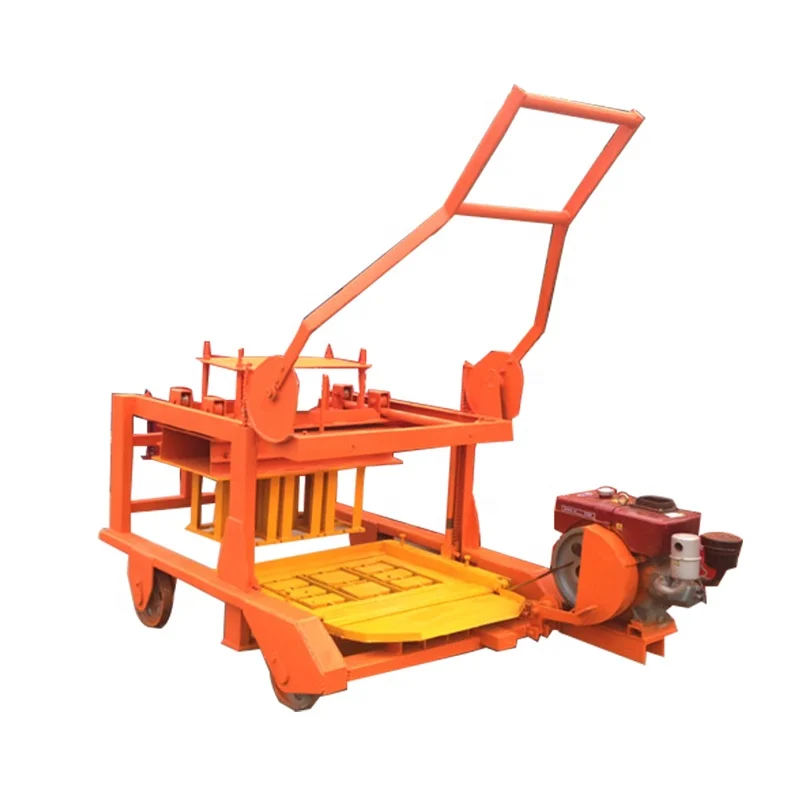
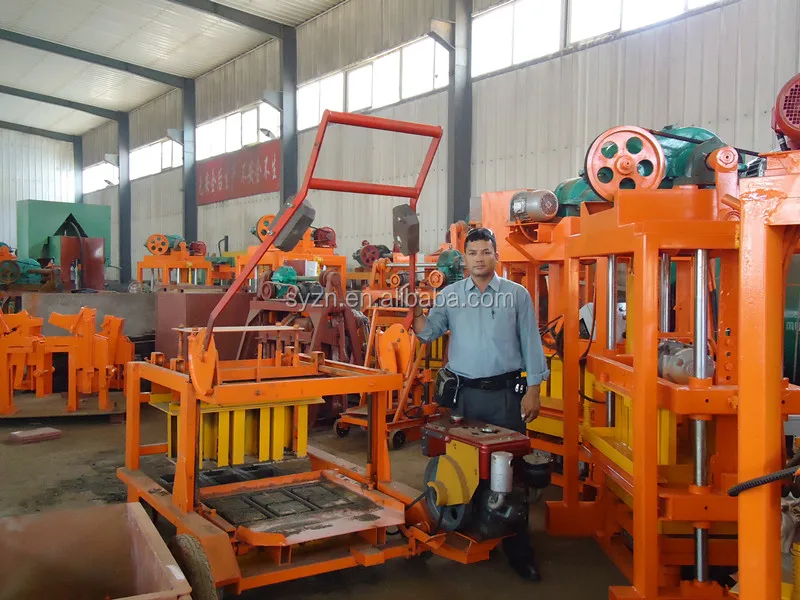
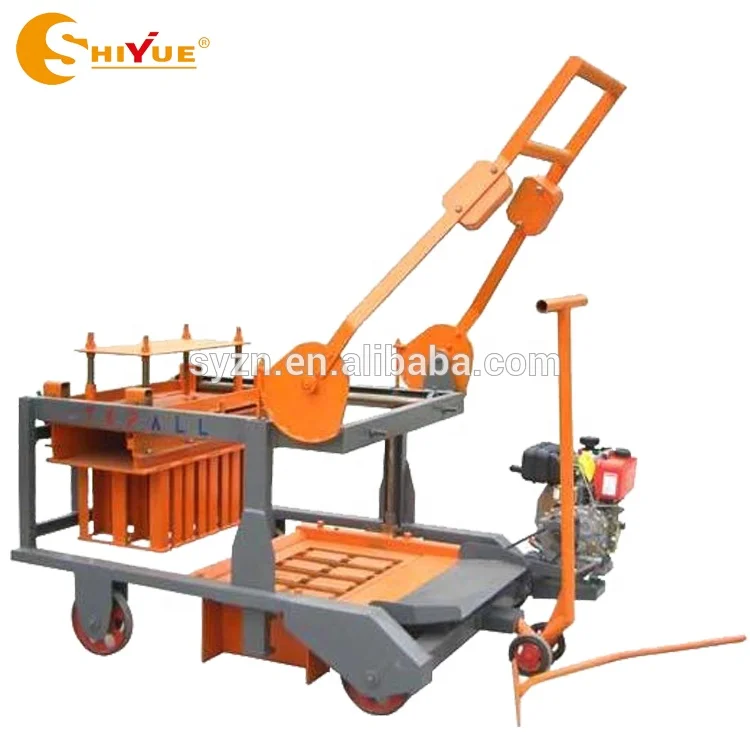
Description
Configurable Control Architecture — The QMR4-45 mobile block machine is specified around the buyer’s local aggregate, target block format, and planned automation upgrades rather than a fixed catalogue entry.
Technical Specifications
| Parameter | Value |
|---|---|
| Model | QMR4-45 |
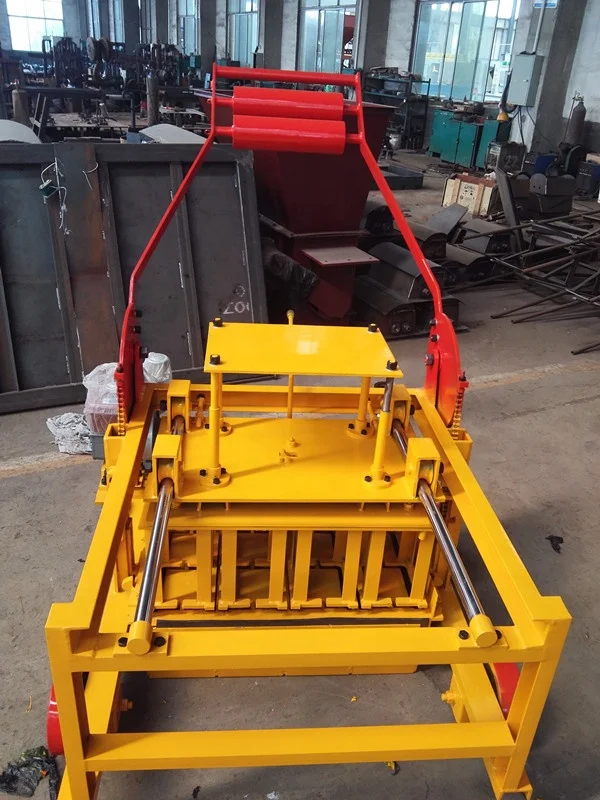
| Product Type | Mobile Concrete Block Making Machine |
| Power Source | Diesel / Petrol Engine / Electric (configurable) |
| Overall Dimensions (L×W×H) | 1100 × 950 × 2100 mm |
| Net Weight | 810 kg |
| Molding Cycle | 30–45 s depending on format |
| Output Capacity | 2,560 pcs/day (basis not stated in source — confirm block format, material, and thickness before ordering) |
| Pallet Requirement | None — egg-laying design |
| Mould Compatibility | Hollow block, solid block, paver brick, fly ash brick |
| Automation Level | Manual, with upgrade path available |
| Standard Accessories | JZC350 or JQ350 diesel concrete mixer, trolley |
| Warranty | 1 Year |
Application Suitability
| Application | Material or Output |
|---|---|
| On-site hollow block production for housing projects | Crushed stone, sand, and cement with local aggregate gradation |
| Paver brick manufacturing for walkways and yards | Fine aggregate mixes with pigment additives |
| Solid brick output for load-bearing walls | Coarse aggregate blends requiring matched vibration force |
| Fly ash brick production near thermal power plants | Fly ash, lime, gypsum, and sand combinations |
| Small-scale contractor block making without a fixed plant | Variable mixes depending on locally available raw materials |
What "2,560 Pieces per Day" Actually Means for Your Site
A capacity figure without a stated block format is not a capacity figure — it is a starting point for a conversation.
I once stood on a job site in West Africa watching a mobile block machine sit idle because the quoted daily output assumed a small solid brick, while the contractor needed 200 mm hollow blocks. The real throughput was a fraction of what had been promised, and the project timeline collapsed. The automatic mobile block machine category is full of spec sheets that quote a single number without naming the format, the mix, or the curing conditions behind it [NEED_CITE: capacity calculation standards for concrete block machinery]. When you evaluate the QMR4-45, the 2,560 pcs/day reference must be verified against your specific block size, wall thickness, and local aggregate before it can inform any production plan.
Control Systems and the Path from Manual to PLC
The QMR4-45 ships as a manually operated, egg-laying machine — the operator controls the feed, vibration cycle, and movement across the curing floor. For buyers who plan to scale, the relevance of this machine lies in what can be added later. PLC controlled mobile block machine configurations become available when production volume justifies the investment, replacing manual timing with programmable cycles that hold the molding duration consistent from the first block of the shift to the last. Batch-to-batch uniformity in block density depends heavily on this timing repeatability, especially when operators change mid-shift or fatigue sets in.
Where Automation Removes the Operator from the Loop
Manual egg-laying production keeps capital expenditure low at the start, but it ties output directly to operator skill and stamina. As a plant grows, automatic material feeding and PLC-controlled batching take over the variables that cause strength inconsistency — water-to-cement ratio drift, uneven mix distribution, and vibration timing that varies by a few seconds per cycle. Those few seconds matter. On a site using volcanic aggregate or coarse river gravel, the vibration force and hydraulic pressure must be matched to the mix [NEED_CITE: vibration force calibration for coarse aggregate block production], and a PLC holds that match cycle after cycle without deviation. The QMR4-45 can serve as the mechanical platform onto which these control layers are added, rather than requiring a full machine replacement.
Reading the Specs That Actually Govern Block Quality
The 30–45 second molding cycle range tells you that format changes directly affect throughput — a thin paver brick cycles faster than a 200 mm hollow block, and the daily output shifts accordingly. The net weight of 810 kg and compact dimensions mean the machine can be repositioned across a curing yard without heavy lifting equipment, which matters for contractors who move between project sites. Power source flexibility — diesel, petrol, or electric — determines whether the machine operates independently on a remote site or ties into a plant’s electrical infrastructure. The choice between JZC350 and JQ350 mixers affects mix consistency; a pan mixer like the JQ350 typically produces a more homogeneous blend for paver bricks, while the drum-type JZC350 handles the coarser mixes used for hollow blocks. No pallet requirement eliminates a recurring consumable cost and removes pallet handling from the workflow entirely, which simplifies the entry-level operation considerably.
The Hidden Cost of Skipping the Configuration Conversation
When a mobile machine arrives on site configured for a standard quartz sand mix but the buyer only has access to coarse laterite or crushed volcanic rock, the vibration force may be insufficient to compact the material properly. Blocks crumble at the edges, strength tests fail, and production halts while waiting for a technician to adjust pressure settings. I have seen this exact scenario cost contractors weeks of downtime and a return flight for a specialist — a cost that a pre-shipment material sample and configuration review would have avoided entirely [NEED_CITE: aggregate compatibility testing for block machine commissioning]. Voltage mismatches create a parallel problem: a machine wired for 380V/50Hz arriving in a 440V/60Hz market will burn out motors before the first production run is complete.
Why Sourcing Through a Single-Focus Block Machinery Supplier Matters
Block machinery is the only product line here, which means the QMR4-45 is not bundled from a press, a mixer, and a pallet system sourced from three different factories and forced to work together. Machine, mould, and handling are specified as one matched set. The mould options — hollow, solid, paver, fly ash brick — are designed and manufactured to fit this specific platform, not adapted from a generic catalogue. Configuration is set against the buyer’s actual mix design and local aggregate rather than a default setting. The automation level is selectable, so a buyer can begin with manual egg-laying and add PLC control, automatic batching, or stacking systems as demand grows without replacing the core press. Installation support and operator training are included, addressing the gap between machine arrival and actual production output.
Documentation & Verification
- Line layout showing the QMR4-45 footprint and curing yard space requirement
- Capacity calculation sheet stating the exact block format behind the output figure
- Mould drawings and format list for every block type in your order
- Voltage, frequency, and control language confirmation before production begins
- Factory test record run on your specified block format before dispatch
- Operation and maintenance manual with wear parts and mould replacement schedule
Installation, Commissioning & Support
- Level compacted ground required across the curing yard; no fixed foundation for this 810 kg mobile unit
- Confirm diesel or electric power source before shipment to match site fuel availability
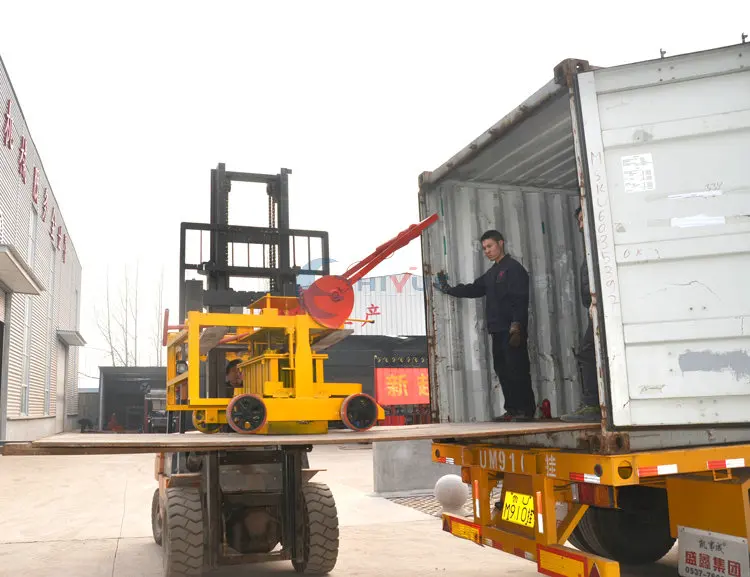
- Machine arrives assembled; mixer and trolley ship separately for container loading efficiency
- First-run commissioning includes vibration and cycle timing calibration to your local aggregate
- Operator training covers mould change procedure, mix loading sequence, and daily maintenance checks
- Wear parts list with reorder intervals for vibration springs, mould liners, and mixer blades
Before You Send an Inquiry
To give you a configuration that holds up on your actual site, we need to know the block formats you sell most, the daily volume you plan to produce, and the raw materials available locally — including a sample if your aggregate is non-standard. Share your site voltage and frequency, the control language your operators read, and whether you plan to start manual and add automation later or require PLC-controlled batching from the first day.
Frequently Asked Questions
Q: What block format does the 2,560 pcs/day output figure assume?
A: The source does not state which block size, wall thickness, or mix type underpins that number. Before using it for planning, request a capacity calculation that names the exact format — for example, 400×200×200 mm hollow block at a 30-second cycle — so you can compare it against your actual product range.
Q: Can the QMR4-45 accept PLC control and automatic batching at a later stage?
A: Yes. The machine can begin operation as a manual egg-laying unit and receive PLC control, automated material feeding, and batching systems as production volume grows. This upgrade path avoids replacing the core press when you transition from manual to higher-consistency output.
Q: How do I confirm the machine will work with my local aggregate?
A: Provide a raw material sample and your target mix design before production. The vibration force, hydraulic pressure, and molding cycle are then configured to match that specific material, rather than relying on a default setting that may not compact coarse or non-standard aggregates adequately.
Q: What voltage and control language options are available?
A: Voltage, frequency, and PLC display language are confirmed during the order process before production starts. Specify your site electrical supply and the language your operators read so the machine arrives ready to commission without rewiring or software changes.
Q: Which automation add-ons make sense as production scales up?
A: Automatic material feeding and PLC-controlled batching are the first additions that improve batch consistency. As volume grows further, automatic stacking and cubing systems reduce manual handling. Each layer can be added to the QMR4-45 platform without replacing the press itself.