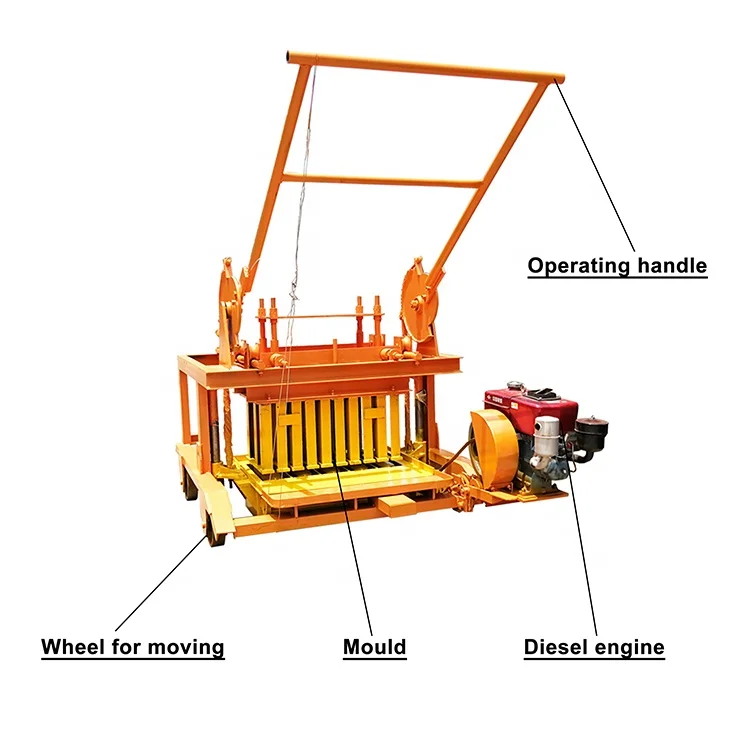
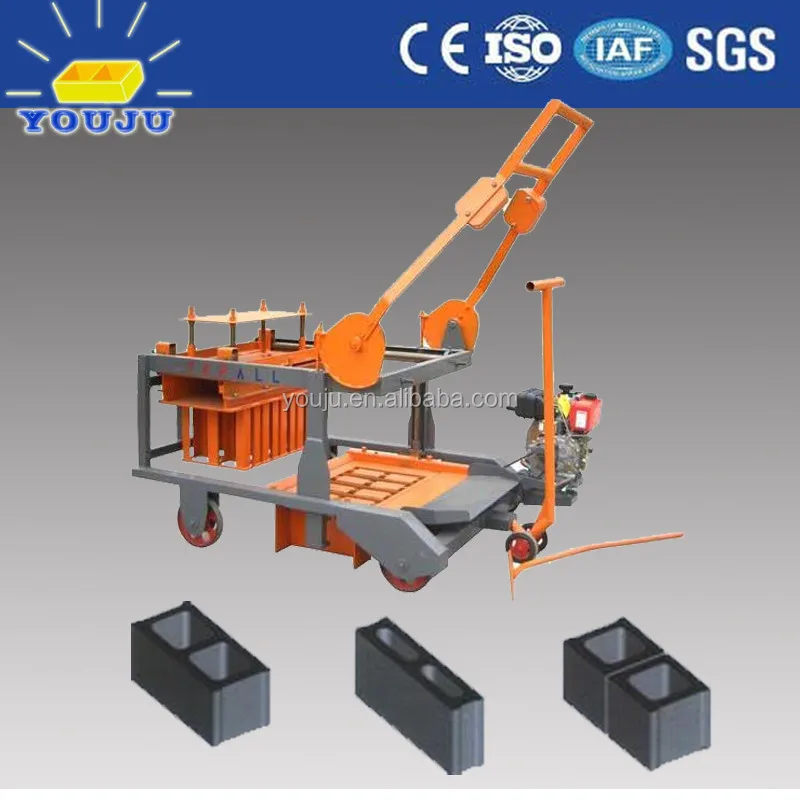
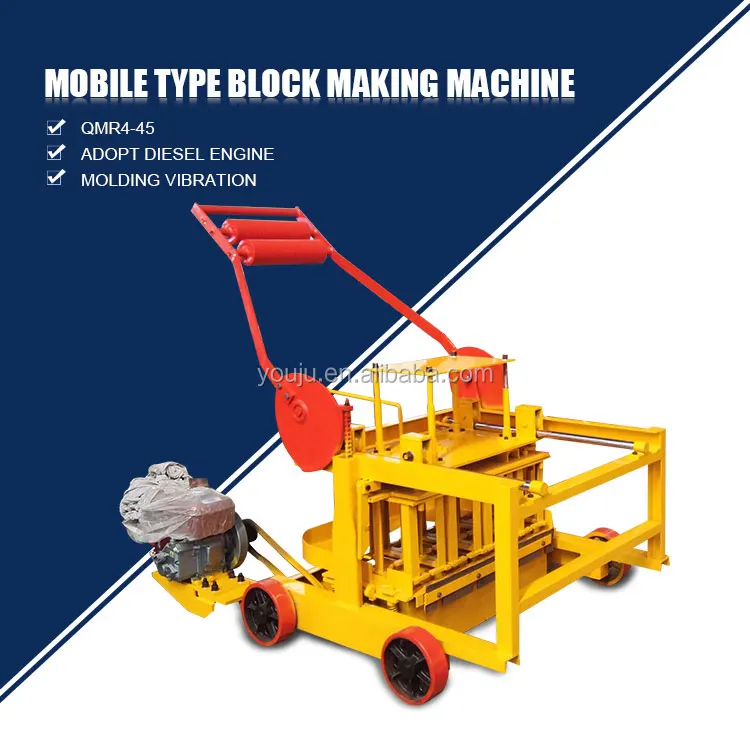
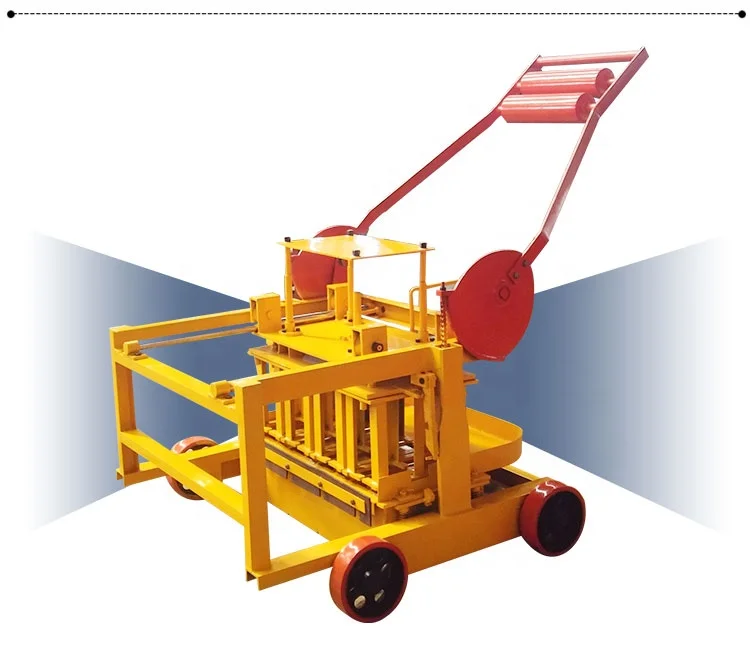
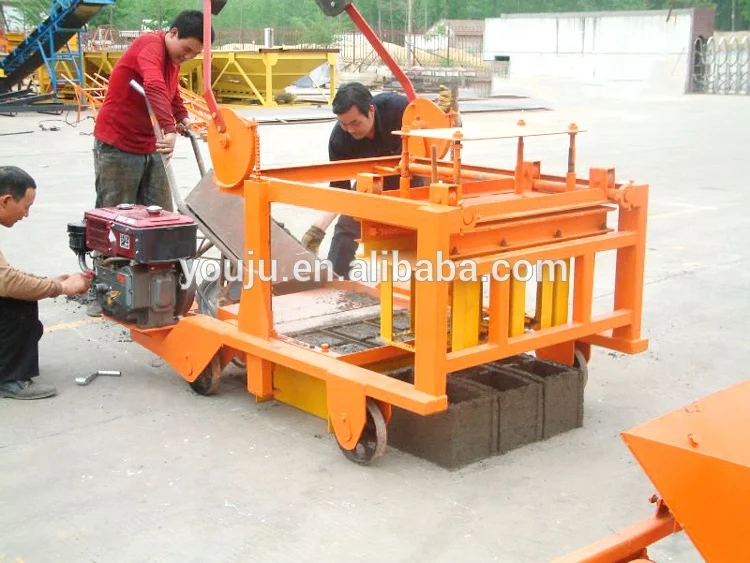
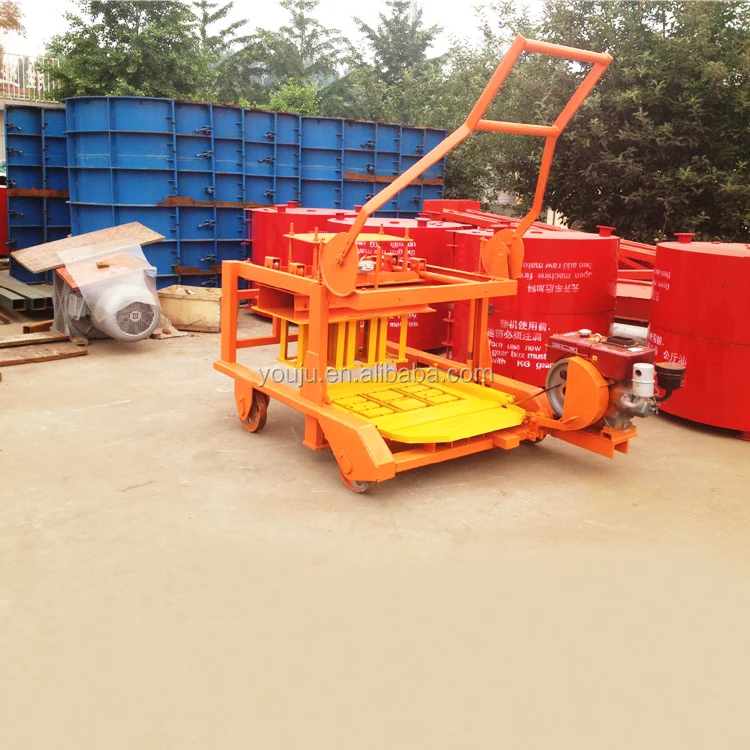
Description
Integrated Control Logic — the QMR4-45 mobile diesel block machine ships with configurable PLC parameters matched to your local aggregate and target block format, not a fixed catalogue default.
Technical Specifications
| Parameter | Value |
|---|---|
| Model | QMR4-45 |
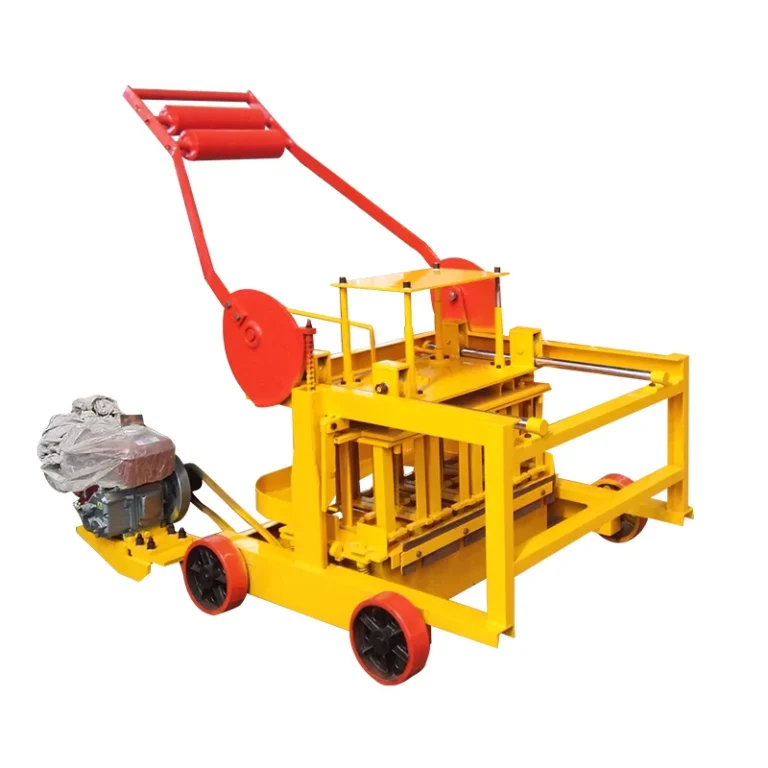
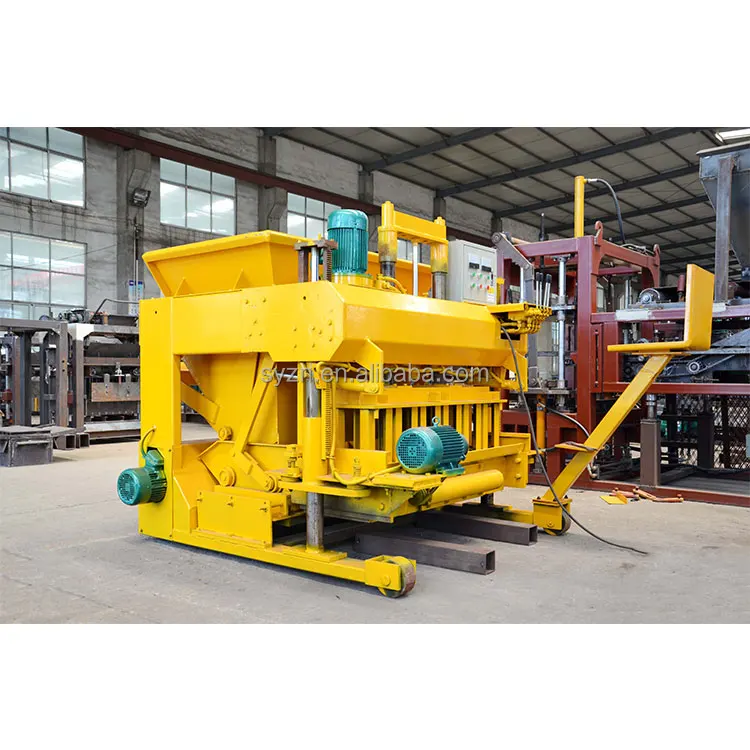
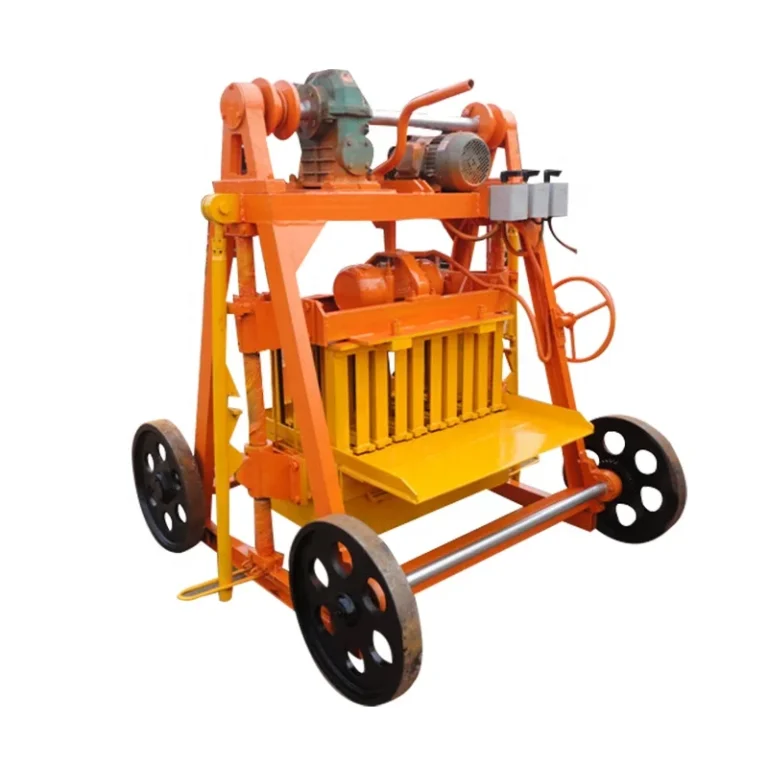
| Product Type | Mobile Diesel Concrete Block Making Machine |
| Overall Dimensions (L×W×H) | 2420 × 1320 × 1650 mm |
| Net Weight | 810 kg |
| Moulding Cycle | 40–45 s per cycle |
| Power Source | 6 kW electric motor or 6–8 HP diesel engine |
| Voltage Options | 220 V / 380 V / configurable to local supply |
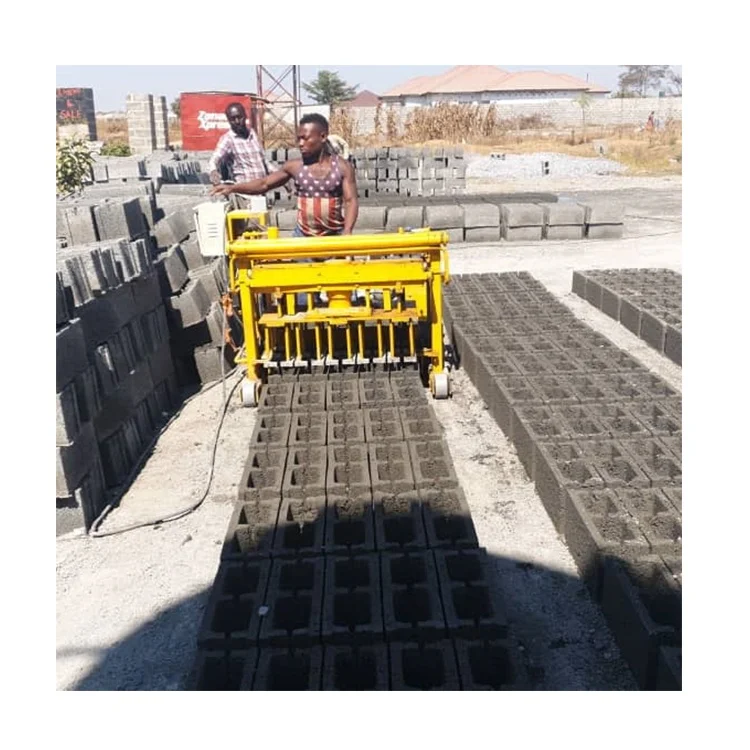
| Pallet Requirement | None (egg-laying design, blocks laid directly on ground) |
| Mould System | Interchangeable moulds for multiple block formats |
| Automation Level | Manual operation with PLC control interface available |
| Assembly State | Fully assembled before dispatch |
| Output Capacity | 3,000 pcs/day (basis not stated in source — confirm block format, material, and thickness) |
| Warranty | One year on complete machine |
| Certification | CE |
Application Suitability
| Application | Material or Output |
|---|---|
| On-site hollow block production for building contractors | Crushed stone, sand, and cement mix laid on prepared ground |
| Paving brick manufacturing for small-scale entrepreneurs | Fine aggregate with cement binder, interlocking or rectangular formats |
| Remote-area block production without grid electricity | Diesel-powered operation using locally available sand and gravel |
| Standard solid brick runs for housing projects | Cement-stabilized soil or conventional concrete mix |
| Multicellular brick production for load-bearing walls | Coarse and fine aggregate blends with controlled moisture content |
What "3,000 Blocks per Day" Actually Means on a Mobile Machine
Daily output figures only hold weight when tied to a specific block format, mix design, and operator count.
When I first started commissioning mobile block machines across West Africa, I watched buyers take quoted capacity numbers at face value and then wonder why their actual production fell short by the end of the first week. The issue was rarely the machine itself — it was the gap between what the number assumed and what the site actually had. A mobile block machine like this one lays blocks directly on the ground without pallets, which simplifies the workflow but makes cycle consistency entirely dependent on the operator feeding the mould and moving the unit forward at a steady pace. An automatic mobile block machine reduces that variable by locking the moulding cycle into the PLC, so each press follows the same timing regardless of who runs it [NEED_CITE: manual versus PLC-controlled cycle consistency in mobile block production].
The QMR4-45 completes a moulding cycle in 40 to 45 seconds, but translating that into a daily total requires knowing which block size is in the mould, how many operators are working, and how long the crew actually runs each shift. Without those parameters stated, the number is a starting point for a conversation, not a promise.
Building Consistency Through the Control Panel
Block strength inconsistency is one of the most frequent complaints I hear on site visits, and it almost always traces back to vibration and pressure settings that were never adjusted for the buyer’s actual raw material. The PLC interface on this automatic mobile block machine stores parameter sets for different mix designs, so when you switch from a river-sand mix to a crushed-stone blend, the operator selects the corresponding profile rather than guessing at manual settings. This removes the most common source of batch-to-batch variation in mobile production [NEED_CITE: PLC parameter management for mix design variance in concrete block machines].
Synchronization Between Moulding Cycle and Ground Handling
The 40 to 45 second cycle time sets the pace for everything downstream. On an egg-laying machine, there is no pallet conveyor or stacking robot to fall out of sync with — the operator pushes the machine forward after each cycle, and fresh ground becomes the curing area. Where intelligent control adds value is in the repeatability of that cycle: the PLC holds the vibration duration and motor engagement to the same values every press, so blocks cured side by side on the ground receive identical compaction. Contractors running multiple job sites benefit because the same control profile travels with the machine, standardizing output quality across locations.
Reading the Specification Sheet Against Your Site Conditions
Several parameters on this machine deserve closer attention before you sign off on a configuration. The dual power option — a 6 kW electric motor or a 6–8 HP diesel engine — is not just a redundancy feature; it determines whether the machine can run in areas where grid supply drops voltage under load, a situation I have encountered repeatedly on sites in rural Nigeria and Bangladesh. The voltage range of 220 V or 380 V, configurable to local supply, must be confirmed before the control panel is wired, because mismatched voltage on a PLC-controlled unit can prevent the HMI from booting at all [NEED_CITE: voltage and frequency standards by export market].
The 810 kg net weight gives the machine enough mass to resist vibration walk-off during pressing, yet it remains movable by two operators across a prepared floor. The 2420 × 1320 × 1650 mm footprint means the machine needs a clear strip of flat ground roughly 2.5 meters wide to operate and lay blocks in a straight line. Interchangeable moulds allow format changes without swapping the entire head assembly, though the time required to switch depends on the block geometry and whether quick-release fasteners are specified.
When the Wrong Configuration Costs You Weeks
A buyer in East Africa once ordered a mobile block machine wired for 380 V three-phase, only to discover the site generator could deliver stable single-phase 220 V at best. The PLC refused to initialize, and a replacement control board had to be shipped from the factory — four weeks of idle time on a project with a fixed completion date. Mismatched control language is another silent delay: an English-only HMI in a region where operators read Hausa or Swahili means every fault code requires translation before anyone can respond [NEED_CITE: HMI language requirements for industrial equipment in non-English markets]. These are not machine defects — they are specification gaps that could have been closed before production began.
Why Source This Machine Through a Line-Integrated Approach
Block machinery is our single focus, which means the QMR4-45 is specified as part of a matched system — mould, control panel, and handling workflow — rather than pulled from a generic catalogue. We configure the PLC parameters against your actual mix design and local aggregate before the machine leaves the factory, not after it arrives and fails its first test run. Mould design covers the formats your market actually sells, with custom drawings available when standard options do not match. The automation level is selectable, so you can begin with manual egg-laying operation and add intelligent control modules for cycle management as production volume justifies the investment. Installation support includes operator training on the PLC interface, fault diagnosis, and routine maintenance specific to this machine’s control architecture.
Documentation & Verification
- Factory test record running your specified block format and mix design before dispatch
- PLC parameter sheet listing stored profiles for vibration duration and motor engagement
- Voltage and control language confirmation signed off prior to wiring
- Mould drawing and format list covering all interchangeable mould options supplied
- Hydraulic and electrical schematic for on-site troubleshooting by your maintenance team
- Operation and maintenance manual with wear parts list and replacement intervals
Installation, Commissioning & Support
- Requires a flat, compacted ground strip at least 2.5 m wide for the 2420 × 1320 mm machine footprint
- Confirm local voltage and phase before wiring the 6 kW motor or diesel engine to the PLC panel
- Machine ships fully assembled — position and connect power for same-day commissioning
- First-run parameter calibration on your local aggregate and cement mix included in site support
- Operator training covers PLC profile selection, fault code reading, and mould change procedure
- Wear parts list and one-year warranty on the complete machine supplied at delivery
Moving From Inquiry to Configuration
To specify this automatic mobile block machine correctly, we need your target block format and dimensions, the local aggregate type and cement ratio you plan to use, your site voltage and phase availability, and the preferred HMI language for operators. Share these details and we can return a configuration proposal with cycle parameters matched to your material, not a generic defaults sheet.
Frequently Asked Questions
Q: What automation levels are available for the QMR4-45, and how do I plan a phased upgrade?
A: The machine starts as a manual egg-laying unit with a PLC interface for cycle control. You can add automated parameter management for vibration and motor timing first, then integrate upstream batching controls later. The upgrade path depends on your production volume and which manual tasks create the most inconsistency on your site.
Q: What PLC brands and HMI languages are supported, and can the system match my workflow?
A: The control system is configurable to support common PLC platforms, and the HMI language is confirmed before wiring. I once lost three days on a Nigerian site because the touch screen was in English and the operator only read Hausa — that confirmation step now happens before every dispatch.
Q: How does the 40–45 second moulding cycle work with ground-level curing logistics?
A: The cycle sets the pace for how fast the operator moves the machine forward and how much ground area you consume per shift. At 40 to 45 seconds per press, you need a clear, flat curing strip long enough to hold a full day’s output before blocks can be moved.
Q: Can the control system adjust parameters for different local aggregates?
A: Yes — the PLC stores separate profiles for different mix designs, so switching from river sand to crushed stone does not require manual guesswork. Each profile locks vibration duration and motor engagement to values tested against that specific material blend.
Q: What training is provided for PLC operation and fault diagnosis?
A: On-site training covers profile selection on the HMI, reading and responding to fault codes, routine maintenance intervals, and the mould change procedure. We walk your operators through a full production shift so they are confident before the commissioning team leaves.