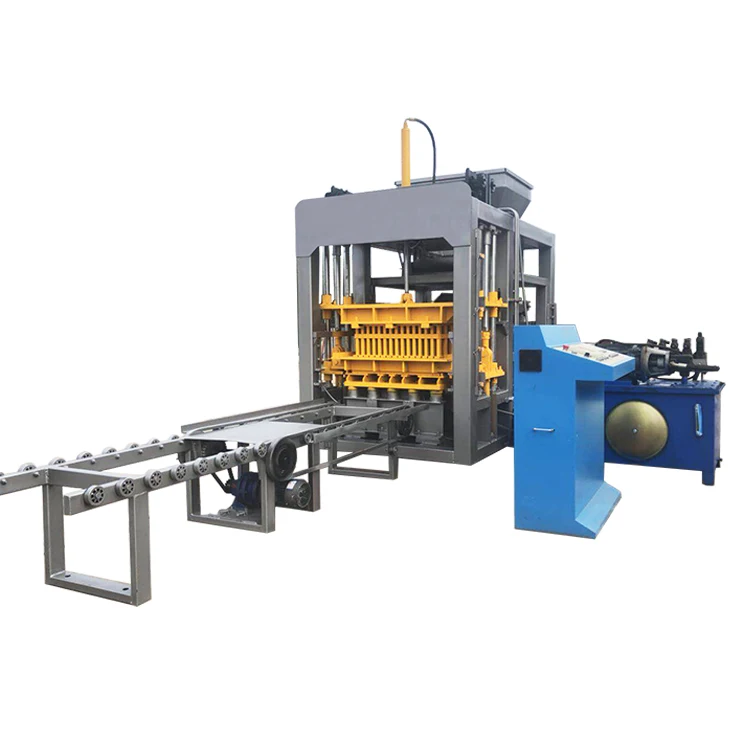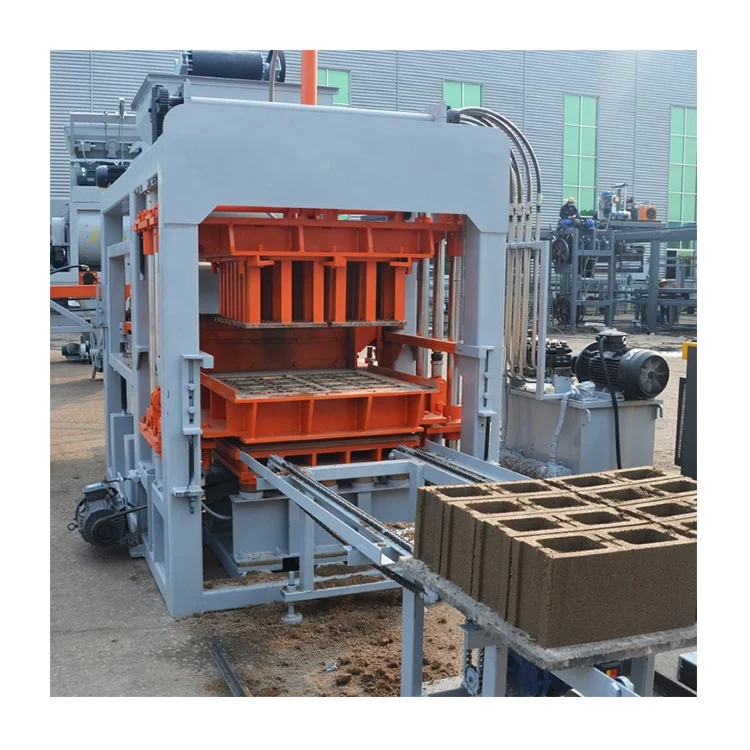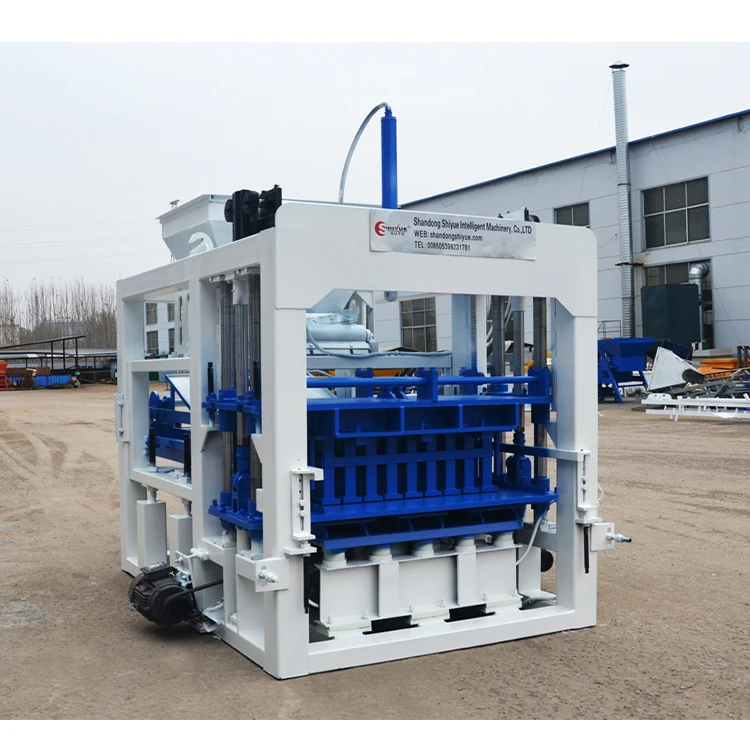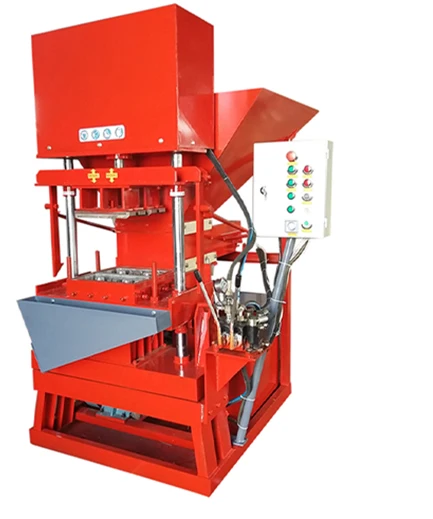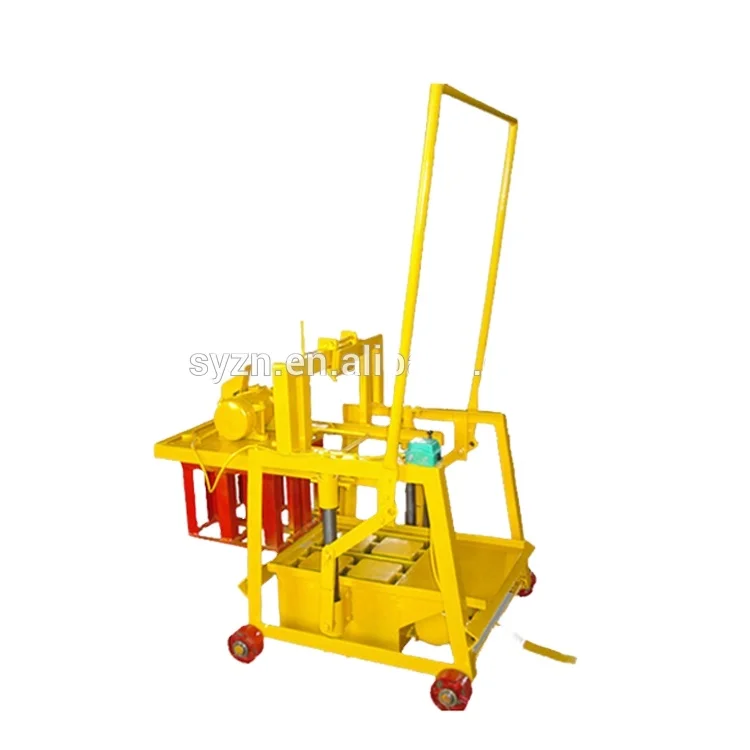


Description
Integrated System Matching — The QMY2-45 mobile block machine is specified against your actual mix design, local aggregate, and target hollow block format rather than offered as a generic catalogue unit.
Technical Specifications
| Parameter | Value |
|---|---|
| Model | QMY2-45 |
| Product Type | Mobile Egg-Laying Block Machine |
| Vibration System | Mold vibration |
| Cycle Time | 45 s (basis not stated in source) |
| Output Capacity | 1000 pcs/day (basis not stated in source) |
| Mould Format | 400×200×200 mm hollow block, 2 pcs per mould |
| Total Power | 1.5 kW |
| Overall Dimensions (L×W×H) | 1000 × 800 × 1300 mm |
| Net Weight | 215 kg |
| Standard Mixer | JQ350 |
| Control System | Manual operation |
| Automation Level | Manual / mobile egg-laying |
| Voltage & Frequency | Customized to local supply |
| Assembly State | Fully assembled, nude packing |
| Warranty | 1 year (excluding wearing parts) |
Application Suitability
| Application | Material or Output |
|---|---|
| On-site hollow block production for small construction projects | Cement-based mix with locally available sand and crushed stone aggregate |
| Home business block making | Standard concrete mix using river sand or crusher dust |
| Rural housing and wall construction | 400×200×200 mm hollow blocks laid directly on prepared ground |
| Contractor self-supply on remote job sites | Concrete blocks produced without pallets or fixed plant infrastructure |
Why the Voltage Question Should Come Before the Price
Local voltage and frequency must be confirmed before the automatic mobile block machine enters production, not after it arrives on site.
I have watched machines sit idle for weeks at job sites across East Africa and South Asia simply because the motor was wound for 380V/50Hz while the local grid ran on a different standard. The QMY2-45 draws only 1.5 kW, which keeps it within reach of standard single-phase supplies, but that low draw does not remove the need to verify what actually comes out of the socket at your location. Voltage mismatches do not just trip breakers — they degrade motor windings gradually, and the first sign of trouble is often a burnt-out stator months into production [NEED_CITE: voltage and frequency standards by export market].
Control Simplicity for First-Time Operators
The QMY2-45 runs on manual controls with no PLC layer between the operator and the machine. For a buyer setting up a first block plant, this removes the commissioning complexity that often delays start-up when a PLC controlled egg-laying block machine arrives with a language or interface the crew cannot read. Manual operation means the cycle sequence is learned by hand within the first shift, and troubleshooting stays mechanical rather than electronic.
Mobility Without Foundation Work
At 215 kg with a compact 1000 × 800 × 1300 mm frame, the QMY2-45 can be wheeled across a prepared concrete floor or flat ground to produce blocks where they will be laid. Egg-laying design eliminates the pallet circuit entirely — no pallet investment, no pallet return conveyor, no pallet storage rack. The machine lays the block directly on the ground and moves forward to the next position, which is the defining advantage of this automatic mobile block machine category for job sites where space and capital are both limited [NEED_CITE: mobile block machine site preparation requirements].
Reading the Numbers That Matter
The 45-second cycle time and 1000-piece daily capacity are both referenced against the 400×200×200 mm hollow block format with two cavities per mould. When a buyer switches to a smaller solid block or a paving format, the cycle count per day changes because mould fill volume and vibration duration shift. The 1.5 kW total power rating covers both the mold vibration motor and the JQ350 mixer drive, meaning the combined draw stays within what a portable generator or a basic site connection can supply. The 400×200×200 mm hollow block is the most traded format across much of Africa and South Asia, so starting with this mould gives a new producer immediate market relevance.
What Happens When Pallet and Handling Costs Are Ignored
Many quotations for block machines look attractive until the buyer realizes that pallets, pallet feeders, stacking frames, and curing racks were never included. The egg-laying design of the QMY2-45 sidesteps that gap because blocks cure in place on the ground. The hidden cost shifts instead to floor preparation — the surface must be level and clean enough that freshly laid blocks do not deform under their own weight. Contractors who skip this step lose a noticeable share of output to broken corners and uneven bases, which erodes the margin advantage of on-site production [NEED_CITE: block curing surface preparation standards].
Why Source From a Line-Focused Builder
Block machinery is the sole production focus here, which means the QMY2-45 is delivered as a matched unit with its JQ350 mixer rather than assembled from unrelated suppliers. The mould is designed for the hollow block format your market actually buys, and custom mould drawings are available if your project calls for a non-standard size. Voltage and control language are confirmed during the order stage so that commissioning is not delayed by electrical surprises. Installation support and operator training bring the crew up to speed on the manual cycle sequence, and a wear parts and mould list ships with every unit so the first replacement order can be placed without guesswork.
Documentation & Verification
- Machine specification sheet stating the block format used for capacity calculation
- Mould drawing and format list for the 400×200×200 mm hollow block cavity
- Voltage and frequency confirmation document matched to your local grid
- Factory test record before dispatch showing cycle operation on target format
- Operation and maintenance manual with wear parts identification
- Packing photographs taken before container loading
Installation, Commissioning & Support
- Flat, clean ground surface required — no fixed foundation or pit needed for the 215 kg unit
- Single-phase power connection verified against confirmed voltage before first start
- Machine arrives fully assembled; position, connect mixer, and begin test cycle same day
- Manual cycle sequence trained on-site with your crew during first production shift
- Mould wear assessment after initial run period against your local aggregate abrasiveness
- Spare mould and vibration motor wear parts list provided for advance stocking
Before You Send an Inquiry
To size the QMY2-45 accurately for your site, share the block format you intend to sell, your target daily output, and the aggregate materials available locally. Confirm your site voltage and frequency so the motor can be wound correctly before production begins. If you plan to run the machine alongside existing equipment or within a larger project timeline, let us know the start date and the curing space you have available.
Frequently Asked Questions
Q: How is the daily output figure calculated, and which block format does it assume?
A: The listed daily capacity references the 400×200×200 mm hollow block produced two at a time per mould cycle. Switching to a different block size changes fill volume, vibration duration, and cycle count, so actual output shifts accordingly. Always confirm the calculation basis against the format you plan to sell before comparing machines.
Q: What voltage and frequency options are available for my local power supply?
A: The motor and mixer are configured to match your confirmed local voltage and frequency before production begins. Common configurations span single-phase and three-phase supplies across standard international ranges. Providing a recent utility reading or generator plate photo helps avoid winding mismatches that delay commissioning.
Q: Can the QMY2-45 be upgraded to semi-automatic operation at a later stage?
A: The manual control architecture is purpose-built for egg-laying operation and does not convert to PLC-driven automation. Buyers anticipating future automation typically start with a semi-automatic stationary model from the same range instead, keeping pallet-based handling and upgrade paths open from day one.
Q: What is the expected mould life, and are replacement moulds available for other formats?
A: Mould lifespan depends directly on the abrasiveness of your local aggregate and the cement ratio in your mix. Custom moulds can be manufactured to buyer drawings for formats beyond the standard 400×200×200 mm hollow block. Requesting a wear parts and mould list at order stage ensures replacements are available when the first change-out is due.