Description
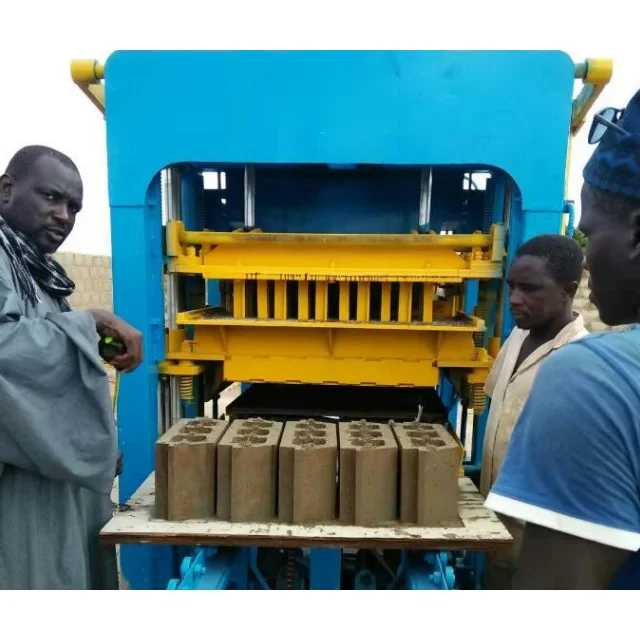
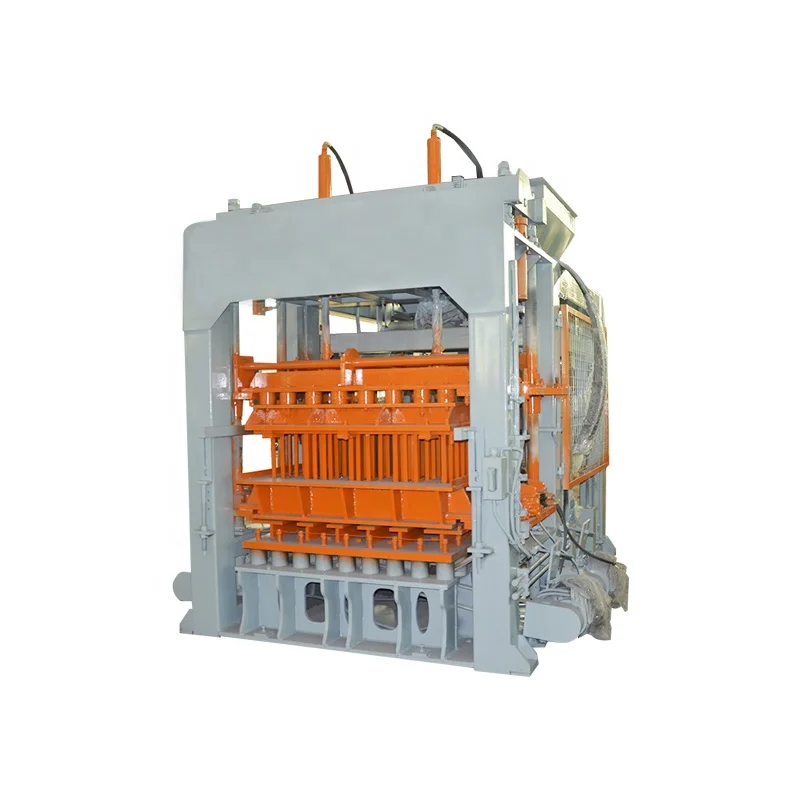
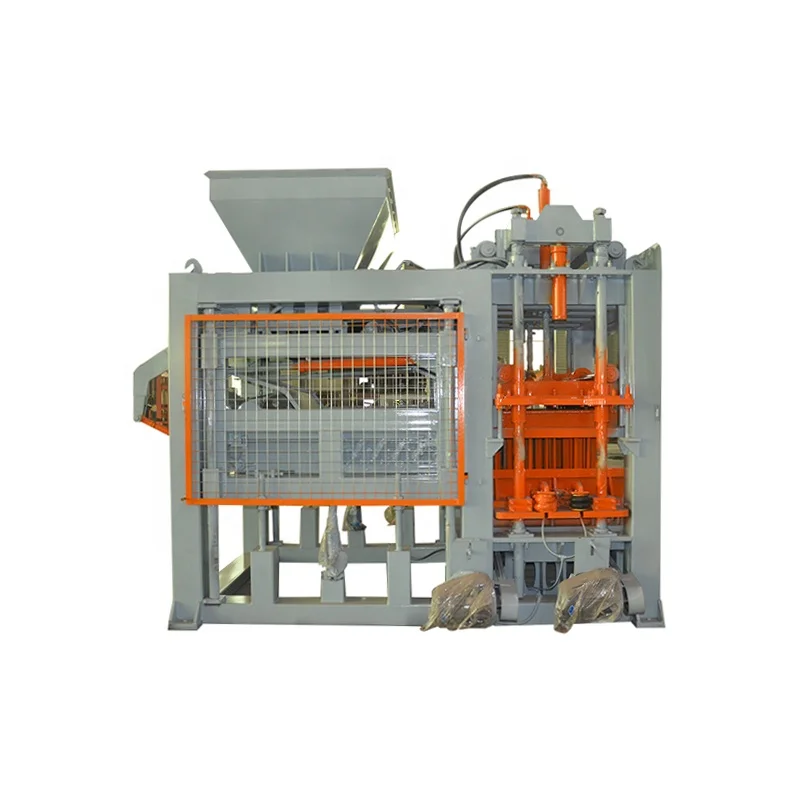
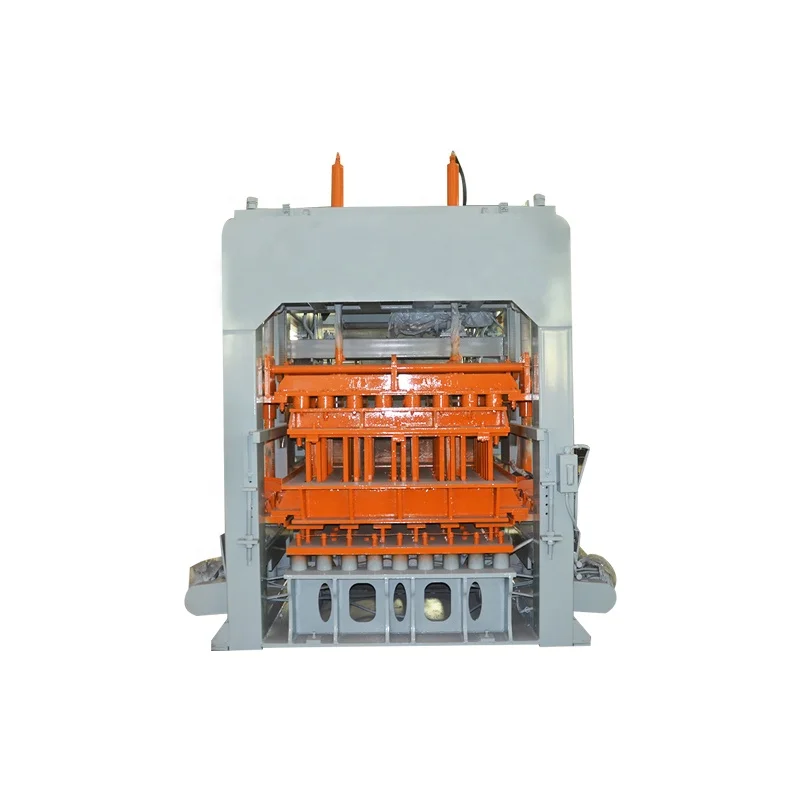
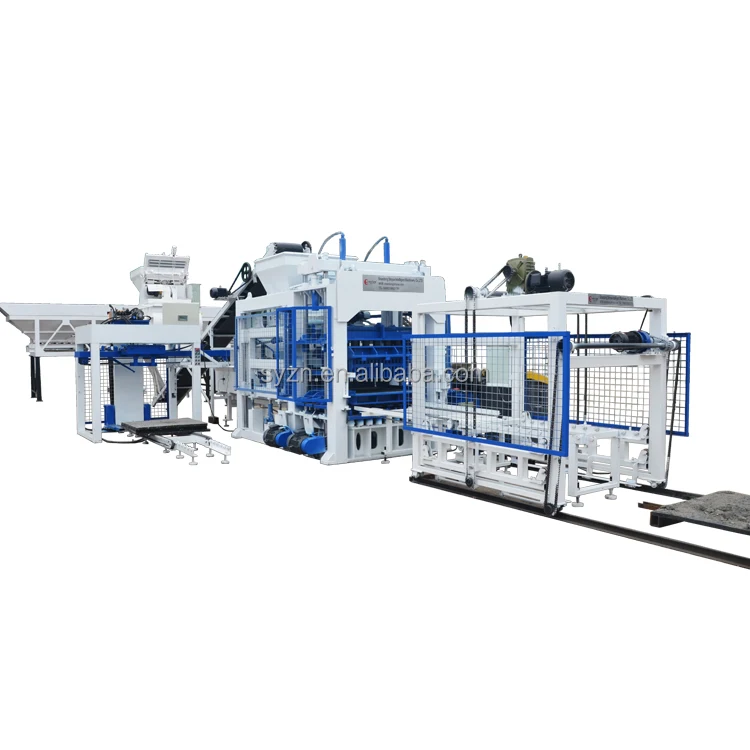
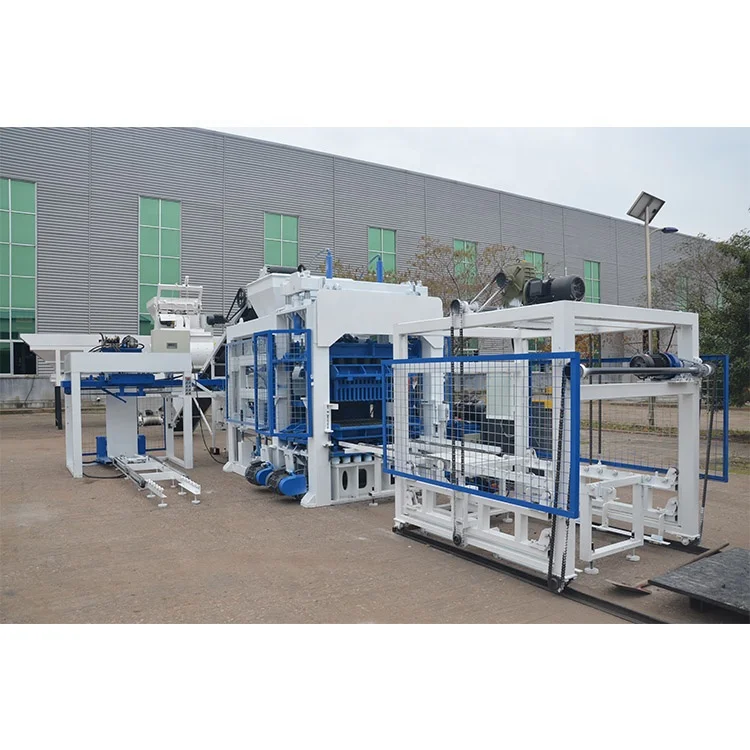
Matched as one system — the QT10-15 press, pallet feeder, and hydraulic station are specified together so cycle timing stays consistent across the entire automatic QT10-15 block machine PLC controlled line.
Technical Specifications
| Parameter | Value |
|---|---|
| Model | QT10-15 |
| Product Type | Automatic Hydraulic Block Making Machine |
| Control System | PLC control cabinet |
| Hydraulic System | Independent integrated hydraulic station |
| Vibration Mode | Vertical station mode resonance with automatic FM-AM |
| Mould Change System | Quick replacement for multi-format production |
| Output Capacity (400×200×200mm hollow block) | 1800–2400 pcs/hour (15–20s cycle, 10 pcs/mould) |
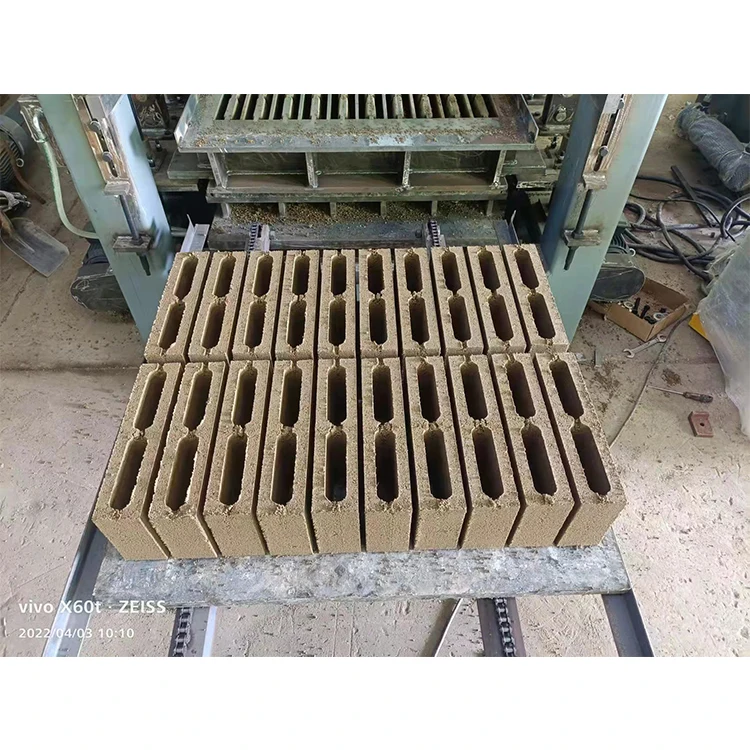
| Output Capacity (400×150×200mm hollow block) | 2160–2880 pcs/hour (15–20s cycle, 12 pcs/mould) |
| Output Capacity (240×115×53mm solid brick) | 8928–11160 pcs/hour (15–20s cycle, 62 pcs/mould) |
| Output Capacity (200×100×60mm paving block) | 5184–6480 pcs/hour (20–25s cycle, 27 pcs/mould) |
| Output Capacity (225×112.5×60mm paving block) | 4032–5040 pcs/hour (20–25s cycle, 24 pcs/mould) |
| 8-Hour Shift Output (400×200×200mm hollow block) | 14,400–19,200 pcs |
| 8-Hour Shift Output (240×115×53mm solid brick) | 71,424–89,280 pcs |
| Cycle Time (hollow blocks) | 15–20s |
| Cycle Time (paving blocks) | 20–25s |
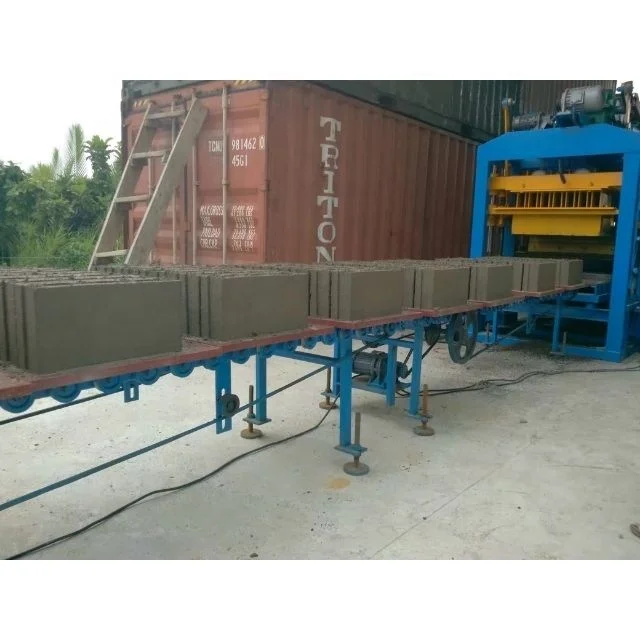
| Machine Configuration | Pallet feed machine, block making machine, storage hopper, conveyor, hydraulic unit, PLC control cabinet |
| Warranty | 1 year (excluding spare parts) |
| Rated Power | basis to be confirmed |
| Voltage & Frequency | basis to be confirmed |
| Overall Dimensions | basis to be confirmed |
| Net Weight | basis to be confirmed |
| Pallet Size | basis to be confirmed |
| Standards | CE (to be confirmed for applicable markets) |
Application Suitability
| Application | Material or Output |
|---|---|
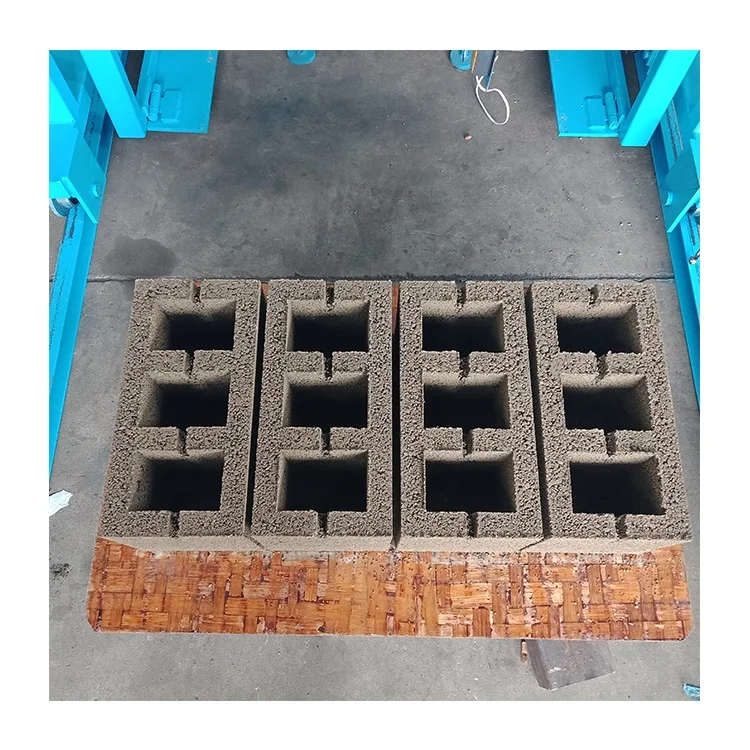
| Hollow block production for building walls | Crushed stone, sand, cement, fly ash aggregates |
| Multi-cellular brick manufacturing | Lightweight aggregate and cement blends |
| Standard solid brick for masonry | Dense aggregate and cement mix designs |
| Paving block for roads and walkways | High-strength concrete with fine aggregate grading |
| Hourdis (ribbed slab block) production | Structural concrete with reinforcement-compatible geometry |
| Large-scale block plant operations | Continuous shift production across multiple block formats |
Why the PLC Language Question Should Come Before the Price
A control system you cannot read is a control system you cannot run.
I spent a week on-site rewriting PLC logic for an African client because the display language and parameter labels did not match what the local operators could read. The automatic QT10-15 block machine PLC controlled cabinet arrived functional, but every alarm message and recipe screen required translation through a second person. By the time we restructured the interface, the project was already behind schedule and the curing racks sat half empty [NEED_CITE: PLC display language standards for export machinery].
When buyers focus only on press tonnage and cycle speed, the automation layer gets treated as a checkbox. Yet it is the PLC that decides whether your operator can adjust vibration frequency, confirm batching weights, or troubleshoot a pallet feed jam without calling overseas support at two in the morning.
What the Control Layer Actually Removes from the Operator
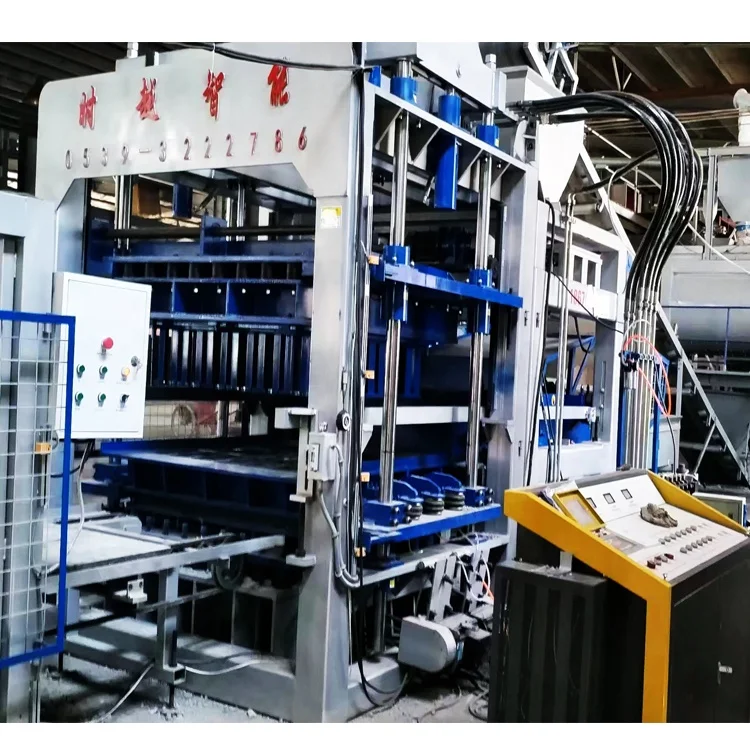
On the QT10-15, the PLC control cabinet handles cycle sequencing, vibration tuning, and pallet feed timing so the operator monitors rather than manually triggers each stage. The vertical station mode resonance system uses automatic FM-AM adjustment, meaning vibration frequency and amplitude shift to match the mould cavity and the density of the mix currently running. This matters when you switch from a lightweight hollow block recipe to a dense paving block in the same shift — the control layer recalibrates without manual dial adjustments.
For a plant owner moving from semi-automatic operation, this is where the labour shift happens. The automatic QT10-15 block machine PLC controlled system does not just replace buttons with a screen; it removes the timing decisions that cause inconsistent block density between the first hour of a shift and the last.
Where Batch Consistency Breaks Down Without Automation
In manual and semi-automatic lines, the operator decides when the mix drops, how long the vibration holds, and when the press releases. Small variations in each decision compound across hundreds of cycles. I have watched two operators on identical presses produce hollow blocks with visibly different surface density by lunchtime because one was holding the vibration cycle a few seconds longer [NEED_CITE: effects of manual cycle variation on concrete block compressive strength].
The independent integrated hydraulic station on the QT10-15 sits isolated from the main press vibration and dust. This separation means hydraulic valve response stays consistent through an eight-hour shift rather than degrading as dust infiltrates seals and heat builds in the fluid. When the hydraulic pressure and vibration force are both managed by the PLC against a stored recipe, the twentieth pallet of the day matches the first.
Reading the Specs That Actually Shape Your Daily Output
The vibration mode on this press — vertical station mode resonance with automatic FM-AM — is not just a label. Resonance-based vibration transfers energy more efficiently into the mould than fixed-frequency systems, which means the mix consolidates faster and the cycle time shortens for dense formats like paving blocks. Combined with the independent hydraulic station, the press can sustain the pressure needed for high-density pavers without the hydraulic system overheating during continuous paving block runs.
The mould change system supports quick replacement across hollow block, solid brick, paving block, and hourdis formats. This flexibility means a single QT10-15 press can cover a product range that would otherwise require multiple dedicated machines. However, the actual changeover time and the tools required should be confirmed before committing, since a mould swap that takes most of a shift defeats the purpose of format flexibility.
The output figures above are tied to specific block dimensions, cavity counts, and cycle times. A 400×200×200mm hollow block runs 10 cavities at 15–20 seconds per cycle, producing 1800–2400 pieces per hour. Switch to a 240×115×53mm solid brick with 62 cavities and the same cycle range yields 8928–11160 pieces per hour. These are not interchangeable numbers — the format you sell determines the capacity you get.
What Happens When Automation Scope Is Left Undefined
One of the most common gaps I see in quotations is a line item that says "automatic" without clarifying where the automation ends. The QT10-15 machine configuration includes a pallet feed machine, storage hopper, conveyor, and PLC control cabinet, but stacking method, curing rack handling, and cubing are not stated in the source specifications. If those downstream stations are not included, your press runs automatically while workers still pull wet blocks off pallets by hand at the end of the line [NEED_CITE: hidden costs of partial automation in block plants].
A press that runs at full cycle speed while the stacking station falls behind simply creates a bottleneck of uncured blocks on the floor. The line only delivers its rated output when every station — from raw material feed through to curing rack placement — is matched to the press cycle time.
Why the Configuration Conversation Has to Start With Your Mix
The Shiyue approach to block machinery focuses on matching the machine to the buyer’s actual mix design, local aggregate, and target block format rather than shipping a catalogue default. For the QT10-15, this means the vibration parameters, hydraulic pressure settings, and PLC recipes are adjusted against the specific aggregate grading and cement ratio available at your site. I have seen machines arrive with settings calibrated for fine river sand, only to find the local quarry supplies crushed stone with a coarser particle distribution that changes the consolidation behaviour entirely.
Configuration also extends to electrical specifications. Voltage, frequency, and PLC display language need confirmation before production starts — not after the container arrives. The documentation package should include hydraulic and electrical schematics so your local maintenance team can plan servicing without waiting for overseas support.
Documentation & Verification
- Line layout showing pallet flow, press position, and curing area matched to QT10-15 output rates
- Capacity calculation sheet stating block format, cavity count, and cycle time for each figure
- PLC programming record with recipe parameters set for your aggregate and mix design
- Hydraulic and electrical schematic for local maintenance and troubleshooting
- Factory test record with actual cycle times per mould format before dispatch
Installation, Commissioning & Support
- Foundation plan confirming load points and vibration isolation for the QT10-15 hydraulic press frame
- Electrical supply specification covering voltage, frequency, and dedicated circuit rating for the PLC cabinet and hydraulic motor
- On-site assembly sequence for the pallet feeder, conveyor, and press alignment
- PLC commissioning with vibration frequency and cycle timing tuned to your local aggregate sample
- Operator training covering mould changeover procedure, alarm response, and daily maintenance checkpoints
- Wear parts and mould list with reorder codes for hydraulic seals and vibration components
What We Need to Size Your Line Correctly
To configure the automatic QT10-15 block machine PLC controlled system for your plant, share the block formats you sell and the daily volume per format. Confirm your local aggregate type, particle size range, and cement supply. Provide your site voltage and frequency, the PLC display language your operators need, and whether you require automatic stacking and cubing downstream of the press.
Frequently Asked Questions
Q: How is output capacity verified per block format on the QT10-15?
A: Each capacity figure is tied to a specific block dimension, mould cavity count, and cycle time range. For example, the 400×200×200mm hollow block figure assumes 10 cavities at 15–20 seconds per cycle. We provide a capacity calculation sheet listing every format you plan to produce so you can plan curing area and shift scheduling against realistic numbers.
Q: What PLC brand and display language options are available?
A: The PLC control cabinet is configured before production with your preferred display language and recipe parameters. The system stores mix recipes and cycle settings per mould format. Interface compatibility with your existing batching plant controls should be confirmed during the quotation stage so integration wiring is planned before shipment.
Q: Does the quotation include automatic pallet feeding, stacking, and cubing?
A: The standard QT10-15 configuration covers the press, pallet feed machine, storage hopper, conveyor, hydraulic unit, and PLC cabinet. Stacking and cubing stations are not listed as standard inclusions. Confirm your automation scope early so downstream equipment is matched to the press cycle time and included in the line layout.
Q: How is the hydraulic station protected during continuous operation?
A: The independent integrated hydraulic station is physically separated from the main press vibration zone and dust exposure. This isolation reduces seal wear and fluid contamination over long shifts. The PLC monitors hydraulic pressure against stored parameters, maintaining consistent forming force across every cycle without manual valve adjustment.