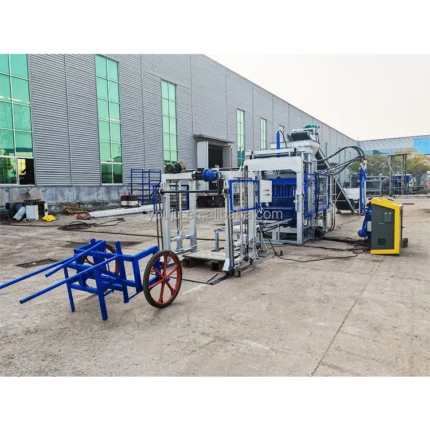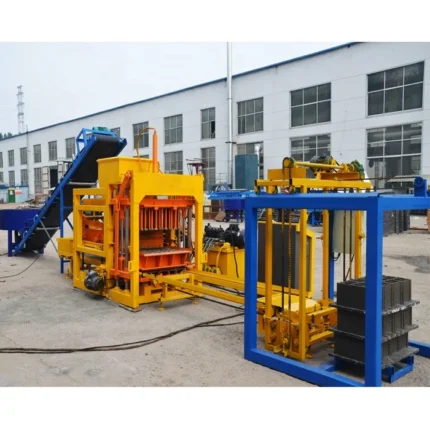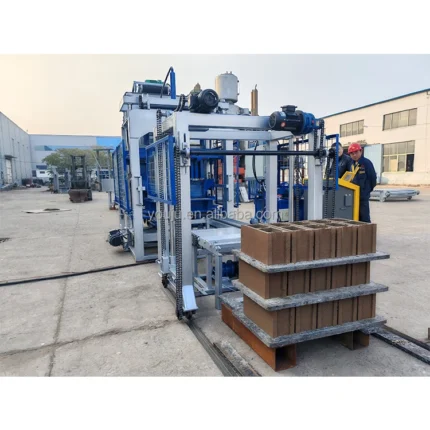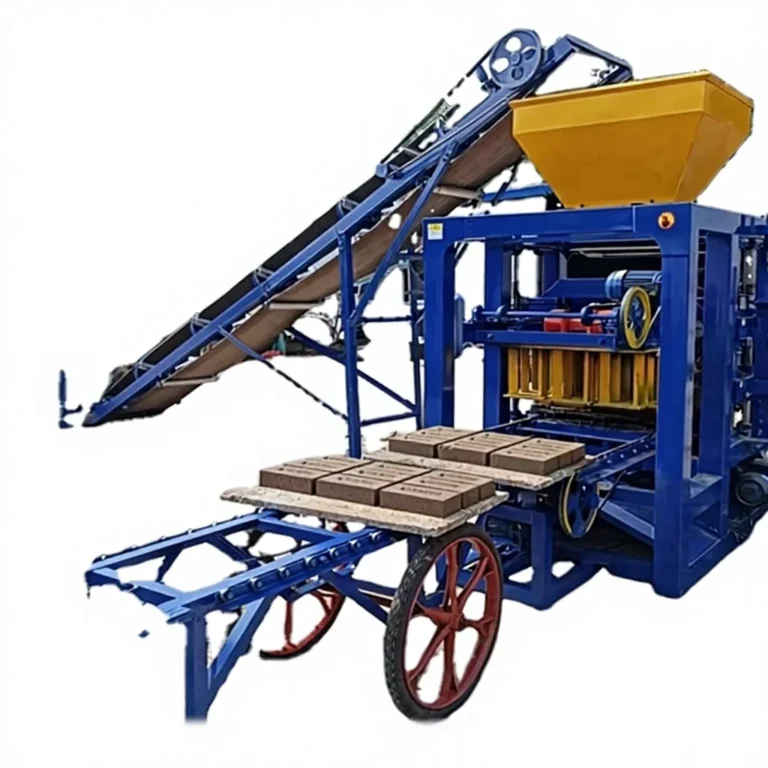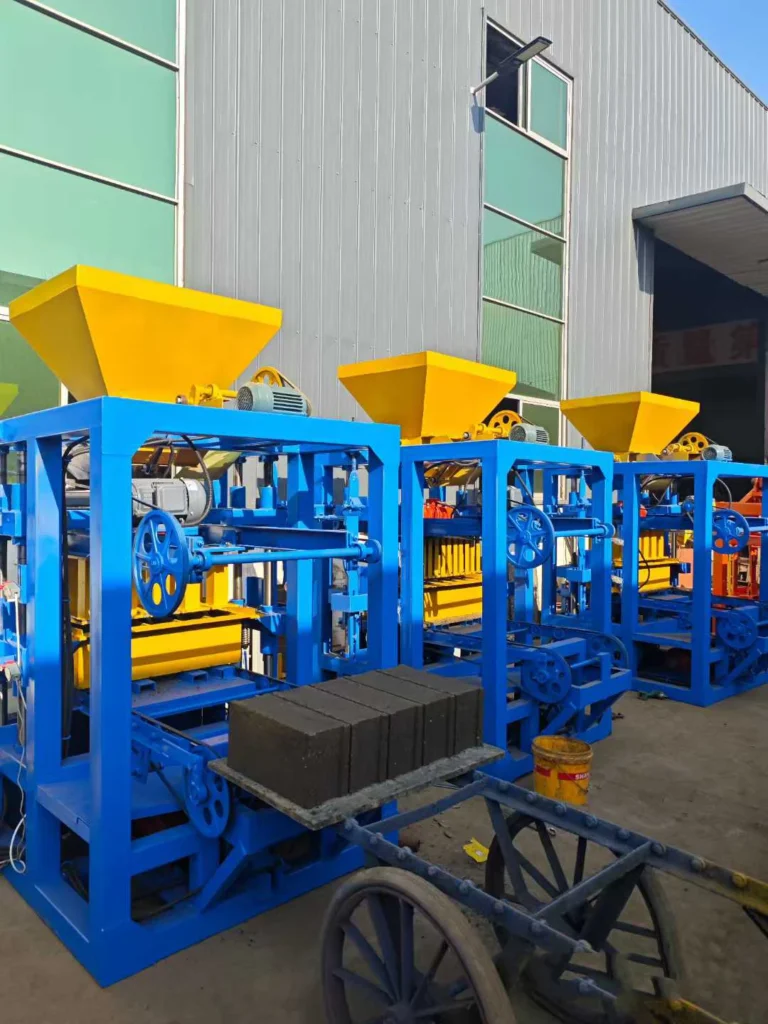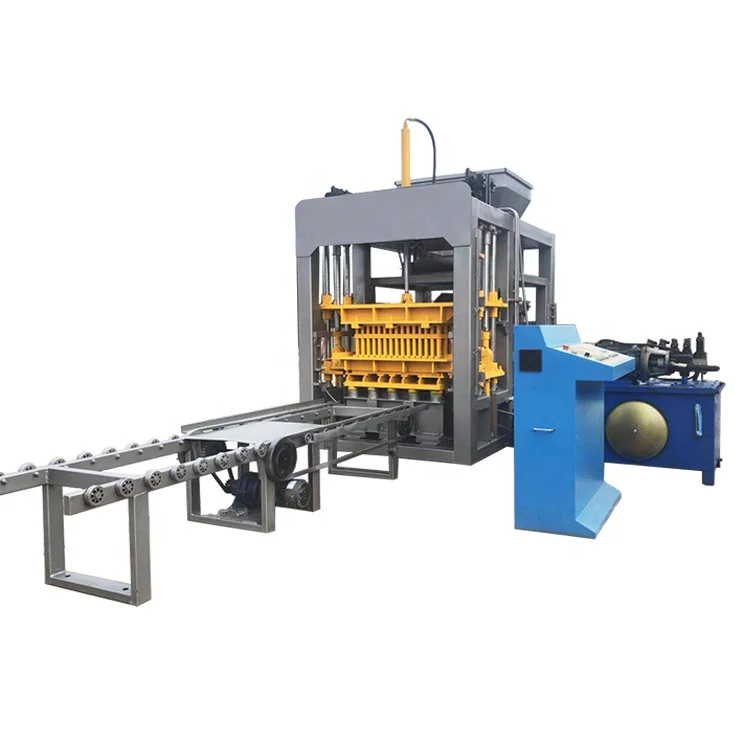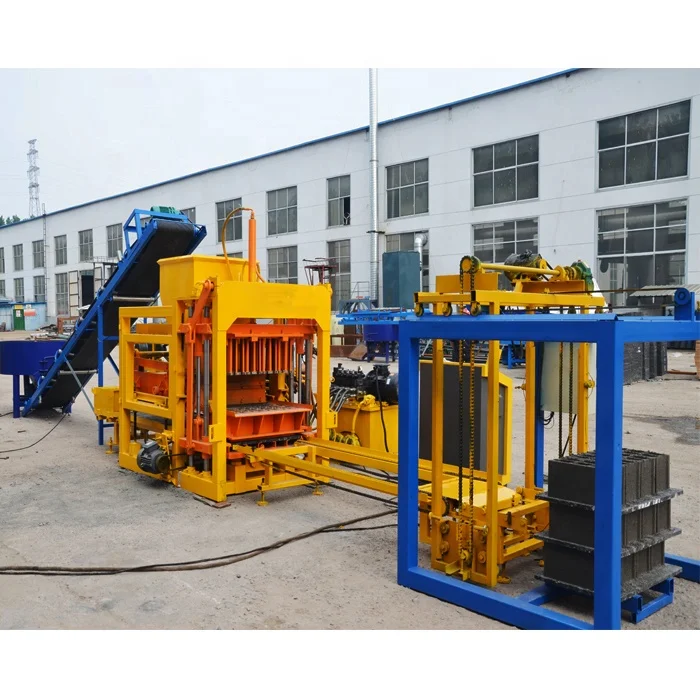
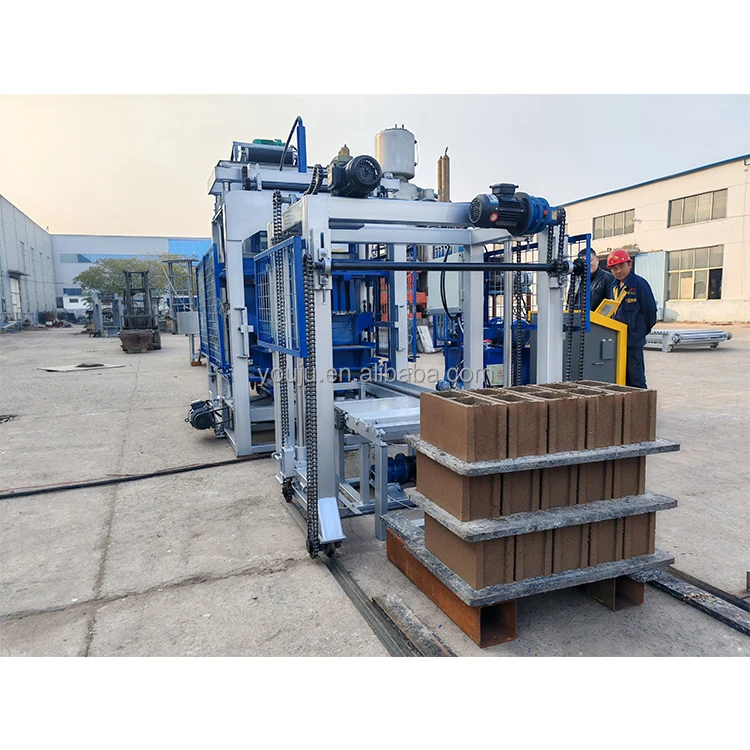
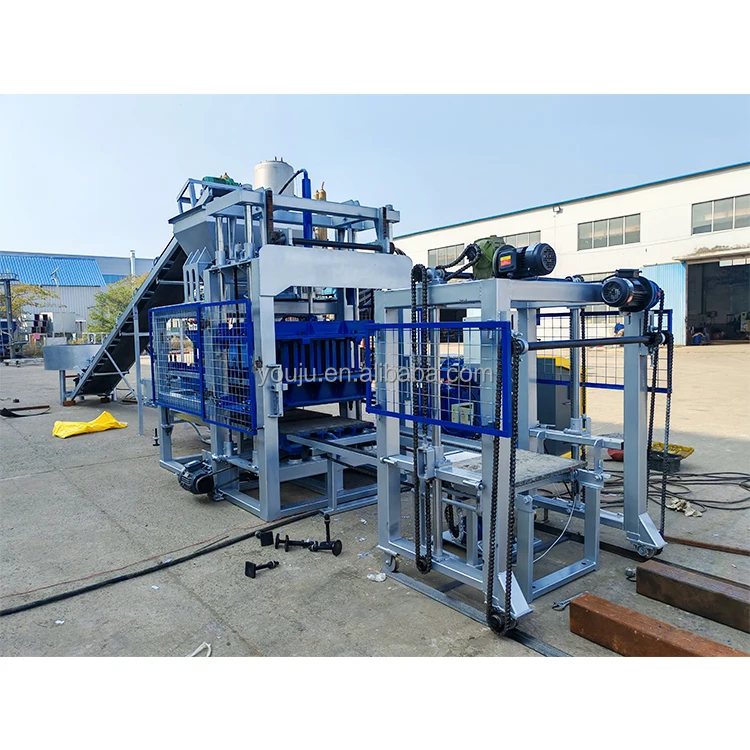
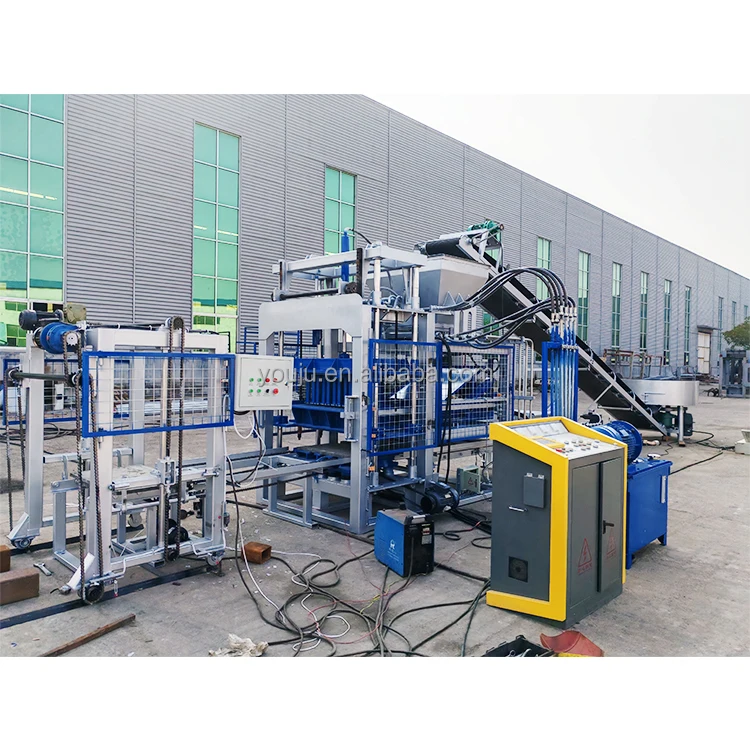
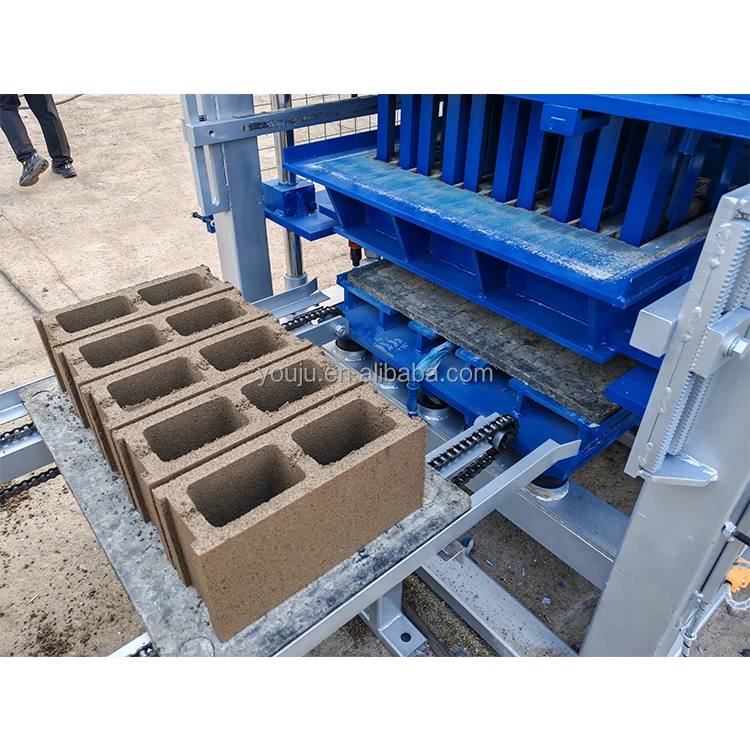
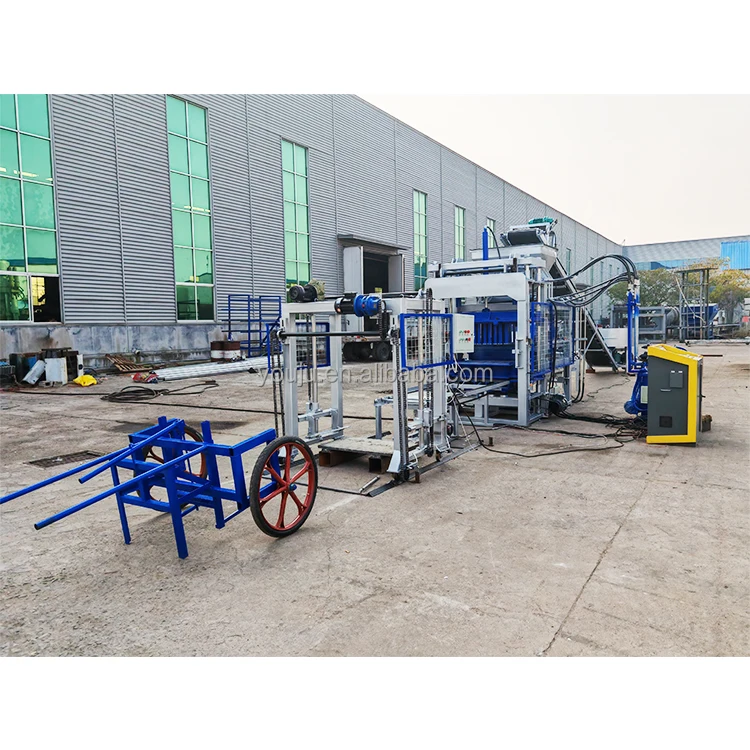
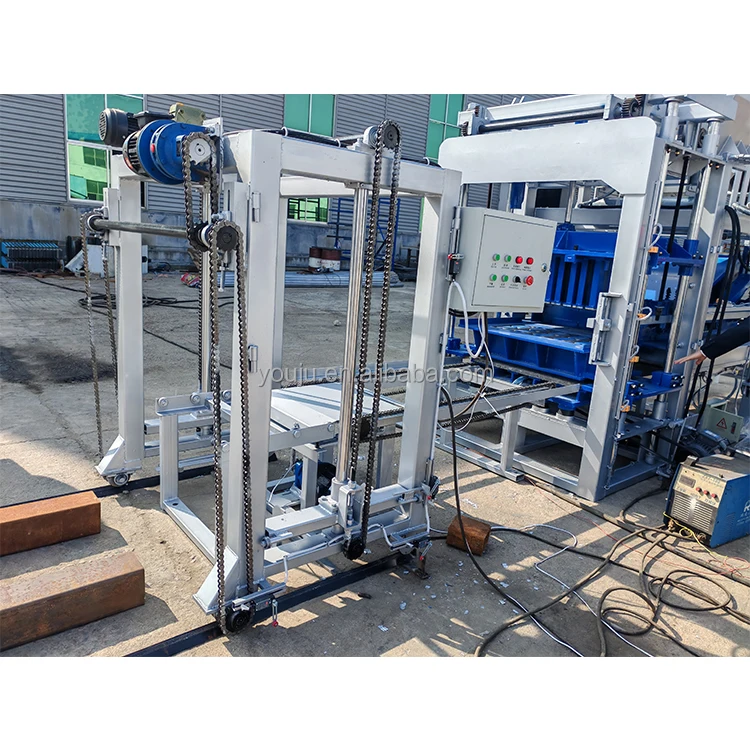
Description
Single-focus automation integration — PLC control, hydraulic demolding, and platform vibration are configured together so the operator interface matches the press logic, not sourced from separate suppliers.
Technical Specifications
| Parameter | Value |
|---|---|
| Model | QT4-15 |
| Product Type | Automatic Hydraulic Block Making Machine |
| Control System | PLC controlled with approach switch monitoring |
| Demolding Method | Hydraulic |
| Vibration Type | Platform vibration |
| Vibration Frequency | 50–70 Hz |
| Molding Cycle | 15–30 s depending on block format and mix design |
| Pallet Size | 900 × 500 mm |
| Product Height Range | 50–220 mm |
| Overall Power | 24.5 kW |
| Block Compressive Strength | >15 MPa with matched mix design |
| Output – Hollow Block 400×200×200 mm | 900–1,200 pcs/hour (basis: 15–30 s cycle, rated at 400×200×200 mm hollow block) |
| Output – Hollow Block 400×150×200 mm | 1,080–1,440 pcs/hour (basis: rated at 400×150×200 mm hollow block) |
| Output – Hollow Block 400×100×200 mm | 1,440–1,920 pcs/hour (basis: rated at 400×100×200 mm hollow block) |
| Output – Paver 200×100×60 mm | 2,880–3,840 pcs/hour (basis: rated at 200×100×60 mm paver) |
| Output – Solid Brick 240×115×53 mm | 5,930–6,720 pcs/hour (basis: rated at 240×115×53 mm solid brick) |
| Mould Format Compatibility | Hollow block, paver brick, solid brick by changing moulds |
| Raw Material Compatibility | Fly ash, slag, gangue, sand, crushed stone, cement, water |
| Automation Level | Automatic (PLC + hydraulic + approach switch monitoring) |
| Electrical & Hydraulic Components | Original imported or China famous brand (basis not stated in source) |
| Voltage & Frequency | Configurable; confirm before production (basis not stated in source) |
| Certification | CE (declaration where applicable) |
Application Suitability
| Application | Material or Output |
|---|---|
| Hollow block production for building walls | Fly ash, sand, crushed stone blended with cement |
| Paver brick manufacturing for landscaping and roads | Crushed stone and sand mix at high vibration density |
| Solid brick production for masonry | Slag, gangue, or sand-based mixes |
| Industrial residue utilization | Fly ash and slag as primary aggregate replacing natural stone |
| Small to medium-scale block plants | Multi-format output on a single pallet size |
Why "Automatic" Means Nothing if the Operator Cannot Read the Screen
A PLC controlled automatic block making machine is only as intelligent as the language its operator understands.
I once shipped a QT4-15 to a French-speaking site in West Africa. The default English interface locked the operator out on the first morning, and remote reconfiguration took three days of back-and-forth over unreliable connections. During that downtime the entire crew stood idle. Since then, every panel we configure goes through a language and button-label check against the buyer’s operator profile before it leaves the workshop. The lesson is simple: automation removes manual effort, but only if the human-machine interface is specified as deliberately as the hydraulic circuit [NEED_CITE: PLC display language and operator comprehension in export machinery].
How PLC Coordination Removes the Waiting Game
The QT4-15 uses approach switches to track pallet position, mould descent, vibration start, and hydraulic demolding as a single timed sequence. When one step finishes, the next triggers without operator judgment, which is where most inconsistency enters semi-automatic lines. This PLC controlled automatic block making machine holds the same cycle rhythm across an eight-hour shift, so block density does not drift as operators tire.
Batch-to-Batch Consistency Across Mould Changes
Switching from hollow block to paver format means the PLC must load a different vibration profile, hydraulic pressure curve, and dwell time. On the QT4-15 these parameters are stored per mould, so the operator selects the format and the system adjusts automatically. What the operator no longer controls is what usually varies — vibration duration and pressing force — keeping compressive strength within the target range regardless of who is running the shift [NEED_CITE: block compressive strength consistency under PLC-controlled vibration profiles].
Reading the Numbers That Actually Matter
The 50–70 Hz vibration frequency range is wide enough to cover fly ash mixes, which need higher frequency and lower amplitude, as well as coarse crushed stone, which responds to lower frequency with greater force. Matching this range to the hydraulic demolding pressure determines how densely aggregate packs before the mould lifts. The 15–30 second molding cycle reflects this trade-off: shorter cycles suit lighter solid bricks, while hollow blocks with thin webs need longer vibration to fill corners without cracking. Pallet size at 900 × 500 mm must align with the curing racks and forklift forks the buyer already has — a mismatch here forces manual re-stacking that defeats the automation upstream. Overall power of 24.5 kW covers the vibration motor, hydraulic pump, and conveyor drives together, so the electrical supply must support sustained peak draw rather than just average load [NEED_CITE: hydraulic-vibration matching for concrete block density standards].
The Cost of Skipping the Automation Audit
Buyers who select automation level without mapping which stations remain manual often find the press producing faster than the pallet return conveyor can deliver empties. The QT4-15 then sits idle at the end of each cycle, and the quoted output collapses. Similarly, specifying a PLC without confirming the control language or voltage at the ordering stage delays commissioning by weeks while replacement panels or transformers are sourced locally. These are not machine faults — they are configuration gaps that surface only after the container arrives.
Why Buyers Source This Line Here
Block machinery is the sole product focus, so the QT4-15 press, its moulds, pallets, and handling equipment are specified as one matched set rather than assembled from separate vendors. Configuration starts from the buyer’s actual mix design and target block format, not a catalogue default. Mould design covers the formats the local market sells, with custom drawings available. Automation level is selectable, allowing a plant to start with semi-automatic pallet handling and add automatic stacking later. Installation support includes operator training on the specific PLC interface shipped with the machine.
Documentation & Verification
- Machine specification sheet stating cycle time and output per block format
- PLC logic diagram showing approach switch sequence and hydraulic integration
- Voltage and control language confirmation signed before production begins
- Factory test record demonstrating block compressive strength on buyer’s mix
- Mould drawing and format compatibility list with changeover procedure
- CE declaration documentation where applicable for destination market
Installation, Commissioning & Support
- Foundation must support 24.5 kW sustained draw with dedicated circuit breaker
- PLC panel configured for site voltage and frequency before dispatch
- Hydraulic lines pre-tested at factory; field assembly limited to connections
- Commissioning includes cycle timing verification across all ordered mould formats
- Operator training covers PLC fault codes and manual override procedures
- Wear parts list identifies hydraulic seals and approach switches for first reorder
What to Include in Your Inquiry
Provide the block formats your market demands along with the daily volume per format, the local aggregate and cement you plan to use, and your site voltage and frequency. Tell us the language your operators read and whether your existing pallet handling or curing racks constrain the line layout. If you are replacing a current press, share its pallet size so we can confirm compatibility or plan the transition.
Frequently Asked Questions
Q: What PLC brand and display language does the QT4-15 use, and can it be configured for local operators?
A: The specific PLC brand is confirmed during configuration based on the buyer’s preference for local service availability. Display language and physical button labels are set before factory testing so operators can navigate menus on day one. We have configured panels in English, French, Spanish, and Arabic among other languages depending on site requirements.
Q: The capacity table shows different outputs — which mix design and curing method were assumed?
A: Each output figure assumes a molding cycle between 15 and 30 seconds on the stated block format, with adequate vibration to achieve >15 MPa compressive strength. The actual cycle time depends on the buyer’s mix design and aggregate grading, which is confirmed during pre-order testing so the capacity calculation reflects real conditions rather than optimistic defaults.
Q: What functions does the PLC control, and what remains manual in the QT4-15 configuration?
A: The PLC governs pallet feeding, material dosing, vibration timing, hydraulic pressing, and demolding coordination through approach switch monitoring. Automatic stacking and cubing are available as line extensions. Raw material batching and finished block transport from the curing area may remain manual depending on the automation level selected at order.
Q: How is the vibration frequency and hydraulic pressure matched to local aggregate?
A: During pre-order configuration we review the buyer’s aggregate type, grading, and cement ratio. Vibration frequency within the 50–70 Hz range and hydraulic pressure are then set to achieve target block density. This matched approach avoids the common problem of machines configured for one region’s sand arriving in another where coarse crushed stone requires a completely different vibration profile.
Q: How does the QT4-15 cycle time coordinate with upstream and downstream equipment?
A: The PLC cycle includes pallet return timing so the press does not wait for an empty pallet before the next press stroke. When automatic stacking or curing rack conveyors are included in the line, their speeds are set to match the press output, preventing bottlenecks that would reduce actual daily production below the rated capacity.